California Fishing Bag and Size Limits
Oh boy, navigating California's fishing regulations can sometimes feel like trying to untangle a hundred-pound snarl of fishing line in the dark – utterly confusing and frustrating! So many of us, myself included, have stood on the shore or deck, scratching our heads, wondering if that gorgeous fish we just landed is legal to keep, or if we’re inadvertently breaking some obscure rule about size or quantity. This guide is here to untangle that mess for you, breaking down the often-complex world of California's fishing bag and size limits so you can fish with confidence and stay on the right side of the law.
The Foundation of Fishing Limits: Why They Exist
Before we dive into the nitty-gritty of specific fish, let's chat about why these limits are even a thing. It's easy to feel like they're just there to make our lives harder, but honestly, bag and size limits are the bedrock of sustainable fishing. Without them, we'd quickly deplete our precious fish stocks, and future generations (or even next year's fishing season!) wouldn't have much to enjoy.
Conserving California's Aquatic Resources
Think of it like this: every fish we catch is one less fish in the water. While that's obvious, the rate at which we catch them and the size of the fish we target heavily impact the population's ability to reproduce and thrive. Smaller fish haven't had a chance to spawn, contributing to the next generation, while extremely large, old fish can be crucial breeders, sometimes called "broodstock," that produce more robust offspring. By setting limits, the California Department of Fish and Wildlife (CDFW) aims to strike a delicate balance. They want to ensure there are enough fish left to reproduce, maintain genetic diversity, and provide forage for other wildlife, all while still allowing anglers to enjoy a productive day on the water. It’s a tough job, and it’s why these rules are constantly reviewed and adjusted based on scientific data.
Ensuring Fair Access for All Anglers
Another vital aspect of bag and size limits is ensuring fairness. Imagine if there were no limits at all. A few individuals could, theoretically, go out and catch hundreds of fish, hoarding the resource and leaving little for others. Limits help distribute the harvest more equitably among all licensed anglers, giving everyone a reasonable chance to bring home some dinner. It promotes a sense of community and shared responsibility for our natural resources. Plus, it discourages commercial-scale harvesting by recreational anglers, which is a whole different ballgame with its own set of rules and licenses. These limits are part of the broader framework covered in the California Fishing Regulations Explained.
General Principles of Bag and Size Limits
Navigating the specifics can feel overwhelming, but understanding the general principles behind bag and size limits can simplify things immensely. These aren't arbitrary numbers; they follow certain logical guidelines designed to protect fish populations and ensure healthy ecosystems.
Understanding Bag Limits and Possession Limits
First off, let's clear up the difference between bag limits and possession limits, because they're not always the same and misunderstanding them can land you in hot water.
Bag Limit: This refers to the maximum number of fish of a particular species or group of species you can catch and keep per day. So, if the bag limit for Rainbow Trout is 5, that means you can only keep 5 trout in a single 24-hour period, regardless of how many times you go fishing or where. If you catch your limit by noon, you can continue fishing for other species, but you must immediately release any additional trout you catch. It's a daily tally.
Possession Limit: This is the maximum number of fish of a particular species or group of species you can have in your possession at any one time, including at your home, in your cooler, or in your vehicle. For many species in California, the possession limit is the same as the daily bag limit. However, for some highly migratory or popular species, the possession limit might be two or even three times the daily bag limit. This usually applies when anglers are on multi-day trips, allowing them to accumulate several days' worth of limits. Always check the regulations booklet for the specific species you’re targeting, as this can vary widely. For instance, if you're on a multi-day offshore trip, you might be allowed to possess more tuna than you could catch in a single day.
Defining Legal Size and How to Measure
Measuring your catch correctly is absolutely critical. A fish that's a quarter-inch too short might seem like a small detail, but it's a violation nonetheless. The general rule of thumb is to measure from the tip of the longest jaw (with the mouth closed) to the end of the longest lobe of the tail, known as the "total length."
However, there are some important nuances:
- Pinch-Tail Measurement: For some species, especially certain freshwater fish or when dealing with fish that have forked tails, the measurement might specify "fork length" or "total length with tail pinched." This means gently pinching the tail lobes together to achieve the maximum length. For instance, many trout regulations specify this method. You can find excellent, visual examples of how to properly measure various fish in the How to Measure Your Catch Correctly guide.
- Head or Tail Removed: It is generally illegal to remove the head or tail from a fish that has a size limit until you are at your final destination (e.g., home, lodging). This is because the head or tail is necessary to determine if the fish meets the minimum size requirement. If you’re filleting fish on the boat, make sure to leave a portion of the skin attached to the fillet to identify the species and ensure it meets size limits. The CDFW has specific rules about this, especially for species like rockfish.
- Measuring Devices: Always carry a reliable measuring device with you. A standard tape measure works, but many anglers prefer specialized fishing rulers or measuring boards that are easy to use and clearly marked. You can find a good variety of sturdy, waterproof measuring tapes and rulers on Amazon that will stand up to saltwater conditions or repeated freshwater use.
Freshwater Bag and Size Limits for Popular Species
California is a freshwater angler's paradise, offering everything from high-alpine trout streams to vast bass lakes. But just like every paradise, it has its rules. Staying compliant with freshwater bag and size limits is key to preserving these diverse fisheries.
Trout and Salmon Regulations in Inland Waters
Trout fishing is practically a religion for many Californians, whether it's fly-fishing in the Eastern Sierra or trolling for Kokanee in a reservoir. However, the rules can be incredibly specific, varying not just by species, but also by waterbody and even by section of a river.
- Rainbow Trout, Brown Trout, Brook Trout: The general statewide default for trout in most waters is a daily bag limit of 5 fish and a possession limit of 10 fish. However, this is highly variable. Many specific lakes, rivers, and streams have special regulations. For example, some famous wild trout waters might be "catch-and-release only" or have barbless hook requirements and much higher minimum size limits. Always consult the "Special Regulations" sections for specific waters in the annual California Freshwater Fishing Regulations booklet. You'll find sections dedicated to specific rivers like the Upper Sacramento, Truckee, or Owens River, each with its own nuances.
- Lake Trout (Mackinaw): These large, predatory trout are found in deeper, colder lakes like Lake Tahoe. Their limits are often more generous than other trout species, but still vary by location. In Lake Tahoe, for instance, the bag limit is generally 2 Mackinaw per day, with specific size restrictions, often a minimum of 16 inches and a maximum of 22 inches, with one fish allowed over 22 inches. This prevents anglers from solely targeting the largest breeding fish.
- Kokanee Salmon: These landlocked sockeye salmon are popular for their delicious flesh and strong fights. Found in reservoirs like Lake Tahoe and New Melones, their bag limits are often separate from other trout species, usually 5 or 10 per day, but again, always check the specific lake’s rules. They often have no size limit.
- Steelhead: These anadromous rainbow trout are one of the most protected and revered fish in California. Most steelhead fisheries are catch-and-release only, especially on coastal rivers. Where retention is allowed, it's typically a very strict limit (e.g., 1 hatchery steelhead per day with a minimum size of 20 inches) and requires a California Steelhead Report Card. The rules for steelhead are complex and vary greatly depending on the river and whether it's a wild or hatchery-run fish. It’s crucial to understand these rules to avoid severe penalties.
Bass, Catfish, and Other Warmwater Species
California's reservoirs and delta system offer fantastic fishing for warmwater species, particularly bass and catfish. These species often have more consistent regulations across different water bodies, but localized rules still apply.
- Largemouth Bass, Smallmouth Bass, Spotted Bass: For these popular game fish, the statewide default is typically a daily bag limit of 5 fish, with a minimum size limit of 12 inches. However, many trophy bass lakes, like Clear Lake or Diamond Valley Lake, often have slot limits or higher minimum size limits to protect larger fish and promote catch-and-release. A slot limit might specify, for example, that you can keep 5 fish, but only one can be over 16 inches, and none between 12-16 inches. This protects prime breeding-size fish. Understanding these nuances is essential for responsible bass fishing.
- Striped Bass: A highly sought-after species, especially in the Sacramento-San Joaquin Delta. Striped bass regulations can change annually based on population health. Currently, the daily bag limit is generally 2 fish, with a minimum size limit of 18 inches. This is a species where leaving the head and tail intact until processing at home is particularly important for enforcement. For detailed information, check the California Striped Bass Regulations.
- Catfish (Channel Catfish, Blue Catfish, Flathead Catfish): These bottom dwellers are prevalent in many reservoirs and slow-moving rivers. The daily bag limit for catfish species is usually 25 fish statewide, with no size limit. This generous limit reflects their often-abundant populations and their role in different ecosystems. However, always double-check for specific water body regulations, especially in urban fishing programs.
- Crappie and Bluegill: These panfish are fantastic for beginners and families. Generally, there's a generous daily bag limit of 25 fish of each species, with no size limit. They are typically abundant and reproduce quickly, making them resilient to higher harvest rates. They're perfect for introducing kids to the joys of fishing without worrying too much about complicated rules.
Saltwater Bag and Size Limits for Popular Species
California's vast coastline, from the chilly waters of the North Coast to the warmer currents of Southern California, offers an incredible array of saltwater fishing opportunities. But just like freshwater, these fisheries are managed with strict bag and size limits to protect diverse marine life.
Rockfish and Lingcod Regulations
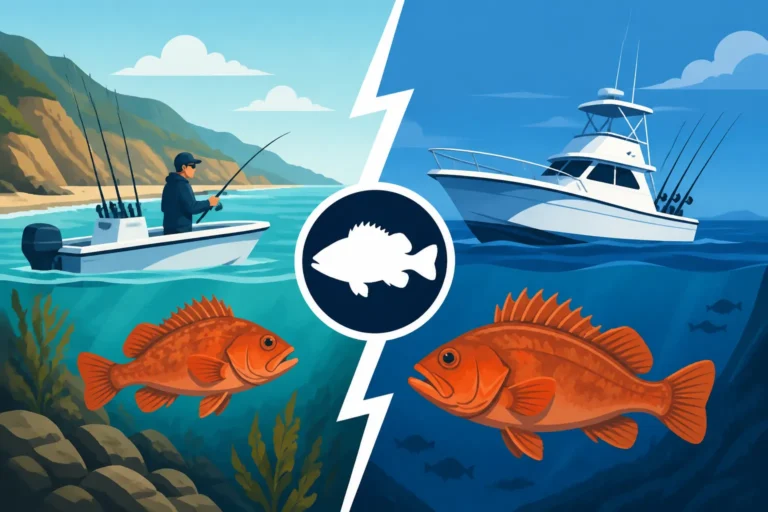
Rockfish are a cornerstone of California's coastal fisheries, with over 60 different species calling our waters home. Lingcod, a prized predatory fish, often share the same habitats and regulations. These rules are complex due to the sheer number of species and varying populations.
- General Rockfish Complex: The daily bag limit for most rockfish species is 10 fish in combination, meaning you can mix and match different types until you hit ten. However, within that 10-fish limit, there are often sub-limits for specific, more vulnerable species. For instance, you might be allowed only 1 or 2 Vermilion Rockfish, or specific rules for Cabezon or Greenlings.
- Minimum Size Limits: Many rockfish species have a minimum size limit, often 10 inches, but again, this varies. Lingcod typically have a much larger minimum size limit, often 22 inches, with a bag limit of 2 fish.
- Depth Restrictions and Seasons: This is where it gets really tricky! Rockfish and lingcod are subject to highly specific depth restrictions that change throughout the year and by management area (e.g., North, Central, and Southern California). During certain seasons, fishing may only be allowed in very shallow waters, or deeper waters might open up. These regulations are designed to protect spawning aggregations or prevent overfishing of certain species found only at specific depths. It's critical to check the current California Rockfish Depth Restrictions and seasonal closures for your specific fishing zone before heading out. These details are often updated annually by the CDFW, sometimes even mid-year if stock assessments warrant. Many reputable charter operations, like those out of Fisherman's Landing in San Diego, are diligent about keeping up with these ever-changing rules.
Pelagic and Nearshore Species
Beyond the reef dwellers, California's open ocean and nearshore waters are home to exciting pelagic species like tuna, yellowtail, and halibut. These fish are often migratory, and their regulations can be influenced by international agreements as well as state management.
- California Halibut: A highly prized flatfish found from bays to offshore reefs. The daily bag limit for California halibut is usually 2 fish, with a minimum size limit of 22 inches. It's crucial to measure these fish accurately from the tip of the jaw to the end of the tail. Understanding the California Halibut Size and Bag Limits is essential, especially when drift fishing in areas like San Francisco Bay.
- Yellowtail and Barracuda: These hard-fighting game fish are common in Southern California. Yellowtail typically have a daily bag limit of 5 fish, with a minimum size of 24 inches fork length. Barracuda generally have a daily bag limit of 10 fish and a minimum size of 28 inches total length. These fish are often caught on party boats or private vessels targeting kelp beds or offshore banks.
- Tuna (Bluefin, Yellowfin, Albacore): California's offshore waters are famous for tuna. The regulations for different tuna species can be complex, involving not just state rules but also federal and international management. Bluefin tuna often have very restrictive bag limits (e.g., 2 fish per person per trip, depending on current stock assessments) and no specific size limit due to their fast growth and migratory nature. Yellowfin and Albacore often have more generous limits, typically 10 fish in combination, with no size limits. However, federal permits and highly migratory species (HMS) endorsements might apply to vessels. Always consult the latest California Tuna Regulations and CDFW ocean sport fishing rules, as these can change quickly based on stock assessments and international quotas.
- White Seabass: A revered ghost of the kelp beds, white seabass are highly sought after. Their daily bag limit is typically 1 fish, with a minimum size limit of 28 inches. Due to their elusive nature and conservation status, penalties for violating white seabass regulations can be particularly stiff.
Shellfish and Other Invertebrates
It's not all finfish in California! Crabs, lobsters, and clams also have specific regulations that anglers need to follow, often requiring special report cards or measuring devices.
- Dungeness Crab: A delicious and popular target in Northern and Central California. Dungeness crab have strict seasons, a minimum size limit (typically 5 3/4 inches measured across the carapace), and a daily bag limit of 10 crabs. Either sex may be kept. Carrying a crab gauge is mandatory, and you can easily find affordable, accurate crab gauges on Amazon. For full details, consult the California Dungeness Crab Regulations.
- Spiny Lobster: Found predominantly in Southern California. Spiny lobster fishing also has a specific season, a minimum size limit (3 1/4 inches carapace length), and a daily bag limit of 7 lobsters. Like crabs, measuring devices are essential. The California Lobster Fishing Rules outline all the requirements, including specific gear types.
- Clams, Mussels, Oysters: While generally more accessible, these invertebrates have diverse rules. For instance, the daily limit for razor clams might be 20, while littleneck clams could be 50. Size limits often apply to specific clam species. Mussels have a seasonal quarantine due to paralytic shellfish poisoning (PSP) and domoic acid, making it unsafe to collect them at certain times of the year. Always check the CDFW health advisories before collecting shellfish.
California's Report Card System and Special Regulations
Beyond the standard fishing license, California employs a report card system for certain species. This system isn't just bureaucratic red tape; it's a vital tool for wildlife management, providing critical data to assess populations and inform future regulations.
The Role of Report Cards in Fisheries Management
Report cards serve as a real-time (or near real-time) survey of angler effort and catch. When you purchase a report card for a specific species, you're agreeing to log your catches, even if they are released. This data helps the CDFW understand fishing pressure, evaluate the success of conservation efforts, and make informed decisions about bag and size limits, seasons, and other management strategies.
- Steelhead Report Card: If you plan on fishing for steelhead, even if you intend to practice catch and release, a California Steelhead Report Card is mandatory. You must fill it out immediately upon catching a steelhead, regardless of whether you keep or release it. This data is crucial for monitoring these vulnerable populations.
- Sturgeon Report Card: Similarly, if you're targeting sturgeon, a California Sturgeon Report Card is required. Sturgeon have a specific slot limit (e.g., 40-60 inches fork length), and only one sturgeon can be kept per year. Reporting all sturgeon caught, retained, or released is vital for managing this long-lived species. For more details, check the California Sturgeon Regulations and the specific rules for the California Sturgeon Report Card.
- Abalone and Spiny Lobster Report Cards: While abalone fishing has been closed for several years in California due to population decline, historically, a report card was a crucial part of its management. Spiny lobster also requires a report card, which helps track harvest numbers during their specific season. The requirement for these cards emphasizes the importance of accurate data for high-value or vulnerable species.
Understanding Special Regulation Waters and Seasons
California is incredibly diverse, and a one-size-fits-all approach to fishing rules just doesn't work. That's why we have "Special Regulation Waters" and species-specific seasons. Ignoring these can lead to unintended violations.
- Specific Lake and River Rules: Many popular fishing destinations, especially for trout, have regulations that differ from the statewide default. For example, a river might be open only to artificial lures with barbless hooks during certain times, or a lake might have a slot limit to protect trophy fish. The Eastern Sierra's trout waters are particularly known for their varied regulations, with some creeks being catch-and-release only with flies. Always consult the detailed "Special Regulations for Specific Waters" section in the annual California Freshwater Fishing Regulations booklet.
- Ocean Fishing Seasons and Closures: Saltwater fishing is heavily influenced by seasons and closures, particularly for species like salmon, rockfish, and lingcod. The California Salmon Season Dates change annually based on stock assessments and ocean conditions. Rockfish seasons can be closed entirely in certain zones or restricted to specific depths for months at a time. These closures are not meant to frustrate anglers but are scientifically determined measures to allow fish populations to recover or to protect them during critical spawning periods. The CDFW publishes these seasonal updates, and reputable charter boat operators will always adhere to them strictly.
- Marine Protected Areas (MPAs): California has an extensive network of Marine Protected Areas. These are like underwater parks with varying levels of protection, from "no-take" zones where all fishing is prohibited, to areas where only certain types of fishing are allowed. Knowing if you are in an MPA and understanding its specific rules is paramount. For example, fishing in a State Marine Reserve (SMR) is generally prohibited, while a State Marine Conservation Area (SMCA) might allow some recreational take. Always carry a map of California Marine Protected Areas Explained or use a marine navigation app that displays MPA boundaries.
How to Measure Your Catch Correctly and Avoid Mistakes
Getting the measurement right is crucial for compliance. It's not just about knowing the limit; it's about executing the measurement precisely every time. A small error could be a costly one.
Essential Measuring Techniques for Anglers
Let's walk through the proper way to measure your fish, reducing ambiguity and helping you stay within the law.
- Preparation is Key: Before you even start fishing, make sure you have a reliable measuring device. A flexible tape measure, a rigid measuring board, or a specialized fish ruler are all good options. For consistency, I like to have a few different options, including a simple foldable ruler from a brand like Berkley or a stick-on measuring tape for my cooler lid, which I picked up on Amazon. Ensure it’s visible and easy to access.
- Handle the Fish Gently: If you intend to release the fish, minimize its time out of water. For fish you plan to keep, handle it carefully to avoid injury and stress. Use wet hands to avoid removing the protective slime layer.
- Positioning the Fish: Lay the fish flat on your measuring device. For total length measurements, the fish's mouth should be closed, and its snout should be at the zero-mark of your ruler or tape. Ensure the fish is straight, not curved.
- Reading the Measurement:
- Total Length (most common): Measure from the tip of the longest jaw (mouth closed) to the very end of the longest lobe of the tail fin.
- Fork Length: This is measured from the tip of the longest jaw (mouth closed) to the center of the fork in the tail. This is less common but used for certain species with deeply forked tails, like some tuna.
- Pinch-Tail Measurement: For some trout species, you'll need to gently pinch the tail lobes together to get the maximum length, still measuring from the tip of the jaw.
- Always Measure Twice: Especially when you're close to a minimum size limit, it's a good idea to measure twice. Sometimes a fish might be barely legal, and re-measuring confirms you’re in the clear. If there's any doubt, err on the side of caution and release it. A quick release is always better than a potential fine.
Common Measuring Mistakes to Avoid
Even experienced anglers can make simple mistakes under pressure or out of habit. Be mindful of these common pitfalls:
- Curved Fish: A fish that isn't laid out straight will always measure shorter than its actual length. Ensure it's fully extended and flat against your measuring device.
- Open Mouth: If the fish's mouth is open, you'll get an inaccurate, longer reading. Gently close the mouth before measuring.
- Not Pinching Tail (when required): For species where "pinch-tail" is specified, failing to do so will result in an inaccurate, shorter measurement, potentially causing you to illegally keep an undersized fish.
- Measuring to the Wrong Point: Some anglers mistakenly measure to the fork of the tail when "total length" is required, or vice versa. Always double-check the specific regulation for the exact measurement method.
- Damaged Tail: If a fish has a damaged tail (e.g., from a fight or previous injury), it can be hard to get an accurate total length. In such cases, if you're close to the limit, it's often best to release the fish. Enforcement officers will generally measure to where the tail would be if it were intact, and it’s a subjective call you might lose.
- Measuring in a Moving Boat: While sometimes unavoidable, trying to get a precise measurement on a rocking boat can be tough. Do your best to stabilize the fish and the measuring device. If possible, measure on a stable surface.
Staying Compliant: Resources and Best Practices
The sheer volume and complexity of California's fishing regulations can be daunting. But it's your responsibility as an angler to know and follow the rules. Thankfully, there are excellent resources available to help you stay compliant.
Essential Resources for Current Regulations
Don't rely on hearsay or outdated information. Regulations change, sometimes annually, sometimes even mid-season. Always consult official sources.
- CDFW Sport Fishing Regulations Booklets: This is your bible! The California Department of Fish and Wildlife (CDFW) publishes annual freshwater and ocean sport fishing regulation booklets. These comprehensive guides contain all the bag and size limits, seasons, and special regulations. You can pick up a physical copy wherever you buy your California Fishing License Guide, or download the latest digital versions directly from the CDFW website. I always recommend having a digital copy on your phone and a physical copy in your tackle box or boat. Learning How to Read the California Fishing Regulations Booklet is a skill every angler should master.
- CDFW Website and Mobile App: The CDFW website is an invaluable, up-to-date resource. They often post emergency closures or in-season changes online before they make it into print. They also have a mobile app (like the "Fish and Game California" app) that provides quick access to regulations, fish identification, and even allows you to report your catch for report cards. It’s super handy to have on your phone for those moments of doubt.
- Local Bait Shops and Charter Boat Captains: Don't underestimate the knowledge of local experts! Bait shop owners and experienced charter boat captains are often the first to know about localized rules, recent changes, or specific quirks of their fishing grounds. They deal with these regulations daily and are generally happy to share their knowledge. Just remember to verify anything critical with the official CDFW resources.
Consequences of Violating Fishing Limits
Breaking fishing laws in California isn't just a slap on the wrist. The penalties can range from hefty fines to loss of fishing privileges, and even jail time in severe cases. This is why understanding California Fishing License Fines and Penalties is so important.
- Fines: The most common penalty is a financial fine. These can range from a few hundred dollars for minor infractions (like one undersized fish) to thousands of dollars for multiple violations or targeting protected species. Each individual fish or violation can incur a separate fine, so a seemingly small mistake can quickly compound.
- Loss of Fishing Privileges: Game wardens have the authority to suspend your fishing license, sometimes for multiple years. This means you won't be able to legally fish in California until the suspension is lifted. For avid anglers, this can be a devastating consequence.
- Confiscation of Gear: Your fishing gear, boat, or even your vehicle can be confiscated if used in the commission of a serious poaching offense.
- Jail Time: For egregious violations, such as commercial poaching, repeated offenses, or taking highly protected species, jail time is a very real possibility.
Game wardens are out there working hard to protect our fisheries. They are trained professionals who know the rules inside and out, and they are not hesitant to enforce them. Always be polite, cooperative, and honest if you are ever contacted by a warden. Your attitude can make a difference, but ignorance of the law is never an excuse.
Species-Specific Bag and Size Limit Tables
To give you a clearer snapshot of some of the most common species and their general limits, I’ve put together a handy table. Please remember: This table provides general guidelines. Always consult the official CDFW regulations for the most current and specific rules, especially for individual water bodies or ocean management areas. Regulations can and do change!
| Species Category | Example Species | General Daily Bag Limit | General Minimum Size Limit | Notes & Common Variations (Consult CDFW) |
|---|---|---|---|---|
| Freshwater Trout | Rainbow, Brown, Brook | 5 fish (combined) | Varies (e.g., 0-12 inches) | Highly Variable: Many specific waters have catch-and-release, higher minimums, or artificial lure only rules. Pinch-tail measurement often applies. |
| Lake Trout (Mackinaw) | Lake Trout | 2 fish | 16 inches | Lake Tahoe has specific slot limits (e.g., one over 22 inches). |
| Bass (Freshwater) | Largemouth, Smallmouth, Spotted | 5 fish (combined) | 12 inches | Many trophy lakes have slot limits (e.g., no fish between 12-16 inches, only one over 16). |
| Striped Bass | Striped Bass | 2 fish | 18 inches | Found mainly in the Delta and coastal areas. Head/tail must remain intact until final destination. |
| Catfish | Channel, Blue, Flathead | 25 fish (combined) | No size limit | Generally consistent, but check local pond rules. |
| Panfish | Crappie, Bluegill | 25 fish (each species) | No size limit | Great for beginners and kids. |
| Rockfish Complex | Vermilion, Black, Copper, etc. | 10 fish (combined) | Varies (e.g., 10 inches) | Very Complex: Sub-limits for specific species (e.g., 1-2 Vermilion). Subject to depth restrictions, seasonal closures, and regional variations (North, Central, South Coast). |
| Lingcod | Lingcod | 2 fish | 22 inches | Often caught with rockfish. Subject to same depth restrictions and seasons as rockfish. |
| California Halibut | California Halibut | 2 fish | 22 inches | Total length measurement. |
| Yellowtail | Yellowtail | 5 fish | 24 inches (fork length) | Primarily Southern California. |
| Barracuda | Barracuda | 10 fish | 28 inches (total length) | Primarily Southern California. |
| Bluefin Tuna | Bluefin Tuna | Varies (e.g., 2 fish) | No size limit | Highly migratory, limits can change quickly based on stock status. Often per trip, not per day. |
| Dungeness Crab | Dungeness Crab | 10 crabs | 5 3/4 inches (carapace) | Either sex. Specific season. Requires a crab gauge. |
| Spiny Lobster | Spiny Lobster | 7 lobsters | 3 1/4 inches (carapace) | Specific season. Requires a lobster gauge and report card. |
| Steelhead (Hatchery) | Steelhead | 1 fish | 20 inches | Extremely Restricted: Most waters are catch-and-release. Requires Steelhead Report Card. |
| White Sturgeon | White Sturgeon | 1 fish per year | 40-60 inches (fork length) | Slot limit only. Requires Sturgeon Report Card. Catch-and-release for undersized/oversized fish. |
Final Thoughts on Sustainable Angling
Look, at the end of the day, fishing is about connecting with nature, enjoying the peace and thrill of the catch, and creating memories. It's not about how many fish you can stuff into your cooler or how big your bragging rights are. Responsible angling means understanding and respecting the rules that are in place to protect these incredible resources for everyone, now and in the future.
Whether you're targeting trout in a pristine Sierra stream, chasing halibut in San Francisco Bay, or heading offshore for tuna, taking the time to understand the California Fishing Bag and Size Limits is an investment in your fishing future. It ensures you have more opportunities to enjoy this fantastic pastime without worrying about penalties. Carry your regulations booklet, keep a measuring device handy, and when in doubt, just practice catch and release. There's nothing more satisfying than watching a healthy fish swim away to fight another day.
Disclaimer
Please note that fishing regulations, including bag and size limits, are subject to change at any time by the California Department of Fish and Wildlife (CDFW). While every effort has been made to provide accurate information in this guide, it should not be considered the official source of regulations. Always consult the current CDFW Sport Fishing Regulations booklets, their official website, or the relevant mobile application before you go fishing to ensure compliance with the latest rules and emergency closures. Your adherence to these regulations is your responsibility as an angler.