California Fishing License by Age Explained
There’s nothing quite like the feeling of reeling in a fish in the Golden State, but before you cast your line, you need to make sure you've got the right paperwork. Navigating California's fishing license requirements can feel a bit like wading through murky water, especially when you factor in age. It's a common point of confusion for families, seniors, and even seasoned anglers trying to understand who needs what. This comprehensive guide is here to clear up all the age-related mysteries surrounding your California fishing license, so you can focus on the tug at the end of your line, not the worry in your mind.
Understanding California Fishing License Requirements by Age
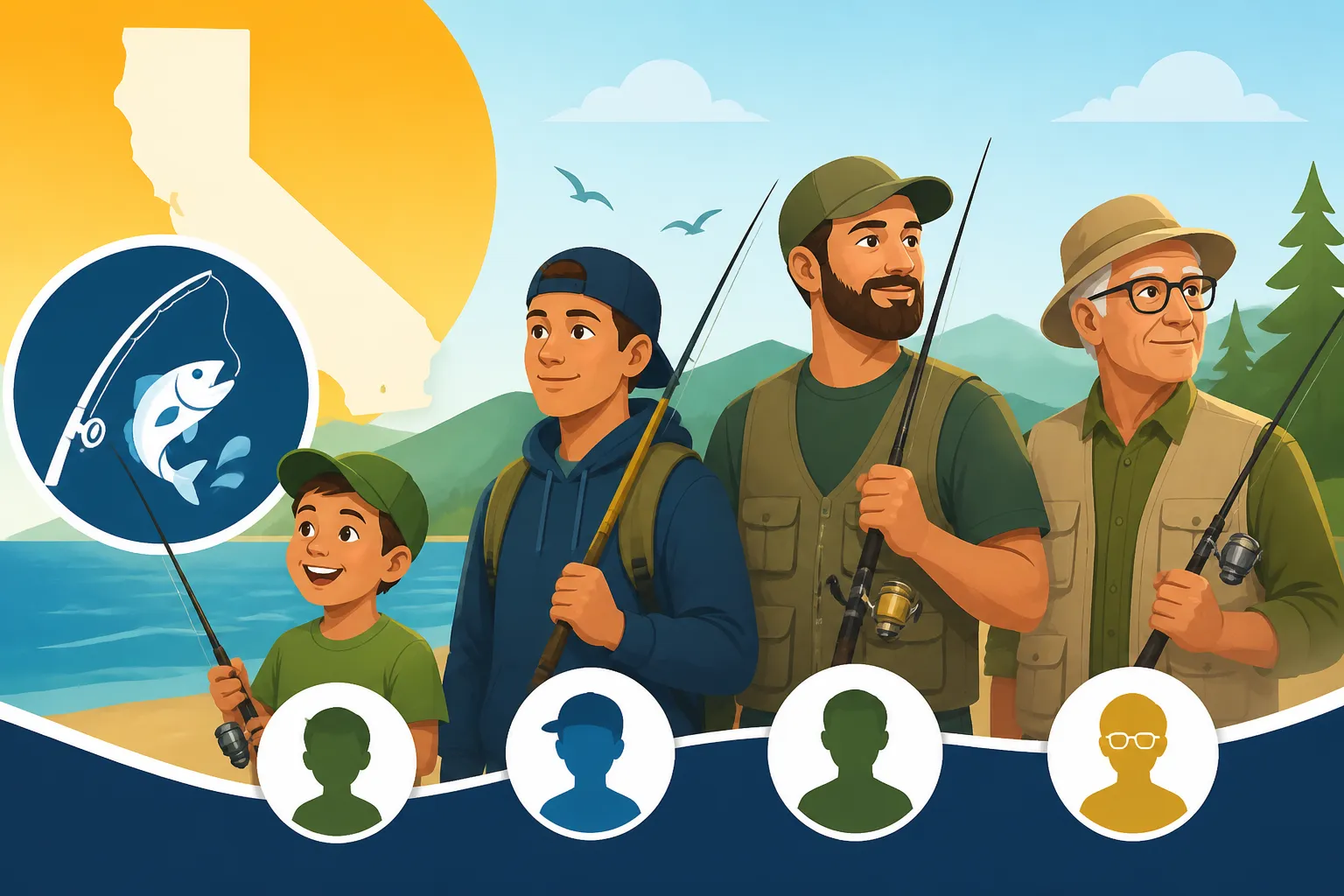
California's fishing license system isn't a one-size-fits-all deal; it changes depending on how many birthdays you've celebrated. This can be a real head-scratcher for parents wondering if their little ones need a license, or for seniors recalling a time when fishing was completely free for them. Let's break down the rules for each age group, because getting it wrong can lead to some hefty fines and put a damper on your peaceful day by the water.
Children and Youth Anglers Under 16
Good news for the younger generation of anglers! In California, anyone under the age of 16 does not need a sport fishing license to fish in either fresh or saltwater. This is a fantastic initiative by the state to encourage kids to get outdoors and experience the joy of fishing without any bureaucratic hurdles. Imagine taking your grandchild out to Lake Tahoe or the local pier without having to worry about an extra license fee – it really makes a difference for families on a budget. This exemption applies year-round, making it easy for kids to fish whenever the opportunity arises.
However, and this is a big "however," while they might not need a general fishing license, there are still a few important things to keep in mind for certain species. Specifically, youth anglers who are going after specific anadromous fish like steelhead or sturgeon do need to possess the appropriate report cards. For example, if your 10-year-old hooks into a steelhead in the Klamath River, they would still need a California Steelhead Report Card, which is issued free of charge to those under 16. The same goes for the California Sturgeon Report Card if they're lucky enough to land one of those prehistoric beauties. These report cards are critical for data collection, helping the California Department of Fish and Wildlife (CDFW) monitor populations and manage these sensitive fisheries. It’s definitely worth brushing up on California Fishing Report Cards Explained before you head out, just to be sure. You can usually pick these up at bait and tackle shops or through the CDFW's online licensing system, just like an adult would for their main license.
Adult Anglers Aged 16 to 64
Once you hit that milestone birthday of 16 years old, the rules shift, and you are officially considered an adult angler in the eyes of California's fishing regulations. This means that if you're between 16 and 64, you absolutely need a valid California sport fishing license to fish in any public waters of the state. There's no getting around this one, whether you're casting from a boat, shore, or even wading in a stream. This is the standard license that most people think of when they talk about fishing permits.
The cost of this license can vary slightly year to year, but it generally covers you for an entire calendar year, from January 1st to December 31st, regardless of when you purchase it. So, if you buy it in July, it still expires on December 31st of that same year. For many, purchasing the annual license is the most cost-effective option if you plan to fish more than a couple of times. If you're just visiting for a quick trip, you might consider a California One-Day Fishing License or a California Two-Day Fishing License, which are also available. These short-term options are perfect for tourists or those who only get out on the water occasionally. You can easily purchase these licenses online through the CDFW website, at authorized license agents like most sporting goods stores, or even at some bigger retailers that carry outdoor gear. When you're browsing for a new tackle box or a fresh spool of line on Amazon, remember that your physical license or a printout of your electronic license should always be with you when you're fishing.
Senior Anglers and Reduced-Fee Options
Ah, the golden years! For many senior anglers, the memories of freely casting a line after hitting 65 are still fresh. However, California's fishing license structure for seniors has changed quite a bit over the years, and it's a point of frequent confusion and sometimes, disappointment. Let's clarify the current situation so you're not caught off guard.
The Golden Age of Fishing 65 and Over
Unlike in years past, merely reaching the age of 65 no longer automatically grants you a free California fishing license. This is a significant change from decades ago, and it's something that often surprises older anglers returning to the sport or those who remember the old rules. Today, if you are 65 years or older, you are generally required to purchase a standard annual sport fishing license, just like an adult between 16 and 64. The full California Fishing License Cost applies to seniors unless they meet specific low-income criteria.
I remember my own grandpa being a bit miffed when he found this out. He’d always fished for free after 65, and suddenly he needed to buy a full-price license. It’s definitely a shift, but it’s part of how the state funds its vital conservation programs. So, while the "free pass" for all seniors is largely a thing of the past, the good news is that there are still some incredibly valuable reduced-fee options available if you meet certain income thresholds. It's not about your age alone anymore, but rather a combination of age and financial need.
Reduced-Fee Licenses for Low-Income Seniors
California does offer a helping hand to seniors who are 65 years of age or older and meet specific low-income requirements. These are known as Reduced-Fee Fishing Licenses. It's not free, but it's significantly more affordable, making fishing accessible for those on a fixed income. To qualify, you usually need to provide proof of age (like a driver's license or state ID) and proof of your income level, demonstrating that you meet the state's low-income guidelines. These guidelines are set by the CDFW and are often tied to federal poverty levels or specific state assistance programs.
The application process typically involves filling out a form, sometimes requiring a visit to a CDFW office or mailing in your documentation. It’s not quite as simple as buying a regular license online, but the savings can be substantial if you qualify. It’s always best to check the most current information directly on the CDFW website or visit a local license agent to understand the precise requirements and necessary documentation. They’ll be able to guide you through the process for a California Reduced-Fee Fishing License and ensure you have everything you need. Don't let the paperwork deter you – the opportunity to continue enjoying the peaceful pursuit of fishing is well worth the effort.
Special Circumstances and Exemptions Beyond Age
While age is a primary factor in determining license requirements, California fishing regulations also account for other special circumstances and offer certain exemptions that aren't tied to your birth year. It's worth being aware of these, as they can sometimes mean the difference between needing a license and being able to fish freely.
Fishing from a Public Pier
This is perhaps one of the most beloved and widely used exemptions in California, particularly for families and casual anglers. Generally, you do not need a sport fishing license to fish from a public pier in ocean waters. This means you can head to iconic spots like Santa Monica Pier, Oceanside Pier, or even the Berkeley Pier and cast a line without any license. This is a fantastic way to introduce new anglers to the sport or just enjoy a relaxing day by the sea without the added cost of a license. My family and I love hitting the Huntington Beach Pier with some inexpensive bait from a nearby shop. It's a fun, low-pressure way to fish.
However, there are crucial caveats to this exemption. Firstly, it only applies to public piers in ocean waters. If you're fishing from a private dock, a jetty, or any structure that isn't officially designated as a public pier (like many breakwaters or rock walls), you likely do need a license. Secondly, while the general license isn't required, all other fishing regulations still apply, including bag and size limits for specific species, as well as seasonal closures. For example, if you catch a Dungeness crab from a public pier, you still need to adhere to the California Dungeness Crab Regulations. Also, if you’re fishing from a public pier in freshwater (say, a pier on a lake or river), you do need a license. It’s a very specific exemption for saltwater piers only. Always double-check the local rules for the pier you plan to visit, and read up on California Pier Fishing License Rules before you go.
Disabled and Military Anglers
California recognizes the contributions and challenges faced by disabled individuals and active-duty military personnel, offering special license provisions. For disabled anglers, particularly those who are permanently and severely disabled, the state provides a Reduced-Fee Sport Fishing License. To qualify, applicants must typically provide documentation from a licensed physician certifying their disability. This isn't just a minor inconvenience; it's a legitimate pathway to continue enjoying a beloved pastime that can be incredibly therapeutic. The criteria are specific, and you'll need to submit an application with supporting medical documents to the CDFW.
Similarly, active-duty military personnel are often eligible for specific benefits, though these can vary. For example, non-resident military members stationed in California may be able to purchase a resident fishing license. It's always a good idea for military personnel to check the most current regulations and application procedures on the CDFW website, or speak directly with a license agent. These special provisions are a small way the state attempts to make fishing more accessible for those who have served or face significant physical challenges. You can find more details on options like the California Fishing License for Disabled Anglers or the California Fishing License for Military through official CDFW channels.
Free Fishing Days and Other Exemptions
California offers specific Free Fishing Days throughout the year, usually two days annually. On these designated days, typically one in the summer and one in the fall, anyone can fish in the state's public waters without needing a sport fishing license. This is a fantastic opportunity for those who are curious about fishing but aren't ready to commit to purchasing a license, or for families looking for a free outing. It's an excellent chance to learn how to fish for Largemouth Bass in California or try your hand at coastal angling without the upfront cost.
However, just like with pier fishing, while the license requirement is waived on these days, all other fishing regulations still apply. This means you must still adhere to bag and size limits, gear restrictions, and species-specific rules. For example, if it's a Free Fishing Day and you're fishing for salmon, you still need to respect the California Salmon Regulations and Limits. It's essentially a "no license required" day, not a "no rules apply" day. Keep an eye on the CDFW website for the exact dates of the next California Free Fishing Days, and make sure you're still aware of the general California Fishing Regulations Explained for the waters you plan to visit.
Why Age-Based Rules Matter: Conservation and Compliance
It might seem like a lot of hassle to figure out all these age-specific rules and exemptions, but there's a really good reason behind them. These regulations, including who needs a license and who doesn't based on age, are crucial for the long-term health of California's diverse fisheries. They're not just arbitrary hoops to jump through; they're the backbone of sustainable fishing practices and the preservation of our natural resources.
Funding Conservation Efforts
The most direct and impactful reason for fishing license requirements, regardless of age, is funding. The revenue generated from the sale of California sport fishing licenses is directly funneled back into the state's fish and wildlife conservation programs. This isn't just a small amount of money; it's a significant portion of the budget that goes towards everything from fish stocking programs in lakes and rivers to habitat restoration projects.
Think about it: those vibrant trout you catch in the Eastern Sierra, or the healthy populations of bass in the Sacramento-San Joaquin Delta? A good chunk of that is supported by license fees. These funds pay for scientific research, law enforcement (the wardens who keep an eye on things), public access improvements, and educational initiatives. When you buy a license, you're not just paying for the right to fish; you're actively investing in the future of fishing in California. Even reduced-fee licenses contribute, albeit less, ensuring that everyone who participates helps support the ecosystem. So, when you pick up your license, whether it's an annual pass or a temporary one, know that you're contributing to something bigger – the incredible natural heritage of California's aquatic environments.
Avoiding Fines and Penalties
Let's be real: no one wants their peaceful fishing trip to end with a hefty fine or a court date. Unfortunately, ignorance of the law is no excuse, and fishing without the proper license or report card (if required) can lead to significant penalties. A California Department of Fish and Wildlife warden might stop you to check your license, and if you don't have one when required, you could be cited. The fines for fishing without a license can be substantial, often hundreds of dollars, and may even involve the forfeiture of your fishing gear or your catch.
Beyond the immediate financial hit, repeated violations can lead to more severe consequences, like the suspension of your fishing privileges. It's a serious matter, and the wardens are out there doing their job to protect the resource. Imagine planning a dream trip to fish for Steelhead on North Coast Rivers, only to have it ruined by a citation because you didn't realize you needed a specific report card even if you're under 16, or you're a senior who forgot the rules changed. It's a frustrating situation that is entirely avoidable by simply understanding the California Fishing License Fines and Penalties and ensuring you're compliant. It’s far better to spend a few extra minutes understanding the rules, or even purchasing an additional report card, than to face the headache and expense of a violation.
Here’s a quick overview of the California Fishing License requirements by age:
| Age Group | California Fishing License Required? | Notes |
|---|---|---|
| Under 16 | No | Still requires species-specific report cards (e.g., Sturgeon, Steelhead) for certain fish, which are issued free of charge. |
| 16 to 64 | Yes | Standard annual sport fishing license required. Short-term licenses (1-day, 2-day) are also available. |
| 65 and Over | Yes | Standard annual sport fishing license required, unless qualified for a Reduced-Fee Sport Fishing License based on low-income status. |
| All Ages (Exemptions) | No | Fishing from a public pier in ocean waters is generally license-free (other regulations still apply). Specific "Free Fishing Days" allow license-free fishing (other regulations still apply). |
| Disabled Anglers | No (Reduced-Fee Available) | Eligible for a Reduced-Fee Sport Fishing License with proper documentation of permanent and severe disability. |
| Military Personnel | Varies | Active-duty military may be eligible for resident rates or other specific benefits; check current CDFW regulations. |
Remember, these are the general rules. Always consult the most current California Freshwater Fishing Regulations and California Saltwater Fishing Regulations booklets, which you can often find at local tackle shops or download from the CDFW website. A quick search on Amazon might even yield a physical copy of the regulation booklet or a good guide to California Fishing Regulations Explained. Staying informed is your best defense against unintended violations and ensures your time on the water is as enjoyable and stress-free as possible.
Disclaimer
The information provided in this guide is for general informational purposes only and does not constitute legal advice. Fishing regulations in California are subject to change by the California Department of Fish and Wildlife (CDFW). While we strive to provide accurate and up-to-date information, it is the sole responsibility of the angler to consult the official CDFW regulations booklet or website before engaging in any fishing activity. Failure to comply with current regulations may result in fines or penalties.