California Salmon Regulations and Limits
It's incredibly frustrating, isn't it? You get excited about a salmon fishing trip in California, dreaming of that powerful run and a fresh catch, only to be met with a wall of confusing rules, closures, and ever-changing season dates. It feels like every year there's a new twist, and simply trying to understand what's legal can be a headache. This guide is here to untangle the complexities of California's salmon regulations and limits, helping you navigate the rules so you can hit the water with confidence.
Why Salmon Regulations Are So Complex
If you've ever tried to keep up with California's salmon regulations, you know it's not as simple as checking a single date or a universal size limit. The rules are intricate, often changing from year to year, and vary wildly depending on whether you're fishing in the ocean or a specific river, and even which particular salmon run is being targeted. This isn't just bureaucracy for bureaucracy's sake; it's a critical effort to protect and rebuild declining salmon populations, particularly the iconic Chinook (King) salmon and, where present, Coho (Silver) salmon.
Salmon face a multitude of challenges in California. Droughts reduce freshwater flows, making spawning and juvenile rearing difficult. Habitat loss, water diversions, and rising ocean temperatures also play significant roles. Because salmon migrate from freshwater rivers to the vast ocean and back again, their management requires coordination between state (California Department of Fish and Wildlife, CDFW) and federal agencies (like the Pacific Fishery Management Council, PFMC, and National Marine Fisheries Service, NMFS). This multi-agency approach, while necessary, can make the regulations feel like a moving target for the everyday angler. It’s a reality we all grapple with, and staying informed is our best defense against inadvertently breaking a rule.
Understanding Your California Salmon Report Card
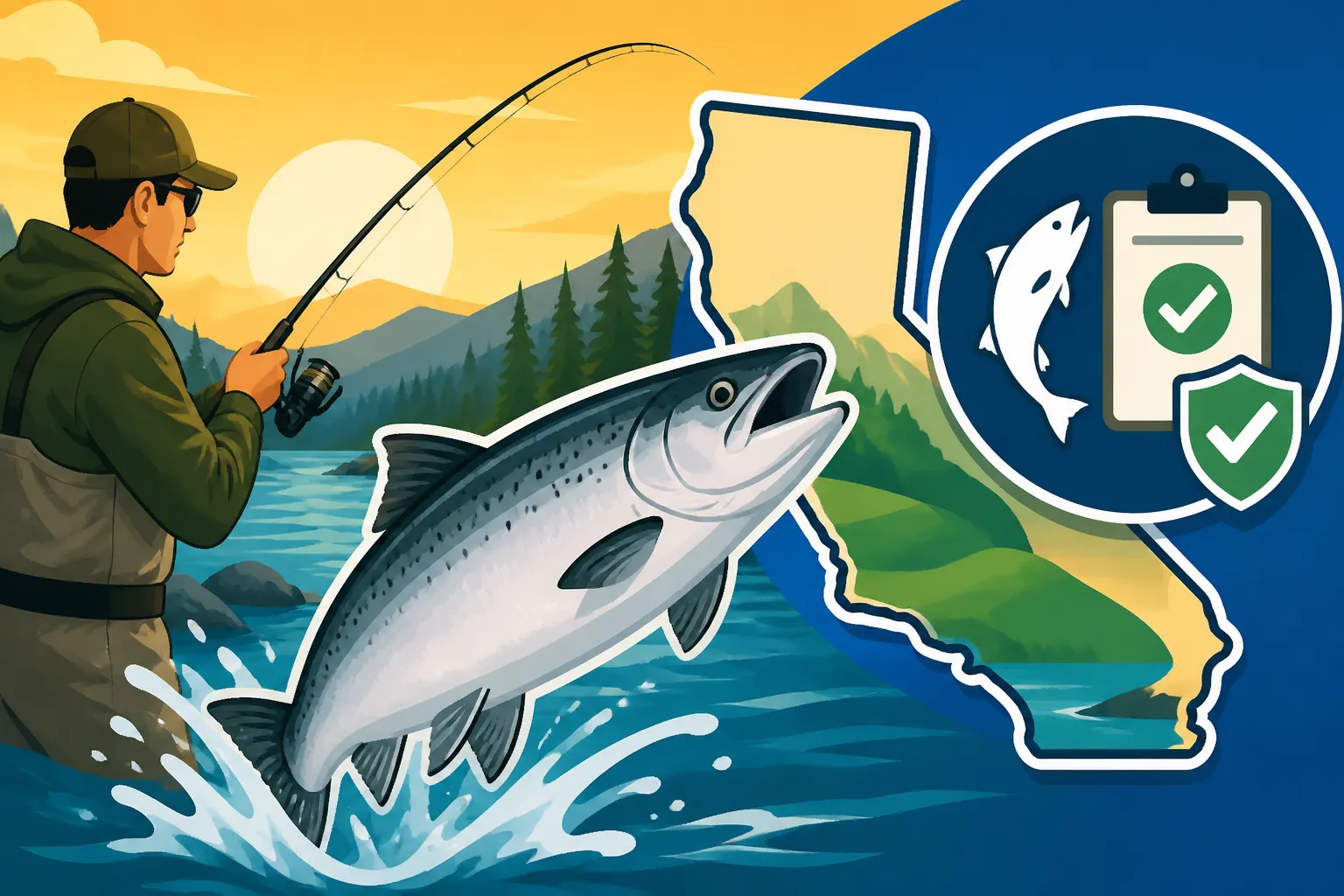
Before we even get into bag limits or seasons, let's talk about something absolutely non-negotiable for anyone fishing for salmon in California: the California Salmon Report Card. This isn't just a suggestion; it's a legal requirement, and honestly, it’s one of the most important pieces of paper (or digital record) you'll carry besides your general fishing license. Ignoring it can lead to hefty fines, and nobody wants that kind of day on the water.
Why the Salmon Report Card is Mandatory
Think of the salmon report card as a vital data collection tool. Every time you head out specifically targeting salmon, or if you happen to catch one, you're required to record your effort and harvest on this card. This data, collected from thousands of anglers across the state, provides the CDFW with crucial information on salmon catch rates, fishing effort, and the health of various salmon populations. Without this angler-submitted data, fishery managers would have a much harder time making informed decisions about season lengths, bag limits, and overall management strategies. It directly impacts whether we get to fish for salmon in future years, so it's really about contributing to the bigger conservation picture. It might feel like a chore sometimes, especially when the fish aren't biting, but it's a responsibility every salmon angler shares. You can usually pick these up at your local tackle shop or purchase them online through the CDFW licensing system, just like your regular license. For a deeper dive into the specifics, check out our guide on California Salmon Report Cards Explained.
How to Properly Fill Out and Return Your Report Card
The report card isn't something you fill out at the end of the year. It needs to be marked immediately upon catching a salmon, or if you release one. Most cards require you to punch out or mark the date of your fishing trip, the specific area, and whether you kept or released a fish. For any salmon you keep, you'll need to record the species, length, and potentially fin clips if the fish is marked. Always use an indelible pen – nothing worse than your hard-earned data washing away in the spray!
Even if you don't catch a single salmon all season, you are still legally required to return your report card by the specified deadline (typically January 31st of the following year). You can usually return it by mail or online through the CDFW website. Failing to return it, even with zero catch, can result in penalties or prevent you from purchasing future report cards. It’s all part of the system designed to ensure accurate data, which ultimately benefits the fishery and future generations of anglers. Keeping a small, waterproof pen and a plastic sleeve for your license and report card, perhaps something you found on Amazon, is a smart move.
Salmon Fishing Seasons and Area-Specific Rules
This is where things get really detailed, and it's also where the frustration often boils over. California's salmon seasons are highly dynamic, largely dependent on annual stock assessments and forecasts. What was open last year might be closed this year, and rules can change at a moment's notice, especially in ocean waters. Always, and I mean always, check the very latest regulations before you head out. Don't rely on last year's memory or what your buddy heard.
Ocean Salmon Season Challenges and Closures
In recent years, ocean salmon fishing in California has faced significant challenges, leading to widespread closures. For instance, the 2023 recreational ocean salmon season was largely closed across the entire state due to critically low forecasts for fall-run Chinook salmon from the Sacramento River and Klamath River basins, which are the primary stocks supporting California's ocean fishery. These closures impact coastal communities and anglers from Crescent City down to San Diego. The decisions are made by federal and state agencies, prioritizing the long-term health of the salmon runs.
When an ocean season is open, regulations typically define open areas (often by management zones like south of Horse Mountain or north of Point Arena), specific dates, minimum size limits, and daily bag limits. For example, during rare open periods, you might see a general bag limit of two Chinook salmon per day in certain zones, with a minimum size of 20 inches. Always be vigilant for emergency closures or in-season changes, which CDFW announces on their website and through news releases. For the most current information, it's essential to consult the official California Ocean Salmon Regulations directly from the CDFW.
Freshwater Salmon Seasons by River System
Freshwater salmon fishing in California is even more localized, with rules varying dramatically from one river system to another. These regulations are designed to protect specific runs (fall-run, spring-run, late-fall-run Chinook) as they return to their natal rivers to spawn.
Sacramento River Basin (and tributaries like the Feather and American Rivers):
Historically, the Sacramento River system offers opportunities for fall-run Chinook. Seasons typically run from late summer through fall, with specific sections of the river opening and closing at different times. For example, a section might open from August 1st to December 31st, but specific reaches may have different rules. The daily bag limit is often one or two Chinook salmon, and many sections require barbless hooks and may have specific hours of fishing. Always check the river-specific sections in the CDFW regulations booklet or online.
Klamath-Trinity River System:
This system, particularly critical for both Chinook and Coho salmon, often has the most complex regulations. Fishing is typically managed under a quota system, meaning once a certain number of fish have been caught by either tribal or recreational anglers, the season can close prematurely. This requires anglers to check the latest catch quotas frequently. Coho salmon are often federally protected and cannot be intentionally targeted or retained. Anglers fishing here must be exceptionally diligent, using a California Steelhead Report Card in addition to their salmon report card, as steelhead are often present in the same waters. The bag limit for Chinook might be one per day, with special regulations concerning methods, tackle, and specific closures to protect returning spawners.
Other Coastal Rivers:
While less common for directed salmon fisheries, some smaller coastal rivers might have limited, highly regulated seasons for Chinook or Coho, often with strict catch-and-release rules or complete closures. These are typically monitored very closely, and any open seasons are usually brief and come with significant restrictions to protect sensitive populations. Always confirm the local rules for any smaller river you plan to fish. You can often find general details in the California Freshwater Fishing Regulations guide, but always cross-reference with specific river sections.
Bag and Size Limits for Salmon
Once you've navigated the tricky waters of seasons and locations, you need to be crystal clear on the bag and size limits. These are your absolute maximums, and exceeding them is a surefire way to get a ticket. The overarching goal of these limits is to ensure enough fish survive to reproduce, bolstering future generations.
Standard Bag Limits When Seasons Are Open
When a salmon season is open, whether in the ocean or a river, the daily bag limit almost always refers to Chinook (King) salmon. Coho (Silver) salmon are generally protected in California's freshwater systems and often in ocean waters as well, meaning they cannot be retained.
- Ocean Waters: During open seasons, the recreational bag limit for Chinook salmon is typically two fish per day. This is usually consistent across all open management zones, but always verify. There are sometimes possession limits as well (e.g., no more than twice the daily bag limit onboard your vessel or in your possession on land), which prevents anglers from accumulating too many fish over multiple days without proper storage.
- Freshwater Rivers: Freshwater bag limits can be more variable but are generally one or two Chinook salmon per day, depending on the specific river and section. For instance, the main stem of the Sacramento River might have a one-fish limit, while a tributary like the Feather River could have a two-fish limit during its designated season. These specific limits are detailed in the California Fishing Bag and Size Limits for freshwater game fish.
It's crucial to understand that "per day" means from midnight to midnight. You can't catch your limit in the morning, go home, and then go back out in the afternoon to catch another limit, even if you clean the first batch. The limit applies to your total catch and possession for that 24-hour period.
Minimum Size Requirements
Size limits are in place to allow salmon to grow and, crucially, to give them a chance to spawn at least once. Catching a small salmon can be exciting, but keeping it if it's undersized is a violation.
- Ocean Waters: For Chinook salmon caught in ocean waters, the typical minimum size limit is 20 inches total length. This measurement is taken from the tip of the snout to the tip of the longest lobe of the caudal (tail) fin, with the fish laid flat.
- Freshwater Rivers: Minimum size limits in freshwater can sometimes be slightly different but often mirror the ocean regulations at 20 inches total length for Chinook. However, certain river systems or specific runs might have unique size requirements. For example, sometimes jacks (small, early-maturing male salmon) under a certain size might be allowed or specifically excluded from the bag limit. Always check the specific regulations for the river you are fishing.
When you catch a fish close to the minimum size, it's always best to measure it carefully. Many anglers keep a measuring device, often a stick-on ruler on their tackle box or a flexible tape, readily available. If there’s any doubt, it’s always safest to release the fish. Remember, all salmon that do not meet the legal requirements (undersized, out of season, wrong species, or in excess of the bag limit) must be immediately released back into the water with the least possible injury. This is where using appropriate techniques and gear, like the California Barbless Hook Requirements often mandated for salmon, really comes into play. Barbless hooks make for easier and less damaging releases, giving those fish a better chance to survive.
| Fishery Type | Typical Season (Highly Variable) | Daily Bag Limit (Chinook) | Minimum Size Limit (Chinook) | Other Key Regulations |
|---|---|---|---|---|
| Ocean Waters | Historically: May-Oct (highly restricted/closed recently) | 2 fish | 20 inches total length | Salmon Report Card, often barbless hooks. Check for emergency closures. |
| Sacramento River | Late Summer-Fall (highly variable by section) | 1-2 fish | 20 inches total length | Salmon Report Card, barbless hooks common. Specific open dates for reaches. |
| Klamath-Trinity Rivers | Fall (quota-managed, highly variable) | 1 fish (Chinook) | Variable, often 22-23 inches | Salmon Report Card + Steelhead Card, barbless hooks. Coho prohibited. Check quotas. |
| Other Rivers | Very limited/closed | Check specific regulations | Check specific regulations | Often catch-and-release only, or fully closed for salmon. |
Note: This table provides typical historical limits and is not a substitute for checking current, official CDFW regulations which can change annually or in-season.
Staying Compliant and Enjoying Your Salmon Trip
Navigating these regulations might seem like a lot of work, and it can be. But ultimately, it’s about making sure we have salmon to fish for in the future. As a veteran angler, I’ve seen the ups and downs of these fisheries, and the regulations, though sometimes cumbersome, are crucial for conservation.
Essential Resources for Up-to-Date Regulations
The absolute best resource for current and detailed information is always the official California Department of Fish and Wildlife (CDFW) website. They publish the complete sport fishing regulations annually, and critically, they issue in-season updates and emergency closures. It’s a good habit to bookmark their "Ocean Salmon Information" and "Freshwater Sport Fishing Regulations" pages.
Another fantastic resource is your local tackle shop. Shop owners and employees are often on the water themselves or in constant communication with others who are. They live and breathe this stuff and can provide invaluable, real-time insights into local conditions and any recent regulatory changes that might not yet be widely publicized. They often carry the printed How to Read the California Fishing Regulations Booklet, which is a comprehensive resource.
Finally, consider using a fishing app that integrates CDFW regulations. There are several good ones out there, sometimes available through platforms like Amazon for a small fee, that can keep the rules right on your phone. Just make sure to download regulations for offline use if you’re heading to an area with no cell service.
Best Practices for Responsible Salmon Angling
- Get Your License and Report Card: This is step one. Don't leave home without them. You can learn more about how to get your California Fishing License Guide online.
- Check Regulations Daily: Seriously. Especially during the season, rules can change due to emergency closures or quota fulfillment. A quick check of the CDFW website or a call to a local tackle shop can save you a lot of grief.
- Know Your Fish: Be able to identify Chinook, Coho, and other salmonids (like steelhead) accurately. Coho are often protected, so misidentification can be costly.
- Practice Catch and Release Ethically: For any fish you don't intend to keep, or if you're targeting species under strict California Catch-and-Release Rules, use barbless hooks, minimize handling time, and keep the fish in the water as much as possible. A good pair of long-nosed pliers or a dehooker can be a lifesaver for quickly releasing fish without causing undue stress.
- Measure Accurately: If a fish is close to the minimum size, measure it carefully. When in doubt, let it go.
- Report Violations: If you witness someone openly violating regulations, report it to CalTIP (CDFW's poacher reporting hotline). It's our collective responsibility to protect these resources.
By following these guidelines and staying informed, you not only ensure you're fishing legally but also contribute to the long-term health of California's incredible salmon fisheries. It's a lot to keep track of, but the reward of a powerful salmon on the line and the knowledge that you're doing your part makes it all worthwhile.
Disclaimer
The information provided in this guide is for general informational purposes only and is not a substitute for the official regulations published by the California Department of Fish and Wildlife (CDFW). Fishing regulations, including seasons, bag limits, and size limits, can change frequently and without prior notice. Always consult the most current official CDFW Sport Fishing Regulations booklet or their website before engaging in any fishing activity. It is the angler's responsibility to know and follow all applicable laws and regulations.