Best Season to Catch Tuna in California
Trying to pinpoint the "best" season to catch tuna in California can feel like chasing a ghost, especially with how dynamic our ocean conditions can be. One year, the bite might be red hot in July, and the next, it's a no-show until late August. It's frustrating to plan a trip, invest in gear, and then find the fish just aren't cooperating. This comprehensive guide will cut through the confusion, helping you understand the general patterns, species-specific peak times, and the critical factors that truly dictate when and where you'll find the best tuna fishing action off the California coast.
Understanding California's Tuna Seasons
California's tuna fishing isn't about rigid calendar dates; it's a fluid dance with ocean currents, water temperatures, and bait fish movements. Unlike some other fisheries with more predictable runs, tuna follow their food and comfortable water, which can shift dramatically year to year, and even week to week. Many anglers, myself included, have learned this the hard way, spending a small fortune on fuel only to find empty expanses. However, there are definitely general periods when the odds are stacked in your favor, and understanding these patterns is your first step to success.
The Migratory Nature of Tuna in California
Tuna are highly migratory pelagic fish, meaning they live in the open ocean and travel vast distances. They don't just "live" off the California coast year-round; they move into our waters from warmer southern climes when conditions are right. Typically, this means warmer sea surface temperatures, which attract the baitfish they prey upon. These conditions usually start developing in late spring and really hit their stride through summer and into fall. However, an unusual upwelling of cold water, or conversely, a strong El Niño year, can completely alter these migrations, pulling tuna further offshore or pushing them closer to our shores at unexpected times. This constant variability is why checking daily fishing reports and water temperature charts is more crucial for tuna than almost any other species.
Key Tuna Species and Their Peak Seasons
While several species of tuna roam the Pacific, recreational anglers in California primarily focus on a few key players. Each has its own preferred temperature range and migratory habits, leading to slightly different peak seasons.
| Tuna Species | Preferred Water Temperature | Typical Peak Season in California | Key Characteristics |
|---|---|---|---|
| Bluefin Tuna | 60-75°F (15-24°C) | July – October | Aggressive, powerful fighters, can range from footballs to giants over 300 lbs. |
| Yellowfin Tuna | 70-80°F (21-27°C) | August – November | Known for speed, distinct yellow fins, often found with dorado and other pelagic species. |
| Albacore Tuna | 60-70°F (15-21°C) | June – September | "Longfins," excellent eating, often found further offshore in cooler, nutrient-rich waters. |
| Bigeye Tuna | 60-75°F (15-24°C) | Less consistent, late summer/fall | Similar to Yellowfin but typically deeper-dwelling, less common catch for recreational anglers nearshore. |
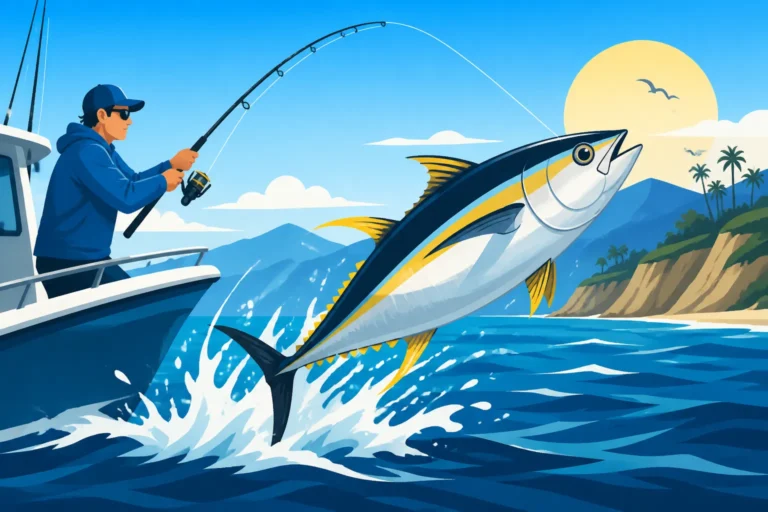
As you can see from the table, there's quite a bit of overlap, but also distinct sweet spots for each. Bluefin, for instance, have really exploded in popularity and accessibility in recent years, often showing up in incredible numbers closer to shore than historical patterns suggested. Understanding these nuances helps you decide what kind of trip to plan and what gear to bring.
Spring and Early Summer Tuna Action
When spring transitions into early summer, there's an undeniable buzz among Southern California anglers. It's the time when the first whispers of tuna start to travel through the docks and online forums. While it's rarely the "wide-open" bite of late summer, these months offer a fantastic opportunity for dedicated anglers to target the early arrivals and enjoy less crowded waters.
Albacore Tuna: The Early Birds
Historically, albacore tuna were the first true offshore migrants to grace California waters, often showing up as early as May and consistently into June. These "longfin" tuna are highly prized for their delicious white meat and their hard-fighting nature. They typically prefer cooler, nutrient-rich offshore waters, often found beyond the 100-fathom curve, sometimes 50 to 100 miles offshore from San Diego or Ventura. When they do show up, it's often in scattered schools, requiring diligent trolling with feathers or cedar plugs to locate them.
Picture this: it's a calm June morning, the sun barely piercing the marine layer, and you're miles offshore, the only boat in sight. You've been trolling for hours, debating if you should turn back, when suddenly, one of your outriggers snaps down, and the reel starts screaming! That's the thrill of early-season albacore. While their runs have been less consistent in recent years compared to decades past, when they do appear, they offer an incredible fishing experience. Keep an eye on sea surface temperature charts and chlorophyll reports, which are key indicators for finding these elusive yet rewarding fish. If you're looking to get started with offshore trolling, I highly recommend checking out some of the great instructional videos and gear on Amazon to get your spread dialed in.
Emerging Bluefin Opportunities
In recent years, bluefin tuna have redefined the early-season game in Southern California. Where once albacore reigned, bluefin have become increasingly prevalent, often appearing closer to shore and earlier in the year than anticipated. We're talking late May and June, sometimes even April, seeing schools of "footballs" (20-40lb bluefin) or even larger models within 20-30 miles of the coast, particularly off areas like Dana Point and San Clemente. These early fish can be finicky, often requiring a more refined approach with light line and smaller baits or lures, as they might still be keyed in on smaller baitfish like anchovies.
It's a different kind of hunt than the later-season bluefin. You might be targeting them in shallower waters, spotting breezing schools or working sonar marks. The bite windows can be short, and they might be boat-shy, making patience and quiet boat handling crucial. Many anglers will head out on smaller private boats or even kayak fish for these early-season bluefin if conditions allow, but it's essential to understand the gear needed for these powerhouses. If you're wondering how to catch bluefin tuna off California, early season provides a challenging but rewarding introduction before the full chaos of summer.
Late Summer and Fall: Peak Tuna Season
If you're dreaming of wide-open tuna bites, multiple hookups, and tackle-testing battles, late summer and fall are unequivocally the best times to fish for tuna in California. This is when the offshore waters truly come alive, teeming with pelagic activity. From the bustling docks of San Diego to the charter fleets further north, this period is synonymous with epic tuna runs that can produce memories of a lifetime.
Bluefin Tuna Domination
From late July through October, and sometimes even into November, bluefin tuna are the undisputed stars of the show. This is when they are typically at their most numerous and often, their largest. Giant bluefin, topping 200 and even 300 pounds, become a real possibility, especially for those venturing out on multi-day trips from landings like H&M Landing or Fisherman's Landing in San Diego. The schools can be massive, spread out over miles of ocean, and often found surprisingly close to shore, making them accessible even for half-day or three-quarter-day charters.
The fishing techniques vary wildly during this peak season. You might find yourself casting poppers or stickbaits to boiling schools, fly-lining live bait (sardines or anchovies) to finicky schools, or deep-dropping sinker rigs or jigs to fish holding hundreds of feet down. The sheer power of a bluefin tuna, especially a large one, is something you have to experience to believe. They will test your tackle, your knots, and your endurance. Having the right gear, from heavy-duty conventional reels to strong fluorocarbon leaders, is paramount. Many seasoned anglers stock up on their leader material, hooks, and lures well in advance, often finding great deals for specific applications on Amazon. To truly maximize your chances during this bluefin frenzy, studying specific tactics, like those outlined in our guide on California Offshore Fishing Techniques, can make all the difference.
Yellowfin and Dorado Joining the Party
While bluefin might get the most headlines, late summer and fall also bring in other incredible species, namely yellowfin tuna and dorado (mahi-mahi). These tropical migrants thrive in the warmest water temperatures, often found from August well into November, especially during warmer ocean cycles. Yellowfin tuna, with their distinctive yellow fins and streamlined bodies, are incredible fighters known for their speed and strength. They often school up in vast numbers and provide exhilarating action, frequently found alongside schools of porpoises, which helps locate them.
Dorado, on the other hand, are the acrobats of the ocean. Known for their vibrant colors and incredible leaps, they are often found around kelp paddies that have drifted north from Baja California. Catching a dorado off a kelp paddy is an iconic Southern California experience: you spot a paddy, motor up slowly, cast a live bait or a shiny jig, and watch as these beautiful fish erupt from beneath the kelp, often providing a "firecracker" bite where multiple fish are hooked simultaneously. For anglers interested in these specific species, our in-depth guides on how to catch Yellowfin Tuna in California: Where and How to Catch and How to Catch Dorado in California offer excellent strategies and tips for success.
The Role of Water Temperature
Water temperature is, without a doubt, the single most critical factor dictating tuna presence and activity in California. These fish are ectothermic, meaning their body temperature mirrors their surroundings, so they are incredibly sensitive to temperature changes. Each species has a preferred range, as highlighted in the table above. When warm water, typically originating from the south, pushes up along the Baja and California coastlines, it brings the tuna with it. Conversely, if cold upwellings occur, pushing colder, deeper water to the surface, the tuna can disappear almost overnight, retreating to more favorable conditions further offshore or south.
This is why experienced tuna anglers are constantly monitoring sea surface temperature (SST) charts, accessible through various fishing apps and satellite imagery. Look for "temp breaks" or "current lines" – areas where distinct temperature changes occur, often creating seams that concentrate baitfish and, subsequently, tuna. These thermal highways are key to locating schools. Additionally, chlorophyll charts, which indicate areas rich in plankton (and thus, baitfish), are another vital tool. Understanding how weather affects California fishing, particularly offshore, can give you a significant advantage, as wind and swell can impact water clarity and temperature gradients.
Factors Influencing Tuna Season Variability
While we talk about "seasons," it's crucial to remember that Mother Nature doesn't consult a calendar. Tuna fishing in California is characterized by its inherent variability, and truly successful anglers are those who understand and adapt to the underlying oceanographic and atmospheric forces at play. This isn't just about showing up when the reports are hot; it's about appreciating the science behind the bite.
El Niño and La Niña Effects
These large-scale climate patterns have a profound impact on California's ocean conditions and, by extension, its tuna fishery.
El Niño events are characterized by warmer-than-average sea surface temperatures in the equatorial Pacific, which can lead to warmer ocean temperatures extending up the California coast. During strong El Niño years, we often see tropical species like yellowfin tuna, dorado, and even wahoo venture further north into California waters, sometimes appearing earlier and staying later in the season. The overall tuna bite can be incredibly robust during these periods, with a wider distribution of fish. However, this warmth can also mean less nutrient-rich water closer to shore, sometimes pushing albacore, which prefer cooler water, further out or bypassing our waters entirely.
La Niña is the opposite, bringing cooler-than-average sea surface temperatures. During La Niña years, the waters off California tend to be cooler and more nutrient-rich due to increased upwelling. This can favor species like albacore, potentially leading to stronger runs, but might limit the presence or northern extent of warmer-water species like yellowfin and dorado. Bluefin tuna, being more adaptable to a range of temperatures, might still be present, but their distribution and abundance could shift. Understanding these patterns, even broadly, can help you set realistic expectations for the season. You can often find general climate outlooks from NOAA or other meteorological sources that hint at an impending El Niño or La Niña, giving you a heads-up on what kind of season might be developing.
Local Conditions and Real-Time Reports
Beyond the large-scale climate phenomena, daily and weekly local conditions are paramount. There's no substitute for real-time information when it comes to tuna. You can pour over all the scientific data you want, but if the water clarity is poor, or a strong onshore breeze has created rough seas and cold upwellings, the fish simply won't be there, or won't be biting. This is where staying connected to the pulse of the fishery becomes vital.
- Fishing Reports: Regularly check fishing reports from reputable landings (like those in San Diego, Long Beach, or Ventura), tackle shops, and online forums. Sites like Bloodydecks or local sportfishing pages on social media are goldmines of information. Pay attention to what species are being caught, where, what techniques are working, and what the water conditions are like. Many of these reports offer insights that you won't find anywhere else, including specific bait preferences or ideal jig colors. Learning how to read California fishing reports effectively is a skill in itself.
- Water Temperature and Chlorophyll Charts: As mentioned earlier, these are your best friends. Invest in a good fishing app or subscription service that provides up-to-date satellite imagery. Look for "clean" warm water, temperature breaks, and chlorophyll concentrations.
- Weather Forecasts: Always, always check the marine weather forecast. Tuna fishing often takes you far offshore, and conditions can change rapidly. Safety first! A clear, calm day can turn into a washing machine if you're not careful. For specific species, you might also want to consult guides like the Best Season for Bluefin Tuna in California or California Albacore Season Explained to fine-tune your timing.
- Charter Captains and Deckhands: These professionals are on the water almost daily and possess an intimate knowledge of current conditions. If you're considering a trip, especially a charter, don't hesitate to call the landing and ask about recent success, expected conditions, and what species they're primarily targeting. They'll tell you straight. Our guide on California Charter Fishing for Beginners has more tips on how to pick the right trip.
Ultimately, while there are general peak seasons for tuna in California, the best approach is to be flexible, informed, and ready to seize the opportunity when the conditions align. The chase is half the fun, and with the right information, you'll significantly increase your chances of connecting with these magnificent pelagic predators.
Disclaimer
Fishing conditions, regulations, and fish populations can change rapidly. Always consult the latest California Department of Fish and Wildlife (CDFW) regulations before heading out. Information provided in this guide is for informational purposes only and does not supersede official regulations.