California Bass Fishing Tips and Techniques
Oh, the thrill of chasing bass in California! It's one of those pursuits that can both ignite your passion and, let's be honest, sometimes leave you scratching your head. California's diverse waters, from massive reservoirs to tranquil delta sloughs, mean that what works wonders in one spot might completely bomb in another. If you've ever felt overwhelmed by the sheer variety of bass species and the ever-changing conditions, you're not alone. This guide is here to untangle the complexities, offering up tried-and-true California bass fishing tips and techniques to help you hook more fish and truly enjoy your time on the water.
Understanding California's Bass Fisheries
California isn't just about one kind of bass. We've got a fantastic trio that keeps things interesting, each with its own quirks and preferences. Knowing what you're targeting and where they like to hang out is the very first step to a successful day.
Largemouth, Smallmouth, and Spotted Bass Differences
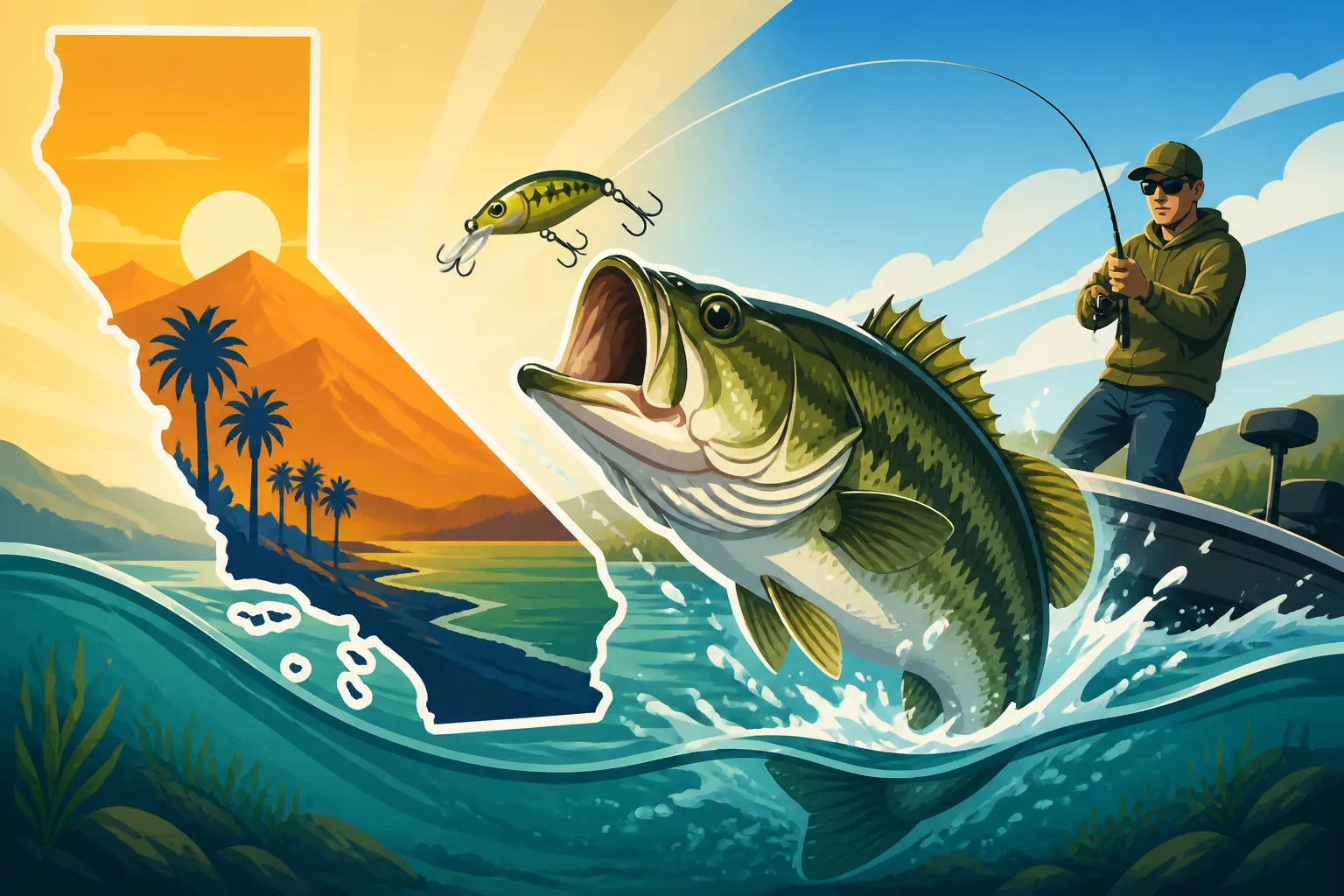
When you say "bass fishing" in California, most folks immediately picture the chunky, green largemouth bass. These are the gladiators of our freshwater systems, known for their aggressive strikes and preference for heavy cover. You'll find them lurking in submerged timber, dense weed beds, around docks, and in the slower, warmer sections of lakes and rivers. They love ambush points, so if you're fishing a flooded timber area, you can bet a big largemouth is eyeing your bait from behind a gnarly branch. They're widespread across the state, from the big Central Valley reservoirs to the many smaller municipal lakes.
Then there are the smallmouth bass, often called "bronzebacks." These fish are pure muscle, renowned for their incredible fight and acrobatic jumps when hooked. Unlike their largemouth cousins, smallmouths prefer cooler, clearer water, often with rocky bottoms and current. Think deep drop-offs, gravel flats, and main lake points. They're more common in specific lakes and river systems, particularly in Northern California and some of the cooler, deeper reservoirs further south. Their diet often consists of crawfish and baitfish, so presentations that mimic these prey items are often key.
Finally, we have the often-underestimated spotted bass. These guys are a fascinating hybrid of characteristics. They tolerate warmer waters than smallmouths but prefer structure and depth more than largemouths. Spots are incredibly numerous in many of our foothill reservoirs and can be absolute schooling machines, especially offshore. They might not grow as big as largemouths, but their aggressive nature and willingness to bite in tough conditions make them a blast to catch. A school of spotted bass can provide non-stop action, and their fighting spirit, pound-for-pound, rivals that of a smallmouth. Understanding these distinct personalities is crucial because what entices a largemouth might be ignored by a smallmouth or spot. To truly dive deep into each species, check out our guides on how to fish for Largemouth Bass in California, how to fish for Smallmouth Bass in California, and how to fish for Spotted Bass in California.
Key Bass Lakes and Reservoirs
California is blessed with an abundance of incredible bass fishing destinations, each with its own character and specialties. If you're chasing trophy largemouth, you simply cannot ignore Clear Lake. Known as the "Bass Capital of the West," this natural lake consistently produces huge fish, with a healthy population of both numbers and size. Its shallow, fertile waters are perfect for growing massive bass, though it can be a challenging lake to learn due to its vastness and ever-changing weed lines.
Further south, in the hills above Los Angeles, Castaic Lake is another legendary spot. It's famous for its big largemouth and has held state records in the past. Its deep, clear waters often require different tactics than Clear Lake, with an emphasis on deeper presentations and targeting structure like points and submerged islands. Nearby, Diamond Valley Lake is a relatively newer reservoir that quickly established itself as a premier fishery. Known for its clear water and excellent populations of largemouth and smallmouth bass, it's a favorite for anglers who enjoy finesse techniques and deep-water fishing.
Up north, Lake Shasta offers a diverse fishery with largemouth, smallmouth, and even spotted bass. It's a huge lake with countless coves, points, and river arms, providing endless opportunities but also demanding adaptability. Each of these lakes, and many others across the state like Lake Oroville, Folsom Lake, and New Melones, has its own unique patterns and best times to fish. Doing a little research on your chosen destination, perhaps through a Clear Lake Fishing Guide or Castaic Lake Fishing Guide, can make all the difference.
Seasonal Strategies for California Bass
Bass behavior changes dramatically throughout the year, largely dictated by water temperature and their biological drive to spawn. Knowing what the bass are doing and where they're likely to be during each season is fundamental to consistent success.
Spring Pre-Spawn and Spawn Tactics
Ah, spring! This is arguably the most exciting time for bass fishing in California. As water temperatures start to climb into the 50s and low 60s, bass begin to move from their deeper winter haunts towards shallower staging areas in preparation for spawning. During the pre-spawn, they are incredibly hungry, bulking up on forage before the energy-intensive act of procreation. Look for them on secondary points, rocky humps, and the outer edges of weed lines near deeper water access. Reaction baits like crankbaits (especially lipless ones like a Rat-L-Trap), spinnerbaits, and swimbaits can be deadly as bass are actively chasing food. You can find a huge selection of these baits on Amazon, often at competitive prices.
Once the water hits the mid-60s, the spawn truly kicks off. Largemouth bass will move into very shallow, protected coves and flats to build their nests (beds). Sight fishing becomes a popular, though sometimes controversial, tactic. If you're sight fishing, be mindful and ethical; aim for a quick catch and release to minimize stress on the fish. Flipping and pitching jigs, soft plastic creature baits, or Senko-style worms into or near beds are classic approaches. Smallmouth and spotted bass, while also spawning, tend to do so in slightly deeper water on gravel or rocky bottoms, making sight fishing less common. During this sensitive time, a proper catch and release technique is paramount to ensure the future health of our fisheries. For more detailed information, our guide on California Bass Spawn Timing and Tactics is a fantastic resource.
Summer Deep Water and Early Morning/Evening Bites
When California's heat truly settles in and water temperatures soar into the 70s and 80s, bass often retreat to deeper, cooler water. This is when understanding thermoclines becomes critical. A thermocline is a layer in the lake where the temperature changes rapidly with depth, and it often holds the most oxygenated and comfortable water for bass. Look for bass relating to offshore structure like deep points, humps, ledges, and submerged timber. Carolina rigs, deep-diving crankbaits, football jigs, and drop shots are excellent choices for targeting these deeper fish.
However, summer isn't just about going deep. The early morning and late evening bites can be absolutely explosive, especially for largemouth and spotted bass. As the sun rises or sets, bass will often push up into shallower water to feed on baitfish or insects. This is prime time for topwater lures – think walking baits (like a Heddon Super Spook), poppers, and hollow-bodied frogs in weed-choked areas. The sound of a big bass exploding on a topwater lure is truly one of fishing's greatest thrills. Targeting shady banks, dock pilings, and overhanging trees during the brighter parts of the day can also yield results, as bass seek refuge from the sun.
Fall Transition and Feeding Frenzies
Fall is a season of change and opportunity for bass anglers. As air and water temperatures begin to cool, baitfish start migrating from their summer offshore haunts towards shallower coves and creek channels. This triggers a frantic feeding frenzy among bass, as they instinctively know winter is coming and it's time to pack on the pounds. This is when "power fishing" really shines.
Moving baits like spinnerbaits, chatterbaits, and crankbaits that cover a lot of water quickly are incredibly effective. Bass are often aggressively chasing schools of shad or other baitfish, so matching the hatch with your lure choice can be crucial. Look for active bass schooling on points, flats, and in the backs of creeks where baitfish are abundant. Areas with a mix of rocks and dying vegetation often hold heat longer and attract forage, making them prime targets. Fall can also be an excellent time for throwing larger swimbaits, mimicking bigger baitfish that bass are keen to ambush. This aggressive bite can last from early fall right up until water temperatures dip consistently into the low 50s.
Winter Slow Bites and Finesse Techniques
Winter bass fishing in California demands patience and a fundamental shift in strategy. With cold water temperatures (often in the 40s), bass metabolism slows down considerably. They become lethargic, consolidating in deeper, more stable temperature zones. You won't find them chasing reaction baits with the same vigor. This is the realm of finesse techniques.
Vertical presentations become key. Drop shots rigged with small worms or creature baits, slow-rolled football jigs, and even tiny spoons are go-to choices. Look for bass suspending over deep water near vertical structure like canyon walls, submerged timber, or on deep points and ledges. The bite will often be incredibly subtle – sometimes just a slight tick on the line or added weight. It's crucial to use sensitive rods and lighter line to detect these delicate bites. Many anglers also find success slow-rolling swimbaits or larger worms on jig heads along the bottom. While you might not catch as many fish as in spring or fall, the bass you do catch in winter are often some of the biggest and healthiest of the year. Some excellent winter bass spots include the deeper sections of Castaic Lake, Diamond Valley Lake, and Lake Shasta.
Essential Lures and Baits for California Bass
Choosing the right lure or bait can often feel like a puzzle, especially with the thousands of options out there. However, a core selection will cover most situations you encounter while bass fishing in California.
Topwater and Reaction Baits
Nothing beats the adrenaline rush of a bass blowing up on a topwater lure. These baits are designed to be fished on the surface, creating commotion that mimics struggling baitfish, frogs, or insects. Poppers, with their cupped faces, create a "chugging" sound, while walking baits (like a Zara Spook or Lucky Craft Sammy) glide side-to-side, imitating a wounded baitfish. Hollow-bodied frogs are fantastic for fishing over thick mats of vegetation where other lures would snag. Topwater is most effective in low light conditions (dawn, dusk, cloudy days) or when bass are actively feeding near the surface in warmer water.
Reaction baits are all about triggering an aggressive, impulsive strike. This category includes crankbaits, spinnerbaits, and chatterbaits. Crankbaits dive to various depths depending on their lip size and retrieve speed; shallow divers are great for covering flats, while deep divers can plumb depths of 20 feet or more. Spinnerbaits, with their flashing blades and vibrating skirts, are excellent for covering water, especially around submerged cover and in slightly stained conditions. Chatterbaits (bladed jigs) combine the flash of a spinnerbait with the erratic action of a crankbait, making them incredibly versatile for fishing through weeds or on open water. A good assortment of these can be found easily on Amazon, covering various colors and sizes for different water clarities and baitfish profiles.
Soft Plastics and Finesse Rigs
When the bite gets tough, or bass are pressured, soft plastics and finesse rigs often save the day. The sheer variety here is mind-boggling, but some standouts include:
- Senkos (stick baits): These simple, cylindrical worms have an incredible shimmy on the fall and are often fished weightless or lightly weighted (wacky rigged or Texas rigged). They are a go-to for all three bass species, especially around docks and sparse cover.
- Creature baits: Mimicking crawfish, lizards, or other invertebrates, these plastics have various appendages that create enticing action. They're perfect for flipping and pitching into heavy cover or for Texas rigging and dragging on the bottom.
- Worms (straight tail, curly tail): From trick worms to magnum ribbon tails, soft plastic worms are incredibly versatile. They can be Texas rigged, Carolina rigged, or fished on a shaky head jig for a more subtle presentation.
Finesse rigs like the drop shot have revolutionized deep-water fishing. This rig involves tying a hook directly to your main line with a weight attached below, allowing your bait to suspend at a specific depth above the bottom. It's deadly for suspended bass or those clinging to deep structure. The Neko rig is a variation of a wacky rig, using a nail weight inserted into one end of a soft plastic worm, causing it to stand up on the bottom with a subtle wiggle. These are truly essential for pressured fish, clear water, or during colder months. For more detailed lure recommendations, our guide on Best Lures for California Largemouth Bass offers specific insights.
Jigs and Swimbaits
No bass angler's tackle box is complete without a solid selection of jigs. Jigs are incredibly versatile and can mimic crawfish, baitfish, or even small bluegill. Flipping and pitching jigs are designed with weed guards to be worked in heavy cover, whether it's submerged trees, thick bushes, or deep docks. Football jigs, named for their football-shaped heads, are excellent for dragging along rocky bottoms and offshore ledges, where they excel at imitating crawfish. Jigs demand a slower, more deliberate retrieve, allowing the fish to truly commit.
Swimbaits are another powerhouse category, especially for targeting larger, more predatory bass. These lures are designed to accurately mimic baitfish, from tiny threadfin shad to hefty trout. They come in both hard and soft versions. Hard swimbaits often have multiple segments for a realistic swimming action and are fantastic for covering open water or the edges of grass lines. Soft swimbaits, on the other hand, can be rigged in countless ways: on jig heads, with screw-lock hooks, or even as trailers on spinnerbaits or chatterbaits. Larger soft swimbaits, sometimes called "boot tails" or "paddle tails," generate a strong thumping action that can call in big bass from a distance. Learning to effectively present a swimbait can take time, but the reward of a true trophy bass is often worth the effort.
| Lure/Bait Type | Primary Species | Key Situations | Recommended Retrieve |
|---|---|---|---|
| Topwater (Popper/Walker) | Largemouth, Spotted | Low light, shallow cover, active fish | Twitch, pause, walk-the-dog |
| Crankbait (Deep-Diving) | Largemouth, Smallmouth, Spotted | Deep points, ledges, offshore structure | Steady retrieve, contact bottom |
| Spinnerbait | Largemouth, Spotted | Stained water, weeds, wood, covering water | Medium-fast retrieve, bump cover |
| Chatterbait | Largemouth, Spotted | Grass edges, docks, pre-spawn | Steady retrieve, stop-and-go |
| Senko (Wacky/Texas) | Largemouth, Smallmouth, Spotted | Docks, sparse cover, pressured fish | Weightless fall, subtle twitch |
| Drop Shot | Smallmouth, Spotted, Largemouth | Deep water, suspended fish, clear water | Subtle shake, dead stick |
| Flipping/Pitching Jig | Largemouth | Heavy cover, docks, timber | Vertical presentations, subtle hops |
| Football Jig | Smallmouth, Spotted, Largemouth | Rocky bottoms, deep structure | Slow drag, hop |
| Swimbait (Soft Paddle Tail) | Largemouth, Smallmouth, Spotted | Open water, edges of cover, mimicking bait | Steady retrieve, slow roll |
Advanced Techniques and Gear Considerations
Once you've got the basics down, there's a whole world of advanced techniques and specialized gear that can elevate your bass fishing game significantly. It’s all about efficiency and understanding the subtle nuances that make a difference.
Mastering Electronics and Mapping
Modern fishing electronics are nothing short of incredible, offering anglers an unparalleled view of the underwater world. Gone are the days of guessing; now, we can literally "see" the structure, cover, and even the fish themselves. Sonar (2D) gives you a traditional view of what's directly beneath your boat, showing depth, bottom composition, and fish arches. Learning to interpret these arches and bottom signals is fundamental.
Side imaging (and down imaging) takes it a step further, painting photorealistic pictures of what's to the sides (or directly beneath) your boat. This is an absolute game-changer for finding offshore structure like submerged humps, rock piles, creek channels, and even isolated brush piles that are impossible to spot otherwise. You can clearly identify exactly what kind of cover bass are relating to. Pairing these technologies with detailed GPS mapping is essential. Having accurate contour maps allows you to pinpoint subtle depth changes, breaks, and points that might hold fish. When you find a productive spot on your sonar, you can mark it with your GPS, making it easy to return. Brands like Humminbird and Lowrance offer fantastic units that can integrate these features seamlessly. Understanding how to use these tools effectively will dramatically reduce your unproductive casting and put your bait in front of more fish.
Rod, Reel, and Line Selection
The right rod, reel, and line setup can make a huge difference in how effectively you present your lure, detect bites, and ultimately land fish. It's not about having one setup for everything; it's about matching your gear to the specific technique.
For heavy cover applications like flipping jigs or frog fishing, you'll want a heavy power, fast action casting rod (7' to 7'6") paired with a baitcasting reel with a higher gear ratio (7.1:1 or higher) for quick line pickup. Spool it with 50-65 lb braided line for its strength and abrasion resistance. For crankbaits or spinnerbaits, a medium-heavy power, moderate or moderate-fast action casting rod (6'6" to 7'3") offers a more parabolic bend, helping to absorb the shock of a strike and prevent hooks from tearing out. A medium gear ratio reel (6.3:1) with 12-17 lb fluorocarbon line (for crankbaits) or monofilament (for spinnerbaits) is a great choice.
For finesse techniques like drop shotting or shaky heading, a medium-light to medium power, fast action spinning rod (6'10" to 7'4") paired with a sensitive spinning reel is ideal. Spool it with 6-10 lb fluorocarbon or a light braid leader to fluorocarbon for ultimate sensitivity and minimal visibility in clear water. Each line type – monofilament, fluorocarbon, and braid – has its own advantages and disadvantages in terms of stretch, sensitivity, abrasion resistance, and visibility. Experimenting with different setups will help you understand what feels right for you and the fishing conditions. You can find a huge variety of quality rods, reels, and lines on Amazon from brands like Shimano, Daiwa, and Abu Garcia.
Kayak and Bank Fishing Strategies
You don't always need a big fancy bass boat to get in on the action. Kayak fishing has exploded in popularity, offering a stealthy and often more accessible way to target bass, especially in smaller lakes, coves, or tight river sections. Kayaks allow you to reach areas that bigger boats can't, often providing less pressured fish. Focus on techniques that are easy to manage from a seated position, like Texas rigging, wacky rigging, or throwing spinnerbaits. Peddle-drive kayaks from brands like Hobie or Old Town can greatly enhance mobility, allowing you to cover more water and even fight fish while maintaining position. Always prioritize safety: wear your personal flotation device (PFD), carry a whistle, and be aware of weather changes.
Bank fishing for bass, while sometimes challenging, can also be incredibly rewarding, especially in California's numerous public parks and community ponds. The key is to think like a bass boat angler, even if you're on foot. Look for accessible points, docks, culverts, or areas with visible cover like downed trees or weed beds. Early morning and late evening are often the best times as bass move shallower. Simplicity is your friend: a medium-heavy spinning rod, some Senkos, jigs, and a few small crankbaits are often all you need. Focus on fan casting to cover as much water as possible from your vantage point, paying close attention to any changes in depth or bottom composition. Don't be afraid to walk a bit and explore; you might just stumble upon an overlooked honey hole. Remember to always check local regulations for fishing access and hours.
Reading the Water and Environmental Factors
Becoming a truly successful bass angler in California, or anywhere for that matter, goes beyond just knowing what lure to throw. It involves keenly observing your surroundings and understanding how environmental factors influence bass behavior.
Understanding Structure and Cover
To consistently catch bass, you need to understand where they live. Structure refers to changes in the lake or river bottom contour, such as points, humps, ledges, creek channels, and submerged roadbeds. These are like underwater highways and intersections that bass use for travel, feeding, and protection. A subtle drop-off or a channel bend can concentrate fish in incredible numbers. Learning to identify these on your electronics and maps is critical. Bass often position themselves on the "ambush side" of a structure, waiting for prey to swim by.
Cover refers to objects on or in the water that provide shelter and concealment, such as weeds, docks, fallen trees (laydowns), brush piles, rocks, and even bridge pilings. Bass use cover for protection from predators, as ambush points for prey, and as refuge from harsh sunlight or strong currents. Fishing cover often means getting right into it, so you'll need weedless presentations (like a Texas rig or a hollow-bodied frog) and robust tackle to pull fish out. The best spots often combine both structure and cover – imagine a submerged point with a brush pile on its tip, or a deep ledge with a thick bed of coontail growing on it. Bass relate to these elements differently based on the season, time of day, and water conditions, making it a constant puzzle to solve.
The Impact of Weather and Water Conditions
Bass are highly sensitive to their environment, and weather and water conditions play a massive role in their mood and location. Water temperature is arguably the most critical factor. As discussed earlier, it dictates seasonal movements from spawning to wintering. Slight temperature changes can push bass deeper or shallower, or make them more or less active. Knowing the ideal temperature ranges for each species and season is invaluable.
Water clarity also significantly impacts lure choice and presentation. In clear water, finesse techniques, natural colors, and lighter lines are often more effective, as bass rely heavily on sight. In stained or muddy water, bass rely more on their lateral line (to feel vibrations) and scent, making noisier, bulkier lures in brighter colors (like chartreuse or orange) or scent-infused baits more productive.
Wind can be your friend or foe. A gentle chop on the water can break up the surface, making bass less wary and often pushing baitfish, concentrating them. This makes windy banks or points prime targets. However, extremely high winds can make boat control difficult and muddy up clear water. Atmospheric pressure also plays a role. A falling barometer (before a storm) often signals an active bite, while a rising barometer (after a cold front) can shut fish down, making them harder to catch and requiring more subtle approaches. Always check the forecast and adjust your plans accordingly. Even the simple act of looking at the water – its color, clarity, and temperature – will tell you a lot about how to approach your day.
Conservation and Responsible Angling
As passionate anglers, we all have a responsibility to protect California's incredible bass fisheries for future generations. This isn't just about following the rules; it's about adopting practices that ensure the health and sustainability of the resource.
Catch and Release Best Practices
While many anglers enjoy a fresh fish dinner, bass fishing in California often emphasizes catch and release, especially for larger, older fish that are crucial for breeding. If you choose to release a fish, doing it properly is vital for its survival.
First, minimize handling. Keep the fish in the water as much as possible. If you must remove it for a quick photo, do so gently, supporting its belly with one hand and grasping the lower jaw (without crushing it) with the other. Avoid touching the fish's eyes or gills. Use a wet hand or a glove to protect their slime coat, which is their primary defense against disease. Second, de-hook quickly and carefully. Barbless hooks make this process much easier. If the hook is deeply embedded, cut the line as close to the hook as possible rather than tearing tissue trying to remove it. Long-nose pliers or a dedicated de-hooking tool are indispensable. Finally, ensure a proper release. Hold the fish upright in the water, gently moving it back and forth to push water over its gills until it regains its strength and can swim away on its own. Don't just toss it back; take a moment to revive it, especially if it was a long fight or the weather is warm. This extra minute of care makes a huge difference.
Adhering to Regulations
California has detailed fishing regulations designed to protect fish populations and ensure fair fishing opportunities. It is every angler's responsibility to know and follow these rules. This includes understanding the specific California Fishing Bag and Size Limits for bass in the waters you're fishing. Limits can vary by species, location, and even time of year. For instance, there might be a slot limit on largemouth bass in one lake, meaning you can only keep fish within a certain size range, while another lake has a simple minimum size limit and a bag limit.
Always ensure you have a valid California Fishing License Guide before you cast a line. Most anglers over the age of 16 need one, even if you're fishing from a pier (though some piers allow license-free fishing in designated areas). There are different types of licenses available, including annual, short-term, and even reduced-fee options for seniors or disabled anglers. Familiarize yourself with the California Fishing Regulations Explained booklet or the online version provided by the California Department of Fish and Wildlife (CDFW). These regulations cover everything from fishing methods and gear restrictions to specific closures or special rules for certain bodies of water. Ignorance of the law is not an excuse, and fines for violations can be steep. By fishing responsibly and adhering to these guidelines, we all contribute to the long-term health and enjoyment of bass fishing in California.
Disclaimer
The information provided in this guide is for general informational purposes only and is not intended as legal or professional advice. Fishing regulations and conditions in California can change frequently. Always consult the official California Department of Fish and Wildlife (CDFW) regulations before engaging in any fishing activity to ensure compliance with the most current laws and guidelines.