California Crab Regulations and Limits
There's nothing quite like the thrill of pulling up a trap or hoop net, eagerly anticipating the sight of a plump Dungeness crab or a feisty rock crab peeking back at you. But for many anglers, the excitement is often tempered by a nagging uncertainty: "Am I doing this right?" Navigating the intricate web of California crab regulations can feel like trying to untangle a particularly stubborn fishing knot, leaving many feeling frustrated and unsure. This comprehensive guide is here to untangle those rules, clarify the limits, and empower you to enjoy responsible and successful crabbing in California.
Why California Crab Regulations Matter to Anglers
Crabbing in California is a cherished pastime, a tradition passed down through generations, and a source of delicious, fresh seafood. But like any resource, it's not unlimited. The regulations aren't there to make your life harder; they're thoughtfully designed to protect these incredible crustacean populations and ensure there's plenty for everyone, year after year.
Protecting Crab Populations for Future Generations
Imagine a California where Dungeness crab season is a distant memory, or where rock crab are scarce. It's a bleak thought, right? That's precisely what regulators aim to prevent. Crab populations face natural pressures from predators and environmental changes, but human fishing pressure can be a significant factor if not managed carefully. Size limits ensure that crabs have a chance to mature and reproduce at least once, contributing to the next generation before they're harvested. Bag limits prevent overharvesting by individuals, while season closures allow crabs to spawn undisturbed and recover their numbers. Without these thoughtful restrictions, we risk depleting the very resource we love. It's about sustainability, pure and simple, ensuring that our kids and grandkids can experience the same joy of a successful crab haul.
Understanding the Legal Ramifications of Violations
It might seem like a minor oversight to keep a crab that's just a hair under the legal size, or to accidentally pull one too many. However, the California Department of Fish and Wildlife (CDFW) takes these regulations seriously, and for good reason. Violations aren't just a slap on the wrist; they can lead to significant fines, confiscation of gear and catch, and even loss of fishing privileges. If you're caught with undersized crabs, for instance, you could be looking at a hefty penalty. Enforcement officers regularly patrol popular crabbing areas, from piers to offshore waters, checking for compliance. Ignorance of the law is rarely an excuse that holds up, so taking the time to truly understand the rules, as laid out in the official California Fishing Regulations Explained booklet, is absolutely essential. Don't let a misunderstanding turn a fun day on the water into a legal headache.
The Nitty-Gritty of Dungeness Crab Regulations in California
When most people think of crabbing in California, they're usually dreaming of Dungeness crab ( Metacarcinus magister ). These delectable crustaceans are a prized catch, and as such, they come with a specific set of rules to ensure their sustainable harvest. It's crucial to pay close attention to these details, as they can vary slightly by region and even shift year to year based on environmental factors.
Essential Season Dates and Permissible Gear
The Dungeness crab recreational season is a big deal in California, and its opening is eagerly anticipated. Generally, the season for recreational crabbers begins in early November north of the Sonoma/Mendocino county line, and typically a week or two later, around mid-November, south of that line. The season usually runs through June or July, but these dates are subject to change. For example, in recent years, whale entanglement risk assessments by the CDFW and health advisories due to naturally occurring domoic acid have sometimes delayed the start of the season, especially in central and southern California waters. Always check the very latest information from the CDFW website or their sport fishing regulations booklet before heading out.
When it comes to gear, recreational crabbers are generally allowed to use crab traps (also known as crab pots), hoop nets, or crab snares. Each angler is typically limited to using no more than 10 crab traps or hoop nets, and remember, each individual device needs to be clearly marked with your California GO ID number. If you're using traps, they must have specific escape openings to allow smaller crabs to exit, and certain biodegradable escape panels are also mandated. This ensures that if a trap is lost, it doesn't continue to "ghost fish." Using bait is common, with squid, fish heads, or chicken often proving irresistible to Dungeness. You can find excellent quality crab snares and traps, often with collapsible designs for easy storage, on platforms like Amazon, but always double-check they meet California’s specific gear requirements.
Size and Bag Limits You Absolutely Need to Know
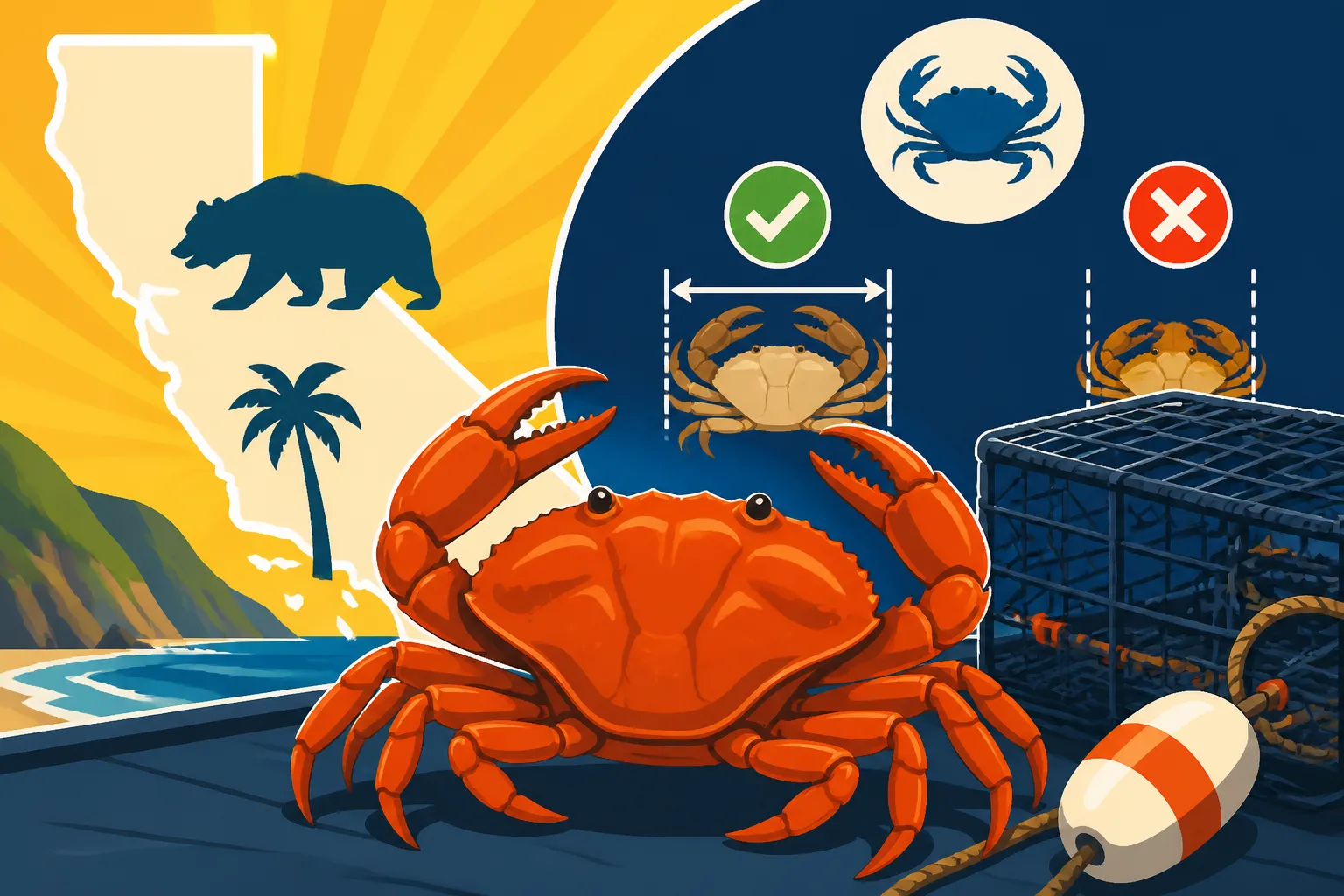
This is where many anglers can get tripped up, and it's vital to get it right. For Dungeness crab, there's a strict minimum size limit. Each crab must measure at least 5¾ inches across the widest part of its shell, immediately in front of the posterior spines. This measurement is critical, and a simple crab gauge, which you can also find easily on Amazon or at local tackle shops, is an essential piece of equipment. If a crab is even a fraction of an inch too small, it must be immediately returned to the water unharmed.
In addition to the size limit, there's a daily bag limit. Recreational anglers are allowed to keep a maximum of 10 Dungeness crabs per person per day. It’s not just about the number; it’s also about possession. Even if you've already caught your limit and are heading back to shore, you can't participate in crabbing activities or help someone else catch their limit if it means exceeding your own. Always count your crabs carefully and err on the side of caution. In California's recreational fishery, either sex may be kept, so a legal-sized female Dungeness crab counts toward your limit just like a male.
Special Closures and Health Advisories
Beyond the standard season dates, California's Dungeness crab fishery can be impacted by temporary closures and crucial health advisories. These aren't arbitrary; they're in place for the safety of both marine life and human consumers.
One of the most common reasons for season delays or closures is the risk of whale entanglement. California's coastline is a vital migratory path for several whale species, and Dungeness crab gear (especially vertical lines from traps) can pose a serious hazard. The CDFW, in coordination with whale research groups, monitors whale activity and may implement risk assessments that lead to delays or depth restrictions for trap fishing. This is why staying current with CDFW announcements is so important; a season that's "normally" open might be delayed.
Another significant factor is domoic acid. This naturally occurring neurotoxin, produced by certain types of marine algae, can accumulate in the viscera (guts) of crabs. While the crab meat is generally safe, consuming crab with high levels of domoic acid can cause severe illness in humans. The California Department of Public Health (CDPH) constantly monitors domoic acid levels in crabs and issues health advisories or recommends consumption warnings when necessary. Sometimes, this can lead to a full closure of the fishery in specific areas or a recommendation to only consume the crab meat, discarding the internal organs. Always check for current health advisories before you go crabbing and certainly before you eat your catch. For updated information, you should always consult the official CDFW and CDPH websites or call their local offices.
Rock Crab and Other Species: What You Need to Know
While Dungeness crabs steal most of the spotlight, California's waters are also home to other delicious crab species, primarily rock crabs. These hardy crustaceans offer year-round crabbing opportunities and have their own distinct set of regulations. Don't lump them in with Dungeness rules; that could land you in hot water!
Key Differences for Rock Crab and Stone Crab
California is home to several species of rock crab, most commonly the yellow rock crab, brown rock crab, and red rock crab. Unlike Dungeness, the recreational season for rock crabs is open year-round. This makes them a fantastic target when Dungeness season is closed, or if you simply prefer their unique flavor and firmer meat.
The size and bag limits for rock crabs are also different. The minimum size limit for rock crabs is 4 inches, measured in the same way as Dungeness crabs – across the widest part of the shell, in front of the posterior spines. This is significantly smaller than the Dungeness limit, so make sure your measuring gauge is clearly marked for both species. The daily bag limit for rock crabs is also much more generous: 35 crabs per person per day. This allows for a substantial haul, perfect for a big crab feast!
Only male rock crabs can be kept, and females must be immediately released. The gear restrictions are generally the same, allowing traps, hoop nets, and snares. The requirements for escape openings and biodegradable panels on traps still apply. If you're out crabbing, it's not uncommon to catch both Dungeness and various rock crab species in the same gear. Just be sure you can correctly identify your catch and apply the appropriate regulations. Understanding California Fishing Regulations Explained for each species is key.
Lobster and Crab: Not the Same Rules
It's easy to get excited when you're looking for crustaceans, but remember that California spiny lobsters are an entirely different animal, with their own very specific and strict regulations. Even though you might catch them in the same hoop nets you use for crabs, their seasons, limits, and report card requirements are distinct. For instance, you need a California Spiny Lobster Report Card in addition to your fishing license to legally take lobsters. The season for lobster is usually much shorter, typically from early October through mid-March, and the legal size limit (measured from the eye socket to the rear edge of the carapace) and bag limits are different. Crabbing does not require a report card like the California Steelhead Report Card or lobster report card. Trying to apply crab rules to lobster will definitely lead to a violation. If you're interested in pursuing both, be sure to thoroughly review the specific California Lobster Fishing Rules before you head out.
Getting Your Gear Right: Essentials for Legal Crabbing
Having the right gear isn't just about catching more crabs; it's about ensuring you're doing it legally and responsibly. Using compliant equipment helps protect the crab population and keeps you on the right side of the law.
Traps, Snares, and Measuring Devices
Let's talk about the tools of the trade. For recreational crabbing, your primary options are crab traps (pots), hoop nets, and crab snares.
- Crab Traps/Pots: These are typically weighted cages that sit on the seafloor, designed to allow crabs to enter but not easily escape. They must have escape rings to let undersized crabs out and a biodegradable escape panel or door that will decay, freeing any trapped crabs if the pot is lost. This is a critical conservation measure. Each trap needs a buoy, clearly marked with your GO ID number, and you're limited in the number of traps you can deploy.
- Hoop Nets: These are generally two concentric rings with netting in between, designed to lie flat on the bottom. When pulled up quickly by a line, the netting forms a basket, trapping anything inside. Hoop nets are very popular, especially from piers and small boats, as they are actively fished. Like traps, they need to be marked with your GO ID.
- Crab Snares: These are small, throwable devices that don't trap the crab inside a cage. Instead, they typically hold bait and have monofilament loops (no more than six loops are allowed in California) that snare the crab's legs when it reaches for the bait. Snares are often used for surf crabbing or from piers. They are a passive form of fishing once cast, but require retrieval to check for crabs.
Regardless of your chosen method, a reliable crab gauge is absolutely non-negotiable. This simple tool ensures you can accurately measure your catch to comply with the 5¾-inch Dungeness limit and the 4-inch rock crab limit. Trying to eyeball it is a surefire way to make a mistake.
Where to Purchase Compliant Gear
You don't need to break the bank to get good, legal crabbing gear. Local tackle shops throughout California, especially in coastal towns like Bodega Bay, Half Moon Bay, Monterey, and San Diego, are excellent resources. They often carry gear specifically designed to meet California regulations and can offer local advice. Many larger sporting goods retailers also stock crabbing supplies.
For convenience, online retailers like Amazon offer a vast selection of crabbing gear. When purchasing from Amazon, make sure to read product descriptions carefully to ensure the traps have the required escape rings and biodegradable components. Brands like Promar and Danielson often carry California-compliant gear. Don't forget to pick up some bait cages or containers, heavy-duty line, and a sturdy buoy to mark your gear. Investing in a good quality crab gauge early on will save you potential headaches down the line. Many people starting out find it helpful to look for beginner-friendly kits on Amazon that include a hoop net, line, and a basic gauge.
Practical Tips for Responsible Crabbing in California
Crabbing isn't just about catching dinner; it's about enjoying the outdoors and being a good steward of the marine environment. Practicing responsible crabbing ensures the health of crab populations and respects other ocean users.
How to Measure and Release Crabs Correctly
Measuring a crab might seem straightforward, but doing it correctly and with minimal stress to the crab is an art. Always measure across the widest part of the carapace (the shell), immediately in front of the posterior spines. Your crab gauge should fit snugly without forcing or damaging the crab.
If a crab is undersized or otherwise not legal to keep, it needs to be released immediately. Here’s how to do it right:
- Handle Gently: Grasp the crab firmly but gently by the sides of its carapace, avoiding the claws if possible, or by the rear legs if you're experienced. Avoid dropping or throwing them.
- Minimize Air Exposure: Crabs breathe underwater. Keep them out of the water for the shortest time possible, just long enough to measure and identify gender.
- Release Safely: Return the crab to the water gently, ideally in the same area where it was caught. Don't just toss it from a height; lower it close to the water's surface.
Remember, the goal of California Catch-and-Release Rules for crabs you cannot keep is to give them the best chance of survival so they can grow larger and reproduce. Taking these extra steps ensures the long-term health of the fishery.
Staying Informed About Regulation Changes
California's fishing regulations, particularly for highly managed species like Dungeness crab, are not static. They can and do change. Factors like environmental conditions, scientific assessments of population health, domoic acid levels, and whale migration patterns all play a role in how seasons are managed.
The best way to stay informed is to make it a habit to check the official CDFW website before each season, or even before each trip if you're unsure. The "Ocean Sport Fishing Regulations" booklet is your bible, and it's updated annually. You can usually pick up a physical copy wherever you buy your California Fishing License Guide or gear. Subscribing to CDFW email alerts can also be a game-changer, providing real-time updates directly to your inbox. Additionally, local bait and tackle shops are often excellent sources of the most current local information, as they hear directly from the CDFW and from other anglers. Don't rely solely on what you heard last year or what your buddy told you – always verify the information yourself! If you're often crabbing from piers, understanding Fishing from a Pier in California: Rules is also vital, as some rules might differ slightly there, especially concerning licenses.
Comparing California Crab Regulations
To make things a little easier, here's a quick overview of the key differences between Dungeness and Rock Crab regulations in California. This isn't exhaustive, so always refer to the official CDFW regulations for full details.
| Feature | Dungeness Crab | Rock Crab (Yellow, Brown, Red) |
|---|---|---|
| Season | Typically Nov/Dec to June/July (variable) | Open Year-Round |
| Minimum Size | 5¾ inches (carapace width) | 4 inches (carapace width) |
| Bag Limit | 10 crabs per person per day | 35 crabs per person per day |
| Gender | Either sex | Males only |
| Gear | Traps, Hoop Nets, Snares (regulated) | Traps, Hoop Nets, Snares (regulated) |
| License Req. | CA Sport Fishing License (unless from pier)* | CA Sport Fishing License (unless from pier)* |
| Report Card | Not required | Not required |
| Advisories | Prone to whale entanglement, domoic acid | Less common, but can occur with domoic acid |
*Note: While a license isn't generally required for fishing from a public pier or jetty in California, specific local restrictions may apply. It's always best to verify with local authorities or signs.
Navigating Specific Crabbing Scenarios
California's vast and varied coastline means crabbing experiences can differ greatly depending on where you drop your traps or nets. From the bustling piers of Southern California to the rugged shores up north, understanding how regulations apply to your chosen location is crucial.
Crabbing from Piers and Shoreline
Pier fishing is incredibly popular in California, offering accessible crabbing opportunities for many, often without the need for a boat. One of the biggest perks is that generally, you don't need a California Fishing License Guide when fishing or crabbing from a public pier or jetty. This applies to both residents and California Fishing License Requirements for Visitors. However, this doesn't mean you're exempt from all rules! All other regulations, including bag limits, size limits, and gear restrictions (like marking your hoop nets), still apply. For instance, while you might not need a license, you still need to adhere to the 10 Dungeness crab or 35 rock crab per person per day limits.
Shoreline crabbing, particularly with snares in the surf zone, is another exciting option. Here, a valid California sport fishing license is typically required. Remember that even on the shore, you must ensure your gear is deployed and retrieved legally and that you're not exceeding any gear limits. Be mindful of marine protected areas (MPAs) – some areas are "no-take" zones, meaning no crabbing or fishing of any kind is allowed. Always check for California Marine Protected Areas Explained near your chosen crabbing spot to avoid accidental violations.
Crabbing from Boats and Kayaks
Taking to the water in a boat or kayak opens up many more crabbing grounds, but it also means you definitely need a current California sport fishing license. When crabbing from a vessel, it's essential to ensure all your gear, especially your crab traps, are correctly rigged with buoys displaying your GO ID number. The number of traps or hoop nets allowed per person and per vessel can be limited, so read the regulations carefully.
For those venturing offshore, remember that the ocean can be unpredictable. Always prioritize safety, wear a life vest, check marine forecasts, and be aware of your surroundings. If you're operating a boat, you're also responsible for everyone's compliance with regulations on board. Make sure every person crabbing has their own license and adheres to individual bag limits. Keep a copy of the How to Read the California Fishing Regulations Booklet onboard, or have it readily accessible digitally, to quickly clarify any doubts that might arise. This is especially important for Dungeness crab, where changes in California Salmon Season Dates or other species' rules might indirectly affect crabbing access or regulations.
Final Thoughts on Sustainable Crabbing
California's crab fisheries are a treasure, providing both recreational enjoyment and commercial sustenance. As anglers, we have a collective responsibility to uphold the regulations set forth by the CDFW and CDPH. These rules are the backbone of sustainable management, designed to ensure that the delicate balance of our marine ecosystem is maintained and that future generations can experience the joy of crabbing.
Crabbing is more than just catching dinner; it's an opportunity to connect with nature, to teach patience and respect for wildlife, and to spend quality time with friends and family. By being informed, responsible, and ethical in our practices, we contribute to the health and abundance of California's crab populations for years to come. So, grab your gear, check the latest regulations, and head out to enjoy the bounty that California's waters have to offer!
Disclaimer
The information provided in this guide is for general informational purposes only and is subject to change. While we strive to offer accurate and up-to-date content, fishing regulations in California can change frequently due to environmental factors, legislative updates, and public health advisories. Always consult the official California Department of Fish and Wildlife (CDFW) regulations and the California Department of Public Health (CDPH) advisories before engaging in any crabbing or fishing activities. Relying solely on the information presented here without cross-referencing official sources is done at your own risk.