California Salmon Season Dates Explained
One of the biggest headaches for any angler hoping to target salmon in California is trying to pin down exactly when you can actually fish for them. It feels like the season dates are always in flux, changing year to year, sometimes even mid-season, leaving you scratching your head and wondering if your planned trip is even going to happen. This guide is here to untangle that knot, explaining why salmon seasons are so dynamic in California and how you can stay on top of the ever-changing regulations to make sure your next salmon adventure is a successful one.
Why California Salmon Seasons Are So Complex and Variable
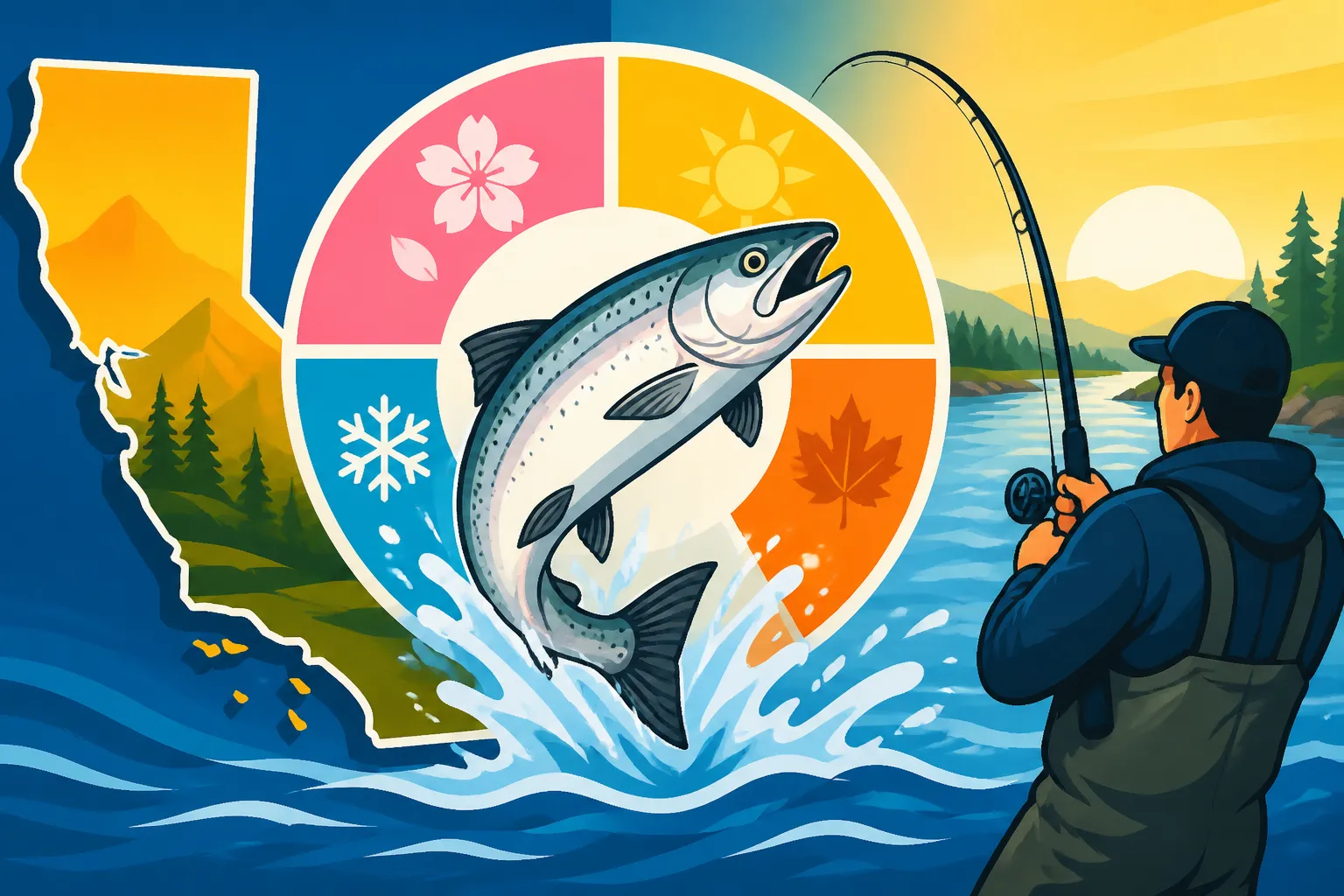
If you’ve ever tried to plan a salmon fishing trip in California, you know the frustration is real. Unlike some other fisheries that have fairly consistent openings and closings, California’s salmon seasons seem to be a moving target. This isn't just to keep us on our toes; there are deeply rooted ecological, environmental, and regulatory reasons that make salmon season dates incredibly complex and often unpredictable. It’s a delicate dance between conservation and opportunity, managed by multiple agencies with a lot riding on every decision.
The Intricate Dance of Ocean and Inland Life Cycles
To truly understand the complexity, you have to appreciate the incredible journey salmon undertake. Most of the salmon we target in California are Chinook (King) salmon, and they have an anadromous life cycle. This means they hatch in freshwater rivers, migrate out to the vast Pacific Ocean to feed and grow for several years, and then return to their natal rivers to spawn and, sadly, complete their life cycle. This journey exposes them to a huge range of variables. In the ocean, they face predation, disease, and changing forage conditions. In rivers, they contend with water temperature, flow rates, dam obstructions, and habitat degradation. Any disruption at any point in this long, challenging journey can significantly impact their population numbers, which then directly influences fishing seasons. The California Salmon Regulations and Limits are designed to protect them through these critical stages.
The Role of Environmental Factors and Climate Change
California's weather and environmental conditions play an enormous, often devastating, role in salmon populations. Droughts are a huge culprit, leading to dangerously low and warm river flows that make it incredibly difficult for juvenile salmon to migrate to the ocean and for returning adults to reach their spawning grounds. Think about the extended droughts we’ve experienced; they’ve truly hammered salmon stocks. Conversely, powerful atmospheric rivers can cause massive floods, scouring riverbeds and destroying redds (salmon nests), further impacting future generations. Ocean conditions are just as critical. El Niño and La Niña cycles, ocean heatwaves, and shifts in upwelling patterns can impact the availability of krill, squid, and baitfish that salmon rely on for survival and growth. When these food sources dwindle, salmon grow slower, return smaller, and fewer survive to adulthood. This variability is why the Why California Salmon Season Changes Yearly article is so vital for understanding the big picture.
How Regulations and Management Agencies Respond to Conditions
Given all these fluctuating factors, it’s no wonder that salmon fishing regulations are constantly adapting. You’ve got a whole host of players involved, from federal agencies like the National Oceanic and Atmospheric Administration (NOAA) Fisheries and the Pacific Fishery Management Council (PFMC) to our very own California Department of Fish and Wildlife (CDFW). The PFMC, for example, is responsible for setting ocean salmon seasons in federal waters (generally 3 to 200 nautical miles offshore) off California, Oregon, and Washington. They make their decisions annually, often in April, based on extensive scientific data, stock assessments, and public input.
For inland fisheries, the CDFW takes the lead, but their decisions are often heavily influenced by the federal ocean regulations, as the fish are the same stocks. This dual-layered regulatory framework means that even a minor change at the federal level can ripple down and significantly alter what we can do in state waters and rivers. It’s a complex, multi-jurisdictional puzzle, all aimed at conserving these precious fish while providing sustainable fishing opportunities.
Navigating California's Salmon Seasons by Region
California is a huge state with diverse waterways, and salmon don't treat every river or stretch of ocean the same way. What's open for fishing in the far north can be completely closed down south, and vice-versa. Understanding these regional distinctions is absolutely key to making sense of the salmon season dates. It’s not just one blanket season for the whole state, and pretending it is will only lead to disappointment or, worse, a citation.
Ocean Salmon Seasons: North, Central, and South
The ocean salmon fishery is typically divided into management areas, primarily along the coast. These zones often have different opening and closing dates, as well as distinct bag and size limits.
- Northern California (e.g., Fort Bragg, Shelter Cove, Eureka, Crescent City): Historically, this area has seen Chinook salmon seasons that vary significantly. Some years, parts of the region might have a summer season, while others might be closed due to low stock forecasts for specific river systems like the Klamath River. The season length can be shorter, and depth restrictions might be in place. In particularly dire years, entire stretches of the coast can be closed to recreational and commercial salmon fishing, as we saw in 2023 and 2024 for much of the California coast due to extremely poor Sacramento River fall Chinook stock forecasts. This often directly impacts ports like Fort Bragg and Eureka, leaving many charter boats tied up.
- Central California (e.g., San Francisco, Half Moon Bay, Monterey): This region, primarily influenced by the Sacramento River fall Chinook stock, often has a more robust season when conditions allow. However, it's not immune to closures. If the Sacramento River stock is low, as it has been, the PFMC may opt for significant restrictions or even full closures to protect the returning spawners. When open, seasons here can run from spring through fall, but again, check the latest CDFW regulations booklet or online updates religiously. For those curious about the specifics, our guide on California Ocean Salmon Regulations offers a deeper dive.
Remember, regardless of the area, you'll need an Ocean Enhancement Stamp if you're fishing in ocean waters south of Point Arguello. The California Ocean Enhancement Stamp is an easy add-on to your license.
Inland Salmon Seasons: Major Rivers and Their Unique Rules
Inland salmon fishing is exclusively focused on Chinook salmon returning to spawn in their natal rivers. These seasons are intensely regulated and highly sensitive to the specific stock health of each river system.
- Sacramento River System: This is California’s largest river system and the primary producer of Chinook salmon targeted by both ocean and inland fisheries. Fishing opportunities exist in various stretches, including the mainstem Sacramento, Feather River, and American River. Seasons here are usually very specific, often with "fall-run" seasons in the lower river and highly restricted "late-fall run" or "spring-run" seasons further upstream. For instance, sections near Redding or under various bridges might have different regulations than sections closer to the Delta. The Sacramento River Fishing Guide has more localized details. Anglers need to pay close attention to open sections, open dates, and specific gear restrictions, as some areas might be artificial lure only or have different bag limits.
- Klamath-Trinity River System: Located in Northern California, this system also supports significant Chinook and coho salmon runs. However, these runs have faced severe challenges due to dam impacts, water diversions, and disease. As a result, fishing opportunities in the Klamath and Trinity Rivers are often extremely limited, sometimes only open for a short period with very low bag limits, or entirely closed. Special regulations, often requiring a Steelhead Report Card or Salmon Report Card even if targeting Chinook, might be in place. The California Salmon Report Card is absolutely essential here.
- Other Rivers (e.g., Eel River, Russian River): While some smaller coastal rivers might see occasional salmon runs, recreational fishing for salmon in these systems is often closed or heavily restricted due to conservation concerns. Steelhead, another anadromous species, often get more attention in these rivers.
It's paramount to understand that these inland river seasons are often managed with strict quotas. Once the quota is met, the season closes, sometimes abruptly. This adds another layer of unpredictability.
Key Factors Influencing Season Openings and Closures
It can feel a bit arbitrary when the salmon season dates are announced, but I promise you, there’s a rigorous, scientific process behind it all. It’s not just a bunch of folks throwing darts at a calendar. The decisions are driven by hard data, conservation mandates, and complex models, which is why it often changes.
Stock Assessments and Environmental Monitoring
At the heart of season-setting are the stock assessments. Each year, scientists from the CDFW, NOAA Fisheries, and various universities meticulously estimate the number of salmon returning to spawn in major rivers like the Sacramento and Klamath. They also forecast how many juvenile salmon are expected to survive and recruit to the ocean fishery in future years. These forecasts are based on a myriad of data points, including:
- Escapement Counts: Counting the number of adult salmon that successfully return to their spawning grounds (past the anglers, past the commercial boats, past the predators).
- Smolt Survival Rates: Monitoring how many juvenile salmon (smolts) successfully migrate from freshwater to the ocean.
- Ocean Indicators: Assessing ocean conditions, forage availability, and historical catch rates.
When these stock assessments show alarmingly low numbers, as has been the case for the Sacramento River fall Chinook stock in recent years, it triggers a cascade of conservation measures. The goal isn't to prevent fishing forever, but to ensure enough salmon make it back to spawn to sustain future generations. This is a critical point that anglers sometimes miss: these closures are about protecting the fishery for the long term, not just restricting it for fun. Sometimes, a full California Salmon Closure Explained is the only responsible option.
The Role of Federal and State Agencies
As mentioned earlier, two main bodies govern salmon seasons in California:
- Pacific Fishery Management Council (PFMC): This is the federal body that manages fisheries in federal waters off the West Coast. The PFMC sets the overall framework for ocean salmon seasons, including opening and closing dates, bag limits, and gear restrictions. They hold public meetings, typically in March and April, where they present various "alternatives" for the upcoming season. These meetings are where anglers and industry stakeholders can voice their concerns and preferences. The final decision is usually made in April, but it's a process that spans months.
- California Department of Fish and Wildlife (CDFW): The CDFW manages salmon fisheries within California's state waters (0-3 nautical miles from shore) and all inland freshwater systems. Their regulations must align with the broader PFMC framework for ocean salmon and are also heavily influenced by the specific health of individual river stocks. They issue detailed regulation booklets and online updates. Keeping an eye on the CDFW website is crucial for getting the most accurate, up-to-date information.
Both agencies work to balance the economic and recreational needs of the fishing community with the biological imperative to conserve salmon populations. It’s a tough job, and they often face immense pressure from all sides.
Marine Protected Areas and Other Restrictions
Adding another layer of complexity are California's extensive network of Marine Protected Areas (MPAs). These are specific ocean areas where fishing is either completely prohibited (No-Take Zones) or heavily restricted to protect marine ecosystems. It's absolutely vital to know if your planned fishing spot falls within an MPA, as fishing for salmon (or anything else) might be illegal there. You can learn more in our article about California Fishing in Marine Protected Areas. Beyond MPAs, there are often specific depth restrictions for salmon fishing in ocean waters, particularly for boats using downriggers or heavy weights, to minimize incidental catch of other groundfish species, like rockfish, which may have their own separate closures or restrictions. This is especially true for the California Rockfish Depth Restrictions which often overlap with salmon season planning.
The table below provides a simplified overview of how various factors interact to determine salmon fishing seasons. Please note that this is illustrative, and actual regulations change annually.
| Factor | Description | Impact on Salmon Season | Management Body |
|---|---|---|---|
| Ocean Abundance Forecast | Scientific prediction of salmon returning to spawn, based on prior year's escapement and ocean survival indicators. | Low forecasts (e.g., Sacramento River Fall Chinook) often lead to shorter seasons, reduced bag limits, or full closures across vast regions. | PFMC, NOAA Fisheries |
| River Flow & Temperature | Hydrological conditions in freshwater rivers (e.g., drought, floods, warm water). | Low, warm flows stress migrating fish, reduce spawning success. Can lead to emergency river closures or further restrictions. | CDFW |
| Ocean Conditions | Sea surface temperature, upwelling strength, availability of forage species (anchovy, sardine, krill). | Poor forage conditions mean smaller, less numerous salmon returning. Contributes to lower abundance forecasts and stricter seasons. | PFMC, NOAA Fisheries |
| Spawning Escapement Goals | Target number of salmon needed to successfully spawn in each river system to sustain populations. | If forecasts indicate escapement goals won't be met, seasons are curtailed to allow more fish to reach spawning grounds. | PFMC, CDFW |
| Incidental Catch Concerns | Risk of catching non-target species (e.g., protected Coho salmon, overfished groundfish). | Gear restrictions (e.g., barbless hooks only), depth restrictions, or time/area closures implemented to minimize bycatch. | PFMC, CDFW |
Planning Your Salmon Fishing Trip: Essential Resources and Best Practices
Given all the moving parts, planning a successful salmon trip in California requires more than just checking the calendar once. It demands diligence, adaptability, and a commitment to staying informed. Trust me, showing up prepared is half the battle, and it saves you a lot of heartache (and potential fines).
Always Check the Latest Regulations
This cannot be stressed enough: Always check the most current regulations directly from the California Department of Fish and Wildlife (CDFW) before every trip. Seasons can open, close, or change mid-season with little warning, especially if quotas are met or emergency conservation measures are enacted.
- CDFW Website: This should be your first stop. Look for the "Ocean Sport Fishing Regulations" and "Freshwater Sport Fishing Regulations" sections. They typically post in-season updates and news releases regarding closures or changes.
- Annual Sport Fishing Regulations Booklet: While helpful, remember that these are printed months in advance and do not include in-season changes. Use it as a general guide, but always cross-reference with online updates. You can usually pick up a physical copy wherever you buy your fishing license, or download the PDF online.
- Fishing Reports: While anecdotal, local fishing reports from reliable sources (charter boats, tackle shops, online forums) can give you a sense of what's happening on the water and whether the fish are even biting, but never rely on them for legal regulations. Our How to Read California Fishing Reports guide can help you interpret them.
The Importance of Report Cards
If you're targeting salmon in certain areas, particularly inland rivers or for specific species like Steelhead (which often overlap with Chinook salmon fisheries), you will almost certainly need a California Salmon Report Card. These cards are crucial for collecting data on catch and effort, which directly informs future stock assessments and season-setting. Failing to possess one, or failing to fill it out correctly and return it by the deadline, can result in penalties. Always make sure you have the correct California Fishing Report Cards Explained for your target species.
Essential Gear for California Salmon
Once you've confirmed the season, it's time to think about gear. Salmon fishing, whether trolling in the ocean or drifting in a river, demands robust and reliable equipment.
- Rods & Reels: For ocean trolling, a medium-heavy to heavy conventional rod (7-9 feet) paired with a sturdy conventional reel loaded with 30-50 lb braid and a fluorocarbon leader (25-40 lb) is standard. Brands like Penn, Shimano, and Accurate are popular. For river fishing, a medium-heavy spinning or baitcasting rod (8-10 feet) with a sensitive tip is often preferred, allowing for precise bait presentation and detecting subtle bites.
- Lures & Baits: In the ocean, common choices include anchovy or sardine rigged behind a flasher or dodger, spoons (e.g., Krippled Anchovy, Apex), and sometimes hoochies. For river fishing, roe (salmon eggs), clusters, worms, spinners (e.g., Blue Fox, Mepps), or specialized plugs (e.g., Kwikfish, Brads KillerFish) can be highly effective depending on water conditions. Remember to check regulations for specific bait restrictions, especially in certain river sections that might be artificial lures only. You can find a great selection of these on Amazon.
- Safety Gear: Especially when fishing offshore, safety is paramount. Always have life jackets, a VHF radio, flares, and a well-stocked first-aid kit. Knowing How Seasickness Works on California Offshore Trips and preparing for it is also crucial.
- Weather-Appropriate Clothing: California weather can be fickle. Dress in layers, bringing waterproof and windproof outerwear, even on what looks like a sunny day.
Sustainable Angling and Ethical Practices
As anglers, we have a responsibility to be stewards of the fishery. Practicing ethical angling is vital for preserving salmon populations. This includes:
- Respecting Limits: Adhering strictly to California Salmon Bag Limit Explained and California Salmon Size Limit Explained. Don't be "that guy" who pushes the limits.
- Careful Release: If you're practicing catch-and-release, use barbless hooks (often required in freshwater anyway, see California Barbless Hook Requirements), minimize handling time, and release fish gently.
- Clean Fishing: Pack out all your trash, including discarded fishing line and bait containers. Leave the environment better than you found it.
By staying informed, preparing properly, and fishing responsibly, you can increase your chances of a memorable and successful California salmon fishing experience, while also contributing to the long-term health of these incredible fish.
Disclaimer
Please remember that fishing regulations, including season dates, bag limits, and specific area restrictions, are subject to change at any time by the California Department of Fish and Wildlife (CDFW) and other governing bodies. While we strive to provide accurate and up-to-date information, it is your responsibility to consult the latest official CDFW regulations before engaging in any fishing activity. This article is for informational purposes only and does not constitute legal advice.