California Rockfish Rules in the San Francisco Management Area
Oh boy, trying to keep track of California's fishing regulations can feel like trying to untangle a particularly gnarly bird's nest of fishing line. It's not just a matter of "can I fish?" but "where, when, and for what?" And when you narrow it down to something as specific as rockfish in the San Francisco Management Area, things can get even more confusing, leaving many anglers scratching their heads or worse, unintentionally breaking the rules. This guide is here to cut through that complexity, laying out the specific rockfish rules for the San Francisco Management Area so you can fish confidently and legally.
Understanding California's Rockfish Regulations Maze
California's coastline is incredibly diverse, from the chilly, rugged waters of the North Coast to the warmer, kelp-forested areas of Southern California. This diversity means that fish populations, their habits, and their vulnerabilities differ significantly from one region to another. That's precisely why the California Department of Fish and Wildlife (CDFW) has carved the coast into various management areas, each with its own set of rules designed to protect local fish stocks and ensure sustainable fishing for generations to come. It’s not just a bureaucracy thing; it’s genuinely about conservation.
Why Specific Management Areas Exist
Imagine trying to apply the same fishing rules to the entire state of California. It just wouldn't make sense! The needs of rockfish populations off Crescent City are vastly different from those thriving near San Diego. For instance, some areas might have denser populations of certain species, while others might be critical spawning grounds. Overfishing in one region could devastate a local stock, even if the species is abundant elsewhere. These management areas allow the CDFW to be much more granular and responsive with their conservation efforts.
They consider things like localized population trends, habitat types, and even different fishing pressures from various communities. What might be an acceptable harvest rate in a highly populated area with many anglers could be unsustainable in a more remote region. It’s a delicate balancing act to keep our fisheries healthy while still allowing us to enjoy the sport we love. So, while it adds a layer of complexity for us anglers, these specific zones, like the San Francisco Management Area, are actually a really smart way to manage our precious marine resources effectively.
General Rockfish Regulations Overview
Before we dive into the nitty-gritty of the San Francisco area, it’s helpful to understand the overarching philosophy behind California's rockfish regulations. Generally, rockfish are managed as part of a larger "Groundfish" complex, which also includes species like lingcod and cabezon. The rules typically cover bag limits (how many fish you can keep), size limits (how big they need to be), seasons (when you can fish for them), and depth restrictions (how deep you can fish).
The CDFW often adjusts these regulations annually, or even mid-season, based on stock assessments and federal guidelines from the Pacific Fishery Management Council (PFMC). This means that what was legal last year might not be legal this year, which is a common point of frustration for many anglers. It's why always consulting the most current official guide, or checking the CDFW website, is absolutely crucial. You also need to be aware of the different types of rockfish; there are over 60 species, and while many fall under a general "rockfish" umbrella, some sensitive species have their own distinct rules. You can find more general information on the rules in our comprehensive guide to California Rockfish Regulations and Limits.
Diving Deep into the San Francisco Management Area (SFMA)
Alright, let's get down to brass tacks: what's the deal with rockfish in the San Francisco Management Area? This area holds a special place in many anglers' hearts, offering diverse opportunities from the Golden Gate to the Farallon Islands. But with those opportunities come specific responsibilities to abide by the rules.
Defining the San Francisco Management Area Boundaries
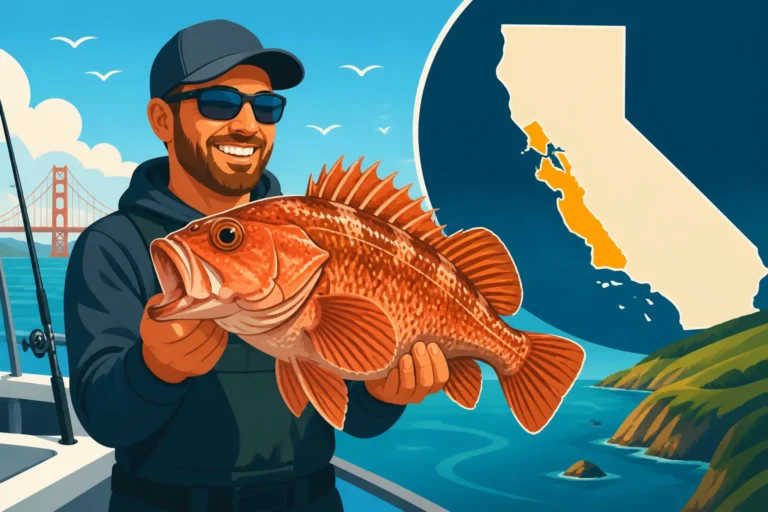
The San Francisco Management Area is a critical stretch of California's central coast. It encompasses a significant portion of the region, typically defined as the waters between 37° 11' N. latitude (near Pigeon Point, San Mateo County) and 38° 57.5' N. latitude (near Point Arena, Mendocino County). This includes all the popular fishing grounds outside the Golden Gate, Bodega Bay, Half Moon Bay, and even offshore to the Farallon Islands.
It's important to remember that these boundaries are straight lines of latitude, not necessarily following coastal contours perfectly. If you're out on the water, having a reliable GPS or marine chart where you can input these coordinates is a lifesaver. Fishing just a mile north or south of these lines could put you in a different management area with entirely different regulations, which can quickly lead to an unwanted citation. Always double-check your position, especially if you're venturing near the edges of the zone. This area is distinct from the more northern California Rockfish Rules in the North Coast Management Area or the southern California Rockfish Rules in the Central Coast Management Area, so knowing your precise location is paramount.
Species-Specific Rules within the SFMA
While there's a general rockfish bag limit, some species have tighter restrictions, or even entirely separate rules. Within the San Francisco Management Area, the aggregate bag limit for rockfish (which includes species like Vermilion Rockfish, Bocaccio, Canary Rockfish, and many others) is generally 10 fish in combination of all species per person, with specific sub-limits for certain species. For example, sensitive species like Canary Rockfish or Yelloweye Rockfish often have very strict sub-limits, sometimes as low as one or even zero, due to their conservation status. Vermilion Rockfish, a popular catch, also frequently has a lower sub-limit within the overall bag.
It’s crucial to be able to identify your catch. If you’re pulling up a beautiful Vermilion Rockfish, you need to know its specific sub-limit and size requirements. If you're not sure, it’s always best to err on the side of caution or release the fish if it's a restricted species you can't identify instantly. A good waterproof fish identification chart on board can be incredibly helpful. You might even find some excellent, laminated versions on Amazon that are perfect for boat use. Understanding these nuances is key to responsible angling, and it ensures you're not contributing to the decline of vulnerable populations. You can dive deeper into specific bag limits in our article on California Rockfish Bag Limit Explained.
Seasonality and Depth Restrictions
This is where things often get tricky and change frequently. The seasons for rockfish in the San Francisco Management Area are not year-round. They typically open in the spring and close in the fall or early winter, but these dates can shift annually based on stock health. It's not uncommon for the season to be delayed or shortened if conservation concerns arise. For the most up-to-date information on California Rockfish Season Dates Explained, you absolutely must check the official CDFW regulations just before you head out. Don't rely on what you heard last year!
Even when the season is open, depth restrictions are a major factor. These rules dictate how deep you're allowed to fish, specifically to protect deep-dwelling rockfish species that are particularly vulnerable to barotrauma (injury from changes in pressure when brought to the surface). For example, in recent years, anglers in the SFMA might be restricted to fishing in depths shallower than 180 feet, or sometimes even shallower depending on the specific regulations in place. If you're fishing offshore, a good quality depth sounder is indispensable, as accidentally dropping your lines into prohibited depths can lead to fines. These restrictions also often vary by time of year, becoming more or less restrictive depending on management goals. These rules are part of broader California Rockfish Depth Restrictions and are vital for sustainable fishing.
Here's a simplified overview of typical San Francisco Management Area rockfish regulations. Always consult the current CDFW regulations booklet before fishing, as these are subject to change.
| Regulation Category | General Rule (SFMA – Typical, Subject to Change) | Specifics/Notes |
|---|---|---|
| Location | Between 37° 11' N. and 38° 57.5' N. latitude | Includes waters off San Francisco, Half Moon Bay, Bodega Bay |
| Season | Varies, generally Spring to Fall/Early Winter | Absolutely check current CDFW regulations before each trip. |
| General Bag Limit | 10 fish per person | Aggregate limit for most rockfish species. |
| Vermilion Rockfish | 4 fish per person (within 10-fish aggregate) | Often has a sub-limit. Minimum size may apply. |
| Canary Rockfish | 1 fish per person (within 10-fish aggregate) | Highly restricted due to conservation concerns. |
| Yelloweye Rockfish | 0 fish per person (prohibited to take) | Zero retention due to severe conservation status. |
| Lingcod | 2 fish per person | Separate species, often caught with rockfish. Minimum size usually 22 inches. |
| Cabezon | 2 fish per person | Separate species, often caught with rockfish. Minimum size usually 15 inches. |
| Depth Restriction | Varies, typically 180 or 240 feet max. | Protects deepwater species. Crucial to verify current limits. |
| Gear Restriction | Max 2 hooks per line | Reduces bycatch and overharvest. |
| Descending Device | Recommended/Required in some cases | Essential for releasing deep-caught fish safely. |
| License Requirement | Yes, for anyone 16 years or older | See California Fishing License Guide |
Disclaimer: This table is for illustrative purposes only and summarizes common regulations. Official CDFW regulations are the only legal authority and must be consulted. Regulations can change frequently.
Gear, Tactics, and Compliance for SFMA Rockfishing
Catching rockfish in the San Francisco Management Area is an absolute blast, but it's not just about getting a bite. It's about having the right gear, employing smart tactics, and ensuring you're doing it all by the book. Compliance isn't just about avoiding fines; it's about being a responsible steward of the marine environment.
Recommended Gear and Tackle for SFMA Rockfish
When targeting rockfish in the San Francisco Management Area, your gear selection can make a big difference, not only in your success but also in your ability to comply with regulations.
First, let's talk about rods and reels. You'll want a medium-heavy to heavy conventional rod, roughly 6.5 to 7.5 feet long, paired with a reliable conventional reel like a Penn Fathom or an Avet MXL. These reels are robust enough to handle the strong pull of rockfish from deeper water and have the cranking power to deal with heavy lead weights. Spool your reel with 50-80 pound braided line; the braid's lack of stretch helps you feel even subtle bites in deep water and provides excellent sensitivity. On Amazon, you can find a wide range of suitable rods, reels, and braided line from reputable brands.
Terminal tackle is also critical. A typical rockfish rig often involves a dropper loop setup or a pre-tied gangion rig, allowing you to present multiple baits or lures at different depths. Remember, the general rule is often a maximum of two hooks per line when fishing for rockfish. For bait, squid strips, anchovies, or sardines are perennial favorites. If you prefer artificials, lead jigs in the 4-10 ounce range, or soft plastic swimbaits on heavy jig heads, can be incredibly effective. Consider colors like green, blue, or red, which tend to work well in the often-murky depths where rockfish live. Don't forget an array of lead weights, ranging from 6 to 16 ounces, as current and depth can vary significantly, dictating how much weight you need to stay on the bottom.
Staying Legal: What Every Angler Needs to Know
Beyond the specific fish regulations, there are a few other absolute must-dos to ensure you're staying legal in the SFMA, or anywhere else in California for that matter.
First and foremost, a valid California fishing license is required for anyone 16 years or older. There are no exceptions when fishing from a boat in the ocean. Make sure you understand how to Get a California Fishing License and always carry it with you. Many anglers buy their licenses online through the CDFW website, but you can also find them at bait and tackle shops.
Secondly, and this is especially critical for rockfish, is having a way to measure your fish accurately. A reliable measuring tape or ruler should be a permanent fixture in your tackle box. Many species, including specific rockfish and lingcod, have minimum size limits. Keeping an undersized fish, even accidentally, can lead to serious penalties.
Third, consider a descending device. While not always strictly required by law, they are strongly recommended, and sometimes become mandatory depending on changing regulations. A descending device allows you to safely release rockfish suffering from barotrauma back to the depth they were caught, greatly increasing their survival rate. This is an important tool for ethical angling, especially given the depth restrictions often in place. Being a responsible angler means doing what you can to ensure fish released have the best chance of survival.
Finally, familiarize yourself with California Marine Protected Areas Explained. The SFMA has several MPAs, or "no-take zones," where fishing is either completely prohibited or highly restricted. Accidentally drifting into an MPA and dropping a line could lead to a very expensive mistake. Always know where these zones are and how to avoid them. A GPS plotter with MPA boundaries overlaid is an invaluable tool for this.
Common Pitfalls and How to Avoid Them
Even the most seasoned anglers can occasionally get caught off guard by California's complex fishing regulations. It's not always intentional; sometimes, it's simply due to misinformation or outdated knowledge. Recognizing these common pitfalls is the first step to avoiding them and ensuring a smooth, legal, and enjoyable fishing trip in the San Francisco Management Area.
Misinterpreting Regulations on the Water
One of the biggest traps anglers fall into is misinterpreting the regulations while out on the water. You might hear something from a buddy at the dock, or glance quickly at an old regulation booklet, and think you're good to go. But regulations change! What was true last season might be completely different today. This is especially prevalent with rockfish, where seasons, depth limits, and even species-specific bag limits can be adjusted with relatively short notice by the CDFW or NOAA Fisheries.
A classic example of misinterpretation is confusing general rockfish limits with sub-limits for specific species. You might know the aggregate bag limit is 10 rockfish, but forget that only one of those can be a Canary Rockfish, or that Yelloweye Rockfish are strictly prohibited. The best way to combat this is by having the current official regulations with you on the boat. You can download the latest California Sport Fishing Regulations booklet as a PDF on your phone or tablet, or even better, purchase a physical copy from a tackle shop or on Amazon to have as a backup. There's also usually a helpful summary of California Fishing Regulations Explained online. Before every trip, take 10-15 minutes to skim the relevant sections for your target species and location.
Another common issue arises with depth restrictions. If your fish finder isn't accurate, or you're not paying close attention to your drifts, you could easily find your lines crossing into prohibited depths. Always verify your depth and keep a keen eye on your electronics, especially when fishing near the edge of a restricted depth zone. Better yet, set alarms on your GPS or fish finder if it has that capability to alert you if you hit a certain depth.
The Importance of Up-to-Date Information
In the fast-evolving world of fishery management, relying on outdated information is a recipe for trouble. The California Rockfish Rules in the San Francisco Management Area, like many other regulations, are dynamic. Factors like scientific stock assessments, environmental changes, and even federal management mandates can trigger shifts in seasons, bag limits, and depth restrictions.
So, how do you stay truly current? The absolute best source is the official California Department of Fish and Wildlife (CDFW) website. They publish all current regulations, emergency closures, and proposed changes. I make it a habit to check their "Ocean Sport Fishing Regulations" page a day or two before every saltwater fishing trip. You can also sign up for their email alerts, which notify you directly of significant changes.
Beyond the CDFW website, local bait and tackle shops are often excellent resources. The folks working there are usually avid anglers themselves and are often the first to know about local nuances or recent changes, as well as providing insights into current conditions or where to find the Best Rock Fishing Spots in California. They can also clarify complex rules in a way that makes sense. Just remember to cross-reference with the official CDFW publication when in doubt, especially for the larger regulatory framework. An informed angler is a successful and legal angler, so making sure your information is fresh is just as important as having sharp hooks.
Disclaimer
The information provided in this article is for general guidance only and is based on typical regulations at the time of writing. Fishing regulations in California, especially for rockfish, are subject to frequent change by the California Department of Fish and Wildlife (CDFW) and federal authorities. It is the angler's sole responsibility to consult and adhere to the most current official CDFW sport fishing regulations before engaging in any fishing activity. Failure to do so may result in fines or penalties.