California Trout Species Explained
It's easy to feel overwhelmed when you're just starting out fishing in California, or even if you've been doing it for years, trying to figure out which trout species is finning at the end of your line. With so much diversity across our amazing state, from high Sierra lakes to coastal streams, it's no wonder anglers sometimes struggle to tell their rainbows from their cutthroats. This guide is here to untangle that confusion, diving deep into the fascinating world of California's trout, helping you identify them, understand their habitats, and appreciate their unique characteristics.
The Golden State's Native Jewels: California's Indigenous Trout
California is home to some truly spectacular native trout species, each perfectly adapted to its unique environment. These are the fish that were here long before any human touched a fly rod, evolving over millennia to thrive in our diverse landscapes. Understanding and protecting them is a huge part of being a responsible angler in this state.
California Golden Trout: A High-Altitude Icon
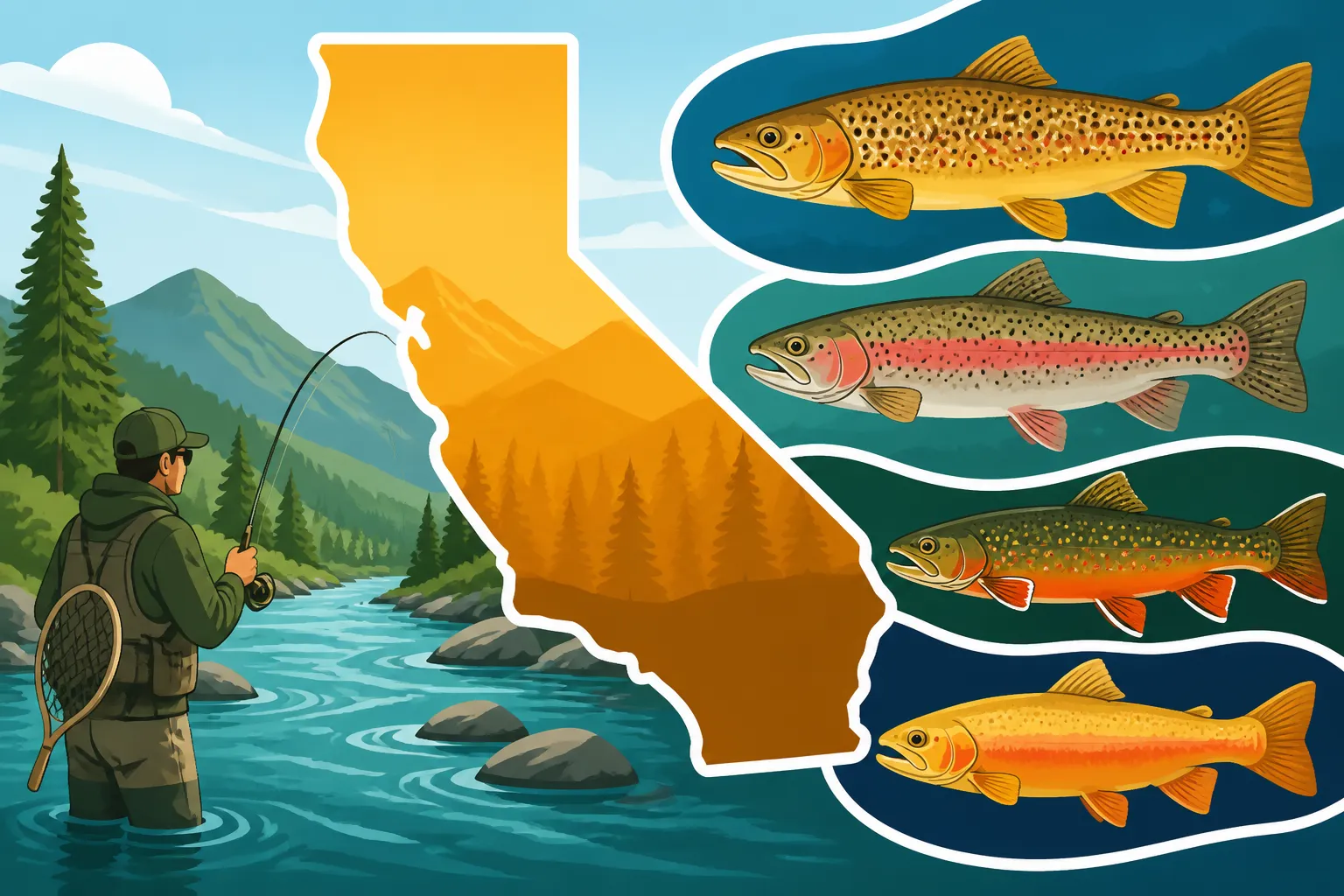
The California Golden Trout, Oncorhynchus mykiss aguabonita, is probably the most iconic and sought-after trout in the state, if not the entire country. Imagine casting your line into a pristine, high-altitude alpine lake or stream, surrounded by granite peaks, and pulling out a fish that looks like it's been dipped in a sunset. That's the golden trout experience. They get their name from their brilliant gold sides, often fading to a reddish-orange belly, adorned with a horizontal red band and striking parr marks that remain visible into adulthood. Their dorsal, caudal, and anal fins are often tipped with white or orange.
These stunning fish are native to the high-elevation waters of the southern Sierra Nevada, primarily in the Kern River drainage. You'll find them in places like Golden Trout Wilderness or parts of Sequoia National Park. They thrive in cold, clear, well-oxygenated streams and lakes, typically above 10,000 feet in elevation. The journey to reach these remote waters is often a multi-day backpacking trip, making the reward of catching one even sweeter. Due to their protected status and specific habitat requirements, understanding the nuanced California Wild Trout Waters Rules is crucial when pursuing them. They mostly feed on aquatic insects like caddisflies, mayflies, and stoneflies, along with terrestrial insects that fall into the water. For an unforgettable adventure, many anglers rely on specialized ultralight gear for their high-country treks, which you can often find great deals on through online retailers like Amazon.
Lahontan Cutthroat Trout: The Desert Survivor
The Lahontan Cutthroat Trout, Oncorhynchus clarkii henshawi, is a remarkable fish with a fascinating history, proving that trout can thrive even in seemingly harsh desert environments. This subspecies of cutthroat trout is named for the distinctive red or orange "slash" mark under its jaw, which is a tell-tale sign of all cutthroat species. Their coloration can vary quite a bit, ranging from silvery-bronze in large lake environments to darker, olive-green backs with yellowish sides and prominent black spots in riverine habitats. In fact, their spot patterns are usually denser and more evenly distributed than other cutthroat subspecies.
Historically, Lahontan Cutthroat Trout were the dominant predatory fish in the ancient Lake Lahontan basin, which covered much of present-day Nevada, parts of Oregon, and northeastern California. Today, you'll find them in isolated populations in places like Pyramid Lake in Nevada and smaller tributaries in Lassen, Plumas, and Sierra counties in California, such as the Truckee River system. These fish are incredibly adaptable, inhabiting large terminal lakes, rivers, and even small, high-desert streams. Their diet includes everything from smaller fish and crustaceans in lakes to aquatic and terrestrial insects in streams. Successfully fishing for them often involves mastering specific California Trout Fishing Techniques that adapt to their unique environments, whether it's trolling deep in a lake or carefully presenting a fly in a desert creek.
Eagle Lake Rainbow Trout: A Unique Evolution
The Eagle Lake Rainbow Trout, Oncorhynchus mykiss aquilarum, is another unique native Californian, closely related to the traditional rainbow trout but with distinct adaptations that allow it to thrive in the alkaline waters of Eagle Lake in Lassen County. While they share the classic rainbow trout appearance with a reddish-pink stripe along their lateral line and a silvery body, they often have a more robust build and a deeper blue-green back. Their spots tend to be smaller and more numerous, especially above the lateral line.
This subspecies is unique because of its resilience to the highly alkaline waters of Eagle Lake, where most other trout species cannot survive. They are also anadromous, meaning they historically migrated from Eagle Lake up Pine Creek to spawn, a behavior that has been supported by hatchery programs and stream improvements. Their diet in Eagle Lake is varied, consisting of tui chub, aquatic insects, and even terrestrial insects that fall into the water. These trout are known for their strong fighting ability, making them a favorite among local anglers. Understanding the specific regulations for this fishery is paramount, as maintaining this unique genetic strain is a high priority.
Stocked Stars: The Rainbow Trout and Its Cousins
When most people picture a trout in California, chances are they're thinking of a rainbow trout. These resilient and beautiful fish are the backbone of California's recreational trout fisheries, both native and hatchery-supported. They're found everywhere from urban ponds to remote wilderness areas.
Coastal Rainbow Trout: The Mainstay
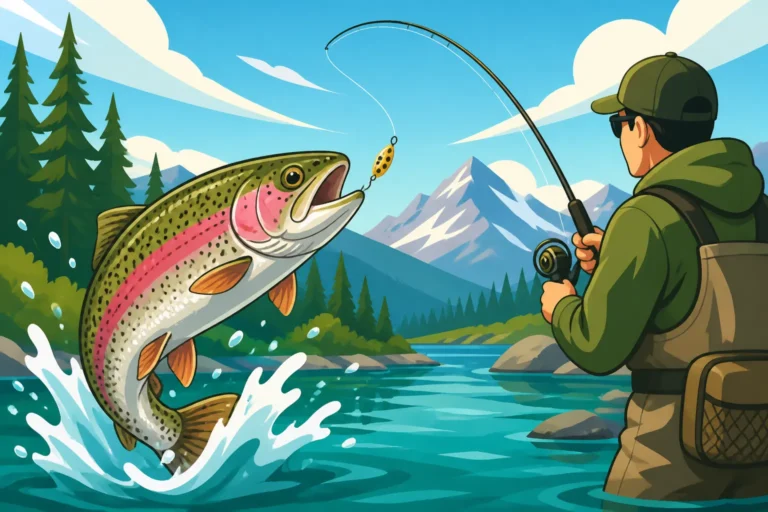
The Coastal Rainbow Trout, Oncorhmykus mykiss irideus, is the most widely distributed and recognized trout species in California. When we talk about "rainbow trout," this is typically the subspecies we're referring to, especially the hatchery-raised versions that CDFW plants regularly across the state. They are characterized by their iridescent, silvery-pink lateral band, dark olive-green backs, and white bellies. Their bodies are covered in numerous small black spots, which extend onto their dorsal, caudal, and adipose fins.
These adaptable fish inhabit a huge range of environments, from cool coastal streams to large reservoirs and alpine lakes throughout the state. They thrive in cold, clear, oxygenated waters. The California Fish Planting Explained program ensures that many popular fishing spots are regularly stocked, providing fantastic opportunities for anglers of all skill levels. Rainbows are opportunistic feeders, consuming a wide variety of prey including aquatic insects (nymphs, larvae, adults), terrestrial insects, small crustaceans, and even smaller fish. They can be caught using an equally wide array of techniques, from bait fishing with PowerBait or worms, to spin fishing with lures like Kastmasters or Rooster Tails, and fly fishing with dry flies, nymphs, or streamers. For those new to trout fishing, finding a good starter fishing kit, complete with various baits and lures, on Amazon can be a great way to begin.
Steelhead: Anadromous Marvels
Steelhead, often referred to as sea-run rainbow trout, are genetically identical to coastal rainbow trout but possess a fascinating life history: they migrate to the ocean to feed and grow large before returning to freshwater streams to spawn. This anadromous lifestyle leads to a significantly different appearance compared to their freshwater-resident counterparts. While in saltwater, they become chrome-bright, almost silvery, with few visible spots and a faint or absent rainbow stripe. Upon returning to freshwater, their coloration deepens, becoming darker on the back and sides, and the rainbow stripe may become more pronounced, though still not as vibrant as a resident rainbow.
Historically, steelhead runs were robust in nearly every coastal stream in California. Today, populations are much more fragile and protected, primarily found in the larger river systems along the North Coast, such as the Eel River, Klamath River, Trinity River, and Russian River. Some smaller runs still exist in Central Coast streams. They are highly sought after by dedicated anglers for their incredible fighting power. Steelhead feed heavily on baitfish and crustaceans in the ocean, and while in freshwater for spawning, they primarily respond to egg patterns, nymphs, and swung flies, often exhibiting a territorial rather than feeding response. Due to their protected status, adhering strictly to California Steelhead Report Card regulations and practicing catch-and-release is often mandatory.
Kern River Rainbow Trout: A Local Treasure
The Kern River Rainbow Trout, Oncorhynchus mykiss gilberti, is a distinct subspecies of rainbow trout native to the Kern River system in the southern Sierra Nevada. Like the California Golden Trout, this fish holds a special place in the hearts of local anglers due to its unique heritage and striking beauty. They typically display a darker, olive-green back, brilliant golden-yellow sides, and a prominent, broad reddish-orange band along their lateral line, which can be quite vibrant, especially during spawning. Their spots are often relatively large and scattered, particularly above the lateral line and on the tail.
These trout are endemic to the upper reaches of the Kern River and its tributaries, thriving in the cold, fast-flowing waters of this majestic Sierra river system. Their habitat is similar to that of the golden trout but at slightly lower elevations within the Kern River drainage. They are well-adapted to the strong currents and rocky bottom of their native river. Their diet consists primarily of aquatic insects, such as stonefly nymphs, caddis larvae, and various mayfly species, as well as terrestrial insects that drift into the water. Fishing for Kern River Rainbows often requires precise presentations and knowledge of the river's unique features, making fly fishing a popular and effective method. If you're planning a trip, be sure to check the specific California Freshwater Fishing Regulations for the Kern River.
The Elusive Giants: Brown Trout and Lake Trout
While not native to California, brown trout and lake trout have established themselves in many of our waters, providing incredible opportunities for anglers seeking larger, often more challenging, catches. These fish bring a different flavor to the California trout scene.
Brown Trout: The Wily Invader
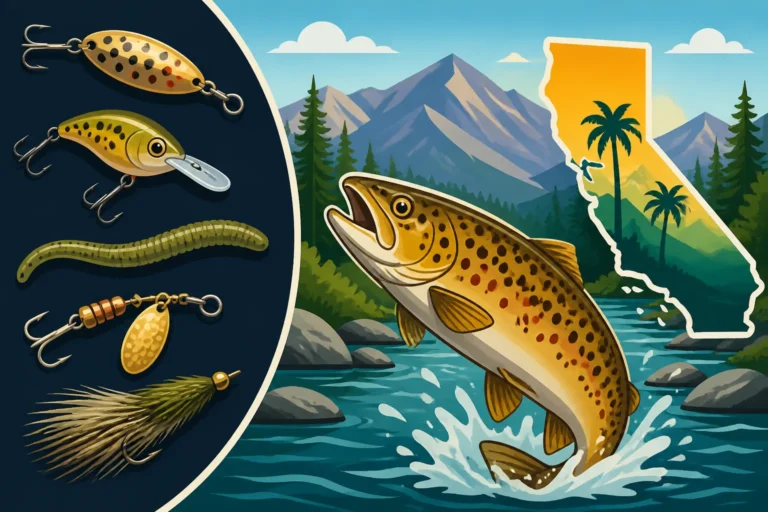
Brown Trout, Salmo trutta, were introduced to California from Europe in the late 19th century and have since become a popular, albeit sometimes controversial, game fish. Known for their intelligence and wariness, they are often considered the most challenging trout to catch. Their appearance is distinct: a brownish or olive-green back fading to golden-brown sides and a creamy or yellowish belly. They are characterized by prominent dark spots, often encircled by a lighter halo, and some red or orange spots that are usually ringed with blue. These spots extend onto their gill covers but rarely onto their caudal fin.
Brown trout have adapted to a wide range of habitats across California, from cold mountain streams in the Eastern Sierra and Trinity Alps to large reservoirs like Lake Almanor, Lake Crowley, and the Lower Owens River. They are incredibly resilient and can tolerate slightly warmer water temperatures than rainbow trout, which has allowed them to colonize diverse environments. As they grow larger, brown trout become increasingly piscivorous, meaning they primarily feed on other fish. However, they also consume a significant amount of aquatic and terrestrial insects. Their predatory nature means they often respond well to larger lures, streamers, and minnow imitations. For serious brown trout anglers, understanding the best times to fish, as outlined in guides like California Fishing Seasons: Month-by-Month Guide, can be the key to landing a trophy.
Lake Trout (Mackinaw): Deepwater Predators
Lake Trout, Salvelinus namaycush, also known as Mackinaw, are another non-native species introduced to California that can grow to impressive sizes, making them a prime target for trophy hunters. These fish are actually a type of char, distinguishable from true trout by their lighter spots on a darker body, as opposed to dark spots on a lighter body. They typically have a grayish-green to dark brown coloration, with cream-colored or yellowish spots scattered over their head, back, and sides. They have a deeply forked tail, which is a key identifying feature.
Lake trout are found exclusively in large, deep, cold-water lakes across California. They are most famously targeted in Lake Tahoe, but also reside in other deep reservoirs like Lake Almanor, Lake Pillsbury, and Shaver Lake. They are a species that prefers cold, oxygen-rich water, typically staying in the deeper parts of lakes, especially during warmer months. As apex predators in their ecosystems, adult lake trout primarily prey on other fish species such as kokanee salmon, tui chub, and minnows. They are often caught by trolling large spoons, plugs, or live bait at significant depths, sometimes requiring specialized downriggers. For those looking to target these deep-water beasts, researching the specific depth restrictions and techniques found in California Fishing Regulations Explained is essential.
Understanding Hybrids and Special Strains
Beyond the pure species and subspecies, California's trout fisheries also feature some interesting hybrids and unique strains, often the result of hatchery breeding programs designed to offer anglers a different kind of challenge or visual appeal.
Palomino and Lightning Trout: Hatchery Wonders
Palomino and Lightning Trout are essentially genetic variations of rainbow trout, primarily bred in hatcheries for their striking coloration rather than being distinct species. They are often stocked in urban lakes and community fishing ponds to add novelty and excitement, particularly for younger anglers. The Palomino Trout often exhibits a vibrant, pale yellow or golden body with a faint, sometimes iridescent, lateral stripe and reddish fins. It typically retains some of the characteristic black spots of a rainbow trout, though they might be less numerous or prominent. The Lightning Trout takes this a step further, often appearing a brilliant, almost fluorescent yellow or gold with a distinct, jagged white stripe running down its lateral line, resembling a lightning bolt.
These unique-looking trout thrive in the same environments as standard stocked rainbow trout – lakes, ponds, and slower-moving rivers that receive regular fish plantings. They have the same dietary preferences as rainbows, feeding on aquatic insects, crustaceans, and anything else readily available. They are typically caught using the same methods as rainbows, making them accessible to most anglers. Their primary purpose is to provide a fun and visually different angling experience, often being a highlight for kids during California Free Fishing Days or community fishing events. You might even find specialized gear for targeting these brightly colored fish among the vast selection on Amazon.
Tiger Trout: The Sterile Hybrid
The Tiger Trout, Salmo trutta x Salvelinus fontinalis, is a fascinating and naturally occurring sterile hybrid between a female brown trout and a male brook trout. This cross rarely happens in the wild but is successfully replicated in hatcheries to introduce a unique and often aggressive fish to specific waters. Their most distinctive feature is their vermiculated (worm-like) pattern of dark stripes and spots on a lighter, often olive-green or yellowish-brown background. This pattern extends all over their body, resembling a tiger's stripes, giving them their apt name. They also have a stout body similar to a brown trout and often display the reddish-orange fins of a brook trout.
Tiger trout are stocked in various lakes and reservoirs across California, often in waters where managers want to introduce a predatory fish that won't reproduce and potentially outcompete native species. They can be found in places like Crowley Lake or some of the high Sierra lakes. Like their brown trout parent, tiger trout are highly predatory and become quite piscivorous as they grow, targeting smaller baitfish, leeches, and larger insects. Their aggressive nature makes them a thrilling catch on both lures and flies. They are known for their strong fights and willingness to chase down baits.
Protecting Our Precious Resources: Conservation and Identification
Understanding the different trout species in California isn't just about identifying your catch; it's deeply tied to conservation, responsible angling, and ensuring these incredible fish thrive for generations to come.
Why Identification Matters for Anglers
Accurate identification is paramount for every angler in California, and honestly, it's one of the most frustrating aspects for many beginners. The California Fishing Regulations Explained are complex and often vary significantly by species, body of water, and even time of year. For instance, the California Salmon Report Card and California Sturgeon Report Card are mandatory for those specific species, while different rules apply to various trout. Many native and wild trout populations, like the California Golden Trout or specific runs of steelhead, are highly protected, with strict catch-and-release rules, specific gear restrictions (like California Barbless Hook Requirements), or even complete closures. Mistaking a protected wild trout for a stocked rainbow could lead to unintentional violations and harm to fragile populations. Knowing your fish helps you comply with bag and size limits, identify special regulation waters, and contribute to the overall health of our fisheries.
It's not just about avoiding fines; it's about respecting the resource. If you can't tell the difference between a rare, native cutthroat and a common stocked rainbow, you might not treat them with the care they deserve. Properly identifying your catch means you can release protected species unharmed, follow specific harvest guidelines for abundant populations, and even contribute valuable data if you're participating in citizen science programs. Always keep a current copy of the annual California Freshwater Fishing Regulations booklet with you, which you can often download digitally or pick up at most tackle shops.
Conservation Efforts for Native Species
California has some truly unique native trout populations, many of which face significant threats from habitat loss, climate change, and competition with non-native species. The California Department of Fish and Wildlife (CDFW) and various conservation groups are actively involved in efforts to protect and restore these populations. This includes habitat restoration projects (improving stream flow, reducing sedimentation, removing barriers to migration), stocking programs focused on native genetic strains, and stringent fishing regulations to limit angler impact.
For species like the Lahontan Cutthroat Trout, efforts include reintroduction into historical habitats and managing water resources to maintain viable populations. For the California Golden Trout, protecting their pristine high-Sierra environments from encroachment and careful management of angling pressure is critical. When you're fishing in these sensitive areas, practicing proper catch-and-release techniques, minimizing handling stress, and strictly adhering to all local regulations are your personal contributions to conservation. Many organizations, like Trout Unlimited, work tirelessly to advocate for and implement these conservation strategies, and anglers can play a huge role by simply being informed and responsible.
California Trout Species Comparison Table
To help you keep track of all these incredible fish, here's a quick comparison of some of the key trout species you might encounter in California. Remember, coloration can vary based on habitat, age, and diet, so look for a combination of features!
| Species | Native/Introduced | Typical Habitat | Key Identification Features | Average Adult Size (CA) | Notes |
|---|---|---|---|---|---|
| California Golden Trout | Native | High Sierra lakes & streams (Kern River drainage) | Brilliant gold/reddish-orange sides, distinct parr marks, white-tipped fins, small spots | 6-12 inches | Iconic, protected, often requires backpacking |
| Lahontan Cutthroat Trout | Native | Large alkaline lakes (Eagle Lake, Pyramid Lake), high desert streams | Red/orange slash under jaw, variable color (silver to olive), dense black spots | 10-30+ inches | Desert survivor, highly adaptable |
| Coastal Rainbow Trout | Native (resident & anadromous) | Diverse: streams, rivers, lakes, reservoirs, ocean | Iridescent pink/red lateral band, olive-green back, white belly, numerous black spots | 10-20 inches | Most common, widely stocked, Steelhead variant |
| Brown Trout | Introduced | Streams, rivers, large reservoirs | Brown/olive back, golden sides, dark spots with light halos, red/orange spots with blue rings | 12-25+ inches | Wily, predatory, often elusive |
| Lake Trout (Mackinaw) | Introduced | Large, deep, cold-water lakes (Lake Tahoe) | Gray-green/brown with light spots, deeply forked tail | 15-30+ inches | Deepwater predator, trophy fish |
| Kern River Rainbow Trout | Native | Upper Kern River & tributaries | Dark olive back, golden-yellow sides, broad vibrant red band, scattered large spots | 8-15 inches | Unique to Kern River system |
| Tiger Trout | Hybrid (Introduced) | Stocked lakes and reservoirs | Distinct vermiculated (worm-like) pattern of dark stripes, sterile | 10-20 inches | Hatchery-bred, aggressive feeder |
This table is a great starting point, but remember that the best way to learn is to spend time on the water, observe, and consult your regulation booklet. Knowing what's biting can help inform your strategy, whether you're learning how to fish for trout in California or targeting the Best Season for Trout in California.
Disclaimer
The information provided in this guide is for general informational purposes only and is subject to change. Fishing regulations, seasons, and limits are determined by the California Department of Fish and Wildlife and can vary widely by location and time of year. Always consult the most current official California Sport Fishing Regulations booklet before heading out on any fishing trip. Adherence to all local, state, and federal regulations is the sole responsibility of the angler.