Dorado in California: Where and How to Catch
Chasing dorado, also known as mahi-mahi or dolphin fish, in California waters is a truly exhilarating experience, but it can also be incredibly frustrating when you're spending hours on the ocean without a single sign of that iridescent flash. Many anglers dream of encountering these vibrant, hard-fighting pelagic fish, only to feel lost about where to even begin their search. This guide is here to cut through that confusion, giving you the real-world insights into where these beautiful creatures roam off our coast and the most effective strategies to hook one of your own.
The Elusive Golden Flash: Understanding Dorado in California Waters
Dorado are, without a doubt, one of the ocean's most stunning inhabitants. Their electric green, blue, and gold hues are simply mesmerizing, and their acrobatic fights are legendary. But beyond their beauty, there's a certain mystique to catching them in California, largely because they're not a year-round resident. They're warm-water, migratory fish, which means their presence here is often fleeting and dependent on specific ocean conditions. Understanding these nuances is the first step in unraveling the dorado mystery.
What Makes Dorado So Special?
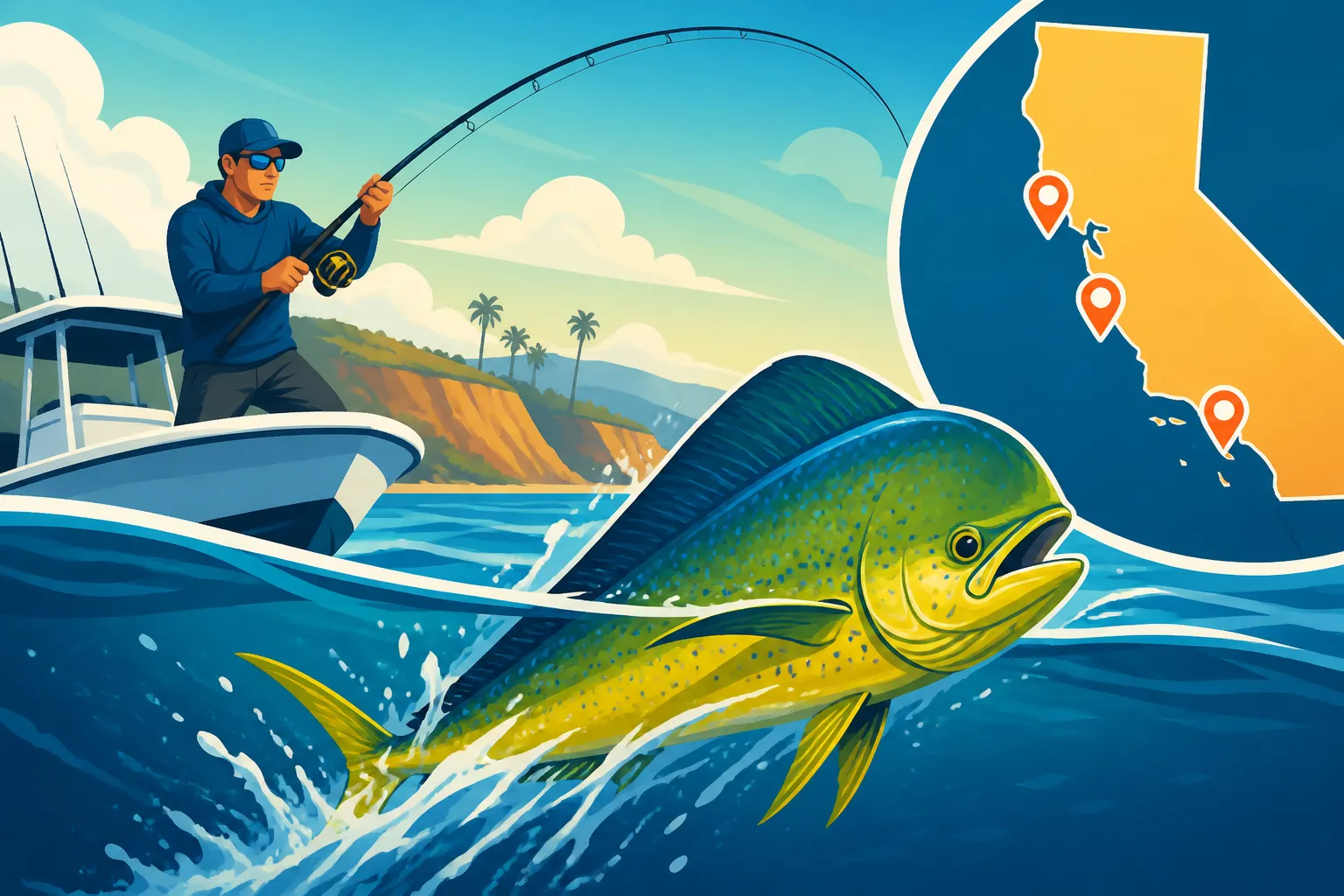
Let's be honest, few fish get an angler's heart pumping quite like a dorado. Their vibrant, almost neon colors are truly a sight to behold, especially when they're lit up and jumping near the boat. You've got that brilliant gold on their flanks, transitioning into a spectacular electric blue and green on their back. These colors, however, can fade quickly once they're out of the water, so savor that initial moment! Beyond their dazzling appearance, dorado are absolute powerhouses on a line. They're known for their blistering runs and incredible aerial acrobatics, often leaping clear out of the water multiple times during a fight. This makes them an incredibly exciting sport fish, challenging even experienced anglers.
And then there's the table fare. Dorado meat is firm, white, and famously delicious, making them a highly sought-after prize for any dinner plate. When you combine their stunning looks, their fierce fighting spirit, and their culinary value, it's no wonder they're considered a dream catch for many. The real "special" part for California anglers, though, is their transient nature. Unlike rockfish or bass, which are more or less permanent residents, dorado are visitors. They follow warm currents from Baja California north, making their appearance a special, seasonal event that dedicated anglers eagerly anticipate each year. It’s this combination of factors that elevates a California dorado catch to legendary status among local fishermen.
When and Where Dorado Show Up
The secret to finding dorado in California hinges almost entirely on water temperature. These are tropical and subtropical fish, and they absolutely thrive in warm, blue water, ideally above 68-70 degrees Fahrenheit. Because of this, their appearance off the California coast is primarily a late summer and early fall phenomenon. We're talking generally from August through October, though this can vary significantly year to year based on oceanographic conditions like El Niño events, which can bring unusually warm water much further north and earlier in the season.
When the warm currents, often originating from the south, push north along our coast, they act like a highway for these pelagic predators. The bulk of the dorado action will typically occur off Southern California, stretching from San Diego up towards Orange County and occasionally even further north to Los Angeles and Ventura if conditions are just right. You're not likely to find them regularly in cooler Northern California waters, though extreme warm water anomalies have seen them caught as far north as Monterey Bay in rare instances. It's a game of patience and constant monitoring of sea surface temperature charts. The moment that warm, blue water intrudes, dorado are usually not far behind, often holding to floating debris or temperature breaks.
Finding the Hot Spots: Where to Target Dorado in California
Once you understand when dorado are likely to be around, the next hurdle is figuring out where to actually find them in the vast expanse of the Pacific. It's not like they hang out in predictable kelp forests near shore most of the time. Dorado are open-ocean wanderers, always on the hunt for food, but they do have specific preferences for where they like to congregate. Successful dorado fishing often means understanding these preferences and knowing how to spot the signs from a boat.
The Magic of Kelp Paddles and Structure
If there's one single piece of advice that almost every experienced California dorado angler will give you, it's this: find the kelp paddies. These aren't your typical nearshore kelp beds; these are detached mats of kelp, often miles offshore, that have broken free from their anchors and are now drifting freely with the currents. Why are they so important? Because they create an entire floating ecosystem! These drifting mats provide shade and cover from predators for smaller baitfish like sardines, anchovies, and mackerel. Where there are baitfish seeking shelter, there will be predators, and dorado absolutely love to hold under or around these paddies.
Approaching a kelp paddy requires a bit of finesse. You don't want to motor right up to it and spook any fish that might be holding there. Instead, try to approach quietly, downwind or down-current, and then drift past it. Have multiple lines ready with live bait or small lures to cast towards the paddy. Sometimes, you'll see dorado free-swimming around the edges or even jumping. Other times, they'll be tucked deep beneath the canopy, and you'll need to drop a bait right to them. Keep an eye out for any bird activity around the paddy too; seabirds often signal baitfish, and thus, hungry dorado. These aren't the only floating structures that attract dorado; any significant piece of floating debris – a pallet, a log, even a discarded rope – can hold them. The key is to investigate every potential piece of flotsam you encounter in warm water.
Following the Temperature Breaks and Current Lines
Dorado are highly sensitive to water temperature, and they gravitate towards the warmest, bluest water available. This means that knowing how to read the ocean's thermal landscape is crucial. Satellite sea surface temperature (SST) charts are your best friend here. Services like Fishdope or even publicly available NOAA data can show you where warm water fingers are pushing into cooler zones. The meeting points of these different water masses often create visible "temperature breaks" or "current lines" – areas where two different currents or water temperatures collide.
These breaks act like natural feeding lanes and aggregation points. Baitfish and plankton get concentrated along these lines, and predatory fish, including dorado, patrol them looking for an easy meal. You might see a visible color change in the water, from murky green to clear blue, or even a subtle rip current. These are prime areas to troll lures or slow-troll live bait. Don't be afraid to put in the miles to find these conditions; the effort often pays off. Sometimes, you'll even find dorado mixed in with other pelagic species like yellowtail or even juvenile tuna in these zones. Familiarity with California Offshore Fishing Techniques can give you a significant advantage when scouting these dynamic environments.
Notable Offshore Banks and Zones
While kelp paddies and temperature breaks are dynamic and transient, certain offshore banks and areas off Southern California are more consistently known for holding warm water and attracting pelagic species when conditions are right. These areas act as underwater mountains or plateaus, causing upwellings and eddies that concentrate nutrients and baitfish, making them prime hunting grounds.
For instance, the waters around Catalina Island and San Clemente Island are perennial favorites. The structure around these islands, combined with their proximity to the open ocean, often makes them a first stop for migrating dorado. Further offshore, banks like the Cortes Bank and Tanner Bank, while a longer run, are legendary for attracting a wide array of pelagic fish, including dorado, yellowtail, and various tuna species. These banks are essentially high-spots in the deep ocean, creating complex currents and ecosystems that hold bait and predators. When warm water pushes into these regions, they can light up with action. Other areas to keep an eye on include the deeper water off Dana Point, Oceanside, and San Diego. It's not about fishing directly on the bank itself, but often working the edges, the associated temperature breaks, and any floating debris found nearby. Staying updated on Best Saltwater Fishing Spots in California can help you prioritize your target areas when dorado are in season.
Mastering the Hunt: Effective Techniques for Catching Dorado
Alright, you've found the warm water, you've located a promising kelp paddy or a distinct temperature break – now what? Catching dorado isn't just about being in the right place; it's also about presenting your bait or lure effectively and having the right gear. These fish are aggressive but can also be surprisingly finicky, especially if they've been pressured. A well-executed technique can mean the difference between a memorable day and a frustrating ride home.
Live Bait Success
When dorado are around, few things are more effective than a lively, fresh baitfish. Sardines, anchovies, and small mackerel are the top choices, mimicking the natural forage they're accustomed to. The key here is presentation. You want your bait to swim naturally, looking like an easy meal.
- Free-lining: This is perhaps the most common and effective method. Use a light wire hook (often a 1/0 to 2/0 circle hook or J-hook, depending on your preference and local regulations for circle hook use) and no weight, or just a tiny split shot if you need to get the bait down a bit. Hook your sardine or anchovy lightly through the nose, just forward of the eyes, or through the back just above the lateral line. Cast it out and let it swim freely. When you see a strike, resist the urge to immediately set the hook. Let the dorado take the bait and turn, then slowly reel down and apply pressure.
- Slow-Trolling: If you're covering ground, slow-trolling live bait can be deadly. Rig your bait similar to free-lining, but add a small trolling lead or even a kite rig to keep it in the water column at a slow boat speed. This method is great for locating schools or targeting fish holding deeper under large paddies.
- Chumming: Once you find a school, a little bit of chum can drive them into a feeding frenzy right at the boat. Toss out a few cut pieces of sardine or a handful of live anchovies, and watch the dorado come alive. This is when the action gets intense, and you can often hook multiple fish.
Remember, dorado often travel in schools, so where there's one, there are usually more. If you hook a fish, leave it in the water for a moment or two near the boat – this can keep the school excited and within casting range, allowing other anglers on board to hook up. Many seasoned anglers keep a spare rod rigged and ready to go with a "chum bait" on a light fluorocarbon leader for this exact scenario. For more specific bait recommendations, check out our guide on Best Baits and Lures for Dorado in California.
Lures and Artificials That Work
While live bait is often king, artificial lures can be incredibly effective, especially when dorado are actively feeding, chasing bait on the surface, or when live bait is scarce. Having a variety of lures on hand gives you options for different situations.
- Jigs: Metal jigs, especially Salas jigs or similar iron, are fantastic for dorado. When you spot a school crashing bait or get a fish to the boat, casting a heavy jig and rapidly retrieving it (often called "yo-yo jigging") can elicit aggressive strikes. Colors like blue and white, sardine patterns, or chrome are typically very productive. You can find a good selection of quality jigs on Amazon from brands like Shimano or Daiwa.
- Poppers and Surface Lures: When dorado are really fired up and feeding on the surface, there's nothing more exciting than a topwater strike. Large poppers or walk-the-dog style lures can draw violent explosions from these aggressive fish. These are best used when you can visually see fish chasing bait or have a school concentrated around a paddy.
- Trolling Lures: If you're covering vast expanses of water searching for kelp paddies or temperature breaks, trolling lures are a must. Small, skirted trolling feathers, cedar plugs, or even diving plugs (like Rapalas) in bright colors (pink, green, blue) or natural baitfish patterns can entice a strike. Run a spread of these at different depths and distances behind the boat to figure out what the fish are keying in on.
- Soft Plastics: Sometimes, especially if dorado are being a bit finicky, a weighted soft plastic swimbait or a large grub can do the trick. Rigged on a jig head, these can be cast and retrieved, mimicking a wounded baitfish.
The key to lure fishing for dorado is matching the hatch and paying attention to their behavior. If they're breaking the surface, throw a popper. If they're a bit deeper under a paddy, drop a jig. Don't be afraid to experiment with different presentations and retrieves until you find what triggers a strike.
Essential Gear and Tackle
Having the right tackle can make or break your dorado experience. These fish are strong and fast, and they'll test your gear to its limits. You don't want to bring a knife to a gunfight!
- Rods: A medium-heavy to heavy action spinning or conventional rod, typically in the 7 to 8-foot range, is ideal. This gives you enough backbone to fight powerful fish but enough tip sensitivity for casting lighter baits or lures. A good general-purpose jig stick or a live bait rod will serve you well.
- Reels: For spinning gear, look for a 5000-8000 series reel with a smooth drag and good line capacity. For conventional, a reel in the 15-30 size range (like a Penn Fathom or an Avet MXL) with a strong drag system is perfect. A reliable reel is paramount, as dorado can make blistering runs, and a sticky drag will cost you fish. You can find excellent options on Amazon from reputable brands like Shimano, Daiwa, or Penn.
- Line: Spool your reel with 20-40 pound monofilament or braided line. Braid offers superior casting distance and sensitivity, but a mono top shot (50-100 yards) can add stretch and shock absorption, which is helpful when a dorado makes a sudden head shake or jump. Many anglers prefer a full spool of braid with a long fluorocarbon leader.
- Leaders: This is crucial. Dorado have excellent eyesight, especially in clear, blue water. A fluorocarbon leader of 30-50 pounds, several feet long, is highly recommended. It’s less visible than monofilament and more abrasion-resistant. Connect it to your main line with a strong knot like an FG knot or an Albright knot.
- Hooks: As mentioned, 1/0 to 3/0 circle hooks are popular for live bait, promoting jaw hookups and easier releases. For lures, ensure your treble hooks are sharp and strong enough to handle a hard-fighting fish.
Before you head out, make sure your drags are smooth, your knots are tied correctly, and your line is fresh. It's often helpful to bring an extra spool of line or two, just in case you get spooled by a particularly large fish or encounter an unexpected break-off. For a comprehensive checklist of what to bring, consider reviewing our guide on What to Bring on a California Fishing Charter.
On the Deck: Handling Your Dorado Catch
Successfully hooking a dorado is only half the battle; getting it into the boat and ensuring its quality for the dinner table requires a few more steps. These fish are known for their last-minute bursts of energy and thrashing, so a little planning and proper technique go a long way in ensuring a safe and successful landing.
The Fight and Landing
Once you've hooked a dorado, get ready for a spectacular fight! They often make explosive initial runs, peeling line off your reel. Keep your drag set appropriately – tight enough to apply pressure but loose enough to prevent snapped lines or pulled hooks. Dorado are also famous for their incredible aerial displays, leaping and shaking their heads in an attempt to throw the hook. When they jump, sometimes "bowing" to the fish (pointing your rod tip at the water, creating slack) can prevent them from leveraging the line and throwing the hook, though this is a debated tactic. Generally, maintaining steady pressure and reeling hard when they're not running is key.
As you get the fish closer to the boat, communicate with your deckhand or fishing buddies. Have the gaff or net ready. For dorado, a gaff is often preferred for larger fish, as it provides a more secure hold and prevents the fish from thrashing in the net, potentially injuring itself or breaking gear. Aim for the head or shoulders, avoiding the meat. If netting, ensure it's a large, rubberized net to minimize harm to the fish and prevent hooks from getting tangled. Once on deck, be prepared for more thrashing. These fish are incredibly powerful and will try to jump and kick even out of the water. Handle them quickly and carefully to avoid injury to yourself or damage to the fish.
Immediate Care for Quality Meat
Dorado are prized for their delicious, firm, white meat, but to ensure the best possible quality, immediate care after landing is crucial. This is where a little preparation goes a long way.
- Bleeding: This is the most important step for preserving meat quality. As soon as the fish is on deck, make a quick, clean cut to the gill arch to bleed the fish out. This removes lactic acid and other metabolic waste products from the flesh, resulting in better flavor and texture. Let it bleed out completely, ideally over the side of the boat or into a designated bleeding bucket.
- Icing: Once bled, get the dorado on ice immediately. A well-prepared cooler or fish bag packed with a generous amount of ice (preferably a slurry of ice and saltwater) will rapidly cool the fish down. This halts bacterial growth and keeps the meat fresh. Lay the fish flat on the ice, ensuring it's fully submerged or covered.
- Cleaning: While bleeding and icing are the most critical immediate steps, once you're back on shore, you'll want to clean your dorado promptly. Filleting them is straightforward, yielding two beautiful, boneless fillets. Remove any dark bloodline along the lateral line, as this can impart a stronger flavor. Many anglers prefer to skin the fillets before cooking. With proper care, your dorado will be an incredible meal, whether grilled, baked, or pan-fried. Knowing California Fishing Regulations Explained for dorado is also vital, as bag and size limits can change, and you want to ensure you're in compliance.
Dorado Fishing Considerations and Best Practices
Fishing for dorado is a unique experience in California, requiring a blend of ocean knowledge, technical skill, and a good dose of luck. To maximize your chances and ensure a responsible trip, there are a few additional points to keep in mind.
The Influence of El Niño and Ocean Currents
As we touched on earlier, the presence and abundance of dorado in California waters are heavily influenced by large-scale oceanographic phenomena, particularly El Niño. During an El Niño year, warmer-than-average ocean temperatures can extend much further north along the coast, sometimes even appearing earlier in the year. This creates a superhighway for warm-water species like dorado, yellowtail, and various tuna species, leading to banner seasons for anglers. Conversely, during La Niña years, when colder water upwells, dorado might be scarcer or stay further south.
Beyond these major climate patterns, local currents play a daily role. Eddy currents, counter-currents, and upwellings can all concentrate bait and, consequently, predators. Staying informed about these ocean conditions through fishing reports, local tackle shops, and online marine weather forecasts is essential. Websites and apps that track sea surface temperature (SST) and chlorophyll data (which indicates baitfish presence) can give you a significant edge, helping you pinpoint areas where the water is warm, blue, and teeming with life. Understanding the broader California Fishing Seasons: Month-by-Month Guide can also help set expectations for when these incredible fish are most likely to be encountered.
Responsible Angling and Conservation
While dorado are generally not considered an endangered species, responsible angling practices are always important to ensure healthy fisheries for future generations.
- Respect Bag and Size Limits: Always be aware of and adhere to the current California Fishing Regulations for dorado. These limits are set to manage fish populations sustainably. You can usually find the most up-to-date information on the California Department of Fish and Wildlife (CDFW) website.
- Handle Fish with Care: If you plan on releasing a fish, minimize its time out of the water. Use barbless hooks or crimp down barbs to facilitate quick removal. Support the fish horizontally, especially larger ones, to avoid damaging internal organs. A quick photo is fine, but get the fish back in the water as soon as possible.
- Avoid Over-Chumming: While chumming can be effective, avoid excessive chumming that might attract too many fish or lead to waste if you're not planning to keep them.
- Leave No Trace: Always pack out everything you pack in. Dispose of all trash, including discarded fishing line and bait containers, properly. The ocean is our playground, and it's our responsibility to keep it clean. Be especially mindful when near California Marine Protected Areas Explained, ensuring you understand and respect the boundaries and regulations within these sensitive zones.
Choosing a Charter or Going Solo
For many, especially those new to offshore fishing or without their own boat, booking a charter is the best way to experience dorado fishing. California Deep Sea Fishing Charter Guide can help you navigate options.
- Charters: Party boats (open party trips) and private charters offer different experiences. Party boats are generally more affordable but offer less personalized attention. Private charters are more expensive but give you the flexibility to target specific species and have the boat to yourselves. The crew on these boats are experts; listen to their advice, and don't hesitate to ask questions. They often provide gear, but you might want to bring your preferred tackle (which you can purchase from Amazon) and certainly bring your own snacks and drinks.
- Private Boats: If you have your own boat, make sure it's properly equipped for offshore travel. This includes safety gear (VHF radio, flares, EPIRB, life jackets), sufficient fuel, and a reliable GPS/fishfinder. Always check weather forecasts before heading out and let someone know your float plan. Fishing offshore can be incredibly rewarding but also presents serious risks if not properly prepared. The experience of California Fishing in Summer or California Fishing in Fall for dorado is unmatched when you're well-prepared.
| Location Type | Primary Technique | Best Time of Day | Key Indicator | Notes |
|---|---|---|---|---|
| Kelp Paddles | Live bait (free-lining), Jigs | Mid-morning – Afternoon | Birds, visual confirmation of fish, shade | Approach quietly, cast to edges first |
| Temperature Breaks | Trolling, Live bait (slow-troll) | All Day | SST charts, visible color change, current lines | Look for converging currents or distinct edges |
| Offshore Banks/High Spots | Trolling, Jigging, Live Bait | Early Morning – Late Afternoon | Depths, structure on sonar, bait schools | Fish the edges of the bank, not necessarily on top |
| Floating Debris | Live bait (free-lining), Small Jigs | Anytime | Visual sighting of wood, pallets, etc. | Small debris can hold surprisingly large fish |
Chasing dorado in California is an adventure that combines the thrill of the hunt with the beauty of the open ocean. It's a game of patience, observation, and readiness, but when that golden flash appears and your reel starts screaming, all the effort becomes incredibly worthwhile.
Disclaimer
Fishing regulations, seasons, and limits can change frequently. Always consult the latest official regulations from the California Department of Fish and Wildlife (CDFW) before heading out. This guide is for informational purposes only and should not replace official sources. Always prioritize safety on the water.