California Offshore Fishing Techniques
Steering your boat or charter beyond the familiar sight of the coastline into the vast, shimmering expanse of the Pacific Ocean can feel both exhilarating and incredibly daunting. Many anglers dream of battling powerful tuna or colorful dorado, but the sheer scale of offshore fishing in California, with its complex currents, deep canyons, and ever-moving pelagic species, often leaves folks wondering where to even begin. This comprehensive guide is designed to demystify the world of offshore fishing, equipping you with the techniques, knowledge, and confidence to chase those big blue dreams.
Understanding California's Offshore Landscape
California's offshore waters are a dynamic, ever-changing environment, far removed from the calmer inshore bays and kelp forests. It's a world where ocean currents, water temperatures, and bait concentrations dictate where the fish will be, making it both challenging and incredibly rewarding.
The Dynamic Pacific Ocean Environment
The Pacific off California is influenced by a complex interplay of forces. The cold, nutrient-rich California Current flows south along our coast, bringing upwellings that fuel a vibrant food chain. Further offshore, warmer water from the south, often associated with El Niño years, can push north, bringing species like dorado (mahi-mahi) and even marlin much closer to shore. These warm water events, while exciting, are just one aspect of the ocean's constantly shifting nature. Thermoclines, which are layers of rapidly changing water temperature, play a huge role in where baitfish and predatory species congregate. Understanding these subtle shifts, often invisible to the naked eye, is key to successful offshore fishing. You're not just fishing in a giant lake; you're navigating an intricate, living system where oceanography dictates your strategy. The vast depths, often plummeting thousands of feet just a few miles offshore, also present unique challenges and opportunities, requiring specialized gear and techniques to access the fish living in these deep-water habitats.
Key Offshore Fishing Zones and Structure
When we talk about "offshore," we're generally referring to waters beyond the immediate coastal zone, often ranging from 10 miles to well over 100 miles from shore. Within this vast area, certain features act as magnets for fish. Submerged seamounts, banks, and canyons disrupt currents and push nutrients towards the surface, creating natural feeding grounds. Think of spots like the Tanner Bank, Cortez Bank, and the 1010 Trench off Southern California, or the various banks and seamounts off the Central and Northern California coast. These aren't just random bumps on the ocean floor; they are vibrant ecosystems. Another critical structure is the kelp paddy – a floating mat of kelp torn from coastal beds and carried offshore by currents. These paddies provide instant shelter and a food source for juvenile baitfish, which in turn attract larger predators like yellowtail, dorado, and even hungry bluefin tuna. Successfully locating and fishing these offshore structures and floating refuges is a fundamental skill for any serious California offshore angler. The depth, current, and proximity to these features will often dictate which species you're likely to encounter and what approach will be most effective.
Essential Gear for California Offshore Adventures
Venturing offshore means you're often far from shore and unexpected situations can arise quickly. Having the right, reliable gear isn't just about catching fish; it's about safety, efficiency, and making the most of your investment in a day on the water.
Rods, Reels, and Line Selection
Offshore fishing demands robust tackle capable of handling powerful, fast-moving fish that can strip line off a reel in seconds. For target species like tuna (bluefin, yellowfin, albacore) and large yellowtail, you'll want heavy-duty conventional setups. Reels in the 30-50 wide class, like those from Penn or Shimano, spooled with 60 to 100-pound braided line and topped with a 50-100 pound fluorocarbon leader, are common. Braid offers incredible strength-to-diameter ratio and sensitivity, while fluorocarbon leaders provide invisibility and abrasion resistance. For lighter action, such as targeting smaller yellowtail, dorado, or even some rockfish, a 20-30 pound conventional or heavy spinning setup can be versatile. Many anglers find a good range of gear available on Amazon, from entry-level combos to more specialized high-performance rods and reels. The key is to match your tackle to the fish you expect to encounter, always erring on the side of slightly heavier gear when you're targeting true offshore beasts. A common mistake is underestimating the power of these fish, leading to lost tackle and, more importantly, lost opportunities.
Terminal Tackle and Essential Accessories
Your terminal tackle – hooks, sinkers, swivels, and leaders – is the direct link between you and the fish, so quality is paramount. For live bait fishing, sharp, strong circle hooks (sizes 2/0 to 6/0 depending on bait and target) are crucial, promoting mouth hooks and easier release if desired. Various jigs, from heavy yo-yo jigs for deep iron fishing to lighter surface jigs for throwing at breaking fish, are indispensable. Don't forget a selection of swivels and strong leader material, usually fluorocarbon, in various test strengths. Beyond the immediate fishing tackle, consider other essential accessories like heavy-duty pliers for hook removal, a sharp fillet knife, a gaff or large landing net, and plenty of ice chest space for your catch. Investing in a good pair of polarized sunglasses will help you spot bait, kelp paddies, and even fish lurking just below the surface. A well-stocked tackle box for offshore fishing on Amazon will include these items, ensuring you're prepared for whatever the ocean throws at you. For a comprehensive look at what you might need, checking out specific guides like our "What to Bring on a California Fishing Charter" can be incredibly helpful.
Safety Gear and Navigation
Offshore fishing, while thrilling, carries inherent risks due to the distances from shore and the unpredictability of ocean conditions. Safety should always be your number one priority. Beyond the basic Coast Guard requirements, every offshore vessel should carry a reliable VHF radio for communication, a GPS unit for navigation (preferably integrated with a chart plotter), and a backup handheld GPS. An Emergency Position-Indicating Radio Beacon (EPIRB) or Personal Locator Beacon (PLB) is a non-negotiable item, providing a distress signal to search and rescue services in an emergency. Flares, a first-aid kit, and enough life vests for everyone on board are also vital. Many experienced offshore anglers also carry a satellite phone or a satellite messenger device for communication beyond VHF range, especially when venturing far offshore. Regularly checking weather forecasts and sea conditions before and during your trip is critical. Always let someone on shore know your float plan – where you're going, who's with you, and when you expect to return. Being prepared for any eventuality will allow you to focus on the fishing with peace of mind.
Core Offshore Fishing Techniques
Catching fish in the vastness of the Pacific requires more than just luck; it demands a strategic approach tailored to the behavior of pelagic species. Mastering a few key techniques will dramatically increase your success rate.
Trolling for Pelagics
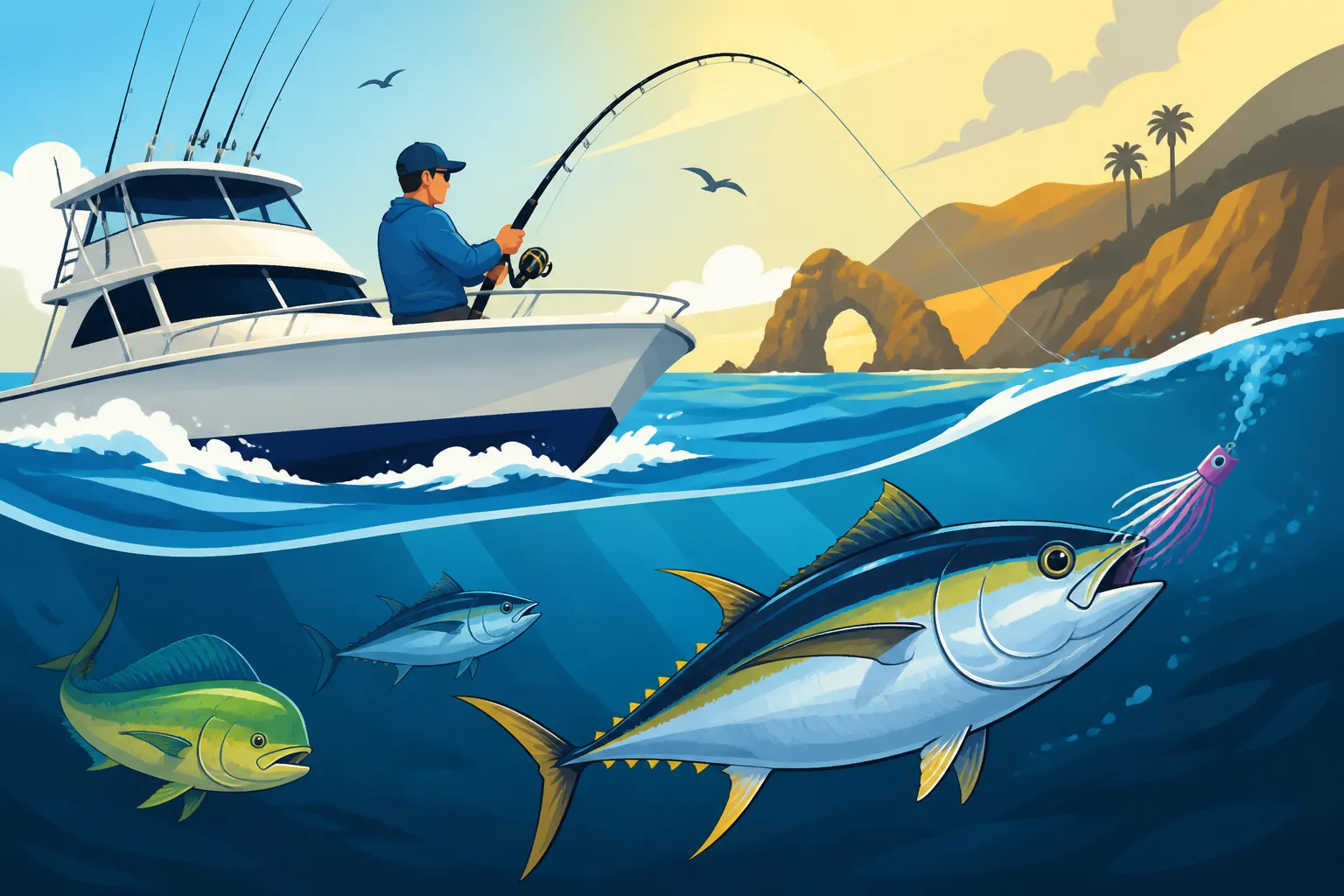
Trolling is perhaps the most iconic offshore fishing technique, especially when you're searching for wide-ranging pelagic species like tuna, dorado, and marlin. It involves dragging a spread of lures or rigged baits behind a moving boat, covering large areas of water to locate active fish. A typical trolling spread might consist of 4-6 lines, with lures staggered at different distances and depths to avoid tangles and present a diverse offering. Lures range from brightly colored feathers and jet heads for tuna to larger chuggers and skirted baits for marlin and larger dorado. The speed of your troll is critical, usually between 5-9 knots, depending on the lures and target species. When a fish strikes, often called a "jig strike," the rod bends over dramatically, and the reel screams. The immediate goal is to keep the boat moving forward briefly to ensure a solid hookset for other fish in the school. Many anglers also use outriggers and downriggers to widen their spread and present lures further from the boat's wake. For those chasing highly migratory species, this active search method is often the most effective way to intercept fish on the move.
Live Bait Fishing and Fly-Lining
Once you've located a school of fish, either by trolling or finding a kelp paddy, live bait becomes your secret weapon. Southern California, in particular, has a thriving live bait industry, with bait receivers in harbors like San Diego, Dana Point, and Long Beach offering fresh anchovies, sardines, and mackerel daily. Fly-lining is a classic technique where a live bait is cast out with little to no weight, allowing it to swim naturally at the surface. This presentation is incredibly effective for wary tuna, yellowtail, and dorado that are feeding on top. The key is to use a light fluorocarbon leader and a small, strong hook that doesn't impede the bait's natural swimming action.
When fish are a bit deeper or less active, you might use a sinker on your main line, above a swivel and leader, to get your live bait down to the desired depth. This technique is often called "dropshotting" or simply "weighted live bait." Keeping your bait lively and presenting it naturally are the pillars of successful live bait fishing. It often involves a lot of chumming – throwing handfuls of live bait into the water to attract and hold fish around your boat. This method is particularly deadly for species like bluefin tuna, which can be incredibly selective, and is a staple technique described in our "How to Catch Bluefin Tuna off California" guide.
Jigging and Dropping Baits Deep
When fish are holding deeper or concentrating around structure, jigging becomes highly effective. This technique involves vertically dropping a metal jig or a weighted bait rig to the desired depth and then working it with a series of lifts, drops, and pauses to imitate an injured baitfish. There are several styles of jigging:
- Yo-Yo Jigging: This involves using heavy, compact metal jigs (often 4-8 oz or more) dropped quickly to the bottom and retrieved with a fast, steady cranking motion. It's incredibly effective for targeting yellowtail, rockfish, and lingcod that are holding deep or around specific structure. The speed of the retrieve is often what triggers an aggressive reaction bite.
- Slow-Pitch Jigging: A more nuanced approach using lighter, often asymmetrical jigs and specialized rods. The rod's parabolic bend imparts a unique "flutter" to the jig on the fall, mimicking a wounded baitfish. This can be deadly for a wide range of species, including larger rockfish, lingcod, and even deeper-holding tuna.
- Dropping Baits Deep: For species like rockfish, lingcod, and occasionally halibut, deploying baited rigs to the bottom is a proven method. This can involve dropper loop rigs with multiple hooks baited with squid or cut bait, or even entire live mackerel sent to the depths. This method requires a good understanding of the bottom contours and often a California Ocean Enhancement Stamp, depending on your fishing location.
These deeper water techniques require patience and a good feel for what's happening hundreds of feet below the surface. Using braided line helps immensely here, as its lack of stretch provides unparalleled sensitivity to bites and bottom structure.
Target Species and Seasonal Considerations
California's offshore waters are a treasure trove of diverse fish species, but knowing what to target and when to target them is key to a successful trip. The migratory patterns and seasonal movements of these fish are heavily influenced by water temperature and bait availability.
Tuna, Dorado, and Yellowtail Seasons
The highly sought-after pelagic species – various tuna, dorado (mahi-mahi), and yellowtail – are often the stars of the California offshore scene.
- Tuna: Bluefin, yellowfin, and albacore tuna are prime targets, with bluefin often being the most elusive and powerful. The peak season for these tuna typically runs from late spring through early fall, roughly May through October. However, bluefin can sometimes be found year-round, especially in warmer offshore eddies. Yellowfin and albacore are more reliant on warmer water pushing north. Understanding the "Best Season for Bluefin Tuna in California" is critical, as their movements are dynamic. These fish are usually found far offshore, often beyond 30 miles, congregating around areas with abundant baitfish.
- Dorado (Mahi-Mahi): These vibrant, aggressive fish are a true warm-water species. Their presence in California waters usually signifies a strong push of warm, tropical water, often from July through October. They are frequently found associated with floating kelp paddies or other offshore debris.
- Yellowtail: While yellowtail can be found inshore around kelp beds, the larger "mossback" yellowtail often roam offshore, particularly around banks, islands, and kelp paddies. Their offshore season largely mirrors the tuna season, extending from spring into late fall. For a more in-depth look at these exciting fish, our California Yellowtail Fishing Guide offers fantastic insights.
Tracking water temperature charts and reading current fishing reports are indispensable for finding these warm-water, migratory species.
Rockfish and Lingcod Deeper Water Strategies
Beyond the pelagic giants, California's offshore reefs and deep-water structures hold a fantastic bounty of bottom-dwelling species, primarily various rockfish and lingcod. These fish are accessible year-round, though specific seasons and depth restrictions apply, making it crucial to understand the California Rockfish Depth Restrictions and other regulations.
- Rockfish: California boasts an incredible diversity of rockfish species, from the brightly colored vermilion and copper rockfish to the formidable greenspots and bocaccio. They inhabit rocky reefs and pinnacles from nearshore to depths exceeding 1,000 feet. The primary technique is bottom fishing with bait (squid, cut fish) or leadhead jigs with soft plastics. Often, anglers will drop multi-hook dropper loop rigs to maximize their chances.
- Lingcod: These aggressive, predatory fish are often found lurking in the same rocky habitats as rockfish, but prefer deeper crevices and caves. They respond well to large leadhead jigs, swimbaits, and even live bait like mackerel or small rockfish (where legal). Lingcod are known for their ferocious strikes and make for excellent table fare.
When targeting these species, it's vital to stay in tune with the latest California Fishing Regulations Explained as rules regarding depth, bag limits, and seasons can change. Always use a descending device for any rockfish caught from deep water that you intend to release, to help them survive barotrauma.
White Seabass and Halibut Opportunities
While often considered inshore or bay species, both white seabass and halibut can be found in offshore waters, particularly near islands, banks, or along structure where they might forage.
- White Seabass: These elusive and highly prized game fish are primarily found along kelp edges and structure, but larger aggregations can occur offshore around islands like Catalina and the Channel Islands. Their season typically peaks in late spring and early summer (April-July), but good fishing can extend into the fall. Live squid is by far the most effective bait for white seabass, often fished on a sliding sinker rig or fly-lined. They are a challenging fish to target, earning them the nickname "grey ghost" for their wary nature.
- California Halibut: Known for their delicious white meat, California halibut are flatfish that ambush prey from the sandy bottom. While many are caught in bays and along beaches, larger halibut can be found offshore, particularly on sandy patches adjacent to reefs or around specific banks. They are often targeted by drift fishing with live bait (sardines, anchovies, mackerel) or by slowly trolling swimbaits along the bottom. Our guide on How to Catch California Halibut offers fantastic tips for landing these tasty flatfish. Pay close attention to the California Halibut Size and Bag Limits as they are strictly enforced to protect populations.
Both white seabass and halibut often respond well to slow, natural presentations of live bait, making a good supply of fresh bait essential for success.
Reading the Ocean: Locating Offshore Fish
The vastness of the ocean can feel overwhelming, but modern electronics and a keen eye can help you pinpoint productive fishing grounds and increase your chances of finding fish. It's like solving a giant puzzle, and every piece of information helps.
Interpreting Marine Electronics Sonar, GPS, Radar
Your boat's marine electronics are your most valuable tools for reading the ocean. Learning to interpret the data they provide is crucial for offshore success.
- Sonar (Fishfinder): This is your underwater eye. A good sonar unit will show you bottom contours, structure, and most importantly, baitfish and target species. Look for "arches" or "marks" that indicate fish. Pay attention to the "gain" setting – too low, and you'll miss fish; too high, and you'll get clutter. Modern CHIRP sonar systems offer incredible clarity and target separation, allowing you to distinguish individual fish even in dense schools. Don't just look for fish marks; look for bait balls, which are often indicated by dense clouds on the screen. Where there's bait, there are usually predators.
- GPS (Global Positioning System): Your GPS allows you to navigate precisely, mark productive spots, and return to them. Use it to mark kelp paddies, specific high spots on banks, and areas where you've previously encountered fish. Many units come pre-loaded with nautical charts, which show important contours, depths, and potential hazards. Knowing how to use your GPS to follow a specific contour line while trolling or drifting can be incredibly effective.
- Radar: While primarily a safety tool for navigation in fog or at night, radar can also be useful for spotting distant boats, especially charter boats or commercial seiners, which might indicate where fish are biting. In calm conditions, sometimes you can even pick up bird activity on radar, which could lead you to feeding tuna.
Mastering these tools takes practice, but the ability to read your electronics will transform your offshore fishing experience, helping you pinpoint the best spots within the vast ocean.
Understanding Water Temperature and Currents
Water temperature and currents are invisible but powerful forces that dictate fish movements and feeding patterns.
- Water Temperature: Different species have preferred temperature ranges. Tuna, dorado, and yellowtail thrive in warmer waters (typically 65-75°F for tuna/dorado), while rockfish and lingcod prefer cooler, deeper environments. Anglers often consult sea surface temperature (SST) charts, available online, which show temperature breaks and eddies. Fishing along these "temperature breaks" – where warm and cold water meet – can be highly productive, as baitfish often congregate there, attracting predators.
- Currents: Ocean currents transport bait, nutrients, and even kelp paddies. Understanding current direction and strength is vital for effective drift fishing and can also influence your trolling strategy. Strong currents can make jigging or bottom fishing challenging, requiring heavier weights. Conversely, areas where currents create upwellings are often highly productive, pushing nutrient-rich water from the deep towards the surface, fueling the entire food chain. You'll often find these currents highlighted on our California Fishing Seasons: Month-by-Month Guide as they influence what's biting where.
Combining knowledge from your electronics with an understanding of these environmental factors gives you a powerful advantage in finding and catching offshore fish.
Identifying Bird Activity and Bait Schools
Sometimes, the best fishfinder isn't electronic at all – it's natural. Observing bird activity and locating bait schools on the surface are old-school techniques that remain incredibly effective.
- Bird Activity: Diving birds, especially terns, shearwaters, and gulls, often indicate baitfish being driven to the surface by predatory fish like tuna or yellowtail. A frenzy of birds actively diving is almost a sure sign of a feed. Pay attention to the type of birds and their behavior; some birds are more indicative of specific fish than others. A lone bird might just be passing by, but a flock circling and diving repeatedly is a sign to investigate. Getting to such a "bird pile" quickly and quietly, without spooking the fish, is paramount.
- Bait Schools: Seeing schools of anchovies, sardines, or mackerel on the surface, sometimes "boiling" as they try to escape predators, is an undeniable sign of life. Often, you'll see large swirls or splashes as bigger fish slash through the bait. These bait balls are hotspots, and working your lures or live baits around them can lead to immediate hookups. Even if you don't see predators, the presence of bait means they could be nearby, just below the surface.
Combining these visual cues with your sonar readings creates a powerful search strategy, allowing you to cover vast areas efficiently and home in on the most productive spots.
Safety First: Preparing for Offshore Conditions
The open ocean is a beautiful, powerful, and sometimes unforgiving place. Prioritizing safety is not just a recommendation; it's a non-negotiable aspect of any offshore fishing trip. Proper preparation can mean the difference between a memorable day and a dangerous situation.
Weather Monitoring and Trip Planning
Never underestimate the Pacific Ocean. A beautiful, calm morning can turn into a rough, windy afternoon with surprising speed. Thorough weather monitoring is the cornerstone of offshore safety.
- Pre-Trip Checks: Before you even think about leaving the dock, check multiple weather sources. NOAA Marine Forecasts are a primary resource, providing detailed wind, swell, and visibility predictions. Look for trends, not just a snapshot. Be particularly wary of strong winds (especially over 15-20 knots) and large, steep swells that can make conditions uncomfortable or even dangerous. Don't be afraid to postpone or cancel a trip if the forecast looks questionable. There will always be another day to fish.
- During the Trip: Continue to monitor weather throughout your trip. Many modern boats have satellite weather overlays on their chart plotters, providing real-time updates. If conditions start to deteriorate unexpectedly, err on the side of caution and head for safe harbor.
- Float Plan: Always file a float plan with a responsible person on shore. This includes your boat's registration, number of people aboard, your intended fishing area, and your expected return time. This simple step ensures that if you don't return as planned, someone knows where to start looking. Many Coast Guard stations offer voluntary float plans, but a quick text or email to a trusted friend or family member works too.
A well-planned trip, backed by diligent weather monitoring, sets the stage for a safe and enjoyable day on the water.
Emergency Procedures and Communication
Even with the best planning, emergencies can happen. Being prepared to handle them is critical.
- Communication Devices: As mentioned earlier, a reliable VHF radio is standard. For extended offshore trips, a satellite phone or a satellite messenger like a Garmin InReach provides communication beyond VHF range. An EPIRB or PLB is your last line of defense, signaling authorities in a life-threatening emergency. Test these devices regularly to ensure they are functional.
- First Aid and Medical Emergencies: A comprehensive first-aid kit, tailored for marine environments, should be on board. Ensure at least one person on the boat knows basic first aid and CPR. If someone has a known medical condition, ensure their medications are accessible and that others on board are aware of what to do in an emergency. Seasickness is common offshore; carrying over-the-counter remedies or prescription patches can make a huge difference, but always consult a doctor first.
- Man Overboard: Have a clear plan for a man overboard situation. Practice quick retrieval techniques. Mark the position on GPS immediately, assign a spotter, and initiate retrieval procedures. A life sling or horseshoe buoy should be readily accessible.
- Fire/Flooding: Know the location and operation of fire extinguishers. Understand how to access bilge pumps and manually activate them if necessary. Regular maintenance of your vessel reduces the risk of these emergencies.
These are not just theoretical situations; they are real possibilities on the open ocean. A calm, prepared crew is the best defense against offshore mishaps.
Ethical Angling and Regulations in California Offshore Waters
As stewards of the ocean, every angler has a responsibility to fish ethically and abide by all regulations. California's waters are heavily managed to ensure sustainable fisheries for future generations. Ignoring these rules not only risks hefty fines but also harms the very resource we cherish.
Bag Limits, Size Restrictions, and Species Identification
One of the most common pitfalls for offshore anglers is failing to correctly identify their catch or adhere to the ever-changing bag and size limits.
- Species Identification: Many rockfish species look similar, but have different bag limits or even protected status. Carry a fish identification guide or use a reliable app to confirm your catch. Misidentifying a fish can lead to violations. For example, some species of rockfish are highly regulated, while others might have more generous limits. Knowing the difference is key.
- Bag and Size Limits: These limits are put in place by the California Department of Fish and Wildlife (CDFW) to prevent overfishing and protect juvenile fish. They vary by species, region, and sometimes even by season. For instance, there are strict rules for California Halibut Size and Bag Limits and different ones for different tuna species. Always check the latest California Fishing Regulations Explained before heading out. It’s also crucial to remember that some limits are statewide, while others are specific to certain management areas (e.g., Northern, Central, or Southern California). Ignorance of the law is not an excuse.
- Report Cards: For certain species like Highly Migratory Species (HMS) such as tuna and billfish, a California Spiny Lobster Report Card is required, even if you are not targeting lobster. These cards help the CDFW gather vital data for stock assessments. Our guide on California Fishing Report Cards Explained delves into these requirements.
Proper identification, careful measurement, and adherence to limits ensure we all play a part in conservation.
Understanding Marine Protected Areas (MPAs)
California has established a network of Marine Protected Areas (MPAs) along its coast, which are essentially underwater parks or refuges designed to protect marine ecosystems. Fishing regulations within these areas are often very strict, ranging from complete no-take zones to areas with highly restricted activities.
- Know Your Location: Before you drop a line, consult a chart or your GPS unit to confirm you are not in a prohibited area. Many MPAs are clearly marked on marine charts and can be overlayed on your electronic chart plotter. Our "California Marine Protected Areas Explained" guide provides maps and detailed information. Fishing in a no-take MPA, even accidentally, can result in significant fines and penalties.
- Types of MPAs: There are different classifications of MPAs in California, each with specific rules:
- State Marine Reserves (SMRs): These are no-take zones, meaning no fishing or removal of any marine life is allowed.
- State Marine Parks (SMPs): These allow some recreational fishing, but usually with significant restrictions.
- State Marine Conservation Areas (SMCAs): These vary widely, with some allowing specific types of fishing and others prohibiting it.
- Consequences: Violating MPA rules can lead to substantial fines, seizure of catch and gear, and even loss of fishing privileges. It's not worth the risk. Always confirm your location and local regulations before you begin fishing.
Respecting these protected areas is vital for the long-term health of California's marine environment and the fishing opportunities we all enjoy.
Tips for Maximizing Your Offshore Success
Beyond mastering techniques and understanding regulations, there are subtle strategies and considerations that can significantly improve your offshore fishing experience and your chances of success. It's about combining knowledge with intuition and a bit of practical wisdom.
Choosing the Right Charter or Private Boat Strategy
For many, offshore fishing starts with a charter boat, while others prefer the independence of their own vessel. Both have their advantages and require different approaches.
- Charter Boat Selection: If you're new to offshore fishing or don't own a suitable boat, booking a charter is an excellent option. Look for reputable captains with a proven track record. Consider the type of trip (half-day, full-day, overnight, long-range) and the target species. A good charter captain will provide all the necessary gear and expertise. Our "Best Offshore Fishing Charters in California" provides a great starting point for finding top-rated operations. Don't be afraid to ask questions about their typical methods, safety protocols, and what's included in the price. Often, a good crew will also share tips and tricks, helping you learn. Remember that on party boats, you'll be fishing with many others, so understanding "California Party Boat Etiquette" can make your trip more enjoyable.
- Private Boat Strategy: For private boat owners, flexibility is a huge advantage. You can choose your spots, stay as long as you want, and target exactly what you want. However, this comes with greater responsibility for navigation, safety, and gear. Ensure your boat is properly equipped for offshore conditions, including sufficient fuel range, redundant electronics, and all safety gear. Learning to read your own electronics, interpreting satellite imagery for kelp paddies and temperature breaks, and continually scouting for bait and birds will be your keys to success. Having a well-maintained vessel is also paramount, as breakdowns offshore can be dangerous and costly.
Whether you're on a charter or your own boat, a fundamental understanding of the ocean and the target species will always pay dividends.
Proper Fish Handling and Preservation
Catching a beautiful offshore fish is only half the battle. How you handle and preserve your catch determines its quality as table fare.
- Bleeding: For species like tuna, yellowtail, and dorado, immediately bleeding the fish upon landing significantly improves meat quality. A quick cut to the gills or artery near the tail helps to remove blood from the flesh, resulting in whiter, tastier fillets.
- Icing: Get your fish on ice as quickly as possible. A properly insulated cooler filled with a slurry of ice and saltwater (if available) will rapidly chill the fish and maintain its freshness. Don't just toss them in a dry cooler; direct contact with ice is crucial. For large tuna, bleeding and gutting them at sea, then packing the cavity with ice, is common practice to preserve quality on long runs back to port.
- Filleting: Learn proper filleting techniques or have a skilled deckhand or processor handle it. Minimize waste and ensure clean, boneless fillets. Having sharp knives and a clean workspace is essential.
Taking care of your catch not only respects the fish but also ensures that your hard-earned meal tastes its absolute best. Many anglers prefer to process their catch at sea using specialized knives and cutting boards, all of which are readily available on Amazon.
Disclaimer
The information provided in this guide is for general informational purposes only and should not be considered a substitute for official regulations. Fishing rules and conditions in California are subject to change. Always consult the latest California Department of Fish and Wildlife (CDFW) regulations and marine forecasts before embarking on any fishing trip. Safety should always be your top priority.