How to Fish for Calico Bass in California
Calico bass are one of California's most exhilarating inshore species, known for their aggressive strikes and powerful fights, especially when they dive straight into kelp. However, consistently hooking these elusive fish often feels like a puzzle, with many anglers struggling to pinpoint their locations and present baits effectively. This comprehensive guide is designed to unlock the secrets of calico bass fishing in California, providing you with battle-tested techniques, essential gear advice, and insider tips to turn those frustrating outings into successful, high-action adventures.
Understanding California's Calico Bass
Before you can truly master the art of catching calico bass, it's crucial to understand who these feisty creatures are, where they live, and what makes them tick. Knowing your target will dramatically improve your chances of success.
Identifying Calico Bass and Their Habitat
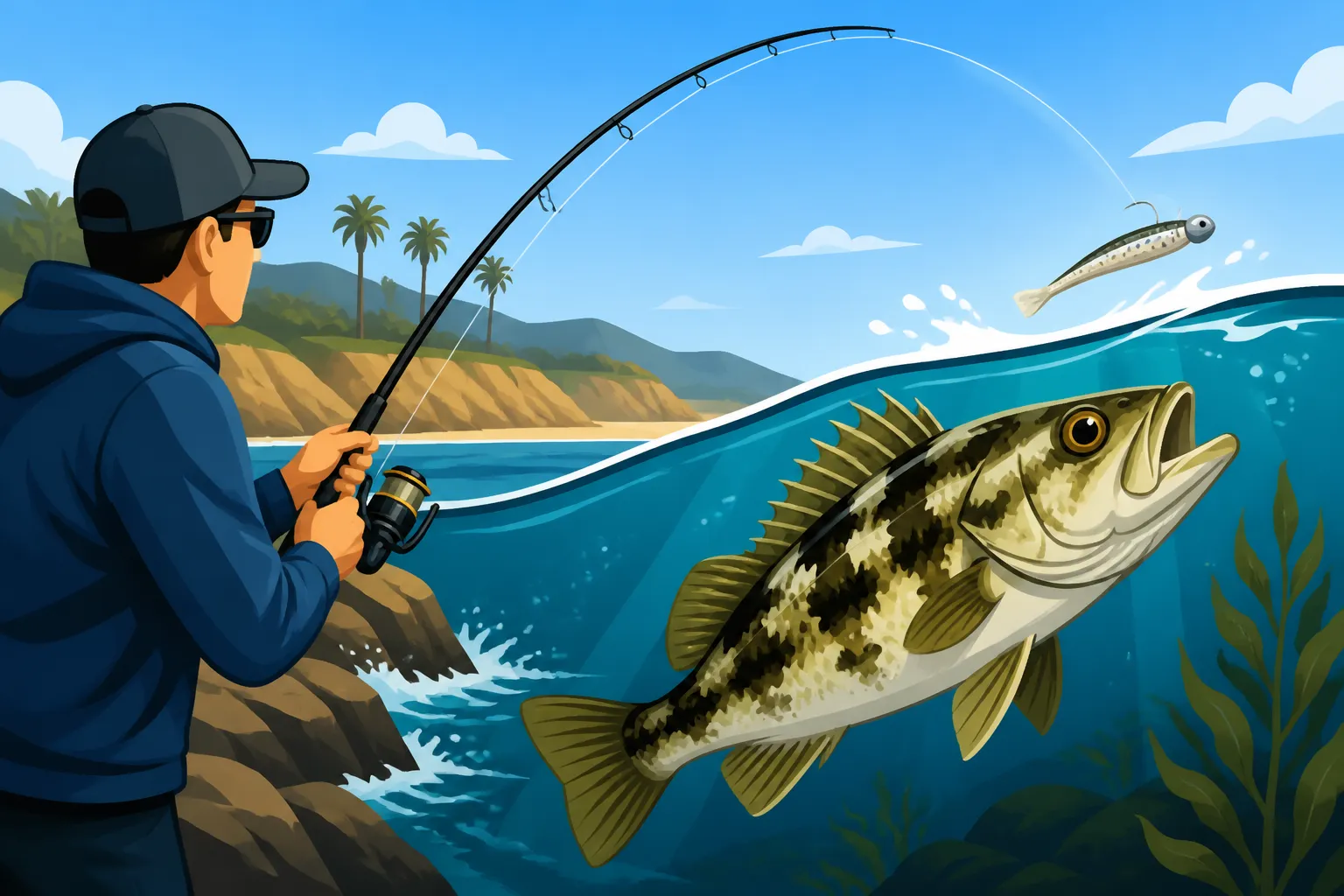
Calico bass, often called "kelp bass," are a truly iconic species along the California coast. They get their name from their distinctive mottled, patchy coloration, which can range from olive green to brown, allowing them to blend seamlessly into their rocky and kelp-filled environments. This camouflage is a survival masterpiece, making them incredibly difficult to spot in their natural surroundings. They typically have a relatively long body, a large mouth, and often sport a dark spot on their operculum (gill cover). Size-wise, while most commonly encountered fish range from 1 to 5 pounds, trophy calicos can push well over 8 or even 10 pounds, offering a seriously stout challenge on light tackle.
Their preferred habitat is right there in their nickname: kelp. Calico bass are intrinsically linked to rocky reefs, submerged structure, and, most importantly, dense kelp forests. They thrive in these areas because the kelp provides both shelter from predators and a rich hunting ground for baitfish like anchovies, sardines, and squid. You'll find them from the shallowest rocky shorelines, often less than 10 feet deep, out to depths of 100 feet or more, always associated with some form of cover. This means spots like rocky points, jetties, artificial reefs, and particularly robust kelp paddies are prime real estate for these ambush predators. Understanding their reliance on structure means your fishing approach needs to be precise, often requiring you to get right into the thick of things.
Calico Bass Behavior and Feeding Habits
Calico bass are opportunistic and highly aggressive predators. They aren't shy; if something looks like an easy meal and gets too close, they're likely to attack it with gusto. Their feeding behavior is largely dictated by water temperature, current, and the availability of bait. In warmer months, especially during late spring through early fall, their metabolism ramps up, and they become incredibly active. This is when you'll find them eagerly chasing down baitfish near the surface or lurking deeper in the kelp canopy, waiting to ambush. They're particularly fond of current, as it disorients baitfish and washes food into their strike zones. Areas where currents sweep around points or through kelp beds are often hotbeds of activity.
Their diet consists primarily of small fish, squid, and crustaceans. This broad diet gives anglers a lot of options when it comes to bait and lures, but mimicking their natural prey is key. You'll notice that calicos often "school up" in loose aggregations, especially around prime feeding grounds. When one starts biting, often others in the area will follow suit. They strike hard and fast, often trying to drag your line immediately into the nearest kelp strand or rock crevice – a maneuver that makes them incredibly frustrating but also immensely fun to fight. Understanding this combative nature means you need gear that can handle the initial shock and quick, strong runs.
Essential Gear for Calico Bass Fishing
Catching calico bass isn't just about finding them; it's about having the right tools for the job. These fish are tough, and their habitat demands specific gear that can withstand the abuse of kelp and rocks while still providing the sensitivity and power needed for a good fight.
Rods, Reels, and Line for Inshore Action
For calico bass, you need a setup that offers a balance of sensitivity, backbone, and durability. You're typically fishing in situations where a quick, powerful hookset is necessary, and you often need to stop a fish from burying itself in cover.
Rods: A medium-heavy to heavy action rod, usually 7 to 8 feet in length, is ideal. This length provides good casting distance and leverage when fighting a fish, especially from a boat or kayak. A fast to extra-fast action tip allows for precise casting and excellent sensitivity to detect subtle bites, while the robust backbone is crucial for pulling a big calico out of dense kelp. Rods specifically designed for inshore saltwater fishing or bass fishing will serve you well. Some popular choices can be found from brands like Phenix, Shimano, or Daiwa.
Reels: A good quality spinning reel in the 3000 to 5000 size range, or a baitcasting reel in the 200-300 size range, will be perfect. You need a reel with a smooth, reliable drag system that can handle the powerful surges of a hooked calico. A high gear ratio is also beneficial, allowing you to quickly retrieve slack line and keep pressure on the fish. Look for reels that are corrosion-resistant, as you'll be exposing them to saltwater. I've found some excellent options on Amazon that offer a great balance of price and performance, perfect for the avid weekend warrior.
Line: This is where things get critical for calico bass. Braided line is almost a non-negotiable for the main line. It offers superior strength-to-diameter ratio, zero stretch for maximum sensitivity and powerful hooksets, and excellent abrasion resistance against kelp and rocks. I recommend 30-50 lb test braided line. To this, you'll want to add a fluorocarbon leader. Fluorocarbon is nearly invisible underwater, which is a huge advantage for these often wary fish, and it has excellent abrasion resistance. A 20-30 lb fluorocarbon leader, about 3-6 feet long, is a good starting point. You can adjust the leader strength based on the water clarity and the size of the fish you're targeting. Using a high-quality double uni-knot or FG knot to connect your braid to your fluorocarbon leader is crucial for maintaining strength.
Best Lures and Baits for Aggressive Bites
Calico bass aren't overly picky, but certain presentations definitely outperform others. Your choice of lure or bait will often depend on the conditions, the baitfish present, and the depth you're fishing.
Artificial Lures:
- Swimbaits: Soft plastic swimbaits, especially those rigged on a leadhead jig, are arguably the most effective calico bass lures. Sizes typically range from 4 to 8 inches, mimicking anchovies, sardines, or mackerel. Colors like sardine, smelt, mackerel, and various greens or browns work wonders. Brands like Big Hammer, MC Swimbaits, and Keitech are angler favorites. The weight of the jig head depends on depth and current; carry an assortment from 1/4 oz to 1 oz or more. You can find a huge variety of these plastics and jig heads on Amazon, making it easy to stock up.
- Jerkbaits/Hard Baits: When calicos are feeding aggressively near the surface, a good hard jerkbait can be deadly. Look for models that mimic baitfish and can be retrieved with a twitch-and-pause action. Surface poppers and walk-the-dog style lures can also create explosive topwater strikes, especially during calm mornings or evenings.
- Plastics (Weedless/Texas Rig): For really dense kelp, rigging a creature bait or a stick bait (like a Yamamoto Senko) weedless with a weighted hook or a small bullet weight can get you into spots where other lures snag. This allows you to pitch right into the heart of the cover without getting hung up.
Live Bait:
- Live Sardines/Anchovies: There's nothing quite like live bait for enticing a stubborn calico. Nose-hooked or through-the-shoulders on a light wire hook (size 1 to 2/0 depending on bait size) and fished with minimal weight (or none at all if the current allows) is incredibly effective. Let the bait swim naturally near kelp beds or structure.
- Live Squid: When squid are in season, they are an absolute magnet for calicos. A fresh live squid is hard for any bass to resist.
- Mackerel/Smelt: Larger live baits like small mackerel or smelt can also be very productive, especially when targeting bigger calicos.
It's always a good idea to have a variety of both artificial and live bait options on hand. Sometimes, the fish will key in on one specific presentation, and being versatile will lead to more hookups.
Here's a quick comparison of popular lure types for calico bass:
| Lure Type | Best Use Case | Pros | Cons | Example Brands (often on Amazon) |
|---|---|---|---|---|
| Soft Plastic Swimbaits | All-around, mimicking baitfish; various depths | Highly versatile, realistic, effective for all sizes | Can be torn easily, jig heads can snag | Big Hammer, MC Swimbaits, Keitech |
| Hard Jerkbaits | Aggressive surface feeding, covering water | Creates strong vibrations, durable, good for active fish | Less effective in deep cover, prone to snagging | Lucky Craft, Rapala |
| Surface Poppers | Calm conditions, topwater explosions, exciting strikes | Highly visual, attracts aggressive fish from afar | Less effective in choppy water, target specific conditions | Yo-Zuri, Halco |
| Weedless Plastics | Dense kelp and heavy cover, precise presentations | Excellent for snag-prone areas, subtle presentation | Slower retrieve, less vibration | Yamamoto, Berkley |
Top Techniques for Catching Calico Bass
These fish are called "kelp bass" for a reason, and if you want to catch them consistently, you've got to be willing to fish where they live. That means mastering techniques that get your lure or bait right into the heart of the action without getting permanently snagged.
Mastering the Art of Kelp Bed Fishing
Fishing kelp beds for calico bass is perhaps the most iconic and effective way to target them in California. It's also the most challenging, requiring precision, patience, and a willingness to occasionally lose some tackle. The key is understanding that calicos use the kelp as both cover and an ambush point. They'll sit deep within the canopy, often right on the bottom of the kelp forest, waiting for unsuspecting baitfish to swim by.
When approaching a kelp bed, whether from a boat, kayak, or even a paddleboard, you want to position yourself so you can cast into the kelp, rather than just alongside it. This means making accurate casts that land your lure close to, or even directly within, the dense strands. Many anglers prefer to use a slow retrieve, letting their swimbait or plastic jig flutter down through the kelp, mimicking a wounded baitfish. As your lure descends, be prepared for a bite at any moment – sometimes they'll strike on the drop. If you feel any tick or resistance, set the hook hard immediately! The goal is to turn the fish's head as quickly as possible and get it out of the kelp before it can wrap your line. This is where your heavy rod and braided line really shine. Consider referring to our guide on California Marine Protected Areas Explained to ensure you're fishing in legal zones, as some kelp forests are protected.
Another effective technique within the kelp is "flipping" or "pitching." This involves making short, accurate casts or drops right next to heavy kelp stalks or open pockets within the canopy. Using a weedless-rigged plastic can greatly reduce snags when fishing this tight. For this style of fishing, a baitcasting setup often provides better control and accuracy for quick, repetitive presentations. Always be mindful of your drift and current, as they will dictate how your lure moves through the kelp. Sometimes, a subtle presentation with a small live anchovy drifted naturally into a kelp pocket can be irresistible to a wary calico.
Tactics for Structure and Current Seams
While kelp is king, calico bass are also voracious predators around other forms of structure and in areas with good current. Understanding how these factors influence their behavior can open up many more fishing opportunities.
Rocks and Reefs: Calicos love hiding in rocky crevices, behind boulders, and along the edges of reefs. These areas offer similar ambush opportunities as kelp. When fishing rocky bottoms, you'll want to use lures that can be worked close to the bottom without constant snagging. Leadhead jigs with paddle tail swimbaits are excellent here. Cast your lure beyond the structure and retrieve it, allowing it to "walk" over or bump into the rocks. The sudden change in direction or depth often triggers a strike. Vertical jigging with heavy metal jigs can also be very effective when targeting deeper reefs, especially if you mark fish on your fishfinder. Always check the local California Rockfish Depth Restrictions before dropping deep, as calicos share habitat with many rockfish species.
Current Seams: Calico bass are very energy-efficient predators. They'll often position themselves in current seams – the boundary where fast-moving water meets slower water, or where current flows around a point or buoy. These seams act like a conveyor belt, bringing disoriented baitfish right to them. Your strategy here is to cast your lure or bait upstream of the seam and let the current carry it naturally into the strike zone. As it passes through the seam, be ready for a bite. Live bait drifted on a Carolina rig or a light leadhead swimbait retrieved with the current can be incredibly productive. Pay close attention to tidal movements, as the changing currents will define these seams throughout the day. This is a common tactic also employed when learning How to Fish for Halibut in California.
Best Times and Places to Target Calico Bass
Knowing when and where to find calico bass is half the battle. These fish have predictable patterns influenced by seasons, water temperatures, and specific geographical features along the California coast.
Seasonal Movements and Prime Fishing Windows
Calico bass are present year-round in California waters, but their activity levels and locations change with the seasons. Understanding these shifts is key to consistent success.
Spring (March – May): As water temperatures begin to warm up, calicos become more active after the cooler winter months. They start to move into shallower, inshore waters as baitfish become more abundant. This is a great time to target them, especially later in the spring, as they begin to feed more aggressively in preparation for spawning. Look for them around rocky points and the edges of kelp beds. During the spring, you might also find success using surface lures on calm mornings.
Summer (June – August): This is prime time for calico bass fishing. The water is warm, bait is plentiful, and the bass are incredibly active and aggressive. They'll be spread throughout the kelp forests, from shallow depths to deeper reefs. Early mornings and late evenings often offer the best surface action with poppers and walk-the-dog lures, while during the brighter, hotter parts of the day, they'll retreat deeper into the kelp canopy or hold tight to structure. This is when fishing with swimbaits and live bait within the kelp is most productive. Many anglers also head out on California Half-Day vs Full-Day Charters during these months to maximize their chances.
Fall (September – November): Fall can be fantastic for calico bass. The water often remains warm well into October, and the fish are still feeding heavily, putting on weight before winter. Larger baitfish, like mackerel and sardines, can be abundant, and calicos will gorge on them. This is often the time for bigger bass. As winter approaches, they'll start moving to deeper offshore reefs, though plenty will remain in the inshore kelp. This period is often covered in general guides like California Fishing Seasons: Month-by-Month Guide.
Winter (December – February): While less active than in summer, you can still catch calicos in winter. They tend to move to deeper, more stable water, often holding tight to offshore reefs and deep kelp. Their metabolism slows, so presentations need to be slower and more subtle. Live bait or slow-fished leadhead swimbaits are often the best bet. Don't expect red-hot action, but persistent anglers can still find quality fish.
Generally, the best time of day for calico bass is during periods of moving water, especially around tide changes (incoming or outgoing). Low light conditions, such as dawn and dusk, also tend to be highly productive, particularly for topwater action.
Top California Spots for Calico Bass Success
California's coastline offers an incredible array of habitats perfect for calico bass. While they are found along much of the state's coast, certain regions and specific spots are particularly renowned for their calico populations.
Southern California Coast: This is arguably the epicenter of calico bass fishing. The extensive kelp forests, rocky shorelines, and offshore islands provide ideal conditions.
- San Diego County: Areas around La Jolla, Point Loma, and the Channel Islands off San Diego are legendary for their calico bass fishing. The expansive kelp beds here hold huge numbers of fish. When planning a trip here, check out our guide on the Best Fishing Spots in Southern California.
- Orange County: Places like Laguna Beach, Dana Point, and the Newport Beach area offer excellent rocky reefs and scattered kelp.
- Los Angeles County: Palos Verdes Peninsula, Catalina Island, and San Clemente Island are fantastic. Catalina, in particular, is a calico bass paradise, with abundant kelp and rocky drop-offs. Many anglers will take a California Fishing License for a Charter Trip to access these island spots.
- Ventura/Santa Barbara Counties: The coastline here, including the other Channel Islands like Santa Cruz, Santa Rosa, and San Miguel, also holds significant populations of calico bass.
Central California Coast: While less concentrated than in the south, calicos can still be found in central California, particularly in areas with good rocky structure and kelp.
- Morro Bay/San Luis Obispo: The coastline around these areas, with their rocky reefs and kelp, can hold good numbers.
- Monterey Bay: North and south of Monterey Bay, where rocky structure and kelp are present, calicos can be targeted, although they are generally less numerous than in Southern California.
Fishing Platforms:
- Private Boats/Charter Boats: Without a doubt, a boat offers the most access to prime calico bass habitat, allowing you to move between kelp beds, offshore reefs, and island structures. Many sportfishing landings offer dedicated calico bass trips, often combined with targeting other species like How to Catch White Seabass in California.
- Kayaks: California Kayak Fishing Guide will tell you that kayaks are incredibly effective for targeting calico bass, offering stealth and the ability to get right into the thickest kelp where larger boats can't go. Safety is paramount when kayaking in saltwater.
- Shore/Pier Fishing: While less common for large numbers, you can catch calicos from rocky shorelines, jetties, and even some piers that have nearby structure or kelp. Just be aware that most piers in California are license-free, but you still need to follow California Fishing Regulations Explained.
Regardless of where you fish, always approach kelp beds and rocky structures with respect. These are delicate ecosystems, and responsible angling practices, including adherence to bag and size limits and careful handling of fish, help ensure healthy populations for years to come.
Mastering the Retrieve and Hookset for Calico Bass
You've got the right gear and you're in a prime spot. Now, how do you actually get that calico to bite, and more importantly, how do you keep it hooked? The retrieve and hookset are critical components of successful calico bass fishing.
Reading the Water and Presenting Your Lure
Calico bass are ambush predators, so your presentation needs to trigger that predatory instinct. It's not just about casting; it's about how you work your lure or bait through their strike zone.
Vary Your Retrieve: Don't just cast and reel in at a steady pace. Experiment! Often, a varied retrieve is most effective. For swimbaits, try a slow, steady retrieve with occasional twitches of the rod tip. Let the bait sink for a few seconds, then reel it up a bit, let it drop again. This "yo-yo" retrieve can imitate a struggling baitfish, making it an irresistible target. For topwater lures, a walk-the-dog action or short, sharp pops followed by pauses can drive them crazy. Watch for boils or swirls on the surface, which indicate active fish, and cast immediately to those spots.
Mimic Natural Prey: The goal is to make your lure look as natural as possible. If you're using a sardine-colored swimbait, try to retrieve it in a way that mimics how a sardine swims – a bit erratic, with sudden bursts and pauses. When using live bait, let it swim naturally with the current. Avoid any unnatural movements that might spook the fish. Pay attention to what baitfish are in the area. Are there anchovies dimpling the surface? Are bigger mackerel crashing bait balls offshore? Adjust your lure size and color accordingly. A useful resource for this is Best Baits and Lures for Calico Bass in California.
Work the Edges and Pockets: Calicos love edges. The edge of a kelp bed, the edge of a rock pile, the edge of a current seam. These are all prime ambush points. Cast your lure so it lands just beyond these edges and work it through, or let it drift naturally into them. Don't be afraid to cast into tight pockets within the kelp. Often, the biggest bass are hiding in the densest cover. This means you might lose some lures, but the reward of a big calico is often worth it.
The Immediate, Powerful Hookset and Fight
This is where many anglers lose calicos. Their initial strike is aggressive, and their first move is almost always to dive straight for cover. You need to be ready for it.
The Instantaneous Hookset: When you feel a bite – and it can range from a subtle tap to a rod-wrenching slam – set the hook immediately and hard. Don't wait. Use a powerful, sweeping motion, pulling your rod tip towards the sky or to the side, taking up any slack line. Remember, braided line has no stretch, so that power translates directly to the hook. If you wait even a second, that fish will likely be wrapped in kelp or wedged in rocks, and your chances of landing it drop dramatically.
The "Pump and Grind" Fight: Once hooked, the fight is on. Calicos are incredibly strong for their size, and their primary goal is to get back into cover. Your job is to keep their head pointed away from that cover.
- Maintain Constant Pressure: Do not give them any slack line. Keep your rod tip up and maintain constant, heavy pressure.
- "Pump and Grind": This technique involves pulling the fish towards you by lifting your rod (the "pump"), then quickly reeling down to take up the slack as you drop your rod tip (the "grind"). Repeat this motion, steadily gaining line.
- Steer the Fish: If you feel the fish trying to run towards kelp, lean your rod to the opposite side to try and steer its head away. Sometimes, you'll feel them "thump" as they try to scrape your line on structure. Keep pumping and grinding.
- Don't Horse It: While you need to be firm, avoid trying to simply "crank" the fish in without pumping. This can put too much strain on your gear and lead to break-offs. Let your drag do its job, but don't be afraid to tighten it a bit more than usual if you're fishing heavy cover.
Landing a big calico from dense kelp is an achievement. It requires quick reflexes, strong gear, and a solid understanding of how these fish fight. It's a true test of an angler's skill and patience.
Calico Bass Conservation and Regulations
As anglers, it's our responsibility to ensure the health and longevity of California's calico bass populations. This means adhering to regulations and practicing good conservation habits.
Understanding Bag and Size Limits
The California Department of Fish and Wildlife (CDFW) sets specific regulations for calico bass (kelp bass), which are part of the larger 'finfish' category. These regulations are subject to change, so always check the most current CDFW ocean fishing regulations booklet or website before heading out. Generally, there's a minimum size limit and a daily bag limit for calico bass, often aggregated with other bass species. For example, in past years, the general bag limit for bass (including calico, barred sand, and spotted bay bass) has been 5 fish, with a minimum size of 14 inches total length or 10 inches alternate length (which means from the tip of the snout to the fork of the tail). This is explicitly detailed in publications like California Fishing Regulations Explained.
It's critical to accurately measure your fish as soon as you catch it. Carry a reliable measuring device on your boat or kayak. If a fish is undersized, handle it carefully with wet hands and release it quickly to maximize its chances of survival. Avoid dropping fish onto hard surfaces. Also, be aware that some areas may have more restrictive local regulations or be designated as Marine Protected Areas (MPAs), where fishing may be restricted or entirely prohibited. Knowing How to Know If You're in a California MPA is crucial to avoid violations.
Responsible Angling Practices
Beyond legal requirements, practicing responsible angling contributes significantly to conservation.
- Catch and Release: While keeping a few legal-sized calicos for dinner is part of the experience, consider practicing catch and release for many of your catches, especially larger breeding-size fish. These bigger fish contribute significantly to the population's health.
- Proper Handling: When releasing fish, minimize their time out of the water. Use knotless rubberized nets to protect their slime coat. If you must handle them, do so with wet hands and support their body weight. For deeper-caught fish that show signs of barotrauma (swollen stomach, bulging eyes), consider using a descending device to safely return them to depth.
- Minimize Tackle Loss: Fishing in kelp and rocks inevitably leads to lost lures, but try to minimize this. Use strong knots, check your line for abrasion frequently, and if you get snagged, try to retrieve your lure safely if possible, rather than breaking off and leaving it. Lost tackle can be harmful to the marine environment.
- Respect the Environment: Pack out everything you pack in. Don't leave trash, fishing line, or any other debris on the water or shore. Respect other anglers and boaters, and always be mindful of wildlife.
By following these guidelines, you're not just a successful angler; you're also a steward of California's incredible marine resources, helping to ensure that future generations can enjoy the thrill of catching a feisty calico bass.
Disclaimer
Fishing inherently involves risks, including but not limited to adverse weather conditions, wildlife encounters, and personal injury. Always prioritize safety, wear appropriate personal flotation devices, and be aware of your surroundings. Regulations regarding fishing licenses, seasons, and bag limits can change frequently; it is the angler's responsibility to consult the latest California Department of Fish and Wildlife regulations before engaging in any fishing activity. The information provided in this guide is for informational purposes only and should not be considered a substitute for official regulations or professional advice.