California Trout Fishing Techniques
Trout fishing in California can feel like an overwhelming puzzle, especially with our state's incredible diversity of waters, from high alpine lakes to rushing rivers and vast reservoirs. It’s easy to get frustrated trying to figure out the right approach when the fish seem to be ignoring everything you throw at them. This comprehensive guide is here to demystify California trout fishing, breaking down the most effective techniques, essential gear, and crucial seasonal considerations to help you find more success on the water.
Understanding California Trout Species and Their Habits
California is a true paradise for trout anglers, boasting a remarkable variety of species. But to consistently catch them, you first need to understand who you're targeting and where they like to hang out. It’s not enough to just know it’s a "trout" – knowing their specific behaviors can make all the difference.
The Many Faces of California Trout
When we talk about trout in California, we're typically referring to a few key players, each with their own quirks and preferences. Knowing the difference can help you tailor your approach, from the lures you pick to the spots you target. Often, these different species coexist, but their preferred feeding lanes or depths might be distinct.
First up, the ubiquitous Rainbow Trout. These are arguably the most common and widely distributed trout in California, found in everything from small creeks to massive reservoirs. Many of them are hatchery-raised, which means they can be a bit less finicky initially, but wild rainbows are true fighters. Then there are Brown Trout, known for their elusive nature and predatory instincts, often growing to impressive sizes. They prefer deeper, cooler water and are big fans of eating other fish. We also have Brook Trout, smaller but vibrantly colored, often found in higher elevation, pristine waters where they can be quite aggressive despite their size. Don't forget the native Cutthroat Trout, though less common, they are a special treat for anglers in specific high-desert and eastern Sierra drainages. And of course, the crown jewel: the Golden Trout, California's state fish, found only in the most remote, breathtaking high-alpine environments. Each of these species offers a unique challenge and reward.
Reading the Water: Trout Behavior and Habitat Preferences
Trout are creatures of habit, and understanding their typical hangouts is like getting a secret map to success. They're constantly looking for three things: food, cover, and comfortable water temperatures. If you can identify these elements in any given piece of water, you're well on your way to finding fish. For a deeper dive into what swims where, you might want to check out our comprehensive guide on California Fish Species: Complete Guide.
In rivers and streams, trout will often be found in seams, eddies, and behind obstacles that break the current. These spots allow them to conserve energy while waiting for food to drift by. Look for deeper pools where they can retreat, undercut banks for shelter, and areas where feeder creeks introduce cooler water or additional nutrients. In lakes and reservoirs, especially in warmer months, trout will often suspend in the water column, following baitfish or seeking out the thermocline – the layer where warmer surface water meets cooler, deeper water. Early mornings and late evenings often find them closer to shore or near the surface, while midday heat pushes them deeper. Understanding these nuances is crucial, as a technique that works in a fast-moving river might be entirely useless in a placid lake.
Essential Gear for California Trout Anglers
Getting your gear dialed in is half the battle when it comes to successful trout fishing. You don't need to break the bank, but having the right tools for the job will dramatically increase your enjoyment and your catch rate. It’s about being prepared for the specific type of water and technique you plan to employ.
Rods, Reels, and Lines: Matching Your Tackle to the Technique
Choosing the right rod, reel, and line setup depends heavily on the trout fishing technique you'll be using. A delicate fly rod for small stream dry flies is vastly different from a spinning setup designed to cast heavy lures on a large lake. One common frustration is trying to make one setup do everything, leading to awkward casts and missed opportunities.
For spin fishing, a light to medium-light action spinning rod, typically 5'6" to 7' long, is ideal. Pair this with a small spinning reel spooled with 4-8 pound monofilament or fluorocarbon line. This setup offers versatility, allowing you to cast small spinners, spoons, and bait with ease. For river and stream bait fishing, a slightly longer, more forgiving rod (7-8 feet, light to medium-light action) can help with casting lighter baits and absorbing the shock of a fighting fish. Fly fishing, of course, has its own specific requirements: a 3 to 6-weight fly rod, depending on the size of the water and fish, matched with a corresponding reel and weight-forward floating or sinking line. A 5-weight is a fantastic all-around choice for many California trout scenarios. Don't forget a good leader and tippet for subtle presentations, especially with fly fishing. You can find some excellent entry-level and advanced options for all these categories on platforms like Amazon, making it easy to build out your kit.
The Importance of Terminal Tackle and Bait/Lure Selection
Terminal tackle—hooks, weights, swivels, and leaders—are the unsung heroes of your fishing setup. They connect your main line to your bait or lure and play a critical role in presentation. Skimping here can lead to lost fish or a lack of bites.
For bait fishing, a selection of small, sharp hooks (sizes 8-14) is essential, along with split shot weights to get your bait down and small barrel swivels to prevent line twist. When it comes to bait, classics like powerbait, salmon eggs, or live worms are consistently effective, especially for stocked trout. Spin fishing opens up a world of artificial lures. Small inline spinners like Panther Martins or Rooster Tails, spoons such as Kastmasters or Thomas Buoyants, and small crankbaits are all proven trout getters. Fly anglers need an assortment of flies to "match the hatch" – nymphs, dry flies, streamers, and emergers in various sizes and patterns are crucial. Having a good variety ensures you can adapt to what the fish are keying in on. Consider looking for variety packs of popular trout lures or fly assortments on Amazon to get a good starter collection.
Top Freshwater Trout Fishing Techniques
California's diverse waters call for a diverse set of techniques. There's no single "best" way to catch trout; rather, the most effective method depends on the environment, the time of year, and even the mood of the fish. Mastering a few key approaches will make you a much more versatile angler.
Bait Fishing: The Classic Approach
Bait fishing is often the entry point for many anglers, and for good reason: it's incredibly effective, particularly for stocked trout and even some wild ones. The key here is presenting a natural or appealing food source in a way that looks easy for the trout to grab.
When fishing with bait, presentation is paramount. Whether you're using powerbait molded around a small treble hook, a worm threaded onto a single hook, or a salmon egg cluster, you want it to drift naturally or sit enticingly on the bottom. In still waters like lakes, a simple Carolina rig with a sliding sinker and a short leader can keep your bait just off the bottom. In rivers, a slip bobber or a very light split shot setup allows your bait to tumble downstream with the current, mimicking a free-floating meal. The patience required for bait fishing can be meditative, but you still need to be attentive. Subtle bites often require quick reflexes to set the hook. This method is especially popular in many of the readily accessible lakes and reservoirs throughout the state, often stocked generously by the California Department of Fish and Wildlife.
Spin Fishing: Covering Water and Triggering Strikes
Spin fishing is an active and dynamic technique that allows you to cover a lot of water quickly, searching for active fish. It relies on the flash, vibration, and erratic movement of artificial lures to provoke a strike, often appealing to the trout's predatory instincts.
For spin fishing, casting accuracy and varying your retrieve are crucial. When using spinners or spoons, cast upstream or across the current and reel just fast enough to get the blade spinning or the spoon wobbling. In lakes, try casting towards structure like submerged logs, weed lines, or rocky points, and retrieve at different speeds and depths until you find what triggers a bite. Small crankbaits can also be highly effective, mimicking baitfish. Experiment with pauses and twitches to add a lifelike erraticism to your presentation. One common mistake is retrieving at a constant speed; trout are often enticed by a sudden change in pace or direction. This technique is incredibly versatile and can be effective in nearly any trout water, from small streams to large reservoirs.
Fly Fishing: The Art and Science
Fly fishing is often seen as the most artistic and challenging form of trout fishing, and while it certainly has a learning curve, the rewards are immense. It's all about presenting an artificial fly that mimics insects or other small prey in a way that fools the trout into thinking it's real. Our California Fly Fishing Guide delves even deeper into this rewarding pursuit.
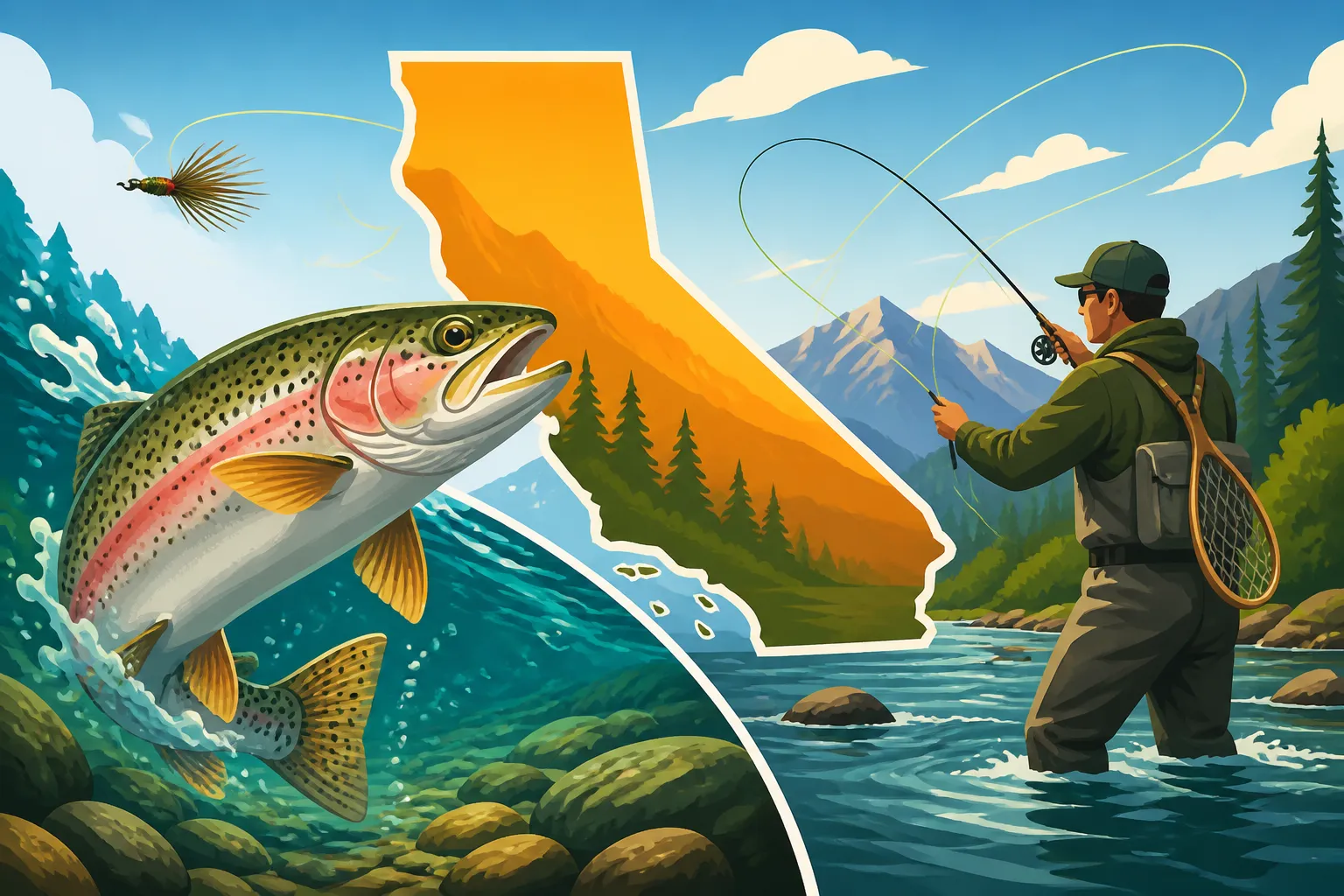
The core of fly fishing lies in the cast and the drift. Whether you're delicately placing a dry fly on the surface to rising trout, drifting a nymph along the bottom in a river, or stripping a streamer in a lake, the goal is to make your fly behave as naturally as possible. This means minimizing drag on your line and presenting the fly with precision. Different types of flies—dry flies, nymphs, streamers, and emergers—are used to imitate different stages of insect life or small baitfish. Learning to "read the water" is even more critical in fly fishing, as you're constantly trying to anticipate where trout might be feeding and what they might be eating. It's a continuous process of observation, adaptation, and refinement, offering endless satisfaction as you progress.
Specialized Techniques for Different California Waters
California's topography offers an astonishing array of trout habitats, and what works in one environment might be completely ineffective in another. Adapting your techniques to the specific water you're fishing is key to consistent success.
High Sierra Alpine Lakes: The Ultimate Backcountry Challenge
There's nothing quite like the solitude and breathtaking beauty of fishing for trout in the High Sierra. These remote, pristine lakes often hold feisty Brook, Rainbow, and even the elusive Golden Trout. However, getting to them and figuring out their unique behaviors requires a specialized approach. Many of these waters are stocked by the CDFW, sometimes via airplane, ensuring a healthy population. If you're wondering about specific trout limits, you'll find comprehensive information in our article on California Trout Limits and Regulations.
For alpine lakes, portability is paramount. Backpacking in means every ounce counts. Spin anglers typically opt for ultralight setups, packing small, compact lures like tiny spoons (e.g., gold or silver Kastmasters, Thomas Buoyants) and inline spinners (e.g., Mepps, Rooster Tails). Bait can be effective too, but often requires packing in worms or PowerBait, which adds weight. Fly anglers will find a 3 or 4-weight rod ideal for delicate presentations. Dry flies like an Adams or Elk Hair Caddis are deadly when trout are rising, while small nymphs (Prince, Hare's Ear) or streamers (Woolly Bugger) work well subsurface. Often, fish in these high-altitude lakes are less pressured and more eager to strike, especially near inlet streams or rocky drop-offs. The key is usually presentation and stealth, as these waters are often crystal clear, making trout easily spooked.
Rivers and Streams: Reading Currents and Structure
Fishing rivers and streams for trout is a dynamic experience that requires a keen eye for water movement and holding lies. The constant flow dictates how trout position themselves and how you need to present your offerings. You'll find a wealth of information on specific locations in our Best Rivers to Fish in California guide.
For river fishing, whether with bait, spin, or fly, understanding current seams, eddies, and riffles is crucial. Trout will often sit just out of the main current, waiting for food to be swept past them. Look for "soft water" directly behind rocks, logs, or in deeper pools. For bait fishing, a drift rig with minimal weight that allows your bait to tumble naturally is often best. Spin anglers should cast upstream and retrieve just faster than the current, allowing the lure to swing through prime holding water. Fly anglers excel here with nymphing techniques, using indicators to suspend flies at the correct depth, or by "high-sticking" to maintain a drag-free drift. Dry fly fishing can be explosive during hatches. Stealth and a methodical approach, dissecting each section of water, will yield the best results.
Reservoirs and Large Lakes: Trolling and Deep-Water Strategies
California's larger reservoirs and lakes present a different challenge. Trout in these expansive waters can be widely dispersed and often hold at specific depths, especially in the warmer months. This is where techniques like trolling, jigging, and deep-water bait fishing really shine. If you're looking for prime locations, our Best Lakes to Fish in California guide has you covered.
Trolling is a highly effective way to cover vast amounts of water and present lures or bait to cruising trout. Using downriggers, lead core line, or planer boards allows you to get your offerings down to the desired depth. Popular trolling lures include small Rapalas, Apex lures, Needlefish, or spoons like Cop Car or Sep's Pro Flasher setups. Tipping these lures with a piece of worm or corn can often increase strikes. For bait fishing in deep lakes, a drop-shot rig or a standard bottom rig with a heavy sinker can get your PowerBait or worm to the fish. Jigging with small Kastmasters or Gitzits in deep water can also entice strikes, especially when fish are schooled up around submerged structure. Electronic fish finders are incredibly helpful here, allowing you to identify bait balls and trout arches, revealing their depth and location.
Mastering Presentation and Retrieval
It's not enough to just pick the right gear and technique; how you present your offering and retrieve your lure is often the difference between a productive day and a skunk. Trout are highly attuned to their environment, and anything that looks unnatural can send them scurrying.
The Subtle Art of the Drift
For many trout fishing scenarios, particularly in rivers and streams, achieving a natural, drag-free drift is absolutely critical. Trout are accustomed to seeing insects and other food items flow downstream at the exact speed of the current. Any deviation, known as "drag," makes your bait or fly look unnatural and will often be ignored.
Whether you're bait fishing with a light split shot, nymphing with a fly, or even drift fishing a worm under a bobber, the goal is for your offering to move at the same speed as the water around it. This means carefully managing your line, mending it upstream to account for varying current speeds, and avoiding any tension that pulls your bait or fly unnaturally. In lakes, a natural drift might mean allowing a floating worm to slowly sink, or letting a small spinner flutter down a drop-off. It’s a subtle skill that takes practice, but once you master it, your hook-up rates will soar. It's truly what separates the casual angler from the consistently successful one.
Varying Retrieves for Artificial Lures
Unlike the natural drift, artificial lure fishing gives you direct control over the action of your offering. A common mistake is to simply cast and reel at a constant pace. To truly unlock the potential of your lures, you need to experiment with different retrieve speeds and actions.
Think about what your lure is trying to imitate. Is it a darting baitfish? A struggling insect? A quick retrieve with a spinner might mimic a fleeing minnow, while a slow, stop-and-go retrieve with a spoon could suggest an injured prey. Try incorporating pauses, twitches of the rod tip, and sudden bursts of speed. Sometimes, a trout will follow a lure for a long time, only striking when you make a sudden change that triggers their predatory instinct. Don't be afraid to experiment throughout your fishing session. If one retrieve isn't working, switch it up. Varying your retrieve is particularly important when fishing pressured waters, as trout can become accustomed to predictable presentations.
Stealth and Approach: Not Spooking the Fish
Trout, especially wild ones in clear water, are incredibly wary creatures. They have excellent eyesight and can detect vibrations. A careless approach can easily send them into hiding, ruining your chances before you even cast. This is especially true in smaller, shallower streams where they have fewer places to hide.
When approaching a fishing spot, move slowly and deliberately. Avoid heavy footsteps on the bank that can send vibrations through the water. Stay low, using natural cover like bushes or rocks to break up your silhouette. Wear drab clothing that blends in with the surroundings, rather than bright, contrasting colors. Cast from a distance, if possible, rather than right on top of where you suspect fish are holding. In smaller streams, try casting upstream and letting your lure or fly drift down to you, keeping your body well away from the fish's immediate line of sight. Even your shadow passing over the water can spook fish, so be mindful of the sun's position. This attention to stealth is a hallmark of truly skilled trout anglers.
Seasonal and Environmental Considerations
California's diverse climate means trout fishing conditions can change dramatically from one season to the next, and even throughout a single day. Understanding these environmental factors is vital for planning your trips and adjusting your techniques on the fly.
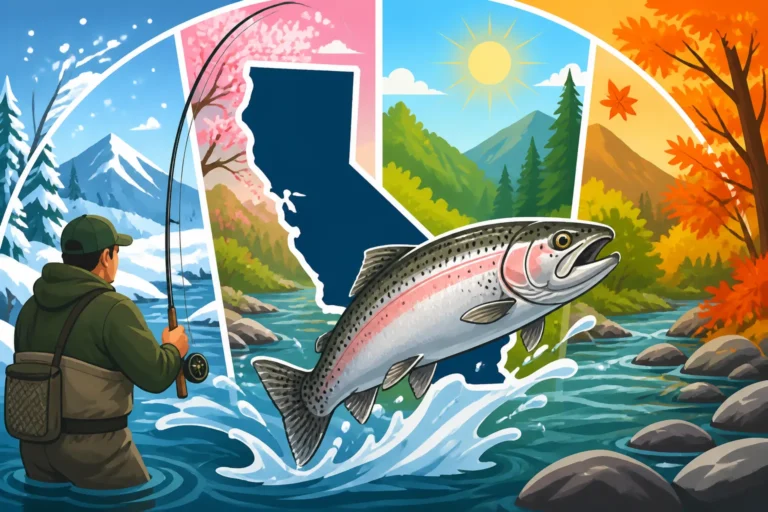
Trout Fishing Through the California Seasons
Each season in California offers unique opportunities and challenges for trout anglers. Being prepared for these changes can greatly improve your success. Our guides on California Fishing in Spring, California Fishing in Summer, California Fishing in Fall, and California Fishing in Winter provide even more granular detail for each period.
Spring often sees trout becoming more active as water temperatures rise, triggering insect hatches and a renewed feeding frenzy after winter. This is a prime time for both fly fishing with nymphs and dry flies, and spin fishing with small lures. Summer can be a bit trickier, especially in lower elevation waters, as trout seek cooler, deeper water during the heat of the day. Early morning and late evening become prime times, and trolling or deep-water jigging is often more effective. Fall is another fantastic season, with cooler temperatures invigorating trout, and many species aggressively feeding before winter. Streamer patterns and larger lures can be very effective as trout key in on baitfish. Winter fishing can be slow, but rewarding. Trout are often less active, but can still be caught by slowing down your presentation, using smaller baits, or targeting deeper holes where they congregate.
Understanding Water Conditions: Temperature, Clarity, and Flow
Beyond just the season, the immediate water conditions – temperature, clarity, and flow – are perhaps the most important factors influencing trout behavior and your choice of technique. Ignoring them is a recipe for frustration.
Water temperature is paramount for trout, as they are cold-blooded and their metabolism is directly tied to it. The "sweet spot" for most trout activity is typically between 45-65 degrees Fahrenheit. Too cold, and they become lethargic; too warm, and they get stressed and seek refuge. Water clarity also affects lure and bait choice. In clear water, subtle presentations and natural colors are best. In murky water (e.g., after rain, which you can read more about in How to Fish California After Rain), brighter colors and more noisy lures can help fish find your offering. Flow rates in rivers and streams dictate where trout hold and how easily they can feed. High, fast water often pushes fish into slower eddies and side channels, while low, clear water makes them extra spooky and concentrated in deeper pools. Always observe these conditions and adjust your strategy accordingly.
The Impact of Weather and Time of Day
It's easy to just look at the calendar and assume a good fishing day, but local weather patterns and even the time of day can dramatically swing your luck. Think about those days when the bite is on fire versus those where you can't buy a strike – weather is often the culprit.
Overcast days or periods of light rain can often be excellent for trout fishing, as the reduced light makes fish feel safer and more willing to feed openly. Bright, sunny days, especially in clear water, can push trout into deeper, shadier areas. Barometric pressure changes, such as before a storm front, can sometimes trigger a feeding frenzy, while a sudden drop in pressure might shut them down. As for time of day, generally, early mornings and late evenings are prime times, especially during warmer months, as light levels are lower and water temperatures are often more comfortable. During colder periods, midday sun might warm the water just enough to get fish active. Always check the local forecast and consider how it might affect the fish's mood before you head out.
Best Practices for Success and Conservation
Beyond the techniques and gear, being a responsible and knowledgeable angler involves a few key best practices. These not only contribute to your personal success but also ensure the health and longevity of California's precious trout fisheries.
Reading Fishing Reports and Local Knowledge
One of the biggest advantages you can give yourself before even heading out is to consult current fishing reports and tap into local knowledge. Conditions change rapidly, and what worked last week or last season might not be effective today. If you want to know about recent stockings, for instance, checking California Fish Planting Explained can be invaluable.
Many tackle shops, guide services, and online forums dedicated to Fishing in California provide up-to-date fishing reports. These reports can tell you what species are biting, what techniques are working, what specific areas are productive, and even water conditions. Don't be afraid to ask questions at local bait and tackle stores – these folks are often a goldmine of information. They can offer insights into recent insect hatches, water flows, or even tell you about a new lure that's been consistently catching fish. Combining this current information with your own understanding of trout behavior will significantly shorten your learning curve.
Catch and Release Ethics and Handling
Many of California's trout fisheries, especially those for wild and native populations, thrive because of responsible catch and release practices. While it's certainly fine to keep legal limits of trout for a meal, knowing how to properly handle fish you intend to release is crucial for their survival.
When practicing catch and release, minimize the fish's time out of water. Use a net with rubber mesh (which is much gentler on scales and slime coat than knotless nylon). Wet your hands before handling the fish to protect its protective slime layer. Avoid squeezing the fish, especially around its belly. If possible, remove the hook while the fish is still in the water. Barbless hooks greatly facilitate quick and easy removal, causing less damage. If the hook is deep, consider cutting the line as close to the hook as possible; the hook will often rust out. Hold the fish gently in the current, supporting its belly, and allow it to revive itself until it swims away under its own power. These simple steps significantly increase the chances of a released fish surviving to fight another day.
Essential Safety Tips for Trout Anglers
Trout fishing, while relaxing, often takes you into natural environments that can pose various risks. Being prepared for potential hazards is just as important as knowing your knots. Even a simple trip to a stocked lake can have unforeseen issues.
Always let someone know where you're going and when you expect to return, especially if you're venturing into remote areas. Dress in layers, as mountain weather can change rapidly, and bring appropriate rain gear. If wading, wear proper wading boots with good traction, and consider a wading staff for stability, especially in swift currents. Be aware of your surroundings: slippery rocks, poison oak, rattlesnakes, and bears are all part of the California wilderness. Carry a first-aid kit, plenty of water, and extra food. If you're fishing in high-elevation areas, be mindful of altitude sickness and rapidly changing weather conditions. A fully charged phone (and maybe a portable charger) is always a good idea. Respect the power of water; never wade in currents that are too strong or too deep for your comfort level.
Table: California Trout Species & Common Techniques
Here's a quick overview to help you decide your approach based on the trout you're targeting:
| Trout Species | Common Habitats | Effective Techniques | Best Baits/Lures |
|---|---|---|---|
| Rainbow Trout | Rivers, streams, lakes, reservoirs (most common) | Spin fishing, bait fishing, fly fishing, trolling | PowerBait, worms, salmon eggs, inline spinners, spoons, nymphs, dry flies |
| Brown Trout | Rivers (undercut banks), deeper lake sections | Spin fishing (lures), fly fishing (streamers), bait | Minnow imitations, crankbaits, spoons, large nymphs, streamers, worms |
| Brook Trout | High alpine lakes, cold headwater streams | Spin fishing, fly fishing (small flies), bait fishing | Small spinners, tiny spoons, small dry flies, nymphs, worms, salmon eggs |
| Golden Trout | High alpine lakes (remote, pristine) | Fly fishing (delicate), ultralight spin fishing | Small dry flies, nymphs, tiny spoons (gold), small spinners |
| Cutthroat Trout | Eastern Sierra streams, specific high-desert lakes | Fly fishing (dry flies, nymphs), ultralight spin fishing | Dry flies, nymphs, small spinners, worms |
| Lake Trout | Deep, cold lakes (e.g., Lake Tahoe) | Trolling (deep), jigging | Large spoons, deep-diving crankbaits, jigs, minnow imitations |
This table provides a generalized overview, and specific conditions will always require some on-the-water adaptation!
Disclaimer
The information provided in this guide is for general informational purposes only and is subject to change. Always consult the most current California Department of Fish and Wildlife (CDFW) regulations before fishing, as rules regarding seasons, limits, and specific water bodies can vary significantly and are updated regularly. Adhering to all local, state, and federal laws is the angler's responsibility.