California Topwater Fishing for Beginners
There’s nothing quite as frustrating as seeing fish dimpling the surface, or even actively busting bait, but having no idea how to make them commit to your offering. Many anglers struggle to break through this barrier, feeling like they're missing a secret technique. This guide is dedicated to demystifying topwater fishing in California, walking beginners through the gear, techniques, and prime opportunities to experience those explosive, heart-stopping surface strikes.
Why Topwater Fishing is an Absolute Thrill in California
Topwater fishing isn't just a technique; it's an experience. There’s something primal and incredibly exciting about watching a fish smash your lure right on the surface. For many, it's the peak of fishing excitement, a visual spectacle that traditional subsurface fishing just can’t match. And here in California, with our diverse fisheries, the opportunities to witness this magic are abundant.
The Unforgettable Thrill of the Surface Strike
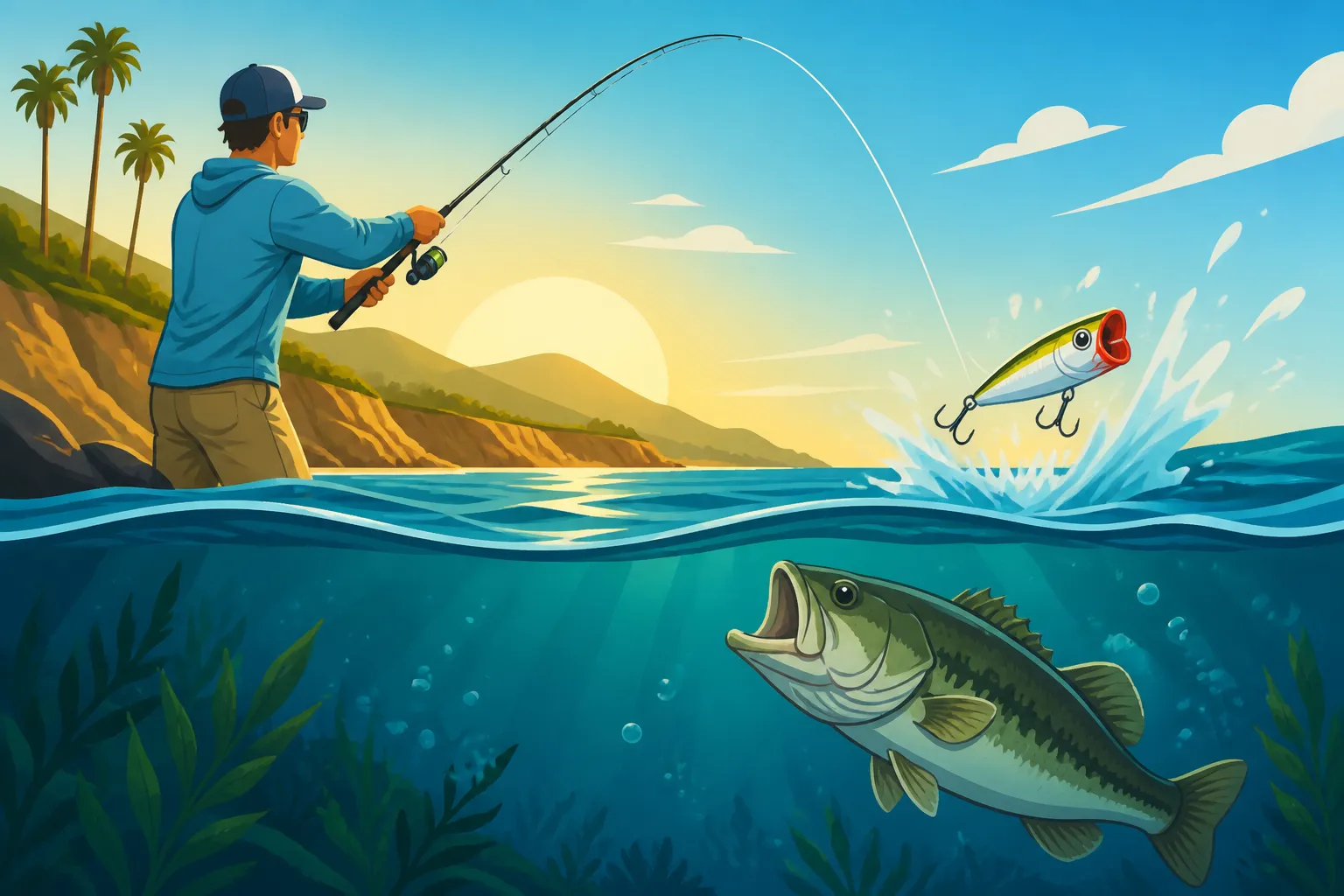
Imagine this: you cast your lure, it lands with a gentle plop, and then you start your retrieve. Suddenly, the water erupts! A fish, often unseen moments before, explodes on your bait, creating a splash and a commotion that gets your adrenaline pumping. This isn't a subtle tap or a gentle tug; it's an aggressive, undeniable declaration. It's exhilarating, and it makes every single cast an anticipation-filled moment. Beginners especially find this visual aspect incredibly rewarding, as it provides instant feedback and a clear, unforgettable memory of the catch. It’s a rush that keeps you coming back for more, hook, line, and sinker.
Mimicking Natural Prey at the Surface
Topwater lures are designed to imitate creatures that naturally reside or venture onto the water's surface. Think about it: frogs, injured baitfish, insects, even small rodents can end up on the water, making easy targets for opportunistic predators. These lures leverage that natural instinct, presenting a silhouette and action that screams "easy meal!" to hungry fish lurking below. The specific movements and sounds — whether it's the splashing of a popper or the side-to-side glide of a walk-the-dog bait — trigger those predatory impulses. It’s less about fooling the fish with a perfect imitation and more about provoking an aggressive reaction.
When to Choose Topwater Over Subsurface Baits
While topwater fishing is incredibly fun, it’s not always the go-to method. It truly shines when certain conditions align. Typically, warmer water temperatures are key, as fish are more active and willing to chase prey to the surface. This often means late spring through early fall, especially during dawn, dusk, or even throughout cloudy days. Low-light conditions reduce the fish's ability to scrutinize your lure, making them bolder. Also, if you notice baitfish showering or seeing fish actively feeding on the surface, it’s a no-brainer. Topwater can also be incredibly effective when fish are holding in shallow cover, like over weed beds or submerged timber, where you need a lure that stays above the snags. It's a fantastic technique for learning California Bass Fishing Techniques or exploring how to fish California Kayak Fishing Tips and Techniques.
Essential Gear for Beginner Topwater Anglers
Getting started with topwater fishing doesn't require a massive investment, but having the right tools can make a huge difference in your success and enjoyment. You don't need the most expensive gear, but a balanced setup will allow you to cast effectively and fight fish confidently. Remember, a good reel and line are crucial for managing those explosive strikes! Many of these items are readily available from online retailers like Amazon, making it easy to assemble your kit.
Rod, Reel, and Line Combos for Success
For most topwater applications, especially for bass or inshore saltwater species, a medium-heavy to heavy power rod, typically 6'6" to 7'6" in length, is ideal. This length provides good casting distance and leverage for working the lure and fighting fish. A fast action tip is beneficial for imparting action to the lure and for quick hook sets.
When it comes to reels, a baitcasting reel is often preferred for its accuracy and power, especially when casting heavier topwater lures. Look for a reel with a gear ratio in the 6.1:1 to 7.1:1 range to allow for quick retrieves to work your lures and pick up slack after a strike. If baitcasting isn't your comfort zone yet, a good quality spinning reel in the 2500-4000 series can certainly get the job done.
For line, braided line is a top choice for topwater fishing due to its zero stretch, which translates to better lure action and immediate hook sets. A 30-50 lb braid for freshwater bass or up to 65 lb for inshore saltwater species is a great starting point. Some anglers prefer to tie a short (12-24 inch) monofilament or fluorocarbon leader (12-20 lb test) to the braid with an FG or uni-to-uni knot. The mono leader can provide a little stretch and acts as a nearly invisible connection, while fluorocarbon, though sinking, can offer abrasion resistance.
Must-Have Topwater Lures for Your Tackle Box
The world of topwater lures is vast, but as a beginner, focusing on a few key types will cover most situations:
- Poppers: These lures have a concave face that creates a "pop" and splash when twitched, mimicking a struggling baitfish or frog. They come in various sizes and colors. Classic options from brands like Heddon's Pop'R or Rebel Pop-R are excellent starting points and widely available on Amazon.
- Walk-the-Dog Baits (Stickbaits): These slender, cigar-shaped lures don't have a lip. Instead, they’re worked with a rhythmic rod twitch and reel turn to create a zig-zagging "walk-the-dog" action across the surface. Think of Zara Spook or Sammy lures. This action is incredibly enticing for bass and often for California Halibut in California: Where and How to Catch in shallow bays.
- Prop Baits: Featuring one or two small propellers, these lures create a gurgling, sputtering commotion that can draw aggressive strikes, especially when fish are finicky.
- Frog Lures: Designed to be fished over heavy vegetation, lily pads, and matted grass, hollow-body frog lures are weedless and incredibly effective for targeting big bass hiding in thick cover. These are a must-have for fishing in specific areas of the California Delta Fishing Guide.
Here's a quick look at common topwater lures:
| Lure Type | Action Description | Target Species (California) | Best Conditions |
|---|---|---|---|
| Popper | Spitting, splashing, "popping" sound | Largemouth Bass, Smallmouth Bass, Striped Bass, Panfish | Calm water, low light, around cover |
| Walk-the-Dog | Zig-zagging glide across surface | Largemouth Bass, Striped Bass, Calico Bass, Halibut | Slightly choppy to calm, open water, ambush points |
| Prop Bait | Gurgling, sputtering, wounded baitfish imitation | Largemouth Bass, Striped Bass | Calm water, active fish, around docks and structure |
| Hollow Body Frog | Gliding over vegetation, weedless | Largemouth Bass, Northern Pike | Heavy cover, lily pads, matted grass |
Accessories for a Smooth Topwater Trip
Beyond the rod, reel, and lures, a few accessories will make your topwater fishing experience much smoother. A good pair of fishing pliers is essential for safely removing hooks from toothy fish or deep-set lures. A fish gripper can also be invaluable for handling active fish without risk of injury to yourself or the fish. Don't forget a small tackle box or bag to keep your topwater assortment organized and easily accessible. A measuring tape or board is crucial for ensuring your catches meet California Fishing Bag and Size Limits. And of course, polarized sunglasses are not just for looking cool; they significantly reduce glare, allowing you to spot fish following your lure or identify underwater structure that fish might be ambushing from.
Mastering Basic Topwater Techniques
The beauty of topwater fishing is that it often rewards aggressive, erratic retrieves that mimic struggling prey. While each lure type has its nuances, the core principle is to create commotion and draw attention. Practice is key, and you'll quickly develop a feel for what the fish want on any given day.
Poppers: The Splashy Attraction
Poppers are arguably the easiest topwater lure for beginners to master. Their action is relatively straightforward.
- Cast: Make a precise cast near cover, structure, or any area you suspect fish are holding.
- Let it Sit: Allow the popper to rest for a few seconds after it hits the water. This "splashdown" often mimics a struggling insect or a frog jumping in, and sometimes, a fish will strike immediately.
- Pop and Pause: Give your rod tip a sharp, downward twitch, then immediately drop your rod tip back towards the lure to create slack. This makes the popper "pop" and push water forward.
- Retrieve: Reel in the slack and pause. The length of your pause is critical and can vary from a couple of seconds to 10-15 seconds. Experiment! Sometimes fish want a quick, aggressive retrieve, other times a long, tantalizing pause is the ticket.
- Repeat: Continue this pop-and-pause retrieve back to your boat or shore. If you feel a strike, keep your rod tip down and reel into the fish to set the hook firmly.
One common mistake is to retrieve too fast. Often, the strike comes on the pause, so don't rush it! Poppers are particularly effective in calm, low-light conditions on lakes like Clear Lake for largemouth bass, or even in estuaries for California Striped Bass Regulations.
Walk-the-Dog Baits: The Glide and Dash
Walk-the-dog baits require a bit more practice to get the hang of, but once you do, they're incredibly rewarding. The goal is to make the lure glide from side to side across the surface, resembling an injured or confused baitfish.
- Cast: Cast your lure to your target area.
- Rod Position: Keep your rod tip pointed slightly down towards the water, around 8-9 o'clock.
- Rhythmic Twitches: Begin a cadence of sharp, downward rod twitches while simultaneously reeling in slack with your other hand. It's a "twitch-twitch-pause" motion. The twitch makes the lure dart, and reeling in slack prepares you for the next twitch.
- Find the Rhythm: The key is to find a rhythm where the lure glides left, then right, then left again. It's not a pull; it's a series of quick, snapping twitches. Don't pull the lure towards you; just snap your wrist.
- Vary the Speed: Sometimes fish want a fast, frantic walk; other times a slower, more deliberate glide with longer pauses is better. Experiment with the cadence and the length of your pauses.
- Hook Set: When a fish strikes, resist the urge to immediately set the hook. Often, they miss the lure on the first pass. Wait until you feel the weight of the fish or see your line tightening, then sweep-set the hook. This technique is fantastic for targeting California Yellowtail Fishing Guide in boiling conditions offshore, or for largemouth bass around submerged structure.
Prop Baits and Frogs: Unique Presentations
Prop baits and frog lures offer specialized topwater presentations.
- Prop Baits: These are often best retrieved with a straight, steady retrieve, allowing the propellers to churn and sputter. You can also incorporate short pauses or give it a few quick twitches to make it look like a panicking baitfish. The key is to create that constant commotion. They're excellent when fish are aggressive but might not commit to a "walk-the-dog" or "pop" action.
- Hollow Body Frogs: Fishing frogs is all about working them over and through heavy cover that other lures can't penetrate. Cast your frog onto a lily pad, log, or weed mat. Let it sit for a moment. Then, use short twitches to make it hop and crawl across the surface. When it hits an open pocket, let it sit again, or twitch it a few times to create ripples. The weedless design means you can pull it right through the gnarliest stuff. When a bass blows up on a frog, it's often a truly violent strike. Again, wait for the fish to actually eat the frog and turn, feeling the weight, before setting the hook. This is a prime method for fishing the thick vegetation of the Sacramento River Fishing Guide or similar waterways.
Prime California Spots and Species for Topwater Success
California's diverse aquatic environments offer fantastic topwater opportunities across the state, from freshwater lakes and rivers to saltwater bays and coastlines. Understanding where and when to target specific species will significantly increase your chances of success.
Freshwater Targets: Bass and Panfish
When it comes to freshwater topwater action in California, bass species reign supreme. Largemouth bass, smallmouth bass, and spotted bass are all notorious for their aggressive surface strikes.
- Largemouth Bass: These are the kings of topwater in California's lakes and reservoirs. Waters like Clear Lake, Lake Shasta, and Diamond Valley Lake are prime spots. Look for them around submerged timber, weed lines, lily pads, tules, and boat docks. Early mornings and late evenings, or even throughout the day on overcast days, are prime times. Frogs are indispensable in heavy cover, while poppers and walk-the-dog baits excel along weed edges and open pockets. Many anglers swear by the Heddon Super Spook Jr. or Lucky Craft Sammy for consistently drawing strikes. Learning How to Fish for Largemouth Bass in California will undoubtedly involve topwater presentations.
- Smallmouth and Spotted Bass: While perhaps not as famed for topwater as largemouth, these feisty fighters will absolutely smash a topwater lure, especially smaller poppers and walk-the-dog baits. Rivers like the Feather River and reservoirs with rocky bottom structure are good places to find them. They tend to be less cover-oriented than largemouth, often chasing baitfish in open water or around rocky points.
- Panfish (Bluegill, Crappie): Don't overlook the smaller species! On light tackle, a tiny popper or even a fly rod with a popper fly can create incredibly fun action for bluegill and crappie, especially in calm ponds and coves. It’s a great way to introduce kids to the thrill of topwater. You can find excellent panfish opportunities in many of the Best Lakes to Fish in California.
Saltwater Opportunities: Calico Bass and Halibut
Topwater fishing isn't just for freshwater. California's saltwater scene offers some explosive topwater action, particularly in southern California.
- Calico Bass: These are arguably the most sought-after topwater target in California's inshore saltwater. Found in kelp forests, rocky reefs, and along structure from San Diego up through the central coast, calicos are incredibly aggressive. They will absolutely annihilate a walk-the-dog bait like a Zara Spook, especially early in the morning or late in the day. Look for boils or "bird schools" of bait being pushed to the surface. Topwater fishing for calico bass from a kayak can be an adrenaline rush. The Channel Islands Fishing Guide areas are legendary for this kind of action.
- Halibut: While typically a bottom-dwelling species, California halibut will sometimes strike topwater lures, especially in shallow bays or estuaries where they are ambushing baitfish. A slower retrieve with a walk-the-dog bait or even a prop bait can entice a strike. This is less common but certainly possible, particularly when focusing on specific California Halibut Regulations and Limits.
- Bonito and Barracuda: When these species are actively feeding on baitfish near the surface, topwater lures can be incredibly effective. A fast-moving walk-the-dog lure or a small popper can draw fierce strikes from these toothy predators.
Ideal Conditions and Seasons for Topwater Action
The most crucial factor for successful topwater fishing is water temperature. Generally, when the water temperature is above 60°F (15°C), fish are more active and willing to chase prey to the surface. This means late spring, summer, and early fall are your prime topwater seasons across much of California.
- Time of Day: Dawn and dusk are often referred to as the "golden hours" for topwater. The low light gives predators an advantage, making them bolder to attack surface baits. However, on overcast or cloudy days, topwater action can extend throughout the day.
- Water Clarity: Clear to slightly stained water is generally preferred. In very murky water, fish may struggle to see your lure on the surface.
- Weather: Calm conditions with little to no wind are ideal for working topwater lures effectively and seeing those tell-tale strikes. A light ripple can be good, but strong winds make it difficult to control your lure and detect bites.
- Bait Activity: Always pay attention to signs of baitfish or insect activity on the surface. If you see baitfish showering or insects hatching, it's a strong indicator that fish are looking up, making it the perfect time to tie on a topwater lure. Understanding California Fishing in Summer conditions will greatly enhance your topwater efforts.
Disclaimer
Fishing regulations in California are subject to change by the California Department of Fish and Wildlife (CDFW). It is always the angler's responsibility to check the most current regulations before heading out. This guide provides general information and should not be considered a substitute for the official CDFW regulations booklet.