California Kayak Fishing Tips and Techniques
There's nothing quite like the feeling of gliding silently across the water, the gentle dip of your paddle or the quiet whir of a pedal drive, as you approach a pristine fishing spot that's just out of reach for shore anglers. For many California anglers, the sheer joy and accessibility of kayak fishing are undeniable, but it can also feel a little intimidating to get started, especially with so much gear and so many unique waters to explore. This guide is designed to cut through the confusion, offering practical tips and techniques to help you master kayak fishing in California, from tranquil lakes to the vibrant Pacific coast.
The Undeniable Allure of Kayak Fishing in California
There's a special kind of magic that comes with kayak fishing, especially here in California. It’s not just about catching fish; it’s about the entire experience, the connection to nature, and the quiet thrill of the hunt. If you've been on the fence, let me tell you why so many of us are absolutely hooked.
Why Anglers Are Hooked on Kayak Fishing
One of the biggest draws of kayak fishing is the incredible sense of stealth and intimacy it provides. Unlike a roaring bass boat or a large party boat, a kayak allows you to approach fishing spots almost silently. This stealth factor is a huge advantage, especially when targeting skittish fish like trout in clear mountain lakes or wary bass in calm coves. You can often get much closer to the action without spooking your quarry, presenting your bait or lure with precision in ways a larger vessel simply can't. Think about those hidden pockets of lily pads on Clear Lake or the quiet eddies on the American River – a kayak can get you right into the heart of those prime zones.
Beyond stealth, there's the unparalleled access. Kayaks can navigate incredibly shallow water and tight spaces that are off-limits to most other boats. This means you can explore remote coves, shallow estuaries, and tucked-away river bends that hold incredible fishing opportunities. It opens up a whole new world of potential hotspots, allowing you to escape the crowds often found at more accessible boat ramps or shore fishing locations. Plus, it's a fantastic workout! You’re not just sitting there; you’re actively engaging with your environment, paddling or pedaling, which adds another layer of satisfaction to every catch. And let's be honest, for many, the cost-effectiveness compared to owning a powerboat is a huge bonus. You can find quality kayaks and gear without breaking the bank.
The Diverse California Kayak Fishing Landscape
California truly is a kayaker's paradise, offering an astonishing variety of fishing environments. From the high alpine lakes nestled in the Sierra Nevada mountains to the sprawling urban estuaries, and out to the vast Pacific Ocean, there's a perfect paddle for every angler and every species. This diversity is what makes kayak fishing here so exciting – you can chase different fish in completely different ecosystems all within a few hours' drive.
For those who love freshwater, California's numerous lakes and rivers are prime territory. Imagine drifting along the shores of Lake Shasta, casting for bass and trout, or silently navigating the intricate sloughs of the California Delta Fishing Guide in pursuit of striped bass. The tranquility of these inland waters, often surrounded by stunning natural beauty, makes for an incredibly peaceful and productive day on the water. Then there are the smaller, lesser-known reservoirs and mountain lakes, which are often overlooked by larger boats but are teeming with fish, and perfectly suited for a kayak. Each body of water presents its own unique challenges and rewards, making it a constant adventure.
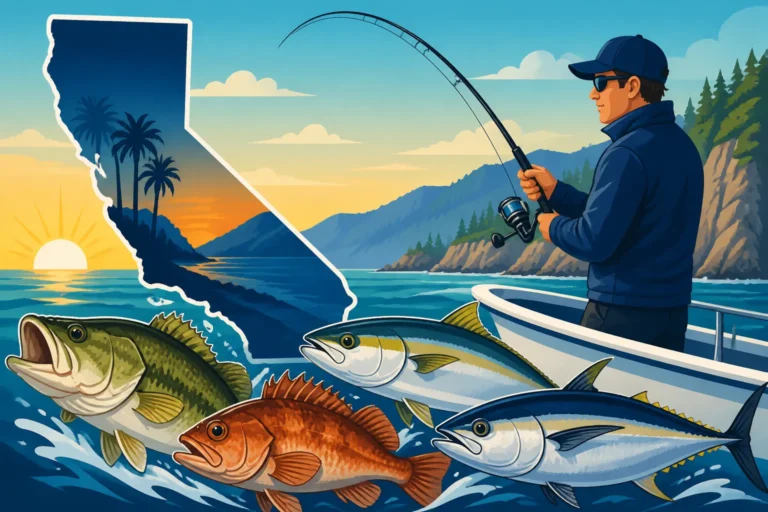
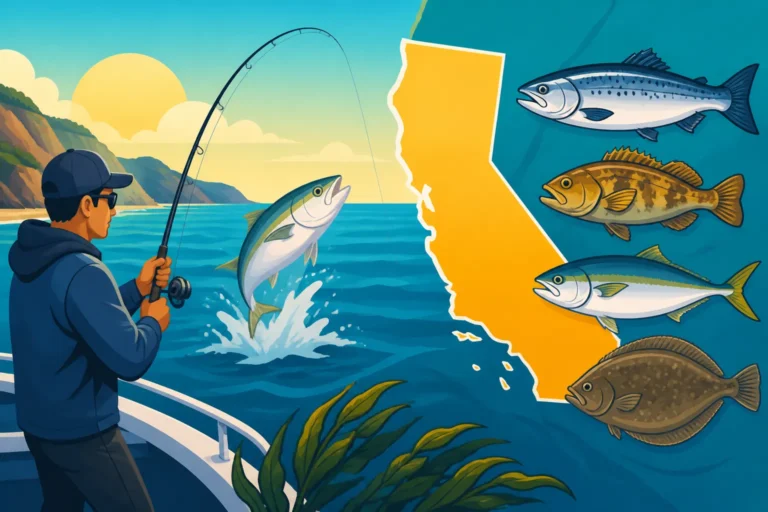
When you're ready for saltwater, the possibilities explode. California's extensive coastline offers fantastic opportunities for kayak anglers. You can explore the calm, protected waters of bays like San Francisco Bay or Monterey Bay, targeting halibut, leopard sharks, or even stripers. For the more adventurous, venturing nearshore into the Pacific can put you on rockfish, lingcod, and a variety of pelagic species. Paddling out to kelp beds off the coast of Southern California, like those near La Jolla or Santa Barbara, is an exhilarating experience, allowing you to fish for calico bass and yellowtail in their natural habitat. The constant ebb and flow of the ocean, the potential for big game, and the stunning views make saltwater kayak fishing an unforgettable endeavor.
Gearing Up Right: Essential Equipment for California Kayak Fishing
Getting into kayak fishing means investing in the right gear. It's not just about comfort and convenience; it's about safety and efficiency on the water. Making smart choices here will directly impact your enjoyment and success.
Choosing the Perfect Fishing Kayak
The foundation of your kayak fishing journey is, naturally, the kayak itself. There are several types, and the "perfect" one really depends on where you plan to fish most often and your personal preferences. The most popular choice for fishing is generally the sit-on-top (SOT) kayak. These are incredibly stable, easy to get on and off (especially if you happen to capsize, which, let's face it, can happen), and offer plenty of open deck space for gear, tackle boxes, and fish coolers. Brands like Hobie, Old Town, and Native Watercraft are highly regarded for their fishing-specific SOT models, often featuring built-in rod holders, tackle storage, and even transducer scuppers for fish finders. If you're looking for more inspiration, check out the Best Kayak Fishing Spots in California to see what kind of kayaks others are using in those waters.
Within the SOT category, you'll find both paddle-driven and pedal-driven options. Paddle kayaks are generally lighter and more affordable, making them great for transport and those on a budget. However, you'll need to put your rod down to paddle, which can be less efficient when actively fishing. Pedal kayaks, on the other hand, use a fin or propeller system operated by your feet, leaving your hands free for casting, reeling, and managing your lines. This hands-free advantage is a game-changer for many anglers, allowing for continuous trolling or fighting a fish while still maintaining position. They are typically heavier and more expensive, but the efficiency often makes them worth the investment for serious anglers.
Sit-in kayaks, while popular for recreational paddling, are generally less common for fishing due to their enclosed nature, which makes re-entry more challenging and limits open storage. However, they can be faster and offer a drier ride, which might be appealing for cold weather fishing on calm lakes or rivers. Ultimately, try to test paddle different models if possible. Many kayak shops offer demo days, or you might be able to rent one for a few hours. Consider stability first – you’ll be casting, reeling, and potentially standing, so a stable platform is key.
Must-Have Accessories and Safety Gear
Once you’ve got your kayak, a suite of essential accessories and safety gear is non-negotiable. Your personal flotation device (PFD) is number one – wear it, always. Accidents happen fast on the water, and a PFD is your best defense. Beyond that, a reliable paddle is crucial, even if you have a pedal drive, as a backup. A paddle leash is also vital to prevent your paddle from floating away if you drop it. Dry bags are your best friend for keeping essentials like your phone, wallet, keys, and an extra layer of clothing safe and dry. You can find a great selection of these on Amazon, often with different sizes and capacities to suit your needs.
For safety, consider a whistle or air horn for signaling, a marine-band VHF radio or a satellite messenger like a Garmin InReach for communication, especially if you're venturing offshore or into remote areas. A safety flag on a pole makes you more visible to other boaters, which is incredibly important in busy waterways or areas with limited visibility. An anchor system, whether it’s a small grappling anchor for freshwater or a heavier anchor with a trolley system for saltwater, is indispensable for holding your position over a prime fishing spot or preventing you from drifting too quickly in current or wind. Don't forget a first-aid kit, sun protection (hat, sunglasses, sunscreen), and plenty of water. For those just starting out, getting comfortable with all this gear is part of the process, and a good resource for learning is our guide on California Kayak Fishing for Beginners.
Navigating California's Waters: Where and How to Launch Your Kayak
California's vast and varied landscape offers endless opportunities for kayak anglers. Knowing where to go and how to safely access these spots is key to a successful and enjoyable outing.
Prime Freshwater Kayak Fishing Destinations
When it comes to freshwater kayak fishing in California, you're truly spoiled for choice. Large reservoirs like Clear Lake Fishing Guide are legendary for trophy largemouth bass, and a kayak gives you the advantage of slipping into shallow coves and thick weed beds that larger boats can't reach. The same goes for Lake Shasta Fishing Guide and Lake Oroville, where you can target bass, trout, and even landlocked salmon. Trolling with small spoons or swimbaits from your kayak is an incredibly effective technique on these bigger lakes, allowing you to cover water and find active fish.
Rivers and the sprawling California Delta also offer phenomenal kayak fishing. The Sacramento River and American River are known for their salmon and steelhead runs, and while a kayak might seem small for these powerful fish, it offers a unique challenge and puts you right in the heart of the action. The Sacramento-San Joaquin Delta, with its labyrinthine network of sloughs, channels, and flooded islands, is a striped bass heaven. Kayaks excel here, allowing you to navigate tight waterways and access secluded areas where stripers ambush baitfish. Bank access can be limited in some areas, so having a kayak lets you unlock entirely new fishing grounds. Always check local regulations, as some areas may have specific rules regarding kayak use or launching.
Exploring California's Saltwater Kayak Opportunities
For saltwater enthusiasts, the California coast is an angler's dream, and a kayak allows for incredible experiences. Bays like San Francisco Bay and Monterey Bay are fantastic starting points. In San Francisco Bay, you can target halibut by drifting live bait or plastics along the flats, or chase striped bass around structure. Monterey Bay offers amazing opportunities for rockfish, lingcod, and even salmon when the season is open. Kayaks are perfect for exploring the calmer, inshore areas of these bays, giving you a chance to avoid the strong currents and larger vessel traffic found in the main channels. Our guide to San Francisco Bay Fishing Guide can give you even more insights into specific hotspots.
Venturing beyond the bays and into the nearshore ocean opens up even more possibilities. Southern California's extensive kelp forests are a prime hunting ground for calico bass, often considered one of the best fighting fish pound-for-pound. Paddling along the kelp edges and pitching swimbaits or plastics into the canopy is an exhilarating way to fish. For those seeking rockfish and lingcod, heading out to nearshore reefs and rocky structures is incredibly productive. You can drop jigs or bait directly over these structures from your kayak, feeling every bump and bite. Always keep an eye on weather and swell conditions when heading out into the ocean, as things can change quickly. For more details on species specific opportunities, check out our Monterey Bay Fishing Guide.
Launching and Landing Safely
Launching and landing your kayak might seem simple, but it requires a bit of planning and practice, especially with fishing gear onboard. For lakes and calm bays, most boat ramps work well, but look for designated kayak launch sites or sandy beaches that offer easier access. Always scout your launch and landing points beforehand, checking for tides, currents, and potential hazards like rocks or heavy boat traffic.
Pre-trip planning is crucial. Check the marine forecast or local weather reports meticulously. Wind can turn a pleasant paddle into a grueling battle, and swell can make ocean conditions dangerous. Tides are also critical for saltwater anglers; understand how they affect currents and fish behavior in your chosen spot. When launching from a busy boat ramp, be courteous and efficient. Have all your gear staged and ready so you can get on the water quickly without hogging the ramp. A portable kayak cart can be a lifesaver for transporting your loaded kayak from your vehicle to the water, especially if it's a bit of a walk. You can find various models suitable for different kayak sizes and weights on Amazon. Remember, getting safely on and off the water is just as important as the fishing itself.
Mastering Kayak Fishing Techniques for California Species
Once you're comfortably in your kayak and on the water, it's time to talk tactics. The beauty of kayak fishing is how it forces you to refine your techniques, often leading to more precise and effective presentations.
Freshwater Tactics from a Kayak
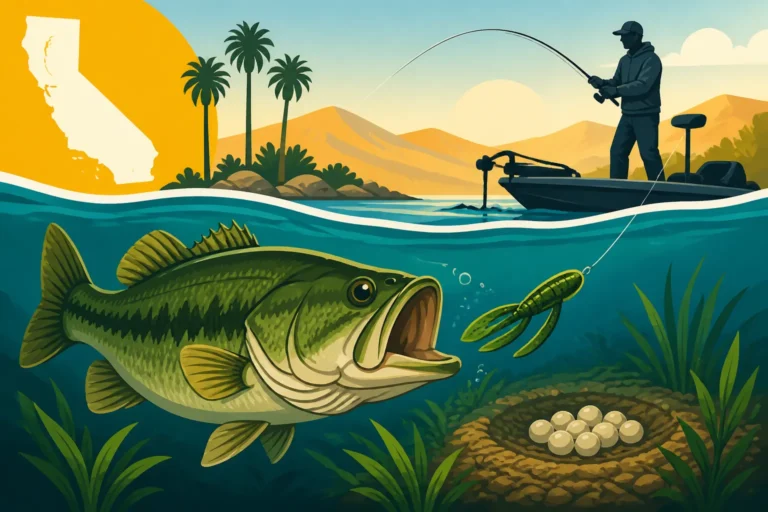
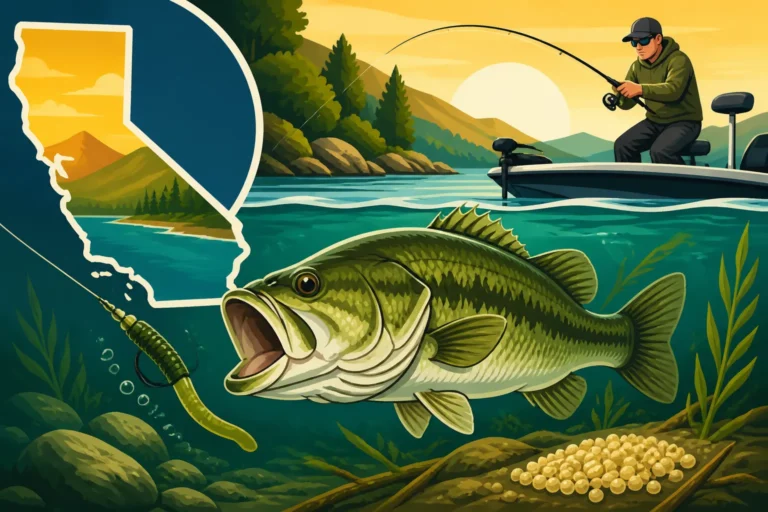
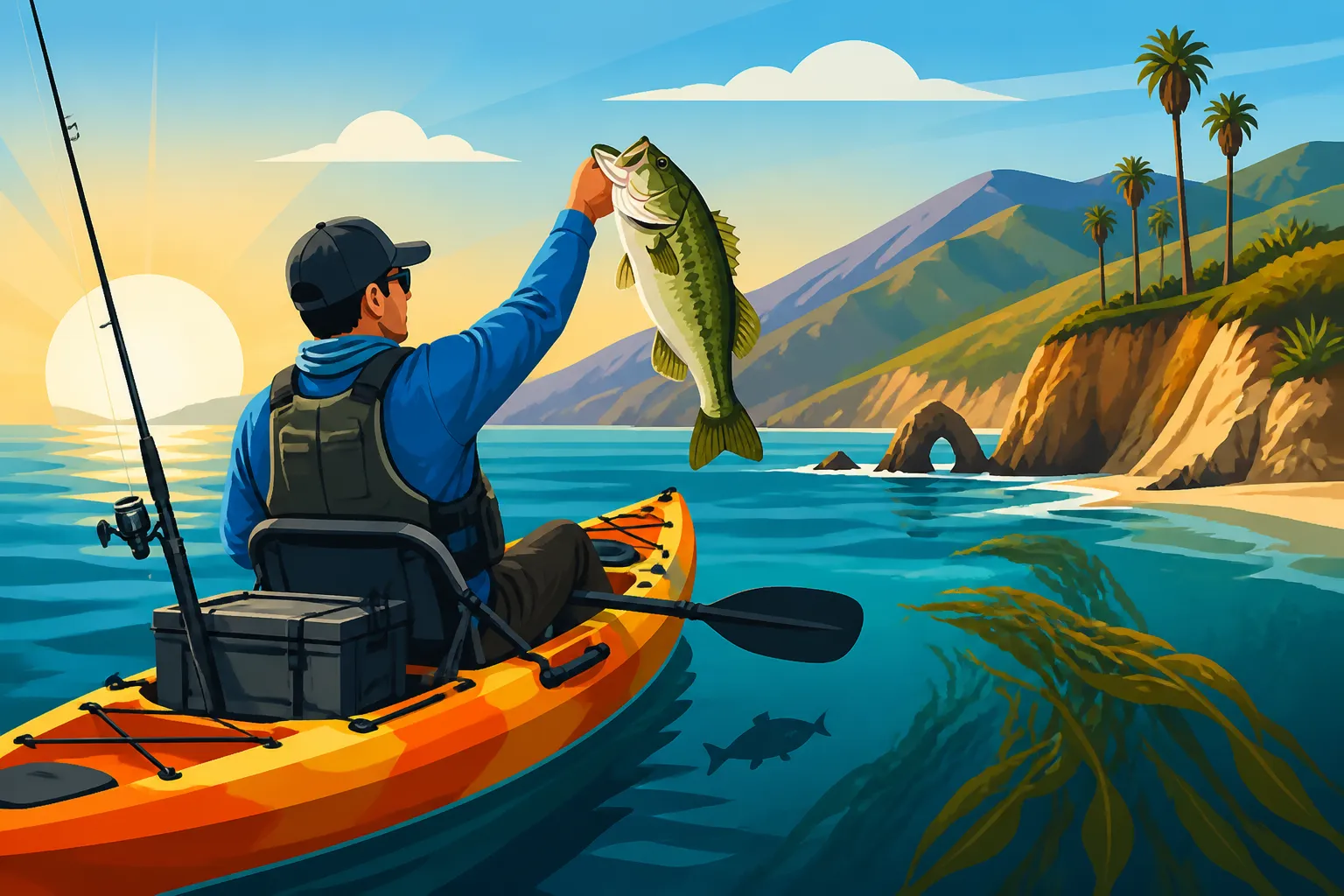
Freshwater kayak fishing in California often centers around species like bass and trout. For largemouth and smallmouth bass, a kayak allows you to be incredibly precise with your casting. You can quietly maneuver right up to fallen trees, docks, or thick vegetation – prime bass real estate – and present lures like jigs, Texas-rigged worms, or topwater frogs with pinpoint accuracy. The low profile of a kayak also gives you a unique vantage point, making it easier to see subtle changes in water structure or even spotting bass cruising in shallower waters. Our comprehensive guide on California Bass Fishing Techniques offers an even deeper dive into this.
When targeting trout in larger lakes or reservoirs, trolling from a kayak is a highly effective method. You can rig up a couple of light trolling rods with small spoons, spinners, or Rapalas, and slowly pedal or paddle along contour lines, drop-offs, or around points. A fish finder mounted to your kayak is invaluable here, helping you locate schools of baitfish and the trout that follow them. In rivers, fly fishing from a kayak can be an incredibly rewarding experience, allowing you to access sections of water that are difficult to reach by wading. Drifting nymphs or casting dry flies to rising trout requires a gentle touch and good boat control, but the rewards are often spectacular. For more specifics, our California Trout Fishing Techniques article is a great read.
Inshore and Nearshore Saltwater Strategies
Saltwater kayak fishing in California presents a dynamic range of techniques. For California halibut, drifting is often the name of the game. Rig up a sliding sinker setup with live anchovies, sardines, or even a large plastic grub, and let the current carry you over sandy flats or through channels in bays like San Diego Bay. A drift sock or sea anchor can help slow your drift in stronger currents, keeping your bait in the strike zone longer. This method allows you to cover a lot of ground and is incredibly effective. To learn more about targeting these flatfish, refer to our guide on How to Fish for California Halibut.
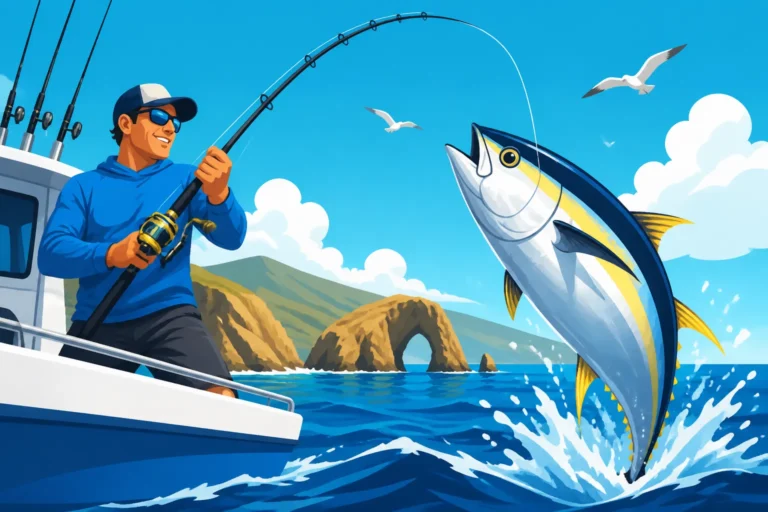
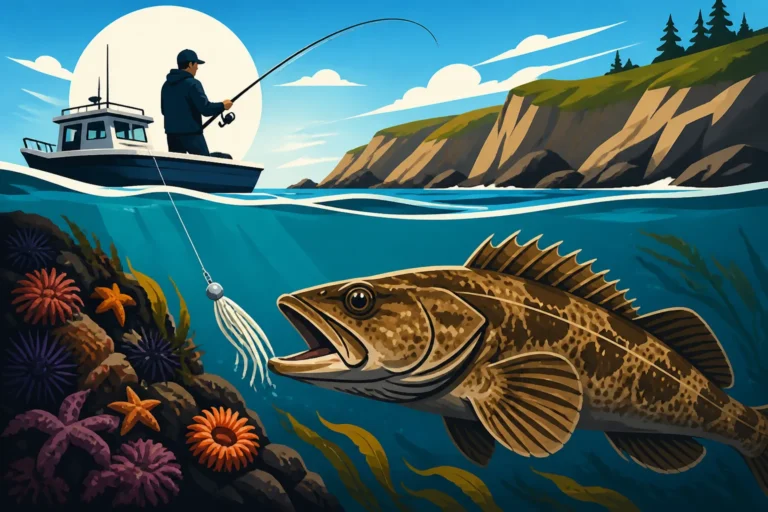
When you're after rockfish and lingcod on kelp beds and rocky reefs, jigging is a primary technique. Drop metal jigs, swimbaits, or even baited dropper loops straight down to the bottom, then reel up a few feet and work your lure with an up-and-down motion. The key is to stay vertical and keep your bait in the strike zone, especially when fishing in deeper water. Kayaks provide an excellent platform for this, allowing you to hover directly over structure. Be sure to check How to Fish for Rockfish in California for detailed advice. For the aggressive calico bass that inhabit the kelp forests, pitching swimbaits, plastics, or even small live baits right into the thickest part of the kelp can produce explosive strikes. And if you're lucky enough to encounter yellowtail near the coast or around offshore islands, live bait trolling or yo-yo jigging with heavy metal jigs can be incredibly productive. These powerful fish offer an epic fight from a kayak, and our California Yellowtail Fishing Guide can help you prepare for that experience.
Seasonal Rhythms and Regulatory Must-Knows
Understanding the rhythm of California's fishing seasons and staying on top of the regulations are paramount for any responsible and successful kayak angler. Mother Nature and the CDFW often dictate when and where you can fish.
Best Times to Kayak Fish in California
Just like any other form of fishing, seasonality plays a huge role in kayak fishing success. Knowing the best times to target specific species can make all the difference between a slow day and a banner one. For freshwater bass, spring and fall are often peak times when the fish are actively feeding in shallower waters. During the hot summer months, bass tend to go deeper, so adjusting your tactics to target thermoclines or fishing early mornings and late evenings becomes more important. Our guide on Best Times to Fish in California offers a deeper look at this.
For ocean-dwelling species, summer and early fall generally offer the calmest conditions, making offshore kayak trips safer and more accessible. This is often the prime time for species like yellowtail and tuna, should they come close enough to shore for kayak anglers. Rockfish and lingcod seasons are often open for longer stretches, but their activity can also vary with water temperature and bait presence. Salmon seasons in both freshwater rivers and the ocean are highly regulated and often short, so staying informed is crucial. Always consult the official California Department of Fish and Wildlife (CDFW) regulations or our California Fishing Seasons: Month-by-Month Guide to ensure you're fishing legally and during prime times. Weather is always a factor for kayak fishing, so pay close attention to forecasts, especially wind and swell, before planning any trip.
Understanding California Fishing Regulations
Navigating California's fishing regulations can feel like a daunting task, but it's absolutely essential to avoid fines and contribute to sustainable fisheries. First and foremost, almost all anglers over the age of 16 need a valid California Fishing License Guide to fish in California, regardless of whether you're in freshwater or saltwater. There are exceptions, of course, like fishing from a public pier in ocean waters, but generally, assume you need one. You can typically purchase your license online through the CDFW website or from authorized license agents like bait and tackle shops, and often even sporting goods stores like those found in larger retail chains.
Beyond the basic license, many species, particularly anadromous fish like salmon and steelhead, as well as sturgeon, require a separate California Fishing Report Cards Explained. These cards help the CDFW gather vital data on catch rates, which informs management decisions. You must fill out these cards immediately after catching the species and return them by a specific deadline. Additionally, California has specific California Fishing Bag and Size Limits for nearly every species, designed to protect fish populations. These limits vary by species, location (e.g., specific lakes might have special regulations), and sometimes even by season.
Marine Protected Areas (MPAs) are another critical consideration for kayak anglers. California Marine Protected Areas Explained are designated zones along the coast where fishing is either completely prohibited (no-take zones) or highly restricted. It is your responsibility to know if you are fishing in an MPA and understand the specific rules for that zone. Ignorance of the law is not an excuse. Always carry a copy of the current California Sport Fishing Regulations booklet (available for free online or at license vendors), or download the CDFW app to your smartphone for easy access to the most up-to-date rules. This proactive approach will ensure your kayak fishing adventures are always enjoyable and lawful.
| Kayak Type | Key Advantages | Key Disadvantages | Ideal For |
|---|---|---|---|
| Sit-on-Top (SOT) | Stable, easy re-entry, ample storage, comfortable | Heavier, slower, less protection from elements | Ocean, large lakes, rivers, beginner-friendly |
| Sit-in | Faster, lighter, drier, better in cold/wind | Less stable, difficult re-entry, limited storage | Calm lakes, protected rivers, touring |
| Pedal Drive | Hands-free propulsion, efficient, faster | Heavier, more expensive, more complex maintenance | Trolling, covering distance, fighting fish, offshore |
| Paddle Only | Lighter, more affordable, simpler, quieter | Requires constant paddling, hands occupied | Stealth fishing, tight spots, budget-conscious, portability |
Disclaimer
Please remember that fishing regulations, seasons, and conditions in California can change frequently. Always consult the official California Department of Fish and Wildlife (CDFW) website or their latest regulations booklet before heading out on the water. Safety should always be your top priority.