How to Fish for Rockfish in California
If you've ever tried your hand at saltwater fishing in California, you've likely heard the call of the rockfish. These feisty, delicious fish are a staple of the Golden State's coastal waters, but figuring out where to find them, what to use, and how to navigate the ever-changing regulations can feel like trying to solve a puzzle with a missing piece. Don't worry, you're not alone in feeling a bit overwhelmed; that's why this guide is here to break down everything you need to know about successfully targeting rockfish in California.
Understanding California Rockfish Species and Their Habitats
Rockfishing isn't just about catching "a rockfish." There's a whole family of these incredible bottom-dwelling fish, each with its own quirks, preferred depths, and even taste profiles. Getting to know them is the first step to becoming a more successful and respectful angler. They are a diverse group, and their habitats are as varied as their appearances, making them a fascinating target for any angler.
Common Rockfish Species You'll Encounter
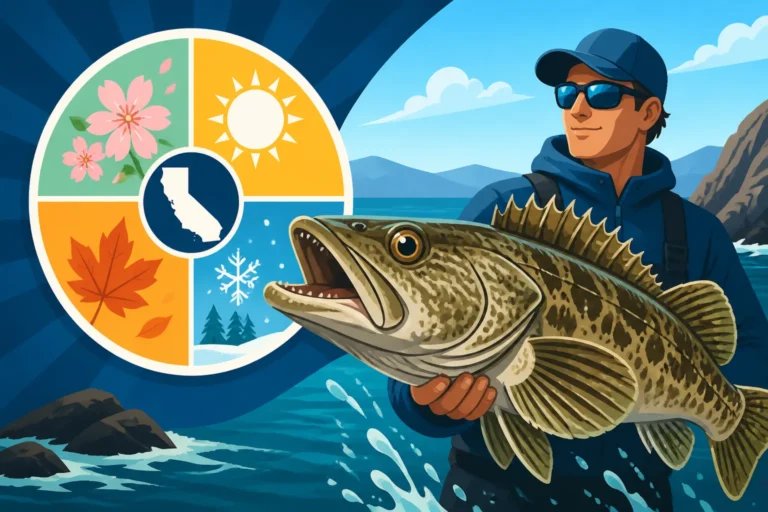
California's waters are home to over 60 different species of rockfish, making it a true rockfish paradise! While you might not encounter all of them on a single trip, some are far more common and sought-after than others. Understanding these popular species can help you tailor your approach and know what you're looking for.
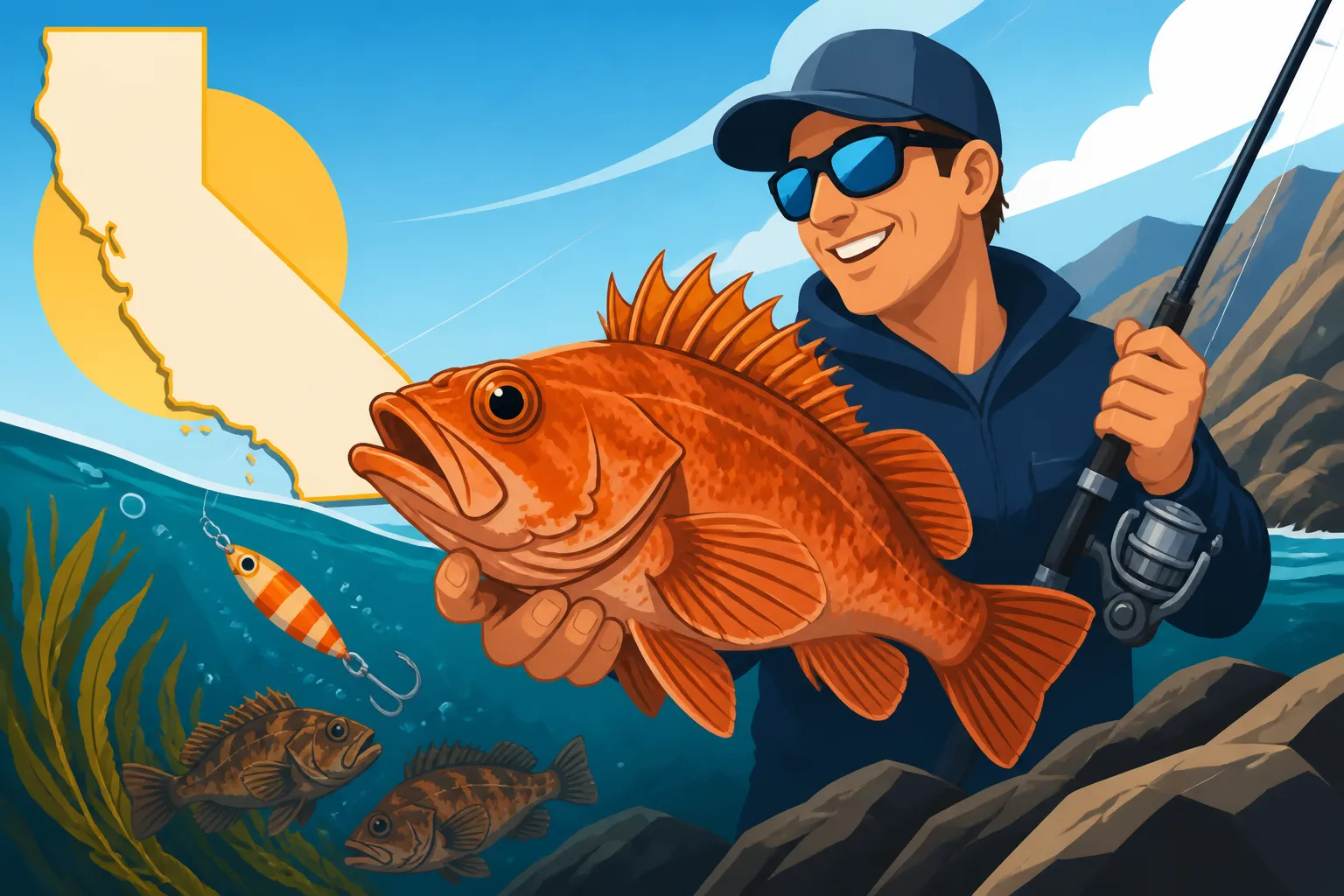
For instance, the Vermilion Rockfish, often called "red snapper" by many for its vibrant color, is a highly prized catch known for its excellent table fare. They tend to hang out in deeper waters, usually around 100-300 feet, preferring rocky reefs and ledges. You'll often find them mixed in with other species, but their bright red hue makes them unmistakable. Then there are the Copper Rockfish, which have a distinctive coppery-brown color with lighter patches, often found in shallower, inshore rocky areas and kelp forests, typically from 30 to 120 feet. They're strong fighters for their size and are another favorite.
You might also hook into a Bocaccio, which is a more slender, elongated rockfish with a large mouth, often found in mid-water over deeper rocky structures. These guys are prolific and can sometimes be found in large schools. Black Rockfish are common in central and northern California, often found near shore around kelp paddies, piers, and jetties, and are a blast to catch on lighter tackle. They're typically black to dark gray and are known for aggressive strikes. Similarly, Blue Rockfish are another inshore species, often seen schooling around structure in kelp forests or near rocky reefs, and are a beautiful steely blue color. Each species has its own subtle preferences, and learning to identify them not only helps with adherence to specific regulations but also adds a layer of appreciation to your fishing adventures.
Where to Find Rockfish: Structure is Key
The name says it all: "rockfish" love rocks. But it's more nuanced than just finding a pile of stones. These fish are masters of ambush, and they seek out specific types of structure that provide shelter, food, and protection from predators. If you want to catch rockfish consistently, you need to think like a rockfish and understand where they live.
The primary habitat for most rockfish species is rocky reefs and ledges. These underwater formations provide countless nooks, crannies, and overhangs where rockfish can hide, dart out to ambush prey, and retreat from larger predators. These areas are also magnets for baitfish, which in turn attract the rockfish. Another prime location is kelp forests, especially for species like Copper, Black, and Blue Rockfish. Kelp beds offer dense cover, a rich food source, and protection from the open ocean, making them bustling underwater cities for many marine species. When fishing around kelp, remember that the fish are often inside or under the canopy, not just on the edge.
Beyond natural formations, shipwrecks and artificial reefs are also rockfish hotspots. Any substantial underwater structure that breaks up the current and provides shelter can become a prime piece of real estate for these fish. Think old boat hulls, sunken barges, or even discarded tires and concrete structures that have been intentionally placed to create habitat. The key is to use your fishfinder or local knowledge to pinpoint these structures. Many of the best fishing spots in California are renowned specifically for their rich rockfish populations due to extensive underwater structure. Remember that depth regulations are crucial here; understanding California Rockfish Depth Restrictions will dictate where you can even drop a line for these species. Fishing outside of permitted depths can result in hefty fines and harm sensitive populations.
Essential Gear for California Rockfishing
Okay, now that you know what you're looking for and where they live, let's talk about the tools of the trade. Having the right gear isn't just about catching more fish; it's about making the experience more enjoyable and efficient, especially when you're battling a stubborn rockfish from a considerable depth. Don't skimp on quality, as your gear will be working hard.
Rods, Reels, and Line Selection
Choosing the right rod and reel setup is paramount for rockfishing. You need something robust enough to handle the weight of heavy sinkers, the pull of a strong fish, and the often-abrasive underwater environment, but still sensitive enough to feel those subtle bites.
For a rod, aim for a medium-heavy to heavy conventional rod between 6 to 8 feet long. A fast or moderate-fast action will give you the backbone to lift fish from deep water while still providing enough tip sensitivity to detect bites. If you're fishing from a pier or kayak in shallower areas, a sturdy spinning rod in the same power range can also work, but for serious boat-based rockfishing, a conventional setup is generally preferred. Brands like Penn, Shimano, and Daiwa offer excellent options that can withstand the rigors of saltwater fishing.
When it comes to reels, a conventional reel with a strong drag system and a good line capacity (think 250-400 yards of 50-65 lb braid) is ideal. Lever drag or star drag models are both popular, but ensure it's built for saltwater use to resist corrosion. Having a high gear ratio can be beneficial for quickly reeling up a rig from hundreds of feet, but a mid-range gear ratio often provides more torque for fighting larger fish. For your line, braided line is almost universally preferred for rockfishing due to its incredible strength-to-diameter ratio and zero stretch. This lack of stretch means you'll feel every bite, even in deep water, and get a much more direct hookset. Spool your reel with 50-80 lb braided line, depending on the depth and size of fish you expect. To this, you'll want to add a fluorocarbon leader of 40-60 lb test, about 6-10 feet long. Fluorocarbon is nearly invisible underwater and is much more abrasion-resistant than braid, which is crucial when fishing around sharp rocks and structures. You can find quality braid and fluorocarbon leaders on Amazon from brands like PowerPro, Izorline, or Seaguar.
Baits, Lures, and Rigs That Get Bites
Once your rod and reel are sorted, it's time to talk about what you'll actually put in front of the fish. Rockfish aren't overly picky, but certain presentations definitely outperform others.
Live bait is often king, especially if you're targeting larger rockfish. Small mackerel, anchovies, sardines, or even squid can be incredibly effective. The erratic movement of live bait is irresistible to predatory rockfish. If live bait isn't an option, cut bait works wonderfully. Strips of mackerel, squid, or anchovy fillets rigged on a hook will often do the trick. The scent trail they leave behind is a huge draw for bottom dwellers. Many anglers will purchase their bait from local tackle shops right before a trip to ensure freshness.
When it comes to lures, jigs are incredibly popular and effective. Heavy leadhead jigs, often tipped with a piece of squid or a plastic grub, can be dropped to the bottom and jigged vertically to entice strikes. The weight helps you get down quickly and stay in the strike zone. Swimbaits, particularly those with paddle tails, are another excellent choice, often rigged on a heavy leadhead. These mimic baitfish and have a lifelike swimming action when retrieved or jigged. You can find a huge variety of jigs and swimbaits on Amazon that are perfectly suited for California rockfishing.
For rigs, the dropper loop rig is a staple. This involves tying several loops off your main leader, to which you attach hooks, with a heavy sinker at the very bottom. This allows you to present multiple baits at different depths simultaneously, increasing your chances of a bite. Another popular choice, especially on party boats, is a gangion rig (sometimes called a sabiki rig with larger hooks). These typically come pre-tied with multiple hooks, often adorned with Mylar or colored tubing, and are designed for catching multiple fish at once. Understanding the Best Rigs for California Rockfish can make a significant difference in your catch rate. The goal is to keep your bait or lure near the bottom, where rockfish are waiting.
Proven Techniques for Catching Rockfish
Now we get to the fun part: how to actually make those fish bite! Rockfishing isn't just about dropping a line and hoping for the best. There are specific strategies and nuances that will drastically improve your success rate, whether you're on a dedicated charter or fishing from your local pier.
Fishing from Boats: Drifting, Dropping, and Jigging
Boat fishing is arguably the most effective way to target rockfish, as it allows you to access prime, deeper structures that are out of reach from shore. When you're on a boat, whether it's your own skiff or a charter, you'll primarily use a combination of drifting, dropping, and jigging techniques.
Drifting is a fantastic method for covering ground and locating schools of fish. Once you've identified a promising patch of rocky bottom or a submerged reef on your fishfinder, position your boat slightly upcurrent or upwind from the structure. As your boat drifts over the area, your baits or lures will be presented naturally to the fish below. The key is to constantly monitor your line and adjust your weight to keep your offering near the bottom without getting perpetually snagged. If your line goes slack, reel in to prevent tangles; if it tightens too much, you're either getting a bite or you're about to get stuck.
Dropping is straightforward: simply lower your bait or lure straight down to the bottom. This is particularly effective when you've marked a dense school of fish directly beneath the boat or when fishing a very precise piece of structure. Once your weight hits the bottom, reel up a few feet, then gently bounce or lift your rod tip to give your bait some action. This mimics a wounded baitfish or a foraging creature, which rockfish find hard to resist. This technique is especially important when you're focusing on How to Catch Rockfish in Deep Water, where precision and efficiency are key.
Jigging is a more active form of dropping. Instead of just letting your bait sit, you actively work a jig by rapidly lifting and dropping your rod tip. This makes the jig dart and flutter, often triggering aggressive reaction strikes. Some anglers prefer a slow, methodical lift-and-drop, while others prefer a more erratic, fast-paced jigging motion. Experiment to see what the fish prefer on any given day. Remember, rockfish often school, so if you catch one, quickly drop your line back down—there's usually more where that came from!
Pier and Shoreline Rockfishing Strategies
While boat fishing offers unparalleled access, you absolutely can catch rockfish from piers and rocky shorelines, especially in areas with good kelp beds or natural rock formations. It requires a slightly different approach, but the thrill is just as real.
When fishing from a pier, look for sections that extend over rocky bottoms or where kelp forests are accessible. Many piers, like those in San Diego or Santa Cruz, have artificial structure or natural reefs beneath them that attract rockfish. Use a Carolina rig or a high-low rig with a heavy sinker to get your bait down. Cast out, let your weight settle, and then slowly retrieve, letting your bait bounce along the bottom. Live or cut squid, shrimp, or pieces of anchovy are excellent bait choices. Be prepared for snags, as the very structure that attracts the fish will also grab your line. Patience is key, and sometimes casting directly next to the pilings can be surprisingly effective, as rockfish use them for cover.
Shoreline rockfishing from jetties, breakwaters, or rocky points can be incredibly rewarding, but also challenging. Safety is paramount here; wear appropriate footwear, be aware of rogue waves, and never turn your back on the ocean. Target areas with visible kelp or submerged rocks. Casting swimbaits, grubs on leadheads, or even a simple bait-and-sinker rig can produce results. Cast parallel to the shoreline or into rocky pockets. The retrieve should be slow and methodical, trying to keep your offering close to the bottom structure. This method is often best during calmer tides when you can feel the bottom more effectively without getting immediately snagged by strong currents.
Reading the Conditions and Adapting Your Approach
Successful rockfishing isn't just about technique; it's about being a keen observer and adapting to the ever-changing marine environment. The ocean is dynamic, and what worked yesterday might not work today.
Tides and currents play a huge role. Often, a moderate current is desirable as it helps disperse the scent of your bait and makes your lures look more natural. However, too strong a current can make it impossible to hold bottom, requiring excessively heavy sinkers. Conversely, slack tide can sometimes make fish lethargic. Pay attention to the tide charts for your specific fishing location, such as those found for the San Francisco Bay, and adjust your fishing times accordingly. The hours around a tide change are often prime biting windows.
Depth is another critical factor. As mentioned, rockfish species have preferred depth ranges. Some, like Black Rockfish, might be found in 30 feet of water, while Vermilions prefer over 100 feet. Your fishfinder is your best friend here, showing you not just the depth but also the presence of baitfish and the rockfish themselves. If you're not getting bites at one depth, try moving shallower or deeper along the same structure.
Finally, weather and water clarity can impact success. Overcast days can sometimes make fish more active, and calm seas are certainly more comfortable for anglers. Clear water often means fish are more wary, so lighter leaders and more natural presentations might be necessary. Choppier conditions can sometimes stir up bait, increasing feeding activity. Always check the local marine forecast before heading out. Being flexible and willing to change your bait, lure, or fishing spot based on the conditions is the hallmark of an experienced rockfish angler.
California Rockfish Regulations and Conservation
Fishing in California means playing by the rules, and rockfish regulations are some of the most dynamic and critical to understand. These rules are put in place to ensure healthy fish populations for future generations, and ignorance is never an excuse. Always consult the latest California Ocean Sport Fishing Regulations booklet or the CDFW website before heading out. This is not just a suggestion; it's a legal requirement and an ethical responsibility for every angler.
Understanding Bag and Size Limits
Rockfish are managed under a complex system that includes bag and size limits. These limits vary significantly by species, region, and often change year to year based on stock assessments. For example, some species might have a general bag limit of 10 fish per person, but within that 10-fish limit, there might be specific sub-limits for certain species like Vermilion Rockfish or Copper Rockfish, say, no more than 4 of each.
Size limits are also common, meaning a fish must be of a certain minimum length to be legally kept. For instance, a Lingcod (often caught alongside rockfish) has a much larger size limit. Using a measuring device is essential to ensure you're compliant. Releasing undersized fish quickly and carefully is crucial for their survival. Familiarize yourself with the general California Fishing Bag and Size Limits, but always dig deeper into the specific regulations for rockfish in your fishing zone. Penalties for violating these limits can be severe, including hefty fines and loss of fishing privileges.
Seasonality and Depth Restrictions
Perhaps the most impactful regulations for rockfish anglers are the seasonal closures and depth restrictions. These are designed to protect spawning fish and deep-water species, which are particularly vulnerable to barotrauma (injury caused by rapid changes in pressure when brought up from deep water).
Seasonal closures mean that rockfish, and the broader "groundfish complex" (which includes lingcod and other species), are often off-limits during certain months of the year. These closures can vary by management area (e.g., Northern, Central, Southern California), and sometimes even within smaller sub-regions. For example, California Rockfish Season Dates Explained will show you that the season for rockfish off San Francisco might open later or close earlier than off San Diego, or vice versa. Always check the regulations for the specific county and ocean management area you plan to fish in. These dates can be confusing, but a quick check of the California Department of Fish and Wildlife (CDFW) website or their physical regulation booklet is non-negotiable.
Depth restrictions dictate how deep you are allowed to fish for rockfish. These are in place to protect sensitive deep-water species and habitats. For instance, in some areas, rockfishing might be entirely prohibited deeper than, say, 180 feet, while in other zones, you might be allowed to fish to 300 feet or more. These rules can also change. For specific details on where you can drop your line, consult the California Rockfish Depth Restrictions. When fishing from a boat, having a reliable depth sounder or fish finder is not just a convenience; it's a regulatory compliance tool. Fishing in an area designated as a California Marine Protected Areas Explained is also strictly regulated, often prohibiting all take of marine life. It is your responsibility to know if you are in one of these areas.
Remember, a valid California Fishing License Guide is always required for anyone 16 years or older, and depending on what other species you might incidentally catch, you might also need a California Fishing Report Cards Explained for specific species like abalone (when open), spiny lobster, or sturgeon. Be informed, be responsible, and help conserve these amazing resources.
California Rockfish Regulations at a Glance
Navigating rockfish regulations can feel like a labyrinth, but knowing the key variables will help you stay compliant. This table provides a simplified overview of what typically influences rockfish rules in California.
| Regulation Category | Key Considerations | Why It Matters |
|---|---|---|
| Species-Specific Limits | Varies by species (e.g., Vermilion, Copper, Black, Bocaccio). | Some species are more vulnerable than others; prevents overfishing of particular stocks. |
| Bag Limits | Total number of rockfish allowed per angler per day. | Ensures sustainable harvest across the rockfish complex. |
| Size Limits | Minimum length requirement for certain species. | Allows fish to reach maturity and spawn at least once, contributing to future generations. |
| Season Dates | Open and closed periods, highly variable by region. | Protects spawning fish and reduces fishing pressure during critical life stages. |
| Depth Restrictions | Maximum depth allowed for rockfish fishing. | Protects deep-water species (more susceptible to barotrauma) and deep-sea habitats. |
| Geographic Zone | Rules differ for Northern, Central, and Southern CA management areas. | Accounts for varying fish populations and environmental conditions along the coast. |
| Marine Protected Areas | Specific "no-take" zones or highly restricted areas. | Crucial for biodiversity and ecosystem health; absolutely no fishing in these zones. |
| Gear Restrictions | Sometimes specific hooks (e.g., barbless) or tackle types are required. | Reduces bycatch mortality and minimizes habitat impact. |
This table is a general guide only. Always check the official California Department of Fish and Wildlife (CDFW) regulations before each trip, as rules can and do change.
Disclaimer
Please note: Fishing regulations, seasons, and limits in California are subject to change by the California Department of Fish and Wildlife (CDFW). It is the angler's sole responsibility to check and understand the most current regulations before engaging in any fishing activity. This guide provides general information and should not be considered a substitute for official CDFW publications.