Monterey Bay Fishing Guide
Monterey Bay is an angler's dream, yet its sheer size and diverse ecosystems can be overwhelming, leaving many wondering where to start or what to target. If you've ever felt intimidated by the vastness of these productive waters, you're not alone. This guide aims to demystify fishing in Monterey Bay, providing you with practical insights to successfully navigate its regulations, identify prime spots, and master techniques for a truly rewarding experience.
Understanding Monterey Bay's Unique Fisheries
Monterey Bay isn't just a pretty stretch of coastline; it's a deep, nutrient-rich marine canyon, a true ecological hotspot that draws in a phenomenal array of fish species. This submarine canyon is one of the largest in North America, plunging to depths exceeding 10,000 feet, which creates upwelling currents that bring cold, nutrient-rich water to the surface. This continuous influx of nutrients fuels a vibrant food chain, from microscopic plankton to massive blue whales, and, of course, an incredible variety of fish that anglers seek.
The unique geography means you can find everything from shallow, sandy bottoms teeming with halibut and perch to rocky reefs harboring lingcod and rockfish, and even deep offshore waters where tuna and other pelagics roam. This diversity is what makes Monterey Bay such a special place to fish, but it also means understanding the different habitats and the species that prefer them is key to success.
Geographical Overview of Monterey Bay
Spanning roughly 90 miles of coastline, Monterey Bay stretches from Año Nuevo Island in the north down to Point Pinos in the south, encompassing the iconic cities of Santa Cruz and Monterey, as well as the bustling fishing port of Moss Landing right in the middle. The bay itself is relatively open, but it's bordered by diverse landforms, from rolling hills and redwood forests to dramatic cliffs and sandy beaches.
The central feature, the Monterey Canyon, is truly what defines its fishing potential. This underwater canyon acts like a funnel, concentrating marine life and providing deep-water sanctuaries close to shore. This means that unlike many other coastal areas, you don't necessarily need to travel dozens of miles offshore to reach productive deep-sea fishing grounds. The proximity of deep water allows for quick access to various fishing environments, from the shallow kelp beds to the deep rockfish reefs and beyond.
Dominant Marine Life and Ecosystems
The ecosystems within Monterey Bay are incredibly varied, supporting a wide range of marine life. Nearshore, you'll find extensive kelp forests, particularly around Monterey Peninsula and parts of Santa Cruz. These kelp forests are like underwater cities, providing shelter and hunting grounds for species like calico bass, cabezon, and a variety of rockfish. The sandy beaches and surf zones are home to surfperch, corbina, and leopard sharks.
As you move slightly offshore, rocky reefs and pinnacles become the dominant structure, perfect for species like lingcod, vermilion rockfish, and canary rockfish. Deeper still, on the edges and slopes of the canyon, you encounter an even greater abundance of groundfish. And then there are the open waters, home to migratory species like salmon, halibut, and even various tuna species when conditions are right. The presence of such a robust ecosystem also means you'll often share the waters with sea lions, dolphins, and even whales, adding to the incredible experience of fishing here.
Prime Fishing Spots in Monterey Bay
Figuring out where to fish in Monterey Bay can feel like a riddle, given its vastness. But whether you prefer casting from shore, dropping a line from a pier, or venturing out on a boat, there are specific spots that consistently produce results. The key is to match your fishing style and target species to the right location.
Popular Piers and Shoreline Access
For many, especially families or those without a boat, piers and shoreline access points offer excellent and often license-free fishing opportunities. You still need to be aware of the specific California Pier Fishing License Rules though. The convenience and accessibility are a huge draw, and these spots can be surprisingly productive.
- Santa Cruz Wharf: This is one of the longest piers on the West Coast, extending over half a mile into the bay. It's a bustling hub, offering fantastic opportunities for halibut, sole, mackerel, and various types of perch. In the warmer months, you might even hook a leopard shark or a bat ray. The deeper sections often yield better results for larger species, while the shallower areas near the entrance are great for smaller panfish. There are tackle shops and bait vendors right on the wharf, making it super convenient.
- Capitola Wharf: A bit south of Santa Cruz, Capitola Wharf is a picturesque spot perfect for families. Similar to Santa Cruz, you can catch perch, mackerel, and sometimes even a legal halibut. It’s generally a bit calmer than the Santa Cruz Wharf, offering a more relaxed fishing experience. Local anglers often use Sabiki rigs for baitfish and then switch to cut bait or lures for larger targets.
- Moss Landing Harbor: While not a pier in the traditional sense, the public docks and jetties within Moss Landing Harbor offer unique opportunities. It's an active commercial fishing port, so the constant flow of water and bait attracts a lot of fish. You can target jacksmelt, perch, and even small rockfish from accessible areas. It's also a prime spot to launch a kayak or a small boat.
- Seacliff State Beach Pier (Aptos): This pier is unique because it leads out to a sunken concrete ship, the SS Palo Alto. While fishing from the ship itself is prohibited due to its deteriorating state, the pier leading to it offers great fishing for surfperch, sole, and sometimes even white croaker. The structure created by the sunken ship attracts bait and predators alike.
Best Locations for Boat and Kayak Fishing
For those with a vessel or a kayak, Monterey Bay truly opens up, offering access to deeper reefs, kelp beds, and open water that land-based anglers can't reach.
- Monterey Bay Submarine Canyon Edges: This is where the magic happens for many of the larger, more sought-after species. The steep drop-offs and ledges of the canyon provide ideal habitat for rockfish and lingcod. Anywhere from 100 to 300 feet deep along the canyon’s edge, particularly near the deeper water access points out of Monterey Harbor or Moss Landing, can be incredibly productive. Look for underwater structure and changes in contour on your fish finder.
- Kelp Beds (Monterey Peninsula): Around Cannery Row, Pacific Grove, and Lovers Point, the vibrant kelp forests are fantastic for light tackle fishing. Species like calico bass, cabezon, and a variety of smaller rockfish hide amongst the fronds. Kayak anglers especially love these areas for their calm waters and abundant fish. Drifting through the kelp with plastics or live bait can yield exciting results.
- Outside Capitola and Santa Cruz: Beyond the piers, these areas feature sandy bottoms interspersed with patchy reef and structure, making them prime grounds for California halibut and sole. Trolling with spoons, swimbaits, or live bait (like anchovies or sardines) is a popular and effective method here. Pay attention to changes in depth and current lines.
- Offshore for Pelagics (Seasonal): Further out in the open ocean, beyond the immediate bay, migratory species like salmon, albacore, and even bluefin tuna can be found during their respective seasons. This typically requires a larger, more capable boat and excellent navigation skills, often venturing 10-50 miles offshore. For these trips, consulting fishing reports and perhaps booking a trip through services like FishingBooker can provide invaluable local knowledge and safe passage.
Targeting Key Species in Monterey Bay
Monterey Bay is a treasure chest for anglers, boasting a remarkable diversity of fish. Knowing what's in season, where they hang out, and what they like to eat is half the battle. Let's dive into some of the most popular catches.
Rockfish and Lingcod
Ah, rockfish and lingcod – the bread and butter of many a Monterey Bay bottom fisherman. There are dozens of rockfish species here, from the brightly colored vermilion and canary rockfish to the darker, more cryptic copper and olive rockfish. Lingcod, with their impressive teeth and voracious appetites, are highly prized for both their fight and their delicious white meat.
- Habitat and Behavior: Rockfish are structure-oriented, meaning they love hiding out in rocky reefs, pinnacles, and ledges along the edges of the submarine canyon. They typically hang out anywhere from 50 to 800 feet deep, though specific species have preferred depths. Lingcod are also ambush predators that favor rocky habitats, often lurking in crevices or on ledges, waiting for an unsuspecting meal to swim by. They can be found in similar depths to rockfish, often a bit shallower, especially during spawning season.
- Effective Techniques and Baits: Vertical jigging is incredibly effective for both rockfish and lingcod. Heavy metal jigs, like those from Ahi USA or Shimano, dropped to the bottom and worked with sharp lifts and drops, can elicit aggressive strikes. When it comes to specific techniques, checking out a guide like How to Catch Rockfish in California can offer deeper insights. Live bait, such as mackerel, anchovies, or sardines, drifted near structure, is also deadly, especially for larger lingcod. Using a dropper loop rig with a heavy sinker and two hooks baited with squid or cut bait is a classic method that works consistently. Remember, California Rockfish Depth Restrictions are a real thing and change, so always check the current regulations before you head out.
- Best Seasons: Rockfish and lingcod fishing is generally open year-round in federal waters beyond state jurisdiction, but there are specific seasons and depth restrictions that vary by management area and change frequently. Generally, late spring through fall offers the most stable weather conditions for offshore trips, but when seasons are open, they can be caught any time of year.
California Halibut and Salmon
These two species represent some of the most exciting and challenging fishing opportunities in Monterey Bay, demanding different strategies and often a bit more patience.
- California Halibut Tactics: Halibut are flatfish that love to lay camouflaged on sandy or muddy bottoms, waiting to ambush baitfish. They are most commonly found in shallower waters, from 20 to 150 feet, often near the edges of kelp beds, structure, or along channel drop-offs. Trolling is perhaps the most popular and effective method for halibut. Using a slow troll with live bait (anchovies, sardines, or mackerel) or artificial lures like swimbaits (think Ahi Assault Diamond Jigs or equivalent) close to the bottom is key. Drift fishing with live bait or a lead-head jig tipped with a grub is another excellent technique, especially in areas with moderate current. If you're serious about targeting these tasty flatfish, our detailed guide on How to Catch California Halibut will give you a significant edge.
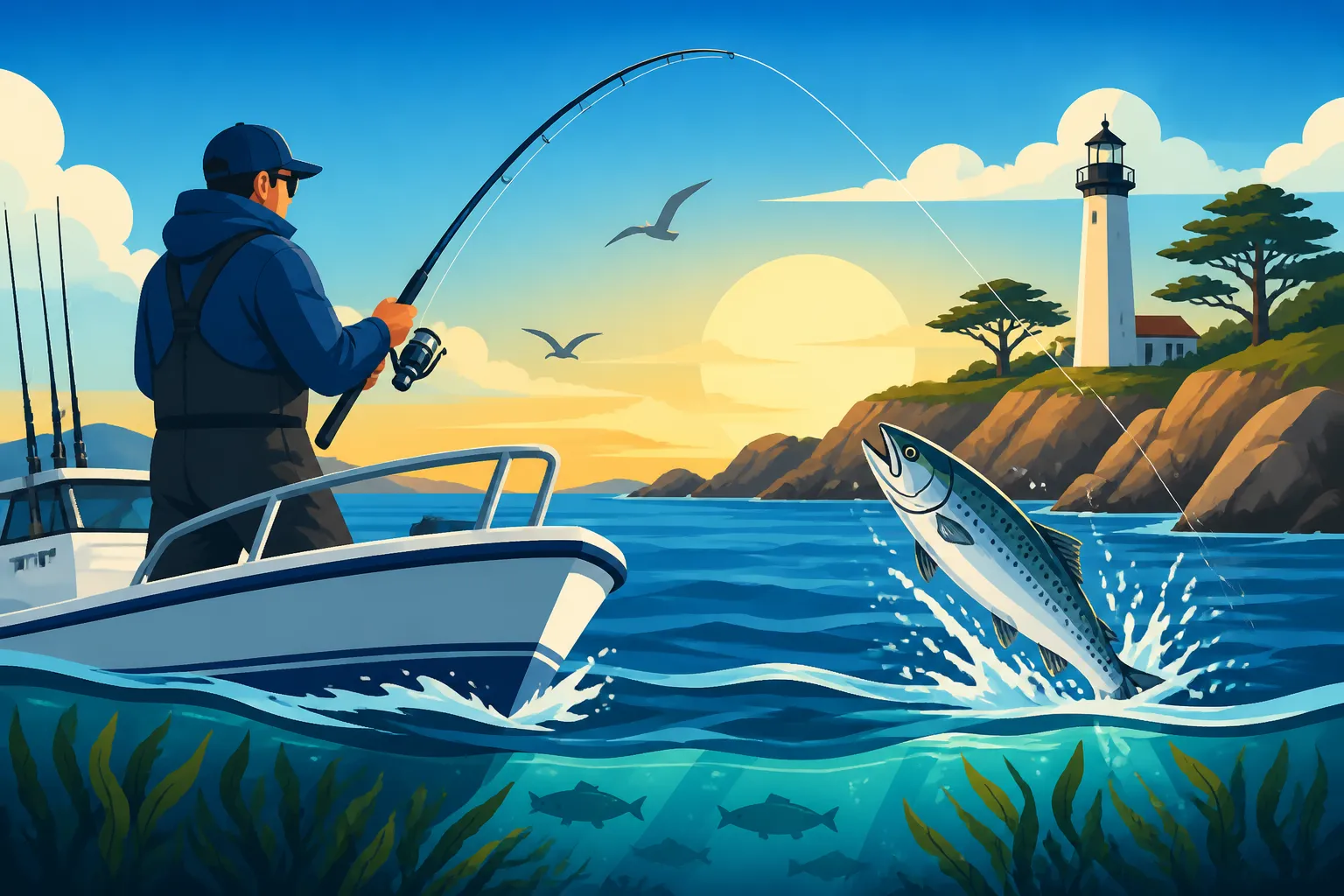
- Salmon Seasons and Techniques: King (Chinook) Salmon are migratory powerhouses that pass through Monterey Bay, particularly during their spawning runs. Salmon fishing is heavily regulated and seasonal, with specific California Salmon Season Dates announced annually, which can even see full closures based on stock health. When the season is open, trolling is the primary method. Anglers use downriggers to get lures or bait (like anchovies or herring in a "rotator" or "helmet") down to the thermocline where salmon feed, often between 50 and 200 feet deep. Flashers and dodgers are used to attract their attention, mimicking schools of baitfish. Look for areas where baitfish are concentrated, often indicated by bird activity or bait balls on your fish finder.
Other Popular Catches: Striped Bass, Perch, and Crab
Monterey Bay offers more than just the big game. Sometimes, the most fun fishing is for the abundant, readily accessible species.
- Striped Bass in the Bay: While more commonly associated with the California Delta or specific surf zones, striped bass do make their way into Monterey Bay, especially in the northern reaches near the Santa Cruz and Capitola areas. They cruise the surf lines, sandy beaches, and estuary mouths looking for bait. Surf casting with lures like Lucky Craft LC Flash Minnows, swimbaits, or bait like anchovies or sardines can be effective. Early mornings and evenings, especially on incoming tides, are often the best times.
- Abundant Perch Species: Surfperch are a year-round staple for shore and pier anglers. Barred surfperch, redtail surfperch, and pile perch are common. They are often found in the surf zone, around structure on piers, or near sandy bottoms. Small hooks baited with sand crabs (especially during warmer months), Gulp! Sandworms, or pieces of market shrimp are highly effective. Light tackle makes fighting these feisty fish a blast.
- Crab Fishing Opportunities: When the Dungeness crab season opens (typically November through June), crabbing becomes a popular activity in Monterey Bay. You can drop crab pots from private boats or even from some piers like the Santa Cruz Wharf, though rules vary. Recreational crabbers need a valid fishing license and a crab trap validation. Rock crabs are also found year-round. Always be sure to check the latest California Crab Regulations and Limits for size and bag limits.
Essential Techniques and Gear for Monterey Bay Fishing
Successfully fishing in Monterey Bay isn't just about knowing what to catch and where to find it; it's also about understanding how to catch them. The diverse environment calls for a versatile approach to techniques and a well-stocked tackle box.
General Gear for Saltwater Fishing
Having the right basic setup will serve you well across most Monterey Bay fishing scenarios. You don't need the most expensive gear, but reliable equipment makes a huge difference.
- Rods and Reels: For pier and light-duty boat fishing, a medium-heavy spinning rod (7-9 feet) paired with a 4000-6000 size spinning reel spooled with 20-30 lb braided line is a versatile choice. This setup is good for perch, mackerel, smaller halibut, and even lighter rockfish. For heavier offshore fishing, especially for lingcod or deeper rockfish, a stout conventional rod (6-7 feet) with a jigging or lever drag reel (like a Penn Fathom or an Avet MXJ) spooled with 40-60 lb braid is ideal. Always use a fluorocarbon leader (20-50 lb, depending on species) for stealth and abrasion resistance.
- Terminal Tackle Essentials: Stock up on swivels (barrel and snap swivels), sinkers (pyramid for surf, torpedo or cannonball for boat fishing), various hook sizes (octopus hooks from size 2 to 4/0, circle hooks for bait fishing), and pre-tied dropper loop rigs. Don't forget a good pair of pliers, line cutters, and a rag. Having a net is also critical, especially on piers, for safely landing fish.
- Bait and Lure Selection:
- Live Bait: Anchovies and sardines are king for many species, especially halibut and salmon. Mackerel also works wonders for lingcod and larger rockfish.
- Cut Bait: Squid is a universal bait, effective for everything from perch to rockfish and even sharks. Cut anchovy or sardine pieces are also excellent.
- Artificials: Metal jigs (Ahi Assault, Raider, Flat Fall) in weights from 2-8 oz are indispensable for rockfish and lingcod. Soft plastic swimbaits (Big Hammer, Gulp! Swimbaits) on lead heads are fantastic for halibut and calico bass. Lucky Craft or Rapala plugs work for trolling salmon or striped bass. Sabiki rigs are a must-have for catching your own baitfish.
Specific Techniques for Success
Beyond the basic gear, mastering a few key techniques will significantly boost your catch rate.
- Bottom Fishing (Rockfish/Lingcod): This is all about getting your bait or lure to the desired depth and working it effectively.
- Vertical Jigging: Drop your jig to the bottom, reel up a few feet, and then work it with sharp upward rips followed by a freefall, repeating the motion. This mimics a wounded baitfish. Pay attention to your fish finder to stay on structure.
- Bait Dropping: Using a dropper loop rig with baited hooks is a classic. Drop to the bottom, reel up a few feet, and let the boat's drift or gentle rod movements work the bait. This is less active than jigging but can be incredibly effective, especially when anchored.
- Remember, there are specific California Rockfish Regulations and Limits you must follow.
- Trolling (Halibut/Salmon): Trolling involves dragging lures or bait behind a moving boat.
- Halibut Trolling: Keep your presentation close to the sandy or muddy bottom. Use a spreader bar or a three-way swivel rig with a weight and a trailing bait/lure. Vary your speed until you find what triggers bites, often between 1-3 knots.
- Salmon Trolling: This is more complex, often requiring downriggers to reach precise depths. The goal is to present bait (like an anchovy or herring in a helmet) or a spoon/hoochie rig behind a flasher or dodger, mimicking a school of baitfish. Knowing the thermocline depth is crucial.
- Surf Casting (Perch/Striped Bass): For shore-based anglers, mastering the cast is paramount. Use pyramid sinkers to hold your bait in the surf. Cast past the breaking waves and let your bait sit, or slowly retrieve a swimbait or plug. Look for deeper pockets, troughs, or structure in the sand.
The Role of Charter Boats and Guides
For those who want to maximize their chances, explore deeper waters, or learn from the pros, booking a charter or a guided trip is an invaluable option.
- What Charters Offer: Charter boats in Monterey Bay, whether private or on a "party boat" (open party), provide all the necessary safety equipment, local expertise, and often high-quality gear. They know the current hot spots, which can change daily with conditions, and can put you on fish you might never find on your own. For a deep dive into options, check out the California Fishing Charters: Complete Guide.
- Choosing a Reputable Service: When selecting a charter, look for experienced captains with good reputations. Websites like FishingBooker are excellent resources for comparing different charters operating out of Monterey, Santa Cruz, or Moss Landing. You can read reviews, see what species they target, and check their availability. Many charters specialize in certain types of fishing, like rockfish trips, salmon trips, or even offshore tuna adventures. Don't hesitate to ask about what's included and what you should bring. Our guide on What to Bring on a California Fishing Charter offers a comprehensive checklist.
Navigating Regulations and Seasons
Fishing in California, and specifically in the diverse waters of Monterey Bay, means navigating a complex web of rules and seasons. These regulations are in place for a good reason – to protect our precious marine resources for future generations – but they can certainly be a headache to keep track of. Ignoring them, however, can lead to hefty fines and a ruined day on the water.
Understanding California Fishing Licenses
Before you even think about wetting a line, the first and most crucial step is to get your fishing license. This is non-negotiable for most forms of fishing in California.
- Who Needs One: Generally, anyone 16 years of age or older needs a valid California fishing license to fish in public waters, whether freshwater or saltwater. There are specific exemptions, for instance, during designated California Free Fishing Days or when fishing from a public pier in ocean waters (though even then, specific regulations for species and gear still apply). For a complete overview, our California Fishing License Guide is an essential read.
- Where to Buy: You can purchase a California fishing license online through the California Department of Fish and Wildlife (CDFW) website, or in person at various license agents like tackle shops, sporting goods stores (e.g., Big 5 Sporting Goods, Walmart), or even some convenience stores. Make sure your license is valid for the current year.
- Additional Stamps and Report Cards: Depending on what you plan to target, you might need additional stamps or report cards. For example, if you're going after Dungeness crab, you'll need a crab trap validation. If salmon is on your list, you'll need to be aware of the California Salmon Report Card. For steelhead and sturgeon, there are separate report cards. These are critical for data collection that helps manage fish populations. Neglecting these can lead to penalties.
Key Regulations and Restrictions for Monterey Bay
Beyond licenses, specific rules dictate what you can catch, how much, and how you can do it. These are vital to protect vulnerable species and ensure sustainable fishing.
- Bag and Size Limits: Almost every species has a daily bag limit (how many you can keep) and a minimum (or sometimes maximum) size limit. These vary wildly by species and often by location or season. For instance, California Halibut Size and Bag Limits are very different from the limits on various rockfish. Always consult the current CDFW Sport Fishing Regulations booklet or their website. It’s always changing, so what was legal last year might not be this year.
- Season Closures: Many popular species, especially salmon, lingcod, and various rockfish, have specific seasons during which they can be harvested. Outside of these windows, they are off-limits, even if you accidentally catch one (you must release it immediately and unharmed). These closures are often enacted to protect spawning populations or to meet conservation goals. Keep an eye on the California Fishing Regulations Explained for updates.
- Gear Restrictions: Certain types of gear might be prohibited in specific areas or for certain species. For example, some freshwater areas only allow artificial lures or barbless hooks. While less common in ocean waters, it's always good to be aware. When fishing for rockfish, there are specific rules about descending devices if you're fishing in certain depths, to aid in the survival of released fish.
- Marine Protected Areas (MPAs): Monterey Bay has several Marine Protected Areas (MPAs) which are essentially underwater parks designed to conserve marine life. Within MPAs, fishing regulations can be extremely strict, with some being "no-take" zones where all fishing is prohibited, and others allowing highly restricted forms of fishing. It is absolutely critical to know where these MPAs are located and what the rules are within them. Our guide on California Marine Protected Areas Explained offers a detailed overview. Ignorance of an MPA boundary is not an excuse for a violation.
Seasonal Considerations for Monterey Bay Fishing
The best time to target specific species in Monterey Bay is heavily influenced by their life cycles, migrations, and environmental conditions.
- Spring (March – May): As waters begin to warm, spring can be excellent for California halibut on the sandy flats, especially outside Santa Cruz and Capitola. Lingcod are often aggressive after their spawning season. Surfperch fishing remains strong, and baitfish start to show up in greater numbers.
- Summer (June – August): This is prime time for many species. Rockfish and lingcod fishing is typically at its peak, with stable weather allowing access to offshore reefs. Salmon season, if open, often sees good runs of Chinook. Albacore tuna can make appearances further offshore. Warm-water species like barracuda and even yellowtail can occasionally stray into the bay in warmer years, offering exciting opportunities for those targeting pelagics.
- Fall (September – November): Often considered one of the best times to fish in California, fall brings cooler, but often calm, weather. Rockfish and lingcod remain strong. Salmon runs, if any, continue. The Dungeness crab season typically kicks off in November, adding a fun dimension to fishing trips. Striped bass might become more active in the surf zone as baitfish move closer to shore.
- Winter (December – February): While weather can be more unpredictable, good fishing days still exist. Deepwater rockfishing can be productive when seas allow. Surfperch fishing is excellent from shore. Striped bass might still be around. It's often a quieter time on the water, offering a peaceful fishing experience for those willing to brave the chillier conditions.
Remember, conditions can change quickly in Monterey Bay. Always check the latest weather forecasts, swell reports, and current fishing reports from local bait shops, marinas, or charter operators before heading out. Using resources like FishingBooker not only helps you find charters but also gives you an idea of what's currently being caught and where.
Here's a quick overview of some common species and their general peak seasons in Monterey Bay:
| Species | Primary Season | Preferred Habitat | Common Baits/Lures | Typical Depth Range |
|---|---|---|---|---|
| Rockfish | Year-round (with regs) | Rocky reefs, canyon edges, kelp beds | Metal jigs, squid, cut bait | 50-800 ft |
| Lingcod | Year-round (with regs) | Rocky reefs, pinnacles, structure | Live bait, large jigs, swimbaits | 50-300 ft |
| California Halibut | Spring – Fall | Sandy flats, mud bottoms, near structure | Live anchovies, swimbaits, grubs | 20-150 ft |
| King Salmon | Spring – Fall (seasonal) | Open ocean, near baitfish schools | Trolled anchovies/herring, spoons | 50-200 ft |
| Surfperch | Year-round | Surf zone, piers, sandy bottoms | Sand crabs, Gulp! sandworms, shrimp | 0-30 ft |
| Striped Bass | Spring – Fall | Surf zone, estuary mouths | Swimbaits, Lucky Craft plugs, anchovy | 5-50 ft |
| Dungeness Crab | November – June (seasonal) | Sandy/muddy bottoms | Fish heads, squid (in traps) | 30-150 ft |
Note: Seasons and regulations are subject to change by CDFW. Always verify current rules before fishing.
Disclaimer
The information provided in this guide is for general informational purposes only and is not intended as legal or professional advice. Fishing regulations in California are subject to change frequently. It is the responsibility of every angler to consult the most current California Department of Fish and Wildlife (CDFW) sport fishing regulations booklet or their official website before engaging in any fishing activity. Always prioritize safety and adherence to all local, state, and federal laws.