California Rockfish Regulations and Limits
Oh, the ever-confusing world of California rockfish regulations! If you've ever found yourself staring blankly at the latest Department of Fish and Wildlife (CDFW) booklet, feeling like you need a law degree just to go fishing, you are definitely not alone. It's a maze of different zones, changing seasons, and cryptic depth limits. This guide is here to untangle that complexity, giving you a clear, realistic understanding of California rockfish regulations and limits so you can hit the water with confidence.
Navigating California's Rockfish Management Zones and Why They Matter
It might seem like an unnecessary headache to have different rules for different stretches of our beautiful coastline, but there’s a really important reason behind it all. California boasts an incredibly diverse marine environment, stretching over 800 miles from the Oregon border down to Mexico. What works for the cold, deep waters of the North Coast simply doesn't make sense for the warmer, shallower kelp forests of Southern California.
Why California Divides Its Coastline for Rockfish
Imagine trying to manage a garden with dozens of different plant species, all with unique needs for sunlight, water, and soil, using only one set of instructions. It would be chaos, right? Our ocean is no different. The fish populations, particularly rockfish, along California's coast are not uniformly distributed. You'll find different species dominant in the north versus the south, and their habitats, spawning patterns, and vulnerability to fishing pressure can vary wildly. A "one-size-fits-all" approach would inevitably lead to overfishing some populations while others remain underutilized or, worse, completely unmanaged.
The scientific reasoning behind these divisions is pretty solid, even if it feels complicated to us anglers. The CDFW, in coordination with federal agencies like the National Oceanic and Atmospheric Administration (NOAA) Fisheries, conducts extensive stock assessments. They look at population sizes, reproductive rates, and the impact of fishing. This data helps them determine how many fish can be sustainably harvested and where. Fishing pressure also plays a huge role; areas near major metropolitan centers naturally see more anglers, requiring tighter controls to protect local stocks. It’s all about maintaining healthy fish populations for the long haul, ensuring that our kids and grandkids can experience the thrill of catching a hefty lingcod or a colorful vermilion.
It's totally understandable to feel a bit frustrated by the sheer volume of information and the constant need to check for updates. You just want to get out there and fish, not spend hours poring over government documents! But it's precisely because of California's vastness and the distinct ecosystems within it that these zones are necessary. They are designed to protect the unique fish communities in each region, adapting to their specific needs and pressures. Think of it as a tailored conservation effort, even if it sometimes feels like a bureaucratic maze.
A Closer Look at the Key Rockfish Management Areas
To make sense of it all, California’s ocean waters are generally broken down into three primary management areas for groundfish, which include rockfish: the Northern, Central, and Southern Management Areas. Each area has specific geographic markers that define its boundaries, and understanding these is your first step to staying compliant.
The Northern Management Area stretches from the Oregon border south to 40°10' N latitude, roughly near Cape Mendocino. This region covers fishing hotspots like Crescent City, Eureka, and Fort Bragg. Characterized by rugged coastline, deep waters close to shore, and often more challenging weather conditions, it typically supports species adapted to colder, deeper environments. The rules here might focus more on protecting vulnerable deepwater species, and seasons can be shorter or have more restrictive depth limits compared to other areas. If you're fishing off Humboldt County, you're firmly in this zone.
Moving south, we enter the Central Management Area, which extends from 40°10' N latitude down to Point Conception in Santa Barbara County. This vast stretch includes iconic fishing destinations such as the San Francisco Bay, Monterey Bay, and Morro Bay. This area sees immense fishing pressure from both commercial and recreational fleets, making careful regulation paramount. The marine environment here is diverse, ranging from the shallower bay ecosystems to deep offshore canyons. Consequently, the regulations for this area are often some of the most dynamic, with seasons and depth limits frequently adjusted to respond to stock assessments. If you've been on a salmon charter out of Half Moon Bay, you've likely navigated these regulations.
Finally, the Southern Management Area covers everything south of Point Conception to the U.S.-Mexico border, encompassing popular fishing locales like Santa Barbara, Los Angeles, Orange County, and San Diego. This region is known for its warmer waters, extensive kelp forests, and a different suite of rockfish species, including species like California sheephead, which are less common further north. Fishing opportunities often include shallower nearshore reefs and island fishing. Due to the warmer waters and differing species, regulations here can sometimes allow for longer seasons or different depth restrictions for certain species, though they are still subject to significant changes.
Here’s a quick overview of these primary areas:
| Management Area | Key Geographic Markers | General Characteristics | Common Fishing Locations |
|---|---|---|---|
| Northern | Oregon border south to 40°10' N latitude (Cape Mendocino) | Colder, deeper water, rugged coast, sensitive deepwater species | Crescent City, Eureka, Fort Bragg |
| Central | 40°10' N latitude south to Point Conception | Highly diverse, heavy fishing pressure, dynamic regulations | San Francisco Bay, Monterey Bay, Morro Bay, Half Moon Bay |
| Southern | Point Conception south to U.S.-Mexico Border | Warmer water, kelp forests, different species composition | Santa Barbara, Los Angeles, Dana Point, San Diego, Channel Islands |
These distinctions are vital because what might be legal for rockfish fishing in the Southern Management Area could land you a hefty fine if practiced in the Northern Management Area. Always confirm which management area you're fishing in and consult the specific regulations for that zone.
Deciphering Rockfish Seasons, Bag Limits, and Depth Restrictions
This is where things can get truly perplexing for many anglers. It's not just about knowing where you can fish, but when, how many, and how deep. These three elements—seasons, bag limits, and depth restrictions—form the core of California's rockfish regulations and are designed to protect these long-lived, slow-growing species.
Understanding Rockfish Seasonality and Closures
The dynamic nature of rockfish seasons is perhaps the most frustrating aspect for many anglers. Unlike some freshwater species that have relatively fixed opening and closing dates, rockfish seasons are often in flux. It’s not simply "open season all year," and often, different areas have different opening and closing dates, or even specific species within the rockfish complex have different seasons. This means you can't just rely on last year's calendar; you absolutely must check the current regulations before every trip. Many a planned outing has been dashed by a sudden in-season closure or a delayed opening.
Factors influencing these seasons are complex. They stem from federal groundfish management plans, which encompass a vast array of species beyond just rockfish, including lingcod, cabezon, and other bottom dwellers. Stock status assessments play a huge role; if a particular species or a stock in a specific area is determined to be struggling, regulators might shorten its season, reduce bag limits, or even implement full closures. These decisions are rooted in science, aiming to prevent overfishing and allow populations to recover. Sometimes, environmental factors like El Niño or La Niña can also influence species distribution and abundance, leading to adjustments.
Because of this fluidity, your single most important tool is the official California Department of Fish and Wildlife (CDFW) website. Seriously, bookmark it! They have the most up-to-date information, and it's your primary legal resource. Don't rely solely on what you heard from a friend or a social media post; rules can literally change overnight. It’s a good habit to check the "Ocean Fishing" section and look for the specific groundfish regulations that apply to your intended fishing location, ideally a day or two before you head out. This diligence will save you a lot of potential headaches and fines. For a broader understanding of how all these rules fit together, it's worth delving into the nuances of the California Fishing Regulations Explained.
While it's impossible to give precise dates that hold true year after year, there are some general trends. Deeper water rockfish species, particularly in the Central and Northern Management Areas, often have later season openings, sometimes not until spring or early summer, and can close earlier in the fall or winter. This is largely due to their vulnerability and slower growth rates. In contrast, some nearshore rockfish species in the Southern Management Area might enjoy longer seasons, sometimes even year-round for certain areas, provided they are caught within specific depth limits. These variations highlight why regional knowledge and constant vigilance are absolutely key to successful and legal rockfish fishing in California.
Bag and Possession Limits: What You Can Keep
Once you understand when and where you can fish, the next big question is how many fish you’re allowed to keep. California's rockfish regulations employ an aggregate bag limit, meaning there’s a total number of rockfish (and sometimes other groundfish) you can keep in combination, but within that aggregate, there are often species-specific sub-limits. This is where it gets really tricky!
Currently, the general aggregate limit for rockfish across most of California's ocean waters is 10 rockfish in combination of species per person, per day. This sounds straightforward enough, but it's the "in combination of species" that demands your careful attention. Within that 10-fish total, you might have specific limits on certain individual rockfish species. For example, Vermilion Rockfish, a highly prized and commonly caught species, often has a sub-limit of 4 Vermilion Rockfish within your 10-fish aggregate. So, you could keep 4 Vermilion and 6 other rockfish, but not 5 Vermilion. Copper Rockfish might have an even stricter limit, such as 2 Copper Rockfish within the aggregate. These specific limits are designed to protect species that are either more vulnerable to overfishing or have slower recovery rates.
It's crucial to understand the distinction between a daily bag limit and a possession limit. The daily bag limit refers to the total number of fish you can catch and keep during a single calendar day. The possession limit is the total number of fish you can have on your person, in your cooler, or in your vehicle at any given time. For rockfish, the possession limit is typically the same as the daily bag limit. However, this is especially important to remember if you’re on a multi-day trip or if you have fish from a previous day at home in your freezer – you cannot exceed the possession limit when you go out fishing again. For a comprehensive dive into these numbers, you’ll find great detail in the California Rockfish Bag Limit Explained article.
Accurate identification of your catch is paramount. With over 50 species of rockfish found in California waters, some looking incredibly similar, it can be a real challenge to know exactly what you’ve caught, especially under dim light or in rough seas. Misidentifying a fish and exceeding a sub-limit can lead to serious penalties. Always carry a fish identification guide (many apps are available now, or a good old-fashioned waterproof booklet) and, if in doubt, release the fish unharmed. This also means you need to be prepared with a ruler or measuring tape, even if not all rockfish have minimum size limits, to ensure you can verify your catch if needed.
Navigating Depth Restrictions and Rockfish Conservation Areas (RCAs)
Perhaps no other regulation causes as much head-scratching and frustration as the constantly shifting depth restrictions for rockfish. These aren't arbitrary lines drawn on a map; they are a critical conservation tool, primarily aimed at mitigating the effects of barotrauma. Barotrauma occurs when a fish is brought up quickly from deep water, causing its swim bladder to expand due often to the rapid decrease in pressure. This can make it impossible for the fish to swim back down, leading to high mortality rates for released fish.
These depth limits are not uniform across the state. They vary significantly by management area and often change with the season. For example, during certain times of the year, fishing for rockfish might be restricted to "no deeper than 60 feet" in one area to protect vulnerable nearshore species, while in another area, you might be allowed to fish down to "240 feet." These limits are subject to change based on stock assessments and conservation needs, making it imperative to consult the California Rockfish Depth Restrictions before each outing. If you're on a charter boat, the captain will, of course, know these intimately, but if you're venturing out on your own boat, this is your homework.
Beyond specific depth limits, California also has designated Rockfish Conservation Areas (RCAs). These are specific geographic zones where fishing for groundfish, including rockfish, is either completely prohibited or heavily restricted. RCAs are not just about depth; they often involve specific coordinates that define no-take zones regardless of water depth. These areas are designed to provide sanctuaries for fish populations, allowing them to reproduce and grow without fishing pressure. Understanding where these RCAs are located is critical. They are clearly marked on NOAA charts and detailed in the CDFW regulations. Many anglers find the complexity of these zones challenging, but their role in long-term fishery health is undeniable. You can learn more about the broader scope of these rules in our guide to California Groundfish Regulations.
For any rockfish caught from deep water that you intend to release, the use of a descending device is not just highly recommended, it’s a crucial ethical practice. These devices (which you can easily find on Amazon by searching "fish descending device" or "seaqualizer") allow you to return a fish back to its capture depth, recompressing its swim bladder and significantly increasing its chances of survival. This simple piece of gear can make a huge difference in conservation efforts, ensuring that those undersized lingcod or over-the-limit vermilions have a real chance to swim away healthy and grow larger. It’s part of being a responsible angler in today’s complex marine environment.
Essential Species Identification, Gear, and Compliance Tips
Okay, you've got the zones down, you know the seasons, and you're aware of the bag and depth limits. Now let's talk about some practical on-the-water aspects that can make or break your trip in terms of compliance and success. Getting these details right not only keeps you legal but also contributes to sustainable fishing practices.
Identifying Your Catch and Hook Requirements
One of the biggest challenges when targeting rockfish in California is simply knowing what you've caught. There are dozens of species, many with subtle differences that can be hard to discern, especially when they're flopping on deck or if you're relatively new to rockfishing. This can lead to accidental violations of species-specific sub-limits or size restrictions. It's truly a test of your identification skills, and misidentification is a common pitfall for even experienced anglers. That's why having resources like our How to Identify California Rockfish Species guide is so important.
Let's look at a few examples: Vermilion Rockfish, with their vibrant red-orange color, are often confused with similar-looking species like Canary Rockfish or Yelloweye Rockfish (which is federally protected and cannot be kept!). Copper Rockfish can be mistaken for Quillback Rockfish. These distinctions, often based on fin ray counts, specific markings, or the shape of the head, are vital. Investing in a good waterproof fish identification guide or using a reliable app on your phone can save you a lot of trouble. When in doubt, it's always best to err on the side of caution and release the fish if you cannot confidently identify it and confirm its legality.
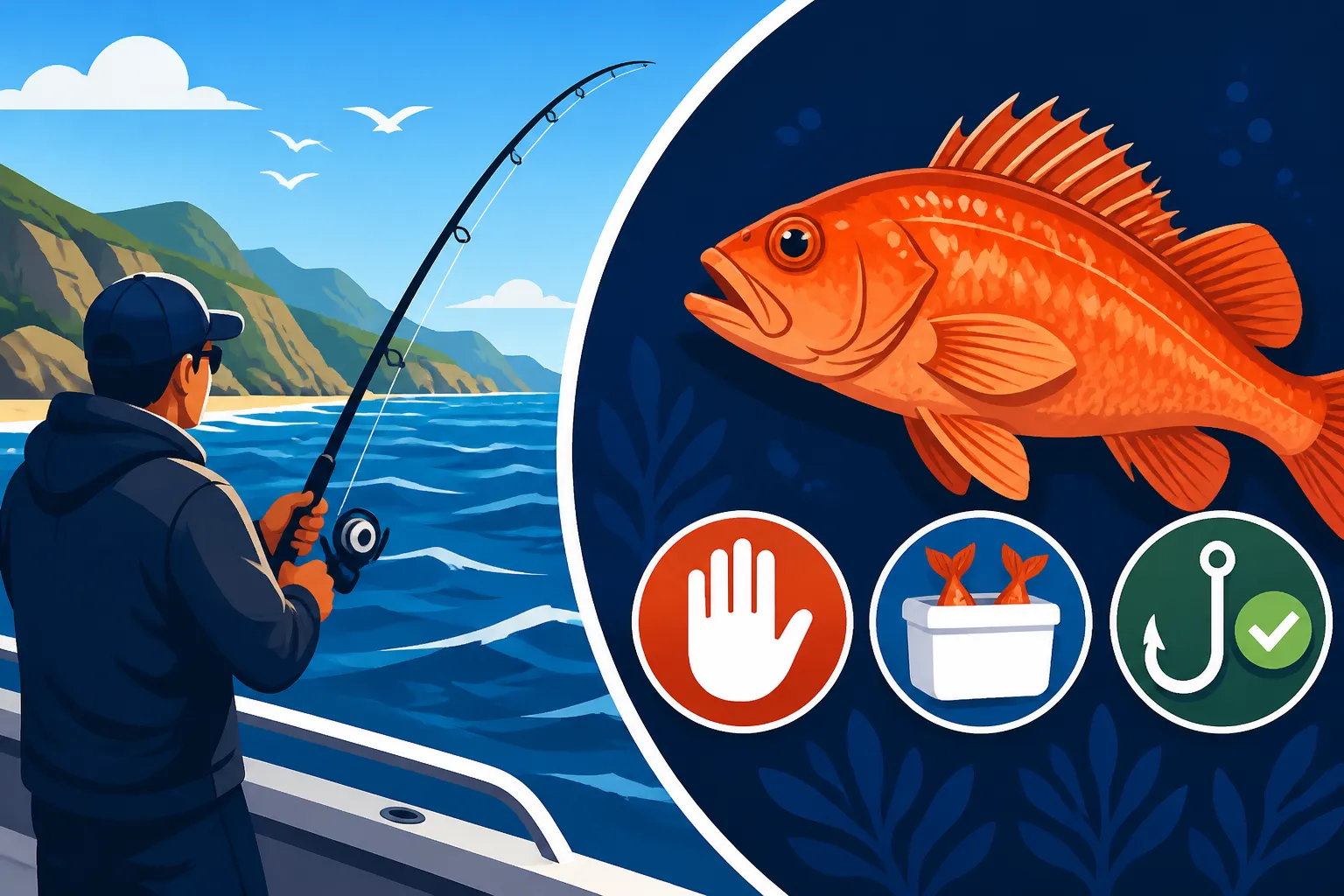
Another critical regulation, often overlooked by those new to California's ocean fishing, is the mandatory use of barbless hooks for rockfish and other groundfish species. This rule isn't just a suggestion; it's law in many areas and for many species. The reason is straightforward: barbless hooks cause less damage to fish, making it easier to release them unharmed, especially when you're dealing with a large number of fish, some of which may be undersized or over your limit. Whether you're using bait or artificial lures, ensure your hooks are barbless. You can buy pre-barbless hooks or simply crimp down the barbs on your existing hooks with a pair of pliers. For a deeper dive into this specific rule, check out our guide on California Barbless Hook Requirements.
Finally, a common question often arises about filleting fish at sea. For rockfish and other groundfish species, filleting at sea is generally prohibited. The reason is simple: it makes it impossible for wildlife officers to verify the species, size, and count of your catch. There are some limited exceptions for specific species (like Pacific mackerel or white seabass under certain conditions), but for rockfish, assume you need to bring them back to shore in whole condition (or at least with the head and tail intact to verify length) until you are on land or at the dock. This allows authorities to ensure compliance with all bag and size limits.
Preparing for Your Trip: Licenses, Stamps, and Information Sources
Before you even think about dropping a line, there are a few non-negotiable items you need to have in order. The absolute first, and arguably most important, is a valid California Fishing License Guide. Anyone 16 years or older needs one, whether you're fishing from shore, a private boat, or even on most charter trips. While party boats might have a blanket license for their passengers for specific trips, it’s always best to have your own, especially if you plan to fish before or after the charter, or if there's any ambiguity. Don't risk a hefty fine by skipping this essential step.
If you're planning to fish in ocean waters south of Point Arguello (Santa Barbara County), you'll also likely need a California Ocean Enhancement Stamp. This stamp helps fund programs that enhance Southern California’s marine fisheries, like white seabass hatchery programs. It's an extra cost, but it's a vital contribution to the health of our fisheries. It's often bundled with your license purchase, but double-check that you've added it if you're fishing in the relevant areas. You can find more details on the California Ocean Enhancement Stamp.
Beyond your license and stamps, your most valuable tool is the current California Sport Fishing Regulations booklet. You can usually pick up a physical copy wherever licenses are sold, or download the latest version directly from the CDFW website. I know, it's dense and can be a bit intimidating to read through, but it contains all the specifics you need. Don't rely on outdated information or hearsay. Regulations change, and what was true last year might not be true today. Make it a routine to check for updates, especially for ocean fishing, which is often subject to more frequent adjustments than freshwater rules.
Finally, always bring a reliable measuring device. Even if specific rockfish species don't have minimum size limits, having a ruler or a measuring tape is crucial for other incidental catches (like lingcod, which do have size limits) and for verifying identification. A good quality, waterproof fish ruler that can be easily attached to your tackle box or boat is a smart investment (again, you can find various options on Amazon by searching "waterproof fish ruler"). Being prepared with the right documents and tools will ensure your focus can remain on the thrill of the catch, not on worrying about legality.
Regional Nuances and Advanced Conservation Practices
We've covered the generalities, but as we mentioned, California's coast is a patchwork of unique environments. What truly makes you a savvy and responsible rockfish angler is understanding these subtle regional differences and adopting practices that go beyond mere compliance.
Spotlighting Regional Differences in Rockfish Rules
It bears repeating: rockfish rules are hyper-local. Thinking that "California rockfish rules" are a single, monolithic entity is a recipe for trouble. What's perfectly legal off Eureka, in the Northern Management Area, could easily land you a citation if you practiced it off San Diego, in the Southern Management Area. This is why paying attention to the specific latitude lines and geographical markers in the regulations is so important. Many anglers, especially those who travel to fish different parts of the state, find this extremely frustrating, but it’s a reality we must navigate.
Let's consider specific examples to highlight this. The California Rockfish Rules in the Central Management Area might dictate a specific seasonal closure for certain deepwater rockfish to allow spawning, while a nearshore rockfish species in the Southern Management Area might remain open year-round at shallower depths. These differences are a direct reflection of varying stock health, fishing pressure, and species composition in each region. It’s not about making things difficult; it’s about targeted conservation where it’s most needed.
Adding another layer of complexity is the fact that many groundfish species, often caught alongside rockfish, have their own distinct regulations that can overlap or supersede the general rockfish rules. Lingcod, for instance, are frequently targeted on the same trips and in similar habitats as rockfish. However, they typically have their own specific seasons, higher size limits, and different bag limits. You might be allowed to keep 10 rockfish, but only 2 lingcod, and those lingcod must meet a minimum size requirement. Our guide to California Lingcod Season and Limits offers more insight into these specific rules. This means you need to be aware of the regulations for all species you might encounter and be ready to adapt your strategy accordingly. It's a lot to keep track of, but it’s essential for staying legal and contributing to healthy fisheries.
Responsible Angling for Sustainable Rockfish Populations
Beyond simply following the rules, truly great anglers embrace practices that ensure the longevity of our fisheries. It's about going beyond compliance and adopting an ethical approach to every fishing trip. This means understanding the impact of your actions and actively working to minimize harm to the ecosystem.
A prime example of this is the responsible handling and release of fish. For any rockfish caught from deeper water that you intend to release (either because it's undersized, over the limit, or a non-target species), a descending device is an indispensable tool. As mentioned earlier, these devices gently return the fish to its capture depth, allowing its swim bladder to recompress naturally and dramatically increasing its survival rate. Brands like the SeaQualizer or the Shelton Fish Descender are popular and effective (search for "descending device for fish" on Amazon). It's a small investment that makes a huge difference in the health of released fish, especially considering how many rockfish are caught and released due to species-specific limits or depth restrictions. This practice shows true respect for the resource.
Another aspect of responsible angling is knowing how and when to report violations. If you witness illegal fishing activities—whether it’s someone exceeding bag limits, fishing in a closed area, or taking protected species—it's your responsibility as a steward of the environment to report it. The CDFW has a confidential tip line (CalTIP: 1-888-334-CALTIP, or 1-888-334-2258). Reporting violations helps protect the fisheries for everyone, ensuring that those who abide by the rules aren't penalized by the actions of a few irresponsible individuals. It reinforces the community aspect of conservation, where everyone plays a part in protecting our natural resources.
Finally, consider getting involved with local fishing clubs or conservation organizations. These groups often have their finger on the pulse of local regulations, participate in habitat restoration projects, and advocate for sustainable fishing practices. The more anglers understand and actively participate in these efforts, the stronger our voice becomes in advocating for healthy, vibrant fisheries. It’s a chance to connect with like-minded individuals, share knowledge, and contribute to the future of fishing in California. For example, understanding the nuances of how salmon seasons are set, as detailed in California Salmon Season Dates Explained, provides valuable context on the broader regulatory environment that affects all species.
Disclaimer
Please remember that fishing regulations, especially for complex species like rockfish, are subject to frequent change by the California Department of Fish and Wildlife (CDFW). While this guide strives to provide accurate and up-to-date information, it is your responsibility to consult the official CDFW regulations before engaging in any fishing activity. This article is for informational purposes only and should not be considered a substitute for the current legal fishing regulations.