California Sturgeon Season Dates Explained
It can feel incredibly frustrating trying to get a straight answer on something as crucial as fishing season dates, especially when you're dealing with a species as unique and regulated as California sturgeon. The rules aren't always as simple as a clear "open" or "closed" period, and frankly, it can be a real headache to decipher the California Department of Fish and Wildlife (CDFW) regulations. This guide is here to untangle the complexities of California's sturgeon season dates and regulations, ensuring you're fully prepared and compliant before you even cast a line.
Understanding California's Sturgeon Fishery
Sturgeon fishing in California is a truly iconic experience, offering the chance to hook into a prehistoric leviathan that can test even the most seasoned angler. However, it's also a fishery steeped in conservation, meaning the rules are strict, and for good reason. Before we dive into the specifics of dates and limits, let's set the stage for why these majestic fish are so carefully managed.
The Importance of Sturgeon Conservation
Imagine a fish that can live for over 100 years, grow to immense sizes, and has been swimming in our waters since the dinosaurs roamed. That's the sturgeon, and in California, we're primarily talking about White Sturgeon and the federally protected Green Sturgeon. These creatures are incredibly slow to mature and reproduce, making them highly vulnerable to overfishing and environmental changes. A single female White Sturgeon might not even reach breeding age until she's 15 or 20 years old! Because of their long lifespan and late maturity, a few bad seasons of fishing pressure can have devastating, long-term impacts on the entire population. This is why the CDFW implements such stringent rules, focusing on protecting breeding-sized fish and ensuring the survival of the species for future generations. It’s not about making it hard for you; it’s about making sure these amazing fish are still here for your grandkids to catch.
Overview of Sturgeon Species in California
When you're out on the water targeting sturgeon in California, you'll primarily encounter two species: White Sturgeon and Green Sturgeon. Knowing the difference between them isn't just a matter of academic interest; it's a legal necessity.
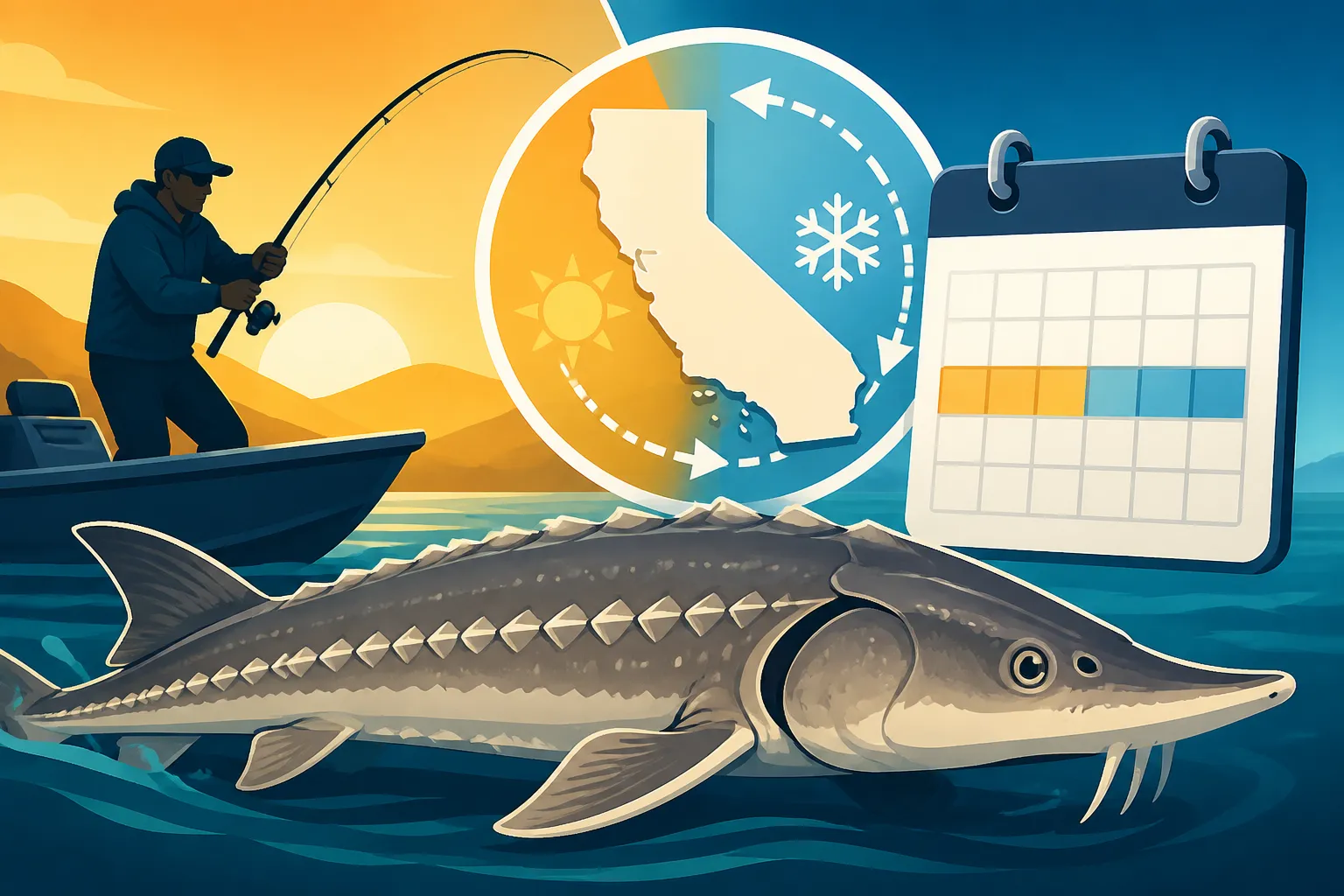
White Sturgeon (Acipenser transmontanus): This is the big kahuna, the one most anglers are actively pursuing. White Sturgeon are the largest freshwater fish in North America, with some individuals growing over 15 feet long and weighing more than 1,000 pounds, though catches of that size are incredibly rare today. They are distinguished by their pale grey to white bellies, generally lighter coloration, and a row of large, scute-like plates running down their sides. They also have two rows of smaller scutes between the main row and the dorsal fin. Their snout is typically blunt and short. The fishery for White Sturgeon is managed through a strict slot limit, bag limit, and the mandatory use of a California Sturgeon Report Card.
Green Sturgeon (Acipenser medirostris): This species is far less common and, critically, is listed as "Threatened" under the federal Endangered Species Act. This means any Green Sturgeon caught must be released immediately and unharmed. They are typically darker in coloration, often olive green to dark brown, and have a more pointed, V-shaped snout compared to the White Sturgeon's blunt snout. A key identifier is the single row of large, prominent scutes running along their side, with no additional rows of smaller scutes between the main row and the dorsal fin, a clear difference from the White Sturgeon. Confusing the two can lead to serious legal trouble, so positive identification is paramount. If you're ever in doubt, treat it as a Green Sturgeon and release it quickly.
Navigating California Sturgeon Season Dates and Regulations
Unlike some other fish species with very defined "open" and "closed" dates for an entire season, California's sturgeon fishery often operates under a more nuanced system, especially for White Sturgeon. While fishing for White Sturgeon is generally permitted year-round in many areas, the real "season" is dictated by adherence to strict size limits, bag limits, and the mandatory use of a report card. Green Sturgeon, on the other hand, have no open season whatsoever. Understanding these nuances is key to staying legal and contributing to conservation.
General Season Dates and Open Areas
For White Sturgeon, the general season in most parts of California is year-round. This means you can fish for them any day of the year, provided you are in an open area and adhering to all other regulations. The primary fishing grounds for White Sturgeon are the Sacramento-San Joaquin River Delta, San Pablo Bay, and Suisun Bay, stretching up into portions of the Sacramento River and San Joaquin River.
However, there are important caveats:
- Specific Area Closures: Certain tributaries or specific stretches of rivers might have seasonal or permanent closures to protect spawning fish or sensitive habitats. For example, some parts of the upper Sacramento River might be closed to sturgeon fishing during specific times of the year. Always consult the most current California Freshwater Fishing Regulations or the annual CDFW Sport Fishing Regulations Booklet for precise details on localized closures. Don't rely on old information or hearsay; regulations are updated yearly.
- Emergency Closures: Unforeseen circumstances, like extreme drought or sudden population declines, can trigger emergency closures at any time. Staying informed by checking the CDFW website before each trip is always a smart move.
Specific Rules for White Sturgeon
This is where the bulk of the regulations lie for those targeting White Sturgeon. It's not just about when you can fish, but how and what size you can keep.
The Crucial Slot Limit
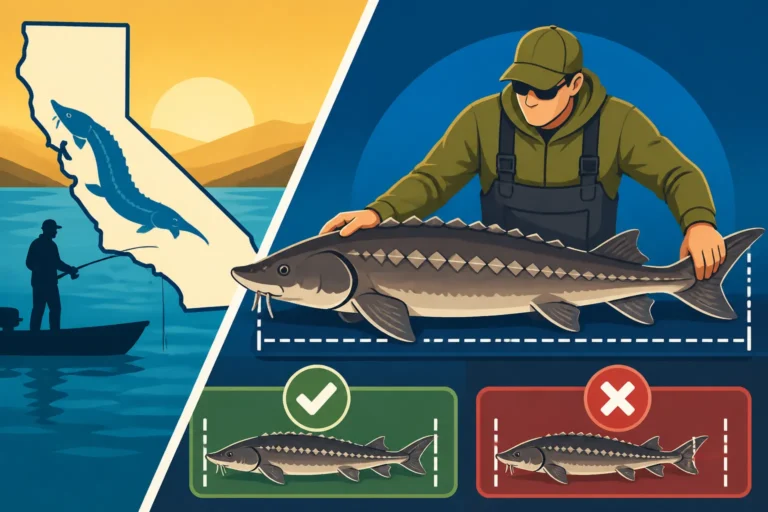
The single most important regulation for White Sturgeon is the slot limit. This means you can only keep White Sturgeon that fall within a very specific size range. Fish that are too small or too large must be released unharmed.
- Current Slot Limit: Generally, the slot limit for White Sturgeon is between 40 inches and 60 inches fork length. "Fork length" is measured from the tip of the snout to the fork in the tail. This means a White Sturgeon shorter than 40 inches or longer than 60 inches must be immediately released. This protects juvenile fish (under 40 inches) that haven't had a chance to breed much, and crucially, it protects the large, mature breeding adults (over 60 inches) that are essential for the population's future.
- Pro Tip: Always carry a sturdy, easy-to-read measuring device in your boat or tackle box. A flexible tape measure or a marked fishing rod can be invaluable. Don't eyeball it; a few inches can be the difference between a legal catch and a citation.
- Bag and Possession Limit: The daily bag limit for White Sturgeon is typically one fish, and the annual possession limit (the total number you can keep in a calendar year) is generally three fish. Once you've kept your three fish for the year, you cannot keep any more, even if the season is open and you catch a legal-sized fish. You must continue to record all kept sturgeon on your report card.
- Gear Restrictions: When fishing for sturgeon, you are generally required to use barbless hooks. This regulation is in place to minimize harm to fish that are caught and released, which, given the slot limit, will be the vast majority of your catches. Using barbed hooks for sturgeon can result in fines and penalties. Many anglers prefer a single, large circle hook when fishing for sturgeon with bait, as it often results in a hook-up in the corner of the mouth, making for an easier and safer release.
Green Sturgeon: A Strictly Protected Species
As mentioned earlier, Green Sturgeon are a federally threatened species. This means there is no open season for Green Sturgeon, and they cannot be legally taken or possessed under any circumstances.
- Immediate Release: If you accidentally catch a Green Sturgeon, you are legally obligated to release it immediately and unharmed. Do not remove it from the water if at all possible. If you must, do so quickly, minimize handling, and get it back in the water as fast as you can.
- Identification is Key: Learn the identification features of both White and Green Sturgeon before you head out. The pointed snout and the single, distinct row of scutes on the side are the most reliable indicators of a Green Sturgeon. When in doubt, let it go. It's better to release a legal White Sturgeon than to accidentally keep a protected Green Sturgeon.
Mandatory Sturgeon Report Cards
This isn't just a suggestion; it's a legal requirement for anyone fishing for sturgeon in California, regardless of whether you intend to keep a fish. The California Fishing Report Cards Explained are a critical tool for the CDFW to monitor sturgeon populations and manage the fishery sustainably.
- Purchase Requirement: Before you start sturgeon fishing, you must purchase a valid California Fishing License and a Sturgeon Report Card. You can often buy these at bait and tackle shops, sporting goods stores like those that carry gear from brands you might find on Amazon, or directly from the CDFW website.
- Immediate Recording: As soon as you catch a White Sturgeon (whether you keep it or release it), you must immediately and legibly record the catch information on your report card. This includes the date, location, whether it was kept or released, and if kept, its fork length. If you keep a legal White Sturgeon, you must also punch out the corresponding month and day on the card.
- Annual Return: Even if you don't catch any sturgeon, you are required to return your completed (or uncompleted) Sturgeon Report Card to the CDFW by January 31st of the following year. You can mail it in or report it online. Failing to return your report card, even if you didn't catch anything, can result in penalties and prevent you from purchasing a report card the following year. This data is vital for wildlife managers to understand fishing pressure and make informed decisions about future regulations.
Best Practices for Sturgeon Anglers
Fishing for sturgeon requires patience, specialized gear, and a deep respect for these incredible creatures. Beyond just following the regulations, adopting best practices ensures both your success and the health of the sturgeon population.
Catch-and-Release Techniques
Given the strict slot limits and the protected status of Green Sturgeon, catch-and-release is an integral part of sturgeon fishing. Mastering proper techniques is crucial for the survival of released fish.
- Minimize Fight Time: Sturgeon are powerful, but a prolonged fight can exhaust them, making their survival post-release less likely. Use appropriate heavy tackle to land the fish as quickly as possible without over-stressing your gear. You want to get them to the boat or shore efficiently.
- Stay in the Water (if possible): For larger fish, it's best to measure and release them without removing them from the water entirely. This minimizes physical stress and injury. If you must bring a fish onto the boat or shore, use a cradle or a large, wet mat to protect its slime coat and internal organs. Never drag a sturgeon by the tail or gills.
- Handling with Care: When handling, support the fish's body evenly, especially if it's a larger specimen. Avoid squeezing or putting pressure on its belly. Keep your hands wet to protect its protective slime layer.
- Quick Hook Removal: Use long-nosed pliers or a de-hooking tool to quickly remove the barbless hook. If the hook is deeply set and cannot be easily removed, cut the line as close to the hook as possible. Barbless hooks are usually shed by the fish or corrode away quickly.
- Revival: If a sturgeon appears sluggish after release, gently hold it upright in the water, facing into the current (if any), until it regains its strength and can swim away on its own. This is often called "burping" the fish if it was held vertically.
Essential Gear for Sturgeon Fishing
Sturgeon fishing isn't a finesse game; it requires robust equipment that can handle powerful runs and the sheer weight of these fish.
- Heavy-Duty Rod and Reel: You'll need a stout, heavy-action rod, typically 7-9 feet long, paired with a large, strong conventional or spinning reel. Conventional reels with a star drag are a popular choice for their power and line capacity. Look for reels designed for big game, capable of holding 200+ yards of heavy line. Brands like Penn, Daiwa, or Shimano offer excellent options that can often be found on platforms like Amazon or local tackle shops.
- Strong Line: Monofilament line in the 50-80 lb test range is common, but many anglers prefer braided line (65-100 lb test) for its sensitivity and incredible strength, often with a monofilament or fluorocarbon leader.
- Sturdy Hooks: As discussed, barbless hooks are mandatory. Choose a strong, sharp hook appropriate for the size of your bait, usually a 7/0 to 10/0 circle hook.
- Heavy Weights: Sturgeon often feed on the bottom, especially in areas with current. You'll need heavy sinkers, sometimes 8-16 ounces or even more, to hold your bait in place. Pyramid or flat sinkers are popular choices.
- Bait: A variety of baits work for sturgeon, but common choices include ghost shrimp, eel, lamprey, fresh shad, or even cured salmon roe. Experimentation can be key, as sturgeon can be finicky eaters.
- Measuring Device: A reliable measuring tape or stick, clearly marked in inches, is non-negotiable for adhering to the slot limit.
- Landing Net or Gaff (for legal fish): A large, strong landing net designed for big fish can be useful. If you plan to keep a legal sturgeon, a flying gaff (used only on kept fish, never on fish to be released) might be an option, but extreme caution is advised, and many prefer careful hand-landing or a net to avoid injury to the fish.
- Gloves and Pliers: Heavy-duty gloves protect your hands from the rough scutes of the sturgeon and the sharp hooks. Long-nosed pliers are essential for hook removal.
Common Misconceptions and Troubleshooting
Even with all the information at your fingertips, confusion can still arise. Let's address some common questions and scenarios you might encounter while sturgeon fishing in California.
What to Do if You Catch a Green Sturgeon
This is one of the most critical scenarios. If you reel in a sturgeon and realize it has the characteristic pointed snout and single row of side scutes, or if you're just not 100% sure, assume it's a Green Sturgeon and release it immediately.
- Don't Bring it Aboard: Avoid bringing a Green Sturgeon onto your boat or dragging it onto the shore. Keep it in the water if at all possible.
- Minimal Handling: If you absolutely must handle it to remove the hook, do so gently, supporting its body, and get it back in the water as fast as humanly possible. Don't take photos that delay its release.
- Report Card: Even though you must release it, some anglers choose to note a "released Green Sturgeon" on their report card in the comments section, though it's not a formal requirement to report released non-target species. The key is not to mark it as a kept sturgeon or punch out a date.
- Consequences: Being caught possessing a Green Sturgeon can lead to significant fines, confiscation of gear, and potential jail time, as it's a federal offense. Ignorance of the law is not an excuse.
Why Seasons Change and How to Stay Updated
While the White Sturgeon season is generally year-round, specific regulations (like the slot limit or bag limit) can change, and localized closures can occur. These changes aren't arbitrary; they're based on scientific data and conservation needs.
- Population Health: The CDFW regularly conducts surveys to assess sturgeon population health, spawning success, and recruitment rates. If populations are declining, regulations might become more restrictive (e.g., a narrower slot limit, lower bag limit, or even full closures).
- Environmental Factors: Drought conditions, changes in water flow, habitat degradation, or disease outbreaks can all impact sturgeon survival and lead to adjustments in fishing rules. For instance, specific river sections might be closed to protect spawning areas during critical periods.
- Scientific Research: Ongoing research helps biologists understand sturgeon migration patterns, feeding habits, and reproduction. New findings can lead to refinements in management strategies.
- How to Stay Updated:
- CDFW Website: The official California Department of Fish and Wildlife website is your absolute best source for the most current regulations. They publish an annual Sport Fishing Regulations Booklet. It's often updated with emergency closures or in-season changes. This is far more reliable than old forums or word-of-mouth. You can even read the full California Fishing Regulations Booklet Explained there.
- Local Bait & Tackle Shops: These shops are often on the front lines of regulation changes. The owners and staff are usually avid anglers themselves and stay informed. They can also provide real-time fishing reports.
- Fishing Forums and Groups: Online fishing communities can be a great resource for current conditions and tips, but always cross-reference any regulation information with the official CDFW sources.
- Sign up for CDFW Alerts: Many state agencies offer email or text alerts for significant regulation changes. This is a fantastic way to stay proactively informed.
Here's a quick reference table for White Sturgeon regulations, but remember, always verify with current CDFW regulations before fishing.
| Regulation Aspect | White Sturgeon (General Rules) | Green Sturgeon |
|---|---|---|
| Season Dates | Generally Year-Round (verify local closures) | NO OPEN SEASON (Federally Threatened) |
| Slot Limit | 40-60 inches Fork Length (must be within this range to keep) | N/A (must be immediately released) |
| Bag Limit | 1 fish per day | 0 (must be immediately released) |
| Annual Limit | 3 fish per calendar year | 0 (must be immediately released) |
| Hook Type | Barbless hooks required | N/A (release immediately, barbless preferred for all sturgeon) |
| Report Card | Mandatory; must be purchased, filled out, and returned by Jan 31st annually | N/A (do not record on card if released, as it's not a legal take) |
| Identification Notes | Blunt snout, lighter color, multiple rows of side scutes | Pointed, V-shaped snout, darker color, single row of prominent side scutes |
Remember, keeping a fish that is outside the slot limit or a Green Sturgeon, failing to fill out your report card immediately, or not returning it by the deadline can all result in fines and penalties. Staying informed and compliant ensures you can continue to enjoy the amazing opportunity to fish for these ancient marvels in California. If you're looking for where to start, you might find some great spots by checking out the Best Places to Catch Sturgeon in California. And always remember, proper California Catch-and-Release Rules are vital for the health of the fishery.
Disclaimer
The information provided in this guide is for general informational purposes only and is not legal advice. Fishing regulations in California are subject to change by the California Department of Fish and Wildlife (CDFW). It is the angler's responsibility to consult the most current and official CDFW sport fishing regulations booklet or website before engaging in any fishing activity. Failure to comply with regulations can result in fines, penalties, and forfeiture of fishing privileges.