California Yellowtail Fishing Guide
There’s nothing quite like the electrifying pull of a California yellowtail on the end of your line. Many anglers dream of this moment, only to be frustrated by the elusive nature of these powerful game fish, or confused by the sheer volume of information (and misinformation) out there. This comprehensive guide is dedicated to cutting through the noise, providing you with practical, in-depth knowledge and proven strategies to successfully target and land yellowtail in California waters.
Understanding California Yellowtail: The "Forktail" Fighters
California yellowtail (Seriola lalandi) are one of the most sought-after game fish along the Pacific Coast, and for very good reason. Their sheer power, speed, and relentless fighting spirit make them an incredible challenge and a true trophy for any angler. But before you can catch them, it helps to truly understand what makes these fish tick.
What are Yellowtail and Why Are They So Popular
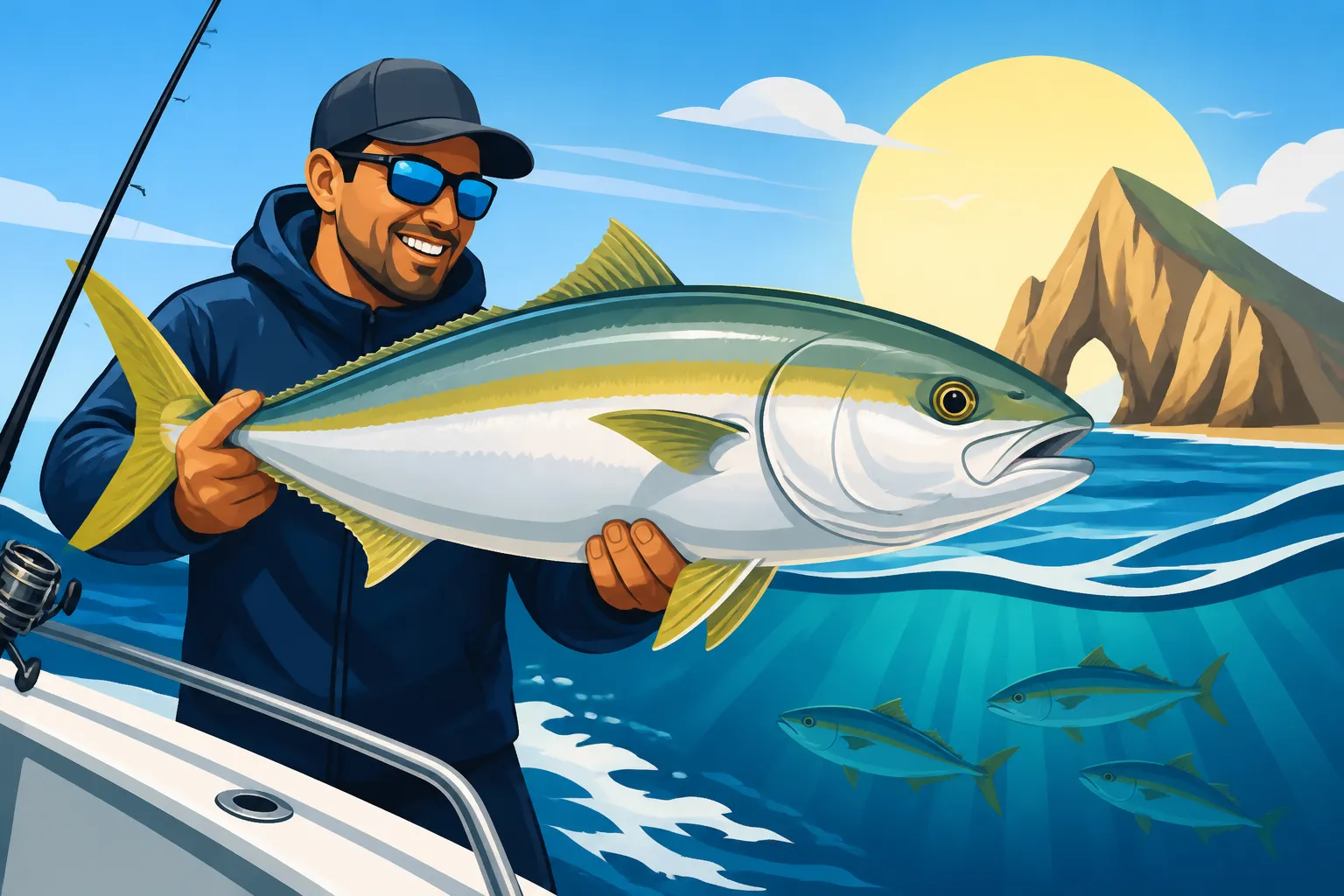
Yellowtail are members of the jack family, often referred to by their distinctive, deeply forked yellow tail, which gives them their common name and incredible burst of speed. They are sleek, torpedo-shaped predators, typically dark blue or greenish-blue on their backs, fading to silver on their sides and belly. A prominent horizontal yellow stripe runs along their lateral line, extending from their eye to their tail. While often called "yellowtail amberjack" in some areas, the California yellowtail is a distinct species from the Gulf of Mexico and Atlantic amberjack.
What draws so many anglers to them? It's a combination of factors. First, their fight. When hooked, a yellowtail will make blistering runs, often trying to dive into structure or drag you around the boat with surprising strength. It's a true test of an angler's skill and tackle. Secondly, they are fantastic eating fish, renowned for their firm, white, delicate flesh, making them a prize for the dinner table. Finally, their availability, particularly in Southern California, makes them a regular target for both private boaters and sportfishing charters, offering consistent opportunities for a thrilling catch. They are truly one of the Best Fighting Fish in California.
Where to Find Yellowtail in California Waters
Yellowtail are migratory pelagic fish, meaning they live in the open ocean rather than strictly near the bottom or shore. However, they are often found around specific types of structure where bait congregates. In California, their primary range extends from Baja California up into Southern and sometimes Central California waters.
You'll typically find them around offshore islands like the Channel Islands Fishing Guide (Catalina Island, San Clemente Island) and the Coronado Islands just south of the U.S. border. They also frequent offshore banks, ridges, and submerged high spots, as well as along coastlines with prominent kelp beds. These kelp beds act as natural baitfish aggregators and provide ambush points for predatory yellowtail. During warmer water periods, they can even move further north, occasionally showing up in significant numbers around the Monterey Bay Fishing Guide area or even beyond, although this is less common than their strong presence in Southern California. The key is always looking for structure and, more importantly, looking for baitfish.
The Life Cycle and Habits of California Yellowtail
Understanding the life cycle and habits of yellowtail is crucial for predicting their movements and feeding patterns. Yellowtail are fast-growing, long-lived fish, capable of reaching lengths over 5 feet and weights exceeding 80 pounds, although most caught in California are in the 10-40 pound range. They typically reach sexual maturity around 2-3 years of age.
Spawning generally occurs in warmer, offshore waters, often south of California, with larvae and juveniles moving into more inshore habitats. As they grow, they form schools, sometimes mixing with other species like barracuda or bonito. They are opportunistic predators with a voracious appetite, feeding on a wide variety of baitfish such as anchovies, sardines, mackerel, squid, and even crustaceans. Their feeding behavior is often aggressive, characterized by "boiling" on the surface as they chase bait, or lurking in the kelp waiting to ambush. Water temperature plays a significant role in their presence and activity, with optimal temperatures typically ranging from the mid-60s to low 70s Fahrenheit. They tend to follow baitfish migrations, which are heavily influenced by ocean currents and water temperatures.
Prime Seasons for Yellowtail Fishing in California
Timing is everything when it comes to fishing, and yellowtail are no exception. Knowing when and where to expect them can drastically increase your chances of a successful trip. While they are present year-round in some parts of their range, certain seasons offer peak opportunities in California. This aligns with finding the Best Season for Yellowtail in California.
Seasonal Trends by Region
California's long coastline means that "prime season" can vary slightly depending on whether you're fishing in the far south or heading further north.
- Southern California (San Diego to Santa Barbara): This is the undisputed capital of California yellowtail fishing. The peak season here generally runs from late spring (April/May) through fall (October/November), often extending longer if warm water persists. Summer is particularly hot, with consistent action around the Coronado Islands, Catalina Island, San Clemente Island, and various offshore banks. As the water cools in late fall, they might move further offshore or south into Mexican waters, but resident populations can still be found around deeper kelp beds even in winter.
- Central California (Morro Bay to Monterey): Yellowtail presence here is much more dependent on prevailing warm water currents, primarily during the late summer and early fall (August to October). If the Pacific Ocean experiences an "El Niño" event or an extended period of warm water, yellowtail can push north in significant numbers, offering exciting opportunities. However, this is less reliable than in Southern California and often requires more dedicated scouting or charter reports.
The influence of Baja California waters cannot be overstated. Much of the yellowtail population that moves into Southern California waters migrates from breeding grounds further south. Warmer ocean conditions, often driven by El Niño, tend to bring these fish further north and closer to shore, making for banner years.
Best Time of Day and Tidal Considerations
While yellowtail can be caught throughout the day, certain periods are often more productive. Early mornings and late afternoons/evenings are frequently the best, coinciding with lower light conditions when baitfish are often more active and predatory fish feel more comfortable feeding. However, during a hot bite, yellowtail can chew all day long.
Tides also play a role, especially when fishing in shallower inshore areas, around kelp, or near structure. Moving water, whether incoming or outgoing, generally concentrates bait and stimulates feeding activity. Many experienced anglers prefer the hour or two leading up to and after a tide change, particularly when there's a good current flow. This moving water helps carry scent and bait, making yellowtail more active. Conversely, slack tide can sometimes slow the bite down considerably, but not always. Pay attention to local conditions and reports for specific areas you plan to fish.
Factors Affecting Yellowtail Activity
Beyond just the calendar and clock, several environmental factors heavily influence where yellowtail are, and more importantly, if they're willing to bite.
- Water Temperature: This is perhaps the most critical factor. Yellowtail prefer warmer waters, typically above 60-62°F, with optimal feeding often occurring in the 65-72°F range. A sudden drop in temperature can send them deeper or moving out of an area. You'll often hear anglers discussing "water temp breaks" where warmer and cooler water meet, as these can be productive zones.
- Bait Presence: Yellowtail are predators, plain and simple. If there's no bait, there are usually no yellowtail. Look for signs of baitfish on your fishfinder, birds diving, or actual bait schools on the surface. Sardines, anchovies, mackerel, and squid are their primary forage. A robust bait supply often means active yellowtail.
- Weather and Ocean Conditions: Calm, sunny days with minimal swell are generally preferred. While yellowtail can be caught in choppier conditions, a comfortable boat and clear visibility for spotting signs of life make fishing much easier. Strong winds can make boat control difficult and disperse bait, sometimes turning off the bite. Overcast conditions can sometimes extend the morning bite.
- Moon Phase: Some anglers swear by certain moon phases, particularly the full or new moon, believing the stronger tidal currents stimulate feeding. While this isn't a hard and fast rule, it's worth noting in your fishing log to see if you observe a pattern.
Understanding these factors helps you make informed decisions about when and where to target yellowtail, rather than just blindly casting a line.
Essential Gear and Tackle for Yellowtail
Trying to land a powerful yellowtail with inadequate gear is a recipe for heartbreak. These fish are strong, fast, and will exploit any weakness in your setup. Having the right rods, reels, line, and terminal tackle is absolutely paramount to success.
Rods, Reels, and Line Selection
Choosing the correct rod and reel combination is crucial for fighting these powerful fish. You'll want a setup that offers both strength for battling and sensitivity for detecting subtle bites.
- Rods: For yellowtail, you're generally looking at medium-heavy to heavy conventional rods, typically 7 to 8 feet long. Many anglers favor a fast action tip with a strong backbone. This allows for long casts with live bait and the power to turn a hard-charging fish away from kelp or other structure. A common choice is a graphite composite rod for its balance of strength and light weight. Brands like Seeker, Calstar, or Phenix are popular among serious West Coast anglers, though there are many great options available. For jigging, a slightly shorter, stiffer rod might be preferred to work the lure effectively.
- Reels: Matching your reel to your rod and target fish is key. For yellowtail, a conventional lever-drag or star-drag reel in the 30-50 size class (e.g., Penn Fathom, Shimano Trinidad, Daiwa Saltiga) is standard. You need a reel with a smooth, powerful drag system and ample line capacity (at least 300 yards of 40-50 lb test). The drag must be able to withstand long, sustained runs without seizing or becoming jerky. High-speed retrieve ratios (6:1 or higher) are often preferred for jigging and quickly recovering line, but a good all-around ratio around 4.5:1 to 5.5:1 works well for live bait too. When buying a new reel, checking reviews on Amazon can give you insights into its real-world performance.
- Line: This is where things get interesting. Most yellowtail setups utilize braided mainline with a fluorocarbon leader.
- Mainline: 40-65 lb braided line (like PowerPro or Daiwa J-Braid) is common. Braid offers incredible strength-to-diameter ratio, no stretch for excellent sensitivity, and great casting distance. The lack of stretch also helps with powerful hooksets.
- Leader: This is where your stealth comes in. Yellowtail, especially larger ones, can be line-shy. A fluorocarbon leader is almost universally preferred because it's virtually invisible underwater and incredibly abrasion-resistant. Typical leader sizes range from 30 lb to 60 lb test, depending on the fishing pressure, water clarity, and the size of the fish you're targeting. For most live bait applications, 40 lb or 50 lb fluorocarbon is a good starting point. You'll connect your braided mainline to your fluorocarbon leader using a strong knot like an FG knot, a double uni-knot, or an Alberto knot.
Hooks, Leaders, and Terminal Tackle
Once you've got your main line and leader, the business end of your setup—your hooks and other terminal tackle—needs to be just as robust and well-chosen.
- Hooks: The type and size of hook depend heavily on your bait and technique. For live bait, strong, sharp, chemically sharpened hooks are essential.
- Live Bait Hooks: Generally, you'll use circle hooks or J-hooks in sizes ranging from 1/0 to 5/0. For smaller anchovies or sardines, a 1/0 or 2/0 light-wire circle hook or a Mustad 92641 J-hook might be appropriate. For larger sardines or mackerel, a heavier 3/0 to 5/0 circle or J-hook is better. Brands like Owner, Gamakatsu, or Mustad are reliable. Circle hooks are excellent for preventing gut-hooking and are often required in certain fisheries.
- Jigging Hooks: Jigs often come pre-rigged with hooks, but if you're swapping them out or adding assist hooks, ensure they are strong, sharp, and appropriately sized for the lure.
- Leaders: As mentioned, fluorocarbon is king. The length of your leader can vary. For fly-lining live bait, a 6-10 foot leader allows for a natural presentation. For dropper loop rigs or heavy jigging, shorter leaders (2-4 feet) are often used. Ensure your knots are tied meticulously and tested. Buying bulk spools of fluorocarbon leader material on Amazon can be cost-effective if you go through a lot.
- Swivels: While not always necessary with fluorocarbon leaders, small, high-quality barrel or ball bearing swivels can be used to prevent line twist, especially when trolling or using lures that spin. If you use one, make sure it's appropriately sized and strong enough for the fish you're targeting.
- Sinkers/Weights: For live bait, you might need a small split shot or an egg sinker (1/2 oz to 2 oz) for a dropper loop rig to get your bait down to where the fish are. For fly-lining, the goal is often to let the bait swim freely, so no weight is used unless the current is very strong or you need to reach deeper depths.
Must-Have Accessories
Beyond your rod and reel, a few key accessories will make your yellowtail fishing experience safer, more comfortable, and more successful.
- Cooler and Ice: Absolutely essential for keeping your bait lively and your catch fresh. A good cooler, like a YETI or an Igloo Marine, packed with plenty of ice, is non-negotiable. Yellowtail meat spoils quickly if not properly iced.
- Gaff or Large Net: Once you've fought a yellowtail to the boat, you need a way to secure it. A sturdy gaff (with a sharp point!) or a large, rubberized landing net is critical. For safety, always have one ready and know how to use it properly. Avoid trying to boat a large, thrashing yellowtail by hand.
- Pliers/Forceps: For hook removal, cutting line, and general tackle adjustments. Long-nose pliers or specialized fishing pliers are a must.
- Knot Tying Tools: If you're tying complex knots like the FG knot, a knot-tying tool can make the process easier and more consistent, especially on a moving boat.
- Sun Protection: Hat, polarized sunglasses (to spot fish and bait), and sunscreen are vital for long days on the water.
- Fishing License and Report Cards: Don't forget your valid California Fishing License Guide and any required report cards (though not specifically for yellowtail, it's good practice to have them if you might target other species like rockfish or salmon). You can check current regulations on the California Department of Fish and Wildlife website.
- First Aid Kit: Always a good idea to have one on board for minor cuts, scrapes, or other emergencies.
- Filet Knife: A sharp filet knife for processing your catch at the end of the day.
- Heavy-Duty Gloves: For handling the fish, especially if it's spiny or you're using a gaff. Also useful for gripping line during a tough fight.
- Cast Net or Bait Tank: If you plan on catching your own live bait, a cast net is necessary. For keeping bait alive, a quality bait tank with a good pump and aeration system is essential. You can find excellent bait tanks and aerators on Amazon that will keep your precious bait frisky all day long.
Having these accessories prepped and ready before you even leave the dock will ensure your trip runs smoothly.
Top Techniques for Catching California Yellowtail
Yellowtail are incredibly aggressive predators, but they can also be surprisingly finicky. Success often hinges on matching the hatch – meaning, presenting bait or lures that mimic what they are currently feeding on, and using the right technique for the conditions. Understanding various methods gives you options when the bite gets tough. This is how to master How to Catch Yellowtail in California.
Live Bait Fishing: The Gold Standard
Without a doubt, live bait is the most consistent and often most effective method for catching yellowtail in California. Fresh, lively bait is irresistible to these predators. The key is to present it as naturally as possible.
- Sardines and Anchovies: These are the bread and butter of yellowtail bait. They are abundant and yellowtail absolutely feast on them.
- Fly-lining: This is the ultimate natural presentation. A single, lively sardine or anchovy is hooked lightly (through the nose, eye socket, or shoulder) on a fluorocarbon leader with no weight. Cast it out and let the bait swim naturally away from the boat. The idea is for the bait to look like it's trying to escape, drawing the yellowtail's attention. Keep your reel in free spool with your thumb on the line, ready for a lightning-fast strike. When you feel a bite, let the fish take the bait for a few seconds before slowly engaging the drag and setting the hook. This gives the yellowtail time to fully inhale the bait.
- Dropper Loop: When fish are deeper or the current is strong, a dropper loop rig can get your bait down. Tie a dropper loop about 18-24 inches above your sinker, then attach a shorter leader (12-18 inches) with your live bait hook to the loop. This keeps your bait suspended above the sinker, allowing it to swim freely at a controlled depth. Sizes of egg sinkers can vary from 1/2 oz to 2 oz depending on depth and current.
- Mackerel: Larger mackerel (Pacific mackerel or Spanish mackerel) are excellent baits for larger yellowtail. They are tougher and can withstand more abuse, making them great for chunking or slow-trolling. You can fly-line them similarly to sardines, or use a bridle rig for a more secure presentation.
- Squid: When yellowtail are keying in on squid, fresh dead or live squid can be deadly. They can be fly-lined, fished on a dropper loop, or even slow-trolled.
Regardless of the bait, always ensure it's lively and healthy. A weak, listless bait is far less attractive.
Jigging for Yellowtail: A Dynamic Approach
Jigging is a highly effective, active technique that can be incredibly exciting. It requires more effort but can be deadly, especially when fish are congregated in deeper water or when they are actively feeding on specific types of forage.
- Yo-Yo Jigging: This technique is fantastic for targeting deep-holding yellowtail. You'll use a heavy, fast-sinking jig (often called a "Yo-Yo" jig or "iron," typically 4-8 oz) in chrome, blue-white, or scrambled egg patterns. Drop the jig to the desired depth (often the bottom or where you mark fish on your sounder), then crank it back up to the surface as fast as you can, reeling and imparting a sharp jigging motion with your rod tip. The yellowtail often strike on the retrieve, mimicking a fleeing baitfish. It's a high-energy technique that can provoke savage strikes. For more on this, check out our guide on Yo-Yo Jigging for Yellowtail.
- Surface Irons: When yellowtail are boiling on the surface, chasing bait, surface irons are incredibly effective. These lighter jigs (2-4 oz) are cast long distances and retrieved quickly across the surface, wobbling and mimicking a wounded baitfish. Colors like blue and white, mint and white, or sardine patterns are popular. The strike on a surface iron is often explosive and visible, making for thrilling fishing.
- Knife Jigs: These long, slender, often multi-faceted jigs are designed to sink quickly and flutter enticingly. They are worked with a series of sharp lifts and drops of the rod tip, often with pauses, to entice strikes from yellowtail holding at various depths. They are particularly effective when fish are deeper or when replicating squid or slender baitfish.
Jigging requires good boat positioning, often drifting over known yellowtail structure, and a strong, appropriately matched rod and reel setup to handle the aggressive retrieval and powerful strikes.
Trolling and Artificial Lures
Trolling can be an excellent search pattern, allowing you to cover large areas of water to locate schools of yellowtail, especially when they are scattered or not showing on the surface.
- Plugs and Hard Baits: Trolling lipped diving plugs (like Rapala X-Raps or Nomad Design DTX Minnows) can be very productive. These lures dive to specific depths and have an enticing wobbling action. Experiment with different colors and sizes to see what the fish prefer on a given day. Chrome, blue back, and sardine patterns are generally good starting points.
- Cedar Plugs: These classic, simple wooden lures, often with skirts, are a long-standing favorite for trolling. Their erratic, darting action often drives pelagic species wild. They are typically fished without additional weight, relying on boat speed to get their action.
- Feathers and Hoochies: While more commonly used for tuna or dorado, small feather jigs or hoochies (squid skirts) trolled in a spreader bar or daisy chain can sometimes attract yellowtail, especially if they are feeding on small bait or squid.
Trolling speeds typically range from 5 to 9 knots, but experimentation is key. Watch your fish finder for bait and structure, and pay attention to where and when bites occur. Outriggers can help spread out your lines and prevent tangles, especially with multiple rods.
Kayak and Shore-Based Tactics
While offshore boats and charters dominate yellowtail fishing, there are increasingly popular options for kayak anglers and even some limited opportunities for shore-based anglers, particularly in Southern California.
- Kayak Fishing: Kayak anglers have an incredible advantage in stealth and access to certain inshore areas that larger boats can't reach. They can effectively fish kelp beds, rock piles, and reefs close to shore. Kayak fishing for yellowtail often involves slow-trolling live bait (like a mackerel or sardine) or slow-trolling small diving plugs along kelp lines or structure. Casting surface irons or smaller yo-yo jigs is also popular. Launching from spots near La Jolla, Point Loma, or Catalina can put kayak anglers right on top of the action. Safety is paramount for kayak anglers, especially offshore – always carry a VHF radio, EPIRB/PLB, and notify someone of your float plan. Check out our guide on California Kayak Fishing Guide for more tips.
- Shore-Based Fishing: This is the most challenging way to target yellowtail, as they are typically an offshore species. However, during very strong warm water events or specific bait runs, yellowtail can occasionally be caught from long piers or rocky shorelines that offer access to deeper water and kelp beds. Casting heavy metal jigs or large swimbaits is the most common technique. The San Diego area, particularly around La Jolla, sometimes offers these rare opportunities. It requires patience and a bit of luck, but the reward of a shore-caught yellowtail is immense.
Best Yellowtail Fishing Spots in California
California is a vast state with diverse fishing opportunities, but when it comes to yellowtail, certain regions and specific spots consistently stand out. Understanding these hotspots can help you plan your next adventure, whether you're hopping on a party boat or taking out your private vessel.
Southern California Hotspots
Southern California is undeniably the heart of yellowtail fishing in the state. The combination of warm water, abundant bait, and offshore islands creates ideal conditions. Many of these areas are also prime locations for San Diego Fishing Spots.
- Coronado Islands (Mexico): Just south of the U.S. border, these islands are a legendary yellowtail factory. Day trips from San Diego are incredibly popular. Yellowtail are found all around the islands, often patrolling kelp beds, reefs, and rocky points. The Middle Grounds, the South Island, and the Keyhole are perennial favorites. You'll need a valid Mexican fishing license if fishing these waters.
- Catalina Island: A true gem of Southern California, Catalina offers fantastic yellowtail opportunities, particularly on its backside and around its many kelp beds. The Farnsworth Bank, the West End, and the East End can all hold fish. It's a popular destination for private boats and charters departing from Long Beach, San Pedro, and Dana Point.
- San Clemente Island: Further offshore, San Clemente Island is another big fish magnet. It's known for producing larger yellowtail and often holds them when other spots are slow. The "front side" (southwest) and the "back side" (northeast) both offer excellent fishing, depending on conditions. Being a Naval installation, access can be restricted, so checking local notices to mariners is crucial.
- La Jolla Kelp Beds: Closer to shore near San Diego, the sprawling kelp beds off La Jolla can hold impressive numbers of yellowtail, especially in spring and fall. These fish can be a bit harder to pull out of the thick kelp, requiring heavy tackle and a strong pull, but the rewards are there. This area is popular for both private boats and kayak anglers.
- Offshore Banks (e.g., Tanner Bank, Cortes Bank): Further offshore, these expansive banks and high spots can hold colossal schools of yellowtail, particularly during warm water years. These are typically targeted by longer-range charter trips due to their distance from shore.
Central Coast Opportunities
While not as consistently productive as Southern California, the Central Coast can offer exciting yellowtail fishing, especially when warm water currents push north.
- Morro Bay: During warmer periods, yellowtail can occasionally be found closer to shore around Morro Bay. Targeting them here usually involves fishing around kelp beds, rock piles, and other structures where bait congregates.
- Monterey Bay: Similar to Morro Bay, yellowtail in Monterey Bay are generally a warm-water phenomenon. When they do show up, they might be found around the deeper edges of the kelp forest or patrolling open water for anchovies and squid. This is definitely more of a "bonus" species for Central Coast anglers, who typically target rockfish and lingcod.
Understanding Kelp Beds and Offshore Banks
The presence of kelp beds and offshore banks is critical to yellowtail success throughout California. These aren't just arbitrary spots; they are vital habitats.
- Kelp Beds: Kelp forests are underwater ecosystems teeming with life. They provide shelter, food, and ambush points for baitfish, which in turn attract predators like yellowtail. When fishing kelp, look for areas where the kelp fronds create open lanes, or where the kelp stops, forming an "edge." Yellowtail will often patrol these edges or hang just outside the main canopy, waiting for bait to emerge. Remember, California Yellowtail: Kelp Bed Tactics are essential, as you'll often need to quickly turn a fish before it "kelps" you, meaning it dives into the thick kelp and breaks your line.
- Offshore Banks and High Spots: These are submerged mountains or ridges that rise from the seafloor, creating upwellings and current breaks. These features concentrate nutrients, which attract plankton, then baitfish, and finally, predatory species like yellowtail. Fishfinders are invaluable here for identifying these structures and marking schools of fish or bait. Look for thermoclines (layers of water with different temperatures) as yellowtail often hold just above or below these boundaries.
When choosing a spot, always consult recent fishing reports, talk to local bait shop owners, and observe bird activity or baitfish boils on the water. These real-time indicators are often more valuable than historical data.
Navigating Regulations and Ethical Practices
Fishing responsibly is not just about following the rules; it's about ensuring healthy fish populations for future generations and preserving the sport we all love. California has specific regulations for yellowtail, and understanding them is crucial.
California Yellowtail Regulations and Limits
Regulations are put in place by the California Department of Fish and Wildlife (CDFW) to manage fish populations sustainably. These rules can change, so always check the latest regulations before you go fishing.
The general regulations for California yellowtail (Seriola lalandi) are typically:
- Bag Limit: Usually 10 fish per person, with a maximum of 10 fish of any one species, but check specific regulations for any regional or species-specific adjustments.
- Size Limit: A minimum size limit of 20 inches total length is often in place. This means you must measure your fish from the tip of the jaw to the tip of the tail, making sure it meets or exceeds this length. Any fish shorter than the minimum must be immediately released.
- Season: Yellowtail fishing is generally open year-round in California. However, always verify this, as closures or restricted seasons can be implemented based on stock assessments or other management decisions.
It's absolutely essential to consult the most current California Ocean Sport Fishing Regulations booklet or the CDFW website before each trip. These regulations are designed to protect the species and provide fair opportunities for all anglers. Don't rely on old information or hearsay; get the facts straight from the source. For a deeper dive into these rules, consult our guide on California Yellowtail Regulations and Limits.
Fishing Licenses and Report Cards
To legally fish for yellowtail or any other marine species in California, you need a valid fishing license.
- California Fishing License: Everyone 16 years of age or older needs a valid California sport fishing license. This applies whether you're fishing from a private boat, a party boat, or even from shore. You can purchase these online through the CDFW website, at licensed bait and tackle shops, or other authorized vendors. There are various license options, including annual, one-day, or two-day licenses, suitable for residents and non-residents alike. Make sure you have your license on your person (either physical or valid digital copy) while fishing.
- Ocean Enhancement Stamp: If you are fishing in ocean waters south of Point Arguello (Santa Barbara County), you are required to have an Ocean Enhancement Validation stamp in addition to your fishing license. This stamp supports programs that enhance ocean fish populations.
- Report Cards: While yellowtail do not require a specific report card, certain other species you might incidentally catch (like white seabass or sturgeon, if you venture into the Delta) do. Always be aware of other species' requirements and ensure you have the appropriate report cards if you plan to target them. It's a good idea to understand California Fishing Report Cards Explained generally.
Penalties for fishing without a license or violating regulations can be steep, including hefty fines and confiscation of gear. It's simply not worth the risk.
Responsible Angling and Conservation
Beyond the rules, practicing responsible angling helps preserve our precious marine resources.
- Catch and Release Best Practices: If you're not keeping a fish, ensure you release it properly to maximize its survival chances.
- Minimize fight time to reduce stress.
- Handle the fish as little as possible, and with wet hands to protect its slime coat.
- Avoid touching the gills or eyes.
- Use barbless hooks or crimp down barbs for easier, less damaging hook removal.
- Use appropriate tools like dehookers or long-nose pliers to quickly remove hooks.
- If a fish is deep-hooked, cut the line as close to the hook as possible.
- Revive tired fish by holding them upright in the water, facing into the current, until they swim off strongly.
- Respect Marine Protected Areas (MPAs): California has a network of MPAs where fishing activities are restricted or prohibited. Know where these areas are and respect their boundaries. Maps and information are available from the CDFW. Fishing in an MPA violation can lead to significant fines and penalties.
- Waste Reduction: Minimize your environmental footprint by avoiding littering, especially plastics, which can harm marine life. Dispose of all fishing line, bait containers, and trash properly.
- Educate Yourself and Others: Share your knowledge of regulations and best practices with fellow anglers. Promote ethical angling within your community.
By adhering to these guidelines, we can all contribute to the long-term health of California's yellowtail fishery.
Preparing Your Catch: From Ocean to Table
Catching a beautiful yellowtail is a fantastic achievement, but the journey isn't over until you've properly cared for your catch. Yellowtail is highly regarded for its delicious, firm flesh, making it a favorite for grilling, searing, or even sashimi. Proper handling from the moment it's caught will ensure the best possible eating experience.
Handling Yellowtail Post-Catch
The quality of your yellowtail at the dinner table starts immediately after it's landed. Speed and proper technique are key to preserving its flavor and texture.
- Bleeding the Fish (Ikejime Method): This is arguably the most crucial step for enhancing flavor and shelf life. When a fish struggles, lactic acid and other metabolic waste products build up in the muscles, which can negatively impact taste and texture. Immediately after landing, humanely dispatch the fish and then bleed it. The quickest way is to cut the main artery behind the pectoral fin or sever the gills. Allow the fish to bleed out thoroughly in a bucket of seawater or over the side of the boat for several minutes. This process removes blood from the flesh, resulting in a cleaner, milder flavor.
- Icing Immediately: Once bled, get your yellowtail on ice as quickly as possible. The goal is to rapidly drop the core temperature of the fish. Place it headfirst into a well-insulated cooler filled with an ice-slurry (a mix of ice and a little saltwater) or lay it flat on a bed of ice, then cover it completely with more ice. Do not let the fish sit in standing meltwater; drain it regularly or use ice packs beneath the fish. Keeping the fish cold and out of direct sunlight is paramount to preventing spoilage and maintaining firm flesh.
- Protecting the Flesh: Avoid throwing fish roughly into a cooler, as bruising can damage the delicate meat. Handle your catch gently. If possible, keep the fish whole until you're ready to fillet it to minimize oxidation and protect the flesh.
By following these initial steps, you're setting yourself up for a truly gourmet experience.
Filleting and Storage Tips
Once you're off the boat and ready to process your fish, good filleting technique and proper storage will continue to protect your investment.
- Filleting: Use a sharp, flexible filet knife. Start by cutting behind the pectoral fin down to the backbone. Then, make a cut along the top of the backbone from head to tail. Carefully work your knife along the ribs, separating the fillet from the bone. Flip the fish and repeat on the other side. You'll then typically remove the skin, which can be done by laying the fillet skin-side down and carefully slicing between the skin and the flesh, holding the skin firmly. Inspect the fillets for any remaining pin bones or bloodline (the darker red strip of meat along the lateral line), which can be trimmed out to improve flavor and appearance. Yellowtail fillets are beautiful, thick, and typically yield four large, boneless pieces of meat.
- Storage for Fresh Consumption: For optimal freshness, consume yellowtail within 1-2 days of catching. Store fillets in an airtight container or zip-top bag, placed on a bed of ice in the coldest part of your refrigerator. Change the ice daily and ensure no meltwater comes into contact with the fish.
- Freezing for Longer Storage: If you plan to store yellowtail for longer, proper freezing is crucial to prevent freezer burn and preserve quality.
- Vacuum Sealing: This is the gold standard. Vacuum-sealed fillets, free of air, can last 6-12 months in a deep freezer without significant loss of quality.
- Water Glazing: If you don't have a vacuum sealer, place fillets in a freezer bag, fill it with water until the fish is completely submerged, then squeeze out as much air as possible before sealing and freezing. The ice block protects the fish from oxidation.
- Wrapping: Tightly wrap fillets in plastic wrap, then butcher paper or foil, then place in a freezer bag. This multi-layer approach helps prevent freezer burn.
Always label your frozen fish with the date and species to ensure you use it in a timely manner.
Simple and Delicious Yellowtail Recipes
Yellowtail's firm, rich, and slightly sweet flavor makes it incredibly versatile in the kitchen. Here are a few simple ways to enjoy your hard-earned catch:
- Grilled Yellowtail Steaks: This is a classic for a reason. Cut thick yellowtail steaks (1-inch thick) from the larger fillets. Marinate briefly (30 minutes) in olive oil, lemon juice, garlic, salt, and pepper. Grill over medium-high heat for 3-5 minutes per side, depending on thickness, until opaque but still moist in the center. Serve with fresh salsa or a squeeze of lime.
- Pan-Seared Yellowtail with Herb Butter: Pat fillets dry. Season generously with salt and pepper. Heat a tablespoon of olive oil or butter in a non-stick skillet over medium-high heat. Sear the yellowtail for 2-4 minutes per side, creating a beautiful golden crust. In the last minute, add a knob of butter, a crushed garlic clove, and fresh herbs like thyme or rosemary to the pan, basting the fish with the infused butter.
- Yellowtail Sashimi/Crudo: If your fish was bled and iced perfectly, and you trust the freshness, yellowtail makes incredible sashimi. Slice very thin pieces against the grain. Serve with soy sauce, wasabi, and pickled ginger. For crudo, arrange thin slices on a plate, drizzle with high-quality olive oil, a squeeze of fresh lemon or lime juice, a sprinkle of flaky sea salt, and perhaps some finely chopped chives or thinly sliced jalapeño.
- Yellowtail Tacos: Flake cooked yellowtail (grilled, baked, or pan-seared) and serve in warm tortillas with shredded cabbage, a creamy white sauce (like a chipotle aioli), and fresh pico de gallo. A squeeze of lime takes it over the top.
The possibilities are endless, but these simple preparations allow the natural deliciousness of yellowtail to truly shine.
Booking a California Yellowtail Fishing Charter
For many anglers, especially those without their own boat or specific local knowledge, a California fishing charter is the best way to experience yellowtail fishing. Charters provide access to prime fishing grounds, expert guidance, and often all the necessary gear. For a broader look, consult our California Fishing Charters: Complete Guide.
Choosing the Right Charter or Party Boat
Deciding between a private charter and an "open party" boat (also known as a party boat or head boat) often comes down to budget, group size, and desired experience.
- Open Party Boats: These are the most common and budget-friendly option. You pay per person and fish alongside other anglers. They typically run half-day, full-day, or even 1.5-day trips. Party boats are excellent for beginners, solo anglers, or small groups, as the crew handles navigation, finds the fish, and provides assistance. Companies like H&M Landing, Point Loma Sportfishing, and Fisherman's Landing in San Diego, or Davey's Locker in Newport Beach, are well-known operators. They offer a great opportunity to learn from experienced deckhands and fellow anglers.
- Private Charters: If you have a larger group, prefer a more personalized experience, or want to target specific species or areas, a private charter is ideal. You rent the entire boat and crew for your group. This allows for flexibility in itinerary, more one-on-one attention from the crew, and often higher-quality tackle. Private charters are generally more expensive but offer an unparalleled fishing experience. When searching for a private charter, look for captains with a strong track record for yellowtail and excellent reviews.
- Type of Trip: Consider the duration of the trip.
- Half-day trips (typically 4-6 hours) are great for a quick outing, often targeting closer-to-shore fish.
- Full-day trips (8-12 hours) offer more time to reach offshore banks and islands, increasing your chances for yellowtail.
- 1.5-day or overnight trips are common for yellowtail, especially if targeting the Coronado Islands or outer banks, allowing for travel time and extended fishing.
When booking, always inquire about what's included (bait, tackle rental, license requirements) and what you should bring.
What to Expect and What to Bring
Preparing for your charter trip will ensure you have a comfortable and successful day on the water.
- What to Expect:
- Early Starts: Most charters depart early in the morning, often before sunrise, to get to the fishing grounds at prime time.
- Boat Ride: Expect varying ocean conditions. Some days will be calm, others choppy. If prone to seasickness, take preventative measures beforehand.
- Crew Assistance: On a party boat, the deckhands are there to help. They'll hand out bait, untangle lines, gaff fish, and provide advice. Don't be shy about asking questions!
- Fast-Paced Action: When the yellowtail bite is on, it can be fast and furious. Be ready to cast quickly and reel hard.
- Fish Cleaning: Most charters offer fish cleaning services at the end of the trip, usually for a small fee per fish. This is well worth it.
- What to Bring: Even if tackle is provided or rented, there are essentials you should always pack. Consult our guide on What to Bring on a California Fishing Charter.
- Valid California Fishing License and Ocean Enhancement Stamp.
- Warm Layers and Rain Gear: Even on sunny days, it can be cool on the water, especially in the morning and evening. Bring layers, including a waterproof jacket, as conditions can change rapidly.
- Sun Protection: Hat, polarized sunglasses, and high-SPF sunscreen. The sun's reflection off the water is intense.
- Food and Drinks: Pack snacks, lunch, and plenty of water or other non-alcoholic beverages. Most boats have galleys, but bringing your own saves money.
- Small Cooler: To bring your filleted fish home.
- Camera: To capture those memorable moments!
- Cash: For tackle rentals, fish cleaning, and most importantly, tips for the crew.
- Seasickness Medication: If you're susceptible, take it before you get on the boat.
Tipping and Etiquette on Charters
Tipping the crew is customary and highly appreciated, as deckhands work incredibly hard to ensure your trip is enjoyable and successful.
- Tipping: A general guideline for tipping deckhands is 15-20% of the trip's cost. If you have an exceptional experience, feel free to tip more. Remember, their wages are often largely dependent on tips, and they put in long hours of physically demanding work. Hand the tip directly to a deckhand or the captain at the end of the trip. For more details, read our guide on Tipping on a California Fishing Charter.
- Etiquette:
- Listen to the Crew: Pay attention to safety briefings and instructions from the captain and deckhands. They are the experts and are there to help you.
- Be Mindful of Others: On a party boat, you're sharing space. Be considerate of other anglers, don't hog rail space, and try to avoid tangling lines.
- Ask for Help: Don't be embarrassed to ask a deckhand for help with a tangled line, rigging, or landing a fish. That's what they're there for.
- Clean Up Your Area: Keep your fishing spot tidy and dispose of trash properly.
- Respect the Fish: Handle any fish you don't intend to keep with care for release.
Following these guidelines ensures a positive experience for everyone on board and shows appreciation for the hard-working crew. A successful yellowtail trip is a team effort, and your enthusiasm and respect contribute significantly to the overall vibe.
| Technique | Ideal Conditions | Preferred Bait/Lure | Pros | Cons |
|---|---|---|---|---|
| Fly-lining Live Bait | Surface boils, active fish, calm water | Live Sardines, Anchovies, Mackerel | Most natural presentation, highly effective | Bait availability, requires delicate handling, tangles |
| Dropper Loop Live Bait | Deeper fish, strong current | Live Sardines, Mackerel, Squid | Gets bait to depth, good for suspended fish | Less natural presentation, can be snagged |
| Yo-Yo Jigging | Deep-holding fish, bait schools marked | Heavy metal jigs (chrome, blue/white) | Excellent for deep fish, active technique | Physically demanding, can be snagged, less versatile |
| Surface Iron Casting | Surface boils, fish chasing bait | Lighter metal jigs (blue/white, mint/white) | Explosive surface strikes, highly visual | Limited to surface action, requires long casts |
| Trolling Plugs | Searching for scattered fish | Diving plugs (Rapala, Nomad), Cedar Plugs | Covers large areas, effective search pattern | Less interactive, requires boat speed |
| Kayak Fishing | Inshore kelp, stealthy approach | Live bait, small jigs, diving plugs | Access to shallow areas, quiet | Weather dependent, safety concerns, limited range |
Disclaimer
This article is for general informational purposes only and does not constitute professional advice. Laws, prices and regulations vary by location and change over time. Consult a qualified professional for guidance on your specific situation.