How to Catch Striped Bass in California
There's nothing quite like the thrill of a hard-fighting striped bass on the end of your line, but let's be honest, figuring out how and where to consistently hook into these elusive fish in California can feel like trying to solve a complex puzzle. From understanding their migratory patterns to picking the perfect lure in ever-changing conditions, it's enough to make even seasoned anglers scratch their heads. This comprehensive guide is designed to cut through the confusion, offering you the detailed insights and actionable strategies you need to dramatically improve your success catching striped bass across the Golden State.
Understanding California's Striped Bass
Before we even talk about rods and reels, it’s vital to get a handle on what makes striped bass tick in California. These aren't just any fish; they're a truly iconic species with a rich history in our waters, known for their powerful strikes and delicious table fare. Knowing their habits, their haunts, and what drives them can give you a significant advantage before you even cast a line.
The Allure of the Striper in California Waters
Striped bass, often affectionately called "stripers," are a magnificent anadromous fish, meaning they spend most of their lives in saltwater but migrate to freshwater to spawn. While they're not native to the Pacific Coast, having been introduced from the East Coast in the late 19th century, they've truly made California their own. They quickly established thriving populations, particularly in the Sacramento-San Joaquin River Delta and San Francisco Bay, providing generations of anglers with incredible sport. The sheer power of a striper, their willingness to chase a variety of baits and lures, and their often-schooling nature make them a perpetually exciting target. There's a certain prestige that comes with landing a big California striper, a testament to skill and persistence.
The allure isn't just about the fight, either. It’s about the hunt, the knowledge that a powerful fish could be lurking in the murky depths of the Delta or crashing waves on a sandy beach. Many anglers dedicate their entire season to chasing these fish, learning their nuances through trial and error, celebrating every successful catch, and even savoring the delicious fillets. They represent a significant part of California's sportfishing heritage, drawing crowds to famous spots and supporting local tackle shops and guide services throughout the striper season.
Key Characteristics and Life Cycle
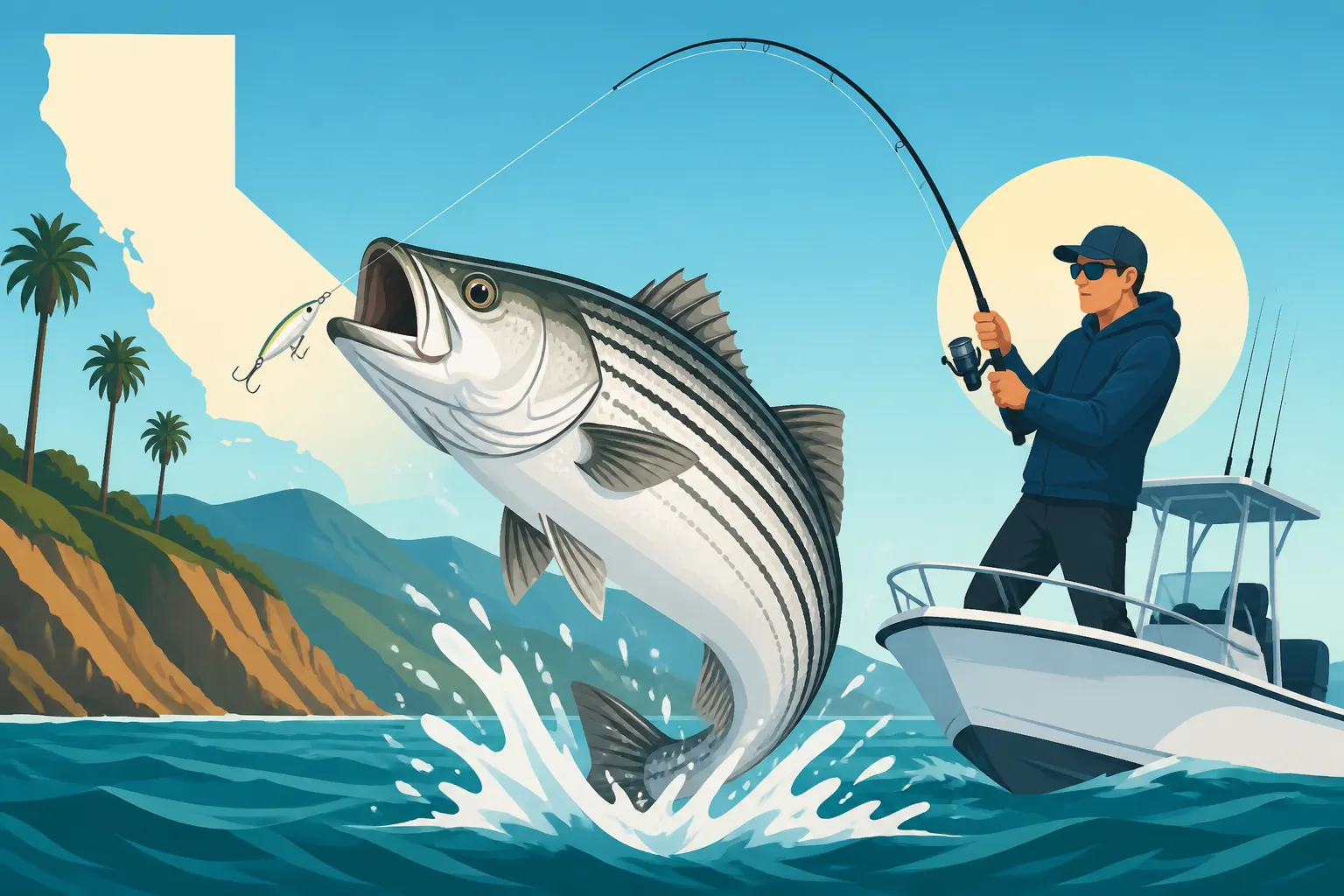
Striped bass are easily recognizable by their elongated bodies and, of course, the distinct horizontal dark stripes running along their silver-flanked sides. They possess a large mouth and a powerful tail fin, built for speed and fighting prowess. In California, they can grow quite large, with trophy fish exceeding 40 pounds, though most catches tend to be in the 5 to 20-pound range. Their average lifespan can be over 20 years in ideal conditions, allowing them to reach impressive sizes.
Their life cycle is fascinating and directly impacts how and when we fish for them. Stripers mature relatively slowly, taking several years before they're ready to spawn. Once mature, they undertake annual migrations from their ocean or bay feeding grounds into the freshwater rivers of the Delta system, typically in late spring and early summer. Here, they broadcast their eggs and milt in swift-moving currents, relying on the flow to keep the eggs suspended until hatching. After spawning, many of these "post-spawn" fish return to the bay and ocean to feed heavily and regain strength. Juveniles spend their first few years primarily in the brackish waters of the Delta and bays, growing quickly on abundant baitfish before joining the adult migrations. Understanding this cycle is crucial for knowing when and where to target them, as their behavior shifts dramatically from pre-spawn gorging to post-spawn recovery.
Where Striped Bass Call Home in California
In California, striped bass primarily inhabit two distinct, yet interconnected, environments: the vast estuarine system of the Sacramento-San Joaquin River Delta and the San Francisco Bay, and the coastal surf zones and nearshore ocean waters. Each habitat presents unique challenges and opportunities for anglers.
The Delta is arguably the heart of California's striped bass fishery. This intricate network of rivers, sloughs, and channels, covering over 1,000 miles of waterways, serves as the primary spawning ground and a crucial nursery area. From the deep shipping channels near Pittsburg to the shallower tule-lined sloughs of the central Delta, stripers can be found throughout, especially during their spawning runs. Key areas include the San Joaquin River, the Sacramento River, and various connecting sloughs like Franks Tract and Mildred Island. For a deeper dive into this incredible fishery, check out our guide on the California Delta Fishing Guide.
Beyond the Delta, the San Francisco Bay offers exceptional year-round opportunities. Stripers congregate in areas with strong current, structure, and baitfish, such as the Carquinez Strait, San Pablo Bay, and the vast expanse of the central San Francisco Bay. They'll hug structure like bridge pilings, rocky outcroppings, and submerged wrecks. Further south, coastal beaches and estuaries become prime targets, especially during fall when baitfish are abundant and stripers move closer to shore to feed. Places like Ocean Beach in San Francisco, various beaches in Marin and Sonoma counties, and even some Southern California beaches can hold stripers, though they are less concentrated the further south you go.
Essential Gear for Striped Bass Success
Equipping yourself properly is half the battle when targeting striped bass. These fish are powerful, and under-gunning yourself can lead to frustration and lost fish. Having the right rod, reel, line, and terminal tackle is crucial for both success and enjoyment.
Rods and Reels: Matching Your Target
Choosing the right rod and reel combination for striped bass depends largely on where and how you plan to fish. For most situations, you're going to want something robust that can handle a strong, surging fish.
If you're casting lures or soaking bait in the Delta or from a boat in the Bay, a medium-heavy to heavy action spinning or baitcasting rod, typically 7 to 9 feet long, is a solid choice. This length provides good casting distance for lures and enough leverage to control a fighting fish. Popular brands like Daiwa and Penn offer excellent saltwater-grade options that stand up to the abuse. For reels, a 4000 to 6000 series spinning reel or a conventional reel with a strong drag system and high line capacity is ideal. You'll want a smooth drag that can handle long runs without seizing up. When considering a new setup, it's worth checking out options on Amazon, as they often have a wide range of models and reviews to help you decide.
For surf fishing, where longer casts are paramount, a dedicated surf rod ranging from 9 to 12 feet, with a medium-heavy to heavy action, is almost a necessity. These longer rods allow you to launch heavier baits and lures beyond the breaking waves and into the striper's feeding zone. Pair this with a robust 6000 to 8000 series spinning reel designed for saltwater use, capable of holding hundreds of yards of braided line. The extra length also helps keep your line above the incoming surf, reducing drag and making it easier to detect bites.
Line Choices: Strength and Sensitivity
Your fishing line is the critical link between you and the fish, and for stripers, you need something reliable. The two main choices are braided line and monofilament, each with its own advantages.
Braided line is incredibly popular for striped bass fishing, and for good reason. Its main benefits include exceptional strength-to-diameter ratio, allowing you to use a thinner line with higher breaking strength, which translates to more line capacity on your reel and less water resistance. More importantly, braid has virtually no stretch, providing unparalleled sensitivity. You'll feel every subtle bump, tick, and even a fish breathing on your bait. This sensitivity is a game-changer when stripers are being finicky or when fishing in strong currents. For most striper applications, a 30 to 50-pound test braided line is a good starting point. However, because braid is highly visible to fish, it's almost always recommended to tie on a fluorocarbon leader. A 20 to 40-pound test fluorocarbon leader, 3 to 6 feet long, offers invisibility in the water and excellent abrasion resistance against rough structure or a striper's powerful jaws.
Monofilament line still has its place, especially for bait fishing where some stretch can be beneficial to absorb sudden strikes without breaking off. Its lower cost and ease of tying knots are also advantages. For mono, a 15 to 25-pound test is typically sufficient. However, its higher diameter for a given breaking strength means less line on your spool, and its stretch can reduce sensitivity, making it harder to detect light bites. Many anglers opt for a braided mainline with a fluorocarbon leader for maximum versatility and performance, combining the best attributes of both.
Terminal Tackle: Hooks, Weights, and Swivels
The small, yet vital, components at the end of your line can make all the difference. Having the right hooks, weights, and swivels is non-negotiable for consistent striper success.
When it comes to hooks, a sharp, strong hook is paramount. Stripers have tough mouths, and a dull hook will often just bounce off. Circle hooks are highly recommended, especially when bait fishing, as they significantly reduce gut-hooking, improving the survival rate of released fish. Sizes typically range from 3/0 to 7/0, depending on the bait size and target fish. J-hooks are also used, particularly with artificial lures, and often range from 2/0 to 5/0. Ensure your hooks are made from high-quality, corrosion-resistant steel, as saltwater environments are harsh.
Weights are essential for getting your bait or lure to the desired depth and holding it in current. Pyramids, sinkers, and egg sinkers are common. For bait fishing in the Delta or strong currents, you might need heavy weights, from 1 ounce up to 8 ounces or more, to keep your offering on the bottom. In calmer waters or when casting lures, lighter weights are sufficient. Always carry an assortment of sizes to adapt to changing conditions. Swivels, specifically barrel swivels or ball bearing swivels, are crucial for preventing line twist, especially when using live bait that spins or lures that wobble. Use appropriately sized swivels that match your line and leader strength. A snap swivel at the end of your leader can also make changing lures much quicker and easier.
Top Baits and Lures for California Stripers
Striped bass are opportunistic feeders, willing to strike a wide variety of offerings. However, certain baits and lures consistently outperform others in California's diverse waters. Knowing what to throw and when can significantly increase your catch rate.
Natural Baits: The Irresistible Offerings
When stripers are in a feeding mood, especially in the Delta or bay, natural baits are often irresistible. Live bait is frequently the most effective, mimicking the natural prey fish that stripers feed on.
Live Baits:
- Shiners: Live shiners, particularly "Delta shiners," are a classic striper bait in the Sacramento-San Joaquin Delta. They are typically fished on a Carolina rig or under a bobber in current. The frantic action of a live shiner is often too much for a hungry striper to resist. Anglers often fish them near submerged structure or current breaks.
- Anchovies and Sardines: In the bay and nearshore ocean environments, live anchovies and sardines are prime baits. They are often "fly-lined" (fished with minimal or no weight) to allow them to swim naturally, or slow trolled. Their oily profile and erratic movements are a powerful attractant. Many party boats provide live bait, but if you’re on a private boat, you might need a bait receiver to keep them lively.
- Worms and Cut Bait: While live bait is king, cut bait can also be highly effective, especially when stripers are scavenging or when you want to avoid the hassle of keeping bait alive. Mackerel, anchovies, or sardines cut into chunks emit a strong scent trail that can draw in stripers from a distance. Pile worms and bloodworms, though less common for larger stripers, can be effective for smaller fish in certain areas. These are often fished on a simple bottom rig. For more details on what natural offerings work best, check out our guide on the Best Bait for California Striped Bass.
Artificial Lures: Mimicking Prey
Artificial lures offer versatility and the ability to cover vast amounts of water, making them ideal for aggressive, actively feeding stripers. Carrying a diverse selection is key.
- Swimbaits: Soft plastic swimbaits, rigged on a lead head, are incredibly effective in both fresh and saltwater. Brands like Keitech, Basstrix, and Hogy produce realistic paddle-tail swimbaits that perfectly imitate baitfish. Colors like chartreuse, white, pearl, and natural baitfish patterns are go-tos. Fish them with a steady retrieve, occasional pauses, or subtle jigging actions. They're particularly potent in the Delta sloughs and along bay shorelines.
- Hard Baits (Plugs and Crankbaits): Diving plugs and lipless crankbaits excel when stripers are actively chasing bait near the surface or suspended. Rapala, Yo-Zuri, and Lucky Craft offer various models, from shallow divers to deep-diving lures that can reach stripers holding in deeper channels. Trolling these plugs can be a deadly tactic, especially in the Delta, while casting and retrieving them along riprap or points in the bay can elicit explosive strikes.
- Jigs: Bucktail jigs are a timeless classic for stripers. Their erratic, jigging motion and pulsating hair imitate fleeing baitfish or crustaceans. White, chartreuse, and olive are popular colors. Pair them with a soft plastic trailer for added bulk and action. Cast them out and work them back with a lift-and-drop retrieve, or jig them vertically beneath the boat. Grub-style jigs, like those from Berkley Gulp!, also work wonders due to their scent and action.
- Spoons: Metal spoons, especially those with a fluttering action, can imitate injured baitfish. Kastmaster and Krocodile spoons are famous examples. They cast a mile and can be worked effectively with a straight retrieve or a jigging motion. They are particularly good for surf fishing or when stripers are feeding on small baitfish in open water.
Specialty Rigs and Presentations
Beyond just the bait or lure itself, how you present it can be crucial. Adapt your rig to the environment and the fish's mood.
| Rig Type | Primary Use | Key Components | Advantages | Disadvantages |
|---|---|---|---|---|
| Carolina Rig | Live bait, cut bait on the bottom | Sliding egg sinker, bead, swivel, leader, hook | Natural bait presentation, good sensitivity | Can snag easily in heavy cover |
| Drop-Shot Rig | Live bait, soft plastics in current/structure | Hook tied directly to mainline, weight below | Excellent bait control, good for vertical fishing | More complex to tie, can twist |
| Three-Way Swivel | Trolling live bait or lures, covering depth | Three-way swivel, leader to weight, leader to bait | Versatile for varying depths and current | Can be bulky, more snag potential |
| Fishfinder Rig | Surf fishing, bait fishing from shore/boat | Sliding sinker, clip, leader, hook | Allows fish to take bait without feeling weight | Can be less sensitive to light bites |
| Fly-Lining | Live bait, light tackle, surface presentation | No weight, just hook and leader | Most natural presentation, exciting surface strikes | Limited casting distance, only for live bait |
The Carolina Rig is a staple for bait fishing in the Delta. It allows your bait to move somewhat freely while the weight keeps it near the bottom. The sliding egg sinker (1/2 to 3 ounces, depending on current) slides freely on the main line, followed by a small bead to protect the knot, and then a swivel. A fluorocarbon leader (2-4 feet) is tied to the swivel, ending with a circle hook.
For surf fishing, the Fishfinder Rig is king. A pyramid or surf sinker slides on the main line, followed by a swivel, and then a leader (18-36 inches) with a strong J-hook or circle hook. This setup allows the sinker to hold bottom in the waves while the bait moves naturally in the current, and a biting fish can pull line without immediate resistance. When fishing in strong currents or when stripers are holding in specific depth ranges, a three-way swivel rig can be highly effective for trolling or drifting. One eye of the swivel goes to your main line, another to a short leader with a weight, and the third to a longer leader with your bait or lure. This keeps your offering at a consistent depth.
Prime Locations and Seasons for Striped Bass Fishing
Knowing where and when to find striped bass is arguably the most critical piece of the puzzle. Their movements are highly seasonal and influenced by spawning cycles, baitfish availability, and water conditions.
The Legendary California Delta
The Sacramento-San Joaquin River Delta is the undisputed epicenter of California's striped bass fishery. This immense freshwater-saltwater interface offers unparalleled opportunities, but its vastness can be intimidating.
-
Key Delta Hotspots: The San Joaquin River and Sacramento River are primary thoroughfares for migrating stripers. Look for confluences, bends, and areas with submerged structure like old pilings, rock piles, or sunken barges. Franks Tract, a sprawling flooded island, is famous for its abundant baitfish and resident stripers, particularly effective for trolling or casting swimbaits. Mildred Island and Whiskey Slough are other productive areas known for holding fish during different parts of the season. Strong current breaks, such as those found around bridge abutments or islands, are always worth investigating, as stripers often wait in ambush there. The deeper channels, like the main shipping lanes, can hold massive schools, especially during cooler months. For a more detailed look, consult a specific guide like the one on how to Fish the California Delta for Stripers.
-
Delta Fishing Strategies: During the spring spawn (April-June), stripers move upriver. Trolling with large plugs (like Bombers, Yo-Zuris, or P-Line Laser Minnows) in the main channels and sloughs is a popular and effective method. During this time, they are concentrated and actively feeding. As summer progresses and water temperatures rise, fish may spread out, seeking cooler, deeper water or retreating to the San Francisco Bay. Fall brings another strong bite as stripers gorge on baitfish before winter. Bait fishing with live shiners or fresh cut bait on a Carolina rig near current breaks is consistently productive throughout the year in the Delta. The key here is mobility, covering water until you locate active fish.
Bay and Estuary Hotspots
The San Francisco Bay and its connecting estuaries provide phenomenal striper fishing, often year-round, as stripers cycle between the ocean, the bay, and the Delta.
- San Francisco Bay System: Carquinez Strait is a renowned hotspot due to its powerful currents and abundant baitfish, particularly during tidal changes. Fishing from shore, piers, or boats here can be excellent. The San Pablo Bay area, with its shallower, often turbid waters, holds large numbers of stripers, especially in the spring and fall. Trolling with plugs or casting swimbaits and jigs are popular methods. The central San Francisco Bay, near Alcatraz, Angel Island, and along the Oakland and San Francisco waterfronts, holds deep water and structure that attracts stripers. Fishing around bridge pilings (Golden Gate, Bay Bridge, San Mateo Bridge) during moving tides is a common strategy.
- Other California Bays: Smaller bays and estuaries along the coast, though less famous for stripers than San Francisco Bay, can still hold resident fish or migrating schools. For example, some stripers can be found in areas of Monterey Bay, particularly around river mouths, though not in the same abundance. Fishing piers can offer accessible options, and you often don't need a license to fish from a public pier in California. Learn more about the specific rules in our guide on Fishing from a Pier in California: Rules.
Surf and Nearshore Opportunities
Chasing stripers in the crashing waves of California's coastline is a unique and exhilarating experience, demanding different techniques and a keen understanding of the tides and surf.
- Prime Surf Zones: Long, sandy beaches with consistent wave action, especially those near river mouths or estuaries, are prime candidates. Ocean Beach in San Francisco is legendary for its surf perch and occasional large stripers. Beaches along the Marin and Sonoma coastlines, such as Stinson Beach or Salmon Creek Beach, also see seasonal runs of stripers, particularly in the fall. These fish move close to shore to feed on baitfish pushed by waves or to intercept migrating schools.
- Best Seasons for Surf Stripers: While stripers can be caught in the surf year-round, the fall (September-November) is often considered the prime time. During these months, large schools of anchovies, sardines, and other baitfish migrate along the coast, creating a feeding frenzy that draws stripers into the shallows. Spring can also be productive as fish move into estuaries. Success in the surf often hinges on understanding the best tides, typically the incoming or outgoing tide around dawn and dusk. For a general overview of seasonal patterns, check out the California Fishing Seasons: Month-by-Month Guide.
- Reading the Beach: Look for "holes," "gutters," and "rip currents" – areas where water is deeper or moving faster than surrounding areas, as these are natural highways and ambush points for stripers. Understanding the nuances of these locations is crucial for effective surf fishing.
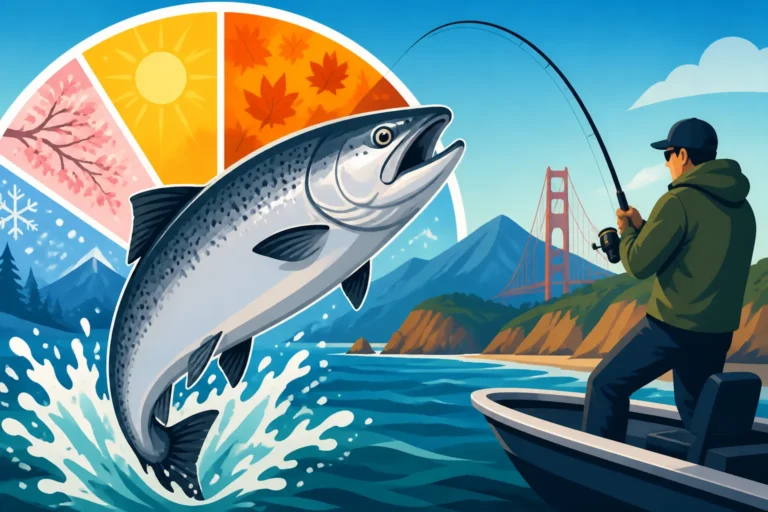
Seasonal Patterns and Movements
Understanding the seasonal migration and feeding patterns of California stripers is paramount for consistent success. They are constantly on the move, driven by spawning instincts, water temperature, and food availability.
| Season | Typical Location | Primary Activity | Recommended Tactics |
|---|---|---|---|
| Spring | Delta rivers, upper bays, river mouths | Pre-spawn feeding, spawning migration | Trolling plugs, live shiners, casting swimbaits |
| Summer | San Francisco Bay, deeper Delta channels | Post-spawn recovery, heavy feeding | Live anchovies/sardines, jigging, trolling |
| Fall | Coastal surf, San Francisco Bay, Delta | Intense feeding, preparation for winter migration | Surf casting lures, live bait, trolling, jigging |
| Winter | Deeper parts of Delta, San Francisco Bay | Slower feeding, holding in warmer, deeper water | Vertical jigging, soaking cut bait, slow trolling |
Spring (March-June): This is prime time for the spawning run. Stripers move en masse from the Bay into the freshwater rivers of the Delta. They are often aggressive as they bulk up for the spawn. This is when trolling large plugs in the main channels or bait fishing with live shiners in tributaries can be exceptionally productive. Check for specific details in our guide on California Fishing in Spring.
Summer (July-August): After the spawn, many stripers retreat to the cooler, more saline waters of the San Francisco Bay to recuperate and feed heavily on abundant baitfish. Some remain in the Delta, seeking deeper, cooler pockets. Live baiting with anchovies or sardines in the Bay, or jigging deep in the Delta, can be effective.
Fall (September-November): This is arguably the best time for sheer action across multiple venues. Stripers are in a heavy feeding mode, gorging themselves before winter. They move into coastal surf zones to chase baitfish, providing incredible surf fishing opportunities. The Bay also lights up with active feeders, and the Delta offers a strong fall run. Look for schools of stripers crashing bait on the surface in both the Bay and Delta. For more, see California Fishing in Fall.
Winter (December-February): Striper activity generally slows down as water temperatures drop. Many fish move into deeper, more stable waters in the Delta and Bay, becoming less active. However, dedicated anglers can still find success by slowing down their presentations, using cut bait, or vertical jigging. While less consistent, winter can sometimes produce some of the largest fish if you know where to find them. Refer to our guide on California Fishing in Winter for more specific strategies.
Effective Techniques for Landing Striped Bass
Having the right gear and knowing where to go are just the start; applying effective techniques is how you truly connect with these powerful fish. Striped bass respond to a variety of presentations, and mastering a few key methods will put more fish in your net.
Bait Fishing Strategies
Bait fishing is often the most consistent way to catch striped bass, especially when they are lethargic or concentrated in deeper water. The key is to present your bait naturally and efficiently.
- Soaking Cut Bait: This is a classic method, particularly effective in the Delta and Bay. Use fresh cut bait like mackerel, sardines, or anchovies. A Carolina rig or a simple bottom rig with a sliding sinker allows the scent to disperse and the bait to sit on the bottom where stripers often cruise. Cast your bait out, put your rod in a sturdy holder, and wait for the tell-tale thud or steady pull. Use circle hooks to prevent deep hooking. Vary your cast distances and depths if fishing from shore or a pier until you find the strike zone.
- Live Bait Presentations: When using live shiners in the Delta or live anchovies/sardines in the Bay, the goal is to keep the bait lively and natural.
- Carolina Rig (Delta): For live shiners, a Carolina rig is excellent. The shiner can swim freely, attracting attention, while the weight keeps it in the productive zone near the bottom. Hook the shiner lightly through the lips or dorsal fin to allow maximum movement.
- Fly-Lining (Bay/Ocean): With live anchovies or sardines, particularly from a boat, fly-lining is deadly. This involves simply hooking the baitfish (often through the nose or eye socket) and casting it out with no weight, allowing it to swim naturally. The lighter line and fluorocarbon leader make it nearly invisible. Watch your line for any sudden movement or pause that indicates a strike. This technique is especially effective when stripers are actively feeding on the surface or near the top of the water column.
- Drifting Baits: From a boat, drifting with the current, presenting live bait or cut bait, can cover a lot of water and put your bait in front of many fish. Use just enough weight to keep your bait near the desired depth, allowing it to tumble and drift naturally with the flow. This is a common tactic in areas with strong current, like the Carquinez Strait or major Delta channels.
Casting and Retrieving Artificials
Artificial lures allow for aggressive fishing, covering ground, and targeting active, chasing stripers. The retrieve is just as important as the lure itself.
- Swimbait Techniques: Soft plastic swimbaits are incredibly versatile.
- Steady Retrieve: A simple, steady retrieve often works wonders, mimicking a cruising baitfish. Vary the speed until you find what the stripers prefer.
- Bounce and Glide: For fish holding near the bottom or structure, cast out, let the swimbait sink, then retrieve with a lift-and-drop motion, letting it "bounce" along the bottom, simulating an injured baitfish.
- Burning and Killing: Sometimes, a fast, erratic retrieve ("burning") followed by a sudden pause ("kill") can trigger a reaction strike from otherwise hesitant fish. This mimics a fleeing baitfish suddenly stopping. This can be very effective in the Delta when stripers are busting bait on the surface.
- Jigging and Popping:
- Vertical Jigging: From a boat over deep water or structure, vertical jigging with bucktail jigs or heavy spoons can be deadly. Drop the jig to the desired depth and work it with sharp lifts and drops, varying the cadence until you find what entices a strike. This is particularly effective in the cooler months when stripers are holding deep.
- Casting Jigs: Cast bucktail or grub jigs out and work them back with a classic lift-and-drop retrieve, letting them hit the bottom between hops. This is great for covering flats or fishing around submerged structure.
- Topwater Popping: When stripers are actively busting bait on the surface (a truly exciting sight!), throwing topwater lures like poppers or walk-the-dog baits can result in explosive strikes. Work these lures with an erratic retrieve, creating splashes and commotion that mimic fleeing baitfish. This is a highly visual and adrenaline-pumping way to catch stripers.
Trolling for Trophy Stripers
Trolling is a highly effective method for covering large areas of water and presenting lures or baits at a consistent depth, often leading to bigger fish. It's particularly popular in the Delta and parts of the San Francisco Bay.
- Plug Trolling: This is a hallmark technique in the Delta. Use diving plugs (e.g., Bomber Long A, Yo-Zuri Crystal Minnow, P-Line Laser Minnow) that dive to specific depths. The key is to match the plug's running depth to where the stripers are holding, often using a fish finder to locate schools. Troll at slow speeds (2-4 mph), often running multiple rods with different plugs or depths to find the productive zone. Using a rod holder is essential, and watching your rod tips for the characteristic bend and thud of a striper strike is part of the thrill. Vary your speed and make turns to change the lure's action and potentially trigger a bite.
- Live Bait Trolling: In the San Francisco Bay, slow trolling live anchovies or sardines can be exceptionally productive. This is often done with minimal weight or a very light sinker to keep the bait swimming naturally. The idea is to cover ground while letting your lively bait do the work of attracting stripers. Pay attention to structure, current breaks, and areas where baitfish are congregating.
- Gear for Trolling: When trolling, specialized trolling rods with a softer tip but strong backbone are ideal. Use line counters on your reels to accurately replicate successful depths. For managing multiple lines, outriggers or planer boards can be used to spread your lines and avoid tangles, though many anglers simply fan out their rods from the stern. Remember to always keep an eye on your fish finder for schools of bait and stripers, adjusting your depth and speed accordingly.
Surf Fishing: Reading the Waves
Surf fishing for stripers is a distinct challenge that requires specialized knowledge of the ocean environment.
- Identifying Structure: The beach might look uniform, but beneath the waves are subtle changes that attract stripers. Look for:
- Holes and Gutters: Deeper areas between sandbars where water collects and baitfish seek refuge. These are natural ambush points.
- Rip Currents: Outgoing currents that form channels where baitfish get swept out to sea, and stripers wait to intercept them.
- Sloughs and Depressions: Subtle dips in the beach profile where water drains and bait congregates.
- Casting Techniques: Long, powerful casts are often necessary to reach the outer sandbars or deeper gutters where stripers feed. Practice your distance casting. Often, a "high-stick" cast or a pendulum cast is used with long surf rods to maximize distance.
- Bait and Lure Choices for Surf:
- Cut Bait: Whole or cut anchovies, sardines, or pieces of Gulp! Sandworm fished on a Fishfinder rig are highly effective.
- Metal Lures: Heavy spoons like the Kastmaster or Krocodile are excellent for casting distance and imitating fleeing baitfish.
- Soft Plastics: Large swimbaits or grub tails on heavy jig heads can also work, especially when retrieved slowly along the bottom or through a gutter.
- Tides and Conditions: The incoming and outgoing tides are generally the most productive. The moving water brings bait closer to shore and makes stripers more active. Fish around dawn and dusk, which are prime feeding times. Choppy water and slightly cloudy conditions can often be better than flat, clear water, as the reduced visibility makes stripers feel more comfortable hunting in the shallows.
Reading the Water and Understanding Striper Behavior
Catching striped bass consistently isn't just about casting a line; it's about understanding their world. Learning to read the water and anticipate their behavior is what separates a lucky angler from a successful one.
Tides and Currents: The Striper's Highway
More than almost any other factor in saltwater and brackish environments, tides and currents dictate where and when striped bass feed. They are lazy predators, preferring to let the current bring food to them or use it to ambush unsuspecting prey.
- Incoming Tide: As the tide rises, it brings in cooler, cleaner, more oxygenated water and often pushes baitfish into bays, estuaries, and upriver. This is often an excellent time to fish, especially during the latter half of the incoming tide, as stripers move into shallower areas to feed. In the surf, the pushing water can stir up invertebrates and disorient baitfish, creating feeding opportunities.
- Outgoing Tide: As the tide falls, it flushes baitfish out of shallow feeding grounds, river mouths, and sloughs into deeper channels. Stripers will often stage at the mouths of these areas, waiting to ambush bait as it exits. The first few hours of the outgoing tide can be particularly productive. In the Delta, strong outgoing currents can be highly effective for drifting baits or trolling plugs through deeper channels.
- Slack Tide: This is the period of minimal current flow between high and low tide. Often, fishing slows considerably during slack tide, as the lack of movement means less baitfish activity and less opportunity for stripers to ambush. However, there can be brief windows of feeding activity right at the beginning or end of slack. Many anglers use slack tide to move to new spots or take a break.
- Current Breaks: Regardless of the tide, look for current breaks – areas where the water flow changes. This could be behind a rock, a submerged log, a bridge piling, or an eddy where water swirls. Stripers will often sit in these calmer areas, expending less energy, waiting for baitfish to be swept past them in the main current. Casting your lure or bait into the main current and letting it drift into the current break is a highly effective tactic.
Structure and Cover: Ambush Points
Striped bass are ambush predators, and they use structure and cover to their advantage. Learning to identify these spots, both visible and submerged, is crucial.
- Man-Made Structures:
- Bridge Pilings: Major bridges in the Bay (e.g., Bay Bridge, Carquinez Bridge) have massive pilings that create significant current breaks and eddies, attracting baitfish and providing prime ambush points for stripers. Fish around these structures, especially on the current-facing side.
- Docks and Piers: These structures provide shade, cover, and often attract baitfish. Casting under and around docks, especially at night or during low light, can be productive. Remember that the California Pier Fishing License Rules often apply here.
- Submerged Wrecks and Debris: Old boats, sunken cars, or other debris in the Delta and Bay provide complex habitats that hold both baitfish and stripers. A good fish finder can help you locate these hidden gems.
- Natural Structures:
- Rock Piles and Reefs: Rocky areas along coastlines, in the Bay, or even riprap along Delta channels provide excellent habitat. These areas often hold crustaceans and smaller fish, drawing in stripers.
- Tule Banks and Weed Lines (Delta): In the Delta, dense tule reeds and submerged weed beds offer excellent cover for baitfish and stripers alike. Look for breaks or edges in these weed lines where stripers might patrol.
- Deep Channels and Ledges: Stripers will use the edges of deep channels or sudden depth changes (ledges) as highways and ambush points, particularly in the Bay and Delta. These are excellent areas for trolling or vertical jigging.
- Identifying Baitfish Concentrations: Where there are baitfish, there are usually stripers. Look for nervous bait, diving birds, or surface boils where stripers are actively crashing bait. A fish finder is invaluable for locating schools of bait underwater.
Forage and Feeding Patterns
Understanding what stripers are eating and how they're feeding will help you choose the right bait or lure and present it effectively.
- Primary Forage: In California, common striper prey includes:
- Anchovies and Sardines: Abundant in the Bay and ocean, especially during warmer months. When these are present, match the hatch with similarly sized lures or use the live bait itself.
- Shiners and Smelt: Prevalent in the Delta and brackish water.
- Threadfin Shad: Another important baitfish in reservoirs and some Delta areas.
- Crabs, Shrimp, and Worms: Stripers will also feed on bottom-dwelling crustaceans and invertebrates, especially in estuaries and the surf zone. This is why cut bait or scented soft plastics can be effective.
- Active vs. Passive Feeding:
- Active Feeding: When stripers are actively chasing bait, often indicated by surface boils, crashing birds, or fast retrieves eliciting strikes, use lures that mimic fleeing baitfish – fast-retrieved swimbaits, topwater plugs, or quick jigging actions. This is often driven by strong tides or specific seasonal movements.
- Passive Feeding: When stripers are less active (e.g., during slack tide, cold weather, or post-spawn recovery), they might be more inclined to take a slow-moving or stationary bait. This is when soaking cut bait on a bottom rig or slow-drifting live bait becomes more effective. They are still hungry, just less inclined to exert energy.
- Time of Day and Light Conditions: Stripers are often most active during low-light conditions – dawn, dusk, and overcast days. They also have excellent night vision and can be successfully targeted after dark, especially in the Bay or from lighted piers, when they move into shallower water to feed under the cover of darkness. This means adapting your approach based on the light, using darker or brighter lures depending on visibility.
California Striped Bass Regulations and Conservation
Fishing for striped bass in California comes with a responsibility to understand and adhere to the regulations set forth by the California Department of Fish and Wildlife (CDFW). These rules are in place to ensure a healthy and sustainable fishery for future generations. Ignoring them can lead to hefty fines and penalties.
Understanding the Current Regulations
California's fishing regulations are dynamic and can change seasonally or annually based on scientific assessments of fish populations. It is your responsibility as an angler to always consult the most current California Freshwater Fishing Regulations booklet or the CDFW website before heading out.
- License Requirements: Almost universally, you will need a valid California fishing license to fish for striped bass, whether in freshwater (like the Delta rivers) or saltwater (like the Bay or ocean). There are some exceptions, such as fishing from a public pier, but always verify. If you haven't renewed yours recently, or are looking to get one, check out our guide on the California Fishing License Guide.
- Bag and Size Limits: Striped bass have specific bag limits (how many fish you can keep) and size limits (the minimum and sometimes maximum size of fish you can retain). These limits can vary based on species and sometimes even location. For striped bass, there is a minimum size limit to protect juvenile fish and allow them to spawn at least once. There is also a specific daily bag limit. Violating these can lead to penalties. You can find detailed information in our article on California Striped Bass Bag Limit Explained.
- Gear Restrictions: Certain gear restrictions may apply. For instance, specific bait types might be prohibited in certain areas, or certain hook types (like treble hooks on specific lures) might be restricted in certain fisheries. Always double-check.
- Report Card Requirements: While not directly for striped bass, other anadromous species like salmon or sturgeon require a specific report card in addition to your fishing license. While not for stripers, it's a good example of how specific regulations can get, and understanding these can be found in our California Fishing Report Cards Explained guide.
Catch and Release Best Practices
Many anglers, especially those targeting larger trophy stripers, practice catch and release to help conserve the fishery. If you plan to release fish, doing so responsibly is critical for their survival.
- Minimize Handling: Reduce the amount of time the fish is out of the water. Handle the fish gently with wet hands or a wet towel to protect its slime coat, which is vital for disease prevention. Avoid touching the gills or eyes.
- Proper Hook Removal: Use a de-hooking tool or needle-nose pliers to remove hooks quickly and efficiently. If a fish is deeply gut-hooked and you can't remove the hook without causing significant damage, it's often best to cut the line as close to the hook as possible, as studies show many fish can survive with a hook left in. Circle hooks, as mentioned earlier, greatly reduce the incidence of gut-hooking.
- Revive the Fish: If the fish appears stressed or sluggish, cradle it gently in the water, facing into the current. Move it back and forth slightly to push water over its gills until it regains strength and swims away on its own power. Don't just toss it back; ensure it's strong enough to survive.
- Avoid "Hero Shots": While it's tempting to get a photo of your catch, prioritize the fish's health. If you must take a photo, do it quickly and with the fish held horizontally, supporting its belly, not hanging vertically by the jaw.
Protecting the Future of Striped Bass
Conservation is a collective effort. Every angler plays a role in ensuring that California's striped bass fishery remains robust for future generations.
- Adhere to Regulations: This is the absolute baseline. Understand and respect all bag limits, size limits, and seasonal closures. These aren't arbitrary rules; they are scientifically determined to protect fish populations. Familiarize yourself with the California Fishing Regulations Explained to ensure you're always compliant.
- Report Violations: If you witness illegal fishing activity, such as exceeding bag limits or fishing in closed areas, report it to the CDFW. Protecting the resource benefits everyone.
- Support Conservation Efforts: Consider joining or supporting organizations dedicated to habitat restoration, water quality improvement, and sustainable fisheries management in California. The health of the Delta and Bay systems directly impacts the health of the striped bass population.
- Educate Others: Share your knowledge of responsible angling practices and the importance of conservation with fellow anglers, especially newer generations. Lead by example on the water. By taking these steps, you not only increase your own chances of success but also contribute to the long-term vitality of this amazing fishery.
Disclaimer
The information provided in this guide is for general informational purposes only and is subject to change. Fishing regulations in California are complex and frequently updated. Always consult the latest official California Department of Fish and Wildlife (CDFW) regulations, guides, and emergency closures before engaging in any fishing activity. The author and publisher are not responsible for any actions taken based on the information provided herein. Fishing involves inherent risks; always prioritize safety.