Best Season for Steelhead in California
There's nothing quite like the thrill of chasing steelhead in California, but let's be honest, figuring out the best time to hit the rivers can feel like cracking a secret code. Many anglers get frustrated, spending countless hours on the water during off-peak seasons, wondering why they're not getting any bites. This comprehensive guide is here to cut through the confusion, revealing the optimal seasons, regions, and techniques to increase your chances of hooking into these elusive, chrome-bright beauties.
Understanding California Steelhead Runs
Steelhead, those magnificent anadromous rainbow trout, present a unique challenge and reward to anglers in California. Unlike their resident cousins that live their entire lives in freshwater, steelhead embark on incredible journeys, migrating from freshwater streams to the ocean to grow large and robust, only to return to their natal rivers to spawn. This remarkable life cycle dictates when and where you'll find them, and understanding these "runs" is key to successful fishing.
Anadromous Nature and Life Cycle
Imagine a fish born in a crystal-clear Sierra stream, spending its early years dodging predators and growing strong. Then, driven by instinct, it transforms, adapts to saltwater, and descends to the vast Pacific Ocean. This is the steelhead's anadromous journey. After one to four years in the ocean, where they pack on incredible size and strength, they return to the same freshwater rivers where they were born. These return migrations, or "runs," typically occur during specific times of the year, driven by factors like water temperature, flow, and day length. When they enter the river system, they stop feeding actively and focus solely on reproduction, making them a challenging, yet highly prized, catch. You can delve deeper into the intricacies of these migrations in our guide on California Steelhead Run Timing.
Factors Influencing Run Timing
Several critical environmental factors dictate when steelhead decide to make their grand entrance back into freshwater. The most significant are rainfall and water temperature. Generally, a good, sustained rain in the fall or early winter acts like a doorbell, signaling to the steelhead waiting at the river mouth that it's time to move upstream. These fresh pulses of water create higher flows, which help them navigate obstacles, mask their presence from predators, and open up spawning grounds.
However, too much rain can lead to blown-out, muddy rivers that are impossible to fish. Conversely, dry years mean lower flows and later, smaller runs, or sometimes no substantial run at all in certain rivers. Water temperature is another crucial variable; steelhead prefer cooler water, typically between 40-55°F (4-13°C), for their migration and spawning. If river temperatures are too warm, they'll hold back in cooler estuaries or the ocean until conditions improve. This delicate balance of flow and temperature is what makes predicting steelhead runs both exciting and, at times, frustratingly unpredictable. Monitoring local fishing reports and river gauges, readily available online, becomes an essential part of the steelheader's toolkit.
Seasonal Breakdown: Prime Steelhead Fishing Months
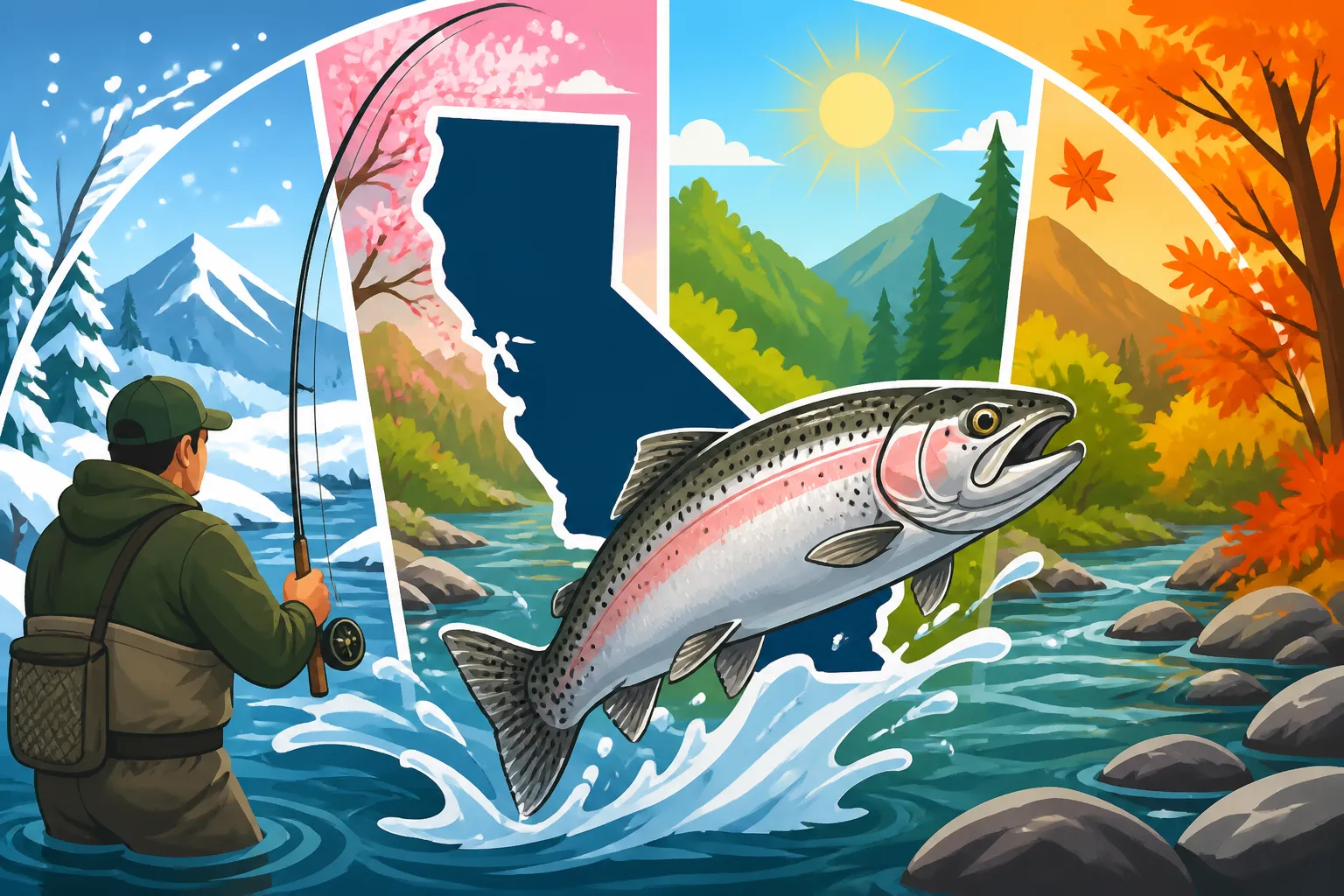
While California offers year-round fishing opportunities for various species, the pursuit of steelhead narrows down to very specific windows. The best season for steelhead in California isn't a single month but rather a distinct period generally spanning from late fall through early spring, with winter being the absolute prime time for many of the state's best rivers.
Winter's Cold Water Opportunities
Winter is undeniably the marquee season for steelhead fishing in California. As the crisp, cold air settles in and winter storms bring much-needed rain, rivers swell, and water temperatures drop into that ideal range. This is when the main push of adult steelhead begins their journey upstream. From December through March, the potential for hooking into a fresh, ocean-bright steelhead is at its peak across many of the state's prime steelhead rivers.
During these colder months, steelhead are typically concentrated in deeper pools, runs, and behind structure, seeking refuge from strong currents. They're often less aggressive than other species, requiring subtle presentations and meticulous drifts. Anglers often brave chilly temperatures, rain, and snow for the chance to connect with these powerful fish. While challenging, the reward of a hard-fighting winter steelhead, fresh from the ocean, is what keeps dedicated steelheaders coming back year after year. Remember, these are wild fish, and their runs can fluctuate greatly from year to year based on rainfall and ocean conditions, so always check current California Fishing Reports before heading out.
Spring Thaw and Active Fish
As winter transitions into spring, typically from late March through April, steelhead fishing can still be excellent, particularly for "post-spawn" or "kelts." These are fish that have already spawned and are now making their way back to the ocean to recuperate. While they might not be as bright or as robust as a fresh-run winter fish, they can be incredibly aggressive feeders as they try to regain strength. This period also sees the emergence of "half-pounders" – juvenile steelhead that have spent less than a year in the ocean before returning to the river. They offer fantastic light tackle action and are a great way to hone your skills.
The spring thaw also brings snowmelt in some systems, which can further boost river flows and keep temperatures cool. This can extend the steelhead season for some rivers well into May, especially in higher elevation systems or rivers fed by significant snowpack. However, as water temperatures steadily climb and flows begin to drop, the main adult steelhead run dwindles. By late spring, most adult steelhead have either returned to the ocean or perished after spawning.
Late Fall Preparations
While winter is prime, late fall, specifically November and early December, acts as the precursor to the main event. This is often when the first rains arrive, triggering the initial "early winter" or "fall-run" steelhead. These fish are typically the earliest spawners and can be incredibly eager to bite after their long ocean journey. The rivers aren't usually as crowded as they will be in the heart of winter, and the weather can be milder, offering a more comfortable fishing experience.
Furthermore, these early rains are crucial for cleaning out the rivers, washing away summer debris, and signaling to the fish offshore that conditions are becoming favorable for their upstream migration. Many dedicated steelhead anglers use this time to scout locations, test their gear, and make sure their wading boots are leak-free before the real onslaught of winter fishing begins. Having your gear ready, perhaps even stocking up on flies or lures from a reputable retailer like Amazon, can make all the difference when those first significant storms hit.
Here's a quick overview of general steelhead season timing in California:
| Season | Months | Primary Target | Conditions | Notes |
|---|---|---|---|---|
| Early Winter | December – January | Fresh-run adults | Cold, rising flows after rain | Peak of main winter runs, strong, aggressive fish. |
| Mid-Winter | February | Spawning adults | Stable cold flows, potential for snow | Fish are on redds; ethical angling is crucial. |
| Late Winter / Early Spring | March – April | Post-spawn kelts, half-pounders | Warming slightly, snowmelt, lower flows | Kelts are aggressive feeders; half-pounders are fun. |
| Late Fall | November – early December | Early-run adults | First rains, milder temps, often less crowded | Good for scouting, early opportunities. |
Regional Variations for Steelhead Fishing
California is a massive state with incredibly diverse geography, and that diversity means steelhead runs vary significantly from north to south, and even river to river. What holds true for a river in Humboldt County might be completely different for a stream in Santa Cruz. Understanding these regional nuances is paramount to successful steelhead fishing.
North Coast Steelhead Hotspots
When most anglers think of California steelhead, their minds immediately turn to the state's North Coast. Rivers like the Klamath River Fishing Guide, Eel River Fishing Guide, and Trinity River Fishing Guide are legendary for their strong runs of both wild and hatchery steelhead. These rivers benefit from consistent winter rainfall and extensive watersheds that provide ideal spawning and rearing habitat. The season here typically kicks off in earnest in December and can run strong through March, sometimes even into April depending on the specific river and snowpack.
The Klamath and Trinity Rivers are particularly notable, not just for their size, but also for their hatchery programs which supplement wild populations. This means more fishing opportunities, though adherence to California Fishing Regulations Explained for wild vs. hatchery fish (often distinguished by a clipped adipose fin) is crucial. Other fantastic rivers in this region include the Smith River, the Russian River, and numerous smaller coastal streams, each with its own character and best fishing windows. Anglers in these areas are often skilled in various techniques, from fly fishing to drift fishing with roe or plugs.
Central Coast and Southern California Opportunities
While the North Coast gets most of the steelhead glory, the Central Coast and, to a lesser extent, Southern California, still hold remnants of wild steelhead populations. Rivers such as the San Lorenzo River in Santa Cruz, Waddell Creek, and the Carmel River are known to see steelhead returns, albeit on a much smaller scale and with greater variability due to habitat loss and highly fluctuating rainfall patterns. The runs here are often heavily dependent on strong El Niño years or exceptional rain events that break through sandbars at river mouths and provide enough water for fish to migrate.
Fishing pressure is often lighter in these areas, and anglers typically focus on smaller, more intimate streams. The seasons can be shorter and more unpredictable, often starting later and ending earlier than on the North Coast. Southern California's steelhead populations are particularly vulnerable, often listed as endangered, making these fisheries primarily catch-and-release and requiring immense respect for the resource. Checking specific regulations for each stream is critical, as many are subject to special closures or gear restrictions to protect these fragile populations.
The Delta and its Tributaries
The vast Sacramento-San Joaquin River Delta and its numerous tributaries also support runs of steelhead, though they are often overshadowed by salmon and striped bass. The American River, Feather River, and Yuba River, all flowing into the Sacramento River and eventually the Delta, receive returns of hatchery-origin steelhead. These fisheries often see fish entering the system from late fall through early spring, similar to the North Coast, but their timing can be influenced by water releases from dams.
These rivers offer a different type of steelhead experience, often with larger, slower-moving water and more bank access. Anglers here might use a wider range of techniques, including drifting roe, beads, or small plugs, and various fly-fishing methods. Steelhead in these systems are often migrating longer distances and can be found in a variety of holding water. It's a great opportunity to chase steelhead without venturing all the way to the far North Coast, but again, always consult the California Freshwater Fishing Regulations as rules can vary greatly by river section and species.
Gear and Techniques for Steelhead Success
Chasing steelhead requires a specialized approach, as these fish are notorious for their challenging nature. They're powerful, wary, and often require precise presentations. Whether you're a seasoned fly angler or prefer conventional gear, having the right setup and understanding effective techniques will dramatically improve your chances.
Fly Fishing for Steelhead
Fly fishing for steelhead is arguably the most iconic and revered method. It demands skill, patience, and a deep understanding of river dynamics. For winter steelhead, a 7- to 9-weight fly rod, typically 10 to 12 feet long, is standard. The longer rod helps with line control, mending, and fighting powerful fish. A quality large-arbor reel with a strong drag and plenty of backing is non-negotiable, as these fish can make blistering runs. You'll primarily be using sinking tips or full sinking lines to get your flies down to the fish in fast, deep water.
Techniques range from traditional "swinging" flies (using classic Spey or switch rods to present flies in a broad arc across the current) to "nymphing" or "indicator fishing" (using weighted flies under an indicator to drift them naturally near the bottom). For those looking to learn, our California Fly Fishing Guide is an excellent resource. Specific fly patterns often imitate salmon or steelhead eggs, stoneflies, caddis larvae, or small baitfish. Popular choices include the Glo-Bug, various stonefly nymphs, or the Intruder-style patterns for swinging. Having a good selection of flies, leaders, and tippet materials, which you can easily find on Amazon, is crucial for adapting to different conditions.
Conventional Gear and Bait Presentations
Not everyone is a fly angler, and conventional gear is highly effective for steelhead, especially in larger rivers or when conditions are challenging. A medium-heavy spinning or baitcasting rod, typically 8 to 10 feet long, paired with a reliable reel spooled with 10-20 lb monofilament or braided line, is a solid starting point. The extra length aids in casting, line control, and cushioning head shakes.
The most common conventional techniques involve drifting natural baits or artificial lures. "Drift fishing" with cured roe (salmon or steelhead eggs), often presented in a mesh sac, or artificial egg imitations like soft beads, is incredibly popular and effective. Anglers use pencil lead or slinky weights to get their bait drifting naturally along the bottom. Small, brightly colored plugs (like the venerable "Hot Shot" or "Wobbler" series) or spoons are also excellent choices, especially in runs where fish might be more aggressive or for covering water. When fishing with conventional gear, understanding the river's currents and how to achieve a drag-free drift is just as important as it is in fly fishing.
Essential Tackle and Accessories
Beyond your rod and reel, a few key accessories will make your steelhead pursuit more successful and comfortable. Waders and wading boots are absolutely essential, as you'll often be standing in cold water for extended periods. Opt for breathable chest waders for comfort and sturdy boots with good traction for safety. A reliable wading staff is highly recommended, especially in unfamiliar or swift water.
Other necessities include a quality line clippers, forceps for hook removal (especially for catch-and-release), and a large, soft-mesh landing net to protect the fish. For your safety, always carry a first-aid kit, a whistle, and inform someone of your fishing plans. Layering your clothing is critical for staying warm in variable winter weather, and a waterproof jacket is a must. Don't forget polarized sunglasses to spot fish and protect your eyes. Many of these essential items, from waders to tackle boxes, can be found readily on Amazon. Remember that carrying a valid California Fishing License Guide and any required report cards, such as the California Steelhead Report Card, is also non-negotiable.
Conservation and Regulations for Steelhead Anglers
Steelhead populations, especially wild ones, face numerous threats from habitat loss to climate change. As responsible anglers, our role in their conservation is paramount. Understanding and adhering to regulations, practicing ethical angling, and advocating for habitat protection are crucial for ensuring these incredible fish continue to thrive for future generations.
Catch and Release Practices
Given the vulnerable status of many steelhead populations, especially wild fish, catch and release is not just a practice; it's often a legal requirement and an ethical imperative. Many rivers in California are strictly "catch-and-release only" for wild steelhead. When fishing in these areas, using barbless hooks is typically mandatory and significantly reduces harm to the fish. Our guide on California Barbless Hook Requirements provides more details.
When you do hook a steelhead, fight it efficiently to minimize stress. Once landed, keep the fish in the water as much as possible. If you must handle it for a quick photo, wet your hands thoroughly, support the fish horizontally with both hands, and avoid squeezing it. Remove the hook gently with forceps, and if it's deeply hooked, cut the line as close to the hook as possible. Revive the fish by holding it upright in a current until it swims away strongly. The goal is for that fish to go on to spawn and contribute to future runs. More in-depth tips can be found in our California Catch-and-Release Rules article.
Understanding Steelhead Report Cards and Limits
Navigating California's fishing regulations can be complex, and steelhead are no exception. Beyond a general California Fishing License Guide, any angler targeting steelhead (even if purely catch-and-release) is required to purchase and possess a California Steelhead Report Card. This report card is a critical tool for the California Department of Fish and Wildlife (CDFW) to gather data on angler effort and harvest, which informs conservation efforts and future regulation changes.
Each report card comes with specific instructions on how to record your catch, even if you release the fish. Failing to correctly fill out or return your report card can result in fines and penalties. Additionally, specific rivers will have unique bag and size limits, or even complete closures, for wild vs. hatchery steelhead. For example, in many systems, you may be allowed to keep a certain number of hatchery steelhead (identified by a missing adipose fin), but wild steelhead must be immediately released unharmed. Always consult the most current California Fishing Regulations Explained booklet or the CDFW website before you head out, as regulations can change annually.
Protecting Steelhead Habitats
Ultimately, the best way to ensure the future of California steelhead is to protect and restore their habitats. Steelhead need clean, cold water, clear gravel beds for spawning, and unobstructed passage to and from the ocean. Many factors, including logging, development, water diversions, and climate change, have degraded these critical habitats.
As anglers, we can contribute by being mindful of our impact on the riverbanks, practicing Leave No Trace principles, and supporting organizations dedicated to steelhead conservation. Groups like CalTrout (California Trout) and local watershed councils work tirelessly to restore riparian zones, remove barriers, and advocate for sustainable water management. A thriving steelhead population is a clear indicator of a healthy river ecosystem, and by being good stewards of these precious natural resources, we help ensure these incredible fish continue their epic journeys for generations to come.
Disclaimer
Please remember that fishing regulations, seasons, and conditions can change rapidly in California. Always consult the official California Department of Fish and Wildlife (CDFW) regulations or website before planning your trip to ensure compliance and safety. This guide is for informational purposes only.