Best Baits and Lures for Albacore Tuna in California
The thrill of chasing Albacore tuna off the California coast is unlike anything else, but these highly migratory, fast-swimming pelagic predators can be incredibly challenging to locate and entice. Many anglers spend hours, sometimes days, on the water without a bite, leaving them wondering if they had the right approach. This comprehensive guide will pull back the curtain on the most effective natural baits and artificial lures, along with crucial presentation techniques, to help you dramatically improve your chances of hooking into these sought-after tuna.
Understanding Albacore Tuna in California Waters
Before we dive into the tackle box, it’s absolutely essential to understand the Albacore itself. These fish aren't just swimming around waiting for any offering; they're driven by specific environmental factors and feeding patterns that dictate their presence and preferences. Knowing what makes them tick is half the battle won.
Albacore Behavior and Habitat
Albacore tuna are true ocean wanderers, typically found in the open ocean far offshore, often beyond the 30-mile mark and sometimes even further. Their migrations bring them into California waters usually from late spring through early fall, though this can vary wildly year to year depending on ocean conditions. What really draws them in are clear, blue, warm offshore waters, generally above 60-62 degrees Fahrenheit, and most importantly, an abundance of their preferred forage. They are constantly on the move, chasing schools of anchovies, sardines, squid, and small mackerel. You'll often find them congregating around "temperature breaks" or "current lines" – areas where differing water masses meet, creating upwellings that concentrate baitfish. These areas are like grocery stores for tuna, providing a rich, easily accessible food source.
It's a common frustration to hear reports of Albacore being "out there" but then struggle to find them. This is because they're not static. They can move 50-100 miles in a day, following their food. This dynamic behavior means anglers need to be adaptable, constantly monitoring water conditions, temperature charts, and up-to-the-minute California fishing reports. They’re also known for their incredible speed and stamina, making them a formidable opponent once hooked. Their schooling nature means that if you find one, there are often many more nearby, making successful bait and lure choice even more critical for multiple hook-ups.
Key Indicators for Albacore Activity
Spotting Albacore isn't always about seeing the fish directly. Often, it's about interpreting the subtle, and sometimes not-so-subtle, signs that they are present and actively feeding. One of the most classic indicators is working bird schools. Look for shearwaters, terns, and other seabirds diving frantically into the water, signaling that baitfish are being pushed to the surface from below – usually by hungry tuna. A good pair of binoculars is indispensable for scanning the horizon for this activity. When you see birds diving, that's often your cue to head that way, but approach cautiously to avoid spooking the fish.
Another strong indicator is visual sightings of tuna crashing the surface, sometimes called "foaming" or "boiling" water. This is an unmistakable sign of aggressive feeding. Keep an eye out for these boils, particularly in the early morning or late afternoon. Your boat's electronics, especially a good fish finder, can also be invaluable for locating subsurface schools of bait and larger marks that could be tuna. Sometimes, even subtle changes in water color, like a distinct blue line meeting greener inshore water, or changes in wave patterns can signal a productive area. Paying attention to these natural clues can guide you directly to the action, saving you precious fuel and time.
The Best Natural Baits for Albacore Tuna
While artificial lures certainly have their place, sometimes nothing beats a natural presentation when Albacore are being finicky or keyed in on specific forage. Live bait, in particular, can be a game-changer.
Live Bait Techniques
When Albacore are around, especially if they’re a bit shy or the bite is slow, live bait is often the absolute best way to entice a strike. The top contenders for live bait in California are typically anchovies and sardines. These are their natural food source, and a frisky baitfish swimming erratically is an irresistible meal.
Acquiring good quality live bait is the first step. Many sportfishing landings in Southern California, like H&M Landing or Point Loma Sportfishing, have bait barges where you can purchase bait. Alternatively, serious anglers might catch their own with sabiki rigs at local piers or harbors before heading offshore. The key is keeping them alive and lively. A good bait tank with proper circulation and aeration is non-negotiable. Stressed or dying bait won't fool these smart predators.
Once you’re on the tuna grounds, the primary method for presenting live bait is often "fly-lining." This involves simply hooking a lively anchovy or sardine through the nose or back and casting it out with minimal or no weight, allowing it to swim naturally. As the bait swims away from the boat, it looks like a lone, vulnerable fish, often triggering an aggressive strike. Chumming with a few handfuls of live bait can also help draw the tuna closer to the boat and into a feeding frenzy, making them less wary of your hooked offering. Another effective technique is slow trolling live bait, especially when trying to cover ground or when the fish are scattered. This involves moving at a very slow pace, just enough to keep your bait swimming naturally behind the boat. This mimics a wounded baitfish, making it an easy target. When using these methods, a light but strong fluorocarbon leader, typically 20-40 lb test, is crucial for invisibility, as Albacore have excellent eyesight.
Dead Bait and Cut Bait Strategies
While live bait is king, there are certainly times when dead or cut bait can be surprisingly effective, particularly if live bait is scarce or the Albacore are targeting a different type of forage. Smaller mackerel, bonito strips, or even squid can be excellent alternatives. When Albacore are gorging on squid, for example, a dead squid fished on a dropper loop or slow-trolled can be deadly. Similarly, if they're feeding on larger baitfish, a chunk of mackerel or bonito presented naturally can mimic their meal.
One popular method for dead bait is "brining" your bait. This involves soaking dead anchovies or sardines in a saltwater and ice solution, sometimes with added agents like Rock Salt, to firm them up and make them more durable for casting and trolling. Brined baits are tougher and stay on the hook better, which is especially helpful when dealing with long drifts or if you're getting short strikes. You can slow-troll a single rigged dead sardine or anchovy with a small egg sinker above the leader to keep it just below the surface. For deeper schools, a heavier sinker or a leadhead jig with a dead bait pinned on can get you into the strike zone. Sometimes, Albacore can be surprisingly opportunistic, and a well-presented dead bait, especially if it appears injured or disoriented, can trigger a reactionary bite. While live bait is generally preferred, don't underestimate the power of a well-rigged dead bait, especially on days when the fish are picky or the livewell runs low.
Top Artificial Lures for California Albacore
For many anglers, the true excitement of Albacore fishing comes from the aggressive strikes on artificial lures. These can cover a lot of water and often provoke powerful, reaction bites.
Trolling Lures: Jigs and Feathers
Trolling is arguably the most common and effective method for locating and catching Albacore tuna, especially when they are scattered or difficult to pin down. It allows you to cover vast stretches of ocean, searching for active schools. A spread of various lures behind the boat can be incredibly effective.
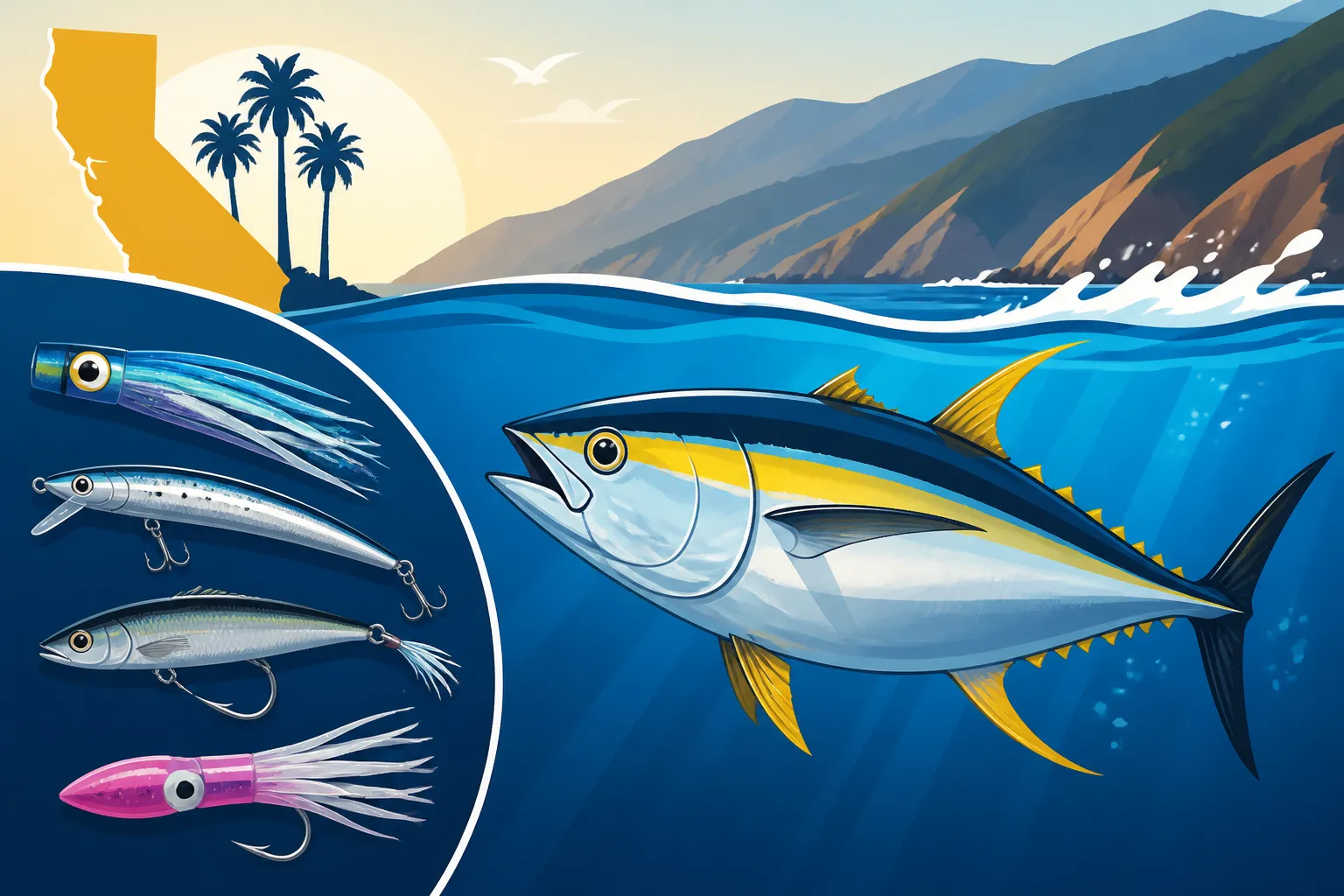
- Cedar Plugs: These classic wooden lures are legendary for Albacore. Their simple, bullet-shaped design and natural cedar aroma are irresistible to tuna. They swim with an erratic, darting action that mimics a fleeing baitfish. Popular sizes range from 4 to 6 inches, and while natural wood is always good, some come painted in dark colors or with Mylar skirts. Many anglers swear by a plain cedar plug, especially on sunny days. You can find quality cedar plugs on platforms like Amazon, making it easy to stock up before a trip.
- Feather Jigs: These are another time-honored favorite. Often made with a lead head and dressed with natural or synthetic feathers, they create a lively, fluttering action in the water. Colors like green and yellow, black and purple, blue and white, or pink and white are all highly effective. Zuker's feathers are a particularly popular brand among California tuna anglers. They come in various sizes; a good starting point is 4 to 6 inches.
- Tuna Clones: These are basically a skirted leadhead jig, often with a Mylar or plastic skirt. They offer a bit more flash and profile than a feather jig. Popular colors mimic anchovies (blue/silver) or sardines (green/yellow).
- Hard Baits/Plugs: Diving plugs like Rapala X-Raps or Yo-Zuri Bonitas can be extremely effective, especially when trying to target fish at a specific depth. These lures dive and swim with a tight wobble, mimicking larger baitfish. The Yo-Zuri Bonita, in particular, is a favorite for its durable construction and proven tuna-catching ability.
- Spreader Bars and Daisy Chains: These setups are designed to simulate a school of baitfish, creating a massive commotion and attractive profile in the water. A spreader bar typically has multiple lures (squid or bird teasers) rigged off a central bar, with a "stinger" lure trailing behind. Daisy chains are a string of lures connected in a line. These can be incredibly effective at drawing tuna to your spread, and many boaters will run one or two off their outriggers or flat lines.
When trolling, experiment with your speed, typically between 5 to 8 knots, and vary your lure positions in the spread to find what the fish prefer. The goal is to mimic a fleeing school of baitfish, making it an easy target for opportunistic tuna.
Casting and Jigging Lures
When Albacore are on the surface, crashing bait (the "foamer" situations we discussed earlier), or when you mark schools deeper on the sonar, casting and vertical jigging become incredibly effective techniques.
- Surface Iron: These long, slender metal jigs are cast out and retrieved rapidly across the surface, skipping and darting like a frantic baitfish. Colors like blue/white, mint/sardine, and scrambled egg are popular. Brands like Salas and Tady make excellent surface iron. The key is a fast, consistent retrieve that makes the lure "swim" correctly. This technique is exhilarating as the tuna often hit with an explosive surface strike.
- Colt Snipers and Speed Jigs: These heavier, more compact metal jigs are designed for longer casts and faster sinking. They are excellent for casting into foaming schools of tuna that might be just out of reach of lighter lures or for working deeper under the surface. Shimano Colt Snipers are a well-regarded example. They can be retrieved quickly with a sweep-and-reel action or allowed to sink and then jigged back up.
- Flat-Fall Jigs: These are a more recent innovation in jigging, designed to "flutter" or "swim" on the fall, mimicking a wounded or dying baitfish. Brands like Shimano's Butterfly Flat-Fall Jigs are very popular. They are dropped to the depth where fish are marked and then retrieved with a lift-and-fall motion, allowing the jig to flutter temptingly on the slack line. This action often triggers bites from deeper, less active fish.
For casting and jigging, having a dedicated rod and reel setup that allows for long casts and strong retrieves is crucial. Many anglers will keep a jig rod rigged and ready to go for those unexpected "foamers" that pop up nearby. Just like with trolling lures, you can stock up on a variety of these jigs easily through online retailers like Amazon, ensuring you have the right weight and color for any situation. Experimentation is key; sometimes the tuna want a fast retrieve, other times a slower, fluttering fall.
Rigging and Presentation Tips for Success
Having the right baits and lures is only half the battle; how you rig and present them can make all the difference between a day of frustration and a successful tuna trip.
Essential Terminal Tackle
Don't skimp on your terminal tackle when targeting Albacore. These fish are powerful, fast, and often lead to long, grueling fights that will test every component of your setup.
- Leader Material: As mentioned, fluorocarbon leader is king. Its refractive index is very close to water, making it virtually invisible to keen-eyed tuna. A good quality 20-40 lb test fluorocarbon is standard, but you might go lighter (15-20 lb) if the bite is tough or heavier (50 lb) if you're getting broken off. The length of your leader can also be important; generally, 6 to 10 feet is a good starting point, but some anglers prefer even longer leaders.
- Hooks: For live bait, sharp, strong, light-wire circle hooks (sizes 1/0 to 3/0) are often preferred as they promote jaw hook-ups, which are healthier for the fish if you plan to release any, and prevent gut hooking. For dead bait or cut bait, a strong J-hook of similar size might be used. When using artificial lures, ensure the treble hooks or single hooks are sharp and strong enough to handle the immense power of an Albacore. Many premium lures come with high-quality hooks, but it's always good to check and replace if necessary.
- Swivels: High-quality barrel swivels or ball bearing swivels are essential, especially for trolling, to prevent line twist. Albacore fights involve a lot of drag and turning, which can quickly twist your main line, leading to tangles and weakened line. Match the swivel size to your main line and leader strength. Investing in reputable brands like Sampo or Spro for swivels is a wise choice.
- Knots: Learn to tie strong, reliable knots. The uni knot, improved clinch knot, and Palomar knot are all excellent choices for connecting leader to mainline, and leader to hook/lure. Practice them at home so you can tie them quickly and confidently on the water. A knot failing is one of the most disheartening ways to lose a tuna.
Remember, every component in your fishing system, from your reel's drag to your hook, is under immense stress during an Albacore fight. A chain is only as strong as its weakest link, so ensure all your terminal tackle is up to the task.
Matching the Hatch and Reading the Water
The concept of "matching the hatch" is incredibly important when targeting Albacore. This simply means trying to present a bait or lure that closely mimics what the tuna are currently feeding on. If you see anchovies being spit up, you'll want to use anchovy-colored lures or live anchovies. If you see squid in the water, a squid-patterned lure or actual squid bait would be more effective.
Reading the water involves constantly observing your surroundings and adapting your strategy. Are there birds working? Is there a noticeable temperature break on your sonar? Are there any kelp paddies floating by? Kelp paddies are natural fish aggregators, providing shelter and a food source for baitfish, which in turn attracts tuna. If you encounter a paddy, slow down, cast around it, or troll past it. The best Albacore anglers are those who are constantly observing, adapting, and experimenting. Don't be afraid to change your lures, vary your trolling speed, or adjust your bait presentation until you find what the tuna are responding to. Sometimes, a subtle change in lure color, or a slightly different retrieve, can turn a slow day into a memorable one. This continuous learning and adjustment are what makes Albacore fishing so engaging and rewarding.
Here’s a quick overview of some of the top baits and lures for Albacore Tuna:
| Bait/Lure Type | Description | Ideal Use Case | Key Characteristics |
|---|---|---|---|
| Live Anchovy | Small, silvery baitfish, Albacore's primary food source. | Fly-lining into foaming schools, chumming, slow trolling for picky fish. | Irresistible natural action, requires good bait tank. |
| Live Sardine | Larger, hardier baitfish than anchovies. | Fly-lining, slow trolling, especially effective when tuna are feeding on bigger bait. | More robust than anchovies, visually appealing. |
| Cedar Plug | Unweighted wooden lure, cigar-shaped. | Trolling (5-8 knots) as part of a spread, especially on sunny days. | Erratic darting action, subtle natural look, simple but effective. |
| Feather Jig | Lead head with natural/synthetic feather skirt. | Trolling (5-8 knots), can be highly effective when mimicking small baitfish. | Flashy, vibrant colors, fluttering action. Popular Zuker's brand. |
| Tuna Clone | Skirted leadhead jig, often with Mylar or plastic skirt. | Trolling, provides more flash and profile, good for mimicking larger baitfish or squid. | Good for a variety of conditions, mimics diverse forage. |
| Yo-Zuri Bonita | Hard plastic diving plug. | Trolling, targets specific depths, durable for aggressive strikes. | Strong diving action, mimics larger baitfish, good for deep fish. |
| Surface Iron | Long, slender metal jig (e.g., Salas, Tady). | Casting into surface boils/foamers, fast retrieve to skip across water. | Explosive surface strikes, visual excitement, requires active retrieve. |
| Colt Sniper/Speed Jig | Heavy, compact metal jig (e.g., Shimano). | Long casting into foamers, jigging deeper schools, fast retrieve. | Sinks fast, good for reaching distant or deep fish, versatile retrieve. |
| Flat-Fall Jig | Weighted jig designed to flutter on the fall (e.g., JRI, Shimano). | Vertical jigging for deeper marked schools, subtle presentation for less active fish. | Unique fluttering action on the drop, mimics wounded bait, effective for finicky fish. |
| Dead/Cut Bait | Mackerel, squid, brined anchovy/sardine. | Slow trolling, dropper loop for deeper fish, when live bait is unavailable or tuna are targeting specific items. | Can be effective when fresh or brined, mimics easy meal. |
Finding Albacore is an adventure in itself, but once you're on them, having the right bait and lure, and knowing how to present it, is paramount. Whether you're carefully fly-lining a lively sardine, trolling a spread of cedar plugs and feathers, or casting surface iron into a boiling frenzy, each method has its place. Many anglers will head out on California party boat fishing explained trips, where the crew often provides excellent advice on current hot baits and lures.
Remember that Albacore tuna seasons can change, so always check the latest regulations and reports. Sometimes the California Fishing Seasons: Month-by-Month Guide can give you a general idea of when to expect them, but real-time conditions are key. For specific techniques like trolling, be sure to brush up on your California trolling tips and techniques or California jigging tips and techniques to maximize your chances.
Whether you're targeting them on a private boat or considering one of the Best offshore fishing charters in California, understanding these key baits and lures will give you a significant advantage. Just like chasing California Bluefin Tuna: Where and How to Catch, preparation is key. Make sure you have plenty of leader material, sharp hooks, and a variety of lures on hand. You can easily find a fantastic selection of these essential items on Amazon, allowing you to build a versatile tackle box ready for any Albacore encounter. Good luck out there, and may your lines be tight!
Disclaimer
Fishing involves inherent risks, including but not limited to adverse weather conditions, marine hazards, and equipment malfunctions. Always prioritize safety, wear appropriate personal flotation devices, and be aware of your surroundings. Regulations regarding fishing licenses, seasons, bag limits, and species-specific rules are subject to change. It is your responsibility to consult the latest official California Department of Fish and Wildlife (CDFW) regulations before engaging in any fishing activity. This guide is for informational purposes only and should not be considered a substitute for professional advice or current legal requirements.