California Halibut Regulations and Limits
Navigating the ever-changing landscape of California fishing regulations can feel like trying to untangle a particularly stubborn knot in your fishing line – frustrating, confusing, and if you get it wrong, potentially costly. For those of us who love chasing California halibut, understanding the specific rules governing these prized flatfish is absolutely crucial to enjoying a successful and legal day on the water. This guide is here to cut through the confusion and give you a clear, comprehensive breakdown of the current halibut regulations and limits in the Golden State.
The Importance of Understanding Halibut Regulations
Let's be real, nobody wants to be that angler who accidentally breaks the rules. The California Department of Fish and Wildlife (CDFW) sets these regulations for a very good reason: to ensure the sustainability of our marine resources, including the beloved California halibut population. These rules aren't just arbitrary roadblocks; they're carefully crafted based on scientific data, population assessments, and an understanding of fishing pressure. Ignoring them, even unintentionally, can lead to serious consequences, from fines and confiscation of your catch to the loss of your fishing privileges. More importantly, it impacts the future of fishing for all of us.
Why Regulations Matter for Halibut Conservation
California halibut are highly sought-after, both for their fighting spirit and their delicious table fare. This popularity means they can face significant fishing pressure, particularly in accessible areas like bays and nearshore waters. Regulations, especially those pertaining to size and bag limits, directly contribute to the species' long-term health. For instance, minimum size limits ensure that fish have a chance to reach sexual maturity and reproduce at least once before being harvested. This concept, known as "spawning biomass," is vital for maintaining a healthy population for future generations of anglers. If we all abide by these rules, we're actively participating in the conservation efforts that keep our oceans thriving.
Think about it: if everyone kept every halibut they caught, regardless of size, we’d quickly deplete the breeding stock. That’s why the CDFW, often consulting with organizations and local stakeholders, makes these decisions. It's a delicate balance of providing recreational opportunities while safeguarding the resource. Staying informed is part of being a responsible angler, and it helps you appreciate the bigger picture beyond just catching dinner. You can always refer to the official CDFW website or their annual fishing regulation booklet for the most up-to-date information, which is something every angler should have handy, either physically or digitally.
Where to Find Official Halibut Information
The internet is a fantastic resource, but when it comes to official fishing regulations, you need to go straight to the source. The California Department of Fish and Wildlife (CDFW) website is your absolute best friend. They have dedicated sections detailing both statewide and regional regulations for all species, including California halibut. Additionally, every year, the CDFW publishes a comprehensive sport fishing regulations booklet. You can often pick up a physical copy at bait and tackle shops, sporting goods stores, or even download a PDF version directly from their site. This booklet is an invaluable tool, meticulously detailing everything from general provisions to specific species regulations and marine protected areas.
It’s crucial to understand that these regulations can change, sometimes unexpectedly, due to environmental factors, stock assessments, or emergency closures. That's why making it a habit to check the CDFW website before each season, or even before a specific trip, is highly recommended. You can also sign up for email updates or follow their social media channels to stay informed of any breaking news or in-season adjustments. Reputable tackle shops and charter operators are also great sources for current, local information, as they deal with these rules daily. Don't rely solely on word-of-mouth or outdated information from a few years ago. Knowledge is power, and in fishing, it keeps you legal! If you're wondering how to get started with the basics, check out our guide on How to Get a California Fishing License.
Current Bag and Size Limits for California Halibut
Alright, let's get down to the brass tacks: what are the actual numbers you need to remember when you're out on the water targeting California halibut? These are the rules that will dictate whether your prize catch gets to come home with you or has to be released back into the briny deep. It’s not just about the number of fish you can keep, but also their size. Both are equally important.
The Daily Bag Limit
For California halibut, the statewide daily bag limit is three fish per person. This means that in any single day, you are allowed to retain a maximum of three California halibut, regardless of how many you might catch and release. This limit applies whether you’re fishing from a private boat, a party boat, a kayak, or even from the shore.
It’s important to clarify what "daily bag limit" truly entails. It's not just about the fish you catch today; it's about the fish you possess. So, if you went fishing on Monday and caught your three halibut, you cannot go out on Tuesday, catch three more, and return home with six fish in your cooler. Your possession limit is also typically tied to the daily bag limit. This rule is designed to prevent stockpiling and ensure that the resource is shared among more anglers. For a broader look at catch regulations, you might find our article on California Fishing Bag and Size Limits helpful.
Here's a common scenario: you're out on a charter trip with a few buddies. Each person on board is individually responsible for their bag limit. So, if there are four anglers, the boat can collectively have twelve legal halibut, provided each angler only has three in their possession. The captain and crew are usually very good about enforcing this, but ultimately, it's your responsibility as the angler to know and adhere to these limits.
Minimum Size Requirements
This is where many anglers, especially newcomers, can trip up. Beyond the number, there's a strict minimum size requirement for California halibut. Any California halibut you keep must measure at least 22 inches total length. Total length is measured from the tip of the jaw (mouth closed) to the farthest tip of the tail.
Why 22 inches? As mentioned before, this size is generally considered to be the length at which a California halibut has had the opportunity to spawn at least once, contributing to the next generation. Keeping undersized fish, often called "shorts," seriously impacts the reproductive potential of the population. It’s a conservation measure designed to safeguard the future of the fishery. Catching a short halibut can be frustrating, especially if it’s a feisty fighter, but releasing it promptly and carefully is part of responsible angling. Many anglers keep a small journal or log to track their catches and ensure they're staying within limits, which can be a great way to improve your overall fishing strategy too.
Remember, the fish must be measured before you decide to keep it. If you're unsure, measure again. There are no "close enough" allowances. If it's even a fraction of an inch short, it must go back. This is why having a reliable, easy-to-read measuring device is indispensable. You can find excellent options, like rigid measuring boards or adhesive rulers for your boat, on platforms like Amazon.
Measuring Your Catch Accurately
Getting an accurate measurement of your halibut is vital, and there's a specific way the CDFW wants it done: total length, with the mouth closed, to the farthest tip of the tail with the tail compressed. This can be tricky with a live, flopping fish, so having the right tools and knowing the technique is important.
First, invest in a good measuring device. Flexible tape measures can be prone to errors, especially on a moving boat. A sturdy, rigid measuring board or a stick-on ruler permanently affixed to a cooler lid or a flat surface on your boat is ideal. These are readily available at most tackle shops and online retailers, including Amazon. When you land a halibut, gently place it on your measuring device. Make sure its mouth is closed and its nose is against the zero mark. Then, gently squeeze or compress the tail lobes together to get the maximum length measurement.
| Species | Daily Bag Limit | Minimum Size Limit (Total Length) | Specific Notes |
|---|---|---|---|
| California Halibut | 3 | 22 inches | Measured from the tip of the jaw (mouth closed) to the farthest tip of the tail. Ensure accurate measurement before retention. Check for regional closures, especially during spawning seasons. |
| Pacific Halibut | 1 | 42 inches (or over 84 inches) | Separate regulations apply for Pacific Halibut, which are typically found further offshore and north. These are much larger fish. |
If the fish doesn’t meet the 22-inch minimum, it must be immediately released back into the water with minimal harm. This often means handling it carefully with wet hands, using de-hooking tools, and avoiding dragging it on rough surfaces. The goal is for that fish to swim away strong and continue its life cycle.
Seasonal Considerations and Depth Restrictions for Halibut
While California halibut can be found year-round in various parts of the state, there are often specific seasonal nuances and geographical restrictions that anglers need to be aware of. It's not always as simple as just grabbing your gear and heading out; understanding these specific rules can make or break your trip.
General Season Overview
Unlike some other species that have very distinct, short seasons, California halibut are generally open to sport fishing year-round in most areas of the state. This is fantastic news for halibut enthusiasts, as it means you can often target them across different seasons and try various techniques. However, "open year-round" doesn't mean "consistently available" or "always easy to catch." The best time of year to catch California Halibut can vary significantly depending on the region and local conditions.
For instance, halibut often move into shallower bay waters during spring and summer months for spawning, making them more accessible to smaller boats and shore anglers. During cooler months, they might move to deeper nearshore waters. While the season might be open, understanding these natural movements is key to successful fishing. Always cross-reference the statewide regulations with local fishing reports for the specific area you plan to fish. Sometimes, even within an open season, a local port or bay might implement a temporary closure or restriction due to specific biological concerns or environmental events, so a quick check with local resources is always smart.
Specific Local Closures and Exceptions
Even with a generally open statewide season, California can have specific localized closures or unique regulations that apply to certain bays, estuaries, or coastal stretches. These exceptions are often implemented to protect spawning aggregations, sensitive habitats, or to address specific conservation needs in a localized area. For example, some estuaries or mouths of rivers might have temporary closures during specific times of the year to protect migrating species or to prevent overfishing in high-concentration areas.
One notable example that has sometimes impacted halibut fishing is the potential for specific closures within certain bays or near harbors to protect other species or address water quality concerns. These are typically announced by the CDFW well in advance and are usually easy to find on their website. Another crucial point: while the main season is often open, be aware of what are called "report card" requirements for other species. For instance, if you're targeting halibut in an area where salmon are also present, you'd need to be aware of California Salmon Report Cards and their specific season dates, even if your primary target is halibut.
Always double-check the "Special Regulations" section of the CDFW regulations booklet for the specific region you plan to fish. What's legal in San Diego Bay might be slightly different than what's allowed in San Francisco Bay or Morro Bay. These local variations are often critical to being a compliant and responsible angler.
Impact of Marine Protected Areas (MPAs)
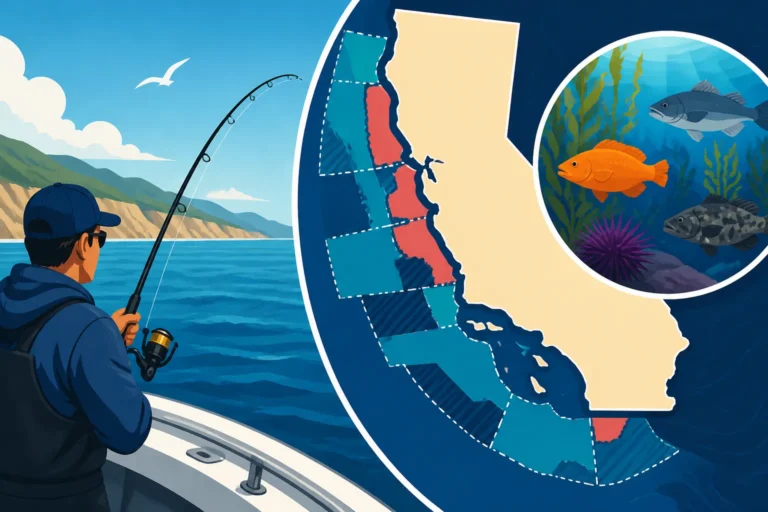
Marine Protected Areas (MPAs) are designated zones along California's coastline established to protect marine ecosystems and allow fish populations to thrive. While these are fantastic for conservation, they create very strict rules about where and how you can fish, including for halibut. Within an MPA, specific activities, including fishing for California halibut, might be completely prohibited ("no-take zones") or heavily restricted (e.g., only catch-and-release, or only certain gear types allowed).
California has a comprehensive network of MPAs, and knowing their boundaries is absolutely paramount. Fishing inadvertently within a no-take MPA can lead to significant fines and penalties. Many MPAs are well-marked on nautical charts and through buoys, but it's your responsibility to know where they are. Before heading out, especially if you're exploring a new area, use online MPA maps provided by the CDFW or integrated into popular fishing apps. These resources clearly delineate the boundaries and specify the allowed activities within each zone. If you are unsure, it's always best to err on the side of caution and fish outside the suspected MPA boundary. Our detailed guide on California Marine Protected Areas Explained can provide even more in-depth information.
Imagine planning a perfect day of halibut fishing near Santa Barbara, only to realize you drifted into a state marine reserve where all fishing is prohibited. A quick check of the MPA map would have saved you that headache and potential legal trouble. These areas are designed for long-term health, so respecting them is a core part of being a good steward of California's marine environment.
Essential Gear and Responsible Angling Practices for Halibut
Catching California halibut legally isn't just about knowing the rules; it's also about having the right tools and employing ethical fishing practices. This combination ensures you're not only compliant but also contributing to the health of the fishery and minimizing your impact on the environment.
Recommended Gear for Halibut Fishing
Having the right gear makes a huge difference in effectively targeting California halibut and ensuring you can adhere to regulations. You don't need to break the bank, but a few key items are indispensable.
Firstly, a reliable rod and reel setup. Halibut are powerful flatfish, capable of strong runs and deep dives. A medium-heavy spinning or conventional setup with 15-30 lb test line is generally a good choice, allowing you to cast effectively and handle a decent-sized fish. Many anglers prefer braided line for its sensitivity and strength. As for terminal tackle, a sliding sinker rig with a leader and a sharp hook (often a size 2/0 to 4/0 circle hook or J-hook) is popular, especially when bait fishing. Live bait, such as sardines, anchovies, or mackerel, is a common choice, but artificial lures like swimbaits, jerkbaits, and even bucktail jigs can also be very effective. If you’re looking for more specific bait advice, check out our post on Best Bait for California Halibut.
Secondly, and critically for regulations, is a measuring device. As discussed, a rigid measuring board or a durable stick-on ruler is essential for accurately measuring your catch. Keep it easily accessible on your boat or in your tackle bag. A sturdy de-hooking tool or needle-nose pliers are also crucial for safely removing hooks, especially from undersized fish you intend to release. These tools minimize handling time and reduce stress on the fish. You can find excellent, durable measuring tools and de-hookers from brands like Rapala or Berkley on Amazon, ensuring you're ready to measure accurately and release safely. Lastly, a good quality net, preferably one with rubberized or knotless mesh, helps protect the fish's slime coat and fins when landing it.
Minimizing Bycatch and Promoting Conservation
Responsible angling extends beyond just following bag and size limits; it includes actively working to minimize your impact on non-target species (bycatch) and promoting the overall health of the marine ecosystem. When fishing for California halibut, especially with bait, you might encounter other species like rays, sharks, or smaller bottom fish.
To minimize bycatch, consider your bait and hook size. Using appropriately sized hooks for halibut (e.g., 2/0-4/0) can help reduce the chances of hooking very small, non-target fish. If you're primarily targeting halibut, avoid leaving your bait unattended for long periods, which can lead to gut-hooking other species. When you do catch a non-target species or an undersized halibut, the goal is to release it quickly and with as little harm as possible. Handle fish with wet hands to protect their protective slime layer, support their body weight horizontally, and use your de-hooking tool to remove the hook cleanly. If a fish is deeply hooked, sometimes cutting the line as close to the hook as possible is better than trying to extract it, as the hook will often rust away over time.
Practicing catch-and-release responsibly is a cornerstone of modern conservation. Every fish released properly has a better chance of survival and contributing to future generations. This thoughtfulness ensures that we can continue to enjoy the fantastic sport of halibut fishing in California for years to come. For specific techniques, you can explore guides like How to Fish for Halibut in California.
Reporting Violations and Maintaining Integrity
Unfortunately, sometimes we encounter situations where regulations are being ignored or deliberately violated. Whether it's someone keeping undersized fish, exceeding bag limits, or fishing illegally in a protected area, these actions undermine conservation efforts and are unfair to all responsible anglers. If you witness a suspected fishing violation, it's important to know how to report it effectively and safely.
The best way to report a suspected violation is to contact the CDFW's CalTIP (Californians Turn In Poachers and Polluters) program. You can do this by calling their toll-free hotline at 1-888-334-CALTIP (1-888-334-2258), which is available 24/7. You can also submit a tip online through their website or via the CalTIP mobile app. When reporting, try to gather as much specific information as possible without putting yourself in harm's way. This includes:
- Location: Exact coordinates, specific landmarks, or pier names.
- Time and Date: When did you observe the incident?
- Description of Suspects: Number of people, physical descriptions, clothing, etc.
- Vehicle/Vessel Description: Make, model, color, license plate number, vessel registration (CF number), or boat name.
- Nature of Violation: What exactly did you see (e.g., keeping undersized fish, too many fish, fishing in a closed area)?
Your identity as a tipster can remain confidential. Reporting violations is not about being a "snitch"; it's about being a steward of our natural resources and protecting the integrity of the sport for everyone. Our post on How to Report a California Fishing Violation provides more details on this important topic. Together, we can help ensure that California's incredible halibut fishery remains healthy and abundant.
Disclaimer
Please note that fishing regulations, including those for California halibut, are subject to change. This guide is intended for informational purposes only and should not be considered a substitute for checking the most current official regulations directly from the California Department of Fish and Wildlife (CDFW) website or their official sport fishing regulations booklet before you head out to fish. It is always the angler's responsibility to know and comply with all applicable laws and regulations.