How to Report a California Fishing Violation
It’s incredibly frustrating, isn't it? You’re out enjoying a beautiful day on the water, minding your own business, and then you see it—someone openly flouting the rules, disrespecting our precious natural resources, or simply being unsportsmanlike. It makes your blood boil, and you wonder, "What can I even do about this?" Well, you're not powerless. This guide is all about empowering you to report a California fishing violation effectively and safely, ensuring our shared outdoors remain vibrant for everyone.
Why Reporting Fishing Violations Matters
When you witness a fishing violation, it's easy to feel a sense of helplessness, or even just annoyance. But those feelings quickly give way to the deeper understanding that these aren't just minor infractions; they have real, tangible consequences. Every time a rule is broken, it chips away at the delicate balance of our ecosystems and undermines the efforts of countless anglers who play by the rules. Reporting isn't about being a "snitch"; it's about being a responsible steward of our natural heritage.
Impact on Fish Populations and Ecosystems
Imagine hundreds, or even thousands, of anglers consistently taking more than their fair share, ignoring size limits, or fishing during closed seasons. What seems like one person's small cheat quickly adds up to a massive strain on fish populations. For species like salmon or steelhead, which have highly sensitive life cycles, even a few extra fish taken during a spawning run can have devastating long-term effects. These regulations exist for a reason: to allow fish to reproduce, grow, and maintain healthy numbers. Without them, we'd quickly see iconic species vanish from our waters, and the entire food chain can suffer. It’s not just about the fish itself; it’s about the whole web of life that depends on those populations.
Fair Play for Ethical Anglers
Let's be honest, we all pay for our fishing licenses and report cards, diligently check the regulations, and spend our hard-earned money on gear. We do it because we love the sport and respect the environment. So, when you see someone blatantly disregard the rules, it feels like a slap in the face. It’s unfair to those who invest their time and money responsibly. Reporting violations helps maintain a level playing field, ensuring that everyone adheres to the same standards and that the resource is shared equitably. It upholds the integrity of sportfishing and ensures that the future generations of anglers have something left to enjoy. It helps reinforce that responsible angling is the expectation, not an optional choice.
Protecting Sensitive Habitats and Water Quality
Fishing violations aren't always about catching too many fish. Sometimes, they involve illegal dumping, pollution, or damaging sensitive habitats. Perhaps you see someone leaving behind excessive trash, discarding fishing lines and hooks, or even using prohibited substances in the water. These actions directly harm the environment, impacting not just fish but also wildlife, plants, and even human health. For instance, discarded fishing line can entangle birds and other animals, leading to injury or death. Reporting these incidents is crucial for maintaining the cleanliness and health of our rivers, lakes, and oceans, protecting the very places we go to enjoy fishing.
What Constitutes a California Fishing Violation?
Before you pick up the phone, it’s helpful to understand what truly counts as a violation. Sometimes what looks suspicious might actually be legal under specific circumstances, or perhaps you're witnessing something that's simply against fishing etiquette rather than a codified law. Knowing the common types of violations will help you discern a genuine problem from a misunderstanding and provide a more accurate report. The California Department of Fish and Wildlife (CDFW) takes violations seriously, but they need solid, specific information.
License and Report Card Issues
This is one of the most common and easiest violations to spot. In California, almost everyone needs a valid fishing license to fish in public waters, whether it's freshwater or saltwater. There are specific rules around who needs one, and certain exemptions like California Youth Fishing License Rules or Where You Can Fish Without a License in California.
- No License: The most straightforward violation. If someone is actively fishing and doesn't appear to have a license displayed (if required) or cannot produce one upon request by a warden.
- Improper License: Someone might have a freshwater license but be fishing in the ocean, or a short-term license that has expired.
- Failure to Possess Report Cards: For certain species like salmon, steelhead, and sturgeon, you also need specific California Fishing Report Cards Explained. If someone is targeting these species without the correct report card, or hasn't filled it out properly, that’s a violation. For example, failing to punch your card immediately after retaining a salmon is a common oversight that can lead to a citation.
- False Information: Providing false information when purchasing a license or report card is also a serious offense. While harder to prove from an observer's standpoint, it contributes to mismanaged data and can lead to overfishing.
Bag and Size Limit Breaches
These regulations are put in place to ensure fish populations can thrive and provide sustainable fishing opportunities. They are arguably some of the most critical rules to follow for conservation. You can find detailed information on these in the California Fishing Bag and Size Limits guide.
- Exceeding Bag Limits: Catching and keeping more fish of a certain species than legally allowed per day or per possession. For example, if the limit for trout is five, and you see an angler clearly keeping eight.
- Keeping Undersized Fish: Retaining fish that are smaller than the minimum legal size. This is particularly common for species like halibut, lingcod, or certain rockfish. Fish need to reach a certain size to have had a chance to reproduce, so these limits are crucial.
- Keeping Oversized Fish: Less common, but some species (like sturgeon) have a maximum size limit to protect large, mature breeding fish.
- Mistaken Identity: Sometimes anglers keep a prohibited species, mistaking it for a legal one. While it might be an honest mistake, ignorance of the law is generally not an excuse. This often happens with different rockfish species or certain types of bass.
Season and Area Closures
California has a complex tapestry of fishing seasons and closures, designed to protect species during critical times like spawning or migration, or to manage areas for conservation. These can be particularly tricky, and it's always a good idea to consult the California Fishing Regulations Explained booklet or the CDFW website.
- Fishing During Closed Seasons: Targeting or retaining a species when its season is closed. A classic example is fishing for salmon when the season is closed, or fishing for rockfish during a winter closure. California Salmon Season Dates change yearly and are very specific.
- Fishing in Closed Areas: Certain areas, like Marine Protected Areas (MPAs) or specific river sections, might have complete fishing bans or severe restrictions. Fishing in a designated "no-take" zone of a California Marine Protected Areas Explained is a serious offense.
- Time of Day Restrictions: Some waters have specific hours when fishing is allowed or prohibited, often to protect nocturnal species or during sensitive spawning periods.
- Emergency Closures: Unforeseen circumstances like drought, disease, or extreme weather can lead to emergency closures. Staying informed is vital.
Gear and Method Violations
The type of gear and methods allowed can vary wildly depending on the water body, species, and season. What’s legal in one place might be strictly prohibited in another.
- Illegal Gear: Using nets, traps, or spears where only rod and reel fishing is permitted. This also includes using multiple rods where only one is allowed, or using a second rod without the proper California Second-Rod Stamp Explained.
- Prohibited Baits: Some freshwater bodies, especially wild trout waters, only allow artificial lures with barbless hooks. Using live bait or scented artificial baits in these areas would be a violation.
- Unlawful Methods: Snagging fish (hooking them anywhere other than the mouth), fishing with explosives or chemicals, or using electric shocking devices are extreme but serious violations.
- Commercial vs. Sportfishing Gear: Using gear designated for commercial fishing when you only have a sportfishing license.
- Barbless Hook Requirements: In many trout and steelhead waters, only barbless hooks are permitted to reduce harm to released fish. Using barbed hooks in these areas is a violation.
Pollution and Habitat Destruction
While not strictly "fishing" violations in the sense of catching fish, these actions directly impact the fishing environment and are often observed by anglers.
- Littering/Dumping: Discarding trash, bait containers, or chemical waste into waterways or on shorelines. This is a common sight and one of the most damaging.
- Damage to Habitat: Illegally harvesting plants, disturbing nesting sites, or causing erosion through improper vehicle use near water bodies.
- Water Diversion/Alteration: Unlawful activities that alter water flow, often seen in smaller streams or rivers.
How to Report a California Fishing Violation
Okay, you've identified a violation, and you're ready to do something about it. The process is straightforward, but success hinges on providing as much detail as possible. The primary method for reporting fishing violations in California is through the CalTIP program.
Gathering Critical Information
Before you even think about making that call or typing up an email, take a moment—if it's safe to do so—to gather as much information as you can. The more details you provide, the higher the chance that law enforcement can act on your report. Think like a detective, but prioritize your safety above all else.
Here’s a checklist of key information you should try to collect:
| Information Category | Specific Details to Note | Example |
|---|---|---|
| Who | – Number of people involved | – One male adult, approximate age 30s |
| – Physical description | – Caucasian, 6'0", medium build, dark hair, wearing a blue jacket and a baseball cap | |
| – Vehicle description | – White Ford F-150 pickup, license plate 7ABC123, parked next to the launch ramp, with a small dent on the rear passenger side bumper | |
| – Boat description | – 18-foot green aluminum fishing boat with a 75hp outboard, registration CF 1234 AB, named "Reel Trouble" | |
| What | – Type of violation | – Exceeding rockfish bag limit, actively fishing in a closed area, keeping undersized halibut |
| – Specific species/items | – Seven undersized Halibut, clearly identified in a cooler, two fishing rods actively fishing | |
| – Gear used | – Using a gill net from a kayak (if illegal), multiple rods with bait in a fly-fishing-only section | |
| When | – Date | – Today, October 26, 2023 |
| – Time of incident | – Observed from 10:30 AM to 11:15 AM | |
| Where | – Specific location | – Halfway between Pier A and B at the Berkeley Pier, near the third light pole |
| – Nearest landmark | – Just north of the Smith's Bait Shop, roughly 100 yards offshore | |
| – Body of water | – Sacramento River, near the Miller's Ferry boat launch | |
| How | – How was the violation committed | – Angler was observed pulling up a stringer with 12 trout, despite a 5-fish limit, and attempting to hide them under a tarp. |
| Evidence | – Photos/Videos | – Clear photograph of the angler holding undersized fish, or a video of the illegal netting. (Only if safe to obtain!) |
Remember, your safety is paramount. Do not confront the individual(s) violating the law. Keep a safe distance and observe without drawing attention to yourself.
Reporting to the California Department of Fish and Wildlife (CDFW)
The CDFW is the primary agency responsible for enforcing fishing regulations in California. They have a dedicated program for reporting violations.
CalTIP Program (1-888-334-CALTIP or via the App)
The CalTIP (Californians Turn In Poachers and Polluters) program is your go-to resource for reporting violations. It’s designed for easy and confidential reporting.
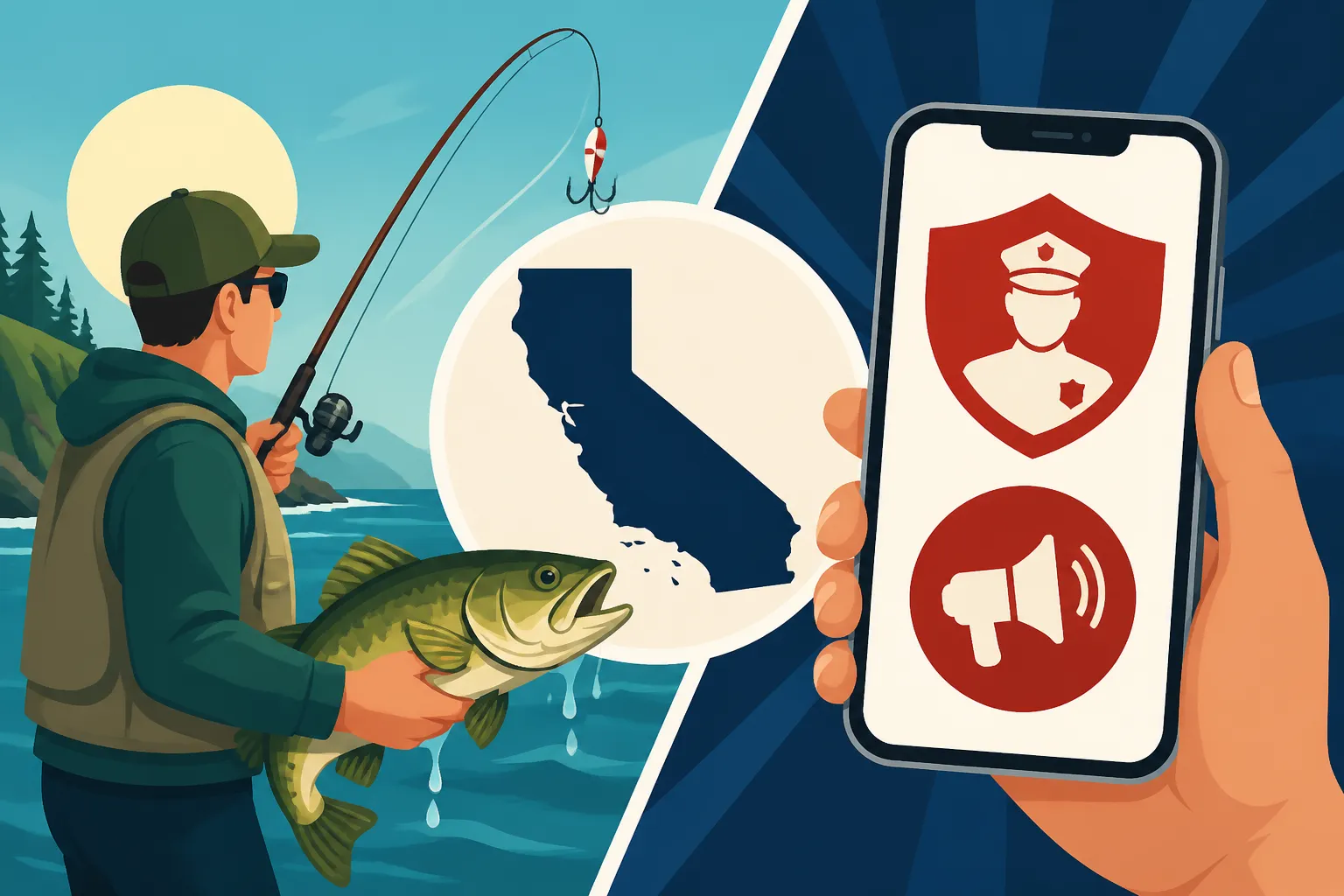
- Phone Call: The quickest way to report a violation that is actively happening or just occurred is to call 1-888-334-CALTIP (1-888-334-2258). This toll-free number is staffed 24/7. When you call, be prepared to provide all the information you gathered. Be clear, concise, and stay on the line until the dispatcher has all the necessary details. They will ask follow-up questions to understand the situation fully.
- CalTIP Mobile App: For situations where a phone call might be difficult or impossible (e.g., you need to be discreet), the CalTIP app is an excellent alternative. You can download it for free on iOS and Android devices. The app allows you to submit text, photos, and even video evidence directly from your smartphone. This can be incredibly useful if you have visual documentation of the violation. Just search for "CalTIP" in your app store. It allows for discreet reporting and can often pinpoint your exact location using GPS, which is a huge help to wardens trying to respond.
When using either method, you have the option to remain anonymous. However, providing your contact information can be beneficial. It allows wardens to follow up with you for additional details if needed, which can be crucial for an investigation. Your identity will be kept confidential if you choose to provide it.
Non-Emergency CDFW Offices
If the violation isn't an immediate threat and doesn't require an urgent response (e.g., you witnessed something last week and are just now getting around to reporting it, or it's a non-urgent environmental concern), you can also contact a local CDFW regional office during business hours. A list of these offices and their contact information can usually be found on the official CDFW website. While CalTIP is preferred for active violations, regional offices can handle less time-sensitive reports or provide guidance on specific regulations. They can also assist with questions like How to Report a California Fishing Violation or understanding localized rules.
Reporting Online (If Available)
While the CalTIP app functions as an online reporting tool, the CDFW website itself also offers ways to submit information, though it might not be as immediate as a phone call for urgent situations.
- CDFW Website Contact Forms: Look for "Contact Us" or "Report a Violation" sections on the CDFW website. These forms typically allow you to fill in details, upload photos, and provide your contact information. This method is best for non-urgent reports or when you have a lot of detailed information to type out. Always double-check that you're on the official CDFW website to ensure your report goes to the right place.
- Email: Some regional CDFW offices might have specific email addresses for reporting non-emergency violations. Check the contact section of the relevant regional office on the CDFW website. Again, this is for non-urgent reports.
What Happens After You Report?
You’ve done your part. You’ve gathered the information, you’ve made the call or submitted the report. Now what? It's important to understand that you likely won't receive an immediate "thank you" or a full rundown of the investigation.
- Investigation: Once a report is received, especially through CalTIP, it is triaged and routed to the appropriate wildlife officer (warden) in that region. If it’s an active violation with good details, wardens will attempt to respond as quickly as possible.
- Discretion: Wildlife officers have broad discretion on how to proceed. Not every report will result in a citation or an arrest. Sometimes, the warden might simply observe, educate the individual, or determine that there isn't enough evidence to pursue further action. They might also arrive to find the individuals have left the scene.
- Confidentiality: If you provided your contact information, the warden might reach out for more details, but they are unlikely to share specific outcomes of the investigation with you due to privacy concerns and ongoing enforcement efforts.
- Long-term Impact: Even if you don't see immediate results, every report contributes to the CDFW's intelligence gathering. It helps them identify hotspots for violations, allocate resources more effectively, and understand patterns of illegal activity. Your report, even if it doesn't lead to a direct bust, is a vital piece of the conservation puzzle.
Tips for Effective Reporting
Making a report is one thing; making an effective report is another. To maximize the chances of your information being useful to wildlife officers, keep these tips in mind.
Safety First and Foremost
This cannot be stressed enough: never confront individuals you suspect of violating fishing regulations. Confrontation can escalate quickly and dangerously. Your personal safety is far more important than any fish or violation.
- Maintain Distance: Keep a significant distance from the suspected violators. Use binoculars if you have them.
- Avoid Eye Contact: Do not draw attention to yourself. Act like you're just another angler or passerby.
- Do Not Intervene: Under no circumstances should you attempt to enforce the law yourself. That's the job of trained wildlife officers.
- Have an Exit Strategy: If you feel unsafe, leave the area immediately. You can always report from a safe location. If you are on a boat, ensure you can motor away easily. If on shore, make sure your vehicle is accessible.
Remember, a good report is one made safely. A warden cannot act on your report if you are in danger.
Be Specific and Detailed
The more precise and comprehensive your report, the better. Generic reports like "Someone is poaching on the river" are far less actionable than "A male, approximately 40, wearing a red hat, is using a gill net near the old oak tree on the north bank of the American River, about half a mile upstream from the Arden Way bridge, at 2 PM on Tuesday."
- Five W's: Always aim to cover the "Who, What, When, Where, Why (if known), and How."
- Quantify: Instead of "a lot of fish," say "approximately 15 undersized rockfish."
- Distinctive Features: Note anything unique about the person, vehicle, or boat. A specific tattoo, a missing headlight, a boat name – these details are incredibly helpful.
- Directions for Access: If the location is remote, provide directions on how wardens can access the site. "Access via the dirt road off Highway 101, approximately 2 miles past the main turnoff for Leggett."
Documenting Evidence (Photos, Videos)
In today's world of smartphones, visual evidence can be incredibly powerful. A clear photo or video can often provide irrefutable proof of a violation.
- Be Discreet: Only take photos or videos if you can do so without being noticed. A zoom lens or a steady hand can help from a distance.
- Clear and Focused: Try to get clear shots of the individuals, their faces (if possible), the fish, the gear, vehicles, and license plates.
- Timestamp/Geotag: Most smartphone cameras automatically add a timestamp and geotag (location data) to photos and videos, which is valuable.
- Don't Alter Evidence: Do not crop, edit, or tamper with the original photos or videos. Submit them as raw as possible.
Remember, a lack of visual evidence doesn't mean you shouldn't report. Your verbal report is still valuable, but visual aids certainly strengthen the case.
Remaining Anonymous vs. Providing Contact Information
The CalTIP program allows for anonymous reporting, and many people prefer this for understandable reasons. However, there are benefits to providing your contact information.
- Anonymous Reporting: If you genuinely fear retaliation or simply prefer not to be involved beyond the initial report, anonymity is your right. The CDFW will still investigate based on the information provided.
- Providing Contact Info: If you're comfortable, providing your name and phone number allows a wildlife officer to call you back for clarification or additional details. Often, the initial report might be missing a crucial piece of information, or the warden might have follow-up questions about what you observed. This extra interaction can be vital for building a stronger case. Your identity will be kept confidential from the violator. It’s a calculated risk that often pays off in terms of enforcement success.
Common Misconceptions and FAQs
It’s natural to have questions and even some reservations about reporting a violation. Let’s tackle some common concerns that might be holding you back.
Will My Report Really Make a Difference?
This is perhaps the most common question, and the answer is a resounding YES! It’s easy to feel like one report won’t matter in the grand scheme of things, but it absolutely does.
- Direct Action: In many cases, especially for active, clear violations, your report can lead directly to a wildlife officer responding to the scene, catching the violator, and issuing citations or making an arrest.
- Intelligence Gathering: Even if a warden doesn't make an immediate bust, your report provides critical intelligence. It helps the CDFW identify problem areas, track patterns of illegal activity, and allocate their limited resources more effectively. If multiple reports come in from the same location or about the same type of violation, it signals to enforcement that there's a recurring issue that needs attention.
- Deterrence: When violators know that ethical anglers are watching and reporting, it acts as a significant deterrent. It makes them think twice before breaking the rules.
- Conservation Impact: Ultimately, every successful enforcement action helps protect fish populations and habitats. It reinforces the importance of regulations and contributes to the long-term health of California’s fisheries. For guides to specific regulations, check out California Halibut Regulations and Limits or California Salmon Regulations and Limits.
What If I'm Not 100% Sure It's a Violation?
It’s completely understandable to hesitate if you’re not certain. California’s fishing regulations can be complex, with specific rules for different species, regions, and times. However, if you have a strong suspicion, it's better to report than to do nothing.
- Err on the Side of Caution: If something looks blatantly wrong (e.g., someone with 20 bass in a cooler where the limit is 5, or fishing in a clearly marked Marine Protected Area), go ahead and report. Let the experts decide if it's a violation.
- Provide Context: When you report, explain your uncertainty if you have it. For instance, you might say, "I saw someone with a large number of fish, more than I believe is the legal limit, but I'm not entirely sure which species they were."
- Consult Regulations: If you have time and access, a quick check of the California Fishing Regulations Explained booklet or the CDFW website can often clarify things. You can find copies of the booklet at most places that sell fishing licenses. However, don't delay reporting an active violation to do research.
Can I Get in Trouble for Reporting?
No, you cannot get in trouble for making a good-faith report of a suspected violation.
- Legal Protection: The CalTIP program and CDFW are designed to protect those who report violations. Your identity, if you choose to provide it, will be kept confidential.
- Good Faith: As long as you are reporting what you genuinely believe to be a violation and are not making false accusations with malicious intent, you have nothing to worry about. The CDFW relies on the public’s help to enforce laws and protect wildlife.
- Focus on the Facts: Stick to what you observed, not speculation or hearsay. This helps ensure your report is credible and protects you from any suggestion of false reporting.
By understanding these points, you can report with confidence, knowing you're doing your part to protect California's incredible natural resources.
Disclaimer
The information provided in this guide is for general informational purposes only and does not constitute legal advice. California fishing regulations are subject to change. Always consult the most current official California Department of Fish and Wildlife (CDFW) regulations booklet or website before fishing. Engaging in any activity based on the content of this guide is at your own risk.