California Striped Bass Bag Limit Explained
There’s nothing quite as exhilarating as feeling that strong tug on your line, the unmistakable fight of a California striped bass. But let's be real, the sheer volume of fishing regulations can sometimes feel like trying to untangle a massive bird's nest of fishing line – confusing, frustrating, and easy to mess up. Many anglers, myself included, have stood by the water wondering if their catch is legal. This guide is here to untangle the specifics of the California striped bass bag limit, ensuring you can enjoy your time on the water without the anxiety of accidental violations.
Understanding the Foundation of Striped Bass Regulations
When you're out there, whether casting from shore in the Bay Area or trolling the vast expanses of the Sacramento-San Joaquin Delta, knowing the rules is paramount. These regulations aren't just arbitrary; they're designed to protect the future of this incredible fishery, ensuring there are plenty of stripers for generations of anglers to come. It’s a delicate balance, and we, as anglers, play a crucial role in maintaining it.
The Statewide Standard Bag Limit
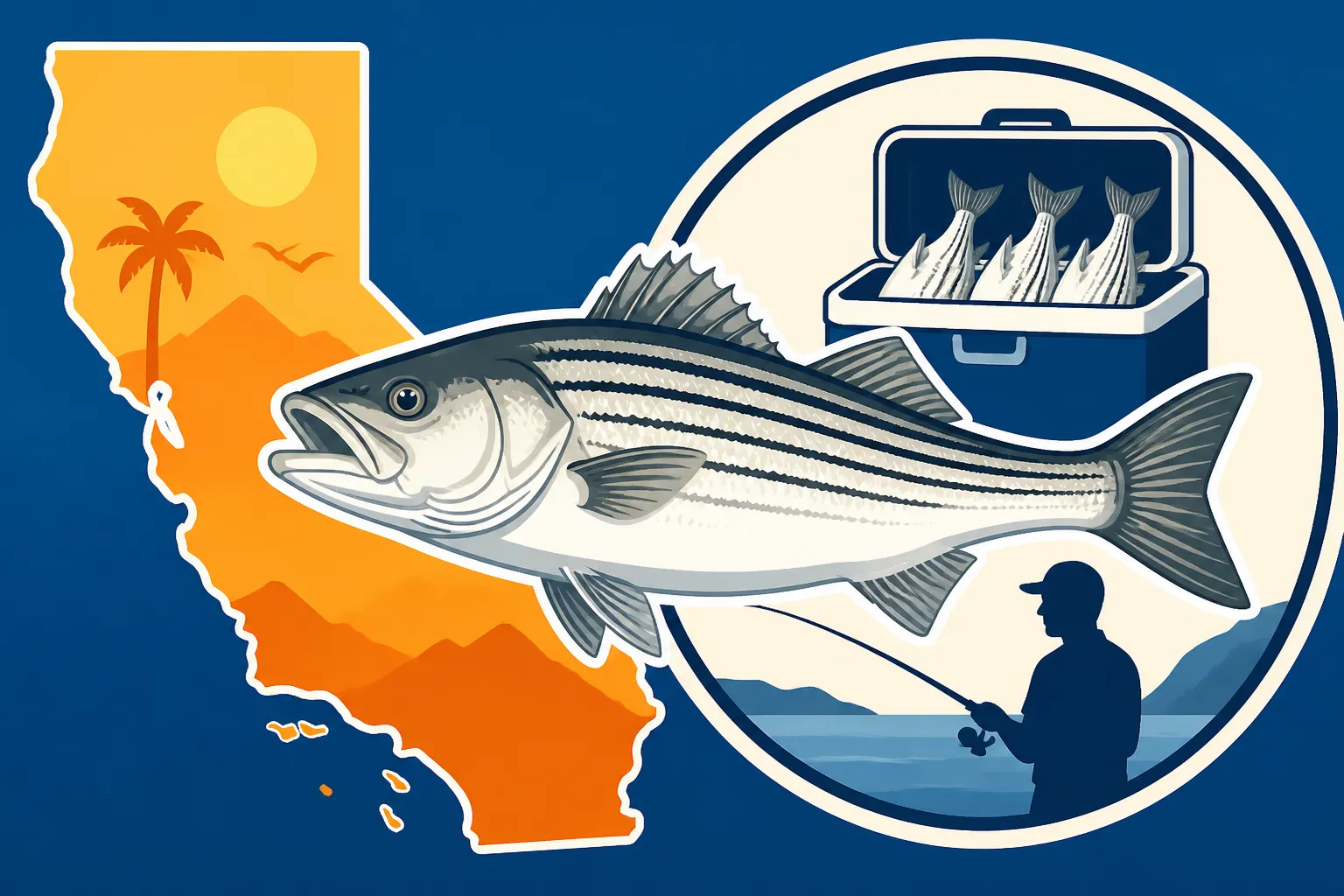
Okay, let's get right to it: the basic, statewide daily bag limit for striped bass in California. This is the one you’ll encounter most often. Currently, in most waters of the state, you're allowed to keep two striped bass per day. This isn't just a daily limit; it also typically functions as a possession limit on the water, meaning you can't have more than two on your person or in your vessel while actively fishing or transporting fish from your trip. It's designed to prevent overfishing and distribute the catch more evenly among anglers.
Think about it this way: if you head out for a day trip to the California Delta, you can catch and keep two striped bass. Once you've got those two legal fish, your fishing for stripers for the day is done. You can switch to targeting other species if regulations allow, but adding more striped bass to your cooler would put you over the limit. It’s a pretty straightforward rule, but the nuances of size and location can sometimes trip people up.
Minimum Size Requirements
Now, it's not just about how many you catch; it's also about how big they are. To ensure that younger fish have a chance to grow and spawn, California imposes a minimum size limit on striped bass. For the vast majority of waters, including the Sacramento-San Joaquin Delta and its tributaries, the San Francisco Bay, and coastal waters, the minimum size limit for striped bass is 18 inches total length.
Measuring correctly is super important. You measure from the tip of the jaw (mouth closed) to the farthest tip of the tail with the tail compressed. Don't eyeball it; get yourself a reliable measuring tape or a fish ruler. Many experienced anglers keep a sturdy, foldable ruler in their tackle box, often something you can easily find on Amazon, just for this purpose. If you catch a striper that's even a hair under 18 inches, it must be immediately released unharmed. Trying to sneak a short fish past the warden isn't worth the hefty fines, which we'll touch on later. Always measure twice, keep once.
Why These Regulations Exist
You might wonder why these specific numbers – two fish, 18 inches – are chosen. It's not arbitrary, I promise. These regulations are the result of extensive biological research by the California Department of Fish and Wildlife (CDFW) to manage the striped bass population sustainably. Striped bass are a highly migratory species, traveling between freshwater spawning grounds and saltwater feeding areas, which makes their management complex.
The 18-inch minimum size ensures that most fish have had at least one, and often several, opportunities to reproduce before they are harvested. This is crucial for population stability. The two-fish bag limit helps distribute the catch more broadly among the angling community and reduces the overall harvest pressure on the population. Without these limits, a few very successful anglers could potentially deplete local populations quickly, leading to a decline in the fishery for everyone. It's all about ensuring that the thrill of hooking a striper remains a possibility for future generations. For a broader understanding of why these rules matter, check out our guide on how to read the California Fishing Regulation Booklet Explained.
Diving Deeper into Daily Limits and Possession
It’s easy to misunderstand the difference between what you can catch in a day and what you can legally have on hand. Trust me, I’ve seen seasoned anglers get into hot water over this distinction. Let's make sure you're clear on the nuances.
Daily Bag Limit vs. Possession Limit
While often the same for striped bass, it's vital to understand the difference between a "daily bag limit" and a "possession limit." The daily bag limit refers to the maximum number of fish you can take in one 24-hour period, typically from midnight to midnight. So, if you go out fishing, catch two legal stripers, and then decide to go home, you’ve met your daily bag limit for that day.
The possession limit refers to the maximum number of fish you can have in your possession at any given time, whether it's in your cooler, your freezer at home, or in your vehicle during transport. For striped bass, the possession limit is generally the same as the daily bag limit on the water or while in the process of fishing. However, once you’re off the water and your fish are processed (e.g., filleted and frozen) at your permanent residence, they no longer count towards your possession limit in the same way. The intent of the possession limit is to prevent anglers from stockpiling large quantities of fish by making multiple daily limit trips without proper documentation or intent for immediate consumption.
For example, if you fish on Monday and keep two legal stripers, that’s your daily limit. If you decide to go out again on Tuesday, you can catch two more legal stripers, bringing your total at home to four, assuming you've consumed or properly stored the first two. The key is to never exceed two while actively fishing or transporting them from a fishing trip to your home. It’s a subtle but critical difference that every angler needs to grasp.
Culling and Releasing Fish
This is where things can get a little tricky for some species, but for striped bass with a fixed bag limit, it’s usually simpler. Culling refers to the practice of catching a fish, keeping it, and then later releasing it in favor of a larger or preferred fish if you catch one. For most species in California, once you’ve kept a fish, it counts towards your bag limit, and you cannot release it later unless specifically allowed by regulation (which is rare).
For striped bass, if you've landed an 18-inch fish and put it in your cooler, that's one of your two for the day. If you then catch a 25-inch fish, you cannot release the 18-inch fish to keep the 25-inch one if you already have two fish on board. The only exception would be if the first fish was sub-legal (under 18 inches) and you accidentally kept it before realizing it was short. In that scenario, you must release the short fish immediately. Always measure every fish before deciding to keep it. This practice protects the fish and keeps you out of trouble. Understanding proper catch-and-release rules is vital for all anglers.
Reporting Your Catch
Unlike some other species in California, like salmon, steelhead, or sturgeon, striped bass generally do not require a separate report card to be filled out and returned to the CDFW. This is a common point of confusion because many anglers are used to the additional steps for other game fish. For instance, if you're targeting sturgeon, you absolutely need a California Sturgeon Report Card.
However, even without a specific report card, you are still expected to adhere strictly to the daily bag and possession limits. Fisheries managers collect data through other means, such as creel surveys where wardens or volunteers might ask about your catch at boat ramps or popular fishing spots. Your honest compliance with the limits is your primary contribution to the management of the striped bass fishery. Always be prepared to show your catch to a warden if requested.
Special Considerations and What to Watch Out For
While the basic rules are generally consistent, California's vast and diverse waterways can sometimes have very specific, localized regulations. It pays to be vigilant and always check the most current information.
Regional Variations and Special Waters
While the 2 fish, 18-inch minimum is the standard, there can be very localized exceptions or temporary rule changes, especially in certain river sections or during specific seasons. For instance, areas within the Feather River or the Yuba River sometimes have special restrictions or closures to protect migrating salmon or steelhead, which can inadvertently affect striped bass fishing in those specific zones.
It's crucial to consult the official California Freshwater Fishing Regulations booklet or the California Ocean Fishing Regulations if you're fishing in saltwater, as regulations can sometimes differ slightly or have additional caveats. Always check the specific section for the body of water you intend to fish. A quick search for "California Striped Bass Regulations" on the CDFW website before heading out is always a good idea. Knowing the specific rules for California Fishing Regulations by Region can save you a lot of headaches.
Barbless Hooks and Other Gear Restrictions
For most recreational striped bass fishing, barbless hooks are not explicitly mandated unless you are fishing in certain designated "catch-and-release only" or "special regulation" waters, or if it's during a specific season or in an area where salmon or steelhead are also present and might be incidentally caught. However, many conservation-minded anglers choose to use barbless hooks voluntarily, especially for catch-and-release fishing, as they cause less damage to the fish and make releases quicker and easier.
The primary gear restriction for striped bass is generally related to the number of rods you can use. In most freshwater areas, you're typically limited to one rod unless you purchase a "Second-Rod Stamp Explained" for your California Fishing License. In saltwater, the rules can be a bit more lenient, often allowing multiple rods if you're using bait. Always confirm the specific gear restrictions for the area you're fishing to avoid any issues. For instance, if you're fishing for striped bass near prime salmon habitat, you might find stricter rules on hook types.
Penalties for Non-Compliance
Breaking fishing regulations isn't just about a slap on the wrist. California has some pretty serious penalties for violations, which can include hefty fines, confiscation of gear, and even suspension of your fishing license. Catching an undersized fish or exceeding the bag limit isn't just a minor infraction; it's considered a poaching offense.
Fines for exceeding bag limits or keeping undersized fish can run into hundreds, if not thousands, of dollars. For example, being caught with just one undersized striped bass could cost you a significant amount, plus court fees and penalties. Repeat offenses can lead to much more severe consequences. It’s simply not worth the risk. Always carry your valid California Fishing License Guide with you, along with any necessary stamps, and measure your fish carefully. Ignorance of the law is never an excuse in the eyes of a game warden. To learn more about the potential repercussions, you can look into California Fishing License Fines and Penalties.
Here's a handy table summarizing the key regulations for striped bass in most of California:
| Regulation Type | Standard Rule (Most Waters) | Key Considerations |
|---|---|---|
| Daily Bag Limit | 2 striped bass per day | Applies within a 24-hour period (midnight to midnight). |
| Possession Limit | 2 striped bass | Max number of fish on your person, in your vessel, or during transport from fishing site. |
| Minimum Size | 18 inches total length | Measure from tip of jaw (mouth closed) to farthest tip of tail (compressed). |
| Report Card | Generally not required | Unlike salmon, steelhead, or sturgeon, no specific report card is needed for striped bass. |
| Gear Restrictions | 1 rod in most freshwater (unless stamp purchased); multiple rods often allowed in saltwater with bait. | Always check specific local regulations for hook type (e.g., barbless areas) and number of rods. |
| License Required | Yes, for all anglers 16 years and older | Must carry a valid California Fishing License, easily obtained via How to Buy a California Fishing License Online. |
Tips for Responsible Striped Bass Angling
Beyond just following the letter of the law, being a responsible angler means understanding how to minimize your impact and maximize your enjoyment. These aren't just rules; they're best practices.
Handling and Releasing Striped Bass Safely
Even when you're adhering to the limits, you're likely to catch more fish than you keep. That's part of the fun! But it also puts a great deal of responsibility on you to ensure those released fish have the best chance of survival. Striped bass are strong fighters, and a prolonged battle can exhaust them, especially in warmer water.
When you catch a striper you intend to release:
- Land it quickly: Don't play the fish to exhaustion.
- Handle with care: Avoid touching their gills or eyes. Support their body horizontally, especially larger fish, to prevent internal organ damage.
- Wet your hands: Dry hands can remove the fish's protective slime coat, making it vulnerable to disease.
- Use appropriate tools: A pair of pliers for hook removal is essential. If the fish is deeply hooked, especially in the gills or gut, it might be best to cut the line as close to the hook as possible rather than trying to rip the hook out. Many anglers also use de-hooking tools, which can be found on Amazon, to minimize handling time.
- Revive the fish: Hold the fish gently in the water, facing into the current (if any), until it regains its strength and swims away on its own. Don't just toss it back; watch it swim off.
These practices aren't just good for the fish; they contribute to the overall health of the fishery and ensure there are more fish to catch in the future.
Staying Updated on Regulations
Fisheries regulations are not static; they can and do change. Drought conditions, shifts in fish populations, or new scientific data can all lead to adjustments. What was perfectly legal last year might be prohibited this year. This is particularly true for migratory species like salmon and steelhead, but it can also affect striped bass, especially in shared waters.
My biggest piece of advice is to always check the current year's fishing regulations before you head out. The CDFW publishes new regulations annually, usually available online or as a physical booklet from license agents. Don't rely on what you think you remember from last year, or what your buddy told you. Take five minutes to review the relevant sections. For a general overview of the rules, our guide to California Fishing Regulations Explained is a great resource. You can also visit specific pages like the California Striped Bass Regulations for detailed, up-to-date information directly from the source.
Ethical Angling and Community Responsibility
Beyond the rules, there's the spirit of ethical angling. This means not just following the bag limits but also practicing good sportsmanship. Don’t be a "fish hog," keeping every legal fish just because you can, especially if you won't consume it all. Take only what you need and what you will truly enjoy.
It also means respecting other anglers, leaving no trace behind, and being an advocate for conservation. If you see someone knowingly violating regulations, you have a responsibility to report it. Poaching harms everyone, depleting resources that belong to the entire community. The CDFW has mechanisms in place for reporting violations, and it's something every responsible angler should be aware of. The health of California's fisheries depends on all of us doing our part. If you're looking for prime locations to enjoy this amazing species, you might want to check out the Best Delta Spots for Striped Bass. And if you want to maximize your chances, understanding the California Striped Bass Run Explained can be a game-changer.
Disclaimer
Please remember that fishing regulations, including bag and size limits, can change. While this guide provides the most current information available at the time of writing, it is your responsibility to consult the official California Department of Fish and Wildlife (CDFW) regulations before each fishing trip. This content is for informational purposes only and should not be considered a substitute for the official regulatory documents.