How to Catch Smallmouth Bass in California
Many anglers dream of battling the sheer power of a largemouth bass, but often overlook the feisty, hard-fighting spirit of its cousin, the smallmouth bass. If you've ever felt the frustration of targeting these elusive bronze beasts in California's diverse waters, you know they can be a real challenge. This comprehensive guide is here to demystify smallmouth bass fishing in the Golden State, offering veteran insights into where to find them, what gear works best, and the techniques that will put more fish in your net.
Understanding California's Smallmouth Bass
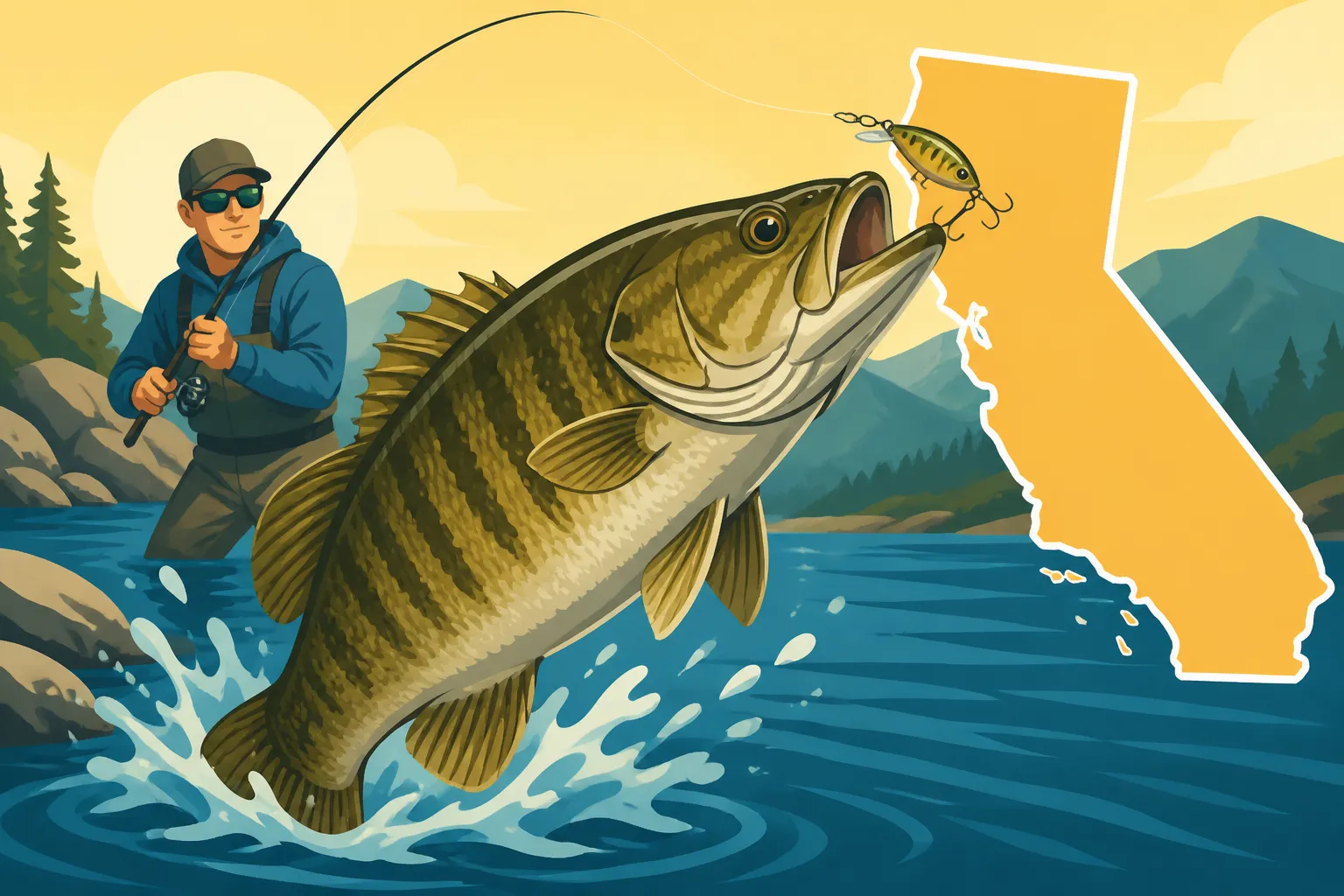
Smallmouth bass, often called "bronzebacks" or "brown bass," are renowned for their aggressive strikes and powerful, acrobatic fights. Unlike their largemouth brethren who prefer slower, weedier waters, smallmouths thrive in clear, cooler environments with plenty of rocky structure. This preference dictates where you'll find them and how you'll need to approach your fishing strategy.
Smallmouth Bass Biology and Behavior
These fish are fascinating creatures. They typically have a more streamlined body than largemouths, with distinct vertical bars or blotches along their sides, especially when young or in clear water. Their upper jaw doesn't extend beyond the rear edge of their eye, which is a key identifying feature. Smallmouths are generally smaller than largemouths, but what they lack in size, they more than make up for in fight. They're highly predatory, feeding on crayfish, insects, and smaller baitfish like minnows and shad. Their diet and habitat preferences mean they are often found lurking near rocky points, submerged humps, gravel bars, and current breaks in both lakes and rivers. They are also highly sensitive to water temperature, becoming most active when water temperatures are between 55-70°F (13-21°C).
During the colder months, smallmouth bass will retreat to deeper water, becoming less active and concentrating in specific thermal refuge areas, often around deep structures or ledges. As spring approaches and water temperatures begin to climb, they move shallower for pre-spawn feeding, packing on calories before the spawning ritual. Spawning occurs when water temperatures hit the low to mid-60s, typically from April to June depending on the region and elevation. During this period, males construct nests on gravel or rocky bottoms, often in protected coves or bays, and aggressively guard their eggs and fry. Post-spawn, they disperse to feed heavily throughout the summer, often relating to submerged cover or current, before another surge of feeding in the fall as they prepare for winter.
Preferred Habitat in California Waters
California's landscape is incredibly varied, offering unique smallmouth habitats. While largemouths dominate the warmer, weedier lakes, smallmouths shine in the cooler, clearer, rockier impoundments and river systems, particularly in Northern California. They are true structure fanatics. Think about what a smallmouth loves: ambush points, places to hide from predators, and areas where baitfish and crayfish congregate. This means looking for clean, hard bottoms.
In reservoirs, focus on main lake points that drop off quickly into deep water, rocky shorelines, submerged humps, ledges, and areas with large rock piles or boulders. Pay close attention to bluff walls and steep banks where the water meets solid rock. In river systems, smallmouths will hold in eddies behind large rocks, current seams, riffles, and pools with rocky or gravel bottoms. They use these areas to ambush prey being swept downstream. The presence of crayfish, their favorite meal, is a huge indicator of good smallmouth habitat. If you find a section of a lake or river that reminds you of a clear, cold-water smallmouth fishery back East, you're probably in the right spot.
Top California Smallmouth Bass Fishing Locations
While smallmouth bass aren't as widespread as largemouths in California, there are several standout destinations where you can consistently find them. Knowing these spots is half the battle; the other half is understanding their unique characteristics.
Northern California Hotspots
Northern California is truly the heartland of smallmouth bass fishing in the state, boasting several world-class fisheries. These lakes and rivers offer incredible opportunities, often surrounded by stunning scenery that makes every trip an adventure.
Lake Shasta: This massive reservoir, one of California's largest, is perhaps the undisputed king of smallmouth bass fishing in the state. With its sprawling arms, countless coves, and endless rocky points, Shasta offers prime smallmouth habitat. The key here is its sheer size and the abundance of rock and deep water. Smallmouths are found throughout the lake, but concentrate your efforts around steep bluffs, main lake points, and submerged islands. During the spring, look for them staging in coves near rocky banks before moving to deeper structure in the summer. Check out our detailed guide on how to fish for Largemouth Bass in California; many of the same principles for finding structure apply to smallmouths. For specific lake information, our guide on Lake Shasta Fishing Guide can provide more context, though it focuses more generally on the lake's offerings.
Trinity Lake: Nestled in the Trinity Alps, this beautiful lake is another gem for smallmouth enthusiasts. Its clear, cold waters and abundant rocky structure provide ideal conditions. Trinity is known for producing good numbers of smallmouths, with some impressive specimens mixed in. Similar to Shasta, focus on rocky points, steep drop-offs, and submerged humps. The fishing here can be fantastic, especially in the spring and fall. The remote, pristine setting only adds to the experience, making it a favorite for many anglers looking for a more wild fishing adventure.
Folsom Lake: Located near Sacramento, Folsom Lake is a popular destination that also holds a healthy population of smallmouth bass. While it might be better known for its largemouths and trout, the smallmouth fishery is strong, particularly in areas with deeper rock structure. Look for them on the dam face, rocky points, and submerged timber. The key here is often deeper water and transitioning from gravel to rock. Being a multi-species lake, you might also hook into other fighting fish while targeting smallies.
New Melones Lake: This Central California reservoir is another excellent option. New Melones is characterized by its clear water and extensive rocky shorelines, making it ideal smallmouth territory. Anglers often find success around the steeper banks, submerged islands, and areas where the old river channel runs close to rocky points. The smallmouths here can be quite feisty, offering strong battles on light tackle. Like many California reservoirs, water levels can fluctuate, so always check conditions before heading out, as it can significantly impact fish location.
Southern California Opportunities
While less common than in the north, Southern California isn't entirely devoid of smallmouth bass, though they are often found in stocked fisheries or specific, cooler water environments.
Lake Perris: This state recreation area lake near Riverside offers one of the few reliable smallmouth bass fisheries in Southern California. The smallmouths in Lake Perris are stocked and have established a decent population. The lake has clear water and some good rocky areas, particularly around the dam and other artificial structures. While not as wild as the Northern California lakes, it provides a convenient option for Southern California anglers looking to tangle with a bronze beauty. The fishing can be challenging but rewarding, especially during cooler months or early mornings.
Other Potential Spots: Occasionally, smallmouth bass are found in other Southern California reservoirs, often as a result of illegal stocking or accidental introductions. However, these populations are typically less robust and consistent than those in dedicated Northern California fisheries. Always verify the current fish populations and regulations for any specific body of water you plan to fish. You might find them mixed in with other species in lakes that have cooler, clearer sections or significant rocky structure. The CDFW website is your best friend for this kind of specific, hyper-local information.
Optimal Times for Smallmouth Bass Fishing
Timing is everything when it comes to catching smallmouth bass. These fish are highly sensitive to water temperature and seasonal changes, which directly impact their activity levels and location. Understanding these patterns will dramatically improve your success rate.
Seasonal Strategies
Different seasons present unique opportunities and challenges for smallmouth bass anglers. Each period requires a slightly different approach to maximize your chances.
Spring (Pre-Spawn and Spawn): Spring is arguably the best time to target smallmouth bass in California. As water temperatures climb into the 50s and low 60s, smallmouths move from their deep winter haunts to shallower, rocky areas to feed aggressively before spawning. This pre-spawn period is characterized by fish trying to bulk up, making them more susceptible to a wide range of lures. Look for them staging on main lake points, rocky flats adjacent to deep water, and around submerged humps. As temperatures rise further (60-65°F), they move onto spawning beds in protected coves or shallow pockets with gravel and rock. During the spawn, sight-fishing for bedding fish can be effective, but remember to practice responsible catch and release to protect the fishery. Light tackle and finesse baits like tubes, grubs, and Ned rigs are deadly during this time. This is a prime time for California Fishing in Spring.
Summer (Post-Spawn and Main Season): Once the spawn is over and water temperatures reach their peak in the 70s, smallmouths transition to their summer patterns. They often move to deeper structures, seeking cooler water and abundant forage. Look for them around main lake points, deep rock piles, ledges, and submerged timber. They'll also relate to current in river systems. Early mornings and late evenings are often the most productive times during summer, as the fish are more active when the sun is lower and water temperatures are slightly cooler. This is when deep-diving crankbaits, Carolina rigs, and drop-shot rigs excel. Sometimes, especially on cloudy days, they might push up shallower to feed.
Fall (Feeding Frenzy): Fall fishing for smallmouth bass can be just as, if not more, productive than spring. As water temperatures begin to drop from their summer highs, smallmouths enter a major feeding period, stocking up on fat reserves for the upcoming winter. They become incredibly aggressive and will chase down bait. Fish will often be found shallower than in summer, but still relating to rocky structure. Look for them on points, flats, and around baitfish schools. Topwater baits, jerkbaits, and crankbaits can be incredibly effective during this time, offering exciting and explosive strikes. They are still strong fighters, making fall a favorite for many dedicated smallmouth anglers.
Winter (Deep Water): Winter is the toughest time to catch smallmouth bass, as they retreat to the deepest, most stable water they can find. They become lethargic and less active, suspending over deep structure or hunkering down on bottom. Vertical jigging with spoons or blade baits, or slow presentations with drop-shot rigs, can sometimes coax a bite. Focus on deep humps, ledges, and channel swings. Patience is key, and bites will often be subtle. It's often not the most productive time, but for those dedicated, a winter smallmouth can be a rewarding catch.
Time of Day and Weather Considerations
Beyond the seasons, daily factors like time of day and prevailing weather conditions play a huge role in smallmouth activity.
Early Morning and Late Evening: These are prime times for smallmouth, especially during the warmer months. The lower light conditions and cooler water temperatures make them more comfortable to move into shallower feeding areas. Topwater action can be absolutely phenomenal at dawn and dusk. As the sun climbs higher, they often retreat to deeper, shadier, or more structured areas.
Overcast Days: Smallmouth bass, like many predatory fish, tend to be more active and willing to chase bait on overcast or cloudy days. The reduced light penetration makes them feel more secure in shallower water and can keep them biting throughout the day, even in summer. This is a great time to throw reaction baits like crankbaits and spinnerbaits.
Wind and Current: Wind can be your friend when fishing for smallmouth. A chop on the water breaks up light, making fish less wary. It also creates current and concentrates baitfish, pushing them against points or structure where smallmouths lie in wait. Look for wind-blown banks and points. In rivers, smallmouths are inherently tied to current breaks and seams, using them as ambush points. Understand how the current flows and where fish might be positioned out of the main force, waiting for food.
Essential Gear and Tackle for Smallmouth Bass
Having the right tools for the job makes all the difference, and smallmouth bass fishing is no exception. While you might already have some gear for other bass species, a few specific considerations will greatly enhance your smallmouth experience. You'll find a lot of excellent options on Amazon for all the gear listed below.
Rods and Reels
When it comes to smallmouth, finesse and sensitivity are often paramount. You're not usually slinging giant swimbaits, so lighter setups tend to be more effective.
Spinning Gear: This is the bread and butter for smallmouth fishing. A good quality, medium-light to medium power spinning rod, typically in the 6'6" to 7'2" range, with a fast action tip, is ideal. This setup provides the sensitivity needed to detect subtle bites and the backbone to handle their powerful runs. Pair it with a 2000 or 2500 series spinning reel. Brands like Shimano and Daiwa offer excellent options that balance smooth drag with durability. The lighter line capacity of these reels is perfect for smallmouth. For beginners, a combo from a brand like Pflueger or Ugly Stik on Amazon can be a great entry point.
Casting Gear (Optional): While spinning gear handles most smallmouth applications, a light casting setup can be useful for throwing slightly heavier reaction baits like deeper crankbaits or larger jerkbaits, especially if you encounter bigger smallmouths or need to make long, accurate casts. A medium power, fast action casting rod (6'8" to 7'0") with a lightweight baitcasting reel spooled with 10-12lb fluorocarbon can be a versatile addition. The sensitivity of modern casting rods is incredible for feeling bottom structure.
Fishing Line
The right fishing line can make or break your day, especially with wary smallmouths in clear water.
Fluorocarbon: This is often the top choice for smallmouths. Its low visibility in water makes it nearly invisible, which is crucial in the clear waters smallmouths inhabit. Fluorocarbon also has excellent sensitivity, allowing you to feel every bump and bite. Use 6-10 lb test for most applications. Its sinking nature also helps your baits get down quickly and stay in the strike zone. You can spool your entire reel with fluorocarbon or use it as a leader tied to braided line.
Braided Line: While visible, braided line offers incredible strength, castability, and no stretch, providing maximum sensitivity. Many anglers use 10-15 lb braided line as their main line, then tie on a 6-8 lb fluorocarbon leader with a strong knot like an FG knot or an Albright knot. This gives you the best of both worlds: the strength and sensitivity of braid, and the stealth of fluorocarbon. This setup is particularly effective for techniques like drop-shotting or Texas rigging where feeling the bottom is crucial.
Lures and Baits
Smallmouth bass are opportunistic predators, but they have some distinct preferences. Having a diverse tackle box will allow you to adapt to changing conditions.
Crankbaits and Jerkbaits: These are excellent search baits, especially in spring and fall. Shallow-diving crankbaits are great for covering rocky flats, while medium to deep divers can probe ledges and humps. Smallmouths love lures with natural baitfish patterns like crawfish, shad, or perch. Jerkbaits, like those from Rapala or Lucky Craft, are fantastic for mimicking wounded baitfish. The erratic action and pauses often trigger vicious strikes from aggressive smallmouths. Don't be afraid to experiment with different retrieve speeds and pauses.
Soft Plastics: This category is arguably the most versatile for smallmouths.
- Tubes: Small (2.5-3.5 inch) tube jigs are a smallmouth staple. They mimic crayfish and baitfish perfectly. Rig them with an internal jig head or on a Texas rig. Green pumpkin, watermelon, and brown/orange are classic colors.
- Grubs: Single-tail or double-tail grubs rigged on a small jig head are simple yet highly effective. Fish them with a steady retrieve or bounced along the bottom.
- Ned Rigs: This finesse technique, consisting of a small mushroom-shaped jig head and a short, buoyant plastic worm (like a Z-Man TRD), is deadly for finicky smallmouths, especially in clear, cold water. It stands upright on the bottom, mimicking a foraging baitfish.
- Drop-Shot Worms: Small (3-4 inch) straight-tail or Gulp! minnow baits on a drop-shot rig are incredible for suspending fish or those hugging deep structure.
- Creature Baits: Smaller crawfish imitations, especially those that look like a genuine local crayfish species, can be irresistible. Texas rig them around rocks and timber.
Topwater Lures: When conditions are right (low light, calm water, active fish), topwater fishing for smallmouth is one of the most exciting experiences. Poppers, walk-the-dog baits (like Heddon Super Spook Jr.), and smaller prop baits can draw explosive strikes. Early mornings and late evenings in summer and fall are prime topwater times.
Effective Techniques for California Smallmouth Bass
Now that you've got the gear, let's talk about how to use it. Smallmouth bass fishing is often about precision and presentation, especially when dealing with clear water and wary fish.
Finesse Fishing Mastery
Finesse techniques are absolute game-changers for smallmouth bass, especially in California's clear, rocky reservoirs and rivers. These methods emphasize a subtle, natural presentation that can entice even the most cautious fish.
Drop-Shotting: This technique is a smallmouth killer. It involves tying a hook directly to your main line (using a Palomar knot is common) and then attaching a weight to the tag end, usually 12-18 inches below the hook. This allows your bait to suspend at a specific depth, directly in the strike zone, while the weight maintains bottom contact. Use small (3-4 inch) straight-tail worms, minnow imitations, or finesse baits. The key is to barely move the rod, just enough to impart a subtle quiver to the bait. This makes it look like a vulnerable baitfish or a struggling insect. It's incredibly effective for deep smallmouths or those suspended over structure. Remember to use light fluorocarbon line, typically 6-8 lb test, for optimal stealth and sensitivity.
Ned Rigging: The Ned Rig has exploded in popularity, and for good reason—it flat-out catches fish, especially smallmouths. It consists of a small, mushroom-shaped jig head (1/16 to 1/8 oz) paired with a short, buoyant soft plastic (like a Z-Man Finesse TRD). The buoyancy of the plastic causes it to stand upright on the bottom, mimicking a foraging baitfish or a small crayfish. Fish it on light spinning gear, casting it out and letting it sink. Then, simply drag it slowly along the bottom with short pauses, or make tiny hops. The subtle action is often irresistible to smallmouths. This rig shines in clear water and tough conditions, making it perfect for many California smallmouth spots.
Shaky Head and Carolina Rig:
- Shaky Head: Similar to a Ned rig but with a slightly larger jig head and a worm typically 4-7 inches long. It's fantastic for probing rocky bottoms. Cast it out, let it sink, and then "shake" your rod tip to make the worm quiver and twitch on the bottom. It's a great choice when smallmouths are feeding on bottom-dwelling creatures.
- Carolina Rig: This setup is excellent for covering water and fishing deeper areas. It involves a weight (often a ½ to 1 oz bullet or egg sinker) sliding freely on your main line, followed by a bead, a swivel, and then a leader (2-4 feet long) with a hook and soft plastic bait (lizards, worms, or creature baits). The weight drags on the bottom, kicking up sediment and attracting attention, while your bait floats enticingly behind it. It’s effective for finding schools of smallmouth on deep flats or points.
Casting and Retrieval Techniques
While finesse often gets the job done, smallmouth bass are also known to aggressively chase down reaction baits, especially when they're actively feeding.
Crankbait and Jerkbait Retrieves: For crankbaits, vary your retrieve. A steady retrieve can be effective, but often a retrieve with intermittent pauses or quick changes in speed can trigger more strikes. When your crankbait bounces off rocks or timber, that deflection is often when a smallmouth will strike, mimicking an injured or fleeing baitfish. For jerkbaits, the "twitch, twitch, pause" retrieve is classic. Two quick twitches of the rod tip, followed by a 2-5 second pause, often provokes a strike as the lure suspends tantalizingly in the water. Experiment with the length of your pauses—sometimes a longer pause is key.
Topwater Action: Fishing topwater for smallmouth is pure excitement. For poppers, cast them near structure and let them sit for a few seconds. Then, give a subtle twitch to make them "pop" and splash, followed by another pause. For "walk-the-dog" baits, a rhythmic side-to-side retrieve is achieved by twitching your rod tip while reeling in slack. The goal is to make the lure sashay back and forth across the surface, mimicking a struggling baitfish. The strikes are usually explosive and unforgettable. Always let the fish commit to the bait before setting the hook; resist the urge to set on the splash.
Jigging and Tubes: When fishing tube jigs or grubs, you can either swim them steadily just above the bottom or "drag and hop" them along the structure. For dragging, simply cast out and slowly retrieve, letting the jig scrape the bottom. For hopping, lift your rod tip a few inches, then let the jig fall back to the bottom on a semi-slack line. Most bites will occur on the fall. Don't be afraid to experiment with vertical jigging techniques if you're marking fish on your electronics in deep water; spoons or blade baits dropped directly onto them can be very effective.
Conservation and Regulations for Smallmouth Bass
As passionate anglers, it's our responsibility to protect the fisheries we enjoy. Understanding and adhering to California's fishing regulations is not just good practice, it's the law.
Catch and Release Practices
Smallmouth bass are a valuable sportfish, and practicing responsible catch and release is crucial for maintaining healthy populations, especially in waters where they are less abundant. Many anglers choose to release all smallmouths they catch.
Minimize Stress: When you land a smallmouth, handle it as little as possible. Keep the fish in the water if you can. If you need to remove it from the water for a photo, do so quickly and support its body horizontally to avoid internal damage. Wet your hands before touching the fish to protect its slime coat, which is vital for its health and protection against disease.
Proper Hook Removal: Use needle-nose pliers or a de-hooking tool to quickly remove the hook. If the fish is deeply hooked, especially in the gills, it's often best to cut the line as close to the hook as possible rather than trying to rip it out, which can cause fatal damage. Barbless hooks can also make hook removal much easier and less traumatic for the fish. Many anglers consider using barbless hooks a standard practice.
Revival: If the fish seems stressed or lethargic after the fight, hold it gently in the water, facing into any current, until it regains its strength and can swim away under its own power. Never throw a fish back into the water; always release it gently. Your efforts ensure that fish can continue to grow and reproduce, providing thrilling battles for future generations.
California Fishing Regulations and Limits
Before you head out, always make sure you have a valid California Fishing License Guide. Without one, your fishing trip could turn into a costly mistake. Additionally, be intimately familiar with the specific regulations for smallmouth bass in the body of water you intend to fish. These regulations can vary by lake, river, or region.
Statewide Regulations: The California Department of Fish and Wildlife (CDFW) sets statewide regulations for freshwater game fish, including bass. Generally, there are statewide limits on the number of fish you can keep (bag limit) and minimum size restrictions. For bass, these are typically set to protect younger fish and allow them to reproduce. Our article on California Bass Fishing Regulations provides a comprehensive overview of the general rules you need to know.
Localized Rules: While there are general rules, it's critical to understand that many lakes and rivers have specific, localized regulations that can supersede the statewide rules. For example, some lakes might have slot limits (where fish within a certain size range must be released) or different daily bag limits. Always consult the current CDFW Freshwater Sport Fishing Regulations booklet or the CDFW website for the specific lake or river you'll be fishing. A quick search on the CDFW site for a specific lake like Lake Shasta will bring up any special regulations. Don't rely on old information or hearsay. Ignorance of the law is not an excuse for a violation.
Here’s a general overview of common bass regulations in California, but always verify for your specific location:
| Rule Type | General Statewide Regulation (Always Verify!) | Notes |
|---|---|---|
| Fishing License | Required for all anglers 16 years and older | Check California Fishing License Cost for details. |
| Bass Bag Limit | Usually 5 bass (mixed species) | Can include largemouth, smallmouth, spotted bass. Specific lakes may differ. |
| Bass Size Limit | Usually 12 inches minimum length | Measured from tip of snout to tip of tail. Some waters have higher minimums or slot limits. |
| Report Card | Not typically required for bass | Specific species like steelhead or sturgeon need separate report cards. |
| Gear Restrictions | Limited to 2 rods per angler | Check for special "artificial lures only" or "barbless hook" waters. |
Remember, these are general guidelines. Always double-check the current regulations before each trip. For a deeper dive into all the rules that govern freshwater fishing, refer to our comprehensive guide on California Freshwater Fishing Regulations. Safe and responsible fishing ensures our beautiful California waters remain a fantastic place to fish for smallmouth bass for years to come.
Disclaimer
The information provided in this guide is for general informational purposes only and is based on publicly available data and common fishing practices. Fishing regulations and conditions in California can change frequently. Always consult the latest official regulations from the California Department of Fish and Wildlife (CDFW) before engaging in any fishing activities. Ensure you have the proper licenses and permits. Fishing involves inherent risks; please exercise caution and prioritize safety.