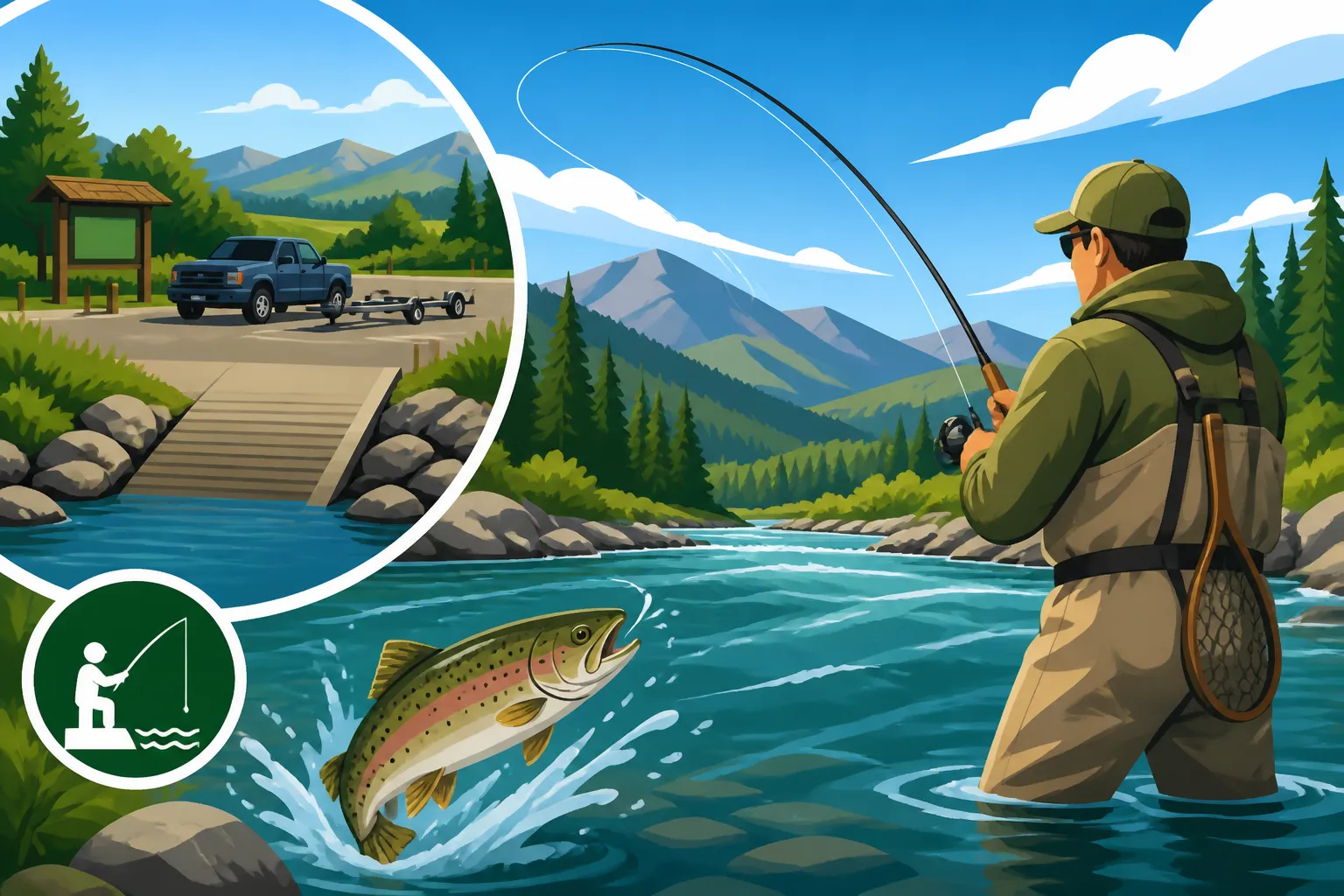
Trinity River: Fishing Access and Tips
The Trinity River, snaking its way through the rugged Klamath Mountains of Northern California, is a truly iconic fishery, but let's be honest, trying to figure out where to cast a line and what rules apply can feel like trying to untangle a particularly stubborn knot in your leader. The sheer volume of regulations, the varying water conditions, and the diverse geography can leave even seasoned anglers scratching their heads. This guide is here to cut through that confusion, giving you the insider knowledge on accessing this magnificent river and the practical tips you need to make your next fishing adventure a successful one.
Understanding the Trinity River's Unique Fishing Landscape
The Trinity River isn't just one type of river; it's a dynamic system that changes dramatically from its upper reaches near Lewiston to its confluence with the mighty Klamath River. This variability means you need to understand the different sections and what fish call them home throughout the year.
The River's Character and Fish Species
From the cold, consistent flows below Lewiston Dam to the warmer, broader stretches near Willow Creek, the Trinity offers a diverse range of habitats. The upper sections, heavily influenced by the dam releases, are prime cold-water fisheries. Here, the focus is almost entirely on trout and steelhead, benefiting from managed flows. As you move downstream, especially past Junction City, the river starts to pick up tributaries, becoming wider and more varied in its structure with deep pools, riffles, and gravel bars.
The Trinity is world-renowned for its anadromous fish runs. Steelhead are, without a doubt, the crown jewel for many anglers. Both hatchery and wild steelhead make their way upriver, offering incredible fishing opportunities, especially in the cooler months. You'll also find strong runs of Chinook (King) Salmon and, to a lesser extent, Coho (Silver) Salmon, though their seasons and regulations can be highly complex. Beyond these migratory species, resident rainbow and brown trout are abundant, particularly in the upper river, providing year-round action. In the lower river, as temperatures rise, you might even encounter smallmouth bass and other warm-water species, adding another layer of complexity and opportunity to your trip.
Seasonal Opportunities and Challenges
Fishing the Trinity River is a year-round affair, but what you target and how you fish will drastically change with the seasons. Trying to fish for salmon in July will likely lead to disappointment, just as targeting summer-run steelhead in the dead of winter might not yield the results you're hoping for.
Fall is arguably the most celebrated season on the Trinity. This is when the main push of Chinook salmon enters the system, followed closely by the first waves of winter-run steelhead. The river often holds good water levels, and the crisp autumn air makes for a truly picturesque experience. However, this also means crowds, especially in popular spots. Winter shifts the focus almost entirely to steelhead, with the river often running cold and clear, offering challenging but highly rewarding conditions for anglers willing to brave the elements. Spring sees a transition, with some late-run steelhead still present, and resident trout becoming more active as water temperatures begin to rise. Summer, particularly in the upper reaches, is fantastic for targeting resident trout with dry flies, while the lower river might offer bass fishing. Always remember that water levels, dictated by dam releases and rainfall, are crucial. A low-flow year can concentrate fish but make them spooky, while high, turbid water can shut down a bite entirely. Staying informed on current conditions is paramount.
Navigating Public Access Points and Regulations
One of the biggest hurdles for new anglers to the Trinity River is simply knowing where you can legally and effectively get to the water. Couple that with the specific and often changing regulations, and it's enough to deter anyone. But don't despair; with a little planning, you can unlock some incredible fishing.
Popular Public Access Areas
The Trinity River has several well-known public access points, each offering different advantages whether you're a bank angler, wader, or drift boater. Starting upstream near Lewiston, you'll find the Lewiston Dam Reregulation Reservoir and adjacent river access. This area is often popular for its consistent water and is a launch point for many drift boat trips. Moving downstream, areas around Junction City offer a mix of public lands and private properties, but careful scouting will reveal turnouts and paths to the river. Douglas City and Big Bar also provide scattered access points, some with designated boat launches and others requiring a bit more bushwhacking. Further downstream, Willow Creek is a major hub, particularly for salmon and steelhead anglers, with numerous public access points and boat ramps that cater to both drift boats and jet boats, especially in the lower, wider sections.
It's always a good idea to consult detailed maps, like those offered by the California Department of Fish and Wildlife (CDFW) or dedicated fishing apps, before heading out. Sometimes, private land borders the river, and respecting posted signs is crucial. If you're looking for a guided experience to navigate these waters, platforms like FishingBooker can connect you with local guides who know every riffle and run on the Trinity, ensuring you hit the best spots legally and safely. They're invaluable for uncovering those lesser-known, yet highly productive, stretches of river.
Essential Regulations and Report Cards
Fishing the Trinity River isn't as simple as just showing up with a rod. It falls under specific California Freshwater Fishing Regulations which can be quite detailed and change annually. The most fundamental requirement is a valid California Fishing License Guide. Every angler aged 16 or older needs one. Beyond that, the Trinity River is often subject to special regulations designed to protect its precious anadromous fish populations.
For instance, much of the Trinity River is designated as "special regulation waters" requiring barbless hooks for all species. There are also specific gear restrictions, varying open and closed seasons for different species, and precise bag and size limits. If you plan to target steelhead, you absolutely need a California Steelhead Report Card, and for salmon, a California Salmon Report Card is mandatory. These report cards are critical for data collection and conservation efforts, and failing to properly fill them out or return them can result in hefty fines. It's imperative to get the most current California Fishing Regulations Booklet Explained each year and study the specific sections for the Trinity River, paying close attention to any emergency closures or in-season changes. This due diligence can save you a lot of grief and help protect the fishery for future generations.
Here's a quick overview of common Trinity River regulations, but always check the official CDFW regulations before you go:
| Species | Typical Season (General) | Hook Type | Common Limit (check regs) | Special Notes |
|---|---|---|---|---|
| Steelhead | Late Fall – Early Spring | Barbless (often) | 1-2 Hatchery (Wild C&R) | Steelhead Report Card required; often artificial lures only or fly-fishing only in certain sections. |
| Chinook Salmon | Late Summer – Fall | Barbless (often) | Varies by year/zone | Salmon Report Card required; season highly dependent on run forecasts and can close early. |
| Coho Salmon | Generally Closed | N/A | N/A | Federally protected; typically catch-and-release only or fully closed. |
| Brown Trout | Year-round | Barbless (often) | 2-5 fish | Often restricted to artificial lures. |
| Rainbow Trout | Year-round | Barbless (often) | 2-5 fish | Hatchery and wild limits may differ; artificial lures often required. |
Disclaimer: This table provides general information. Always consult the current CDFW regulations for precise and up-to-date rules.
Proven Fishing Techniques and Gear for the Trinity
The Trinity River caters to a wide array of fishing styles, but to be truly effective, understanding the nuances of each technique and having the right gear is key. Whether you prefer the graceful art of fly fishing or the practical efficiency of conventional tackle, the Trinity demands adaptability.
Fly Fishing Strategies
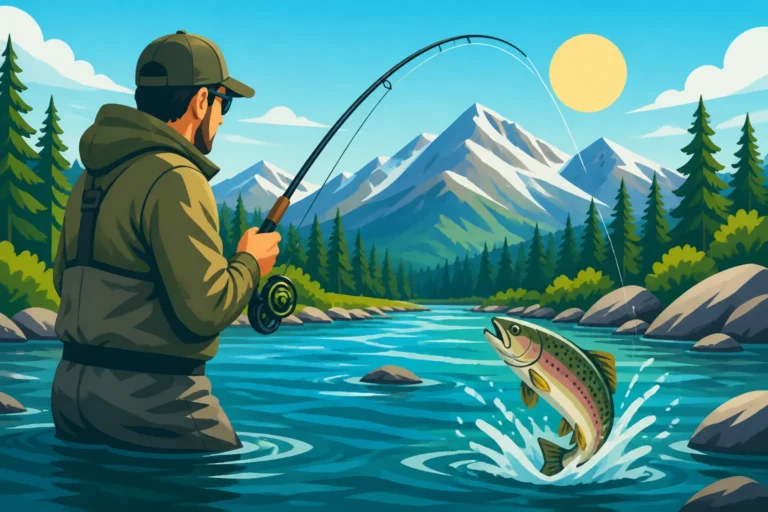
Fly fishing on the Trinity River is not just a technique; for many, it's a way of life, especially when targeting its elusive steelhead. When the conditions are right, particularly when targeting How to Catch Steelhead in California or trout, it can be incredibly rewarding. Nymphing is perhaps the most consistent method throughout much of the year, particularly for steelhead and resident trout. This involves drifting weighted nymph patterns, often under an indicator, mimicking the aquatic insects that make up a large portion of the fish's diet. Patterns like Copper Johns, Psycho Princes, and various egg patterns are staples. You'll want a longer rod, typically 9-10 feet, in a 6-8 weight range for steelhead, paired with a matching reel and a weight-forward floating line.
Beyond nymphing, swinging flies, often with a two-handed spey or switch rod, is a truly mesmerizing and effective technique for steelhead. This involves casting across and downriver, allowing a weighted fly (like an Intruder or an articulated leech pattern) to swing through prime holding lies. The takes are often subtle but powerful. When summer arrives and water temperatures are optimal, particularly in the upper river, dry fly fishing for resident trout can be phenomenal. Caddis, mayfly, and stonefly imitations can bring fish to the surface, offering exciting visual strikes. For a deeper dive into the specifics, check out our California Fly Fishing Guide for more expert tips.
Conventional Angling Approaches
While fly fishing gets a lot of attention, conventional angling methods are incredibly effective and widely used on the Trinity, especially for salmon and steelhead. Drift fishing with bait or lures is a time-tested strategy. This involves using a three-way swivel or a sliding weight setup to present your offering naturally along the river bottom, bouncing along with the current. Cured salmon roe is an absolute killer bait for both salmon and steelhead, particularly in the fall. Worms, like nightcrawlers, can also be productive for resident trout and sometimes steelhead. When using bait, ensure you're in sections of the river where bait is allowed, as many areas are artificial lures only.
Lures also play a huge role. For steelhead, small plugs like Hot Shots or Brad's KillerFish, often fished in tandem (a practice where two lures are rigged on one line), are extremely popular, particularly for back-trolling from a drift boat. Spinners, like Blue Fox or Mepps, can also entice strikes from aggressive trout and steelhead. For salmon, larger plugs or even jigs tipped with roe can be effective in deeper holes. You'll want a medium-heavy spinning or baitcasting setup, typically 8-10 feet in length, capable of handling 8-15lb test line, depending on the target species and water conditions. Remember that even with conventional gear, the often-mandated barbless hook rule applies, so be sure to pinch down your barbs before you hit the water.
Tips for a Successful and Responsible Trinity River Fishing Trip
Fishing on the Trinity River isn't just about catching fish; it's about connecting with nature, respecting the environment, and ensuring that this incredible resource remains healthy for future generations. A little preparation and mindful behavior can make all the difference.
Planning Your Adventure
Before you even leave home, a little research can go a long way. The Trinity River is highly dependent on flows from Lewiston Dam and natural rainfall, so water conditions can change rapidly. Check the latest river flow data from USGS gauges and consult California Fishing Reports for current clarity and temperature readings. These factors will heavily influence fish behavior and which techniques will be most effective.
Consider the time of year carefully. If you're chasing migratory species, understanding California Salmon Season Dates Explained and California Steelhead Season Dates Explained is absolutely crucial, as these seasons can be short and subject to change based on run forecasts. If you're new to the river, or just want to maximize your chances, hiring a local guide is an excellent investment. Guides possess intimate knowledge of the river, current fish patterns, and all the tricky regulations. Websites like FishingBooker are a fantastic resource for finding experienced, reputable guides who specialize in Trinity River fishing, offering everything from half-day drift trips to multi-day steelhead expeditions. They can provide all the necessary gear and expertise, making your trip stress-free and productive. Always pack layers of clothing, as Northern California weather can be unpredictable, and bring plenty of water and snacks.
Conservation and Etiquette
The Trinity River is a precious resource, and responsible angling is paramount. Practicing ethical catch-and-release, especially for wild steelhead and other sensitive species, is fundamental to conservation. Learn how to properly handle fish to minimize stress: keep them in the water as much as possible, use wet hands, and revive them gently before release. Using barbless hooks, which are often required on the Trinity, makes this process much easier and less harmful to the fish.
Beyond fish handling, adopting "Leave No Trace" principles is essential. Pack out everything you pack in, and perhaps even pick up any litter you find. Respecting private property is also critical; much of the land bordering the Trinity is privately owned, so ensure you are only accessing the river via designated public easements or with permission. Finally, be courteous to other anglers. The Trinity can get crowded, especially during peak seasons, so give fellow fishermen ample space and avoid "fishing through" someone's spot. A friendly wave and mutual respect go a long way in ensuring everyone has a positive experience on this truly special river.
Disclaimer
Fishing in California carries inherent risks. Regulations, seasons, and conditions can change rapidly. Always consult the official California Department of Fish and Wildlife (CDFW) regulations before any fishing trip. This guide is for informational purposes only and does not constitute legal advice or an exhaustive list of all rules. Fish responsibly and safely.