California Leopard Shark Fishing
It can be incredibly frustrating to hear about all the exciting fishing opportunities in California, only to feel overwhelmed by the sheer number of species and the complex regulations that come with them. If you're looking for a relatively accessible, unique, and strong-fighting shark species that's abundant in our coastal waters, this comprehensive guide will walk you through everything you need to know about California leopard shark fishing, from identifying them to landing them responsibly.
Understanding California Leopard Sharks
Leopard sharks are a truly iconic species along the California coast, easily recognizable and a favorite target for many anglers, especially those looking for a thrilling fight without needing an offshore boat. Knowing a bit about their biology and habits will dramatically improve your chances of finding and catching them.
What Makes Leopard Sharks Unique?
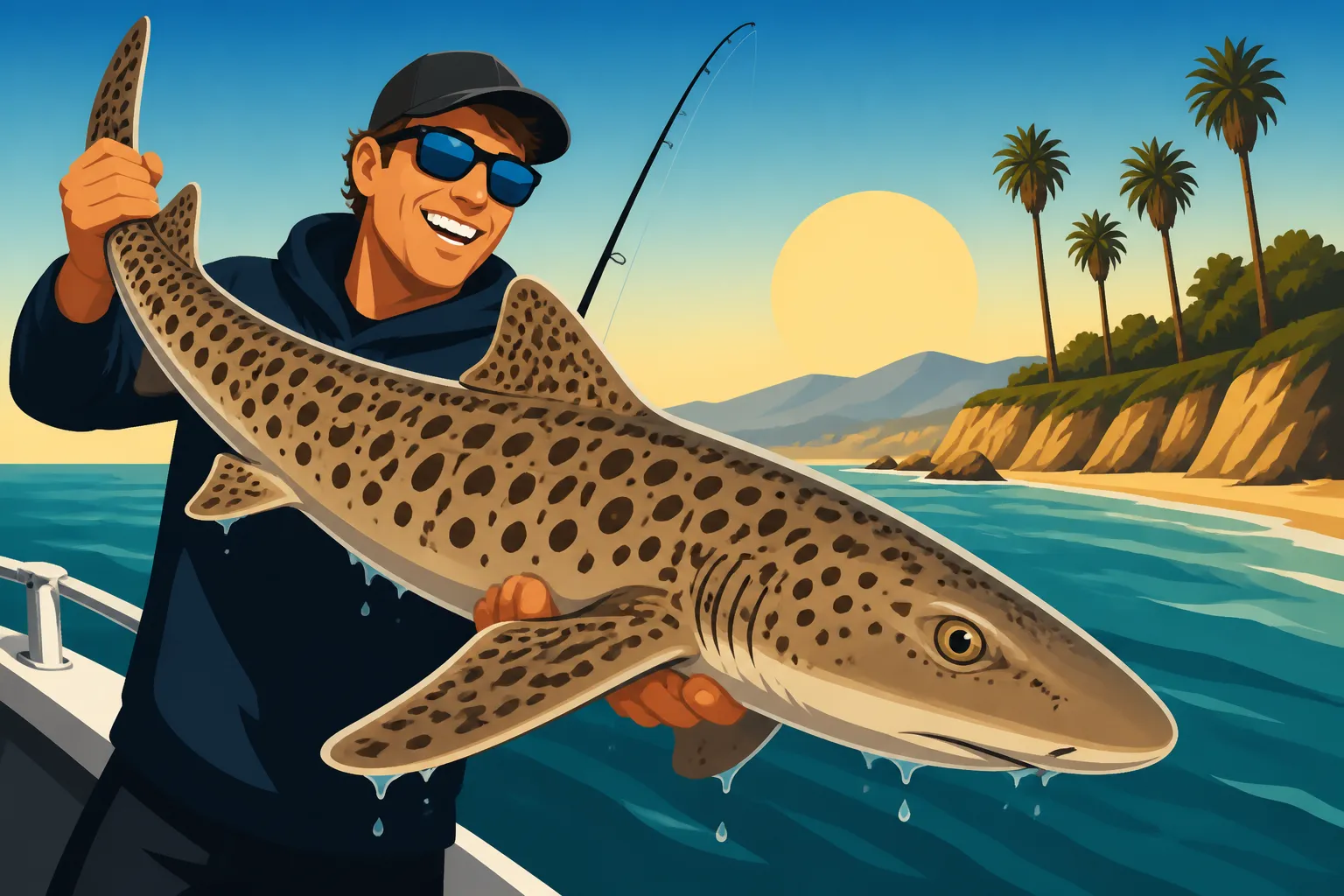
First off, let's talk about what makes these sharks so cool. Leopard sharks, or Triakis semifasciata, get their name from those distinctive saddle-like markings and dark spots that cover their sleek, elongated bodies. They're typically a bronze or silvery-gray color on top, fading to a lighter belly, making them blend in beautifully with the sandy and rocky bottoms they frequent. These aren't your massive, toothy ocean predators you see on TV; they're generally smaller, usually ranging from 3 to 5 feet in length, though some can reach up to 7 feet. They have small, blunt teeth designed for crushing crustaceans and soft-bodied prey, not tearing flesh, which makes them less intimidating to handle than other shark species.
What's really fascinating about leopard sharks is their adaptability. They thrive in shallow coastal waters, estuaries, bays, and even brackish environments, making them incredibly accessible to shore anglers. They're a bottom-dweller, often cruising slowly over sandy or muddy flats, kelp beds, or around rocky reefs. They're also relatively docile and quite curious, which often works in an angler's favor. You'll find them active year-round, but they really ramp up their feeding and breeding activities when the water warms.
Leopard Shark Habitat and Behavior
Leopard sharks are truly creatures of the nearshore environment. You’ll rarely find them far out in the deep ocean. Their preferred hangouts include our many bays, estuaries, and sheltered coastal areas all along California. Think places like San Francisco Bay, Monterey Bay, Morro Bay, San Diego Bay, and the protected lagoons and harbors in between. They love areas with a mix of sandy bottom and some structure, whether it’s eelgrass beds, rock piles, or even pier pilings. This variety in habitat gives them plenty of places to forage for their favorite foods and seek shelter from larger predators.
These sharks are primarily nocturnal feeders, though they're certainly caught during the day, especially in murky water or during tide changes. They use their keen sense of smell and electroreception to detect prey buried in the sand or hiding in the weeds. They often congregate in large schools, sometimes numbering in the hundreds, especially during their pupping season in spring and early summer when females move into warmer, shallower bays to give birth. These schooling behaviors mean that if you find one, you're likely to find many! Understanding their preference for these shallow, sheltered environments is key to knowing where to drop your line.
Where and When to Find Leopard Sharks in California
Knowing where they live is one thing, but knowing the best spots and when to go can feel like a secret code. Luckily, leopard sharks are quite predictable, and with a little local knowledge, you'll be well on your way to a successful outing.
Prime Leopard Shark Fishing Locations
California’s expansive coastline offers countless spots, but certain areas are consistent hotspots for leopard sharks.
- San Francisco Bay: This massive estuary is perhaps the most famous leopard shark fishery in the state. From shores, piers, and boats, you can find them almost anywhere there's a mud flat or a channel. Popular spots include the Berkeley Pier Fishing Guide and the waters around Alameda and Foster City.
- Monterey Bay: Known for its rich marine life, Monterey Bay also holds a healthy population of leopard sharks, especially in the shallower sections. Fishing from shore near Moss Landing or launching a kayak in calmer areas can be highly productive.
- Morro Bay: Another fantastic, protected bay, Morro Bay Fishing Guide offers excellent opportunities for leopard sharks, particularly around the harbor entrance and eelgrass beds.
- Southern California Bays: San Diego Bay Fishing Spots, Mission Bay, and Newport Bay are all fantastic nurseries and feeding grounds for leopard sharks. Pier fishing, kayak fishing, or small boat fishing in these areas can yield consistent results.
- Estuaries and Lagoons: Don't overlook the myriad smaller estuaries and lagoons that dot the coast, like those near Half Moon Bay or Bodega Bay. These often provide ideal shallow, warm water conditions that leopard sharks love.
When considering a specific spot, look for areas with current breaks, channel edges, or the confluence of muddy flats and slightly deeper water. These are natural ambush points for the sharks.
Best Seasons and Tides for Leopard Sharks
Timing your trip can make all the difference. While leopard sharks are present year-round, certain seasons and tide cycles are definitely more productive.
- Spring and Summer (April-September): These are prime months. As coastal waters warm up, leopard sharks become much more active. This is also when many females move into the shallow bays for pupping, leading to higher concentrations of sharks. You'll find them aggressively feeding to support their energy needs.
- Fall (October-November): Fishing can remain excellent into the early fall, especially in Southern California, as water temperatures stay relatively mild. As winter approaches, their activity might slow down, but they don't disappear entirely.
- Winter (December-March): While possible, winter fishing for leopard sharks is generally slower. They tend to move to slightly deeper, more stable waters within the bays or just offshore to escape colder temperatures. However, warmer winter days or specific deep channels can still produce catches.
When it comes to tides, the prevailing wisdom for leopard shark fishing is to target moving tides. Both the incoming and outgoing tides can be great, as the movement of water stirs up the bottom, dislodging prey and carrying scent, which really gets these sharks on the hunt. A strong tidal flow, especially around a tide change (the hour before and after high or low slack tide), often provides the best bite. However, fishing during slack tide can sometimes be productive in shallower areas where sharks might be resting or waiting for the next current.
Here’s a quick overview of optimal conditions:
| Factor | Ideal Conditions | Notes |
|---|---|---|
| Season | Spring, Summer, Early Fall (April – November) | Most active when water is warmest; peak pupping in spring/summer. |
| Tide Cycle | Incoming or Outgoing Tide | Moving water stirs up food, disperses scent. |
| Time of Day | Dawn, Dusk, Night (especially in clearer water) | Nocturnal feeders, but caught all day in murky water or strong tides. |
| Water Temp | 55°F – 70°F (13°C – 21°C) | Higher temperatures increase metabolism and feeding activity. |
| Location Type | Shallow bays, estuaries, sandy/muddy flats, eelgrass | Look for structure and current breaks. |
Essential Gear and Techniques for Leopard Shark Fishing
You don't need highly specialized, expensive gear to catch leopard sharks, which is part of their appeal. However, having the right setup will significantly increase your success rate and make the experience much more enjoyable.
Rods, Reels, and Line Choices
For most leopard shark fishing, whether from shore, a pier, or a small boat, a medium-heavy to heavy conventional or spinning setup is ideal.
- Rods: Look for a rod in the 7 to 9-foot range with a fast action and a strong backbone. A rod rated for 15-40 lb line with a lure weight of 2-8 oz will handle most leopard sharks comfortably. Brands like Penn, Daiwa, or Shimano offer excellent value in this category. You want something that can cast a decent distance if you're on shore and can absorb the powerful runs these sharks can make.
- Reels: A sturdy conventional reel (like a Penn Squall or a Daiwa Lexa) or a robust spinning reel (like a Shimano Spheros or a Penn Battle) in the 5000-8000 size class is perfect. Ensure it has a smooth drag system, as this is crucial for fighting any strong fish. A high line capacity is also a plus. You can find many reliable options on Amazon if you're looking to upgrade your setup.
- Line: Spool your reel with 30-50 lb braided line. Braid offers superior sensitivity, casting distance, and strength-to-diameter ratio. However, because braid is highly visible and has no stretch, you'll want to add a monofilament or fluorocarbon leader. A 50-80 lb fluorocarbon leader, about 3-5 feet long, tied to your braid with a strong knot like an FG knot or an Albright knot, provides abrasion resistance and stealth. This is important because leopard sharks often rub your line against rocks or their rough skin.
Baits and Rigs That Work Best
Leopard sharks are primarily scavengers and opportunistic predators, so strong-smelling baits are often the most effective.
-
Top Baits:
- Mackerel: Fresh or frozen chunks of mackerel are a leopard shark favorite. The oily scent trails through the water, attracting sharks from a distance.
- Sardines: Similar to mackerel, sardines are oily and create a great scent slick.
- Squid: Always a reliable bait for bottom-dwelling species, squid is tough, stays on the hook well, and has a good scent. It's often readily available.
- Anchovies: While smaller, fresh anchovies can be effective, especially when fished in schools or lightly mashed to release more scent.
- Ghost Shrimp/Clams: In some bay environments, where these are natural prey, live or freshly shucked ghost shrimp or clam necks can be incredibly effective.
-
Effective Rigs:
- Carolina Rig (Sliding Sinker Rig): This is arguably the most popular and effective rig for leopard sharks. It consists of a sliding egg sinker (1-4 oz, depending on current and depth), a bead (to protect the knot), a swivel, and a 12-24 inch fluorocarbon leader (50-80 lb) tied to a sturdy hook. The sliding sinker allows the shark to pick up the bait without feeling the weight, leading to more confident bites.
- High-Low Rig (Dropper Loop Rig): This rig uses two hooks suspended above a weight at the bottom. It allows you to present two different baits or cover a slightly larger water column. This is very popular for pier fishing, often allowing anglers to target other bottom fish like perch simultaneously.
- Fish Finder Rig: A variation of the Carolina rig, using a pyramid sinker attached to a clip that slides on your main line, then a bead, swivel, and leader. This rig is excellent for fishing in sandy or muddy bottoms where you want the bait to stay put.
Hooks: Use strong, sharp circle hooks or J-hooks in sizes ranging from 5/0 to 8/0. Circle hooks are highly recommended as they greatly reduce the chance of gut-hooking the shark, making catch-and-release much safer for the fish. Many anglers purchase these hook assortments from Amazon for convenience.
California Regulations for Leopard Shark Fishing
Fishing for leopard sharks in California isn't just about having the right gear and knowing the best spots; it's also about understanding and following the rules. California has specific regulations designed to protect marine life, and it's your responsibility as an angler to know them. Ignorance of the law is not an excuse, and fines can be steep.
License Requirements and Report Cards
First and foremost, if you're 16 years or older, you absolutely need a valid California Fishing License Guide to fish for leopard sharks, whether from shore, a pier (with some exceptions like public piers extending into the ocean), or a boat. You can easily buy a California Fishing License Online through the California Department of Fish and Wildlife (CDFW) website or at licensed vendors like tackle shops and sporting goods stores.
Unlike some other species that require a specific report card (like California Steelhead Report Card or California Sturgeon Report Card), leopard sharks generally do not require a separate report card for recreational take. However, it’s always wise to check the latest California Fishing Regulations Explained booklet annually, as rules can change. This booklet, available online and at license vendors, is your go-to source for all regulations.
Bag and Size Limits for Leopard Sharks
Leopard sharks are managed under specific daily bag and size limits to ensure sustainable populations. These limits are crucial for maintaining healthy ecosystems and future fishing opportunities.
As of recent regulations (always double-check the current CDFW regulations booklet before you go), the recreational bag and possession limit for leopard sharks in California is 3 fish per person, with a minimum size limit of 36 inches total length.
This means:
- You cannot keep more than three leopard sharks in your possession at any time.
- Any leopard shark you keep must be at least 36 inches long, measured from the tip of the snout to the tip of the tail.
- If you catch a leopard shark that is under the 36-inch minimum size, it must be immediately released back into the water with as little harm as possible. This is where using circle hooks becomes especially important, as they tend to hook the fish in the jaw, making release much easier.
Remember, these regulations apply to all waters within California, including bays, estuaries, and coastal waters out to three miles offshore. It's also important to be aware of any local or regional closures or special regulations that might apply to specific areas you're fishing in, such as California Marine Protected Areas Explained, where fishing for certain species, including sharks, might be restricted or prohibited entirely.
Always carry a tape measure or have markings on your rod to quickly measure your catch accurately. This isn't just about avoiding a ticket; it's about being a responsible angler and contributing to the conservation of this magnificent species.
Catch and Release Best Practices
Leopard sharks are beautiful, long-lived creatures, and many anglers enjoy catching them for the thrill of the fight rather than for the table. Practicing responsible catch and release is paramount to ensure these populations thrive for generations to come.
Minimizing Stress and Injury
The moment you hook a leopard shark, your focus should shift to minimizing its stress and ensuring its safe release.
- Fight the Fish Quickly: While it's tempting to prolong the fight for the thrill, a long fight exhausts the shark, reducing its chances of survival after release. Apply steady pressure and try to land the fish as quickly as safely possible.
- Keep It in the Water: The best practice is to keep the shark in the water as much as possible, especially if you plan to release it. Their internal organs are not designed to support their weight out of water, and even a short time out of their element can cause severe stress and damage. If you must bring it onto shore or a boat, do so quickly and carefully.
- Handle With Care: If you need to handle the shark, support its body weight horizontally, preferably with one hand under the belly and another at the tail base. Avoid holding it vertically by the tail or gills, as this can cause internal injuries. Don't drag it across rough surfaces like rocks or concrete.
- Remove the Hook Safely: Using a pair of long-nosed pliers or a de-hooking tool is essential. If you've used a circle hook, it should be easily removable from the corner of the mouth. If the hook is deeply embedded and cannot be removed without causing further damage, it's often better to cut the line as close to the hook as possible. Most hooks will rust out over time.
Proper Release Techniques
Once the hook is removed, the release itself is a critical step for the shark's survival.
- Revive If Necessary: If the shark seems sluggish or disoriented, gently hold it upright in the water, facing into the current. Move it back and forth slightly to help water flow over its gills. This "ventilates" the shark, helping it recover oxygen. Wait until it shows signs of strength, like attempting to swim away on its own, before fully releasing it.
- Avoid Publicizing Spots: While sharing your excitement is natural, consider the impact of widely publicizing exact locations of concentrated leopard shark schools, especially during sensitive times like pupping season. Overfishing or excessive handling can negatively impact local populations.
- Educate Others: Be a role model for responsible fishing. If you see someone mishandling a shark or breaking regulations, calmly and politely educate them on best practices and the importance of conservation.
By following these guidelines, you're not only increasing the survival rate of the individual sharks you catch but also contributing to the health and sustainability of the entire leopard shark fishery in California. It ensures that future generations can also experience the thrill of California Leopard Shark Fishing.
Disclaimer
Fishing regulations, seasons, and limits can change frequently. While this guide provides current information, it is always your responsibility to consult the latest California Department of Fish and Wildlife (CDFW) regulations booklet or website before heading out to fish. This content is for informational purposes only and should not be considered legal advice.