San Francisco Bay Fishing Guide
Alright, fellow anglers! If you've ever stared out at the vast expanse of San Francisco Bay, rod in hand or boat keys jingling, and felt a mix of excitement and utter confusion, you're not alone. This isn't just a body of water; it's a dynamic, intricate system that can be incredibly rewarding but also pretty intimidating. From swirling currents to ever-changing regulations and a dizzying array of potential fishing spots, trying to figure out where to cast your line and what you might actually catch can feel like a riddle. That's why we're diving deep into the San Francisco Bay, breaking down everything you need to know to transform that confusion into confidence and, hopefully, a full cooler!
Understanding San Francisco Bay's Unique Ecosystem
The San Francisco Bay isn't your typical fishing hole; it's a massive, diverse estuary where freshwater from the Central Valley meets the Pacific Ocean. This unique mix creates an incredibly rich and complex environment, offering a vast array of fishing opportunities that change with the seasons, the tides, and even the time of day. It’s a place where you can be catching a powerful striper one minute and a delicate perch the next, all within a few miles.
The Bay's Diverse Habitats
Imagine standing at the Golden Gate Bridge, looking out at the turbulent confluence of ocean swells and bay currents. This is just one small slice of the Bay's incredible diversity. As you move inland, you transition from saline, ocean-influenced waters near the Golden Gate and the Pacifica coast into vast stretches of brackish water that are heavily influenced by the mighty Sacramento and San Joaquin Rivers. These rivers dump massive amounts of freshwater, nutrients, and sediment into the northern reaches of the Bay, creating a rich, fertile environment for many species.
Then you have the myriad of shallow mudflats, particularly prominent in the South Bay, which serve as crucial feeding grounds for baitfish and bottom dwellers. These areas, often exposed at low tide, are teeming with life. Contrasting sharply with these flats are the deep, dredged shipping channels that snake through the Bay, providing cooler, more stable environments for larger predatory fish. And let's not forget the incredible amount of artificial and natural structure: the pilings of countless piers, the rocky outcrops around Alcatraz and Angel Island, and the numerous bridge supports. All of these elements create micro-habitats that attract different species at different times, making local knowledge and a good fishing map absolutely invaluable. It's truly a dynamic ecosystem, constantly shifting with the tides and the influx of freshwater.
Key Fish Species to Target
San Francisco Bay is a veritable buffet for anglers, hosting a wide variety of fish that migrate in and out with the seasons, or call the Bay home year-round. Knowing what's biting when and where is half the battle, and it certainly helps manage expectations!
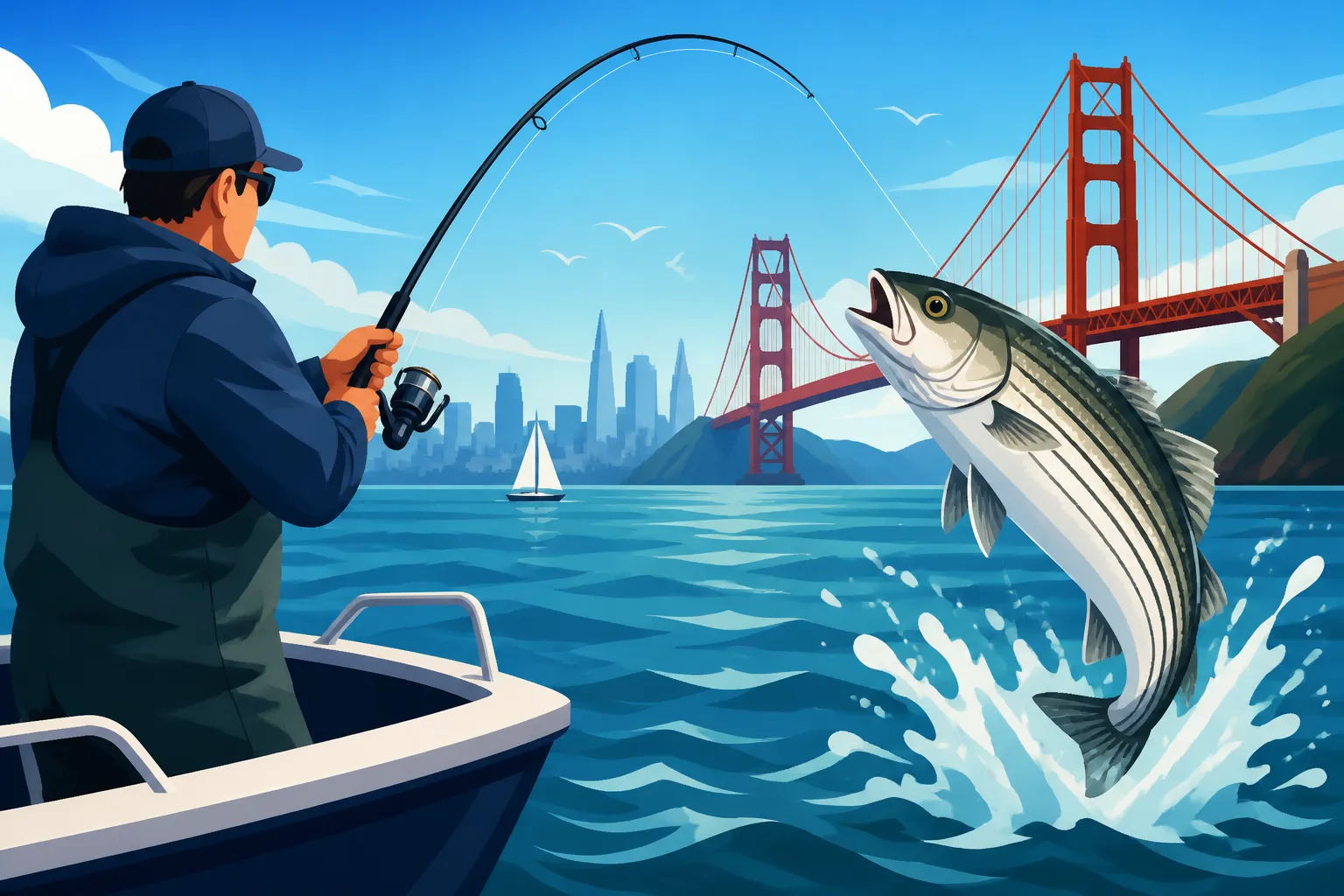
Striped Bass (Stripers): These are perhaps the most iconic sport fish in the Bay. Stripers are opportunistic predators, often found chasing baitfish in strong currents, around structure, or cruising the shallows of the South Bay. They're strong fighters and can be caught year-round, though their activity peaks in spring and fall. For more on these powerful fish, be sure to check out our detailed guide on the California Striped Bass Regulations.
California Halibut: Another highly sought-after species, California Halibut are masters of camouflage, lying in wait on sandy or muddy bottoms. They're often found in the shallower flats and channels, especially when tides are moving bait. Spring and summer are prime times for halibut, particularly in areas like the Berkeley Flats or near the Golden Gate. If you're looking to specifically target these flatfish, our article on How to Catch California Halibut offers some fantastic insights.
White Sturgeon: These prehistoric giants are truly a challenge and a prize for any angler. Sturgeon inhabit the deeper, muddier parts of the Bay and its river deltas, feeding on shrimp, crabs, and other invertebrates. Winter and early spring are generally the best times to target them. Be aware that sturgeon fishing has very specific regulations, including a slot limit, which you can learn more about in our guide to California Sturgeon Regulations and Limits.
Leopard Shark: Abundant throughout the Bay, especially in shallower waters and sloughs, Leopard Sharks are a blast to catch, offering a strong fight. They're often targeted in summer and fall, and while not typically eaten, they provide excellent sport. They’re very common catches for those fishing from piers and shorelines.
Rockfish (Various Species): While many rockfish species are more common outside the Golden Gate, you can find various types, particularly near rocky structures and deeper channels closer to the ocean entrance. These bottom dwellers are delicious and fun to catch, often found alongside lingcod and cabezon.
Jacksmelt & Shiner Perch: These smaller baitfish are often caught in abundance from piers and shorelines. While not necessarily target species for most, they make excellent live bait for bigger predators like striped bass and halibut. Plus, they’re a great way to introduce kids to fishing!
Here's a quick overview of some key species:
| Species | Best Season | Typical Habitat | Preferred Baits/Lures |
|---|---|---|---|
| Striped Bass | Spring, Fall | Channels, structure, river mouths, flats | Live anchovies, shiner perch, swimbaits, bucktails |
| California Halibut | Spring, Summer | Sandy/muddy flats, shallow channels | Live anchovies, shiner perch, grubs, Gulp! plastics |
| White Sturgeon | Winter, Early Spring | Deep channels, muddy bottoms | Ghost shrimp, grass shrimp, pile worms, herring |
| Leopard Shark | Summer, Fall | Shallow flats, sloughs, pier areas | Squid, cut bait (sardine, anchovy), shrimp |
| Jacksmelt | Year-round | Piers, docks, calm bay waters | Small pieces of shrimp, sabiki rigs |
| Shiner Perch | Year-round | Piers, docks, calm bay waters | Small pieces of shrimp, sabiki rigs |
| Rockfish | Summer, Fall | Rocky structures, deeper channels near ocean | Live bait, plastics, jigs, shrimp |
Understanding this diverse fish population is your first step to a successful day out on the water. Each species has its own habits, preferences, and regulatory requirements, so a little homework goes a long way.
Prime Fishing Spots in San Francisco Bay
The beauty of fishing in San Francisco Bay is that you don't always need a boat to get in on the action. There are fantastic opportunities for shore anglers and pier enthusiasts, alongside the more adventurous boat and kayak options. Each type of access offers a unique experience and targets different species.
Shore and Pier Fishing Hotspots
For many, especially those new to the Bay or just looking for a casual outing, shore and pier fishing are incredibly accessible. One of the biggest perks? Generally, if you're fishing from a public pier in California, you don't need a fishing license! This is a huge benefit for families or tourists. However, statewide bag and size limits still apply. Our comprehensive guide on Fishing from a Pier in California: Rules has all the details you need to avoid any surprises.
- Berkeley Pier: This iconic pier stretches far into the Bay, offering access to deeper waters. It's a fantastic spot for striped bass, leopard sharks, and various types of perch. On a good day, you might even hook a halibut, especially during the spring and summer months. The currents here can be strong, so be prepared with heavier weights.
- Pacifica Pier: While technically just outside the Bay's immediate entrance, Pacifica Pier is often considered part of the larger Bay Area fishing scene. It's famous for Dungeness crab during the season and offers excellent opportunities for rockfish, lingcod, and sometimes even salmon and halibut closer to the ocean.
- Pier 32 (San Francisco): Located along the Embarcadero, this pier, like many others in the city, can yield catches of perch, jacksmelt, and sometimes striped bass, especially during active feeding periods. It's very accessible by public transport, making it an easy option for urban anglers.
- Candlestick Point Recreation Area (South San Francisco): This spot offers shoreline access and a pier, providing chances at striped bass, leopard sharks, and various bottom fish. It's a popular spot for bait and wait techniques, especially for those targeting sharks or larger stripers. The South Bay's extensive mudflats mean excellent crabbing opportunities here too, if you're into that!
- Oyster Point Marina/Pier (South San Francisco): This marina and pier system provide access to protected waters. It's a great spot for perch, jacksmelt, and smaller striped bass. It’s also a popular launch point for boats heading out into the South Bay.
- McNears Beach Park (San Rafael): On the Marin side of the Bay, this location offers a pier and shoreline access, popular for catching perch and occasionally striped bass. It's a calmer, more family-friendly spot than some of the busier urban piers.
When fishing from shore or a pier, remember to observe your surroundings. Look for signs of baitfish, diving birds, or even other anglers hooked up. These visual cues can tell you a lot about where the fish are holding.
Boat Fishing: Channels, Reefs, and Estuaries
For those with a boat or who prefer a guided trip, the entire Bay opens up. This allows access to deeper channels, offshore reefs, and secluded estuaries that shore anglers simply can't reach.
- Berkeley Flats: This vast shallow area in the central Bay, easily accessible from the Berkeley Marina, is renowned for California Halibut, especially in spring and summer. Drifting live bait (like anchovies or shiner perch) or artificial swimbaits is a popular and effective technique here. The key is to cover ground and find the schools of halibut.
- Alcatraz and Angel Island: The waters surrounding these islands are rich with structure and current breaks, making them prime real estate for striped bass, especially during strong tidal flows. You might also find rockfish and an occasional halibut or lingcod in these areas. The Raccoon Strait between Angel Island and Tiburon is a particularly famous spot for strong currents and big stripers.
- South Bay Sloughs and Estuaries: Areas like Alviso Slough, Redwood City Slough, and other marshy waterways in the southern end of the Bay are fantastic for targeting striped bass, leopard sharks, and even some sturgeon. These calmer, more protected waters are often productive during less favorable conditions in the main Bay.
- Richmond Shoreline: The waters off the Richmond shoreline, particularly near the ship channel, can hold good numbers of striped bass and sometimes halibut. Launching from the Richmond Marina provides easy access.
- Golden Gate Bridge Area: While often turbulent, the waters directly under and around the Golden Gate Bridge and out towards the ocean can be phenomenal for rockfish, lingcod, and even salmon when they are in season. However, this area requires experienced boat handling due to strong currents, fog, and heavy vessel traffic.
- San Pablo Bay: North of the Carquinez Strait, this expansive body of water is shallower and muddier, making it a prime location for sturgeon and striped bass, especially closer to the Sacramento-San Joaquin River Delta.
Navigating the Bay by boat requires vigilance. Strong currents, rapidly changing weather, and heavy commercial and recreational vessel traffic demand constant awareness. Always have up-to-date charts, a reliable GPS, and a VHF radio on board. Always check marine forecasts before heading out.
Kayak and Float Tube Fishing Opportunities
For a more intimate and often stealthier fishing experience, kayaks and float tubes are gaining immense popularity in the Bay. They allow you to access shallower areas, sloughs, and quiet coves that larger boats can't reach, offering a unique perspective and often undisturbed fishing.
- Protected Sloughs and Marinas: The various sloughs in the South Bay, such as those around Alviso or Redwood City, offer excellent kayak fishing for striped bass, leopard sharks, and even some sturgeon in calmer conditions. Many marinas also have quieter corners where kayak anglers can target perch and smaller stripers.
- Richardson Bay (Mill Valley/Sausalito): This relatively protected bay, just north of the Golden Gate, is excellent for kayak fishing. It’s known for halibut in the spring and summer, as well as striped bass and leopard sharks. The calmer waters make it a great option for those newer to kayak fishing in the Bay.
- Paradise Beach Park (Tiburon): This park offers good access to the calmer sections of the Bay, suitable for kayak and float tube fishing for perch and sometimes striped bass. It’s a scenic location with less boat traffic than the main channels.
- Crown Memorial State Beach (Alameda): The shallow waters off Alameda provide good opportunities for kayak anglers to target halibut and leopard sharks, especially during outgoing tides. The extensive flat bottom is ideal for drifting.
When heading out in a kayak or float tube, safety is paramount. Always wear a PFD (Personal Flotation Device), file a float plan, and be acutely aware of tides, currents, and weather. The Bay can turn treacherous quickly, and even small waves can swamp a kayak. Choose your launch points wisely, preferring protected areas, and always let someone know where you're going and when you expect to return. Consider using a service like FishingBooker to find a local guide who can offer specific advice for kayak fishing in the Bay.
Essential Techniques and Gear for San Francisco Bay
Fishing the San Francisco Bay effectively means adapting your tactics and gear to the specific conditions and target species. It's not a "one size fits all" kind of place, given its diverse habitats and varied fish. What works for a trophy sturgeon in a deep channel won't cut it for a halibut on the flats.
Bait and Lure Choices for Bay Species
The right bait or lure can make all the difference, and savvy Bay anglers often carry a versatile arsenal. Understanding what the fish are feeding on at any given time is key. Our general guide on California Bait Fishing Tips and Techniques can give you a solid foundation, but let's talk specifics for the Bay.
-
Live Bait: This is often king, especially for predatory fish like striped bass and halibut.
- Anchovies & Sardines: These oily baitfish are irresistible to stripers, halibut, and sometimes even aggressive rockfish. They can be drifted, trolled, or fished on the bottom. Many bait shops around the Bay (like those in Berkeley, Emeryville, or San Rafael) will sell live anchovies, especially during the peak seasons.
- Shiner Perch: These small, hardy perch make excellent live bait for larger game fish. They're often caught on sabiki rigs directly from piers, then transferred to a livewell.
- Ghost Shrimp & Pile Worms: For sturgeon and sometimes striped bass, these invertebrates are absolute dynamite. They mimic the natural forage these bottom feeders consume. Ghost shrimp are often pumped from mudflats, while pile worms can be purchased at bait shops.
- Crabs: Small pieces of crab, especially Dungeness or rock crab, are fantastic for sturgeon.
-
Artificial Lures:
- Swimbaits: Soft plastic swimbaits, often weighted with lead heads, are incredibly effective for striped bass and halibut. Colors like chartreuse, white, and baitfish patterns are popular. Brands like Lucky Craft or Berkley Gulp! (which is technically an artificial but has scent) are favorites.
- Jigs & Spoons: Metal jigs can be dropped into deeper channels for rockfish or even retrieved quickly for active stripers. Spoons, especially Kastmasters, are classic striper lures.
- Bucktail Jigs: These hair jigs, tipped with a plastic grub or piece of bait, are a Bay staple for striped bass and halibut.
- Topwater Lures: During calm conditions, particularly around dawn or dusk, topwater plugs can provoke explosive strikes from aggressive striped bass, especially in shallower areas.
Always match the hatch if you can – observe what baitfish are present and try to mimic them in size, shape, and color with your lures.
Rigging for Success: From Drifting to Bottom Fishing
The strong currents and varied depths of the Bay necessitate a range of rigging strategies.
- Drifting for Halibut and Stripers: This is a classic Bay technique. For halibut, a Carolina rig with a sliding sinker, a swivel, a leader (2-4 feet of fluorocarbon), and a single hook baited with live anchovy or shiner perch is highly effective. For stripers, a similar rig can be used, or simply free-lining live bait in current breaks. The goal is to keep your bait near the bottom but allowing it to move naturally with the current.
- Bottom Fishing for Sturgeon and Sharks: For these bottom dwellers, a stout 3-way swivel rig is common. Tie your main line to one eye, a dropper line (about 12-18 inches) with a heavy pyramid or Sputnik sinker to another, and your leader (18-36 inches of heavy mono/fluoro, 50-80 lb test for sturgeon) with a large circle hook to the third. This keeps your bait on the bottom while allowing the sinker to hold against the current. Using a circle hook is crucial for sturgeon to ensure a lip hook and easy release.
- Casting and Retrieving for Stripers: From shore or boat, casting swimbaits, jigs, or topwater lures and retrieving them allows you to cover water and target active, feeding stripers. Vary your retrieve speed and depth until you find what triggers a bite.
- Pier and Shore Rigs: For general pier fishing, a simple high-low rig with two hooks and a pyramid sinker on the bottom is versatile for perch, jacksmelt, and smaller bottom fish. For leopard sharks, a heavier sliding sinker rig with a stout leader and a large circle hook is ideal.
Regardless of the rig, using strong, abrasion-resistant leaders is critical due to the Bay's structure and the toothy nature of some species. Always check your knots and line regularly for fraying.
Navigating Tides and Currents
Perhaps no single factor influences fishing success in San Francisco Bay more than the tides and currents. Ignoring them is a recipe for frustration.
- The Tidal Dance: The Bay experiences two high tides and two low tides each day. The movement of water during these changes creates currents that dictate when and where fish feed. Fish often position themselves in current breaks, waiting to ambush baitfish swept past them.
- Best Bite Windows:
- Tidal Swings: Generally, the "moving tides"—the periods of strong current during the incoming or outgoing tide—are the most productive. This is when baitfish are disoriented and predators are most active.
- Slack Tide: The brief period of minimal current at the peak of high or low tide is often the slowest for fishing, as baitfish scatter and predators become less active. However, for sturgeon, the periods just before and after slack tide can be productive as they root around on the calmer bottom.
- Incoming Tide: Brings fresh, often cleaner, ocean water into the Bay. This can be great for halibut and ocean-going species pushing in.
- Outgoing Tide: Flushes bait and nutrients from the rivers and estuaries into the Bay, often concentrating stripers and other predators at choke points.
- Current Strength: The currents, especially around the Golden Gate and choke points like the Carquinez Strait, can be incredibly powerful. You'll need heavy sinkers (often 8-16 oz or more for sturgeon) to hold bottom. Always check tide charts and current predictions (available from NOAA or various fishing apps) before heading out. For boaters, understanding current speed and direction is essential for safe navigation and effective drifting. The faster the current, the more aggressive the bite can often be, but it also presents a greater challenge for presenting your bait naturally.
Regulations and Safety for San Francisco Bay Anglers
Fishing in the San Francisco Bay, while exhilarating, comes with a responsibility to understand and abide by California's complex fishing regulations and to prioritize safety. The California Department of Fish and Wildlife (CDFW) sets these rules to ensure sustainable fisheries for future generations.
Understanding Bay-Specific Fishing Regulations
It can feel like a lot to keep track of, but knowing the rules is crucial to avoid fines and contribute to conservation. Every angler over the age of 16 needs a valid California fishing license, with very specific exceptions, such as when fishing from a public pier. You can get a quick overview with our California Fishing License Guide and dive into the specifics in our California Fishing Regulations Explained article.
- General Statewide Rules Apply: All statewide regulations regarding general angling methods, gear restrictions, and species protections apply within the Bay. This includes requirements for barbless hooks in certain areas or for specific species, and limitations on the number of rods you can use.
- Bag and Size Limits: These are perhaps the most frequently updated and critical regulations. Every species has a daily bag limit (how many you can keep) and often a minimum or maximum size limit (the length a fish must be to be legally retained). For example, Striped Bass have specific size and bag limits, and White Sturgeon have a strict slot limit, meaning they must fall within a certain length range to be legal. Always consult the current CDFW ocean or freshwater sport fishing regulations booklet, available online or at license agents, before your trip. Pay particular attention to our guides like California Striped Bass Regulations and California Sturgeon Regulations and Limits for target species.
- Report Cards: For certain species, like Sturgeon, Steelhead, and Salmon, you'll need a specific report card in addition to your fishing license. These cards are vital for data collection and must be filled out immediately upon catching the fish, even if released, and returned to the CDFW by a specific deadline. Our guide on California Fishing Report Cards Explained details what you need to know about these critical documents.
- Seasonal Closures: Some species have specific seasons when they can be legally targeted. For example, some salmon runs might have specific open and closed dates, or rockfish seasons can vary by management area and depth. While the Bay itself might be open, access to ocean-side areas or specific river systems might be closed.
Always double-check the most current regulations just before your trip. Regulations can change frequently, often due to scientific assessments of fish populations. A quick visit to the CDFW website or a call to a local bait shop can save you a lot of trouble.
Navigating Marine Protected Areas (MPAs)
California has established a network of Marine Protected Areas (MPAs) along its coast and within its bays, including parts of San Francisco Bay. These are like underwater parks, designed to conserve marine life and habitats.
- Understanding No-Take Zones: Many MPAs are "no-take" zones, meaning all fishing (and even collecting marine life) is prohibited. Others might have specific restrictions on certain gear types or species. It's crucial to know where these zones are located and what the rules are within them.
- Check Maps and Boundaries: The boundaries of MPAs are usually clearly marked on nautical charts and can be viewed on interactive maps provided by the CDFW. Before you drop a line, especially if you're exploring new areas, confirm that you are not fishing in a prohibited zone. There's nothing worse than catching a beautiful fish only to realize you're in an area where you can't keep it, or worse, facing a hefty fine. Our article on California Marine Protected Areas Explained is a great resource to help you navigate these areas responsibly.
Safety First: Weather, Currents, and Vessel Traffic
The San Francisco Bay is a magnificent place to fish, but it demands respect. It's not a calm lake, and conditions can change rapidly.
- Unpredictable Weather: The Bay is famous for its microclimates and sudden shifts in weather. A clear, calm morning can quickly give way to strong winds, chop, and dense fog, especially near the Golden Gate. Always check the marine forecast before you go, and be prepared for changing conditions with appropriate clothing and gear.
- Powerful Currents: As mentioned earlier, the currents in the Bay are no joke. They can be incredibly strong, posing a significant hazard to small boats, kayaks, and even shore anglers if they get too close to the water's edge in high flow areas. Understand tidal predictions and avoid venturing into areas beyond your comfort and skill level, especially during peak current flows.
- Heavy Vessel Traffic: San Francisco Bay is a major international shipping hub. You'll encounter large container ships, ferries, tugboats, and numerous other commercial and recreational vessels. Always maintain a sharp lookout, understand navigation rules, and give large vessels a wide berth. Never assume they see you.
- Essential Safety Gear: For any boat angler, required safety gear includes life jackets (worn, not just stored, especially in smaller craft), a working VHF radio, visual distress signals (flares), a sound-producing device (horn), and fire extinguishers. Consider carrying an emergency personal locator beacon (PLB) or satellite messenger for offshore excursions. Even shore anglers should be mindful of slippery rocks, incoming tides, and steep drop-offs.
- Cold Water Immersion: The water in the Bay is cold, even in summer. Accidental immersion can quickly lead to hypothermia. Always wear a PFD, and if you're in a kayak or small boat, dress for the water temperature, not the air temperature.
Don't underestimate the Bay. A safe trip is always a successful trip, regardless of the catch.
Hiring a Guide or Charter for the Bay
Sometimes, the best way to experience fishing in a complex system like San Francisco Bay, especially if you're new to the area or targeting a specific species, is to go with an expert. Hiring a local fishing guide or jumping on a charter boat can significantly enhance your experience and success rate.
Benefits of a Guided Trip
Think of a fishing guide as your personal, highly experienced instructor and local expert rolled into one. They bring an unparalleled level of knowledge and resources to your trip:
- Local Knowledge is King: The Bay is a labyrinth of channels, flats, and structure, and fish patterns change daily with tides, bait movements, and water conditions. A good guide spends hundreds of days a year on these waters and knows exactly where the fish are likely to be biting and what they're biting on. They've already done the hard work of scouting, checking reports, and adapting to conditions.
- Proper Gear and Techniques: No need to invest in specialized rods, reels, or tackle. Guides come fully equipped with high-quality, well-maintained gear perfectly suited for the Bay's target species and conditions. They'll also teach you the specific techniques that work best, whether it's drifting for halibut, jigging for rockfish, or soaking bait for sturgeon.
- Increased Success Rates: While fishing is never guaranteed, a guided trip dramatically increases your chances of catching fish. Guides are invested in your success and will work tirelessly to put you on the fish. This is particularly valuable if you're targeting a challenging species like white sturgeon or trying to land your first trophy striped bass.
- Safety and Navigation: Guides are highly experienced boat handlers and navigators, intimately familiar with the Bay's currents, hazards, and traffic. They ensure your safety, allowing you to relax and focus on fishing. They're also up-to-date on all the latest regulations, so you don't have to worry about accidental violations.
- Learning Opportunity: Beyond just catching fish, a guided trip is a fantastic educational experience. You'll learn about the Bay's ecosystem, fish behavior, and advanced angling tactics. It's an investment in your own fishing skills.
For visitors or those looking to expand their skills, booking a guide through platforms like FishingBooker can be an excellent way to connect with reputable local captains. They list numerous operators who specialize in various Bay species and trip types. You can see reviews, compare prices, and easily book your adventure.
Choosing the Right Charter
Once you decide to go with a guide, the next step is finding the right one for you. There are several factors to consider to ensure you have the best possible experience. Our general guide on How to Choose a California Fishing Guide provides a broader perspective, but let's narrow it down for the Bay.
- Target Species: What do you really want to catch? Some guides specialize in striped bass, others in sturgeon, and some are versatile for halibut and other bay species. Be clear about your goals when inquiring. If your heart is set on a massive white sturgeon, make sure you pick a guide known for targeting those giants.
- Trip Length: Charters often come in half-day (4-5 hours), full-day (8 hours), or sometimes even extended trips. Half-days are great for quick trips or beginners, while full-days offer more time to explore and maximize your catch potential.
- Private vs. Party Boat:
- Private Charter: You book the entire boat for your group. This offers the most personalized experience, allowing you to dictate the target species, timing, and receive dedicated attention from the guide. It's more expensive per person but ideal for families or serious anglers.
- Party Boat (Open Party): You pay for a single spot on a larger boat with other anglers. This is a more budget-friendly option and a great way to meet other anglers. While you get less individual attention, the crew works hard to put everyone on fish. Several party boats operate out of Bay Area marinas like Berkeley, Emeryville, and San Francisco.
- Experience and Reputation: Look for guides with strong reputations, plenty of experience on the Bay, and positive reviews. Platforms like FishingBooker often highlight top-rated captains with verified catch logs. Ask about their catch rates, their preferred methods, and what they recommend for the current conditions.
- What's Included: Confirm what the charter fee covers. Most include rods, reels, tackle, and sometimes bait. Ask if you need to bring your own snacks, drinks, or a cooler for your catch. Remember, you will still need your own California fishing license and any necessary report cards (though the guide can often help you verify what's needed).
A good captain will communicate clearly, set realistic expectations, and prioritize your safety and enjoyment. Don't hesitate to ask questions before booking – it's your trip, after all!
Disclaimer
Always check the latest regulations from the California Department of Fish and Wildlife (CDFW) before heading out, as rules, seasons, and limits can change frequently. This guide is for informational purposes only and should not replace official CDFW publications.