California Sturgeon Regulations and Limits
Chasing after sturgeon in California is an incredible experience, offering a chance to connect with these prehistoric giants. But let's be honest, figuring out the specific rules and regulations for these magnificent fish can feel like trying to untangle a bird's nest of fishing line. The California Department of Fish and Wildlife (CDFW) has very strict guidelines, and for good reason—these fish are special and need our protection. This guide is here to break down the ins and outs of California's sturgeon regulations and limits, so you can enjoy your time on the water without worrying about accidentally breaking the law.
Why Sturgeon Regulations are So Strict in California
It’s easy to get frustrated by the sheer volume of rules when you're just trying to enjoy a day of fishing, but when it comes to sturgeon, there's a profound reason for every single regulation. These aren't your typical fast-breeding game fish. Sturgeon have a unique biology that makes them particularly vulnerable to overfishing, and the history of their populations in California tells a cautionary tale we’re actively working to avoid repeating.
The Delicate Balance of Sturgeon Populations
Imagine a fish that can live for over 100 years, doesn't even start reproducing until it's 10 to 20 years old, and then only spawns every few years. That's a sturgeon for you! Unlike many other fish species that can recover relatively quickly from population dips, sturgeon take an incredibly long time to rebound. Their long lifespan means they don't reach maturity until much later in life, and their spawning cycles are infrequent. This biological reality makes every single fish caught, especially breeding-age adults, incredibly important to the health and future of the entire population. One season of heavy pressure could wipe out a generation's worth of reproductive potential, leading to a decades-long struggle for recovery.
Historical Context and Conservation Efforts
California's waters were once teeming with sturgeon, particularly the Sacramento-San Joaquin Delta system. However, rampant commercial fishing in the late 19th and early 20th centuries, combined with habitat loss and water quality issues, pushed white and green sturgeon populations to the brink. It was a classic boom-and-bust scenario: massive catches for caviar and meat, followed by a dramatic decline that almost led to their complete disappearance. Today, green sturgeon are even listed under the Endangered Species Act, meaning they are completely off-limits for sportfishing. White sturgeon, while more abundant, are still carefully managed to ensure they don't follow the same path. The strict regulations we see today are the direct result of these painful historical lessons and ongoing, dedicated conservation efforts by the CDFW to restore and maintain healthy sturgeon populations for future generations to enjoy. It's a delicate balancing act, but one that's absolutely essential for these living fossils.
Understanding California's Sturgeon Regulations: The Nitty-Gritty Details
Alright, let’s get down to the brass tacks of what you need to know before you even cast a line. The regulations for sturgeon aren't just suggestions; they're legal requirements designed to protect these incredible fish, and violating them can lead to some pretty serious penalties. It’s critical to have all your ducks in a row – or rather, all your licenses and report cards in your pocket – before heading out.
Essential Licenses and Report Cards
First and foremost, just like with any other sportfishing in California, you'll need a valid California fishing license. This is your basic entry ticket to fish our waters. You can learn more about how to get one in our comprehensive guide, "California Fishing License Guide." However, for sturgeon, that's just the beginning. You also absolutely need a California Sturgeon Report Card. This isn't optional; it's a mandatory requirement for anyone fishing for sturgeon, even if you intend to catch and release.
Why the extra card? The report card is a vital tool for the CDFW to gather crucial data. Each time you catch a sturgeon, whether you keep it or release it, you are required to punch out the corresponding month and day on your card. If you keep it, you must also record the fork length and area of catch. This data helps biologists track catch rates, assess population health, and make informed decisions about future regulations. Think of it as your contribution to science and conservation. Failing to have or properly fill out your report card can result in fines and legal trouble, so make sure you understand "How to Fill Out a California Report Card" correctly. These are available from any licensed vendor, often where you buy your main fishing license, and often come with a small additional fee on top of the regular California fishing license cost.
Size Limits: The Slot Limit Explained
This is perhaps the most unique and critical regulation for white sturgeon: the slot limit. Unlike many species where you can keep anything over a certain size, or under a certain size, sturgeon have a minimum and a maximum size limit. This means only fish that fall within a very specific size window can be legally retained.
For white sturgeon, the general statewide slot limit is typically between 40 inches and 60 inches fork length. Fork length is measured from the tip of the snout to the fork of the tail. Any sturgeon shorter than 40 inches or longer than 60 inches must be immediately released unharmed. The reason for this specific slot is brilliant: it protects juvenile fish, giving them a chance to grow and mature, and it protects the largest, most prolific breeding adults, who are essential for replenishing the population. These big "broodstock" fish lay millions of eggs and are the backbone of future generations. If you catch one outside the slot, handle it with extreme care and get it back in the water as quickly and safely as possible. Having a reliable measuring device is essential; you can find sturdy, collapsible measuring tapes perfect for kayak or boat fishing on Amazon.
Here's a quick reference table for the standard White Sturgeon slot limit:
| Species | Minimum Fork Length | Maximum Fork Length | Notes |
|---|---|---|---|
| White Sturgeon | 40 inches | 60 inches | Measured from tip of snout to fork of tail. |
| Green Sturgeon | Prohibited | Prohibited | Federally protected; illegal to catch or possess. |
| All Sturgeon | — | — | Must be released immediately if outside the legal slot. |
Keep in mind that while these are the general statewide rules, always check the "California Fishing Regulations Explained" booklet or the CDFW website for any localized or temporary changes, as regulations can occasionally shift based on scientific assessments.
Bag and Possession Limits
Even if your sturgeon falls perfectly within that legal 40-60 inch slot, you can't just keep as many as you want. There are strict bag and possession limits designed to control the overall harvest. For white sturgeon, the general daily bag limit is one fish per day. This means that once you have legally retained one sturgeon within the slot, you cannot keep any more for that calendar day, regardless of how many others you catch and release.
Beyond the daily limit, there's also an annual possession limit. This annual limit is typically three white sturgeon per calendar year. Each time you retain a sturgeon, you must mark it on your Sturgeon Report Card, and once you've kept three, you are done for the year. This annual limit is another critical conservation measure, ensuring that the total number of fish removed from the population each year is sustainable. It's not just about what you catch on a single trip, but your cumulative impact throughout the entire year. Always check the official "California Fishing Bag and Size Limits" for any updates before you head out, as these numbers are carefully reviewed by the CDFW annually.
Gear Restrictions and Ethical Angling for Sturgeon
It's not just if you can keep a sturgeon, or how many, but also how you catch them and how you handle them. The regulations extend to your gear and your methods, all aimed at minimizing harm to these sensitive fish, particularly those that must be released. Ethical angling isn't just a suggestion when targeting sturgeon; it's embedded in the rules.
Hook and Line Requirements
When it comes to tackle, there are specific rules you absolutely must follow. For instance, only a single barbless hook may be used when fishing for sturgeon. This means no treble hooks, no multiple hooks on one line, and definitely no barbed hooks. The reason for the barbless rule is straightforward: it makes hook removal much easier and causes less damage to the fish, significantly increasing their chances of survival after release. A barbed hook can tear flesh, especially in the mouth, leading to infection or difficulty feeding for the released fish. Many anglers will crimp down the barbs on their favorite hooks, but you can also find a wide selection of pre-barbless hooks on Amazon that are perfect for sturgeon fishing.
Your tackle should also be robust enough to handle these powerful fish. Using light gear that prolongs the fight can exhaust a sturgeon to the point where it won't survive after release. A heavy-action rod and a reel spooled with strong line (think 50-80 lb test) will allow you to land the fish more quickly, minimizing stress on both you and the sturgeon.
Prohibited Methods and Bait
There are certain methods and types of bait that are strictly prohibited when targeting sturgeon. Snagging is absolutely illegal and carries severe penalties. This means intentionally hooking a fish anywhere other than its mouth. If you accidentally snag a sturgeon, you must immediately release it. Using devices like gaffs to land a sturgeon is also explicitly forbidden, again to prevent injury to the fish, especially those that will be released. A large, rubberized landing net or simply tailing the fish (if you know how to do it safely) are the preferred methods.
Regarding bait, generally, natural baits like ghost shrimp, pile worms, various types of roe (salmon eggs, lamprey), or even cut bait are popular and effective. However, there can be specific restrictions on using certain species as bait in particular areas, so always double-check the "California Freshwater Fishing Regulations" if you're unsure. The key here is to use legal methods that allow the fish to take the bait voluntarily, ensuring a fair fight and a clean hookset in the mouth.
Catch-and-Release Best Practices
Given the slot limit, the vast majority of sturgeon you encounter will be either too small or too large to keep, making catch-and-release paramount. Even if you're planning to keep a legal fish, you want to ensure it's handled with care right up until the moment it's processed. Here are some critical best practices:
- Minimize Fight Time: As mentioned, use appropriate gear to land the fish efficiently.
- Keep the Fish in the Water: Sturgeon are incredibly heavy and fragile out of water. Their internal organs can be damaged by their own weight if held horizontally without proper support. If possible, unhook them while they're still in the water, or bring them boatside with only their head and shoulders exposed. If you absolutely must bring them onto a boat, use a large, wet mat and avoid dragging them across rough surfaces.
- Use a Net or Tail: A large, soft, knotless net is ideal for controlling the fish while unhooking. Avoid using gaffs.
- Quick Release: Have your camera ready before the fish is landed, take a quick photo if you must, and get it back into the water as fast as possible.
- Revive if Necessary: If a sturgeon seems sluggish or disoriented, hold it gently upright in the water, facing into the current, until it regains its strength and swims away on its own.
- No "Jaw Jacking": Never hold a sturgeon by its gills or jaw. Their jaws are cartilaginous and easily damaged.
By adhering to these practices, you're not just following the rules, you're becoming a steward of this precious fishery, ensuring that these incredible creatures continue to thrive. This commitment to careful handling also ties into topics like "California Catch-and-Release Rules" for all species, but it's especially critical for sturgeon.
Where and When to Fish for Sturgeon Legally
Knowing the rules is one thing, but knowing where and when to apply them is another. California offers some fantastic sturgeon fishing opportunities, but just like with every other regulation, there are seasonal nuances and specific locations that require your attention.
Prime Sturgeon Waters and Regional Rules
When most folks talk about sturgeon fishing in California, their minds immediately go to the Sacramento-San Joaquin River Delta. This vast network of waterways is truly the heart of the state's sturgeon fishery, offering excellent opportunities for white sturgeon. Rivers like the Sacramento, San Joaquin, Feather, and American, along with Suisun Bay and San Pablo Bay, are prime spots. The confluence points where tributaries meet larger rivers, and deep channels with good current, are often productive. For a deeper dive into specific locations, check out "Best Places to Catch Sturgeon in California".
While the Delta is the main event, sturgeon can also be found in other larger river systems along the coast, though often in smaller numbers. It's crucial to remember that while the core statewide regulations generally apply, there can sometimes be localized rules or specific closures, especially if you venture into areas designated as special regulation waters or if certain parts of a river are closed to protect spawning fish. Always consult the most current CDFW regulations booklet or online resources for any regional exceptions.
Seasonality and Closures
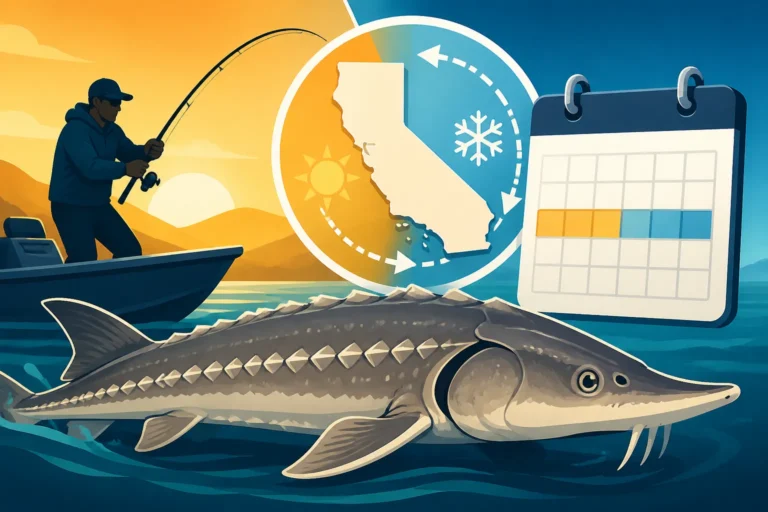
Unlike some other fish species with very defined seasons, white sturgeon fishing in California is generally open year-round, which is fantastic! However, there's always a "but." While the season technically stays open, fishing can be impacted by temporary emergency closures, especially during periods of drought or low water flows, which can stress fish populations. These closures are typically announced by the CDFW and are crucial to respect.
Beyond broad closures, certain areas within the major sturgeon fisheries might have their own temporary restrictions. For example, specific river sections might close during salmon or steelhead runs to minimize incidental take of those protected species or to provide undisturbed spawning grounds.
Also, it’s worth noting that if you're targeting sturgeon on a party boat or charter, the operators are typically well-versed in the current regulations, but it's always your responsibility as an angler to be aware of the rules. For detailed information on specific season dates or potential closures, always refer to the official CDFW website or an article like "California Sturgeon Season Dates Explained" which is updated regularly. Understanding when and where to find sturgeon, and the techniques like those found in "How to Catch Sturgeon in California", is only truly useful when paired with a thorough knowledge of all applicable regulations.
Common Misconceptions and Troubleshooting Sturgeon Regulations
Navigating fishing regulations can be tricky, and sturgeon rules are no exception. Sometimes, what seems like common sense isn't quite right, and small misunderstandings can lead to big problems. Let’s clear up a few common points of confusion and offer some troubleshooting tips.
"If I Catch and Release, I Don't Need a Report Card"
This is a common misconception that can get anglers into trouble. Many assume that because they don't intend to keep a fish, they're exempt from certain requirements. However, for sturgeon in California, you absolutely need a Sturgeon Report Card even if you plan to release every single fish you catch. The report card is not just for recording retained fish; it's a tool for tracking angling effort and catch data, which is crucial for population estimates and management.
Think about it this way: if hundreds or thousands of anglers are catching and releasing sturgeon without reporting it, the CDFW has no way of knowing how much fishing pressure the population is experiencing. This data helps them understand how many fish are being encountered, regardless of whether they're kept. So, even if you’re out for a pure catch-and-release experience, make sure you have your "California Sturgeon Report Card" in hand and are punching out the dates for every sturgeon you interact with. Failing to do so is a violation, and ignorance of the law is generally not a valid defense.
"I Can Keep a Sturdy 65-Inch Sturgeon if It's My Only Fish"
Another dangerous misunderstanding! The slot limit is absolute. While it might seem like a shame to release a truly massive, trophy-sized sturgeon, remember that those big fish are the most valuable breeders. The 40-60 inch slot limit for white sturgeon means that any fish outside that window, whether smaller than 40 inches or larger than 60 inches (like that hypothetical 65-incher), must be released immediately and unharmed. There's no exception for "one big one" or "my only fish of the year."
The slot limit is the cornerstone of white sturgeon conservation in California, specifically designed to protect both the young fish and the crucial breeding stock. Releasing a fish outside the slot isn't just a suggestion; it's a legal requirement. Trying to retain an oversized or undersized sturgeon is a serious violation of "California Fishing Regulations Explained" and can result in significant fines and the confiscation of your gear and catch.
What to Do If You're Unsure About a Regulation
It's completely normal to feel a bit overwhelmed by the sheer volume of rules. The best approach if you're ever in doubt is to proactively seek clarification before you head out. Here are a few reliable resources:
- CDFW Website: The California Department of Fish and Wildlife's official website is the ultimate source for the most current regulations. They often have PDFs of the full regulations booklet, as well as specific pages dedicated to sturgeon.
- Official Regulations Booklet: Always carry a current copy of the California Freshwater Sport Fishing Regulations booklet. You can usually pick these up for free wherever fishing licenses are sold. Take the time to read through the sturgeon section carefully.
- Local Tackle Shops: These often-overlooked gems are fantastic resources. The staff at your local tackle shop in areas like the Delta will usually be up-to-date on all local and statewide regulations, and they often have practical tips on how to comply.
- Avoid Online Rumors: While fishing forums can be helpful, always cross-reference any information you find with official sources. Regulations can change, and outdated advice can be detrimental.
Being informed is your best defense against accidental violations. It’s far better to spend a few minutes reviewing the rules beforehand than to face a hefty fine or, worse, harm a valuable fish population. And if you ever witness a violation, knowing "How to Report a California Fishing Violation" is an important part of being a responsible angler.
Disclaimer
The information provided in this article is intended for general guidance and informational purposes only. Fishing regulations in California are subject to change by the California Department of Fish and Wildlife (CDFW). It is the angler's sole responsibility to consult the most current official CDFW regulations booklet or website before engaging in any fishing activity to ensure full compliance with all applicable laws and rules.