How to Catch White Sturgeon in California
There's nothing quite like the thrill of hooking into a truly ancient, powerful fish, but the thought of targeting white sturgeon in California can feel incredibly daunting. These prehistoric giants are legendary for their size, strength, and cunning, making them a formidable challenge for even seasoned anglers. If you've ever found yourself wondering how to even begin to tackle such a magnificent creature, you're not alone. This guide is going to walk you through everything you need to know, from understanding their habits to mastering the techniques that will give you the best shot at a successful catch and, most importantly, a responsible release.
Understanding White Sturgeon in California
Before you even think about casting a line, getting a handle on what makes white sturgeon tick is absolutely crucial. These aren't your average trout or bass; they're living dinosaurs, and respecting their biology and knowing their habits will significantly increase your chances of finding them and, just as importantly, ensuring their survival for future generations.
Biology and Life Cycle of White Sturgeon
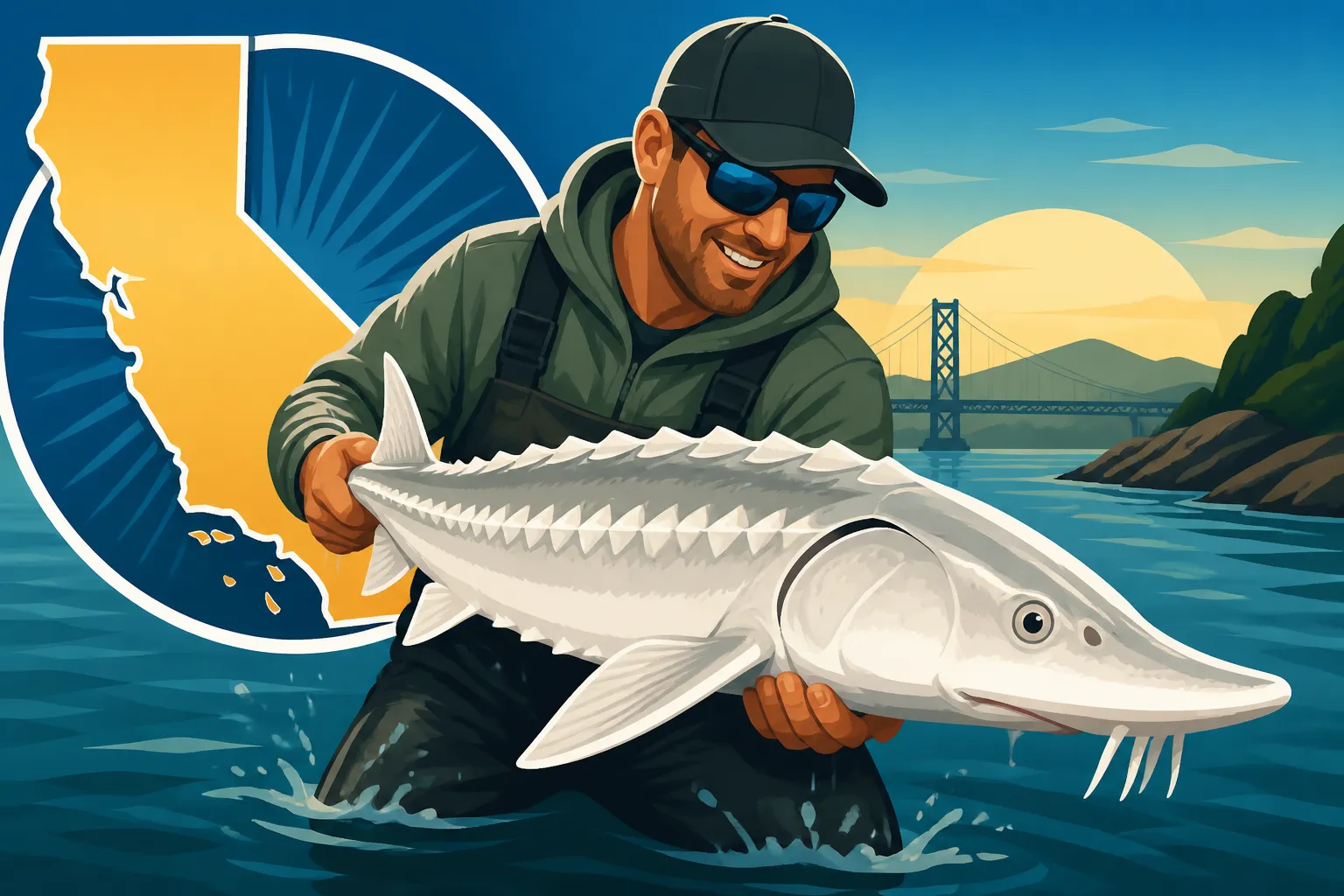
White sturgeon ( Acipenser transmontanus) are North America's largest freshwater fish, and they can live for an astonishingly long time—up to 100 years or more! Imagine a fish that could have been swimming in California's waters since before your grandparents were born. That's a sturgeon. While they can grow to be over 20 feet long and weigh more than 1,500 pounds, those giants are exceedingly rare these days. In California, you're more likely to encounter fish in the 4-8 foot range, which is still a monumental catch!
These fascinating fish are anadromous, meaning they spend most of their lives in brackish or saltwater estuaries but migrate into freshwater rivers to spawn. They're slow growers and don't reach sexual maturity until they're quite old—males around 7-15 years, and females sometimes not until 12-20 years. This slow reproductive rate makes them incredibly vulnerable to overfishing and habitat degradation, which is why conservation is such a critical part of the sturgeon fishing experience. Their diet is primarily made up of bottom-dwelling organisms like clams, shrimp, crabs, and smaller fish, which is a huge clue when it comes to bait selection!
Identifying White Sturgeon vs. Green Sturgeon
This distinction is not just academic; it's a legal necessity. There are two main species of sturgeon in California: white sturgeon and green sturgeon (Acipenser medirostris). Green sturgeon are a federally protected species and are extremely rare. Catching one, even accidentally, requires immediate release without removing it from the water. If you're caught with a green sturgeon out of the water, or attempting to retain one, the penalties are severe.
So, how do you tell them apart? It can be tricky, especially with smaller fish, but here are the key differences:
- Scute Count: White sturgeon generally have 11-14 (usually 11-12) bony plates (scutes) behind their dorsal fin, while green sturgeon have 8-11 (usually 9-10). This is the most reliable method.
- Snout Shape: White sturgeon have a blunter, more rounded snout. Green sturgeon have a more pointed, wedge-shaped snout, often described as shovel-like.
- Coloration: White sturgeon are typically gray to brownish-gray on top, fading to a lighter, almost white underside. Green sturgeon often have a distinct olive-green or grayish-green color on their back and sides, with two prominent, continuous rows of large scutes along their belly, and a vibrant greenish stripe down their side.
Always, always be sure of your identification. When in doubt, treat any sturgeon as a green sturgeon and release it immediately and safely. You can learn more about specific regulations in our guide to California Fishing Regulations Explained.
Where to Find White Sturgeon in California
White sturgeon are creatures of habit, often preferring specific types of underwater terrain and current conditions. Knowing where to focus your efforts is half the battle when targeting these elusive fish.
Prime Sturgeon Habitats in the California Delta
When we talk about white sturgeon fishing in California, our minds immediately go to the Sacramento-San Joaquin River Delta. This vast network of rivers, sloughs, and bays is the undisputed epicenter of sturgeon activity. The Delta provides the ideal blend of freshwater flow from the Sierra Nevada snowmelt and the brackish influence of the Pacific Ocean, creating a rich ecosystem that sturgeon thrive in.
Key areas to target include:
- Suisun Bay: This is arguably the most famous sturgeon fishing ground. Areas like the Mothball Fleet, Chain Island, and the various deep channels within Suisun are legendary. The strong tidal currents here concentrate bait and create prime feeding lanes.
- San Pablo Bay: Further downstream, San Pablo Bay also holds a significant population of sturgeon. The deep channels and mudflats offer excellent habitat, particularly during strong tidal swings.
- Grizzly Bay and Honker Bay: These shallower bays adjacent to Suisun Bay can be productive, especially as sturgeon move in and out with the tides, searching for food in the mud.
- The Sacramento River and San Joaquin River: While the bays are prime, sturgeon do move up into the main river systems, especially during spawning migrations. Look for them in deep holes, outside bends, and below significant current breaks. For a more general overview of fishing in this region, check out our California Delta Fishing Guide.
When fishing these areas, pay close attention to depth changes, humps, ledges, and channels on your fish finder. Sturgeon often congregate in these areas, especially where they can ambush prey or find refuge from strong currents. The confluence of currents, where different bodies of water meet, is also a hotspot as it often concentrates bait.
Other Productive Sturgeon Waters
While the Delta is king, sturgeon can be found in other areas, though usually in lesser numbers or under specific conditions.
- Carquinez Strait: This narrow, deep strait connecting San Pablo Bay to Suisun Bay is a major transit route for sturgeon and can be incredibly productive, especially around the bridges and deep-water drop-offs.
- Napa River: The lower stretches of the Napa River, particularly where it meets San Pablo Bay, can hold sturgeon, especially during certain tides when they move in to feed.
- Coastal Estuaries (Rarely): On rare occasions, sturgeon might be encountered in other coastal estuaries or even the ocean, but targeting them there is far less common and less reliable.
Seasonality plays a huge role in sturgeon movements. While you can catch them year-round in the Delta, the peak seasons often coincide with cooler water temperatures and strong tidal flows, usually from late fall through spring. Always keep an eye on the latest fishing reports and check the California Sturgeon Season Dates Explained to ensure you're fishing within legal parameters and maximizing your chances during prime activity periods. Strong outgoing tides are often considered the best for sturgeon fishing as they flush bait through channels, concentrating it for waiting sturgeon.
| Location | Primary Fish Type | Typical Depth Range | Best Tidal Conditions | Notes |
|---|---|---|---|---|
| Suisun Bay | White Sturgeon | 10-50 feet | Outgoing/Slack | Famous for big fish; many deep channels. |
| San Pablo Bay | White Sturgeon | 20-60 feet | Outgoing/Slack | Deeper, more open water; strong currents. |
| Carquinez Strait | White Sturgeon | 30-100+ feet | Outgoing/Incoming | Major transit route; very deep, strong current. |
| Sacramento River (Lower) | White Sturgeon | 15-40 feet | Slack/Outgoing | Upriver migration routes; look for deep bends. |
| Napa River (Lower) | White Sturgeon | 10-30 feet | Incoming/Slack | Smaller river, can be good on specific tides. |
Best Baits and Rigs for White Sturgeon
Sturgeon aren't picky eaters, but they definitely have preferences. They're primarily scent-oriented bottom feeders, so a strong, natural smell is going to be your best friend. As for rigging, there's a tried-and-true setup that every sturgeon angler relies on.
Top Sturgeon Baits That Get Bites
The key to sturgeon bait is freshness and scent. You want something that will release a potent aroma into the water, attracting these scavengers from a distance.
- Ghost Shrimp: Often considered the king of sturgeon baits. Ghost shrimp, whether live or freshly dead, emit a powerful scent that sturgeon absolutely can't resist. They're often sold frozen in bait shops or can be pumped from mudflats. Rig them whole or in chunks, making sure to present a juicy, enticing target.
- Shad: Another hugely popular and effective bait, especially fresh American or Threadfin shad. Cut shad in chunks, making sure to include some of the oily belly meat or bloodline for maximum scent dispersion. Some anglers will "cure" their shad with special brines to toughen it up and enhance its smell.
- Pile Worms (Bloodworms): These wiggly, scent-laden worms are fantastic, particularly when fishing for smaller sturgeon or when other baits aren't producing. They're expensive but can be worth it. Thread several onto your hook to create a tempting cluster.
- Salmon Roe (Cured): While often associated with trout or salmon fishing, cured salmon roe clusters can be very effective for sturgeon, especially when they're feeding on salmon carcasses or eggs.
- Lamprey: A more specialized bait, but lamprey sections are incredibly oily and smelly, making them a top choice for larger sturgeon. They can be hard to find and are often regulated in their take.
- Eel: Similar to lamprey, sections of fresh eel can be highly attractive due to their oiliness and strong scent.
No matter which bait you choose, make sure it's fresh and securely hooked so it doesn't get ripped off by the current or smaller fish. You want your bait to stay on the bottom and keep its scent trail going for as long as possible.
Essential Rigging for Success
When it comes to rigging for white sturgeon, simplicity and strength are key. The "sliding sinker rig" or "Carolina rig" is pretty much the universal standard, and for good reason. It allows the sturgeon to pick up the bait and move off without immediately feeling the weight of your sinker, leading to a much more natural presentation and better hookups.
Here’s how to set it up:
- Main Line: Start with your main line (usually 80-100 lb braided line).
- Sliding Sinker: Thread a heavy pyramid or pyramid-style sinker onto your main line. You'll need anywhere from 8 to 16 ounces, sometimes even more in strong currents, to keep your bait pinned to the bottom.
- Swivel: Tie a heavy-duty barrel or ball-bearing swivel (at least 150 lb test) to the end of your main line. This is crucial as it stops the sinker from sliding down to your hook and prevents line twist.
- Leader: Tie a leader of heavy monofilament or fluorocarbon (80-150 lb test) to the other end of the swivel. Your leader should be fairly short, typically 18 to 36 inches. Heavy leader material is essential because sturgeon have incredibly abrasive scutes and powerful jaws that can easily fray lighter lines.
- Hook: Tie a strong, sharp circle hook to the end of your leader. Sizes 8/0 to 12/0 are common, depending on your bait size. Circle hooks are mandatory in many areas for sturgeon fishing because they greatly reduce the chance of gut-hooking the fish, ensuring a safer release. The design of a circle hook allows it to rotate into the corner of the fish's mouth as it swims away, setting itself perfectly without you needing a forceful "hook set."
This rig ensures your bait is right on the bottom where sturgeon feed, and the sliding sinker provides a natural "feel" that doesn't spook the fish. For those looking to upgrade their tackle, high-quality braided line and swivels are readily available on Amazon, which can make a real difference in landing these giants.
Essential Gear for Sturgeon Fishing
You wouldn't bring a butter knife to a sword fight, and you shouldn't bring light tackle to a sturgeon battle. These fish demand serious gear that can withstand immense pressure and prolonged fights.
Rods and Reels Built for Battle
Sturgeon fishing is not a finesse game; it's about brute strength, endurance, and reliable equipment.
- Rods: You'll need a heavy-action rod, typically 7 to 10 feet long, designed for casting heavy weights and fighting large, powerful fish. Fiberglass or composite rods are often preferred over pure graphite for their durability and parabolic bend, which helps absorb the shock of a sturgeon's powerful runs and head shakes. Look for rods rated for 50-100 lb line or higher. Popular choices often come from brands like Ugly Stik, Lamiglas, or custom rod builders that specialize in big-game freshwater fishing. A good sturgeon rod should feel robust, almost like a broomstick, but still have enough tip sensitivity to detect the subtle "tap-tap" of a sturgeon bite.
- Reels: Conventional (baitcasting) reels are the undisputed champion for sturgeon fishing. They offer superior cranking power, line capacity, and durability compared to spinning reels for this application. Look for reels with a strong, smooth drag system (star drag or lever drag) and a high line capacity (at least 300-400 yards of 80 lb braid). Models like the Penn Squall, Shimano Calcutta, or Okuma Komodo are popular choices among serious sturgeon anglers. A reliable reel is paramount; a cheap reel will often fail when a 100-pound sturgeon decides to make a run.
- Line: Your main line should almost exclusively be braided fishing line, in the 80-100 lb test range. Braid offers incredible strength, minimal stretch (which means superior bite detection), and excellent abrasion resistance. However, because braid can be tough on rod guides and knots, some anglers will use a heavy monofilament backing on their reel before spooling the braid. For leaders, as mentioned, heavy mono or fluorocarbon (80-150 lb test) is non-negotiable to handle the fish's rough skin and powerful jaws. Getting a high-quality braided line can often be done easily through online retailers like Amazon, ensuring you have the strength you need right out of the gate.
Must-Have Accessories and Safety Equipment
Beyond your rod and reel, a few key accessories will make your sturgeon fishing experience safer, more comfortable, and more successful.
- Rod Holders: You'll be waiting a lot, and holding a heavy sturgeon rod for hours is no fun. Heavy-duty rod holders that can securely hold your rod and withstand the sudden violent strike of a sturgeon are essential. Many boat anglers use custom-welded holders, while bank anglers rely on sturdy spike-style holders driven deep into the ground.
- Landing Net: This is absolutely critical for safely landing and handling large sturgeon. You'll need a net with a very large hoop (at least 4-5 feet across) and a sturdy, deep, rubberized mesh bag. Rubberized mesh protects the fish's slime coat and fins, minimizing harm during the landing process. A large net also makes it easier to keep the fish partially submerged while you unhook and measure it.
- Heavy-Duty Gloves: Sturgeon are incredibly rough, with sharp scutes and strong mouths. A good pair of heavy-duty gloves (e.g., leather or specialized fishing gloves) will protect your hands when handling the fish.
- Pliers and Dehooking Tool: Even with circle hooks, sometimes a hook can be deeply set or difficult to remove. Long-nosed pliers or a dehooking tool are invaluable for safe and quick hook removal, minimizing stress on the fish.
- Measuring Tape: Accurate measurement is critical for determining if a sturgeon falls within legal slot limits (if retention is even allowed, which it usually isn't for White Sturgeon in most parts of CA). A flexible, durable measuring tape that can handle being wet and muddy is ideal.
- Camera: You'll want to capture the memory, of course! Just remember to prioritize the fish's safety over the perfect photo.
- Personal Flotation Devices (PFDs): If you're fishing from a boat, PFDs are a non-negotiable safety item. The Delta's currents can be deceptively strong.
- California Sturgeon Report Card and Pencil: Even if you're practicing catch-and-release, you are legally required to possess and fill out a California Sturgeon Report Card before you begin fishing. This card helps CDFW collect vital data for managing the sturgeon population. Forgetting to fill it out can result in a significant fine. Make sure you understand the nuances of the California Fishing License Guide, as well as specific rules for your report card.
Having the right gear isn't just about comfort; it's about effectiveness, safety, and responsible angling.
Sturgeon Fishing Techniques and Strategies
Now that you've got your gear and know where to find them, it's time to talk strategy. Sturgeon fishing is less about constant action and more about patience, precision, and understanding subtle cues.
Mastering the Art of Bait Presentation and Patience
Sturgeon fishing is often described as a game of patience, and for good reason. You're waiting for a fish that might be moving slowly along the bottom, following a scent trail.
- Casting into the Strike Zone: Once you've identified a promising area (deep channels, drop-offs, current seams, humps), your goal is to cast your rig precisely into that spot and let it sink directly to the bottom. In strong currents, this means casting slightly upstream and allowing your heavy sinker to roll or bounce naturally until it settles. You want your bait to be presented where the sturgeon are actively foraging. If you're drifting, you want your bait to be rolling just fast enough to cover ground but slow enough to be detected.
- The Waiting Game: This is where patience comes in. Once your bait is down, put your rod in a sturdy holder and wait. Keep your reel in gear with the drag set appropriately, or use a clicker if your reel has one, but be prepared for a fight. Many anglers prefer to loosen their drag slightly or use a bait-runner style reel so the fish can pull line without feeling too much resistance, preventing it from dropping the bait.
- Reading the Bite: A sturgeon bite is often very subtle at first. You might see a slight tap, tap, tap on the rod tip. This is the sturgeon investigating the bait with its sensitive barbels. Resist the urge to set the hook immediately! The sturgeon is likely just mouthing the bait or trying to orient it. What you're waiting for is a steady, deliberate pull or "drag scream" as the fish commits and swims away with the bait. This is where the magic of the circle hook comes into play. As the fish swims off, the line pulls tight, and the hook is designed to roll into the corner of its mouth and set itself. You don't need a massive hook set; just pick up the rod, tighten the line, and start reeling. A common mistake among new sturgeon anglers is setting the hook too early, pulling the bait right out of the fish's mouth.
Fighting and Releasing White Sturgeon Responsibly
Hooking a white sturgeon is an experience you won't soon forget. These fish are incredibly powerful and will test your gear and your resolve.
- The Fight: Once you're hooked up, get ready for a battle. Sturgeon will make powerful, often sustained, runs. Keep steady pressure on the fish, pumping the rod to gain line when you can, and letting the drag do its work when it runs. Avoid "horsing" the fish, as this can lead to pulled hooks, broken lines, or over-exhausting the sturgeon. Maintain a low rod angle to keep the fish from jumping, which can increase the chance of pulling the hook or causing injury.
- Bringing the Fish to Boat/Shore: As you get the fish closer, continue to work it slowly and methodically. Avoid rushing the last few feet. Once the fish is alongside the boat or close to shore, use your large, rubberized landing net to secure it. If fishing from shore, gently slide the fish into shallow water.
- Handling for Measurement and Release: This is the most critical part for the fish's survival.
- Keep it Wet: Do everything you can to keep the sturgeon in the water, especially its gills. If you must bring it aboard a boat for a quick measurement, place it on a wet mat or tarp. Do NOT drag it onto dry land or concrete.
- Support its Weight: Never lift a large sturgeon by its tail or gills alone. If you need to lift it, support its belly with one arm while holding the tail with the other, or better yet, use two people to support its body horizontally.
- Quick Release: Remove the hook quickly and gently with pliers. Measure the fish (fork length, from the tip of the snout to the fork of the tail). Take your photos quickly, keeping the fish partially submerged if possible.
- Revive the Fish: Before releasing, hold the fish gently in the water, facing into the current (if present), until it regains its strength and can swim away on its own. It might take a few minutes. Don't just toss it back if it's still disoriented.
Remember, sturgeon are a precious resource. Adhering to California Catch-and-Release Rules and practicing responsible angling ensures these magnificent fish continue to thrive in California's waters.
California Sturgeon Regulations and Conservation
Fishing for white sturgeon in California isn't just about the thrill of the catch; it's also about being a responsible steward of a truly ancient and vulnerable species. The regulations surrounding sturgeon fishing are strict and constantly evolving, designed to protect these long-lived fish.
Understanding Current Bag and Size Limits
This is where it gets absolutely critical: the rules for white sturgeon are NOT set in stone, and they can change based on the health of the population and specific regional management decisions. It is your personal responsibility to check the latest California Department of Fish and Wildlife (CDFW) regulations before every single trip. You can find this information in the annual California Sport Fishing Regulations booklet, often available at tackle shops or online. You can also refer to our guide on California Sturgeon Regulations and Limits.
Here's what you generally need to know:
- Catch-and-Release Dominates: For white sturgeon, the vast majority of fishing in California, especially in the Delta, is strictly catch-and-release only. This means you must release all white sturgeon immediately and unharmed, without removing them from the water, even if they fall within a historical slot limit.
- Slot Limits (Historically/Rarely): In very specific, often limited, seasons and areas, there might be a narrow slot limit for retention (e.g., typically between 40 to 60 inches fork length, but this can vary wildly or be entirely closed). The annual bag limit, when retention is allowed, is usually extremely restrictive, often one fish per year per angler, with a limit on how many you can possess. The important takeaway here is to assume catch-and-release unless you have explicitly verified otherwise for your specific fishing date and location with the most recent CDFW regulations.
- Gear Restrictions: Only a single rod and reel may be used while fishing for sturgeon. Only barbless hooks are allowed for sturgeon, and only circle hooks when retention is allowed. You must also have a valid California Fishing License Guide and the aforementioned sturgeon report card.
- Green Sturgeon: As mentioned earlier, green sturgeon are federally protected. If you catch one, you must release it immediately, and it is illegal to remove it from the water.
Ignorance of the law is not an excuse. Fines for sturgeon violations can be very steep, often running into the thousands of dollars, along with potential loss of fishing privileges and confiscation of gear. Always err on the side of caution.
The Importance of Conservation and Ethical Angling
White sturgeon are incredibly vulnerable. Their slow growth rate, late maturity, and long lifespan mean that each individual fish contributes significantly to the population's stability. Overfishing, habitat loss, water quality degradation, and diversions have all put immense pressure on their numbers.
As anglers, we play a crucial role in their conservation:
- Practice Proper Catch-and-Release: This cannot be stressed enough. Minimizing stress, keeping the fish wet, proper handling, and ensuring a strong revival before release are paramount for their survival. Using the correct gear, like circle hooks and large rubberized nets, is part of this.
- Adhere to Regulations: Strictly following all bag limits, size restrictions, gear requirements, and season closures is non-negotiable. These rules exist for a reason—to protect the fishery.
- Fill Out and Return Report Cards: The California Sturgeon Report Card is not just a formality. The data collected from these cards, even for released fish, provides vital information to fisheries biologists, helping them assess population health and make informed management decisions. Make sure to return your card by the deadline, usually at the end of the calendar year.
- Report Violations: If you witness illegal sturgeon fishing activity, such as retaining undersized or oversized fish, poaching, or improper handling, report it to the CDFW CALTIP hotline (1-888-334-CALTIP or 1-888-334-2258). Protecting these magnificent fish is a shared responsibility.
- Support Conservation Efforts: Many organizations are working to protect and restore sturgeon populations and their habitats. Supporting these groups through donations, volunteering, or simply spreading awareness can make a difference.
By understanding and respecting white sturgeon, their habitat, and the regulations designed to protect them, we can ensure that future generations of anglers will also have the opportunity to experience the awe-inspiring thrill of catching one of California's true living legends.
Disclaimer
Fishing involves inherent risks, including injury and drowning. Always prioritize safety, understand local regulations, and fish responsibly. The information provided in this guide is for informational purposes only and should not be considered legal advice. Fishing regulations are subject to change; always consult the most current California Department of Fish and Wildlife (CDFW) regulations before engaging in any fishing activity.