Yellowfin Tuna in California: Where and How to Catch
There’s nothing quite like the rush of a Yellowfin Tuna absolutely screaming line off your reel, is there? For many anglers in California, chasing these powerful pelagic predators is the ultimate quest. But let's be real, it's not always easy. Finding them can feel like a game of hide-and-seek across vast ocean expanses, and once you do, enticing them to bite and then battling them to the boat requires skill, patience, and the right setup. This guide is going to break down everything you need to know about where and how to tackle Yellowfin Tuna in California, helping you turn those frustrating blank trips into epic success stories.
Understanding Yellowfin Tuna in California Waters
Yellowfin tuna are magnificent creatures, known for their incredible speed and strength. They're a highly sought-after game fish, and for good reason—they put up an exhilarating fight and are absolutely delicious on the plate. But unlike some of our more predictable inshore species, Yellowfin are highly migratory, making them a true offshore challenge.
Identifying Yellowfin Tuna
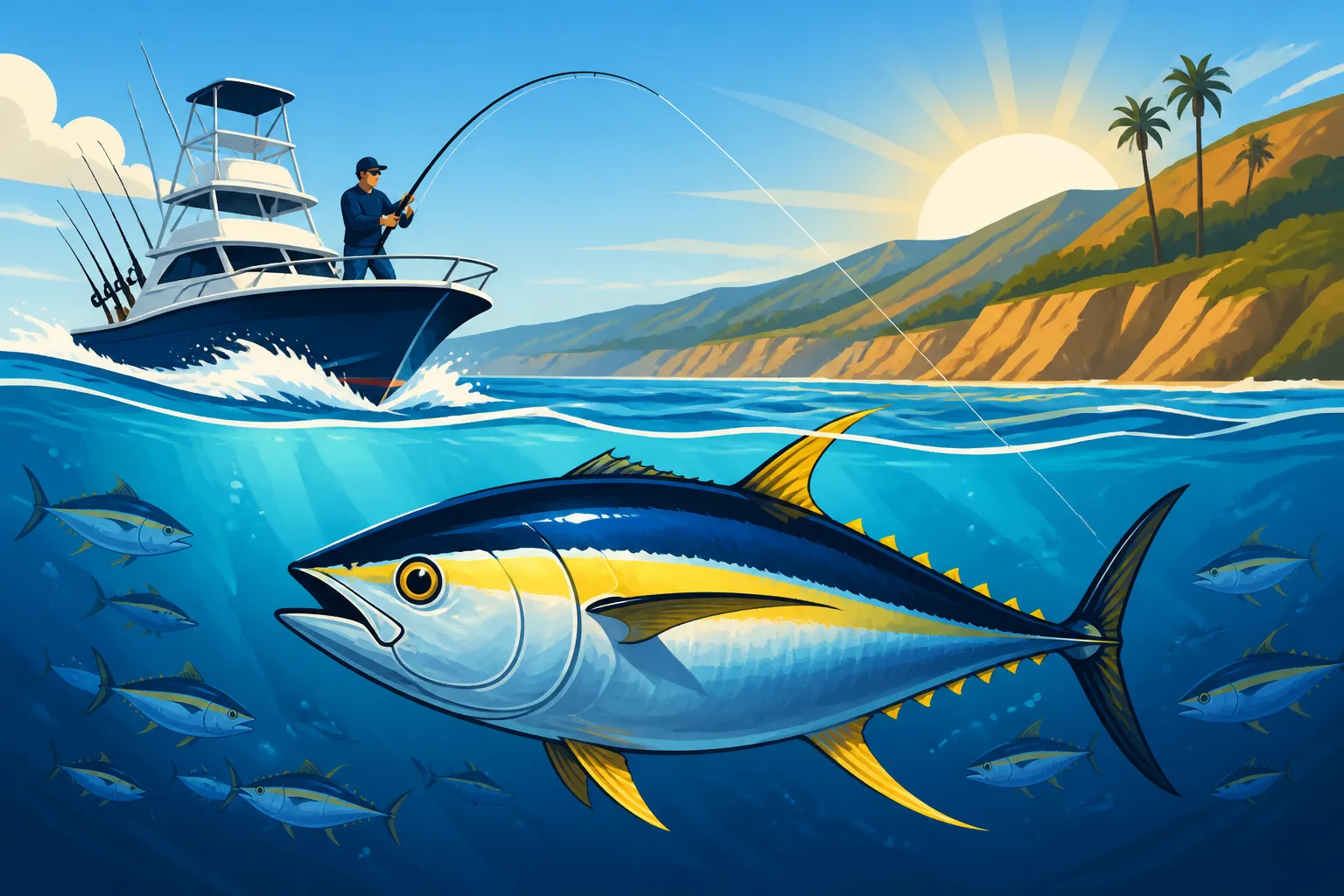
When you're out on the water, you'll want to be sure of what you're targeting. Yellowfin tuna (Thunnus albacares) get their name from their distinctive bright yellow finlets along their back and belly, stretching from the second dorsal and anal fins back to the tail. They also have a prominent golden stripe running down their side, and their second dorsal and anal fins are often quite long, especially on larger specimens, sometimes reaching almost to the tail. Their bodies are typically metallic dark blue on the back, fading to silver on the belly.
Compared to other tuna species you might encounter, such as Bluefin, Yellowfin tend to have a more streamlined, torpedo-like body, and their pectoral fins are usually longer than those of a Bluefin but shorter than those of an Albacore. They can grow to impressive sizes, with some individuals pushing over 300 pounds, though in California, a more common catch ranges from 20 to 100 pounds. Landing one of those bigger fish is a memory that will last a lifetime, let me tell you.
When and Where to Find Them
Yellowfin tuna are warm-water fish, and their presence in California waters is largely dictated by ocean temperatures and currents. Typically, the peak season for Yellowfin tuna off the California coast runs from late summer through fall, roughly August to October, but they can show up earlier in the summer and sometimes linger into early winter if conditions remain favorable. It really depends on the warmth of the water, specifically those nice, comfortable 68-75°F (20-24°C) bands that they absolutely love.
These tuna are pelagic, meaning they live in the open ocean, far from shore. You won't be catching them from a pier! They are often found around offshore banks, seamounts, and current breaks where baitfish congregate. Famous spots off Southern California include the Cortez Bank and Tanner Bank, but they can be found further south towards Mexican waters or follow warmer currents up the coast. These fish are constantly on the move, chasing baitfish like anchovies, sardines, and mackerel, so what was hot one week might be dead the next. Staying on top of the latest fishing reports is crucial, and knowing when to hit the water for different species is key to a successful trip, which is why understanding the California Fishing Seasons: Month-by-Month Guide can be so helpful.
Key Characteristics and Habits
Yellowfin tuna are incredibly fast swimmers, capable of bursts of speed up to 50 miles per hour! This incredible speed allows them to efficiently hunt their prey and evade predators. They are also highly social creatures, often schooling in large numbers, sometimes with other tuna species like Skipjack or even dolphins. If you see a pod of dolphins crashing bait, chances are good there are Yellowfin (and possibly Bluefin) tuna feeding below.
Their feeding habits are opportunistic, meaning they'll eat just about anything that looks like an easy meal. This includes small schooling fish, squid, and even crustaceans. They'll feed near the surface, especially during low light conditions or when there's an active bait school, but they'll also dive deep to chase bait in the thermocline. Understanding these habits is key to deciding whether to cast a popper on the surface or drop a jig deep. These dynamic characteristics mean you need to be versatile in your approach, ready to adapt to whatever the tuna are doing on any given day.
Essential Gear and Tackle for California Yellowfin
Chasing Yellowfin tuna is serious business, and your gear needs to be up to the task. These fish are powerful, relentless fighters, and trying to land one on inadequate tackle is a recipe for heartbreak. There’s nothing worse than hooking into a monster and having your reel seize up or your line snap. Trust me, I’ve been there.
Rods, Reels, and Line
For Yellowfin tuna, you'll typically be looking at heavy-duty conventional or spinning setups. The choice often depends on your preferred fishing style and the size of the fish being targeted.
- Rods: You'll want sturdy, fast-action rods, generally in the 6 to 7.5-foot range. For live bait, a parabolic (moderate) action rod can be better for absorbing those powerful runs. For jigging or casting poppers, a faster action rod gives you better lure control and hook-setting power. Look for rods rated for 40-80 lb line, with many anglers opting for 60-80 lb setups when big Yellowfin are around. Brands like Phenix, Calstar, and Seeker are popular choices among West Coast tuna anglers for their durability and backbone.
- Reels: This is where you absolutely cannot skimp. Your reel needs a strong drag system that can put out 25+ pounds of pressure smoothly, a high line capacity (at least 300-400 yards of heavy braid), and robust gearing.
- Conventional Reels: These are workhorses for live bait and slow trolling. Think Shimano Talica, Penn International, or Daiwa Saltiga. Make sure it has a solid retrieve ratio for getting those fish in, especially if they're running towards the boat.
- Spinning Reels: For casting poppers, stickbaits, or light jigs, heavy-duty saltwater spinning reels are fantastic. They offer incredible casting distance and are easier for some anglers to manage. Look for models like the Shimano Stella SW, Penn Slammer, or Daiwa Saltiga Expedition. These reels need to be sized for 10000 or larger to hold enough heavy line.
- Line: Your mainline should almost always be braided line due to its incredible strength-to-diameter ratio and zero stretch. 65 lb to 100 lb test braid is common. The braid is then typically connected to a fluorocarbon leader.
- Leaders: This is where the magic happens. Yellowfin have excellent eyesight, so a long (10-20 foot) fluorocarbon leader is essential for stealth. For average Yellowfin, 40-60 lb fluorocarbon is common, but if you're targeting bigger fish or fishing around structure, you might jump up to 80-100 lb. Make sure your knots connecting the braid to fluorocarbon (like an FG knot or PR knot) are impeccable; these are often the weakest link in your setup! You can find a wide range of reliable braided and fluorocarbon lines on
Amazon, ensuring you're stocked for any tuna encounter.
- Leaders: This is where the magic happens. Yellowfin have excellent eyesight, so a long (10-20 foot) fluorocarbon leader is essential for stealth. For average Yellowfin, 40-60 lb fluorocarbon is common, but if you're targeting bigger fish or fishing around structure, you might jump up to 80-100 lb. Make sure your knots connecting the braid to fluorocarbon (like an FG knot or PR knot) are impeccable; these are often the weakest link in your setup! You can find a wide range of reliable braided and fluorocarbon lines on
Lures, Baits, and Terminal Tackle
Having a diverse tackle box is critical because Yellowfin can be incredibly finicky. What they wanted yesterday, they might ignore today.
- Live Bait: This is often the most effective method, especially on party boats or charters.
- Anchovies & Sardines: These are the bread and butter. Keep them healthy in a good bait tank. The fresher, the better.
- Mackerel & Squid: For larger Yellowfin, these bigger baits can be irresistible.
- Artificial Lures:
- Jigs: Heavy, iron jigs (like Salas, Tady, or Shimano Butterfly jigs) are fantastic for deep water vertical jigging, especially when tuna are holding deep. You'll also want some surface irons for casting into boiling fish.
- Poppers & Stickbaits: These surface lures create a commotion that can draw Yellowfin up from the depths, especially during a hot bite. Nomad Design and Yo-Zuri make some excellent ones.
- Cedar Plugs: A classic trolling lure, especially effective when Yellowfin are chasing smaller baitfish.
- Terminal Tackle:
- Hooks: Strong, sharp hooks are non-negotiable. For live bait, circle hooks (like Gamakatsu or Owner) are popular, often sized 2/0 to 6/0 depending on bait size. For jigs, ensure your assist hooks are fresh and sharp.
- Swivels: High-quality barrel or ball-bearing swivels are important to prevent line twist, especially when trolling.
- Split Rings: Ensure any split rings on your lures are heavy-duty and won't straighten under pressure.
Must-Have Accessories
Beyond the core fishing gear, a few accessories can make your Yellowfin trip much more comfortable and successful.
- Sun Protection: You're going to be out on the open ocean, often for a full day or even overnight. High SPF sunscreen, a wide-brimmed hat, polarized sunglasses, and UV-protective clothing are essential. Nobody wants a nasty sunburn ruining their trip!
- Coolers: You’ll need a good quality cooler to keep your catch fresh. A YETI or an RTIC cooler will keep your Yellowfin in prime condition until you get home. It’s also a great spot to keep your lunch and drinks cold.
- Fishing Pliers & Cutters: Heavy-duty pliers for removing hooks and strong line cutters for braid and fluorocarbon are non-negotiable.
- Fighting Belt/Harness: If you're planning on tackling larger Yellowfin, a fighting belt and harness will distribute the pressure and save your back during those long, brutal fights.
- First Aid Kit: Accidents happen, especially on a rocking boat. A well-stocked first aid kit is always a good idea. Many of these essential items, from UV shirts to reliable fishing pliers, are readily available and can be quickly ordered from
Amazonbefore your next trip.
It’s not just about the gear; it's about being prepared for anything the ocean throws at you. For a complete list of essentials, check out our guide on What to Bring on a California Fishing Charter.
Proven Techniques for Catching Yellowfin Tuna in California
Yellowfin tuna are intelligent, powerful fish, and a one-size-fits-all approach rarely works. You need a repertoire of techniques, ready to deploy based on current conditions, bait presence, and how the fish are behaving. Adaptability is your best friend when chasing these elusive giants.
Live Baiting Strategies
Live baiting is arguably the most consistent and often most productive method for Yellowfin tuna in California. There's just something about a struggling live bait that these predatory fish can't resist.
- Chumming and Fly-lining: This is the classic party boat strategy. Once tuna are located, the crew will start throwing handfuls of live anchovies or sardines into the water to create a "chum line," drawing the tuna closer to the boat. Anglers then "fly-line" their live bait – simply casting a single, healthy live bait on a hook (often with minimal or no weight) into the chum line. The goal is for your bait to swim naturally with the chum, looking like an easy meal.
- Pro Tip: Hook your bait carefully through the nose or just behind the dorsal fin to keep it lively. Pay close attention to your line; a sudden twitch or acceleration often means a tuna has inhaled your bait. Don’t set the hook instantly; let the fish take the bait and swim away for a few seconds before leaning into it to ensure a solid hookup. This technique often works best when the tuna are feeding aggressively on the surface.
- Slow Trolling Live Bait: Sometimes, tuna won't commit to a chum line, or they're more spread out. Slow trolling live mackerel or large sardines can be incredibly effective. This involves dragging several baits behind the boat at a slow speed (usually 2-4 knots), often with a small lead sinker or a downrigger to present baits at different depths. The boat covers more ground, increasing your chances of finding actively feeding fish. This method requires constant vigilance of your rod tips for any sign of a strike.
- Balloons and Kites: For even larger bait or when tuna are particularly spooky, using balloons or kites to suspend live bait on the surface, away from the boat, can be deadly. The balloon acts as a float and a visual aid, while a kite keeps the bait skipping tantalizingly on the surface, mimicking a fleeing baitfish. This is a highly specialized technique often used for trophy-sized Yellowfin.
Artificial Lure Tactics
While live bait is king, artificial lures are incredibly effective, especially when tuna are boiling on the surface or when you need to cover water quickly. Plus, the strike on an artificial lure is often explosive!
- Casting Poppers and Stickbaits: When you see tuna busting on the surface, chasing bait, this is your prime opportunity for topwater action. Cast a large popper or stickbait past the feeding frenzy and work it back with sharp jerks and pauses, mimicking a wounded baitfish. The visual strike is absolutely heart-stopping, a true thrill. Remember, retrieve speed and cadence can make all the difference, so experiment until you find what triggers a bite.
- Jigging (Surface and Vertical): Jigs are versatile tools for Yellowfin.
- Surface Iron: When tuna are feeding near the surface, casting and retrieving heavy metal jigs (like Tady 45s or Salas 7X) with a fast, erratic retrieve can trigger a reaction strike. This is a very active fishing style and can be incredibly rewarding.
- Vertical Jigging: When tuna are holding deeper, perhaps marked on your fishfinder, dropping a heavy, slender jig (often called "knife jigs" or "butterfly jigs") down to their depth and working it back with aggressive lifts and drops can be incredibly effective. This technique requires a good feel for your jig and strong arms, but it can turn a slow day into an epic one. For deep-water techniques, remember to factor in potential California Rockfish Depth Restrictions if you're in an area where those might apply, though tuna are generally found in much deeper, unrestricted waters.
Trolling for Yellowfin
Trolling is a fantastic way to cover vast expanses of the open ocean and find scattered schools of Yellowfin. It's often the first method employed on many California Fishing Charters: Complete Guide to locate active fish.
- Cedar Plugs and Feathers: These classic trolling lures are simple yet highly effective. Dragged at speeds of 6-9 knots, they imitate small baitfish. You can run multiple lines, with different colors and sizes, to see what the tuna prefer. Sometimes, a single cedar plug way back in the spread is all it takes.
- Daisy Chains and Spreader Bars: These are more elaborate trolling rigs that create the illusion of a school of baitfish, attracting tuna from a distance. A daisy chain consists of several "teaser" lures (squid or bird imitations) followed by a hooked "stinger" lure. Spreader bars are even larger, deploying multiple teasers on a bar, creating a massive baitball illusion. These rigs can be incredibly effective for drawing attention, but they require heavier tackle and careful deployment to avoid tangles.
- Rigging and Speed: Experiment with your trolling spread. Some lures work better closer to the boat, others further back. Varying speeds can also be key; sometimes a slight acceleration or deceleration will trigger a bite. Keep an eye on your fishfinder for any signs of bait or fish holding beneath the surface. Knowing the Best Offshore Fishing Charters in California often means finding captains who are masters of these trolling techniques.
| Technique | Primary Application | Bait/Lure Type | Typical Depth | Aggressiveness of Bite | Key Benefit |
|---|---|---|---|---|---|
| Fly-lining | Surface feeding, chum bite | Live anchovies, sardines | Surface | High | Natural presentation, excellent for active fish |
| Slow Trolling Bait | Scattered fish, covering ground | Live mackerel, large sardines | Surface to mid-depth | Moderate to High | Locates fish, effective for finicky feeders |
| Casting Topwater | Surface boils, visible feeding | Poppers, stickbaits | Surface | Explosive | Thrilling visual strikes, covers area |
| Vertical Jigging | Deep holding fish, marked on sonar | Knife jigs, butterfly jigs | Mid-depth to Deep | High | Targets non-surface feeders, good for structure |
| Trolling Lures | Locating fish, covering large areas | Cedar plugs, feathers, spreader bars | Surface to mid-depth | Moderate | Efficient search method, consistent action |
Best Fishing Spots and Charter Options for Yellowfin Tuna
Finding Yellowfin tuna off California isn't a casual endeavor. These are blue-water fish that require a commitment to venturing far offshore. You’re not just going out for a few hours; these are often full-day or multi-day expeditions.
Prime Offshore Banks and Zones
When the warm water pushes into Southern California, Yellowfin tuna often follow the bait to specific offshore structures that act as aggregation points.
- Cortez Bank and Tanner Bank: These are legendary offshore banks located roughly 100 miles southwest of San Diego. They are essentially submerged mountains that rise significantly from the ocean floor, creating upwellings and eddies that concentrate baitfish and, consequently, pelagic predators like Yellowfin, Bluefin, and Dorado. The fishing here can be absolutely phenomenal when conditions are right, but it's a long run.
- The Outer Banks: Further offshore from San Diego, there are several other unnamed or less famous banks and seamounts that can hold Yellowfin. These are often discovered by dedicated long-range boats.
- San Clemente Island and Santa Catalina Island: While often associated with inshore species, the offshore waters and currents around these larger Channel Islands can sometimes hold transient schools of Yellowfin, especially on their migratory routes. The waters here are usually more accessible than the farther offshore banks.
- The Ridge: This is a vast, elongated underwater feature that runs roughly parallel to the coast of Baja California and extends up towards Southern California. It’s a major migratory corridor for all sorts of pelagic species, including Yellowfin.
- Floating Kelp Paddys: Keep an eye out for floating mats of kelp. These act as mini-ecosystems in the open ocean, attracting small baitfish and juvenile fish, which in turn attract larger predators like Yellowfin, Dorado, and Yellowtail. Always approach kelp paddys cautiously and quietly. You can sometimes spend hours fishing one productive paddy.
Choosing a California Charter or Party Boat
For most anglers, especially those without their own offshore vessel, booking a charter or party boat is the way to go for Yellowfin tuna. These boats are specifically equipped for offshore fishing and have experienced crews who know where to find the fish.
- Party Boats (Open Party Trips): These are the most common and budget-friendly option. You pay for a spot on a boat with other anglers. Trips can range from 3/4-day to multi-day long-range excursions. The deckhands are generally fantastic and will help you with rigging, tangles, and gaffing fish. This is a great way to learn from experienced anglers and crew. Look for reputable landings in San Diego like H&M Landing, Fisherman's Landing, or Point Loma Sportfishing, or Dana Point Sportfishing in Orange County. Many offer specialized
California Tuna Fishing Tripsthat target Bluefin and Yellowfin. - Private Charters: If you have a group, a private charter offers a more personalized experience. You dictate the target species, duration, and often the fishing style. These are more expensive but offer flexibility and one-on-one attention from the captain and crew. This can be an excellent option for beginners or families who want a tailored experience. To truly maximize your chances, booking a California Bluefin Tuna Charter Trips or Yellowfin-specific charter with a proven track record is invaluable.
- What to Look For:
- Reputation: Check online reviews and ask for recommendations.
- Experience: Captains and crews with years of experience chasing tuna are worth their weight in gold.
- Boat Size & Amenities: Ensure the boat is comfortable, well-maintained, and has ample bait capacity and fish-holding facilities.
- Fish Counts: Look at recent fish counts from the landing or specific boats. This gives you a real-time idea of what's being caught.
Remember, safety is paramount. Make sure the boat is Coast Guard certified and the crew prioritizes safety. Knowing How to Prevent Seasickness on a California Charter can also make or break your trip.
Safety and Regulations
Offshore fishing can be exhilarating, but it also comes with inherent risks. Always prioritize safety.
- Weather: The ocean can change quickly. Listen to the captain's instructions and be prepared for rough seas.
- Hydration and Sun Protection: As mentioned earlier, offshore trips mean long hours in the sun. Stay hydrated and protected.
- Fish Handling: Yellowfin tuna are powerful even out of the water. Be careful when unhooking or gaffing.
- California Fishing License: Don't forget, you absolutely need a valid California Fishing License Guide before you step on any boat, even a charter. You also often need a California Ocean Enhancement Stamp for certain southern California waters. Always double-check current regulations for bag limits, size limits, and any seasonal closures. These can change yearly depending on fish stocks and conservation efforts. You can usually find the most up-to-date information through the California Department of Fish and Wildlife (CDFW) website or by picking up a copy of the regulations booklet at any licensed fishing tackle shop. Being prepared with your California Fishing License Requirements for Visitors is also crucial if you're coming from out of state.
Disclaimer
Fishing can be a dangerous activity. Always exercise caution, wear appropriate safety gear, and be aware of your surroundings. Regulations can change, so always consult the latest California Department of Fish and Wildlife rules before fishing. This guide is for informational purposes only and should not replace professional advice or judgment.