California King Salmon Fishing Guide
For many anglers, the pursuit of California King Salmon isn't just a hobby; it's a deep-seated passion, a quest for one of the most magnificent and challenging sport fish our state has to offer. But let's be real, tracking down these elusive kings, understanding their migratory patterns, and mastering the techniques to bring one to the boat can feel like deciphering an ancient riddle. This comprehensive guide is here to cut through the confusion, helping you understand where and when to find these incredible fish, and what you need to do to increase your chances of a successful catch.
Understanding California King Salmon
King Salmon, also known as Chinook Salmon, are true titans of the California fishing scene. These magnificent fish are born in freshwater rivers, migrate to the Pacific Ocean to grow and mature, and then return to their natal rivers to spawn, completing a life cycle that offers incredible angling opportunities at various stages. Trying to catch them without a solid understanding of this journey is like trying to navigate a maze blindfolded.
Life Cycle and Migration Patterns
The life of a King Salmon is nothing short of epic. They hatch from eggs in the cold, clean gravel beds of California's rivers, spending their early lives in freshwater, feeding and growing. As they mature into smolts, usually after a year or so, an incredible transformation occurs, preparing them for the saltwater environment. They then embark on an arduous journey downstream to the Pacific Ocean. Once in the ocean, they spend several years feeding voraciously, growing to impressive sizes, sometimes over 50 pounds, though 15-30 pounds is more common for a trophy fish in California.
After 2 to 5 years at sea, driven by an instinctual call, these mature salmon begin their journey back to the very rivers where they were born. This migration, often peaking in late summer and fall, is when many anglers get their shot. Understanding these seasonal movements is absolutely crucial. You can't just throw a line in anywhere and expect results; you need to be where they are, when they're there. This also means being acutely aware of things like California Salmon Season Dates Explained, as these dates dictate when and where you can legally target them.
Physical Characteristics and Behavior
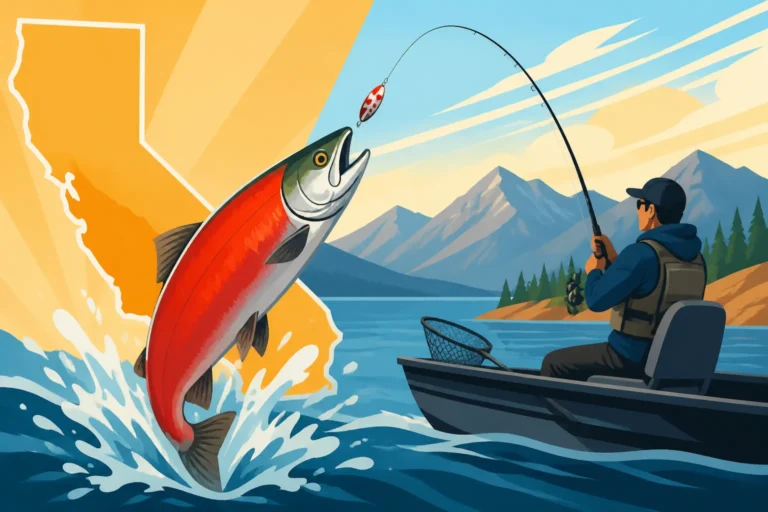
King Salmon are easily identified by their large size, dark spots on their backs and tails, and a dark gum line (hence their scientific name, Oncorhynchus tshawytscha, which means "black mouth"). Their flesh is typically a rich, vibrant orange-red, highly prized for its flavor and nutritional value. When hooked, they are formidable fighters, known for powerful runs, deep dives, and sometimes acrobatic leaps, making them a truly exhilarating catch.
Their behavior is heavily influenced by their environment. In the ocean, they are pelagic predators, often found feeding on baitfish like anchovies, sardines, and squid. This means ocean anglers need to mimic these natural prey sources. As they enter freshwater systems, their focus shifts from feeding to reproduction. While they still strike at lures and baits, it's often more out of aggression or instinct than pure hunger. Knowing this behavioral shift can drastically change your approach, moving from active feeding patterns in the ocean to more territorial or reactionary strikes in the river.
Where to Find King Salmon in California
California offers a diverse range of habitats for King Salmon, from the vast expanse of the Pacific Ocean to numerous coastal rivers and even some inland reservoirs. Each location presents its own unique challenges and rewards, and knowing where to focus your efforts is key.
Coastal Ocean Waters and Bays
When King Salmon are feeding and growing, they roam the Pacific Ocean, often following schools of baitfish. This is where the biggest Kings are typically caught. The waters off Northern and Central California are particularly renowned. Locations like Bodega Bay, Half Moon Bay, and Monterey Bay are famous for their robust ocean salmon fisheries. Further north, areas around Fort Bragg and Eureka also see strong runs. These areas can be accessed via private boats or through numerous sportfishing charters available along the coast.
Bays and estuaries also offer fantastic opportunities, especially as salmon stage before their final push upstream. The San Francisco Bay Fishing Guide outlines excellent spots where Kings congregate. Often, these fish are feeding heavily, gorging themselves before they cease feeding once they hit fresh water. Targeting them in these transitional zones can be incredibly productive, requiring different techniques than offshore fishing, focusing on areas where freshwater mixes with saltwater and baitfish are abundant.
Major Freshwater Rivers
Once the salmon commit to their spawning run, they enter California's major river systems. The Sacramento River Fishing Guide highlights it as the most important King Salmon river in the state, with various runs (fall, late fall, winter, and spring) occurring throughout the year, though specific regulations often limit fishing to particular runs. Other significant rivers include the Feather River, American River, Klamath River, and Trinity River. These rivers become highways for salmon, and anglers often intercept them using different techniques than in saltwater.
Fishing in these rivers can be challenging due to varying water levels, currents, and specific regulations regarding gear and access. It's crucial to consult the California Freshwater Fishing Regulations and the California Salmon Regulations and Limits to ensure compliance. You might find yourself fishing from the bank, wading, or using drift boats, depending on the river section and conditions. The experience of catching a powerful King Salmon in a pristine river setting is truly unforgettable, a visceral connection to nature's cycle.
Best Times to Fish for King Salmon
Timing is everything when it comes to King Salmon. Their presence in certain areas is highly seasonal, dictated by their life cycle and environmental factors. Missing the peak window means missing out on the best action.
Peak Seasonality and Runs
California's King Salmon fishery is primarily known for its fall run, which typically sees fish entering rivers from late summer through fall (August to November). This is often the most accessible and popular time for river fishing. However, some rivers also experience spring, winter, and late fall runs, which can offer unique opportunities, especially for dedicated anglers seeking less crowded conditions or trophy fish. The ocean fishery for King Salmon generally runs from late spring through fall, varying by management area and specific quota announcements.
Understanding the specific runs and their timings is paramount. For instance, the Klamath and Trinity Rivers often have strong fall runs, while the Sacramento River sees fish throughout various runs. Always check the official California Salmon Season Dates Explained to know when and where fishing is permitted, as these dates can change yearly based on stock assessments and conservation efforts. Local knowledge from tackle shops or fishing guides is invaluable for pinpointing the exact start and peak of a run in any given year, as conditions can fluctuate.
Daily Timing and Environmental Factors
Beyond the yearly seasons, daily timing and environmental factors play a huge role. In both ocean and river environments, King Salmon often bite best during periods of low light – dawn and dusk. These are typically cooler, quieter times when salmon feel more secure or are more actively feeding on baitfish. Overcast days can extend these prime bite windows.
Tides are also critical for ocean and bay fishing. Incoming and outgoing tides can concentrate baitfish and salmon in certain areas, creating ideal ambush points. River conditions like water temperature, flow rate, and clarity are vital. A sudden drop in temperature or a significant increase in flow (due to rain or dam releases) can either turn fish on or shut them down completely. Clear water might call for lighter lines and more natural presentations, while murkier water might favor scent and vibration. Wind, too, affects conditions, making it harder to maintain a drift or present lures effectively.
Effective Techniques and Gear for King Salmon
Catching King Salmon is a blend of art and science, requiring the right techniques and reliable gear. Whether you're trolling in the ocean or back-trolling in a river, having your setup dialed in makes a world of difference.
Ocean and Bay Techniques
When fishing in the open ocean or large bays for King Salmon, trolling is the most common and often most effective method. This involves dragging lures or baits behind a moving boat, covering large areas to find active fish. Downriggers are frequently used to get lures down to the exact depth where salmon are feeding, often alongside bait balls detected by sonar. Flashers and dodgers are popular attractants, creating vibration and flash to mimic a school of baitfish, followed by a rigged bait (like an anchovy or sardine) or a spoon/hoochie.
Another highly effective technique, especially in bays or near coastal structures, is mooching. This involves drifting with the current, dropping weighted bait down, and slowly retrieving or jigging it. This slower, more subtle presentation can be deadly when salmon are concentrated or less aggressive. A common mooching setup includes a banana weight, a leader, and two hooks rigged through a baitfish like an anchovy. For deeper waters, especially in crowded areas like the San Francisco Bay, you might also find success with vertical jigging. Remember to pack a variety of lures and baits, as what works one day might not the next. Brands like Scotty and Cannon are popular for downriggers, while Luhr Jensen and P-Line offer excellent trolling gear. You can find a vast selection of these items on Amazon, making it easy to stock up before your trip.
River and Estuary Techniques
River fishing for King Salmon often employs different strategies tailored to current and structure. Back-trolling, back-bouncing, and drift fishing are popular choices. Back-trolling involves using the boat's motor to slowly move upstream against the current, allowing weighted lures or bait to drift downstream, effectively presenting them to fish holding in deeper holes or along structure. This method is incredibly precise, allowing anglers to hit specific spots multiple times.
Drift fishing, particularly popular for bank anglers or those in smaller boats, involves casting weighted bait or roe upstream and letting it drift naturally downstream along the bottom, mimicking natural food sources. Spinners and plugs can also be effective, especially when cast into holding water or swung through runs. Popular baits include roe (cured salmon eggs), clusters of roe, or even artificial scent-infused baits. For plugs, brands like Yakima Bait's Mag Lip are legendary for their wiggling action that drives salmon crazy. When setting up for river fishing, having a reliable scent applicator and a variety of weights for different current speeds is a must. Don't forget your California Fishing Report Cards Explained for any anadromous species you might catch.
Essential Gear and Tackle
Regardless of where you're chasing Kings, robust gear is essential. These are powerful fish, and flimsy tackle won't cut it.
| Gear Category | Ocean/Bay Fishing | River/Estuary Fishing |
|---|---|---|
| Rod | Medium-heavy to heavy, 7-9 feet, fast action | Medium-heavy, 8.5-10.5 feet, moderate-fast action |
| Reel | Conventional reel (star drag or lever drag), size 20-30 or equivalent, high line capacity | Baitcasting reel (low profile or round) or spinning reel, smooth drag |
| Line | 25-40 lb monofilament or braided mainline, 20-30 lb fluorocarbon leader | 15-25 lb monofilament or braided mainline, 10-20 lb fluorocarbon leader |
| Lures/Baits | Flashers, dodgers, spoons (e.g., Apex, Coyote), anchovies, sardines, hoochies | Cured roe, plugs (e.g., Mag Lip, Kwikfish), spinners (e.g., Blue Fox), soft beads, Brad's Killerfish |
| Terminal Tackle | Swivels, snap swivels, cannonballs, banana weights, circle hooks, treble hooks | Lead weights (slinky, pencil), bobber stops, beads, egg hooks, treble hooks |
| Accessories | Downriggers, net, gaff, fish cooler, pliers, measuring tape, cutting board | Net, plier, measuring tape, scent, bait cooler, wading boots |
For rods and reels, brands like Shimano, Penn, and Daiwa offer excellent options that can withstand the brutal fights of a King Salmon. Your mainline might be braided for sensitivity and strength, but you'll almost always use a fluorocarbon leader due to its invisibility underwater, especially for wary salmon. Make sure your hooks are sharp and strong; a dull hook can cost you a trophy fish. A good quality net is crucial for landing these powerful fish safely. A California Fishing License Guide is your first piece of essential gear, and you can stock up on everything from hooks to bait containers on Amazon. Don't forget about your California Salmon Report Card, which is a legal requirement to possess when targeting salmon. Remember, being prepared with the right tools ensures you're ready when that King Salmon decides to bite.
Regulations and Conservation
It’s impossible to talk about King Salmon fishing in California without diving deep into the regulations. These majestic fish are highly managed due to their ecological and economic importance, and regulations are in place to ensure their sustainability. Ignoring them isn't just irresponsible; it's illegal.
Understanding Current Regulations
The California Department of Fish and Wildlife (CDFW) meticulously manages salmon fisheries, and these regulations can be complex and change frequently. You'll need to pay close attention to the California Fishing Regulations Explained, which outline specific rules for different species, fishing methods, and regions. For King Salmon, this often includes:
- Season Dates: Open and closed seasons vary by ocean management area (e.g., Klamath Management Zone, Fort Bragg, San Francisco, Monterey) and by river system. These dates are set annually and are critical to know before you ever cast a line. For example, a particular ocean area might be open for salmon in July, but a river might only open in late August.
- Bag and Size Limits: There are strict limits on the number of salmon you can keep per day (bag limit) and the minimum size a salmon must be to be retained (size limit). These also vary by location and year. Always check the current California Salmon Bag Limit Explained and California Salmon Size Limit Explained.
- Gear Restrictions: Certain baits (like barbed hooks or bait in specific freshwater areas), tackle configurations (e.g., number of hooks), and even fishing methods (e.g., snagging is illegal) are often prohibited to protect fish stocks and ensure fair chase. For example, certain areas might require barbless hooks only, which is a rule you absolutely must follow.
- Report Cards: If you're targeting anadromous species like salmon, you're usually required to possess and fill out a California Salmon Report Card. These cards help the CDFW collect vital data on catch rates, which informs future management decisions. Failing to accurately fill out and return your report card is a serious violation.
It's not enough to just skim these rules. You need to understand them thoroughly, and a quick check on the CDFW website or a visit to a local bait shop for the most recent regulation booklet before each trip is always a smart move.
Conservation Efforts and Sustainable Practices
As anglers, we have a responsibility to contribute to the conservation of King Salmon populations. Decades of habitat loss, damming, water diversions, and climate change have put immense pressure on these fish. Following regulations is just the starting point.
Practicing catch-and-release responsibly, especially for wild fish or when you've reached your bag limit, is crucial. Minimize handling time, keep the fish in the water as much as possible, and use proper de-hooking tools. Avoid stressing fish unnecessarily. If you're fishing in a river, be mindful of spawning beds and avoid wading through areas where salmon might be actively spawning. Supporting organizations involved in salmon habitat restoration, responsible fishery management, and water conservation also plays a vital role. When we all do our part, we help ensure that future generations can continue to enjoy the thrill of King Salmon fishing in California.
Disclaimer
Fishing regulations and conditions in California can change frequently. Always consult the latest California Department of Fish and Wildlife (CDFW) regulations and local advisories before heading out on any fishing trip. The information provided in this guide is for general informational purposes only and should not be considered legal advice.