California Kokanee Salmon Fishing Tips
Fishing for Kokanee salmon in California can feel like trying to solve a cryptic puzzle – one day they’re biting like crazy, the next they vanish completely, leaving you wondering if they even exist! Many anglers get frustrated by these elusive, landlocked salmon, struggling to find them or entice a strike. This comprehensive guide is here to demystify Kokanee fishing in the Golden State, offering actionable tips, essential gear advice, and proven techniques to help you consistently hook into these delicious and feisty fish.
The Allure of California Kokanee Salmon Fishing
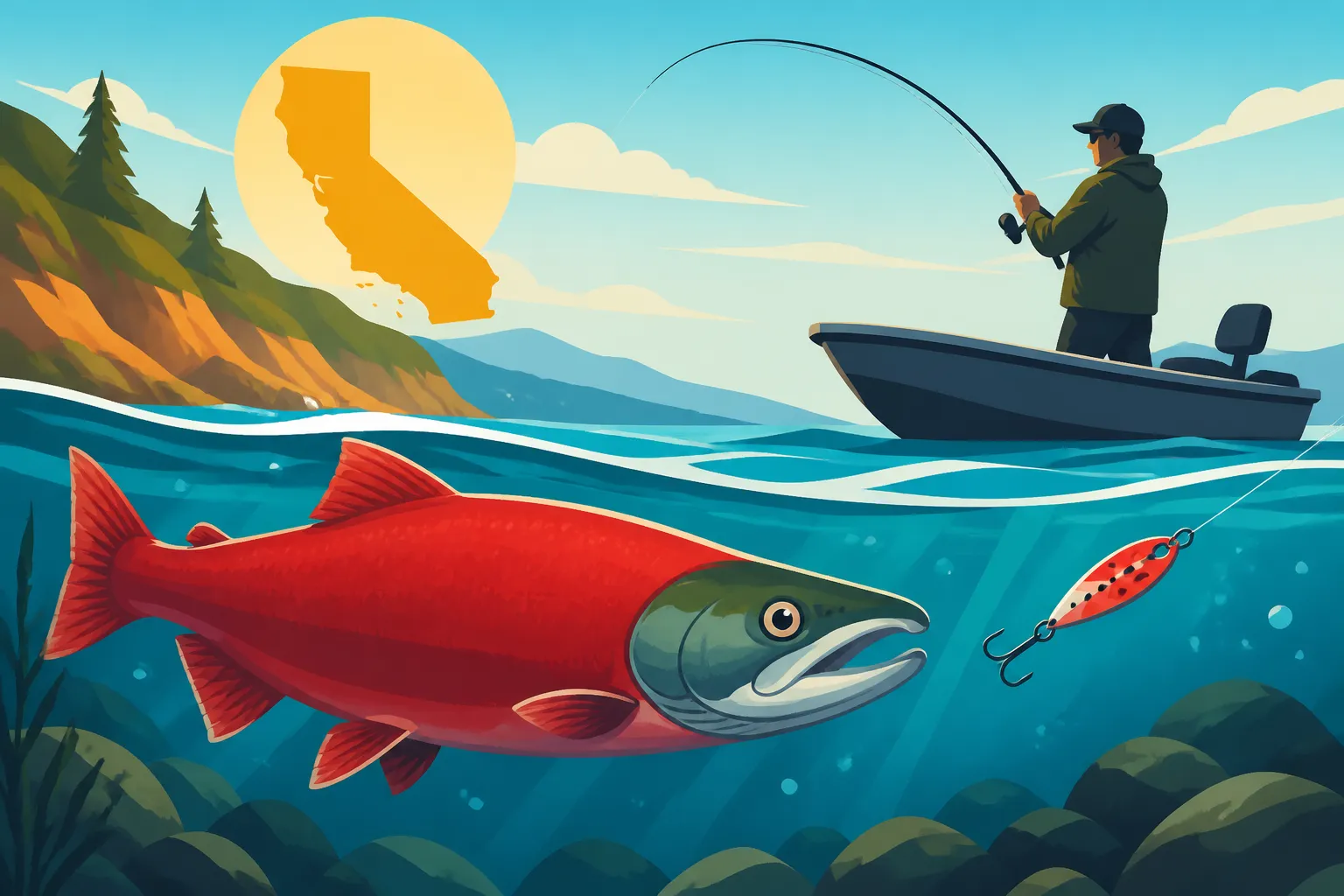
Kokanee salmon are a special breed, distinct from their ocean-going cousins. They offer a unique freshwater fishing experience that captivates many California anglers. Their vibrant silver bodies, often turning crimson during spawning, and their vigorous fighting spirit on light tackle make them a highly sought-after species. But to catch them, you first need to understand them.
Unpacking the Kokanee Life Cycle and Behavior
Kokanee salmon are essentially sockeye salmon that have become landlocked, adapting to a freshwater existence without ever migrating to the ocean. In California, these fish typically live for about four years, growing to sizes that usually range from 10 to 16 inches, though some larger specimens can be found in nutrient-rich lakes. What makes them particularly challenging and intriguing is their diet; they primarily feed on zooplankton, tiny microscopic organisms floating in the water column. This specialized diet means they aren't interested in traditional baits like worms or minnows, making lure and scent presentation critical.
Throughout their lives, Kokanee remain schooling fish, preferring cold, deep water. They'll follow the thermocline – the layer in the lake where water temperature changes rapidly – seeking out optimal conditions. When they are about to spawn, usually in the late summer or fall, their appearance dramatically transforms. Males develop a distinctive hooked jaw (kype) and a humped back, both sexes turn brilliant red, and they migrate into tributary streams or shallow lake areas to reproduce before dying. This one-time spawning event, known as semelparity, means timing your fishing before the spawn is crucial for catching them at their prime. Understanding this lifecycle and their behavior patterns is the first step in successful Kokanee fishing. For more insights into these fish, you might find our guide on Kokanee Salmon in California: Where and How to Catch particularly helpful.
Top California Kokanee Waters and Their Nuances
California is blessed with several fantastic Kokanee fisheries, each with its own characteristics and peak seasons. Knowing where to go and what to expect from each body of water significantly increases your chances of success.
- Lake Tahoe: This iconic alpine lake is famous for its large Kokanee, often reaching over 20 inches, though they can be harder to locate in its vast, deep waters. Fishing here often requires deeper presentations due to the lake's immense depth and clarity.
- New Melones Lake: Located in the Sierra Nevada foothills, New Melones is a consistent producer of Kokanee, especially in the spring and early summer. The fish here are typically a good average size, and the lake is known for its strong thermocline, which can make locating fish easier. Our specific New Melones Lake: Fish Species and Best Spots guide offers detailed information.
- Lake Shasta: As California's largest reservoir, Lake Shasta provides ample Kokanee opportunities. The fishing can vary here, but good numbers of medium-sized Kokanee are typically caught, especially near the dam and in deeper arms of the lake. Learn more about this massive fishery in our Lake Shasta Fishing Guide.
- Stampede Reservoir: Up in the high Sierras, near Truckee, Stampede is renowned for its large Kokanee, sometimes called "supersized." It's a colder lake, and fishing success can be highly dependent on seasonal water levels and temperatures.
- Don Pedro Reservoir: Another Central Valley gem, Don Pedro offers reliable Kokanee fishing, often with good numbers of healthy fish, especially during the spring.
- Trinity Lake: Located in Northern California, Trinity can be a fantastic Kokanee spot, offering a more remote and serene fishing experience, with strong populations of fish.
Each of these lakes requires a slightly different approach due to varying depths, water clarity, and food availability. Always check the latest local fishing reports and the Department of Fish and Wildlife (CDFW) regulations for specific lake conditions and any special rules before heading out. Staying informed about California Freshwater Fishing Regulations is crucial for a legal and enjoyable trip.
Gearing Up for Kokanee Success
Catching Kokanee isn't just about luck; it's about having the right tools and knowing how to use them. These fish are known for their delicate bites and soft mouths, requiring specific gear to detect strikes and keep them hooked.
Rods, Reels, and Line: Precision is Paramount
When it comes to Kokanee, finesse is the name of the game. Heavy gear will only lead to pulled hooks and missed opportunities.
- Rods: Opt for a light to medium-light action trolling rod, typically 7 to 8.5 feet long. Fiberglass rods or composite rods with a soft tip are excellent as they absorb the Kokanee's head shakes and help prevent the hook from tearing out of their delicate mouths. A slow parabolic bend is ideal. Brands like Lamiglas and Berkley make popular Kokanee-specific rods that you can find readily on platforms like Amazon.
- Reels: Small conventional reels (like a Shimano Tekota 300 or Daiwa Accudepth Plus) are popular for trolling, especially if you're using lead core or downriggers, as they allow for precise depth control and line counters are a huge advantage. For jigging or still fishing, a sensitive spinning reel in the 1000-2500 size range paired with a light spinning rod works well.
- Line: Your main line can be 10-15 lb braided line, which offers superior sensitivity and minimal stretch, allowing you to feel even the lightest taps. However, Kokanee are line-shy, so you absolutely need a fluorocarbon leader. A 6-8 lb fluorocarbon leader, anywhere from 10 to 20 feet long, provides invisibility underwater and the necessary stretch to cushion their strikes. Using a small barrel swivel to connect your braid to your leader helps reduce line twist, which can be a problem when trolling with flashers.
Lures, Baits, and Attractants: The Scent Trail
Kokanee fishing is heavily reliant on visual attraction and scent. They are plankton eaters, so you're trying to mimic something small and appealing or simply trigger an aggressive response.
- Dodgers and Flashers: These are perhaps the most critical components of a Kokanee setup. Dodgers (like a Dick Nite or Shasta Tackle Sling Blade) and flashers (like a Sep's Pro-Flash or Vance's Tackle Dodger) are designed to create erratic movements and vibrations in the water, attracting Kokanee from a distance. They are usually placed 12 to 36 inches in front of your lure. The size and color of your dodger/flasher can make a huge difference depending on water clarity and light conditions. Popular colors include chrome, gold, pink, green, and orange.
- Lures: Behind your dodger, you'll run a small lure, typically 1 to 2.5 inches long. Popular choices include mini-hoochies (small squid skirts), wedding rings, spinners (like a Kokanee Killer or Mack's Lures Smile Blade), or small spoons. Again, color is king, with pink, orange, green, and chartreuse being consistent producers. It's always a good idea to have a variety on hand to experiment with. You can find a vast selection of these lures and dodgers on Amazon, making it easy to stock up.
- Bait and Scent: This is where the magic often happens. The vast majority of Kokanee lures are tipped with a small piece of shoepeg corn (often dyed with attractant), Gulp! maggots, or other small soft plastic baits. These baits serve two purposes: they add a bit more visual appeal and, more importantly, they carry scent. Common scents include Anise, Garlic, Bloody Tuna, and Krill. Apply a generous amount of scent to your corn or lure and refresh it frequently, as the scent trail is vital for drawing strikes.
Mastering Depth Control with Downriggers and Lead Core Lines
Since Kokanee school at specific depths, getting your lure to the exact right spot is non-negotiable. This is where specialized depth control methods come in.
- Downriggers: These are mechanical devices that allow you to precisely control the depth of your lure. A heavy cannonball is lowered on a steel cable, and your fishing line is attached to this cable with a release clip. When a fish bites, the line releases from the clip, allowing you to fight the fish directly. Downriggers are incredibly effective for targeting fish holding tight to a thermocline or suspended at a consistent depth. They allow you to run multiple lines at different depths to find the active zone.
- Lead Core Line: An alternative to downriggers, lead core line is a specially constructed fishing line with a lead core and a braided nylon sheath. The lead causes the line to sink, with each "color" (usually 10 yards) representing an approximate depth increment (e.g., one color typically sinks about 5 feet at standard trolling speeds). By counting colors, you can estimate your lure's depth. Lead core is less precise than downriggers but is a more economical option and simpler to manage for fewer lines. It works best for shallower Kokanee (under 60 feet) and for covering a wider depth range without constant adjustment. Many anglers use a combination of both methods on their boats.
Advanced Kokanee Trolling Strategies
Once you have your gear ready, it's time to put it to use. Trolling is overwhelmingly the most effective method for catching Kokanee, but it's far from simply dragging a lure behind the boat.
Dialing in Your Trolling Speed and Direction
Kokanee are highly sensitive to lure action, and that action is dictated by your trolling speed. Most anglers find success trolling between 0.8 and 1.8 miles per hour. However, the exact speed often depends on the type of dodger and lure you're using, and what the fish are responding to on a given day.
- Experimentation is Key: Don't be afraid to vary your speed in increments of 0.1 or 0.2 mph until you start getting bites. Watch your rod tip; your dodger should have a good, consistent wiggle. If it's spinning too much, you're going too fast. If it's just dragging, you're too slow.
- S-Turns and Zig-Zags: Instead of trolling in a straight line, make gradual S-turns or gentle zig-zags. As your boat turns, the lures on the inside of the turn will slow down and drop slightly, while those on the outside will speed up and rise. This change in speed and depth can often trigger a strike from following fish that were hesitant to commit. Many veteran anglers swear by this technique, as it mimics natural baitfish behavior more effectively. For detailed trolling tips, consult our article on How to Troll for Kokanee in California.
Interpreting Your Electronics and Locating Schools
Modern fish finders are invaluable tools for Kokanee anglers, allowing you to "see" what's happening beneath the surface.
- Identifying the Thermocline: Your fish finder can help you locate the thermocline, which often appears as a distinct band on the screen. This is where zooplankton concentrate, and thus where Kokanee will often be found.
- Spotting Fish Schools: Kokanee show up as arches or groups of dots on your screen, often suspended in the water column rather than hugging the bottom. Pay attention to the depth at which you see the most fish, and adjust your downriggers or lead core lines accordingly. It's not uncommon to see "bait balls" – dense schools of zooplankton – with Kokanee arches nearby.
- Reading the Sonar: Don't just look for fish; look for patterns. Are they scattered? Are they in tight schools? Are they moving? This information helps you decide on your trolling path and depth. A good quality fish finder from brands like Lowrance or Humminbird, available through retailers like Amazon, can provide critical information for an angler.
Adapting to Finicky Bites and Changing Conditions
Kokanee are notoriously finicky. What worked yesterday might not work today, and what works in the morning might not work in the afternoon.
- Color Changes: If the bite slows down, change your lure colors. Bright sunny days might call for natural colors like silver and blue, while overcast conditions or deeper water might favor brighter, fluorescent options like pink, chartreuse, or orange. Sometimes even a subtle change in the shade of pink or green can make all the difference.
- Scent Refresh: Always refresh your bait's scent frequently, especially after catching a fish or if you haven't had a bite in a while. The scent trail is a powerful attractant for these fish.
- Depth Adjustments: If you're not getting bites but seeing fish on your electronics, try adjusting your depth by a few feet up or down. Even a minor change can put your lure right in front of their noses.
- Lure Style Variation: Switch from a hoochie to a wedding ring, or try a different size of dodger. Sometimes a change in the lure's action is what it takes.
- Light-Handed Hooksets: Remember, Kokanee have soft mouths. When you feel a bite, don't set the hook with a violent jerk. Instead, sweep the rod smoothly back or simply reel into the fish, letting the rod's flex do the work. Maintain steady pressure during the fight to prevent them from throwing the hook. If you find your tackle getting tangled often, especially when adjusting depths, consider reviewing your rigging or even checking for line twist.
Essential Regulations and Responsible Angling
Before you even think about hitting the water, it's absolutely crucial to familiarize yourself with California's fishing regulations. The rules are in place to protect the fishery and ensure sustainable angling for everyone.
Navigating California Kokanee Regulations
Kokanee salmon, like all game fish in California, are subject to specific regulations regarding bag limits, size limits, and seasons. These rules can vary not only by species but also by body of water.
- Bag and Possession Limits: Typically, the daily bag limit for Kokanee salmon is 5 fish per angler, with a possession limit of 10. However, these numbers can change, and specific lakes might have unique rules. For instance, some high-alpine lakes might have different limits to manage their more sensitive populations.
- Size Limits: Generally, there is no minimum size limit for Kokanee salmon, but always double-check the current regulations for the specific lake you are fishing.
- Fishing Seasons: Kokanee are often available year-round in many lakes, but their peak activity and catchability vary seasonally. Spring and early summer are usually the most productive times before they begin their pre-spawn color change and migration.
- Report Cards: While not always required for Kokanee specifically, other salmonids like Steelhead or Sturgeon require a report card. It's good practice to understand the difference between a fishing license and report cards; you can find more information in our article on California Fishing License vs Report Card.
Always carry a current copy of the California Freshwater Sport Fishing Regulations booklet, either physically or digitally on your phone. You can find the most up-to-date information directly from the California Department of Fish and Wildlife (CDFW) website. Being caught unaware of current California Fishing Bag and Size Limits can lead to fines and penalties.
Seasonal Considerations for Peak Action
While Kokanee can technically be caught year-round in many places, certain seasons offer far better fishing than others. Understanding these cycles can help you plan your trips for maximum success.
- Spring (March-May): This is often considered prime time for Kokanee. As water temperatures begin to rise, Kokanee become more active and start moving into shallower areas of the lake (relatively speaking, still deep compared to other species). They're actively feeding and are in excellent condition. Look for them between 20-50 feet.
- Early Summer (June-July): Fishing remains strong, but as the water warms, Kokanee will retreat deeper, often congregating around the thermocline, which can be anywhere from 40 to 80+ feet, depending on the lake and specific conditions. This is when downriggers become absolutely essential.
- Late Summer/Fall (August-October): This period marks the start of their spawning run. The fish begin to take on their distinctive red coloration and hooked jaws. While they are visually stunning, their feeding slows dramatically as their focus shifts to reproduction. Many anglers cease targeting them at this point, giving them space to spawn. However, some anglers still enjoy the challenge of catching a large, colorful pre-spawn Kokanee.
- Winter (November-February): Winter Kokanee fishing can be extremely challenging due to deep, cold water and less active fish. However, for those willing to brave the cold, smaller windows of opportunity can exist, often requiring very slow trolling speeds and precise depth control. For a broader overview of yearly fishing prospects, check out our California Fishing Seasons: Month-by-Month Guide and Best Times to Fish in California.
To help visualize peak seasons and locations, here's a table summarizing some key Kokanee spots and their general characteristics:
| Lake | Typical Size (inches) | Peak Season (General) | Preferred Depth (feet) | Notes |
|---|---|---|---|---|
| Lake Tahoe | 12-20 | May-July | 60-120+ | Known for larger fish, very clear water, deep |
| New Melones | 10-15 | April-June | 30-80 | Consistent producer, good numbers, strong thermocline |
| Lake Shasta | 9-14 | April-July | 40-90 | Largest reservoir, good numbers, can be spread out |
| Stampede Res. | 12-18+ | June-Aug | 50-100 | High elevation, can produce "supersized" Kokanee |
| Don Pedro | 10-15 | April-July | 30-80 | Reliable fishery, good for spring action |
| Trinity Lake | 9-14 | May-Aug | 40-100 | More remote, healthy populations |
Note: Depths are approximate and can vary significantly based on water temperature, time of day, and specific lake conditions.
Common Challenges and Troubleshooting
Even with the best gear and knowledge, Kokanee fishing still presents its share of head-scratching moments. Knowing how to adapt when the bite is tough is what separates good anglers from great ones.
Dealing with Finicky Biters
It’s a common scenario: your fish finder shows schools of Kokanee, but your rods aren't bending. This means they are present but simply not interested in what you're presenting. This is where troubleshooting becomes vital.
- Subtle Changes First: Before making drastic changes, try small adjustments. Speed up or slow down your troll by a tenth of a mile per hour. Make a tighter or wider turn. Change the color of your lure or dodger to a slightly different shade of pink or green. Sometimes, simply swapping out a dodger for a flasher, or vice-versa, can create enough of a change in action to trigger a bite.
- Scent Power-Up: Reapply your scent, or try a different one. If you've been using garlic, try anise or krill. Ensure your corn or bait is fresh and adequately scented. The scent trail is often the final trigger for these plankton feeders.
- Leader Length Experimentation: If fish are spooking from your gear, try lengthening your fluorocarbon leader. A longer leader (up to 25-30 feet) can make your lure appear more natural and disconnected from the dodger's flash. On the flip side, sometimes shortening the leader (12-18 inches) can give the lure more erratic action directly behind the dodger, which can also trigger strikes.
- Depth Precision: Even if you think you're at the right depth, a change of just 5-10 feet up or down can be the difference between an empty cooler and a full one. Thermocline depths can shift, and fish may move vertically throughout the day. Your electronics are your best friend here.
Avoiding Tackle Tangles and Break-offs
Because Kokanee are often caught using long leaders, dodgers, and multiple lines, tangles can be a frustrating reality. Their soft mouths and spirited fights also make break-offs a concern.
- Proper Leader-to-Lure Connection: Use a quality knot like a Palomar or improved clinch knot to tie your leader to your lure. Inspect your knots regularly for fraying.
- Dodger/Flasher Placement: Ensure your dodger/flasher is correctly positioned on your main line. Some dodgers are directional, with one side meant to face the boat. Improper rigging can lead to spinning, which causes line twist and tangles.
- Maintain Distance Between Lines: If running multiple lines, try to space them out horizontally using planer boards if possible, or vertically by staggering depths significantly. When making turns, monitor your lines closely to prevent them from crossing.
- Set Drag Correctly: Your drag should be set light enough to allow line to peel off easily during a run, but firm enough to maintain hook tension. A good starting point is about 1/3 of your line's breaking strength. When a Kokanee strikes, let the rod do the work, reeling smoothly without over-pumping, which can tear the hook out.
- Use a Net Properly: When a Kokanee is boatside, use a soft, rubberized landing net to scoop it up. Avoid lifting the fish by the line or swinging it into the boat, as their soft mouths can easily tear. A quick, decisive scoop is best. Investing in quality swivels and snaps, easily found on Amazon, can also greatly reduce line twist issues and potential break-offs when fighting these energetic fish.
Disclaimer
Fishing conditions and regulations in California can change frequently. Always consult the latest California Department of Fish and Wildlife (CDFW) regulations and local advisories before planning any fishing trip. This guide is for informational purposes only and does not supersede official regulations.