How to Catch California Halibut in California
There’s nothing quite like the thrill of a California halibut hitting your line. That distinctive thumping, the sudden weight, and the ensuing battle with a powerful flatfish that can feed a small army. But let's be honest, trying to consistently catch these elusive, camouflaged predators can feel like cracking a secret code. From deciphering their preferred hiding spots to selecting the right bait and understanding the ever-changing regulations, it's enough to make even seasoned anglers scratch their heads. This guide is here to unravel the mysteries of targeting California halibut, offering practical, in-depth advice to help you land more of these prized fish.
Understanding California Halibut
Before you even think about dropping a line, it's crucial to understand the fish you're after. California halibut are unique and fascinating creatures, and knowing their biology and behavior is your first step to success.
Halibut Identification and Biology
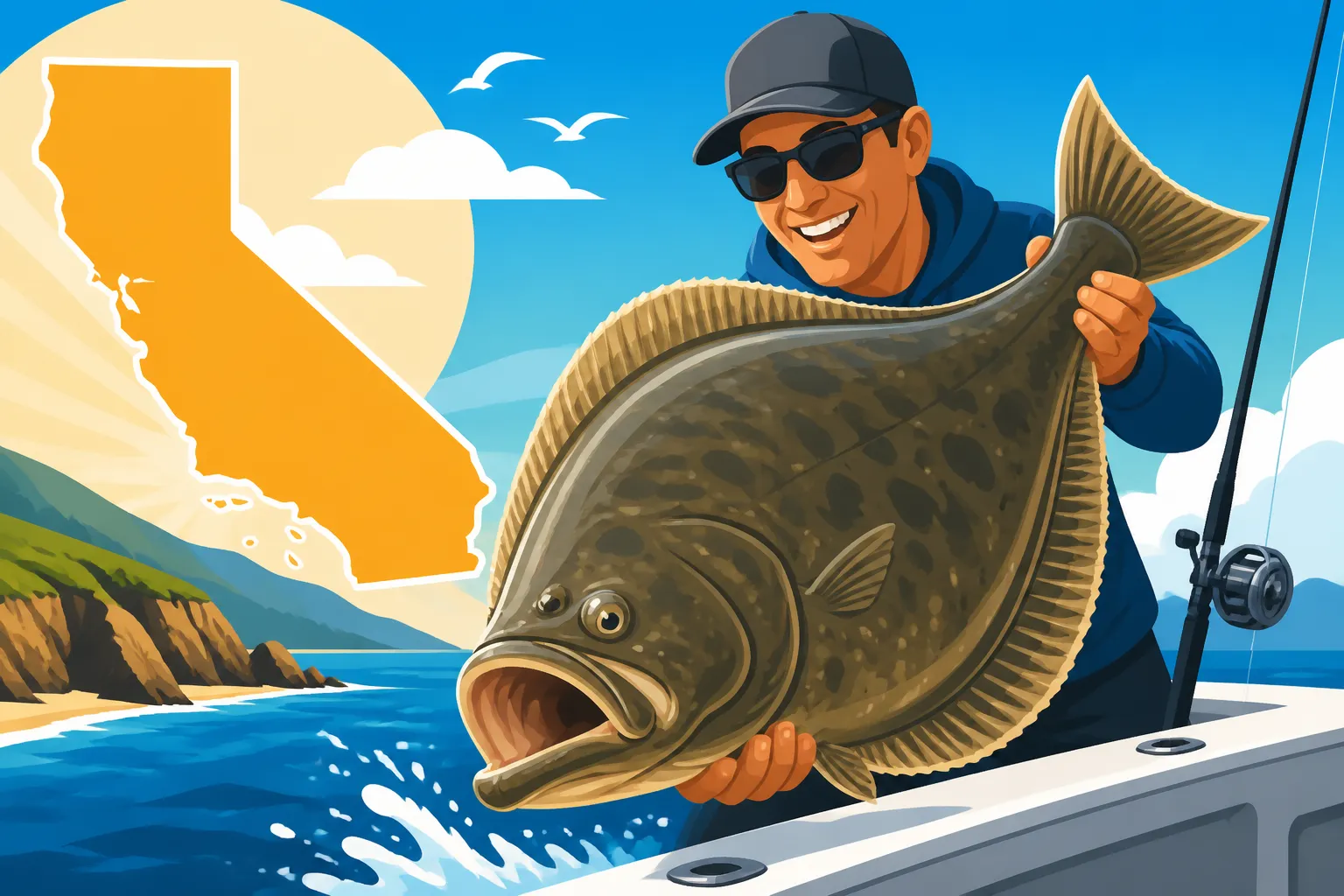
California halibut, Paralichthys californicus, are fascinating flatfish perfectly adapted to their environment. Unlike some other fish, they start life looking like a typical upright fish, but as they mature, one eye migrates to the other side of their head, and they flatten out, becoming masters of camouflage. Most often, both eyes end up on the left side of their body, allowing them to lie flat on the seafloor while maintaining a wide field of vision. Their coloration is usually a mottled brown, gray, or olive on their upper side, mimicking the sand or mud they inhabit, while their underside is stark white. This natural disguise makes them incredibly difficult to spot, even in clear water.
These fish can grow quite large, with adults typically ranging from 5 to 20 pounds, though specimens over 30 pounds are caught regularly, and the state record is a whopping 67 pounds. They are relatively long-lived, reaching ages of up to 30 years, depending on environmental factors. Distinguishing them from their larger, deeper-water cousin, the Pacific halibut (Hippoglossus stenolepis), is important. Pacific halibut are found in colder, more northern waters and deeper offshore, have both eyes on the right side of their head, and grow much, much larger. If you're fishing in California's nearshore waters or bays, you're almost certainly targeting the California halibut.
Preferred Habitats and Behavior
California halibut are primarily ambush predators, meaning they lie in wait, partially buried in sand or mud, and explode upwards to snatch unsuspecting prey. Their preferred habitat reflects this hunting strategy: they love soft, sandy or muddy bottoms, especially near structures that create current breaks or food concentrations. Think about it – if you're a halibut, why work hard when the tide can deliver dinner right to your "doorstep"? This is why you'll often find them near submerged rocks, artificial reefs, kelp beds, docks, piers, and particularly in the mouths of bays and estuaries where baitfish congregate and currents create feeding lanes.
Their behavior is also heavily influenced by water temperature and prey availability. During spring and summer, as coastal waters warm up, halibut move into shallower areas, including surf zones and bays, to feed and spawn. This is generally considered the Best Season for Halibut in California and usually when they are most accessible to anglers. As water temperatures cool in the fall and winter, many will retreat to deeper offshore waters, though a significant population can still be found in protected bays year-round. Understanding these seasonal movements is key to knowing where to focus your efforts throughout the year.
Essential Gear for California Halibut Fishing
Having the right tackle isn't just about having expensive stuff; it's about having the effective stuff that handles the fight and the conditions. Halibut might be bottom dwellers, but they can put up a surprisingly strong, drag-peeling fight, especially those bigger models.
Rod and Reel Setup
For California halibut, you’re generally looking for a medium-heavy to heavy setup, depending on whether you’re fishing from a boat, pier, or the surf. The rod should have a sensitive tip to detect subtle bites but plenty of backbone to drive the hook home and muscle a big flatfish off the bottom. A rod length of 7 to 8 feet is a good all-around choice for boat or pier fishing, allowing for decent casting distance and leverage. For surf fishing, you'll want something much longer, typically 9 to 12 feet, to cast beyond the breaking waves and handle larger sinkers.
When it comes to reels, you have a couple of solid options. Many anglers prefer conventional reels for their direct power and control when dropping bait straight down or slow trolling. A quality conventional reel in the 30-pound class, spooled with braided line, is a fantastic choice. However, spinning reels are also incredibly popular, especially for casting lures or lighter bait presentations. A robust spinning reel in the 5000 to 8000 series range will give you the drag power and line capacity you need. Whatever you choose, ensure it has a smooth, reliable drag system – a crucial factor when a large halibut decides to make a powerful run. For line, I highly recommend 30-50 lb braided mainline for its sensitivity and strength, paired with a 20-30 lb fluorocarbon leader. Fluorocarbon is nearly invisible in water, which can be a huge advantage with finicky halibut, and it offers excellent abrasion resistance against rough bottoms. You can find a wide selection of suitable rods, reels, and lines on Amazon, often with good reviews to guide your choice.
Terminal Tackle and Rigging
Your terminal tackle is where the rubber meets the road, or rather, where the hook meets the fish. Getting this right can make all the difference. For halibut, a simple yet effective rig is usually best.
- Hooks: When using live or cut bait, circle hooks are increasingly popular and often mandated by regulations, as they significantly reduce gut hooking, promoting better catch-and-release success. Sizes ranging from 3/0 to 6/0 are common, depending on your bait size. If you're using artificial lures, the hooks come pre-rigged, but ensure they are sharp and strong enough.
- Weights: For keeping your bait on the bottom, sliding sinkers are almost universally favored for bait fishing. A 1 to 4-ounce egg sinker or similar allows the line to run freely through it, meaning the halibut can pick up the bait without immediately feeling the weight of the sinker, giving them more time to commit. For heavier current or deep water, a cannonball sinker might be needed to get down quickly.
- Swivels: A quality barrel or SPRO swivel is essential to connect your mainline to your leader, preventing line twist, especially when drifting or slow trolling.
- Rigs: The classic Carolina rig (also known as a sliding sinker rig) is a go-to for halibut. It consists of your main line, then a sliding egg sinker, followed by a bead (to protect the knot), a swivel, and finally a fluorocarbon leader (2-4 feet long) tied to your hook. This rig presents your bait naturally on the bottom while allowing the fish to take the bait without immediate resistance. Another option, especially when fishing around structure, is a dropper loop rig, which keeps the bait slightly off the bottom, minimizing snags. Many anglers will prepare several leader segments ahead of time, already tied with hooks and swivels, making it quick to re-rig if you break off. You can easily stock up on all these terminal tackle components from retailers like Amazon.
Baits and Lures
Halibut are opportunists, but they definitely have their preferences when it comes to a meal. Matching the hatch, or at least presenting something appealing, is key.
- Live Bait: This is hands-down the most effective method for halibut. They are ambush predators, and a struggling, natural baitfish triggers their predatory instincts like nothing else. The best live baits mimic their natural forage, which includes sardines, anchovies, mackerel, squid, and even small smelt. Hook your live bait through the nose or lightly through the back, ensuring it can swim freely and naturally. The livelier the bait, the better your chances! Many bait receivers along the California coast sell fresh live bait.
- Cut Bait: When live bait isn't available, fresh cut bait can still be productive. Strips of mackerel, sardine, or squid can be irresistible. The key here is freshness and making sure the strip is large enough to be appealing but not so large it hinders hook set.
- Artificial Lures: Don't underestimate artificials, especially if you're actively searching for fish or prefer a more engaging style of fishing.
- Swimbaits: Large, soft plastic swimbaits, often weighted internally, are incredibly effective. Look for natural baitfish colors (greens, blues, browns, whites) in sizes from 6 to 9 inches. Brands like Berkeley Gulp! and similar paddletail swimbaits are popular choices.
- Grubs and Curly Tail Worms: These can be fished on a leadhead jig and dragged or bounced along the bottom.
- Jerkbaits/Hard Baits: Occasionally, suspending or slow-sinking jerkbaits can entice a strike, particularly in shallower water or over kelp beds.
- Metal Jigs: While less common for halibut, a properly worked metal jig can sometimes trigger a reaction strike if fished near the bottom.
The best approach often involves trying both live bait and artificials, especially when drifting. Many anglers will have one rod out with live bait and actively work another with a swimbait or grub. This allows you to cover more water and test what the fish are keying in on that day. You can find a huge variety of artificial lures, from swimbaits to jigs, on Amazon.
Top Techniques for Catching California Halibut
California halibut fishing offers a variety of engaging techniques, each suited to different conditions and angler preferences. Mastering these methods will significantly boost your success rate.
Live Bait Fishing Strategies
Live bait is arguably the most productive way to catch California halibut. The goal is always to present your live bait in the most natural and enticing way possible, mimicking an easy meal for an ambush predator.
- Slow Trolling: This is a highly effective method, especially from a boat. You move at a very slow pace (typically 1-3 knots) with your live bait deployed behind the boat, often with a trolling sinker or planer to get it to the desired depth. The slight movement of the boat makes the bait swim erratically, mimicking an injured fish, which is irresistible to halibut. Pay close attention to your depth finder to identify sandy patches, edges of structure, or bait concentrations, and try to troll along these features. Using a drift sock can help maintain a consistent, slow speed, especially on windy days.
- Drifting: Often done in bays or nearshore areas, drifting involves letting the current carry your boat and bait over known halibut holding grounds. This covers a wide area and allows your bait to move naturally with the water flow. Deploy your Carolina-rigged live bait to the bottom, ensuring it stays in contact with the seafloor. As you drift, occasionally lift and drop your rod tip slightly to present the bait with subtle movements. Keep a keen eye on your rod tip for the tell-tale "thump" of a halibut bite. Drift fishing is a fantastic way to cover ground and find actively feeding fish.
- Anchoring: If you've located a promising spot – maybe a sand patch near a rock pile, a channel edge, or an area with a lot of bait on your fishfinder – anchoring can be very effective. Once anchored, cast your live bait around the boat, allowing it to settle to the bottom and swim naturally. You can chum lightly with cut bait to attract more fish to your area. This method is great when you've pinpointed a high-probability area and want to thoroughly work it. Remember to always have a California fishing license before heading out.
Artificial Lure Tactics
While live bait is king, artificial lures offer an exciting, active alternative. They require more engagement from the angler but can be incredibly rewarding.
- Jigging: This technique involves dropping a leadhead jig rigged with a soft plastic swimbait or grub to the bottom and then rhythmically lifting and dropping your rod tip. The goal is to make the lure "swim" or "hop" along the bottom, kicking up puffs of sand that mimic a fleeing baitfish or a crustacean. Vary your retrieve speed and jigging cadence until you find what triggers bites. This is particularly effective when you've marked fish on your sonar or are fishing over known structure.
- Casting and Retrieving: From a boat, pier, or the shore, casting swimbaits or other lures into promising areas and retrieving them can be highly effective. Cast your lure out and let it sink to the bottom. Once it's down, retrieve it slowly, either with a steady crank and occasional twitch, or by bouncing it off the bottom. Think about replicating the movement of an injured or unaware baitfish. Colors that mimic natural bait, such as sardine, anchovy, or grunion patterns, are usually a good starting point. Sometimes, a brighter color can trigger a reactionary strike, especially in murky water.
- Working Structure: Halibut love structure. When fishing with artificials, focus your casts and retrieves around kelp beds, rock piles, jetties, bridge pilings, and other underwater features. These spots provide cover for halibut and attract baitfish. Present your lure so it works right along the edges or through the lanes where halibut might be hiding. Be prepared for snags when fishing around structure, so carrying extra pre-rigged jigs and soft plastics is a good idea. For a comprehensive guide on different techniques, refer to California Bait Fishing Tips and Techniques and California Trolling Tips and Techniques.
Surf Fishing for Halibut
Catching halibut from the beach is a fantastic challenge and a rewarding experience, offering anglers without boats a chance to tangle with these prized flatfish. It requires a different set of skills and an understanding of the surf zone.
- Reading the Beach: The most crucial skill in surf fishing for halibut is learning to "read the beach." Halibut will often position themselves in troughs (deeper channels parallel to the shore), around points, or near depressions where baitfish get trapped or where currents bring food. Look for darker patches of water (indicating deeper areas), rips (outward-flowing currents that create cuts), and areas where waves are breaking differently. These are often indicators of structure or depth changes that halibut favor.
- Casting Techniques: You’ll need a long surf rod (9-12 feet) and a reel capable of long casts to get your bait out beyond the immediate breaking waves into the "guts" or deeper channels. A smooth, powerful cast is essential. Once your bait (live or cut bait on a Carolina rig, or a large swimbait) is out, let it settle to the bottom.
- Specialized Surf Rigs: For surf fishing, the Carolina rig with an egg sinker is still excellent, but sometimes a spider weight (a sinker with wire legs that dig into the sand) can be useful to hold your bait in place in heavy current. Keep your line tight enough to detect bites, but not so tight that it moves your bait too much.
- Best Tides: Halibut often feed aggressively during tide changes, particularly the incoming tide. As the tide rises, baitfish are pushed closer to shore and into shallower areas, making them easy targets for waiting halibut. Early morning and late evening, when light conditions are lower, can also be prime times. For more general advice on timing your trips, check out Best Times to Fish in California.
Best Times and Locations for Halibut in California
Knowing when and where to cast your line is just as important as knowing how. California is a massive state with diverse fishing grounds, and halibut are seasonal travelers within them.
Seasonal Patterns and Tidal Influences
Halibut are highly responsive to environmental changes, particularly water temperature and tidal movements.
- Spring/Summer Peaks: Generally, the late spring through early fall (roughly April to October) is considered the prime season for California halibut. As coastal waters warm up, halibut migrate from deeper offshore waters into shallower bays, estuaries, and even the surf zone to spawn and feed aggressively. This is when they are most accessible and abundant. Fishing during the California Fishing in Summer months can be particularly productive.
- Tidal Influences: Tides play a critical role in halibut feeding behavior. The general consensus among experienced anglers is that moving water is best.
- Incoming Tide: As the tide floods, baitfish are pushed into bays, estuaries, and up onto shallow flats. Halibut often position themselves at the edges of these channels or in depressions, waiting for food to come to them. Many consider the last half of the incoming tide and the peak of high tide to be excellent.
- Outgoing Tide: Conversely, as the tide recedes, baitfish are flushed out of shallow areas and back into deeper channels, creating another feeding opportunity for halibut waiting at these transition points. The first few hours of the outgoing tide can also be very productive.
- Slack Tide: This is often the slowest fishing, as the lack of current means less bait movement and thus less feeding activity. However, sometimes a large halibut might still be picked up during slack, especially if you're directly over a known holding spot.
- Water Temperature: Halibut prefer water temperatures typically ranging from the mid-50s to low 70s Fahrenheit. Sudden drops in water temperature can make them sluggish and less willing to bite. Keep an eye on local fishing reports and water temperature gauges to inform your outings.
Prime Fishing Spots Across California
California boasts numerous excellent halibut fishing locations, from vast bays to productive surf beaches.
- San Francisco Bay: This massive estuary is a legendary halibut fishery. The shallower, sandier sections of the South Bay, the Berkeley Flats, and the waters around Alameda are notorious halibut producers. Anglers often drift live anchovies or sardines with great success here. The bay's strong currents also make it ideal for slow trolling.
- San Diego Bay: In Southern California, San Diego Bay is another hotspot. Areas like the Bayside, the flats near the Coronado Bridge, and the entrance to the bay are prime halibut territory. Drifting live anchovies or plastics often yields good results. Outside the bay, nearshore sandy beaches and reefs also hold fish.
- Other Bays and Harbors: Many other harbors and bays along the coast, such as Santa Monica Bay, Marina del Rey, Newport Bay, Mission Bay, and Humboldt Bay, all hold resident and transient populations of halibut. Look for areas with sandy bottoms, eelgrass beds, and proximity to ocean access.
- Nearshore Reefs and Structure: Beyond the bays, halibut will congregate around submerged reefs, artificial reefs, and rocky outcroppings that are adjacent to sandy patches. These provide ambush points and attract bait. Fishing charters frequently target these areas, often using live mackerel or sardines.
- Surf Zones: Many sandy beaches up and down the California coast offer fantastic surf fishing opportunities for halibut. From the beaches of San Diego and Orange County to those in Central California and even some stretches up north, halibut will move into the shallow breakers to feed. Beaches with pronounced troughs and rip currents are particularly promising. For a broader look at where to find these elusive flatfish, check out our guide on the Best Saltwater Fishing Spots in California.
Navigating Regulations and Responsible Angling
Understanding and adhering to fishing regulations is not just about avoiding fines; it's about protecting the resource for future generations of anglers. California's fishing regulations, specifically for halibut, can change, so always check the latest rules.
Understanding Size and Bag Limits
California halibut are subject to specific size and bag limits set by the California Department of Fish and Wildlife (CDFW). These regulations are designed to manage the fish population, ensure sustainable harvesting, and allow enough fish to reach spawning age.
- Minimum Size Limit: Currently, the minimum size limit for California halibut is 22 inches total length. This means any halibut you catch shorter than 22 inches must be immediately released unharmed. It's imperative to carry a measuring device on your boat or in your tackle box to quickly and accurately measure your catch.
- Bag Limit: Anglers are generally allowed a daily bag limit of two California halibut. This limit applies to the number of fish you can keep in a 24-hour period, regardless of how many times you go fishing within that period.
- Possession Limit: The possession limit often mirrors the daily bag limit in recreational fishing, meaning you can't have more than two California halibut in your possession, whether on your person, in your cooler, or in your vehicle, unless those fish are properly processed (e.g., filleted) and you have proof of legal take (like a fishing license and knowing the date of catch).
It's crucial to consult the most current California sport fishing regulations booklet or the CDFW website before each fishing trip, as rules can and do change. For detailed information, see our comprehensive guide on California Halibut Size and Bag Limits.
Conservation and Best Practices
Responsible angling goes beyond simply following the rules; it's about adopting practices that minimize your impact on the environment and the fish population.
- Handle Fish with Care: If you plan to release a halibut, handle it as little as possible. Use wet hands or a wet towel if you must touch it. Avoid dragging it on rough surfaces or inserting your fingers into its gills.
- Quick Release: If a fish is undersized or you’ve caught your limit, release it quickly. Barbless hooks can make release easier and less damaging.
- Proper Hook Removal: Use de-hooking tools if the hook is deep. If the hook is swallowed and you can't easily remove it, simply cut the line as close to the hook as possible; stomach acids will often dissolve it.
- Bleeding and Icing Keepers: If you keep a halibut, bleed it immediately by cutting an artery near the gills. This improves the meat quality significantly. Then, place it on ice as soon as possible to preserve freshness.
- Respect Marine Protected Areas (MPAs): California has numerous MPAs where fishing is restricted or prohibited. Always know if you are fishing within an MPA and adhere strictly to its regulations. Fishing in these areas is a big no-no, so be sure you understand California Marine Protected Areas Explained. These areas are vital for fish conservation, offering safe havens where populations can thrive.
Licenses and Report Cards
To legally fish for California halibut, or any fish in California, you absolutely need a valid California fishing license.
- California Fishing License: Every angler aged 16 or older must possess a valid California Sport Fishing License. This license is your ticket to enjoying the state's incredible fishing opportunities. You can purchase annual licenses, or short-term options like 1-day or 2-day licenses if you're just visiting or trying it out. These licenses can be purchased online through the CDFW website, at authorized license agents (like tackle shops or sporting goods stores), or directly from a CDFW license sales office. For a complete walkthrough, refer to our California Fishing License Guide or if you are specifically looking for saltwater options, check out the California Ocean Fishing License Requirements.
- Report Cards: While specific report cards are not typically required for California halibut alone (unlike species such as salmon, steelhead, or sturgeon), it's good practice to understand that certain species do require them. A report card helps the CDFW gather vital data on catch rates, which informs management decisions. Always confirm if any specific report cards are needed for the area or species you are targeting. Understanding California Fishing Report Cards Explained can prevent any surprises. Overall, knowing the ins and outs of California Fishing Regulations Explained will keep you on the right side of the law.
Tips for Maximizing Your Halibut Success
Beyond the basic gear and techniques, a few nuanced tips can significantly increase your chances of landing that trophy California halibut.
Reading the Water and Structure
Halibut are masters of their environment, and you need to become one too. It's not just about finding water; it's about finding the right water.
- Interpreting Currents: Halibut are lazy predators. They'll position themselves where the current brings food to them, rather than expending energy chasing it down. Look for current breaks caused by structure (points, jetties, channel edges) or subtle changes in bottom contour. These are prime ambush points. In bays, strong tides can create ideal feeding lanes. Understanding the flow of water and predicting where baitfish will concentrate is a huge advantage.
- Identifying Sandy Patches: Even within a bay or nearshore area, halibut prefer specific sandy or muddy bottoms. Learn to identify these on your fishfinder (usually a softer, less defined return than hard rock) or by visually observing calmer, darker patches in clearer water. Halibut will often bury themselves just at the edge of these sandy areas, especially where they meet rock or kelp.
- Structure Fishing: Halibut aren't always in wide-open sand. They'll hug the edges of kelp beds, rock piles, and artificial reefs. These structures offer cover and attract bait. When fishing these areas, present your bait or lure right along the transition zone between the structure and the sand. Be prepared for snags, but the payoff can be big. This is also where a good set of polarized sunglasses really shines, helping you spot subtle changes in the water.
Essential Boating and Kayak Fishing Considerations
Whether you're in a high-powered sportfisher or paddling a kayak, there are specific considerations for targeting halibut effectively from a vessel.
- Anchoring Techniques: When anchoring, position your boat so you can cast or drift over the most promising features. Use enough anchor line (at least a 5:1 scope, preferably 7:1) to ensure your anchor holds firmly. For drift fishing, strategically deploying an anchor and then using a controlled drift around it can be effective.
- Drift Socks: For optimal live bait presentation, especially when slow trolling or drifting in windy conditions, a drift sock (or sea anchor) is invaluable. It slows your boat down to the ideal speed, allowing your bait to swim naturally and enticingly. Without one, you might drift too fast, making your bait look unnatural or simply cover too much ground too quickly.
- Electronics (Fishfinders/GPS): A quality fishfinder is your best friend. Learn to distinguish bottom contours, identify bait balls, and even mark potential halibut (though they can be hard to spot when buried). GPS is crucial for marking productive drifts, specific structures, and avoiding MPAs. Many modern units from brands like Garmin or Humminbird offer excellent capabilities for marking waypoints and navigating. If you're into paddle sports, our California Kayak Fishing Guide offers more specialized advice for fishing from a smaller craft.
Post-Catch Care and Preparation
The work doesn't end when the fish is in the boat. Proper care of your catch ensures the best possible table fare.
- Handling: Once a halibut is on board, a swift, humane dispatch is important. A sharp rap to the head with a club (priest) or brain spiking will quickly stun the fish.
- Bleeding: This is a crucial step for taste and quality. Immediately after dispatching, make a cut to sever the main arteries behind the gills. Let the fish bleed out in a bucket of seawater or over the side for several minutes. This removes blood from the flesh, resulting in whiter, milder, and better-tasting fillets.
- Icing: Get your halibut on ice as quickly as possible. A cooler filled with ice slurry (ice and a little water) is ideal. This rapidly chills the fish, preventing bacterial growth and preserving its freshness. Don't just lay it on top of ice; bury it in the ice.
- Filleting: Halibut are relatively easy to fillet due to their flat shape. There are many online tutorials demonstrating how to get four clean fillets (two from the top, two from the bottom side) from each fish. A sharp, flexible fillet knife is essential.
- Cooking: Halibut is renowned for its firm, flaky white meat with a mild, sweet flavor. It's incredibly versatile and can be baked, grilled, pan-fried, broiled, or even used in ceviche. Enjoy the fruits of your labor!
California Halibut Fishing Techniques Comparison
Here's a quick look at the main techniques for targeting California halibut, highlighting their strengths and ideal scenarios.
| Technique | Ideal Conditions | Primary Bait/Lure | Pros | Cons |
|---|---|---|---|---|
| Live Bait Drifting | Bays, nearshore, moving tides | Live anchovy, sardine, smelt | Highly effective, natural presentation, covers ground | Requires live bait sourcing, can be slower to cover water |
| Slow Trolling | Open bays, nearshore, light chop | Live mackerel, sardine | Covers large areas, consistent bait presentation | Requires boat control, can be monotonous |
| Jigging Artificials | Over structure, marked fish | Soft plastic swimbaits, grubs | Active fishing, no live bait needed, good for searching | Can snag, requires technique to impart action |
| Surf Fishing | Sandy beaches, incoming tide | Cut bait, live sand crab | Accessible without a boat, exciting challenge | Requires long casts, challenging conditions |
Disclaimer
Fishing regulations, including size and bag limits, seasons, and licensing requirements, can change frequently. Always consult the latest California Department of Fish and Wildlife (CDFW) regulations booklet or their official website before heading out on your fishing trip. This article is for informational purposes only and should not be considered a substitute for official regulatory guidelines.