California Sheephead in California: Where and How to Catch
Trying to catch California sheephead can feel like you’re chasing a ghost sometimes. These colorful, reef-dwelling fish are notoriously tricky, known for their powerful bites and ability to hide among structure, making them a real challenge for even seasoned anglers. If you've ever spent a frustrating day with barely a nibble, wondering where these elusive beauties are hiding, you’re not alone. This comprehensive guide is here to unravel the mysteries of California sheephead, showing you exactly where to find them and how to entice them to bite.
Understanding California Sheephead: Habitat and Behavior
California sheephead are some of the most distinctive and fascinating fish you'll encounter in the Golden State's waters. Their vibrant colors and unique life cycle make them stand out, but understanding their preferred haunts and habits is the first step to successfully targeting them. They are protogynous hermaphrodites, meaning they start as females and can transition to males later in life, which explains the dramatic color differences you'll see between the sexes.
Where to Find Them: Rocky Reefs, Kelp Beds, and More
If you're looking for California sheephead, think structure, structure, structure! These fish are homebodies, preferring to hang out in complex environments where they can find food, shelter, and protection from predators. Their primary residences are rocky reefs, kelp forests, and any areas with abundant submerged rocks and crevices. From the cooler waters of Central California down to the warmer coasts of Baja California, if there's good rock or kelp, there's a good chance sheephead are nearby. They particularly love the edges of kelp beds where the sunlight still penetrates, allowing smaller organisms they prey on to thrive, but they're not afraid to duck deep into the darker, denser parts of the forest.
You’ll often find them at depths ranging from just a few feet near the shoreline, especially around prominent rock outcroppings, all the way down to 180 feet or more offshore. The juveniles tend to stick closer to shore in shallower, more protected areas, while the larger, more robust males often dominate deeper, more exposed reefs. During spawning seasons, typically late spring through summer, they might become more active and somewhat more predictable in certain areas as they congregate. Good spots include the Channel Islands, Catalina Island, and rocky stretches along the Orange County and San Diego coastlines, which are teeming with the kind of habitat they love. They also frequent artificial reefs, shipwrecks, and even bridge pilings, demonstrating their adaptability to man-made structures that mimic natural reef environments. You might even stumble upon them while fishing some of the deeper sections of the San Francisco Bay, particularly around the rock walls of Alcatraz or Angel Island, though they are more prevalent further south.
Identifying California Sheephead: A Colorful Character
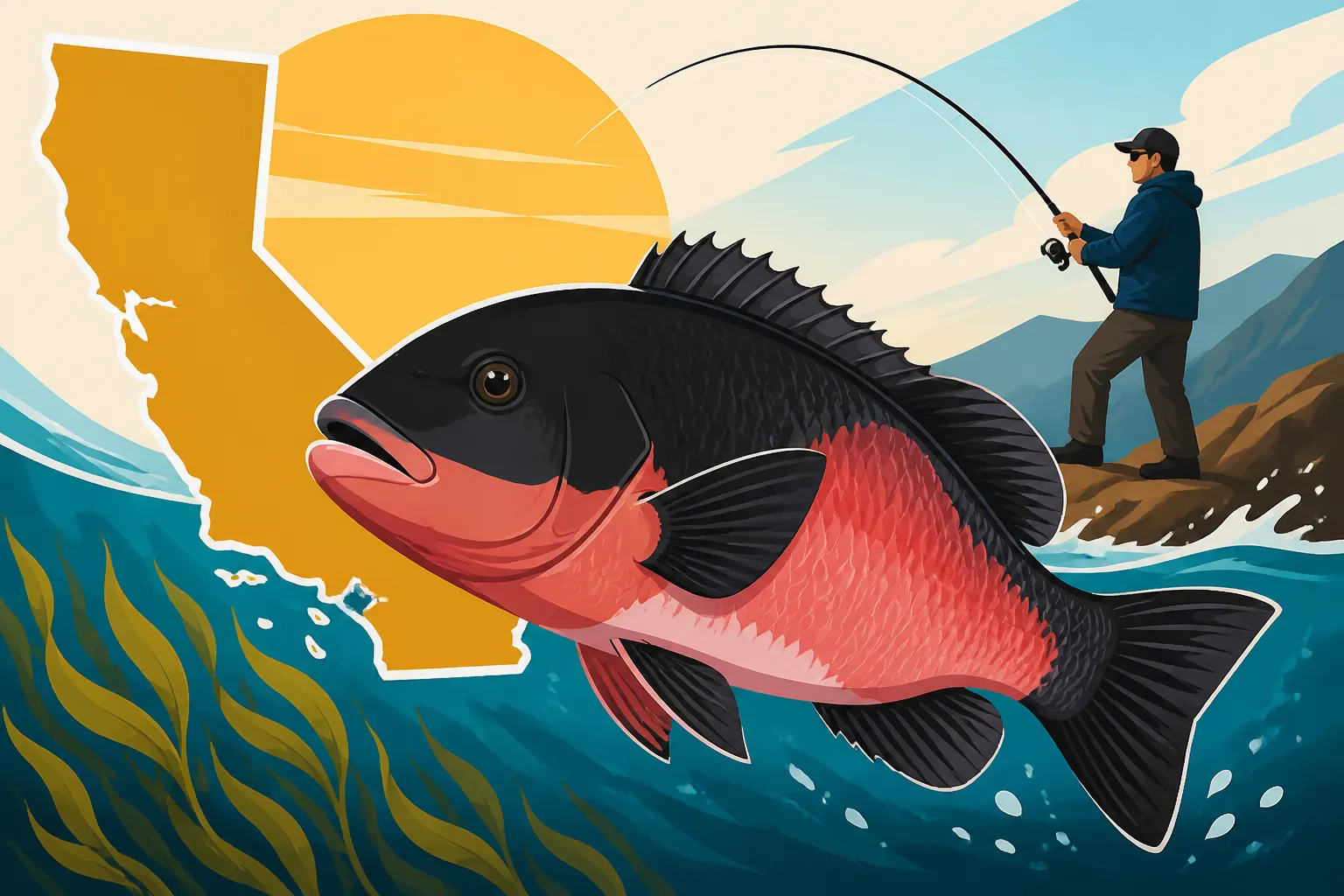
California sheephead are, without a doubt, one of the most visually striking fish in our local waters. The males, often called "red sheephead," are impossible to mistake: they sport a vibrant reddish-pink body with a stark white chin and a distinctive black band stretching from their pectoral fins back to the tail, almost like they're wearing a black belt. Their head often has a pronounced bump or humping forehead, making them look quite imposing. And those teeth? They're large, canine-like, and protrude slightly, perfectly adapted for crushing the hard shells of their favorite prey.
Females, on the other hand, are generally smaller and exhibit a more uniform pinkish-red coloration without the prominent black band or white chin. Their head shape is also less exaggerated. Juvenile sheephead are even more different, typically bright red with white horizontal stripes, which helps them blend into their rocky, anemone-filled environments. Knowing these distinctions is important not just for identification but also because the regulations sometimes vary based on size, which loosely correlates with sex. Understanding their diet helps too; they are primarily carnivores, feasting on sea urchins, crabs, lobsters, and various mollusks and worms. This diet explains why certain baits are so effective and why they are so commonly found in rocky and kelp-filled areas. It’s truly a remarkable transformation from a tiny, striped female to a dominant, brightly colored male patrolling the reefs.
Essential Gear for Targeting California Sheephead
Chasing after California sheephead requires a bit of specialized gear, or at least gear that can handle the tough environment they call home. These aren't delicate biters; they're strong, determined fighters that will try to rock you up the moment they feel the hook. Having the right tools for the job can make all the difference between landing a trophy and losing your rig to the rocks.
Rod, Reel, and Line Setup
When it comes to your rod and reel, think sturdy and reliable. For targeting sheephead, a medium-heavy to heavy conventional rod, somewhere in the 7 to 8-foot range, is often preferred. You want a rod with a fast action tip for sensitivity but plenty of backbone to muscle fish away from structure. A rod rated for 20-40 lb line is a good starting point. For reels, a conventional reel like a Penn Fathom or a Daiwa Lexa is a popular choice, known for its strong drag system and cranking power. However, many anglers also find success with heavy-duty spinning reels, especially when fishing lighter rigs or making longer casts from shore or piers. The key is a smooth, powerful drag that can handle sudden runs and enough line capacity for deeper deployments.
For your line, a braided main line of 40-65 lb test is highly recommended. Braid offers incredible strength, minimal stretch for maximum sensitivity, and a smaller diameter for its breaking strength, which can be advantageous in current. However, braid is highly visible and prone to abrasion on rocks, so you absolutely need a fluorocarbon leader. A 20-40 lb test fluorocarbon leader, typically 3-6 feet long, is perfect. Fluorocarbon is nearly invisible underwater and much more abrasion-resistant than mono, giving you a fighting chance against those sharp rocks. Make sure to use a strong knot to connect your braid to your fluorocarbon, such as an FG knot or a uni-to-uni knot. You can find a wide selection of these rods, reels, and quality fluorocarbon leaders on Amazon, often at competitive prices.
Baits and Rigs That Get Their Attention
California sheephead are not picky eaters in terms of variety, but they definitely have their preferences, and those preferences lean heavily towards their natural diet. Think crunchy, meaty, and scent-rich. The absolute number one bait for sheephead, hands down, is fresh ghost shrimp. These little critters are irresistible to them. Live market shrimp, peeled or unpeeled, are another excellent choice. If you can't get live, fresh dead shrimp will still work wonders. Other fantastic options include small pieces of squid, mussels, clams, and especially small crabs, like rock crabs or sand crabs. The fresher the bait, the better your chances. They key is to present a natural offering that looks and smells like something they'd find among the rocks.
When it comes to rigs, simplicity and effectiveness are paramount. A classic dropper loop rig is incredibly effective. This involves tying a loop in your leader for the hook, with the weight tied to the very end of the line. This keeps your bait slightly off the bottom and minimizes snags compared to a sliding sinker rig. Another popular choice is a Carolina rig or a sliding sinker rig, where your line goes through a barrel sinker, then a bead, then a swivel, with a 12-24 inch fluorocarbon leader to your hook. The sliding sinker allows the fish to pick up the bait without feeling the weight immediately. Hook sizes typically range from 1/0 to 4/0, depending on your bait size, using strong, sharp circle hooks or octopus hooks to ensure good hooksets and minimize gut-hooking. For heavier current or deeper water, torpedo or bank sinkers from 2 to 8 ounces might be necessary to get your bait down and keep it there. Many anglers stock up on their fluorocarbon leaders and various hook styles on Amazon before a trip.
| Gear Category | Recommended Item | Key Features |
|---|---|---|
| Rod | 7-8 ft Medium-Heavy to Heavy Conventional Rod | Fast action tip, strong backbone, 20-40 lb line rating |
| Reel | Conventional Reel (e.g., Penn Fathom) or Heavy Spin | Strong drag, good cranking power, sufficient line capacity |
| Main Line | 40-65 lb Braided Line | High strength, low stretch, small diameter |
| Leader | 20-40 lb Fluorocarbon Leader (3-6 ft) | Nearly invisible, abrasion-resistant |
| Hooks | 1/0 – 4/0 Circle or Octopus Hooks | Strong, sharp, good for firm hooksets |
| Weights | 2-8 oz Torpedo or Bank Sinkers | Get bait down in current/depth, minimize snags |
| Baits | Ghost Shrimp, Live/Dead Market Shrimp, Squid, Crabs | Natural, scent-rich, effective on sheephead |
Effective Techniques for Catching California Sheephead
Successfully catching California sheephead is all about precision, patience, and adapting to their environment. They're not going to chase your lure across open water; instead, they hug structure, so your techniques need to get your bait right into their living room. Whether you’re on a boat or casting from shore, understanding how to approach their habitat is crucial.
Fishing from Boats: Anchoring and Drifting Strategies
When fishing from a boat, your primary goal is to position yourself directly over or very close to the rocky reefs and kelp beds where sheephead thrive. This usually means carefully using your depth sounder and GPS to locate prime structure. Once you've found a good spot, you have two main strategies: anchoring or drifting. Anchoring allows you to precisely target a specific piece of structure. You’ll want to anchor upcurrent or upwind of your target, allowing your bait to drift naturally into the zone. Deploy your bait on a dropper loop or Carolina rig, letting it sink to the bottom. Once it hits, slowly retrieve a few turns of your reel to keep it just above the snags, especially in kelp. The key here is not to let your bait sit motionless too long in one spot; a slight lift and drop, or a slow reel, can mimic a natural movement and attract attention. You'll want to ensure you're compliant with all California Saltwater Fishing Regulations.
Drifting is another highly effective method, particularly when you’re trying to cover a larger area of a reef or kelp bed, or if the current is strong. Instead of anchoring, you let the boat slowly move over the structure, deploying your bait as you drift. This allows you to present your bait to multiple sheephead that might be spread out. Pay close attention to your depth sounder to understand the contours of the bottom and anticipate snags. When you get a bite, be ready for a powerful initial run. These fish will try to dive back into the rocks or kelp, so a quick and firm hookset, followed by aggressive cranking, is essential to pull them out of danger. Using a strong electric trolling motor with GPS "spot-lock" functionality can also be a game-changer, allowing you to effectively "anchor" over structure without dropping a physical anchor, and quickly reposition if needed.
Pier and Shore Fishing: Accessing Nearshore Haunts
Fishing for California sheephead from piers and rocky shorelines presents its own set of challenges and rewards. Many of the best fishing piers in California are built over or near rocky structure, providing access to these fish. From a pier, you’ll want to cast as close to the pilings, rock jetties, or any visible structure as possible. The same dropper loop or Carolina rig with fresh ghost shrimp or squid works wonders here. The challenge is often avoiding snags on the pier structure itself. Be prepared to lose some tackle, but the reward of a big sheephead from a pier is well worth it. Places like the Ocean Beach Pier in San Diego or the Gaviota Pier in Santa Barbara can offer good opportunities, especially during warmer months. Remember that while Fishing from a Pier in California: Rules often means you don't need a license, knowing the species-specific regulations is still critical.
From rocky shorelines or jetties, access can be trickier, but these spots put you right in their wheelhouse. Look for areas with visible kelp beds, rock outcroppings, or submerged boulders. Heavy surf can make fishing difficult and dangerous, so choose calmer days or protected coves. Casting close to the wash rocks and letting your bait settle into crevices can be very productive. The key here is stealth and patience. Make sure your gear is robust enough to handle the abrasive environment. A sturdy surf rod might be beneficial for getting your bait out past the immediate shore break into deeper holes or around submerged rocks. Always prioritize safety when fishing from rocks, wearing appropriate footwear and being aware of rogue waves.
Divers and Spearfishing: A Different Approach
While this guide focuses on rod-and-reel angling, it’s worth noting that California sheephead are also a very popular target for divers and spearfishermen throughout California. Their curious nature and tendency to frequent specific structures make them an appealing challenge for those underwater. Spearfishermen often target the larger male sheephead, which can grow quite substantial, offering a significant and delicious catch. Observing how divers interact with sheephead can actually provide valuable insights for anglers about their behavior and preferred hiding spots.
For example, divers often find sheephead tucked into caves, under ledges, or deep within kelp forests, confirming their strong association with dense cover. This reinforces the idea that anglers need to get their bait right into these intricate areas, rather than just casting into open water. Spearfishermen also report that sheephead can be quite wary after initial encounters, highlighting their intelligence and the need for a stealthy approach, whether you’re diving or dangling a line. The California Fishing Regulations Explained booklet details specific rules for both angling and spearfishing.
Regulations and Conservation for California Sheephead
As with any popular species in California, strict regulations are in place to ensure the sustainability of California sheephead populations. Being a responsible angler means not only knowing how to catch them but also how to fish ethically and legally. Always check the most current regulations from the California Department of Fish and Wildlife (CDFW) before heading out, as they can change.
Size Limits, Bag Limits, and Seasons
California sheephead have specific size and bag limits designed to protect their populations, particularly allowing females to mature and contribute to spawning before being harvested, and ensuring a healthy number of breeding males. Currently, there is a minimum size limit of 12 inches total length for California sheephead. This means any fish shorter than 12 inches must be immediately released back into the water. The daily bag limit is generally 5 fish per person. These regulations are critical because of the species' unique life cycle – starting as female and potentially transitioning to male. Protecting smaller females helps maintain a strong reproductive base, while allowing larger males to exist ensures successful spawning.
There isn't a specific closed season for California sheephead that impacts general recreational angling year-round, unlike some other species such as salmon or rockfish, which have very particular seasonal closures based on regional management areas or stock status. However, it's always wise to consult the latest California Fishing Regulation Booklet Explained or the CDFW website, as rules can be updated annually or even mid-season if necessary. These limits apply whether you're fishing from a private boat, a party boat (though party boat crews will often guide you), or from a public pier or shoreline. Knowing these limits ensures you're doing your part to keep sheephead populations healthy for future generations of anglers.
Sustainable Practices and Releasing Fish
Beyond just adhering to size and bag limits, practicing good conservation habits is vital for the long-term health of California sheephead and our marine ecosystems. If you catch a sheephead that is undersized or you’ve already met your bag limit, it's imperative to release it properly and quickly. Minimize the time the fish spends out of the water. Handle the fish gently with wet hands or a wet towel to protect its slime coat, which is crucial for its health and disease resistance. Use a de-hooking tool to remove hooks cleanly and swiftly, especially if using circle hooks, which tend to hook in the corner of the mouth, making for easier release. If a fish is deeply hooked, cutting the line as close to the hook as possible is often better than trying to forcefully remove it, as this can cause more internal damage.
Consider using a descending device for sheephead caught in deeper waters. Like many reef-dwelling fish, sheephead can suffer from barotrauma (the bends) when brought up from significant depths due to the rapid change in pressure. Signs of barotrauma include a distended belly, bulging eyes, or an everted stomach. Descending devices, available on Amazon or at local tackle shops, allow you to safely return the fish to its original depth, increasing its survival chances dramatically. Understanding and respecting Marine Protected Areas (MPAs) is also paramount. Many prime sheephead habitats fall within MPAs, and specific rules, including "no-take" zones, apply there. Always consult California Marine Protected Areas Explained to ensure you are fishing in an authorized area and adhering to all local regulations. Your actions truly make a difference.
Disclaimer
Fishing regulations, species availability, and conditions can change rapidly. Always check the latest California Department of Fish and Wildlife (CDFW) regulations before any fishing trip. This guide is for informational purposes only and should not be considered a substitute for official regulatory information.