Best Season for Halibut in California
There's nothing quite like the thrill of feeling that distinct thump on your line, knowing it could be a prized California halibut on the other end. But let's be honest, trying to figure out the absolute best time to target these elusive flatfish can feel like a guessing game, leaving many anglers frustrated and empty-handed. This comprehensive guide is here to cut through the confusion, breaking down the optimal seasons, regional hotspots, and key factors to help you consistently hook into California halibut.
Deciphering the California Halibut Calendar
California halibut are a truly iconic species, prized by both recreational and commercial anglers for their delicious white meat and challenging fight. But unlike some other fish, their activity isn't uniformly consistent throughout the year. Understanding their seasonal patterns, coupled with the official regulations, is your first step toward consistent success. It’s all about being in the right place at the right time, with the right approach.
Official Regulations and Conservation Efforts
First things first, let’s talk rules. California's Department of Fish and Wildlife (CDFW) meticulously manages halibut populations, and these regulations are crucial for maintaining healthy stocks for future generations. For many anglers, the rules can feel like a maze, but knowing them is non-negotiable. Generally, there isn't a closed season for California halibut specifically, meaning you can technically target them year-round. However, there are strict size and bag limits that apply, and these can sometimes change based on scientific assessments and environmental factors. It's always, always a good idea to check the most current California Fishing Regulations Explained before you head out. These regulations dictate everything from how many fish you can keep to the minimum size they must be. For instance, the minimum size limit for California halibut is usually 22 inches total length, and the daily bag limit is often three fish, but these numbers are subject to change, especially within certain regions or during specific events. Staying informed isn't just about avoiding a hefty fine; it's about being a responsible angler and contributing to conservation.
Moreover, certain areas, especially around estuaries, bays, and nearshore zones, might have specific local rules or even be designated as California Marine Protected Areas Explained where fishing is restricted or prohibited altogether. These protected areas are vital for species recovery and ecosystem health, so familiarize yourself with any such zones in your intended fishing grounds. Carrying a copy of the current regulations, or having the CDFW app on your phone, is a habit every serious angler should adopt. Missing a critical detail about California Halibut Size and Bag Limits can quickly turn a fun day on the water into a costly mistake.
Halibut Life Cycle and Seasonal Movements
California halibut are fascinating creatures, and their behavior is heavily influenced by their life cycle, particularly spawning. Typically, these flatfish spawn during the warmer months, roughly from spring through early fall, with peak activity often in late spring and early summer. During this period, they tend to move from deeper offshore waters into shallower bays, estuaries, and along coastal beaches, seeking warmer temperatures and abundant forage to support their reproductive efforts. This inshore migration is precisely what creates the most exciting fishing opportunities.
As water temperatures cool in late fall and winter, many halibut will migrate back to deeper, more stable offshore environments. While you can still catch them inshore during these colder months, they become less concentrated and often require different tactics to locate and entice. Understanding this annual migration pattern is key to knowing where to focus your efforts. For example, during the spring and summer, bays like San Diego Bay, Mission Bay, Newport Bay, and the vast expanse of San Francisco Bay become prime hunting grounds. As the season progresses, they might spread out along the open coast, congregating around structure, kelp beds, or sandy flats where baitfish are abundant. Keeping an eye on local water temperatures and bait movements, rather than just the calendar, will give you a significant advantage.
Spring Awakening: Nearshore Opportunities
Ah, spring in California! The days get longer, the sun feels warmer, and that itch to get out on the water becomes undeniable. For halibut anglers, spring isn't just a promise of good weather; it's the beginning of a truly fantastic fishing season as these flatfish start making their grand entrance into shallower waters.
March to May: The Early Bite
As winter's chill begins to recede and ocean temperatures slowly climb, California halibut start to awaken from their deeper water dormancy. Typically, from March through May, you'll find an increasing number of halibut moving into bays, harbors, and along sandy beaches. This early season bite is often characterized by ambitious fish that are hungry after a colder winter and are beginning to stage for their upcoming spawn. The inshore movement is driven by two primary factors: rising water temperatures that make shallow areas more comfortable, and the proliferation of baitfish like anchovies, sardines, and smelt, which also move inshore to feed and spawn.
During these months, anglers often find success targeting the edges of channels, sand flats adjacent to drop-offs, and around structures like piers and jetties within the bays. The fish might not be as densely packed as they will be in the summer, but the ones you do find are often eager to bite. It's a great time for patience and covering ground, often by drifting with live bait or casting artificials. Many seasoned anglers consider March and April a fantastic time to target quality over quantity, as some of the larger, pre-spawn females are often among the first to move into these shallower, warmer feeding grounds. If you're looking for an overview of what the entire state has to offer this time of year, check out our guide on California Fishing in Spring.
Ideal Conditions and Early Season Tactics
When it comes to spring halibut fishing, specific conditions can make all the difference. Look for periods of warming water, especially after a stretch of cooler weather. Halibut are very sensitive to temperature fluctuations, and even a slight bump can trigger a feeding frenzy. Tides are also critical; the incoming tide, especially during a strong tidal swing, can push baitfish into areas where halibut are ambushing their prey. Focus on the last few hours of the incoming tide and the first hour or two of the outgoing tide for maximum activity.
For tactics, live bait reigns supreme in the spring. Small anchovies, sardines, or even ghost shrimp can be incredibly effective when fished on a simple Carolina rig or dropper loop. Drift fishing, either from a boat or kayak, is a hugely popular and effective method. You want to cover a lot of ground slowly, allowing your bait to present naturally along the bottom. For artificials, swimbaits like those from Lucky Craft or Berkley Gulp! grubs in natural baitfish colors, retrieved slowly along the bottom, can also entice strikes. Make sure your tackle is appropriately sized; while halibut can be large, you don't want to use overly heavy gear that spooks them. A medium-light to medium-heavy spinning rod spooled with 15-20 lb braided line and a fluorocarbon leader is a versatile setup. You can find a fantastic selection of these essential items on Amazon, making it easy to get ready for the season.
Summer Sizzles: Peak Halibut Action
When summer arrives in California, it often brings with it the absolute prime time for targeting California halibut. The ocean is alive, water temperatures are consistently warm, and the flatfish are usually in full swing, making this the season many anglers eagerly anticipate all year long.
June to August: High Season for Flatfish
From June through August, California halibut fishing generally hits its peak. The waters are at their warmest, both inshore and nearshore, which means halibut are actively feeding and widely distributed. During these months, you'll find them not only in bays and estuaries but also along sandy beaches, near kelp beds, around rocky reefs, and even several miles offshore over sandy bottoms. This is when their spawning activity often intensifies, making them aggressive and relatively easier to locate in good numbers. It's the time of year when those epic halibut stories truly begin to unfold.
Party boats and private charters often see their best halibut counts during the summer, as the fish are more predictable and concentrated in productive areas. This abundance makes it a great time for both experienced anglers looking for a trophy and beginners hoping to get their first taste of a halibut fight. Whether you're casting from a pier, drifting from a kayak, or trolling from a boat, the summer months offer consistent opportunities across much of the California coast. If you're wondering about other species and optimal times, our California Fishing Seasons: Month-by-Month Guide offers a broader perspective.
Popular Summer Halibut Fishing Techniques
Summer halibut fishing is all about maximizing your chances while the fish are active. Live bait remains king, but the range of effective baits expands. Besides anchovies and sardines, larger smelt, mackerel, and even small squids can be incredibly productive, especially for targeting bigger fish. Drifting is still a go-to method, particularly in bays and along the open coast where currents are consistent. When drifting from a boat, try a "halibut rig" which is essentially a variant of a Carolina rig with a sliding egg sinker, a swivel, and a leader with a hook. This allows your bait to move naturally with the current close to the bottom.
Trolling is another highly effective summer technique, especially when covering large areas offshore or in expansive bays like San Francisco Bay. Many anglers use flashers or dodgers ahead of a baitfish imitation lure, or even a slow-trolled live bait. The key is to keep your bait or lure near the bottom, often bumping it along or just above the sandy terrain where halibut ambush prey. For artificials, larger swimbaits, jerkbaits, and even bucktail jigs can entice aggressive strikes. Colors that mimic local baitfish, like anchovy or sardine patterns, are always a good bet. If you're fishing from shore, fan-casting swimbaits or soaking a live or cut bait on a Carolina rig can be productive during strong tidal movements. Learning How to Fish for Halibut in California effectively often comes down to adapting these techniques to the specific conditions of your chosen spot.
Fall and Winter: Transitioning for Halibut
While spring and summer get most of the halibut glory, don't write off fall and winter entirely! These seasons present a different kind of challenge, but they can still yield fantastic results for the dedicated angler willing to adapt their strategy. It’s all about understanding the transition and targeting the fish where they choose to spend the colder months.
September to November: Post-Summer Prowess
As the scorching heat of summer gives way to the crisper air of fall, usually from September to November, halibut fishing undergoes a subtle but significant shift. The peak spawning season generally winds down, and many halibut that moved inshore for the summer begin to think about their migration back to deeper waters. However, before they make that full retreat, they often enter a period of aggressive feeding. These fish are bulking up for the leaner winter months and can be incredibly receptive to a well-presented bait or lure. This "fall run" can be less crowded than the summer bite, offering a more peaceful and often very productive fishing experience.
During these months, halibut might still be found in bays and along coastal beaches, particularly during warmer spells or around areas with consistent bait presence. However, they also start to congregate on the edges of deeper channels, around offshore structure, and along transition zones where shallow water meets deeper drop-offs. Anglers who focus on these slightly deeper staging areas often find great success. It's a fantastic time for targeting larger, more mature fish that are actively feeding. You can find more information about what to expect on the water during these months in our guide to California Fishing in Fall.
December to February: Winter Challenges and Rewards
Winter, from December through February, is often considered the slowest time for California halibut fishing, but it's not impossible by any stretch. Many halibut have completed their migration to deeper offshore areas, making them harder to locate in typical inshore spots. The colder water temperatures also tend to slow down their metabolism, meaning they might be less aggressive and require more subtle presentations. This is definitely a time for patience and precision.
However, determined anglers can still find success. Some halibut will remain in certain bays or nearshore areas throughout the winter, especially in the warmer southern reaches of the state or in areas with consistent warm water discharges. When targeting winter halibut, look for deeper pockets within bays, sheltered channels, or offshore rocky reefs adjacent to sandy bottoms. The key is to slow down your presentation, use smaller, more natural baits, and pay close attention to subtle bites. Often, winter halibut fishing involves more vertical jigging with plastics or slow-trolling deeper divers. While it might not be the numbers game of summer, hooking into a solid winter halibut feels like a hard-earned trophy. If you’re brave enough to venture out during the coldest months, our guide to California Fishing in Winter might have some additional tips.
Regional Halibut Hotspots and Their Seasons
California is a long state with incredibly diverse marine environments, and what works for halibut in San Diego might be slightly different than what works in San Francisco. Understanding these regional nuances is crucial for optimizing your halibut fishing strategy.
Southern California's Productive Waters
Southern California, stretching from San Diego up through Los Angeles and Ventura counties, is arguably the most famous region for California halibut fishing. The combination of warmer ocean temperatures, expansive sandy beaches, and numerous productive bays and estuaries creates ideal habitat for these flatfish.
- Spring (March-May): This is when halibut really start to light up in Southern California. Bays like San Diego Bay, Mission Bay, and Newport Bay become prime areas. Anglers can find success drifting live anchovies or sardines along channel edges and sand flats. The surfline also starts to produce as water temperatures rise, with corbina and perch anglers sometimes hooking into halibut.
- Summer (June-August): Peak season! Halibut are abundant in the bays and along the open coast. Charter boats from landings like Fisherman's Landing in San Diego or Davey's Locker in Newport Beach will target them along coastal stretches, near kelp beds, and over sandy patches. Drifting live bait (often caught on site) is the most popular and effective method. This is also when surf fishing for halibut becomes very productive on beaches like those in Coronado or Huntington Beach.
- Fall (September-November): The bite remains strong, especially in September and October. Halibut are still active feeders, preparing for winter. They might start moving towards deeper sections of the bays or slightly further offshore. This can be a great time for quality over quantity, as bigger fish are often still around.
- Winter (December-February): Slower, but not impossible. Dedicated anglers will find fish in deeper bay channels or over offshore sandy spots, often requiring more patience and a slower presentation. Some of the Best Fishing Spots in California for halibut are found right here in Southern California.
Central and Northern California's Unique Halibut Fisheries
While Southern California often gets the spotlight, Central and Northern California offer fantastic halibut fishing, particularly in iconic locations like San Francisco Bay. The seasons here might start a little later and end a bit earlier due to generally cooler water temperatures, but the fish are just as eager.
- Spring (April-June): The halibut season in Central and Northern California often kicks off a bit later than in the south. San Francisco Bay is the undisputed king for halibut during these months. As baitfish like anchovies flood the bay, halibut follow. Drifting live bait, particularly anchovies, is incredibly effective. The season might extend into June before truly peaking.
- Summer (July-September): This is the prime window for halibut in Central and Northern California. San Francisco Bay continues to be a hotspot, with charter boats and private anglers catching limits. Beyond the bay, anglers target them along the coast in areas like Half Moon Bay, Monterey Bay, and even Bodega Bay. Trolling with various lures and live bait is also very popular, especially outside the bay.
- Fall (October-November): The fall can still offer some excellent fishing, especially in October. As waters cool, halibut might start migrating out of the bays and into the nearshore ocean. Anglers often target them along the shipping channels leading out of San Francisco Bay or over sandy flats just outside the Golden Gate.
- Winter (December-March): Halibut fishing becomes very slow. Most fish retreat to deeper offshore waters. While some resident fish might be found, it’s generally not a target species for most anglers during these colder months. However, persistent anglers might still find success with slow, deep presentations. For those who enjoy bay fishing, learning How to Drift for Halibut in the Bay is essential.
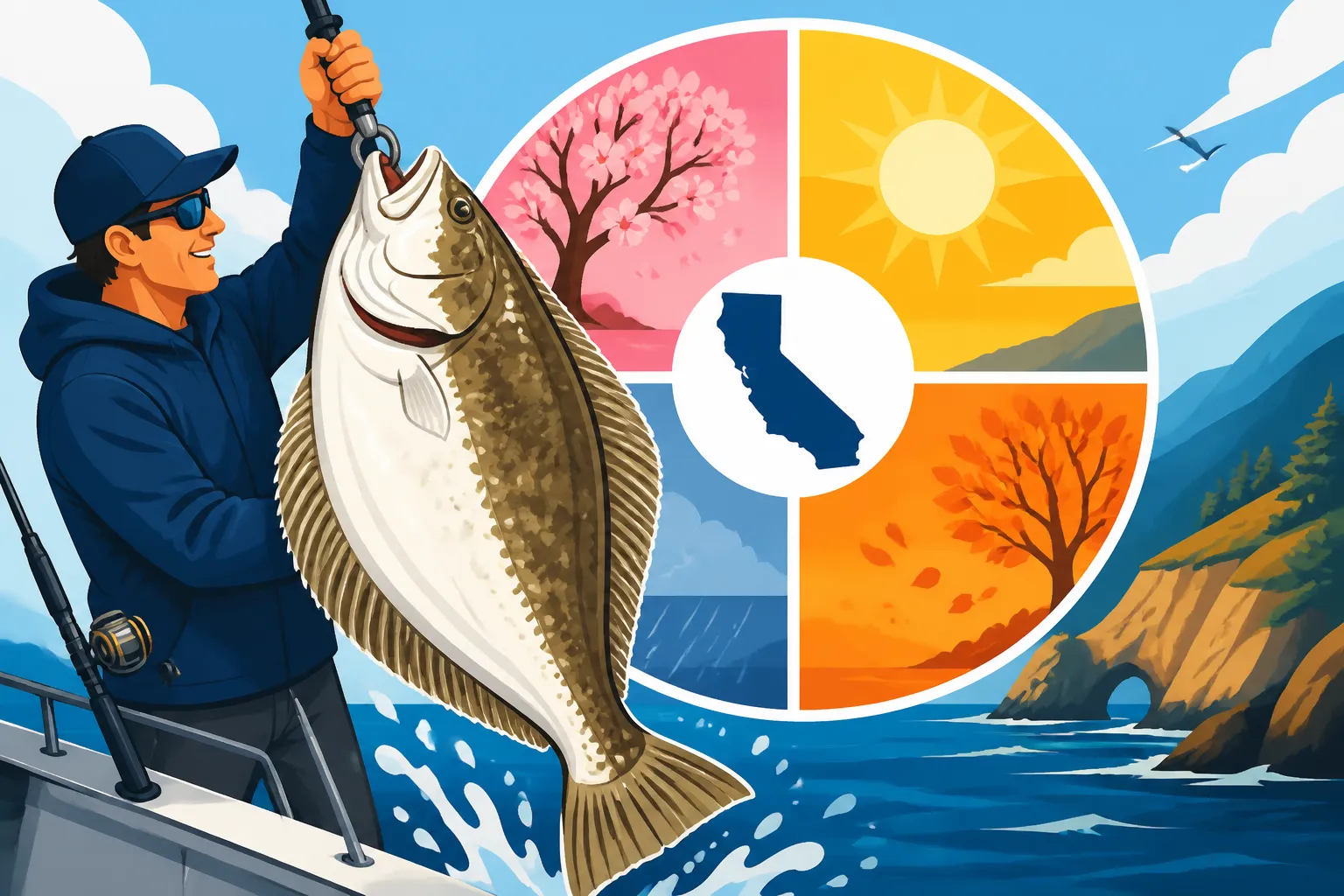
Here’s a quick overview of the seasonal trends:
| Season | Southern California (e.g., San Diego, Orange County) | Central/Northern California (e.g., San Francisco Bay, Monterey) | Primary Techniques | Key Bait/Lures |
|---|---|---|---|---|
| Spring | Warming up, inshore movement into bays and surf. Consistent bite. | Starts picking up, strong in San Francisco Bay by late spring. | Drifting live bait, Carolina rigs, light trolling. | Live anchovies, sardines, smelt, Gulp! swimbaits. |
| Summer | Peak season! Abundant in bays and along the open coast. | Peak season! Excellent in bays, strong along coast. | Drifting live bait, trolling, jigging. | Live anchovies, sardines, mackerel, squid, swimbaits. |
| Fall | Strong bite continues, fish move to deeper bay channels and nearshore. | Good bite in early fall, fish exiting bays. | Drifting live bait, deeper trolling, vertical jigging. | Live/cut bait, larger swimbaits, bucktail jigs. |
| Winter | Slow but possible in deeper bay channels and offshore. | Very slow, most fish offshore. | Slow presentations, vertical jigging, deep trolling. | Smaller live/cut bait, plastics on leadheads, deep divers. |
Key Factors Influencing Halibut Season Success
Knowing the general season is a great start, but truly maximizing your chances means diving into the environmental factors that dictate halibut behavior on any given day. These subtle cues can turn an average day into an epic one, or vice-versa.
Water Temperature and Tidal Influence
Halibut are cold-blooded creatures, and their activity levels are directly tied to water temperature. They generally prefer water temperatures between 55-70°F (13-21°C). When temperatures are within this range, they're typically more active, feed more aggressively, and are more likely to be found in shallower, accessible areas. Significant drops in temperature, often due to upwellings or colder currents, can send them deeper or make them more lethargic, reducing their willingness to strike. Keep an eye on local marine forecasts and use a reliable thermometer if you have one.
Tides are perhaps the single most important factor for many halibut anglers, especially those fishing in bays or estuaries. Halibut are ambush predators that rely on current to bring food to them. Strong tidal movements, particularly the incoming tide, will push baitfish into key ambush points like channel edges, sand bars, and structure. The outgoing tide can also be productive as baitfish get flushed out of estuaries. The best window often occurs during the last few hours of an incoming tide and the first hour or two of the outgoing. Slack tide, when there's little to no current, is generally the slowest period for halibut, as the water isn't moving enough to concentrate bait. Pay close attention to the tide charts for your specific fishing location, and prioritize fishing during the strong "swings."
Bait Availability and Forage Patterns
You know the old saying: "Find the bait, find the fish." This couldn't be truer for California halibut. Their presence and activity are intrinsically linked to the availability of their primary food sources. Halibut are opportunistic predators, feasting on whatever small baitfish are abundant in their area. This often includes anchovies, sardines, smelt, mackerel, and even small squids.
When these baitfish schools are thick in an area, halibut will congregate. Pay attention to visual cues on the water – diving birds, nervous bait schools rippling on the surface, or even predators like sea lions or dolphins actively feeding – these are all indicators that bait is present, and halibut are likely nearby. Conversely, if there's no bait in an area, your chances of finding halibut diminish significantly, even if the calendar says it should be prime season. Local fishing reports often provide invaluable information about current bait conditions and what the halibut are currently feeding on. Matching the hatch, both in terms of the size and type of bait or lure you're using, will always give you an edge. Many anglers swear by the effectiveness of live bait, readily available at many local bait shops or caught with a cast net, but high-quality artificials that mimic these natural food sources, like those you can find on Amazon, are also incredibly effective. Our guide to the Best Bait for California Halibut in California can offer more specific recommendations.
Mastering Halibut Fishing Across Seasons
Whether you're hitting the water in the vibrant spring or the quiet winter, having the right gear and understanding the appropriate tactics for the season are paramount. Don't let a change in seasons catch you off guard; instead, see it as an opportunity to diversify your angling skills.
Essential Gear and Bait Considerations
Your gear selection for halibut fishing doesn't need to be overly complicated, but having the right tools for the job makes a huge difference. A versatile setup usually involves a medium-light to medium-heavy spinning or conventional rod, around 7-8 feet in length, paired with a reliable reel spooled with 15-30 lb braided line. The braid offers excellent sensitivity and casting distance. Crucially, you'll want to tie on a fluorocarbon leader of 15-25 lb test. Fluorocarbon is nearly invisible underwater, which is a huge advantage when targeting wary halibut, and it's abrasion-resistant against their rough mouths.
- Rods and Reels: For drifting live bait in bays or nearshore, a lighter setup (medium-light) can be incredibly sensitive to the subtle bites. For trolling or fishing deeper offshore, a medium-heavy rod provides the backbone needed for heavier weights and larger fish. Shimano and Penn are two brands known for their reliable saltwater gear that you can often find on Amazon.
- Terminal Tackle: A basic Carolina rig or dropper loop is often all you need. This consists of an egg sinker (1/2 oz to 2 oz, depending on current and depth), a swivel, and a leader (2-4 feet long) ending with a sharp, strong hook (sizes 1/0 to 4/0, like Owner Mutu Light Circle hooks or Gamakatsu Octopus hooks).
- Bait: As discussed, live bait (anchovies, sardines, smelt, mackerel, ghost shrimp) is often the most effective, especially in spring and summer. Cut bait (strips of mackerel, sardine, or squid) can also work. For artificials, soft plastic swimbaits (e.g., Berkley Gulp!, Big Hammer) rigged on leadheads, jerkbaits (e.g., Lucky Craft Flash Minnow), and bucktail jigs are proven halibut producers. Match your bait to what the halibut are feeding on.
Reading the Conditions: Tides, Temperature, and Forage
Becoming a truly successful halibut angler involves more than just showing up. It means becoming a student of the ocean and learning to read the subtle clues it provides. This holistic approach, combining knowledge of tides, water temperature, and forage patterns, is what separates consistent catchers from occasional lucky ones.
- Tide Charts: Always, always check the tide charts for your specific location. Look for periods of strong tidal flow, as these are typically when halibut are most active. An incoming tide often pushes bait into bays and along the coast, while an outgoing tide can sweep bait out of estuaries. Don't be afraid to experiment with different parts of the tide cycle, but always prioritize moving water over slack water.
- Water Temperature: As noted, halibut prefer specific temperature ranges. If the water is too cold, they'll be lethargic and deeper; if it's too warm, they might also seek deeper, cooler zones. Marine weather apps or fish finders with temperature gauges can provide real-time data. Look for areas where temperatures are within the optimal 55-70°F range.
- Forage Sign: Keep your eyes peeled for signs of baitfish. Diving birds, bait balls on your fish finder, or even other predators like sea lions working an area are strong indicators that halibut might be nearby. If you see bait, fish it! Conversely, if an area looks devoid of life, it's often best to move on.
- Structure and Bottom Composition: Halibut love structure. While they are flatfish that often lie on sandy bottoms, they'll congregate around reefs, rock piles, kelp beds, channel edges, and drop-offs where they can ambush prey. Your fish finder can be invaluable for identifying these key bottom features.
By diligently paying attention to these factors and adapting your techniques accordingly, you'll significantly increase your chances of finding and catching California halibut, no matter the season. It's a continuous learning process, but that's what makes fishing so rewarding!
Disclaimer
Fishing conditions and regulations in California can change frequently. Always consult the latest California Department of Fish and Wildlife (CDFW) regulations before heading out. This guide is for informational purposes only and should not replace official sources. Always prioritize safety on the water and adhere to all local, state, and federal laws.