Best Lures for California Trout
If you've ever stood in the tackle aisle, staring at a dizzying array of tiny lures, all promising to be the "best" for trout, you know the frustration. It feels like you need a Ph.D. in fish psychology just to pick one out! But don't worry, finding the right lure for California trout isn't as complicated as it seems. This guide is going to strip away the mystery and walk you through the top lure choices and how to use them effectively, so you can spend less time guessing and more time catching.
Understanding the Trout's World: What Makes a Lure Effective?
Before we dive into specific lure types, it's really helpful to get into the mind of a trout. What are they eating? What are they looking for? Understanding these basics will dramatically improve your lure selection and presentation, no matter where you're fishing in California.
Mimicking Natural Prey: The Art of Imitation
Trout are opportunistic feeders, meaning they'll eat just about anything that looks like a meal and presents itself in an appealing way. In California's diverse waters, this can range from tiny insects to larger baitfish and even small crustaceans. The most effective lures are often those that best mimic these natural food sources in terms of size, shape, color, and movement.
Think about the environment you're fishing in. Are there lots of minnows? Then a small, silver spoon or a minnow-imitation jerkbait might be the ticket. Are you seeing hatches of aquatic insects? Then maybe a tiny jig or a soft plastic that resembles a nymph could be more successful. The key is observation. Spend a few minutes watching the water before you cast. Are bugs flying around? Are small fish darting in the shallows? These clues can guide your lure choice. For a deeper dive into their diet, understanding the various species can help; for example, the habits of a Rainbow Trout in California are quite different from a large Lake Trout.
Water Conditions and Clarity: Matching the Environment
The state of the water itself plays a huge role in what lures will work. California's trout waters can range from crystal-clear alpine streams to turbid, snowmelt-fed rivers and vast, deep reservoirs.
- Clear Water: In clear water, trout rely heavily on their eyesight. This means subtle, natural colors (silvers, browns, greens, black) and realistic presentations are usually best. Smaller lures are often more effective as they appear less threatening. Anything too flashy or unnatural can spook wary trout. Think about a small spinner with a dull finish or a neutral-colored soft plastic.
- Murky or Stained Water: When the water is murky, visibility is low. Here, trout often rely more on vibration and scent, and brighter colors become much more effective because they stand out. Fluorescent colors like chartreuse, orange, or hot pink, or lures with strong reflective qualities, can be excellent. Lures that displace more water or have internal rattles can also help fish locate them. This is where a larger, brightly colored casting spoon might shine.
- Light Conditions: Bright, sunny days can make fish more sensitive to light, pushing them deeper or under cover. On such days, more subdued colors or lures that don't produce excessive flash might be better. Overcast days or low-light conditions (dawn/dusk) often allow brighter or more flashy lures to work well, as the light dispersion can make them appear more vibrant.
Target Species and Their Habits: Different Trout, Different Tastes
California is home to several incredible trout species, and while many lures can catch them all, tailoring your approach can make a difference.
- Rainbow Trout: These are often the most common and widely stocked trout in California. They are generally aggressive and readily hit a variety of lures, from spinners and spoons to PowerBait and small jigs. They're often found in lakes, reservoirs, and rivers, and their habits can vary depending on whether they're wild or recently stocked. Many anglers find success targeting them in popular spots by reviewing guides like the one for the Best Trout Lakes in California.
- Brown Trout: Known for their predatory nature, brown trout often prefer lures that mimic baitfish. Small jerkbaits, spoons, and larger spinners are frequently successful, especially when targeting bigger browns in rivers or large lakes like Lake Tahoe. They can be more elusive than rainbows and often hold in deeper, more structured areas.
- Brook Trout: These beautiful, smaller trout are typically found in colder, higher-elevation streams and lakes. They have smaller mouths, so tiny spinners, spoons, or micro-jigs are often the best bet. They are less wary than browns and rainbows in their natural high-country habitats.
- Lake Trout (Mackinaw): Found primarily in deeper, colder lakes like Lake Tahoe, these are the largest trout species in California. They prefer much larger lures, such as big spoons, heavy jigs, or even trolling large plugs. They stay deep, often near the bottom, so presenting your lure at the correct depth is crucial.
Knowing which trout species you're likely to encounter in your chosen spot can significantly influence your lure selection.
Top Lure Categories for California Trout
Now that we've covered the basics of trout behavior and environment, let's talk tackle! Here are the core categories of lures that consistently produce trout across California. You can often find a wide selection of these lures on platforms like Amazon, making it easy to stock up before your next trip.
Spinners and Spoons: Classic Trout Catchers
These are arguably the most iconic and effective trout lures ever created. They rely on flash, vibration, and erratic movement to trigger strikes.
-
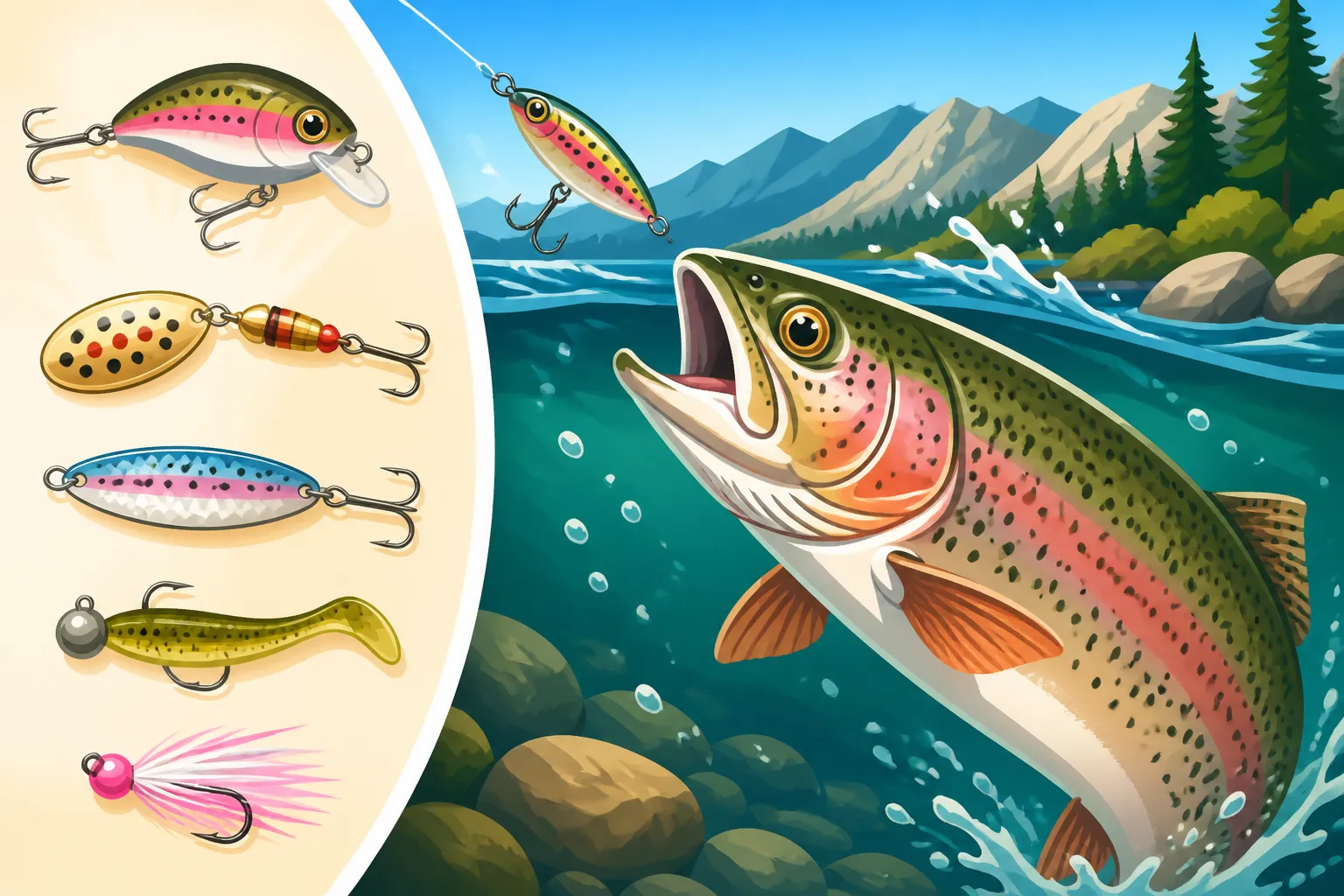
Inline Spinners: Brands like Mepps, Panther Martin, Rooster Tail, and Blue Fox are legendary for a reason. These lures feature a spinning blade attached to a weighted body, often adorned with a hackle tail.
- How they work: The blade rotates rapidly, creating flash and vibration that imitate small, struggling baitfish or insects.
- When to use them: They're incredibly versatile and effective in both moving water (rivers, streams) and still water (lakes, ponds). They work well for aggressive trout, especially rainbows and smaller browns. Sizes from 1/16 oz to 1/4 oz are most common for trout.
- Retrieval: A steady, medium retrieve is often all you need to get the blade spinning properly. In rivers, cast slightly upstream and across, letting the current carry the spinner downstream while you retrieve. In lakes, a slow to medium retrieve works well, occasionally adding a twitch to create a more erratic motion.
- Colors: Silver and gold blades are staples. Chartreuse, black, and white can also be very effective, especially with a contrasting blade color (e.g., black blade with yellow dots, silver blade with a red-orange body).
- Pro Tip: Always check if the blade is spinning correctly as soon as the lure hits the water. A bent or fouled blade won't attract strikes.
-
Casting Spoons: Lures like the Kastmaster, Little Cleo, Daredevil, and Thomas Buoyant have been catching trout for decades. These are simply curved pieces of metal that wobble and flash as they're retrieved.
- How they work: Their erratic wobbling motion imitates a wounded baitfish, while the flash attracts attention from a distance.
- When to use them: Spoons are fantastic for covering water, especially in larger lakes and reservoirs where trout might be chasing baitfish. They cast a mile, making them ideal for shore anglers. They're also effective in rivers with deeper pools.
- Retrieval: A simple steady retrieve works, but varying the speed and adding pauses or jerks can be deadly. For a "flutter-and-fall" action, reel in quickly for a few feet, then pause and let the spoon flutter down like a dying fish. Watch for strikes on the fall!
- Colors: Silver, gold, and brass are classic. Blue/silver, green/silver, and firetiger patterns are also very popular.
- Pro Tip: For deeper water or when trout are holding near the bottom, let the spoon sink to your desired depth before beginning your retrieve. Jigging spoons vertically from a boat or kayak can also be incredibly effective for Lake Trout.
Hard Baits: Jerkbaits and Minnows for Aggressive Strikes
These lures are designed to imitate minnows and other small baitfish with incredible realism, often triggering a violent reaction strike.
- Small Jerkbaits/Minnow Plugs: Think Rapala Original Floater or Countdown, Rebel Wee-R, or similar slim-profile lures.
- How they work: These lures are carved to look exactly like baitfish. Depending on their design, they'll float, suspend, or slowly sink, diving to a specific depth when retrieved. Their lifelike swimming action and ability to "suspend" in the water column after a twitch can be irresistible.
- When to use them: Excellent for larger, more aggressive trout, particularly brown trout and bigger rainbows, especially when they are actively feeding on baitfish. They're great in lakes, reservoirs, and wider river sections.
- Retrieval: The "jerk-jerk-pause" or "twitch-twitch-pause" retrieve is classic. Reel in slack, give a couple of quick twitches of the rod tip to make the lure dart, then pause for a few seconds. Many strikes happen on the pause. Experiment with the length of the pause; sometimes a longer pause is key.
- Colors: Natural baitfish patterns (silver, gold, perch, rainbow trout imitation) are top choices. Firetiger and other bright colors can work in stained water.
- Pro Tip: Match the size of your lure to the prevalent baitfish in the area. If you see tiny minnows, use smaller plugs. If larger forage is present, don't be afraid to go a bit bigger.
Soft Plastics and Jigs: Subtle Appeal for Fickle Fish
When trout are finicky, pressured, or feeding subtly, soft plastics and jigs can be your secret weapon. They offer a more natural, lifelike presentation with less flash and vibration than hard lures.
-
PowerBait, Gulp! and Similar Scented Baits: While technically not lures in the traditional sense, these molded, scented dough baits (like Berkeley PowerBait or Gulp! Trout Dough) are incredibly effective, especially for stocked trout. However, there are also soft plastic "worms," "minnows," and "grubs" designed to be fished actively.
- How they work: Scented soft plastics appeal to a trout's sense of smell, while their subtle action and lifelike appearance can entice strikes.
- When to use them: Excellent for slow fishing from shore or boat, particularly for recently stocked trout in lakes and ponds. Small soft plastic worms or minnows on a jig head are fantastic for wild trout in streams and rivers when presented naturally.
- Retrieval: For trout dough, rig it on a small hook with a sliding sinker or under a bobber and let it drift or soak. For soft plastic minnows or worms, rig them on a small jig head (1/32 oz to 1/8 oz) and fish with a slow, gentle retrieve, adding small twitches or bounces along the bottom. This is a common technique used for How to Fish for Trout in California.
- Colors: Chartreuse, white, pink, orange, and natural shades are all effective.
- Pro Tip: When fishing soft plastics with a jig head, use the lightest jig head possible that still allows you to feel the bottom or get to the desired depth. This provides the most natural presentation.
-
Marabou Jigs and Micro Jigs: These small jigs, often tied with marabou feathers or synthetic materials, offer a compact, lifelike presentation.
- How they work: The soft, pulsing action of the marabou feathers in the water is incredibly alluring to trout, mimicking aquatic insects or small fry.
- When to use them: Ideal for wary trout in clear water, small streams, or when fish are holding in deeper pools. They're also great for fishing under a bobber or float.
- Retrieval: A slow, steady retrieve with occasional twitches, or bouncing them along the bottom, works wonders. In rivers, cast upstream and let them drift naturally with the current, imparting slight twitches.
- Colors: White, black, olive, brown, and chartreuse are popular choices.
- Pro Tip: Pay close attention to your line for any subtle bumps or pauses, as trout often hit jigs very lightly. Consider adding a tiny bit of scent to the jig for extra appeal.
| Lure Type | Best Conditions | Target Trout Species | Advantages | Disadvantages |
|---|---|---|---|---|
| Inline Spinners | Versatile: Rivers, streams, lakes, clear to stained water | Rainbow, Brown, Brook | High vibration & flash, easy to use, wide range of sizes/colors | Can twist line if not using a swivel, may spook very wary fish in clear water |
| Casting Spoons | Large lakes/reservoirs, deep rivers, windy conditions | Rainbow, Brown, Lake Trout | Casts far, good for covering water, effective for aggressive fish | Less subtle, can be heavy for light tackle, may tangle if retrieved too fast |
| Jerkbaits/Plugs | Lakes, wider rivers, when fish feed on baitfish | Brown, larger Rainbow, Lake Trout | Realistic appearance & action, triggers reaction strikes, good for specific depths | More expensive, can be tricky to master retrieve, easily snagged in shallow areas |
| Soft Plastics | Slow fishing, pressured fish, clear water, stocked trout | All trout species, especially stocked & finicky wild trout | Very natural presentation, can be scented, effective with light bites | Less flash/vibration, slower presentation, sometimes less durable |
| Marabou Jigs | Clear water, small streams, subtle presentations | All trout species, especially Brook & wary wild trout | Extremely lifelike action, compact, good for light tackle | Very light, hard to cast far, delicate presentation required |
Strategies for Success: Deploying Your Lures in California Waters
Having the best lures is only half the battle; knowing how to use them effectively is where the magic happens. A solid understanding of trout behavior, paired with proper technique, will significantly increase your catch rate.
Reading the Water: Where to Cast Your Lure
Trout are structure-oriented fish. They seek out areas that offer cover, current breaks, and easy access to food. Learning to "read the water" is fundamental for consistent success, whether you're fishing the California Delta Fishing Guide for Stripers or a small mountain stream.
- Rivers and Streams:
- Current Seams: Look for where fast water meets slow water. Trout often sit in the slower water, waiting for food to be swept past them in the current. These are prime ambush points.
- Eddies and Backwaters: Areas where the current swirls back on itself or slows down drastically. These are resting spots where trout can feed without expending much energy.
- Deep Pools: Trout, especially larger ones, will often hold in the deeper sections of a river, particularly in the middle of the day or when water temperatures are high.
- Structure: Submerged rocks, fallen trees (logjams), undercut banks, and overhanging vegetation all provide cover and ambush points. Cast your lure as close as possible to these areas without getting snagged.
- Lakes and Reservoirs:
- Drop-offs and Ledges: Where the bottom contour changes significantly. Trout will cruise these edges, moving between deep water and shallower feeding grounds.
- Inlets and Outlets: Where streams or rivers flow into or out of the lake. These areas often concentrate baitfish and provide oxygenated water, attracting trout.
- Submerged Structure: Rock piles, brush, old creek beds, and even man-made structures can hold fish. If you have a fish finder, use it to locate these features.
- Tules and Weedlines: The edges of submerged vegetation offer cover and insect life. Trout will often patrol these boundaries.
- Open Water: Don't neglect the open water, especially in large reservoirs. Trout, particularly Lake Trout, will suspend at certain depths, often following bait schools. This is where trolling becomes a powerful tool.
Always approach your chosen spot cautiously, especially in clear, shallow water. Trout are easily spooked by sudden movements or shadows. Stay low, move slowly, and make your first cast count by placing the lure in a prime feeding zone.
Retrieval Techniques: Bringing Your Lure to Life
The best lure in the world won't catch fish if you're not presenting it correctly. The way you retrieve your lure is paramount to making it look like a natural, vulnerable food source.
- Steady Retrieve: This is the most basic and often effective method for inline spinners and casting spoons. Simply reel at a consistent speed that allows the lure to work as designed. Vary the speed until you find what the fish prefer.
- Stop-and-Go: Particularly effective for spoons and some jerkbaits. Reel for a few seconds, then pause completely, allowing the lure to flutter or sink. This imitates a dying baitfish and often triggers a strike on the pause or just as you restart the retrieve.
- Twitching/Jerking: Essential for jerkbaits and can add life to soft plastics and jigs. Use short, sharp movements of the rod tip to make the lure dart erratically. Combine this with pauses. The key is to impart action without moving the lure too far from the strike zone.
- Bouncing/Dragging: For jigs and soft plastics on the bottom. Cast out, let the lure sink, and then slowly reel while occasionally lifting and dropping your rod tip to make the lure "hop" or "crawl" along the bottom. This is excellent for slower-moving trout or when they are lethargic.
- Trolling: For larger lakes and reservoirs, especially when targeting Lake Trout or covering large areas. Use a boat to slowly pull lures (spoons, plugs, even weighted soft plastics) behind you at various depths. Downriggers or lead core line can help get lures deep. This is a common technique covered in California Trolling Tips and Techniques.
The best approach is to experiment. Start with a basic retrieve and gradually add variations until you find what's enticing the fish on that particular day. Pay attention to how the lure feels and moves in the water to ensure you're getting the desired action.
Lure Modification and Presentation Tips
Sometimes, a small tweak can make a big difference in your trout fishing success.
- Adding Scent: Trout have an excellent sense of smell. Adding a dab of fish attractant like Pro-Cure or Mike's Lunker Lotion to your soft plastics, jigs, or even spoons can make them more appealing, especially in murky water or when fish are being shy. You can often find a variety of scents on Amazon.
- Changing Hooks: Many factory lures come with treble hooks. In some California waters, particularly those designated for catch-and-release or with special regulations, barbless hooks are required. Even when not required, switching to a single, barbless hook can reduce harm to fish, make releases easier, and surprisingly, often result in better hookups as the single hook penetrates more deeply.
- Using Swivels: When using inline spinners, a high-quality barrel or ball-bearing swivel is essential to prevent line twist, which can weaken your line and make casting difficult. Attach the swivel a foot or two above the lure.
- Leader Material: In clear water, a fluorocarbon leader (4-6 lb test) can be incredibly beneficial. Fluorocarbon is nearly invisible underwater and is more abrasion-resistant than monofilament. This stealthy approach is especially critical for sensitive fish in areas with California Freshwater Fishing Regulations.
- Knot Tying: Learn a few strong, reliable knots like the Improved Clinch or Palomar knot. A weak knot is often the point of failure when you hook a big fish.
- Line Choice: Match your line to your tackle and target. For most trout fishing with lures, 4-8 lb monofilament or fluorocarbon is ideal. Braided line can be used as a main line, but always tie on a fluorocarbon leader for stealth.
The overarching goal is a natural presentation. Your lure should look like an easy meal, not a piece of hardware dragged through the water. Pay attention to every detail, from how your lure swims to how quietly you approach the water.
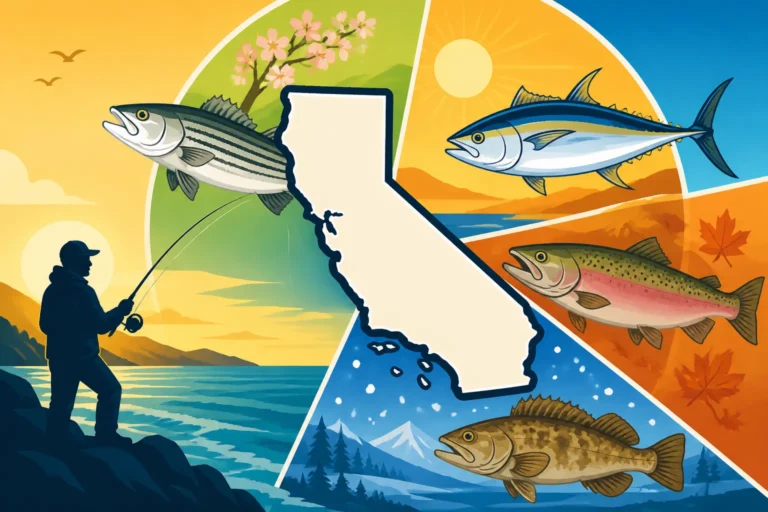
Seasonal and Regional Considerations for Trout Lures
California's vast and varied landscape means trout fishing opportunities change dramatically with the seasons and regions. What works in the Eastern Sierra in spring might not be effective in a lowland reservoir in summer.
Spring and Fall: Aggressive Feeds and Prime Opportunities
These are often considered the prime times for trout fishing in much of California, especially for active lure fishing.
- Spring (March – May): As waters warm up after winter, trout become incredibly active and aggressive. They're recovering from the lean winter months and often feeding heavily. Snowmelt can bring stained, high water in some areas, while other lakes are just turning over.
- Lure Strategy: Spinners, spoons, and jerkbaits are exceptionally effective during spring. Trout are willing to chase, so flash and vibration are key. In larger lakes, they may be moving shallower to feed, so casting from shore or shallow trolling can be productive. If waters are stained from runoff, don't be afraid to use brighter colors like chartreuse or orange. For a general understanding of what to expect, check out California Fishing in Spring .
- Fall (September – November): As summer heat fades and water temperatures cool, trout again become very active. Many trout species, particularly brown trout and some rainbows, will begin their spawning runs in rivers and streams, making them very aggressive and territorial.
- Lure Strategy: This is prime time for larger spoons and jerkbaits, especially if you're targeting trophy brown trout. Spinners also remain highly effective. Focus on areas where fish might be staging for spawning runs or actively feeding to bulk up for winter. Realistic baitfish imitations can be deadly.
Summer and Winter: Adjusting for Tougher Conditions
These seasons can present more challenges, but with the right adjustments, you can still find success.
- Summer (June – August): In many lowland areas, water temperatures rise, pushing trout into deeper, cooler water. High-country lakes and streams, however, become more accessible and can offer fantastic fishing.
- Lure Strategy: For warmer lowland lakes, focus on early morning or late evening when trout move shallower to feed. During the day, you'll need to target deeper water with heavier spoons, jigs, or by trolling plugs at depth. Soft plastics and subtle presentations might be more effective for lethargic fish. In the cooler high country, small spinners, spoons, and jigs still work well. Consider looking into Best Time of Year to Catch Trout in California for specific timings.
- Winter (December – February): Trout metabolism slows significantly in cold water. They are less aggressive and more likely to hug the bottom. Some lakes might freeze over, offering ice fishing opportunities in certain areas.
- Lure Strategy: Slow down your retrieve dramatically. Small, subtle jigs (marabou or plastic-tipped) fished very slowly along the bottom or under a bobber can be effective. Ice fishing jigs tipped with a maggot or worm are also excellent. Vertical jigging spoons can work in deeper water. Scent becomes even more important during these colder months.
High Sierra and Lowland Waters: Tailoring Your Tackle
California's geography gives us a huge range of trout habitats, each requiring slightly different considerations.
- High Sierra Alpine Lakes and Streams: These waters are typically crystal clear, cold, and often hold wild brook, rainbow, and golden trout. The fish might not be huge, but they are eager to bite.
- Lure Strategy: Small is key here. Think tiny inline spinners (1/16 oz to 1/8 oz) in natural colors, micro-jigs (1/32 oz), and small casting spoons. Light line (2-4 lb test) is essential for a stealthy presentation. These fish aren't usually pressured, so a simple retrieve works well. Fly fishing is also extremely popular in these areas. For some specific locations, you might want to consult a guide on the Eastern Sierra Fishing Guide .
- Lowland Lakes and Reservoirs: These are often larger, warmer, and more accessible, frequently stocked with rainbow trout. They can also hold larger brown trout or even lake trout in deeper systems.
- Lure Strategy: A wider variety of lures can be effective here. Spinners and spoons are go-to choices. Jerkbaits are great for aggressive, larger fish. Soft plastics like PowerBait are exceptionally popular for stocked trout. Trolling is often very effective for covering water and targeting suspended fish. Be aware of the California Trout Regulations and Limits for your specific fishing area, as rules can vary.
Understanding the unique characteristics of each body of water you fish will help you refine your lure selection and tactics, turning those frustrating days into memorable catches.
Disclaimer
Fishing regulations, seasons, and limits can change frequently. Always consult the latest California Department of Fish and Wildlife (CDFW) regulations booklet or their website before heading out. This guide is for informational purposes only and does not supersede official regulations.