Best Baits and Lures for California Halibut in California
Trying to hook into a California halibut can feel like a game of hide-and-seek where the fish always has the advantage. These flatfish are notoriously cunning, masters of camouflage, and can be incredibly selective about what they’ll bite. If you've spent hours drifting or casting only to come up empty-handed, you know the frustration. This guide is here to unravel the mystery, providing you with detailed insights into the best baits and lures to entice that elusive California halibut into taking your offering.
Understanding California Halibut Preferences and Habits
Before we even dive into specific baits and lures, it’s crucial to understand the California halibut itself. These aren't just any fish; they're ambush predators that spend most of their time lying in wait on sandy or muddy bottoms, often near structure or drop-offs. Their diet primarily consists of smaller fish like anchovies, sardines, mackerel, and even squid, along with some crustaceans. Understanding their natural prey helps us choose the most effective presentations.
How Halibut Hunt and Feed
California halibut are visual predators with eyes on top of their flattened heads, giving them an excellent upward field of vision. When a baitfish swims overhead, they'll burst from their hiding spot, engulfing the prey with surprising speed and power. This ambush style means that your bait or lure needs to mimic distressed or vulnerable prey, presenting an easy meal that triggers their predatory instinct. It's not just about what you use, but how you present it, making it irresistible to a fish that prefers minimal effort for maximum reward. Think about it: a healthy, fast-moving sardine is harder to catch than one that's injured or disoriented.
Key Factors Influencing Halibut Bites
Several environmental factors can significantly impact halibut feeding behavior. Tidal movement is arguably one of the most critical. Halibut often position themselves to ambush prey moving with the current, especially during outgoing or incoming tides that create strong flows around points or structure. Water clarity also plays a role; while they are visual hunters, overly clear water can make them warier of artificial presentations. Lastly, water temperature influences their activity levels; they tend to be more active in warmer, but not hot, waters. Knowing these factors can help you decide when and where to deploy your chosen bait or lure, improving your chances dramatically. For a deeper dive into seasonal patterns, check out our guide on the :Best Season for Halibut in California:.
Top Natural Baits for California Halibut
When it comes to California halibut, natural bait often reigns supreme, especially for those who prefer a more relaxed fishing approach or when the fish are particularly finicky. The key is using fresh, lively bait that accurately imitates their natural diet.
Live Baits: The Undisputed Champions
Live bait is, hands down, the most effective way to catch California halibut. The erratic, natural movements of a live baitfish are almost impossible for a halibut to ignore. They provide both visual appeal and a strong scent trail, hitting all the right notes for an ambush predator.
- Anchovies and Sardines: These small, oily baitfish are like candy to halibut. They are abundant along the California coast and are a primary food source for many predators. When fishing with live anchovies or sardines, a light line and a small, sharp hook (like a size 1 or 2 circle hook) are essential. Hook them through the nose or just behind the dorsal fin to allow for natural movement. You can drift these baits along sandy flats, near kelp beds, or around structure. Getting your hands on quality live bait can sometimes be a challenge, but many local bait shops in areas like San Diego, Long Beach, and Monterey Bay carry them. If you're on a budget or can't find them, a sabiki rig can help you catch your own fresh supply.
- Mackerel and Smelt: Slightly larger than anchovies or sardines, live mackerel (especially Spanish mackerel or small Pacific mackerel) and smelt are excellent choices for targeting bigger halibut. These baits offer a more substantial meal and can attract more aggressive strikes. Hooking methods are similar, aiming for natural presentation. When using mackerel, ensure it’s not too large for the halibut you're targeting; a 4-6 inch mackerel is usually ideal. The vibrant colors and vigorous swimming action of these baits are tough for a hungry halibut to resist.
- Squid: While not as common as fish baits, live squid can be incredibly effective, especially in areas where squid are prevalent. Their pulsating movement and visual appeal are distinct. Squid is also a very versatile bait. If live squid isn't available, fresh dead squid can also work, especially if you cut it into strips and "sweeten" it with some Pro-Cure scent. The key with dead bait is ensuring it moves naturally with the current or is retrieved with a jigging motion to simulate life.
Dead Baits and Cut Baits: A Viable Alternative
When live bait isn't available or practical, fresh dead bait and cut bait can still be highly effective. The critical difference here is that you need to impart the movement yourself or rely on current to do the work. Scent becomes paramount.
- Fresh Dead Baitfish: A fresh dead anchovy, sardine, or mackerel can be effective when rigged properly. Often, anglers will "sweeten" these baits with a scent spray or paste from brands like Pro-Cure or Atlas Mike's to enhance their attractiveness. Using a bait harness or a tandem hook rig allows the bait to swim somewhat naturally when drifted or slowly retrieved. The oily residue and strong scent emitted from these baits can often draw halibut in, especially if they are actively feeding or if the water is a bit murkier.
- Cut Bait Strips: Long, thin strips of mackerel, anchovy, or even bonito can work well, particularly when tipped onto a leadhead jig or a spreader bar rig. The strip should be tough enough to stay on the hook and cut in a way that allows it to flutter enticingly in the water. Many anglers like to cut them in a "diamond" shape or a tapered strip to give them a natural swimming action. The best practice is to keep the strips relatively thin so they don't impede the hook set. Again, scent plays a huge role here, as the movement is primarily artificial.
| Bait Type | Pros | Cons | Best Presentation |
|---|---|---|---|
| Live Anchovy | Highly natural, irresistible action | Fragile, harder to keep alive | Nose-hooked, drifted on light line |
| Live Sardine | Strong action, good size for larger fish | Requires proper aeration, can be costly | Nose-hooked, slow drift/retrieve |
| Live Mackerel | Attracts trophy halibut, very active | Larger setup required, less common bait | Tail or nose-hooked, slow troll/drift |
| Live Squid | Unique movement, visual, effective | Seasonal availability, can be expensive | Lightly hooked, drifted or slow-jigged |
| Dead Mackerel | Durable, good scent trail | Requires angler-imparted action | Scented, slow drift on a rig |
| Cut Sardine | Easy to obtain, strong scent | Less natural action, must be actively worked | Tipped on jigs, slow retrieve |
For detailed information on rules regarding what you can keep, consult our guide on :California Halibut Size and Bag Limits:.
Effective Artificial Lures for California Halibut
While live bait often steals the show, artificial lures are incredibly effective, especially for active anglers who enjoy covering more water and enticing strikes through action. The key is to select lures that mimic the halibut’s natural forage and to present them in a way that triggers an aggressive strike.
Soft Plastics: Versatility and Natural Appeal
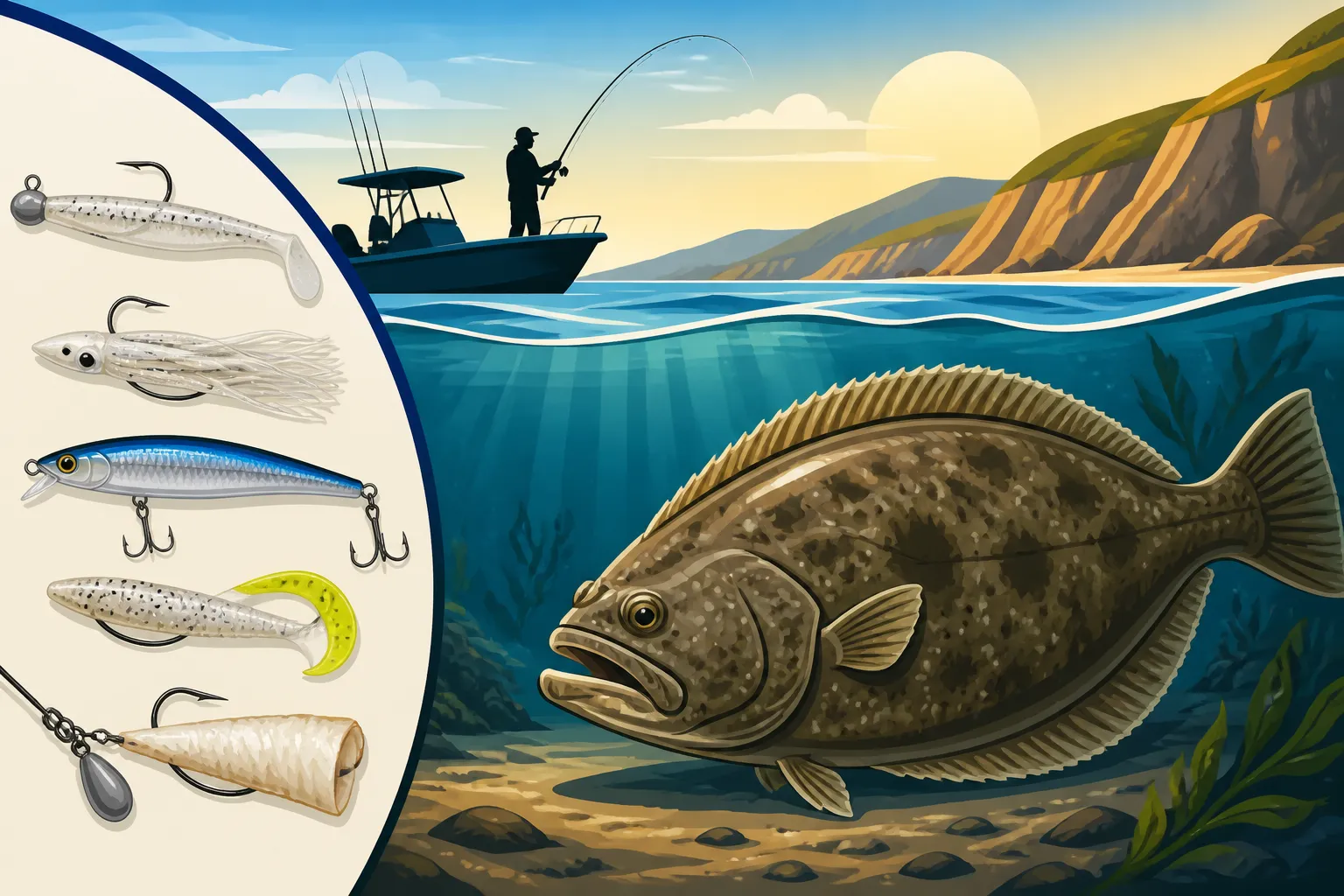
Soft plastic swimbaits and grubs are arguably the most popular and versatile artificial lures for California halibut. Their soft, flexible bodies and paddle tails or curly tails create enticing actions that perfectly imitate baitfish.
- Paddle Tail Swimbaits: These are a go-to for many halibut anglers. Brands like Keitech, Berkley Gulp!, and Big Hammer offer a huge range of colors and sizes. The most effective sizes are typically 4-6 inches. White, pearl, chartreuse, and natural baitfish patterns (like anchovy or sardine) are perennial favorites. Rig them on a leadhead jig, usually ranging from 1/2 oz to 2 oz depending on depth and current. The weight should be just enough to get your lure to the bottom and keep it there with a slow, steady retrieve. The tail action is crucial; ensure it kicks effectively even at slow speeds. Sometimes, adding a touch of scent to these lures, like Smelly Jelly or Pro-Cure, can make a huge difference, especially in murky water or when the bite is tough. You can find a huge selection of these swimbaits on Amazon year-round, making it easy to stock up.
- Grubs and Worms: Curly tail grubs, especially those from Berkley Gulp! such as the 6-inch Grubs or the 4-inch Swimmin' Mullets, are excellent choices. While perhaps less "fishy" looking than a paddle tail, their aggressive tail action and strong scent profile make them irresistible. These are particularly effective when fished slowly along the bottom, often with a slight lift-and-drop motion, mimicking a foraging baitfish or a scuttling crustacean. Again, jighead weight should match the conditions, allowing for a controlled descent and bottom contact.
Hard Baits and Metal Jigs: Covering Water and Mimicking Fleeing Prey
Hard baits and metal jigs offer different presentations, often excelling when halibut are aggressively feeding or when you need to cover a lot of ground quickly.
- Jerkbaits/Minnow Plugs: Shallow-diving jerkbaits that suspend or slowly sink can be deadly, especially when twitched or reeled with an erratic cadence. Brands like Rapala or Lucky Craft Pointer 100 series in baitfish colors can provoke vicious strikes. These work best when fished over slightly deeper flats or along edges where halibut might be staging. The key is to imitate a panicked or injured baitfish with quick jerks and pauses.
- Spoons and Metal Jigs: Heavy spoons (like Krocodile spoons) or vertical jigs are excellent for getting down deep quickly or when imitating wounded baitfish. They create a lot of flash and vibration, which can draw halibut from a distance. These are often worked with a yo-yo retrieve, lifting and dropping the jig to make it flutter and fall. While effective, they can sometimes attract other species like rockfish, so be prepared for diverse bites. For those deeper scenarios, a heavier jig like a Shimano Colt Sniper or a Daiwa Saltiga jig in a natural finish can be incredibly effective when dropped and retrieved with a fast, erratic motion. The flash and vibration can trigger a reaction strike from even a lazy halibut.
Adding Scent to Artificial Lures
Don't underestimate the power of scent, even with artificials. Halibut have an excellent sense of smell. Adding a scent spray, gel, or paste (like Pro-Cure, Smelly Jelly, or Berkley Gulp! Alive attractants) to your soft plastics can significantly increase your strike rate. This is especially true on slower days or in murkier water where visual cues are diminished. Apply it generously and reapply frequently to maintain a strong scent trail. Even a subtle enhancement can be the difference between a follow and a committed bite.
Presenting Your Baits and Lures for Success
Knowing the best baits and lures is only half the battle; knowing how to present them effectively is just as crucial. Halibut are ambush predators, so your presentation needs to put your offering right in their strike zone and trigger that predatory response.
Drifting: The Gold Standard for Halibut
Drifting is perhaps the most effective method for targeting California halibut, especially when using live bait. It allows you to cover large areas of bottom efficiently and present your bait naturally with the current.
- Natural Drift with Live Bait: When drifting live bait, the goal is to keep your bait close to the bottom but not dragging. Use just enough weight to maintain contact with the bottom without anchoring your bait. A sliding sinker rig (Carolina rig style) with a swivel, leader, and hook is ideal. This allows the fish to pick up the bait and run without feeling the resistance of the weight. The lighter the lead and line you can get away with, the better, as it enhances the bait's natural movement. As you drift, keep a close eye on your line for any subtle taps or changes in tension. Halibut often "mouth" the bait before committing, so a slow, deliberate hookset is often needed. For more details on drifting techniques, our article on :How to Drift for Halibut in the Bay: might be particularly helpful.
- Controlled Drifting with Artificials: You can also drift artificials. This involves casting your swimbait or grub up-current, letting it sink to the bottom, and then slowly retrieving it as your boat drifts. This creates a natural presentation where the lure moves with the current, mimicking an injured baitfish struggling to keep up. Pay close attention to current speed and adjust your jighead weight accordingly. If the current is too strong, your lure will lift off the bottom too much. If it's too weak, it might not have enough action.
Casting and Retrieving: Active Search and Precision
Casting and retrieving with artificial lures is an active way to search for halibut, especially when fishing from shore, a pier, or when trying to cover specific pieces of structure from a boat.
- Slow, Bouncing Retrieve: The most common retrieve for soft plastics is a slow, methodical retrieve that keeps the lure bouncing along the bottom. Cast out, let the lure sink until it hits bottom, and then slowly reel while imparting subtle lifts and drops with your rod tip. The goal is to imitate a baitfish rooting around on the bottom or struggling to swim. Many halibut strikes occur as the lure falls or just after it hits the bottom. This retrieve is especially effective with paddle tail swimbaits and grubs.
- Erratic Jigging: For metal jigs or when targeting more aggressive fish, an erratic jigging retrieve can be deadly. Cast out, let the jig sink, and then rapidly lift your rod tip a few feet, letting the jig flutter back down on a semi-slack line. Most strikes happen on the fall, so pay close attention. This mimics a wounded or fleeing baitfish, triggering a reaction strike. This technique is often used in deeper water or when fishing vertically from a boat.
Trolling: Covering Expansive Flats
Trolling is another effective method, particularly when you need to cover large, open sandy flats where halibut might be spread out. This is often done from a boat with a planer or downrigger to keep the bait or lure at the desired depth.
- Live Bait Trolling: Trolling live anchovies, sardines, or mackerel on a bridle rig or with a trap hook setup can be incredibly effective. Maintain a very slow speed, just enough to give the bait a natural swimming action. The key is to keep the bait close to the bottom, often just a few feet off the sand.
- Lure Trolling: Trolling hardbaits like Rapala CD (CountDown) series lures or diving plugs can also produce results. Choose lures that dive to the target depth and have a good, tight wobble. Colors mimicking anchovies, sardines, or mackerel are usually best. This method allows you to systematically work an area, pinpointing where halibut are holding. Ensure your trolling speed is slow, generally 1.5 to 3 knots, to allow the lure to track properly and entice strikes.
Essential Gear for Halibut Fishing
Having the right gear complements your bait and lure choices, making your efforts more fruitful. You don't need the most expensive setup, but reliable equipment is key.
Rod and Reel Setups
- Medium-Light to Medium Rod: A sensitive rod, typically 7-8 feet in length with a fast or moderate-fast action, is ideal. This sensitivity allows you to feel those subtle halibut bites, which can sometimes be incredibly light. A rod with a good backbone but a forgiving tip is perfect for fighting these surprisingly powerful fish. Brands like Ugly Stik or Penn offer durable and affordable options that are widely available on Amazon and at tackle shops.
- Matching Reel: A reliable spinning reel in the 3000-5000 size range or a conventional reel like a Shimano Calcutta or Daiwa Lexa 100/200 series is appropriate. The key is a smooth drag system and enough line capacity. Halibut don't make blistering runs, but they can put up a strong fight close to the bottom.
- Line: Braided line, typically 15-30 lb test, is highly recommended for its sensitivity and strength. Spooling with braid allows you to feel the most subtle taps on your bait or lure. However, a fluorocarbon leader (20-30 lb test, 3-6 feet long) is crucial. Fluorocarbon is nearly invisible in water and provides excellent abrasion resistance, which is important when fishing near structure or on sandy bottoms.
Terminal Tackle
- Hooks: For live bait, sharp, strong circle hooks (size 1 to 2/0) are excellent for ensuring good hook sets in the corner of the halibut's mouth, reducing gut-hooking. For dead bait, J-hooks (size 1 to 3/0) can be effective. For soft plastics, leadhead jigs with strong, sharp hooks (often Mustad or Gamakatsu) are integrated directly into the jig.
- Weights: A variety of sinkers will be needed, ranging from 1/2 oz up to 4 oz, depending on current, depth, and line type. Sliding egg sinkers or cannonball sinkers are commonly used for drifting bait.
- Swivels and Snaps: High-quality barrel or ball-bearing swivels are essential to prevent line twist, especially when using lures or drifting. A good snap swivel can make changing lures quicker and easier.
Before heading out, make sure you're up to date on all the rules and regulations. Our comprehensive guide, :California Fishing Regulations Explained:, is an excellent resource to ensure you're compliant.
Troubleshooting and Advanced Tips
Even with the best baits and lures, halibut fishing can have its challenges. Here are a few tips to help you overcome common hurdles and boost your success rate.
When the Bite is Slow
It happens to everyone: you're on the water, you've got the "perfect" setup, and nothing is biting. Don't despair!
- Change Presentation: If a slow retrieve isn't working, try speeding it up, or add more erratic jerks. Conversely, if you're jigging aggressively, try slowing down to a dead-stick drift. Sometimes a subtle change in cadence is all it takes.
- Vary Depth: Halibut can be very depth-sensitive. If you're fishing strictly on the bottom, try reeling your lure up a few feet and suspending it, or slowly working it through the mid-water column. Conversely, if you're not getting bites off the bottom, ensure your offering is truly hitting the deck.
- Try Different Colors/Scents: If white isn't working, switch to chartreuse, pearl, or a natural dark color. Reapply scent often, or try a different flavor. Sometimes a slight variation in appearance or smell can trigger a bite when nothing else will.
- Move: If an area isn't producing, don't be afraid to change spots. Halibut are often concentrated in specific areas, and moving even a short distance can put you right on top of them. Look for subtle changes in bottom contour, current breaks, or bait concentrations on your fish finder.
Targeting Trophy Halibut
If you're after those elusive "barn door" halibut, you might need to adjust your approach slightly.
- Bigger Baits: Trophy halibut aren't interested in tiny snacks. Live mackerel, large sardines, or even small legal-sized bass can be excellent choices for tempting a true monster. The same applies to artificials; opt for 6-8 inch swimbaits or larger, heavier jigs.
- Patience and Persistence: Big fish often mean longer waits. Be prepared to spend more time in a good spot, and don't give up. Trophy halibut are often solitary and require a bit more dedication to find.
- Structure: Big halibut love structure. Look for rockpiles, wrecks, kelp beds, or sharp drop-offs on your fish finder. These areas provide cover and ambush points for larger predators. A California Halibut fishing guide can often put you on these secret spots, or consider booking a charter as discussed in our :California Fishing Charters: Complete Guide:.
Reading the Water
Becoming a consistent halibut angler means learning to read the water.
- Tides and Currents: As mentioned earlier, tides are paramount. Halibut often feed most actively during moving tides, particularly the outgoing tide in bays and estuaries, or during the slack tide on ocean flats. Learn to understand :Best Tides for California Halibut: in your specific fishing area.
- Bait Presence: Keep an eye out for signs of baitfish, such as diving birds, bait balls on your sonar, or even visual schools near the surface. Where there’s bait, there are usually predators like halibut waiting below.
- Water Conditions: Consider water temperature, clarity, and color. Halibut generally prefer cleaner, slightly warmer water. If the water is too cold, they may be sluggish. If it's too murky, you might need to rely more heavily on scent and vibration.
Remember, practice makes perfect. The more time you spend on the water, experimenting with different baits, lures, and techniques, the better you'll become at cracking the code of California halibut. Don't be afraid to try new things and always be willing to adapt to the conditions.
Disclaimer
Fishing regulations, seasons, and limits can change frequently. Always consult the latest California Department of Fish and Wildlife (CDFW) regulations before heading out on any fishing trip. The information provided in this guide is for general educational purposes and should not be considered a substitute for official regulations.