Best Time of Year to Catch Brown Trout in California
Trying to figure out the absolute best time to catch brown trout in California can feel like solving a complex puzzle. These wily fish have their own rhythms, and what works one month might leave you empty-handed the next. This comprehensive guide will strip away the guesswork, diving deep into the seasonal behaviors of California brown trout and revealing exactly when and where you're most likely to hook into that trophy.
Understanding Brown Trout Behavior in California
Brown trout, with their distinctive golden flanks and aggressive nature, are a prized catch in California's diverse waters. But to truly understand the best time to target them, we first need to get inside their heads, or rather, understand their biological imperatives throughout the year. Their behavior is heavily dictated by water temperature, food availability, and the ancient urge to spawn.
Seasonal Movements and Habitat Preferences
California's brown trout are quite sensitive to changes in their environment, especially water temperature. During the warmer months of summer, you'll often find them retreating to deeper, cooler sections of lakes or seeking out cold-water refuges in rivers, like spring-fed tributaries or shaded pockets with faster currents that provide more oxygen. They aren't as tolerant of high temperatures as some other trout species, which makes their seasonal movements predictable if you know what to look for. When the water cools down in spring and fall, they become much more active and willing to cruise shallower areas, making them more accessible to anglers.
In reservoirs and larger lakes, this often means moving up from the thermocline (the layer where water temperature changes rapidly) into shallower zones where they can ambush baitfish or feed on emerging insects. In rivers, they'll move from those deep, slow pools that offered refuge from summer heat to faster runs and riffles where insects are abundant. Understanding these shifts is paramount; a spot that held fish in July might be barren in October, simply because the fish have moved to their preferred temperature and feeding zones.
Spawning Habits and Their Impact on Fishing
One of the most significant factors influencing brown trout behavior, and therefore fishing success, is their spawning cycle. Brown trout typically spawn in the fall, often from late September through November, depending on water temperatures and specific locations. As the days shorten and water temperatures drop into the ideal range (usually between 44-53°F or 7-12°C), these fish begin to migrate upstream in rivers or move into shallow rocky areas of lakes and reservoirs to create their redds (nests).
During this pre-spawn period, brown trout become incredibly aggressive. They're gorging themselves, trying to build up energy reserves for the strenuous act of spawning, and also become highly territorial as they guard their chosen nesting sites. This aggression makes them particularly vulnerable to anglers using streamers, spoons, or even large dry flies mimicking grasshoppers or other substantial meals. However, once the actual spawning begins, many anglers advocate for leaving them undisturbed to ensure the continuation of healthy fish populations. It's a delicate balance between targeting aggressive pre-spawners and respecting the future of the fishery. Always check local California Freshwater Fishing Regulations regarding specific closed seasons or areas during spawning.
Prime Seasons for Brown Trout Fishing in California
While brown trout can be caught year-round in various California locations, certain seasons truly stand out for consistent action and the chance at a trophy fish. These prime windows align perfectly with the brown trout's natural life cycle, capitalizing on their feeding frenzies and aggressive dispositions.
Spring: Post-Spawn Recovery and Rising Activity
As winter's chill begins to recede and snowmelt starts to swell rivers and fill lakes, spring ushers in a fantastic period for brown trout fishing. After the rigors of their fall spawn and the leaner winter months, brown trout are typically hungry and ready to feed aggressively to regain their strength. Water temperatures begin to climb into their comfortable feeding range, triggering increased insect activity and waking up baitfish populations.
The exact timing can vary, especially in the high country of the Eastern Sierra, where heavy snowpack can delay the thaw well into late spring or early summer. However, generally from March through May, you'll find trout becoming more active. Look for them moving into shallower areas of lakes and slower sections of rivers as they seek out emerging insects like midges and caddisflies, or hunt for juvenile baitfish. This is a great time to throw small spinners, spoons, or tie on some nymph patterns if you're fly fishing. The key is to find that sweet spot where the water has warmed enough to invigorate the fish but isn't yet too warm to send them deep.
Fall: Pre-Spawn Aggression and Big Fish Opportunities
If there's one season that gets brown trout anglers buzzing in California, it's undoubtedly fall. From late September through November, as the air crisps and the leaves turn vibrant shades of gold and crimson, brown trout enter their pre-spawn feeding frenzy. This is when they are at their most aggressive and often at their largest, making it the prime time to target truly trophy-sized fish.
During this period, brown trout are focused on bulking up for the upcoming spawn. They'll actively chase down large streamers, swimbaits, and even topwater lures if conditions are right, showing an intensity you often don't see at other times of the year. Targeting river mouths in lakes, the confluence of tributaries, or shallow gravelly areas where they prepare to spawn can be incredibly productive. This is also when many "migratory" browns, often larger fish from lakes, will push into rivers for their spawning run, presenting incredible opportunities for anglers. Make sure to consult the California Fishing Seasons: Month-by-Month Guide to align your trip with peak activity.
Summer and Winter Challenges and Niche Opportunities
While spring and fall are prime, that doesn't mean you should write off summer and winter entirely for brown trout. They just require different tactics and an understanding of the challenges. Summer fishing for browns can be tough, especially in lower elevation rivers and lakes where water temperatures can become dangerously high. During these times, brown trout will retreat to the deepest, coolest parts of lakes, or seek out cold pockets, springs, or heavily shaded areas in rivers.
To succeed in summer, you'll need to fish early morning or late evening, targeting these specific cool-water refuges with deep-diving lures, bottom-bouncing rigs, or by How to Fish for Trout in California. High-elevation lakes in the Eastern Sierra, often only accessible in summer, can offer fantastic fishing as their waters remain cool year-round. Similarly, winter fishing presents its own set of hurdles, primarily cold water and sluggish fish. Brown trout become much less active, conserving energy in the frigid water. Success often comes from targeting deep holes, slow pools, or areas with slight temperature advantages, using slow retrieves and subtle presentations with baits like PowerBait or worms, or small jigging spoons. Don't forget your warm gear if you're out there!
Key Factors Influencing Brown Trout Success
Beyond the broad strokes of the seasons, several specific environmental factors play a crucial role in determining whether you'll have a banner day chasing brown trout or simply a nice day outdoors. Paying attention to these details can dramatically increase your chances of success, turning a good fishing spot into a great one.
Water Temperature and Clarity
Water temperature is arguably the single most important factor for brown trout. Their preferred feeding and activity range is quite narrow, generally between 45°F and 65°F (7°C-18°C). When temperatures drop much lower, they become lethargic. When they rise too high, they get stressed and seek refuge, often shutting down their feeding. Knowing the water temperature of your chosen fishing spot can tell you a lot about where the fish might be holding and how actively they might feed. Many anglers use a simple thermometer, which you can easily find on Amazon, to gauge conditions.
Water clarity also plays a significant role. Brown trout are visual predators, and while they can tolerate some turbidity, overly muddy or cloudy water, often a result of heavy rains or snowmelt, can make feeding difficult. Conversely, crystal clear water can make them incredibly wary, requiring longer leaders, lighter lines, and stealthier approaches. The "sweet spot" is often slightly stained water, which offers fish a sense of security while still allowing them to see their prey effectively. This is where subtle lure colors and patterns really shine.
Food Sources and Hatch Cycles
Like all fish, brown trout go where the food is. Their diet is incredibly varied, including insects (both aquatic and terrestrial), crustaceans, and most importantly, other fish. Understanding the prevailing food sources in your target water body is key to selecting the right presentation. In rivers, paying attention to insect hatch cycles – when mayflies, caddisflies, or stoneflies are emerging – can lead to explosive topwater action, especially for fly anglers. A good local fly shop or even a quick search online can give you current hatch information.
In lakes and reservoirs, brown trout often key in on baitfish like minnows, shad, or kokanee salmon, which is why larger streamers, swimbaits, and spoons mimicking these forage fish are so effective. During the fall, as California Salmon Season Dates Explained, some brown trout, particularly larger ones, will actively prey on salmon eggs or even small salmon smolts. Carrying a variety of lures and flies that imitate both insects and baitfish will prepare you for whatever the brown trout are feeding on that day. Check out different Best Lures for California Trout on Amazon.
Weather Patterns and Barometric Pressure
Beyond temperature and food, weather patterns and barometric pressure can subtly, yet significantly, influence brown trout behavior. Stable, consistent weather patterns often lead to more predictable fishing. However, sudden changes, especially a drop in barometric pressure preceding a storm front, can sometimes trigger a feeding frenzy. Fish, sensing a change, may feed heavily before the weather turns foul. Conversely, immediately after a strong cold front passes, fishing can be tough as fish become less active and more reluctant to move.
Wind also plays a role. A gentle breeze can create a chop on the water, breaking up the surface and making trout less wary, and it can also concentrate food sources like insects along a shoreline. Strong winds, however, can make casting difficult and stir up sediment, reducing visibility. Overcast days are often favored by brown trout anglers, as the subdued light encourages fish to be more active and less spooky, allowing them to cruise shallower waters throughout the day without the intense sun glare.
Regional Considerations for California Brown Trout
California is a massive state with incredibly diverse ecosystems, and what works for brown trout in one region might be completely different in another. Knowing the specific characteristics of your chosen fishing grounds is crucial for timing your trip just right.
Eastern Sierra Lakes and Rivers
When most anglers think of brown trout in California, their minds instantly drift to the Eastern Sierra. This region is truly a brown trout paradise, boasting a stunning array of pristine alpine lakes and crystal-clear rivers fed by snowmelt. Places like Crowley Lake, the Owens River, and the various creeks and small lakes accessible via Highway 395 are renowned for their robust brown trout populations, including legitimate trophy-sized fish.
The "Best Time of Year to Catch Brown Trout in California" here often means a concentrated window. For the high-elevation lakes, summer (July-September) is prime because that's when they're finally ice-free and accessible. The fish are hungry after a long winter and the cooler water temps keep them active. For the major rivers like the Owens, the shoulder seasons – April-June and especially September-November – are absolutely phenomenal. In fall, the pre-spawn browns become incredibly aggressive, moving out of their summer haunts. You can find detailed information on specific waters in our Eastern Sierra Fishing Guide and specifically the Owens River: Fishing Access and Tips or Crowley Lake: Fish Species and Best Spots articles. Many fly fishermen consider the fall in the Eastern Sierra for browns to be one of the best experiences in the state, utilizing streamers and larger nymph patterns.
Northern California Rivers and Reservoirs
While the Eastern Sierra gets a lot of the spotlight, Northern California also offers fantastic brown trout opportunities, particularly in its larger rivers and some of the colder reservoirs. Rivers like the upper Sacramento River, the McCloud River, and sections of the Feather River hold healthy populations of wild brown trout. These rivers are often spring-fed or fed by large dams that release cold water, maintaining suitable temperatures even in summer.
For river fishing in Northern California, spring (April-June) and fall (October-November) are generally the most productive. Spring sees fish recovering from winter and actively feeding on emerging insects, while fall offers that classic pre-spawn aggression. Reservoirs like Lake Shasta or Lake Almanor can also hold sizable browns, especially in deeper, cooler sections. These lake fish often key in on baitfish, so trolling with spoons or stickbaits can be highly effective. Always double-check specific regulations for these waterways, as some areas may have special rules or closures. You'll find a wealth of information in our general California Fly Fishing Guide if you're looking to target these fish with a long rod.
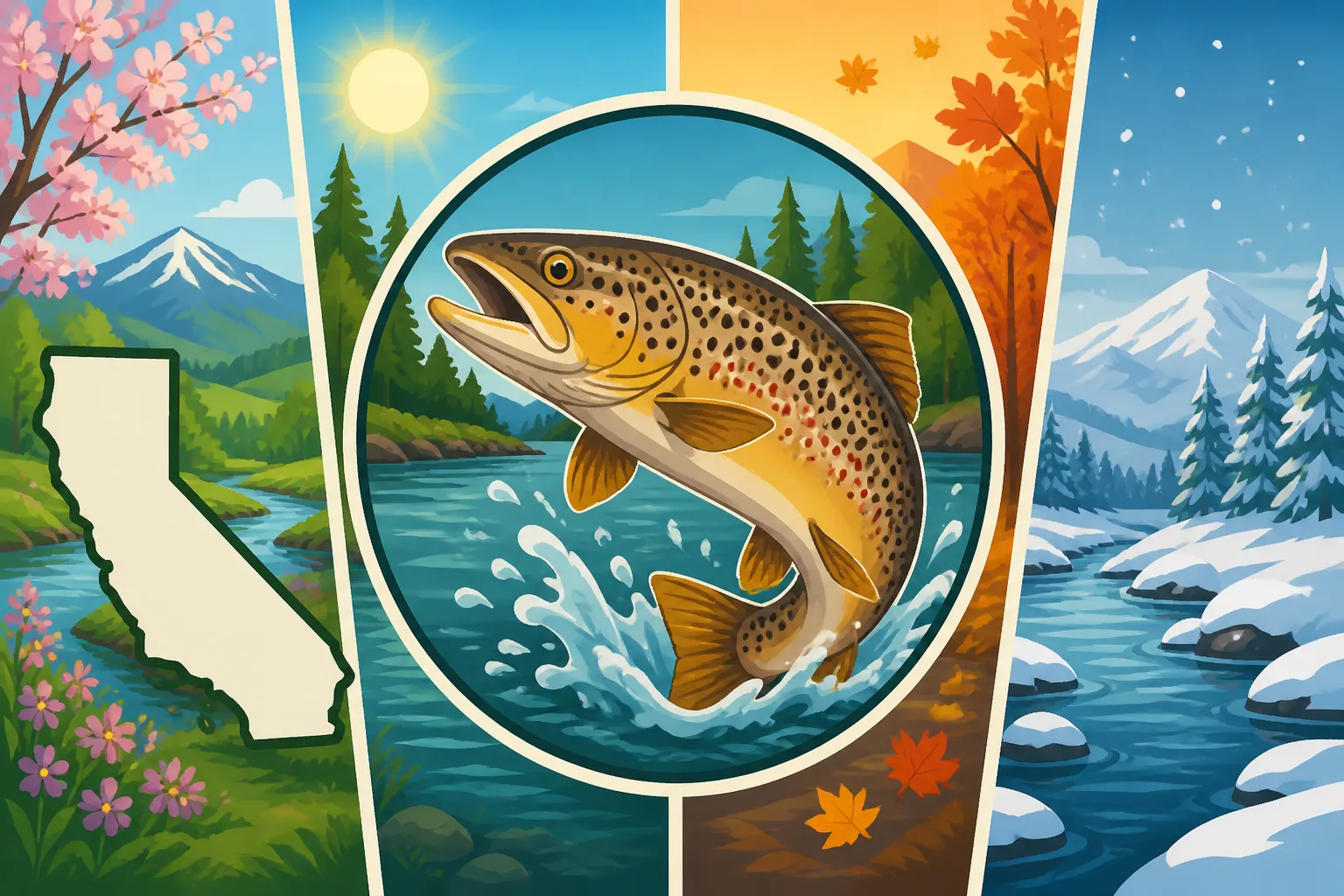
Here’s a quick summary table to help you plan your brown trout adventure in California:
| Season | Best Months | General Behavior | Key Tactics | Prime Locations (Examples) |
|---|---|---|---|---|
| Spring | March – June | Post-spawn recovery, actively feeding in warming water | Small spinners, spoons, nymphs, dry flies | Eastern Sierra rivers, Northern CA rivers |
| Summer | July – August | Seek cool depths, active early/late, high-country lakes | Deep-diving lures, jigging, terrestrial dry flies | High-elevation Eastern Sierra lakes |
| Fall | September – November | Pre-spawn aggression, heavy feeding, territorial | Large streamers, swimbaits, spoons, large dries | Eastern Sierra rivers & lakes, NorCal rivers |
| Winter | December – February | Lethargic, holding in deep pools and slow currents | Slow retrieves with bait, small jigs, nymphs | Lower elevation rivers, deeper lake sections |
Remember, this table provides a general overview. Always check local California Trout Limits and Regulations before heading out, as specific water bodies can have unique rules. The best fishing experiences often involve a little research and adapting to the conditions on the ground. You might even find a great selection of local fishing guides and maps on Amazon to help you pinpoint those secret spots!
Disclaimer
Fishing conditions and regulations in California can change frequently. Always consult the latest California Department of Fish and Wildlife (CDFW) regulations booklet or website before planning your trip to ensure compliance with current laws, seasons, and limits. This guide is for informational purposes only and should not be considered a substitute for official regulations.