How to Drift for Halibut in the Bay
There's nothing quite like the thrill of chasing California halibut, but sometimes, these elusive flatfish can make you feel like you're fishing in a bathtub – no bites, no action, just endless waiting. If you've been struggling to connect with halibut in our beautiful bays, especially when they seem scattered or finicky, you're not alone. This comprehensive guide is going to walk you through the ins and outs of drift fishing, a technique that dramatically increases your chances of finding and catching these prized bottom dwellers in the varied conditions of California's inshore waters.
Why Drift Fishing is King for Bay Halibut in California
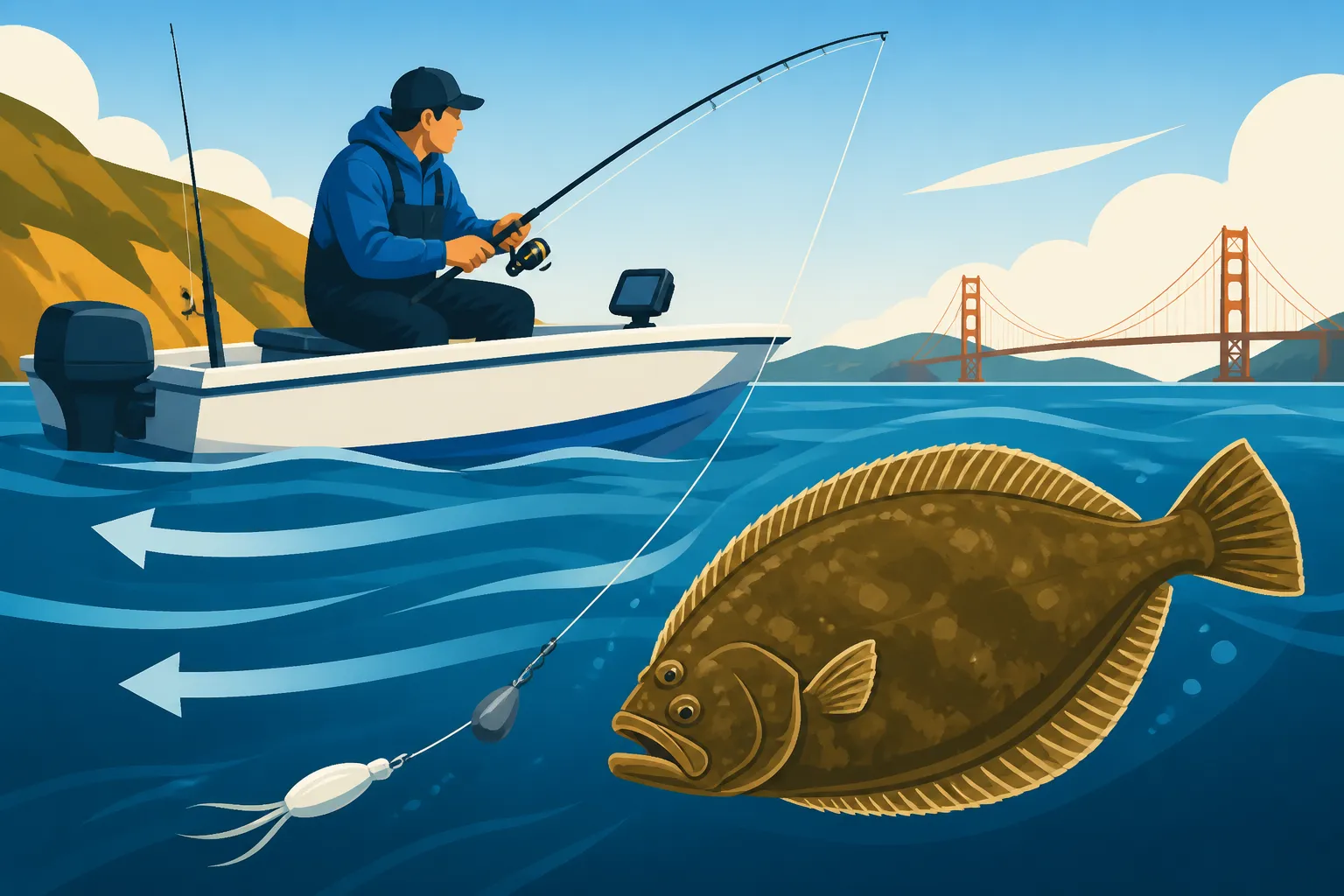
When you think about halibut, you're picturing a master of disguise, blending seamlessly into the sandy or muddy bottom, just waiting for an unsuspecting meal to swim by. This ambush predator behavior is precisely why drift fishing is so incredibly effective in places like San Francisco Bay, San Diego Bay, or the vast waters of Humboldt Bay. Instead of anchoring down and hoping a halibut swims to you, drift fishing allows you to take your bait directly to them, covering a much larger area and increasing your odds significantly.
The Ambush Predator Strategy
Halibut are essentially underwater stealth bombers. They lie perfectly camouflaged, often partially buried in the sand or mud, with their eyes on top of their heads scanning for prey. Their diet primarily consists of baitfish like anchovies, sardines, and smelt, as well as squid and sometimes even smaller crabs. They’re not actively swimming around chasing food all day; they prefer to let the food come to them. This passive hunting style means that for an angler, simply dropping a bait in one spot isn't always the most productive strategy, especially if you're not directly on top of a fish.
Imagine you're fishing in a vast, open bay. How do you find a fish that's essentially invisible against the bottom? By presenting your bait across as much prime habitat as possible. Drift fishing allows your bait to mimic a natural, injured, or disoriented prey item moving with the current, making it an irresistible target for a halibut waiting in ambush. It’s about putting your lure or bait right in their strike zone, appealing to their inherent hunting instincts without having to guess exactly where they're hiding.
Covering More Water Effectively
One of the biggest frustrations in fishing can be spending hours in a spot you thought was hot, only to realize the fish had moved, or weren't there in the first place. Drift fishing eliminates much of this guesswork. By letting your boat drift with the prevailing current or wind, you're essentially trolling your bait over a wide swath of potential halibut territory. This is particularly crucial in expansive bay systems where halibut can be widely dispersed or concentrated in subtle pockets that are hard to pinpoint from a stationary boat.
Think of it this way: instead of a single dart thrown at a dartboard, drift fishing is like scattering a handful of darts across the entire board. Your chances of hitting a target increase exponentially. As your boat drifts, your bait explores different depths, varying bottom compositions, and areas with differing current flows. You might discover a subtle channel edge, a patch of gravel, or a slight drop-off that's holding fish, areas you'd likely miss if you were simply anchored. This method is incredibly adaptable; if one drift isn't producing, you can easily reposition and try a slightly different angle or area, constantly seeking out those hungry halibut. It's a dynamic approach that rewards attentiveness and adaptability on the water.
Assembling Your Ideal Halibut Drift Fishing Setup
Before you even think about hitting the water, getting your gear dialed in is paramount. Halibut might be ambush predators, but they can be surprisingly powerful fighters, especially when you hook into a larger one. Having the right rod, reel, line, and terminal tackle means the difference between a successful landing and a heartbreaking break-off.
Rods, Reels, and Line Choices
When it comes to rods for bay halibut, you'll want something sensitive enough to feel the often subtle "thump" of a halibut bite, but with enough backbone to set the hook firmly and muscle a strong fish away from structure. A medium-heavy conventional rod, typically in the 7 to 8-foot range, with a fast action tip, is a fantastic choice. Brands like Okuma, Penn, and Shimano offer excellent options that strike this balance. The fast action tip allows you to feel those light bites, while the robust mid-section provides the necessary power.
For reels, a conventional star-drag or lever-drag reel in the 15-30 size class is ideal. Think about models like the Penn Fathom or Shimano Tranx. These reels offer smooth drags, reliable cranking power, and good line capacity. You're not usually making long casts when drift fishing, so casting distance isn't the primary concern; instead, focus on retrieve power and a smooth, consistent drag system. Line choice is critical: I personally lean towards 30-50 pound braided line as my main line. Braid has almost no stretch, which significantly enhances sensitivity, allowing you to detect those subtle bites even when drifting a long way from the boat. Plus, its thinner diameter means less water resistance, helping your bait get down quicker and stay down. Always use a top-quality braid from reputable brands; cheap braid can lead to frustrating wind knots and breakage.
The Art of Terminal Tackle and Bait
Your terminal tackle is where the magic happens, connecting your mainline to your bait and ultimately, the fish. For halibut, a sliding sinker rig is a classic and highly effective choice. Here's a typical setup:
- Leader: Connect about 3-6 feet of 20-30 pound fluorocarbon leader to your braided mainline using a strong knot like a FG knot or a double uni knot. Fluorocarbon is nearly invisible underwater and is more abrasion-resistant than mono, which is great when fishing over rougher bottoms.
- Sliding Sinker: Thread an egg sinker (1-4 ounces, depending on current and depth) directly onto your mainline above the swivel. The sliding sinker allows the halibut to pick up the bait and run without feeling the weight of the sinker, giving you a better hook set.
- Swivel: Tie a strong barrel swivel or a high-quality ball-bearing swivel to the end of your leader. This prevents line twist, especially when using live bait.
- Hooks: For live bait, use a single, sharp 3/0 to 6/0 octopus-style hook. Circle hooks are also excellent for halibut, as they tend to hook the fish in the corner of the mouth, reducing gut-hooking. If using cut bait or artificials, a treble hook (if permitted by regulations) or a larger J-hook can also work. Ensure your hooks are razor-sharp. You can even find pre-made halibut rigs online, sometimes on sites like Amazon, that include swivels, leaders, and hooks for convenience.
Now, for the bait itself. Live bait is often king for halibut. Live anchovies, sardines, smelt, or mackerel are deadly. The key is to keep them lively! If you're using live bait, a good bait tank is an absolute must. For cut bait, strips of mackerel, squid, or sardine can be effective, particularly when tipped onto a jig or used with a scent attractant. When considering artificials, swimbaits like the Berkley Gulp! series or traditional lead-head jigs tipped with a grub tail can also produce, especially when jigged gently along the bottom during the drift. Check out what works for local anglers in your specific bay, as preferences can vary.
Essential Electronics and Accessories
Modern fishing isn't just about rod and reel; technology plays a huge role, especially in drift fishing. A reliable fish finder/chartplotter is practically a necessity. Units from brands like Lowrance, Garmin, or Humminbird with CHIRP sonar technology will give you a clear picture of the bottom contour, identify bait schools, and sometimes even mark individual halibut lying flat on the seabed. Knowing the depth and seeing the structure you're drifting over is incredibly valuable information.
Beyond your fish finder, a good GPS is essential for marking productive drifts and avoiding marine protected areas. Before you head out, make sure you know your California Marine Protected Areas Explained to avoid costly violations. A VHF radio is also a critical safety item for communication on the water, especially if you're venturing further out in larger bays. Don't forget a sturdy landing net with a long handle – halibut have nasty teeth and can thrash around quite a bit at the boat. A quality pair of pliers for hook removal and a measuring device to ensure your catch meets the California Halibut Size and Bag Limits are also non-negotiables.
Mastering the Drift: Techniques for Success in California Bays
Drift fishing isn't just about letting your boat wander; it's a strategic dance with the elements. Understanding the bay's natural rhythms – especially the tides and currents – and knowing how to control your boat's movement are what truly separate a successful halibut angler from someone just hoping for a lucky bite.
Reading the Bay: Tides, Currents, and Structure
The secret sauce to consistent halibut success often lies in understanding how tides and currents influence their behavior and location. Halibut love areas where baitfish are concentrated, and baitfish are often concentrated by currents. Strong incoming or outgoing tides create current rips, eddies, and upwellings that push bait into specific areas, such as channel edges, points, or underwater humps. These are prime feeding grounds for halibut. Generally, a moderate moving tide, either incoming or outgoing, is more productive than a slack tide. Too strong a current, however, can make it difficult to keep your bait on the bottom without using excessive weight, which can spook fish.
Before you even launch, consult a tide chart for your specific bay. Look for periods of decent current flow. On the water, use your fish finder to identify structure: channels, humps, rocky patches, and especially areas where sandy or muddy bottoms transition to rock or kelp. Halibut often lie in wait near these transitions, ready to ambush prey moving from one habitat to another. Pay attention to any baitfish schools you mark on your sonar – where there’s bait, there’s likely a predator. Knowing the Best Times to Fish in California often comes down to understanding these local nuances.
Executing the Perfect Drift
Once you've identified a promising area, it's time to set up your drift. This isn't always as simple as just killing the engine. You want to position your boat upstream or upwind of your target area, allowing the current and/or wind to carry you over the most productive zones. You might need to use a trolling motor or even occasionally "bump" your main engine in and out of gear to maintain a desirable speed and trajectory. The ideal drift speed is often between 0.5 to 1.5 miles per hour – slow enough for the halibut to intercept your bait, but fast enough to cover ground.
Deploy your bait or lure as soon as you start your drift. The goal is to keep your bait as close to the bottom as possible without constantly dragging or snagging. This requires constant vigilance and adjustment. If your line is angling too far back, you might need more weight. If you're constantly snagging, you might be using too much weight or drifting too slowly. The goal is to feel the weight lightly tapping the bottom occasionally. You want your bait to appear natural, effortlessly moving with the current. Don't be afraid to experiment with different drift angles and starting points. Sometimes, a subtle change in your entry point can make all the difference. Many anglers find the Best Fishing Spots in the Bay Area by perfecting these drifts.
Here's a quick comparison of common drift fishing setups for halibut:
| Rig Type | Pros | Cons | Ideal Conditions |
|---|---|---|---|
| Sliding Sinker | Excellent bite detection, natural bait presentation | Can tangle with light leaders | Moderate current, live/cut bait, sandy/muddy bottom |
| Carolina Rig | Similar to sliding sinker, good feel | Weight can occasionally spook timid fish | Less current, live/cut bait, various bottoms |
| Drop Shot Rig | Keeps bait off bottom, great sensitivity | More complex to tie, can snag in heavy cover | Light current, structure fishing, plastic baits |
| Lead Head Jig | Active presentation, covers water fast | Requires active jigging, less natural drift | Faster current, targeting aggressive fish, artificials |
Hooking, Fighting, and Landing Your Halibut
Halibut bites can range from a subtle tap to a solid "thump" that feels like you've snagged the bottom. When you feel that distinctive bite, resist the urge to immediately yank the rod! Remember, these are ambush predators. They often grab the bait and turn it to swallow. Give the fish a few seconds to fully commit, allowing the line to come tight. Once you feel steady pressure, lower your rod tip, reel down to remove any slack, and then sweep the rod upwards firmly to set the hook. With circle hooks, a steady reel-down often sets the hook automatically.
Once hooked, halibut can make powerful runs, especially larger specimens. Keep steady pressure on the fish, pumping the rod and reeling down. They tend to fight in short, powerful bursts. As you get the fish closer to the boat, be prepared for them to make a final surge, often turning sideways and using their broad body to create immense resistance. This is where a good, smooth drag system on your reel is invaluable. Maintain constant pressure; slack line is a halibut's best friend for throwing the hook. When the fish surfaces, use that long-handled net to scoop it up headfirst. Be wary of their sharp teeth – a gaff can be useful for larger fish if you intend to keep them and are experienced with its use. For more details on the fight, check out How to Catch California Halibut.
Navigating Halibut Regulations and Maximizing Your Catch
Responsible angling is about more than just catching fish; it's about preserving the resource for future generations. Understanding and adhering to California's fishing regulations is absolutely non-negotiable, and implementing sustainable practices ensures the health of our bay fisheries.
Understanding California Halibut Regulations
California has specific rules for halibut to ensure a healthy population. These regulations can change, so it's vital to stay informed. Always consult the current year's California Sport Fishing Regulations booklet, available from the California Department of Fish and Wildlife (CDFW) website or at any fishing license agent. You can also review our guide on California Fishing Regulations Explained.
Key regulations to be aware of include:
- Minimum Size Limit: California halibut generally have a minimum size limit of 22 inches total length. This means your fish must measure at least 22 inches from the tip of the jaw to the tip of the tail. Using a reliable measuring device is crucial, easily found on Amazon or at local tackle shops.
- Bag Limit: There's also a daily bag limit, typically 5 fish per person per day. However, always double-check as these numbers can fluctuate based on scientific assessments of the stock.
- Season: While California halibut are often open year-round in most bay areas, specific closures or seasonal adjustments can occur, especially in relation to other species or spawning periods. Always verify before you go.
- Gear Restrictions: Pay attention to any specific gear restrictions, such as the number of hooks allowed or if treble hooks are prohibited in certain areas. In some waters, barbless hooks may be required, so make sure you understand California Barbless Hook Requirements.
Familiarize yourself with these rules before every trip. Ignorance of the law is not an excuse, and game wardens do patrol the bays.
Best Practices for a Sustainable Halibut Fishery
Beyond just following the rules, adopting best practices for catch-and-release and conservation contributes to the long-term health of the halibut population.
- Handle with Care: If you catch a halibut that's undersized or you plan to release, handle it gently. Minimize its time out of the water. Support its body horizontally, avoiding vertical holds by the jaw or tail that can damage its spine and internal organs.
- Quick Release: Use a de-hooking tool to quickly remove hooks. If a fish is deeply hooked, especially in the gills or stomach, it's often best to cut the line as close to the hook as possible. The hook will usually corrode away, and the fish has a better chance of survival than if you try to forcefully remove it.
- Ventilation: If a halibut shows signs of barotrauma (swollen stomach, bulging eyes from being reeled up from deep water quickly), you might consider using a venting tool. However, for most bay halibut caught in shallower water, this is less often an issue.
- Report Cards: Remember that for certain species like salmon, steelhead, and sturgeon, California requires a specific report card. While not typically needed for California halibut in the bays, understanding California Fishing Report Cards Explained is good practice for all your angling adventures.
By embracing these responsible fishing habits, you not only enjoy the thrill of the catch but also ensure that future generations of anglers can experience the excitement of drift fishing for California halibut in our beautiful bays. It's about respecting the fish and the environment that provides us with such incredible opportunities.
Disclaimer
The information provided in this guide is for general informational purposes only and is subject to change. Always consult the official California Department of Fish and Wildlife (CDFW) regulations booklet or website for the most current and accurate fishing laws, seasons, and limits before heading out on the water. Fishing conditions and regulations can vary by location and time of year. Stay safe and fish responsibly!