Smallmouth Bass in California: Where and How to Catch
Oh, the elusive smallmouth bass in California! It's a common frustration for many anglers, myself included, who've spent countless hours chasing the more prevalent largemouth, only to wonder where their bronze-backed cousins are hiding. Unlike the widespread largemouth that thrives in so many of our reservoirs and lakes, smallmouth bass are a bit pickier, preferring cooler, clearer, and rockier waters, making them a true challenge to locate and catch consistently. This guide is here to shed light on exactly where you can find these hard-fighting fish in the Golden State and the most effective techniques to entice them to bite.
Understanding California's Smallmouth Bass Population
Smallmouth bass, often referred to as "bronzebacks" for their distinctive coloration, present a unique challenge and reward for California anglers. They're not native to the state, but their introduction decades ago brought a new kind of fight to our freshwater scene. However, their specific habitat requirements mean they haven't spread with the same vigor as largemouth bass, leading to pockets of excellent fishing rather than widespread distribution.
A Brief History and Distribution
Smallmouth bass were initially introduced to California in the late 1800s, primarily from Midwestern and Eastern states. The idea was to establish another game fish for anglers, but their success was tempered by California's often warmer, muddier, and weedier waters, which are more suited to largemouth bass. You won't find smallmouth in every lake or river system across California; instead, they thrive in specific environments that mimic their native clear, rocky, and often riverine homes. This makes finding them a bit of a treasure hunt, but when you do, the reward is often spectacular, as these fish are renowned for their aggressive strikes and powerful fights.
Historically, the initial stockings helped establish populations in key rivers and lakes, particularly in Northern California where conditions were more favorable. Over time, some populations naturally expanded or were augmented by additional stockings. However, the Department of Fish and Wildlife (CDFW) manages their spread carefully, especially in areas where they might impact native species. This focus on specific, suitable habitats means that a local expert's knowledge or a detailed fishing report can be invaluable when targeting smallmouth in California.
Identifying Smallmouth vs. Largemouth
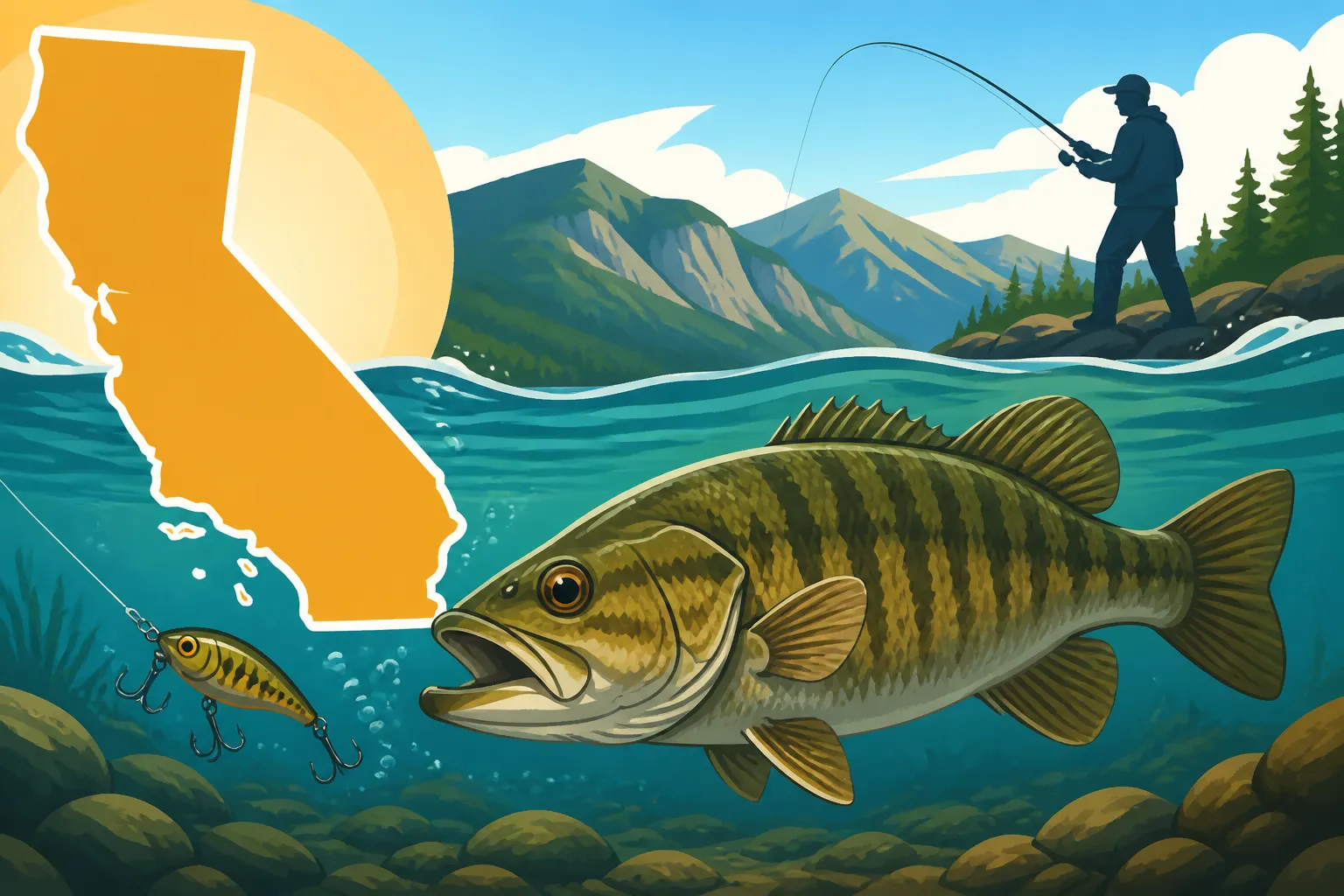
Before you even cast a line, knowing what you're looking for is half the battle. Many new anglers sometimes mistake a small largemouth for a smallmouth, but there are clear distinctions. The most obvious difference is in the jaw: a largemouth's jaw extends well past its eye, while a smallmouth's jaw typically ends directly under or slightly before the eye. Smallmouth also tend to have vertical stripes or blotches on their sides, rather than the horizontal band often seen on largemouth. Their coloration is usually more bronze or brownish, contrasting with the greener hues of a largemouth.
Another key identifier is their dorsal fin. A smallmouth bass has a more uniformly spined dorsal fin, with less of a deep notch separating the spiny front section from the softer-rayed back section compared to a largemouth. The body shape is also generally more streamlined and compact in a smallmouth, built for fighting current, while largemouth are often a bit chunkier. Once you've caught a few of each, you'll find it easy to tell them apart, even without comparing jawlines. The fight itself is also a dead giveaway; smallmouth are notorious for their aerial acrobatics and relentless tug-of-war.
Preferred Habitats in Golden State Waters
Smallmouth bass are particular about their living arrangements. They much prefer clear water with rocky bottoms, gravel, and submerged timber over the weedy, silty environments where largemouth often thrive. Think about areas with a good current, like rivers and creek mouths, or deeper, cooler sections of reservoirs with plenty of rocky structure. This preference means they are often found around bluff walls, rocky points, submerged humps, and current seams in rivers.
In lakes, they'll gravitate towards the deepest, coolest sections, especially during the summer months. Look for areas with a steep drop-off, where they can ambush baitfish. Unlike largemouth that might hold tight to lily pads or thick grass beds, smallmouth are more comfortable in open water near hard structure. During the spawn, typically in spring when water temperatures reach the mid-50s to low-60s, they will move to shallower rocky flats or gravel beds, often still associating with some form of current or deeper water access. Understanding these habitat preferences is critical for anyone hoping to land one of these California bronzebacks.
Top Smallmouth Bass Fishing Spots in California
While smallmouth bass aren't everywhere in California, there are several fantastic locations where they thrive, offering incredible opportunities for anglers. These spots tend to share the characteristics smallmouth love: clear water, rocky structure, and often a good amount of current. Knowing these specific areas is key to a successful smallmouth hunt.
Northern California Hotspots
Northern California is arguably the best region in the state for consistently targeting smallmouth bass, largely due to its abundance of clear, cooler water systems. The Shasta Lake area stands out as a premier destination. This massive reservoir, located near Redding, boasts incredible rocky shorelines, numerous points, and submerged islands that are perfect smallmouth habitat. Anglers here regularly catch smallmouth in the 2-4 pound range, with bigger trophy fish always a possibility. Focus on steep drops, main lake points, and areas where creek channels meet the main body of water, especially during the cooler months. Early spring and late fall often bring some of the best action. You might also want to check out the Lake Shasta Fishing Guide for more details on that specific location.
Another excellent northern option is the Trinity River. While renowned for its salmon and steelhead, sections of the Trinity, particularly the upper river, hold healthy populations of smallmouth bass. The river's clear, cold water and rocky bottom provide an ideal environment. Here, you'll often find them tucked behind boulders, in eddy lines, or along the current breaks. Fishing from a drift boat or kayak can be very effective for covering water and hitting these prime spots. You'll definitely want to refer to California Freshwater Fishing Regulations before heading out on any river system.
Central and Southern California Opportunities
While Northern California might get more attention for smallmouth, there are some surprisingly good spots further south if you know where to look. New Melones Lake in the Sierra Nevada foothills is a fantastic multi-species fishery that also holds a solid population of smallmouth bass. Similar to Shasta, it’s a large reservoir with diverse rocky terrain. Anglers often find success targeting points, deep banks, and submerged humps, especially in the clear water arms of the lake. It's not uncommon to catch a mix of largemouth and smallmouth here, making for an exciting day on the water.
Further south, the opportunities become a bit more scattered, but they do exist. Lake Perris in Riverside County, surprisingly enough, has a decent population of smallmouth bass, particularly around its rocky coves and structure. It's a smaller lake, which can make locating fish a bit easier once you understand their patterns. The key here, as with all smallmouth spots, is focusing on areas with rock and clean water. If you're in Southern California and want to chase bronzebacks, Lake Perris offers a convenient option. For those looking for broader opportunities, researching Best Bass Lakes in California might reveal more multi-species fisheries that also hold smallmouth.
Seasonal Considerations for Location
Just like any other fish, smallmouth bass movements are heavily influenced by the seasons and water temperature. Understanding these patterns will significantly increase your success.
- Spring (Pre-spawn & Spawn): As water temperatures begin to warm, typically from March to May, smallmouth will move shallower. During the pre-spawn, they'll congregate on rocky points and humps adjacent to deeper water, feeding aggressively. Once water temps hit the mid-50s to low-60s, they'll move onto shallower flats with gravel or small rock to spawn. This is a fantastic time for sight fishing in clear water. Consider reading up on California Bass Spawn Timing and Tactics for more detailed insights.
- Summer: When the scorching California summer hits, smallmouth bass will seek refuge in deeper, cooler waters. Look for them around main lake points, bluff walls, and submerged humps, often holding 15-30 feet deep or more. Early mornings and late evenings can also see them move shallower to feed. Vertical jigging and drop-shotting become highly effective during these warmer months.
- Fall: As water temperatures cool down in autumn, smallmouth become incredibly active, feeding heavily in preparation for winter. They'll often move back shallower, cruising rocky flats and points. This can be one of the most exciting times to fish for them, as they are aggressive and willing to chase a variety of baits.
- Winter: Smallmouth become lethargic in winter, retreating to the deepest sections of lakes and rivers. They'll school tightly around structure like deep humps, channel edges, and submerged timber. Finesse techniques, slow presentations, and finding those key deep spots are crucial for success during this time. For more general advice, checking California Fishing in Spring or other seasonal guides can help dial in your approach.
Effective Techniques and Lures for California Smallmouth
Smallmouth bass are fierce fighters and incredibly fun to catch, but they can be finicky. The key to consistent success lies in adapting your techniques to their preferences and the specific conditions of California's diverse waters. Generally, smallmouth respond well to presentations that mimic crawfish, baitfish, or even insects, and they appreciate a good, natural presentation.
Mastering Finesse Techniques
When fishing for smallmouth in clear California waters, finesse often outshines power. These fish have excellent eyesight, and a subtle, natural presentation can make all the difference, especially when the bite is tough or the water is ultra-clear.
- Drop-Shotting: This is arguably the most effective finesse technique for smallmouth, particularly when they're holding deep or are pressured. A small soft plastic bait (like a RoboWorm, Keitech, or even a simple straight-tail worm) is tied above a weight, allowing it to suspend tantalizingly in the water column. This rig keeps your bait in the strike zone longer and presents it very naturally. Cast it out, let it sink to the bottom, and just barely quiver your rod tip to make the bait dance. This method is a game-changer when fish are suspended over deep structure or unwilling to chase. You can find a vast array of drop-shot worms and weights on Amazon.
- Ned Rig: Originating in the Midwest, the Ned rig has quickly become a smallmouth staple. It's a simple, short soft plastic (often a Z-Man TRD) rigged on a mushroom-shaped jig head. The buoyancy of the plastic makes it stand straight up on the bottom, mimicking a foraging baitfish or crawfish. It's deadly when slowly dragged, hopped, or even dead-sticked on rocky bottoms. Its subtle action and compact profile are irresistible to smallmouth.
- Tube Jigs: A classic smallmouth catcher, tube jigs are incredibly versatile. Rigged on an internal jig head, tubes imitate crawfish or small baitfish. You can cast and drag them along the bottom, let them fall through the water column, or hop them over rocks. The spiraling fall of a tube is often what triggers a strike, especially on suspended fish. Choosing natural colors like green pumpkin, brown, or watermelon with flake is often the most effective.
Power Fishing Strategies
While finesse often rules, there are certainly times when a more aggressive "power fishing" approach is exactly what's needed to trigger those explosive smallmouth strikes. When fish are aggressive, actively feeding, or in lower light conditions, these techniques can cover water quickly and draw out the bigger bites.
- Crankbaits and Jerkbaits: Hard-bodied baits like crankbaits and jerkbaits are excellent for covering open water, especially along rocky points, humps, and bluff walls. Diving crankbaits that mimic crawfish (in shades of brown, red, or orange) or baitfish (silver, blueback) are fantastic for bouncing off rocks and triggering reaction strikes. Jerkbaits, retrieved with a "twitch, twitch, pause" cadence, are deadly for suspended smallmouth, particularly in cooler water or during the pre-spawn. Brands like Megabass and Lucky Craft make some incredibly effective jerkbaits that smallmouth can't resist.
- Spinnerbaits and Chatterbaits: These baits create a lot of flash and vibration, making them ideal for aggressive fish or stained water. Spinnerbaits are great for covering flats, around submerged timber, or along rocky edges. Chatterbaits (or bladed jigs) offer a unique vibration and a jig-like profile that can be incredibly effective when retrieved steadily, mimicking a fleeing baitfish. Both are excellent search baits when you're trying to locate active schools of smallmouth.
- Topwater Lures: There's nothing quite like a smallmouth blowing up on a topwater lure. Poppers, walking baits (like a Zara Spook), and prop baits can be incredibly exciting when smallmouth are feeding on the surface, usually during low light conditions in the early morning or late evening, or on overcast days. Work them over rocky flats, points, or along shallow sections of bluffs. The key is often patience and varying your retrieve until you find what they want. For more general tactics, check out California Bass Fishing Techniques.
Baits and Lures That Get Bites
Choosing the right bait can make all the difference. Smallmouth bass are opportunistic predators, but they often have clear preferences based on their local forage and the conditions.
| Lure Type | Best Conditions | Target Forage Imitated | Key Characteristics |
|---|---|---|---|
| Drop-Shot Worms | Clear water, deep fish, pressured fish | Baitfish, worms, crawfish | Subtle, natural action, suspended presentation |
| Ned Rigs | Clear water, subtle bite, rocky bottom | Crawfish, dying baitfish | Buoyant plastic stands up, small profile |
| Tube Jigs | Rocky bottoms, current, imitating crawfish | Crawfish, gobies, baitfish | Spiraling fall, good for bouncing off structure |
| Crankbaits | Aggressive fish, covering water, bouncing off rocks | Crawfish, shad, minnows | Diving depth varies, strong vibration |
| Jerkbaits | Suspended fish, clear water, cooler temps | Baitfish (shad, trout) | Erratic darting motion, long pauses |
| Spinnerbaits | Covering water, active fish, some stain in water | Baitfish | Flash and vibration, good for wind |
| Chatterbaits | Aggressive fish, covering water, unique vibration | Fleeing baitfish | Strong vibration, jig-like profile, weedless |
| Topwater Lures | Low light, calm water, aggressive surface feeding | Frogs, insects, wounded baitfish | Surface disturbance, exciting visual strikes |
When selecting soft plastics, think natural colors like green pumpkin, watermelon, browns, and smoke with flake. For hard baits, shad patterns, crawfish patterns, and chrome/blue are often excellent choices. Don't be afraid to experiment with different sizes; sometimes a subtle downsize or an aggressive upsize can be the trick. Many of these excellent baits, from finesse worms to crankbaits, are readily available on Amazon, making it easy to stock your tackle box for your next smallmouth adventure. Always ensure your hooks are sharp – smallmouth have hard mouths, and a good hookset is essential! You might find more specific lure advice in a guide like Best Lures for California Largemouth Bass, many of which also cross over to smallmouth.
Smallmouth Bass Regulations and Conservation in California
Fishing for smallmouth bass in California is not just about the thrill of the catch; it's also about being a responsible angler and understanding the rules set in place to protect these valuable fisheries. The California Department of Fish and Wildlife (CDFW) establishes regulations to ensure healthy populations for future generations, and it's our duty to adhere to them.
Current Bag and Size Limits
The bag and size limits for smallmouth bass in California are generally part of the statewide black bass regulations, which include largemouth, spotted, and smallmouth bass. Currently, the daily bag limit is typically five fish, with a minimum size limit of 12 inches total length. However, it is absolutely critical to check the most current regulations booklet from the CDFW, or visit their website, before heading out. Regulations can change, and specific water bodies might have special regulations that differ from the statewide general rules. For example, some lakes might have slot limits, where fish within a certain size range must be immediately released, or different bag limits to manage specific populations.
Ignoring these rules can lead to significant fines and penalties, not to mention harming the fish populations we all enjoy. Always make sure you understand the rules for the specific body of water you're fishing. It's not just about avoiding a ticket; it's about preserving the incredible fishing opportunities we have here in California. You can find comprehensive details in the official California Fishing Regulations Explained guide.
Catch and Release Best Practices
While keeping a few fish for a meal is certainly within the rules if you adhere to limits, many smallmouth anglers practice catch and release, especially for the larger, older fish that are crucial for a healthy breeding population. Smallmouth bass are a robust species, but proper handling is essential to ensure their survival after release.
Here are some key catch and release best practices:
- Minimize Fight Time: Land the fish as quickly as possible to reduce stress and exhaustion. A longer fight can lead to lactic acid buildup, making it harder for the fish to recover.
- Use Barbless Hooks: Consider crimping down the barbs on your hooks. Barbless hooks make removal much easier and cause less damage to the fish's mouth, increasing its chances of survival. Many hooks, especially those from reputable brands available on Amazon, can be easily de-barbed with a pair of pliers.
- Handle with Care: Always wet your hands before touching the fish. Dry hands can remove the fish's protective slime coat, leaving it vulnerable to disease. Support the fish horizontally, especially larger ones, to avoid damaging internal organs or its jaw. Avoid holding it vertically by the jaw alone.
- Quick Hook Removal: Use needle-nose pliers or a hook-remover tool to quickly and carefully extract the hook. If the fish is deeply hooked, it's often best to cut the line as close to the hook as possible rather than trying to rip it out, which can cause fatal damage.
- Revive Properly: If the fish seems stressed or lethargic, gently hold it upright in the water, facing into any current. Move it back and forth slightly to push water over its gills until it's strong enough to swim away on its own. Don't just toss it back; make sure it's ready.
By following these practices, you're not only doing your part for conservation but also ensuring that the next angler (or even yourself on a future trip) has a chance to experience the thrill of catching a feisty California smallmouth. Embracing these conservation methods helps maintain the vibrant California Fish Species: Complete Guide for generations to come.
Disclaimer
Fishing regulations, seasons, and access can change rapidly. Always consult the latest California Department of Fish and Wildlife (CDFW) regulations booklet or website before embarking on any fishing trip. This guide is for informational purposes only and does not supersede official government regulations.