How to Prevent Seasickness on a California Charter
There's nothing quite like the excitement of heading out on a California fishing charter, rods loaded and anticipation high. But for many of us, that excitement quickly turns to dread as the all-too-familiar queasy feeling of seasickness creeps in, threatening to ruin an otherwise perfect day. If you've ever wished you could just enjoy the fishing without battling nausea, you're in the right place. This guide offers practical, empathetic advice to help you understand, prevent, and manage seasickness so you can fully embrace your next offshore adventure.
Understanding the Beast: What is Seasickness, Anyway?
Before we dive into how to tackle seasickness, it helps to understand what's actually happening in your body. It's not just "all in your head," believe me. It's a very real physiological response that can make even the most seasoned angler miserable. Nobody wants to spend their hard-earned fishing trip leaning over the rail, wondering if they made a terrible mistake.
The Dizzying Science Behind Motion Sickness
At its core, seasickness, or motion sickness in general, is a conflict of signals. Your brain is constantly trying to make sense of your body's position and movement in space. It gets information from several sources: your eyes (what you see), your inner ear (which senses motion, balance, and gravity), and your muscles and joints (which sense body position). When you're on a boat, these signals can get wildly out of sync. Your eyes might be fixed on the stable deck of the boat, telling your brain you're not moving much. But your inner ear, that amazing vestibular system, is shouting a different story: "We're rocking! We're rolling! Up, down, side to side!" This contradiction—your eyes saying one thing, your inner ear saying another—confuses your brain, and its default response, for some reason, is to trigger nausea, cold sweats, dizziness, and that truly awful feeling of impending doom.
It’s like your brain thinks you’ve ingested a neurotoxin because your senses are lying to it, and its protective mechanism is to make you purge whatever it thinks is making you sick. Which, of course, is nothing, making the whole experience even more frustrating. This isn't a sign of weakness; it's just your body's primitive alarm system going a bit haywire in an unfamiliar environment.
Common Triggers: More Than Just Rough Seas
While choppy water is certainly the most common culprit, it’s not the only thing that can set off a bout of seasickness. Believe it or not, sometimes the most benign factors can exacerbate the problem. Think about a relatively calm day where you might still feel a bit off.
For instance, reading a book or staring intently at your phone can make things worse because your eyes are focused on a stable, internal reference point, further conflicting with the motion your inner ear is detecting. The smell of diesel fumes, bait, or even someone else's breakfast can trigger a wave of nausea, especially when you're already feeling a little queasy. Being cooped up inside the cabin, away from the fresh air and a view of the horizon, can also heighten the sensory conflict. Even something as simple as a lack of sleep or feeling anxious about the trip can prime your body to be more susceptible. Knowing these common triggers can help you strategically avoid them, giving you a better fighting chance against the green monster.
Arm Yourself Before You Go: Pre-Trip Preparations
The best defense against seasickness is a good offense, and that means starting your prevention efforts long before you even step foot on the gangplank. Trust me, waiting until you feel sick on the water is often too late to truly recover and enjoy your day.
Your Medication Arsenal: OTC and Prescription Options
For many, medication is the most effective first line of defense. There are several options, and what works best for one person might not work for another, so a bit of experimentation (before your actual trip!) can be helpful.
Over-the-counter (OTC) options like Dramamine (dimenhydrinate) and Bonine or Less Drowsy Dramamine (meclizine) are popular choices. Dramamine typically works well but can cause significant drowsiness, which might not be ideal if you want to be alert for fishing action. Meclizine, on the other hand, is usually less sedating, making it a favorite for many anglers. The key with these oral medications is to take them before you feel sick. Most need at least 30-60 minutes to start working, so popping one as you're pulling out of the harbor is often too late. For a truly deep sea fishing trip, especially if you're heading out to target species like Bluefin Tuna or are embarking on a How to Prepare for a Long-Range Tuna Trip, you might consider talking to your doctor about prescription options. The Scopolamine patch (Transderm Scop) is a common prescription. It's a small patch you place behind your ear, and it releases medication steadily for up to three days. Many find this highly effective, though it can have side effects like dry mouth or blurred vision for some.
Important Note: Always read the labels and consult with a doctor or pharmacist, especially if you have other medical conditions or are taking other medications. Don't mix and match without professional advice.
Strategic Eating and Drinking: Fueling Your Body Right
What you put into your body before a charter can significantly impact your susceptibility to seasickness. Think light, bland, and non-acidic. Avoid heavy, greasy, or spicy foods the night before and the morning of your trip. That breakfast burrito might sound amazing, but it could sit like a brick in your stomach when the boat starts rocking.
Instead, opt for simple carbohydrates like toast, crackers, or a banana. Hydration is also crucial. Drink plenty of water in the days leading up to your trip, but avoid excessive alcohol the night before, as dehydration and a hangover will only make you more vulnerable. Skip the coffee and highly acidic juices right before you go; plain water is your best friend. A good strategy is to have a light, easily digestible meal a couple of hours before departure, giving your stomach time to process it without being completely empty, which can also trigger nausea.
The Power of Rest: Don't Skimp on Sleep
This might sound obvious, but it's often overlooked. Being well-rested can make a huge difference in how your body handles motion. When you're fatigued, your body is generally more stressed and less able to adapt to new or challenging sensory inputs.
Imagine trying to balance on a wobbly surface when you're already feeling groggy versus when you're wide awake and alert. Your brain is better equipped to process conflicting signals from your inner ear and eyes when it's not fighting off sleep deprivation. So, for your big day out on a California Deep Sea Fishing Charter Guide, try to get a full seven to eight hours of quality sleep the night before. This simple step can significantly bolster your resilience against seasickness, allowing you to focus on the fishing and the beautiful California coastline instead of feeling miserable.
Choosing Your Vessel Wisely: Location, Location, Location
Not all boats are created equal when it comes to stability. Size often matters. Larger vessels tend to be more stable than smaller ones, as they displace more water and are less affected by chop. If you're particularly prone to seasickness, looking for a larger party boat might be a good idea, as opposed to a smaller, faster center console that can really bounce around.
When booking your trip, especially if you're using a platform like FishingBooker, you can often see the type and size of the boat. Don't hesitate to ask the charter captain about the vessel's stability, especially if conditions are expected to be rough. Additionally, where you position yourself on the boat can make a big difference. The middle of the boat, closer to the waterline, is usually the most stable spot, as it experiences the least amount of pitching and rolling. Avoid the bow (front) where the motion is most exaggerated. When considering How to Choose Between Party Boat and Private Charter, factor in the size and type of vessel. A great way to research boats and captains is through a platform like FishingBooker, which provides detailed listings and reviews. Booking through a reputable service like FishingBooker also often allows you to ask these kinds of crucial questions before committing.
Riding the Waves: Strategies While Onboard
Even with the best pre-trip preparations, the ocean can still surprise you. Having a few tricks up your sleeve for when you're actually out on the water can be a game-changer. These are the immediate actions you can take to alleviate symptoms if they start to creep in.
Finding Your Horizon: A Visual Anchor
This is perhaps one of the most classic and consistently recommended tips, and for good reason: it directly addresses that sensory conflict we talked about earlier. When your inner ear is screaming "MOTION!" but your eyes are fixated on something unstable inside the boat (like your tackle box or a fish finder screen), your brain gets confused.
The solution? Give your eyes something stable to look at. Find a point on the distant horizon and focus on it. The horizon, even when the boat is pitching and rolling, appears relatively stable. This helps to re-synchronize your visual input with your vestibular input, telling your brain, "Okay, the world is actually moving, and my body is moving with it." This simple trick can work wonders. Avoid looking down at your hands or into the cabin. Keep your gaze up and outward, aligning your visual cues with the real motion. This is especially helpful during a California Offshore Fishing Techniques trip where you're often far from land.
Fresh Air and Distraction: Simple Yet Effective Tactics
Nothing makes seasickness worse than being in a stuffy, confined space. Get out on deck, even if it's chilly, and breathe in that fresh ocean air. The cool breeze on your face can be incredibly soothing and can help reduce the feeling of being overheated or clammy, which often accompanies nausea.
Being out in the fresh air also naturally encourages you to look at the horizon. Beyond that, finding a way to distract yourself can also be surprisingly effective. Engage in conversation, listen to music (if it doesn't make you feel more disoriented), or focus on a simple task like rigging a bait, provided it doesn't require staring down intensely. Sometimes, just shifting your mental focus away from how terrible you feel can actually make you feel a little less terrible. Just make sure the distraction doesn't involve looking down or inside.
Hydration and Light Snacks: Keeping Nausea at Bay
Even if you don't feel like eating or drinking, it's vital to stay hydrated and keep a little something in your stomach. Dehydration can worsen seasickness symptoms, and an empty stomach can make nausea feel more intense.
Sip on plain water or clear sodas like ginger ale (real ginger, if possible!) slowly throughout the trip. Avoid sugary drinks or anything acidic. For food, stick to bland, easily digestible snacks. Saltine crackers, plain bread, or dry toast are excellent choices. A common mistake is to avoid eating anything at all, thinking it will prevent vomiting. In reality, having a little something in your stomach can actually help settle it. If you're on a full-day or multi-day trip, remember to pack accordingly; check out What to Bring on a California Fishing Charter for a complete list of essentials.
Natural and Alternative Remedies: Beyond the Pills
For those who prefer not to take medication, or as a supplement to other methods, several natural and alternative remedies show promise.
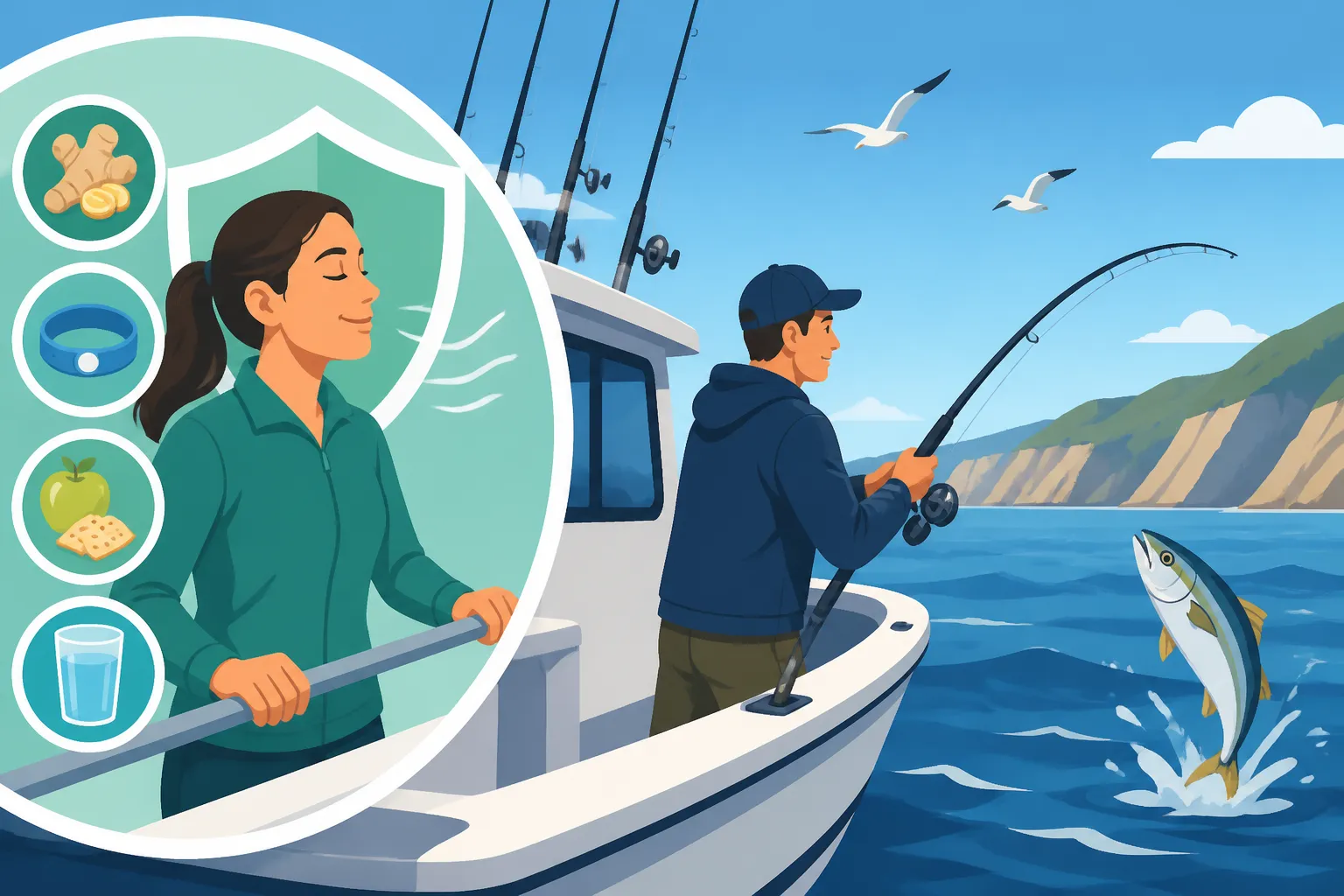
Ginger, in various forms, is a well-known natural anti-nausea remedy. You can try ginger candies, ginger chews, ginger ale made with real ginger, or even ginger capsules taken before your trip. Acupressure wristbands, like Sea-Bands, are another popular option. These bands apply pressure to a specific point on your wrist (the P6 or Nei-Kuan point) believed to help relieve nausea. While scientific evidence for these varies, many people swear by them. They’re non-invasive, have no side effects, and are worth a try, especially for lighter cases of seasickness.
Here’s a quick comparison of some popular options:
| Remedy Type | Examples | How It Works | Pros | Cons |
|---|---|---|---|---|
| Oral Medication | Dramamine (Dimenhydrinate) | Antihistamine, blocks signals to the vomiting center | Effective, widely available | Can cause drowsiness, needs pre-trip timing |
| Oral Medication | Bonine / Less Drowsy Dramamine (Meclizine) | Antihistamine, less sedating | Less drowsiness, effective | Needs pre-trip timing, still a medication |
| Transdermal Patch | Scopolamine (Transderm Scop) | Blocks nerve signals to the brain and inner ear | Long-lasting (up to 3 days), highly effective | Prescription needed, side effects possible |
| Natural/Herbal | Ginger (chews, capsules, tea) | Anti-inflammatory, aids digestion | Natural, few side effects | Efficacy varies, might not be strong enough |
| Acupressure | Sea-Bands (wristbands) | Applies pressure to Nei-Kuan point (P6) | Non-invasive, no side effects | Efficacy varies, not always strong enough |
When to Call It Quits and Common Mistakes to Avoid
Sometimes, despite your best efforts, seasickness can become overwhelming. It’s important to know when to seek help and also what actions can inadvertently make your situation worse.
Recognizing Severe Symptoms: When It's More Than Just Queasy
While mild seasickness is unpleasant, severe cases can be debilitating and even a bit concerning. If you're experiencing continuous, violent vomiting that won't stop, severe dizziness that makes standing impossible, or persistent cold sweats and extreme paleness, it's time to inform the boat captain or deckhands.
They are experienced with these situations and can offer assistance. They might be able to find you a more stable spot on the boat, provide some additional remedies, or in extreme cases, decide to head back to port if necessary. Don't suffer in silence out of embarrassment. Your well-being is paramount, and the crew's priority is the safety and comfort of all passengers. This is especially true on longer excursions or California Fishing Charters: Complete Guide where you're many miles offshore.
Pitfalls to Sidestep: Don't Make Things Worse
There are several common mistakes people make that can actually exacerbate seasickness. One of the biggest is trying to "tough it out" by staying inside the cabin. As discussed, being enclosed denies you access to the horizon and fresh air, two of your most potent allies. Another huge no-no is consuming alcohol. A celebratory beer might sound good, but it will dehydrate you and can amplify all those nasty seasickness symptoms.
Similarly, looking down at your phone, reading, or focusing intently on small tasks inside the boat are surefire ways to trigger or worsen symptoms. Even thinking too much about being seasick can be a self-fulfilling prophecy. Try to keep your mind occupied, but with outward-focused activities. Also, avoid strong smells – whether it's bait, another passenger's greasy food, or cigarette smoke. Politely move away if you can. Being mindful of these pitfalls can significantly improve your chances of having an enjoyable and nausea-free day on the water, whether you're targeting rockfish or pursuing other exciting Best Times to Fish in California.
So, the next time you're planning a trip, perhaps using a reliable booking service like FishingBooker to find the perfect Best California Charters for Bluefin Tuna, remember these tips. A little preparation and some smart choices can truly transform your fishing experience from one of dread to pure enjoyment.
Disclaimer
The information provided in this guide is for general informational purposes only and does not constitute medical advice. Always consult with a qualified healthcare professional before taking any new medications or implementing any health strategies, especially if you have pre-existing medical conditions. Fishing in California and participating in charter trips carries inherent risks, and individual experiences with seasickness can vary.