California Rockfish Conservation Areas
One of the biggest headaches for any angler targeting rockfish off the California coast isn't usually finding the fish; it's figuring out where you're actually allowed to drop a line. The ever-changing and often complex rules surrounding Rockfish Conservation Areas (RCAs) can turn a fun day on the water into a stressful exercise in navigation and regulation interpretation. This guide is here to untangle the confusion, explaining what RCAs are, why they exist, and how you can confidently fish for rockfish without breaking the rules.
What Exactly Are Rockfish Conservation Areas (RCAs)?
You're out on the ocean, maybe on a party boat or your own vessel, sonar pinging with what looks like a perfect rockfish school, only to hear the skipper or a fellow angler say, "Can't drop here, we're in an RCA." It's a common scenario that leaves many scratching their heads. So, what are these mysterious zones?
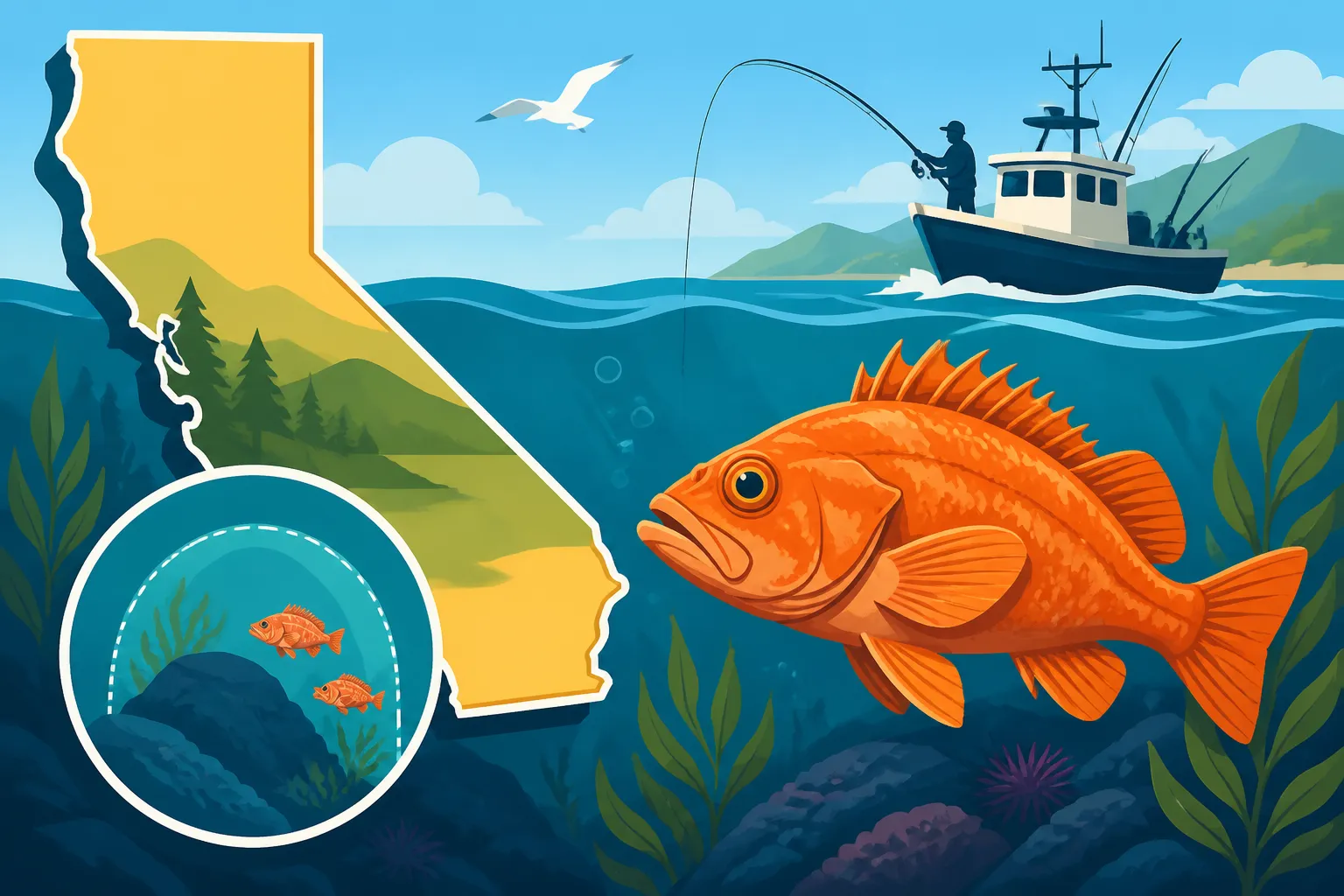
Rockfish Conservation Areas (RCAs) are specific geographic boundaries, typically defined by depth contours, where fishing for groundfish—a broad category that includes various species of rockfish, lingcod, and other bottom-dwelling fish—is either prohibited entirely or severely restricted. Think of them as underwater no-go zones or limited-access neighborhoods designed to give these slow-growing, long-lived species a much-needed break from fishing pressure. They're a critical tool in managing the health of California's marine ecosystems, especially after decades of intense fishing that significantly depleted many groundfish stocks.
Why Were RCAs Established?
The story behind RCAs is rooted in a serious conservation crisis that hit California's fisheries in the late 20th century. Many rockfish species, particularly those living in deeper waters like Bocaccio, Cowcod, and Yelloweye Rockfish, were severely overfished. These species are particularly vulnerable because they mature slowly, live for many decades (some over 100 years!), and don't reproduce until they're quite old. Traditional fishing methods, especially trawling and even targeted recreational hook-and-line fishing, put immense pressure on these populations.
To prevent collapses and allow these valuable fish populations to rebuild, federal and state agencies stepped in. The Pacific Fishery Management Council (PFMC) and NOAA Fisheries, in conjunction with the California Department of Fish and Wildlife (CDFW), implemented strict management measures. RCAs were a cornerstone of this effort. The idea was simple: by closing off certain areas, especially deeper ones where many of the most vulnerable species reside, these fish would have safe havens to grow, reproduce, and ultimately contribute to healthier overall populations. It's a long-term investment, and while it can be frustrating for anglers in the short term, it's essential for ensuring there are rockfish to catch for generations to come.
How Do RCAs Affect Anglers?
For us recreational anglers, RCAs mean we need to be incredibly mindful of where we're fishing. It's not just about what you're catching; it's about where you're trying to catch it. If you're targeting rockfish, lingcod, or other groundfish within an active RCA closure, even if you're practicing catch and release, you could be in violation. The regulations are complex and can change seasonally or even annually, so staying informed is paramount.
The primary impact is spatial restriction. You might find a promising reef, only to discover it falls within an RCA, forcing you to move on. This can be particularly frustrating when you've invested time and fuel to get to a spot. Beyond simply preventing fishing, RCAs also dictate gear restrictions or even transit rules. For example, in some deeper RCAs, you might be allowed to pass through with groundfish on board from another area, but your gear must be stowed, and no fishing is permitted. Failing to comply isn't just a minor inconvenience; it can lead to hefty fines, confiscation of gear, or even loss of your fishing license. It's truly crucial to understand these zones to avoid accidentally breaking the law.
Navigating the Different Types of RCAs
Okay, so RCAs are important. But what makes them so confusing? Part of the challenge comes from the layering of regulations. California has both federal and state-level protections, and understanding how they interact is key to staying legal.
Federal RCAs vs. State MPAs: What's the Difference?
This is where many anglers get tangled up. You might hear about Rockfish Conservation Areas, and then in the same breath, someone mentions Marine Protected Areas (MPAs). While both are conservation tools, they operate under different authorities and often have distinct rules.
Federal Rockfish Conservation Areas (RCAs) are established by the Pacific Fishery Management Council (PFMC) and NOAA Fisheries, primarily managing federal waters which extend from 3 nautical miles offshore out to 200 nautical miles. These zones specifically target groundfish species. A notable example is the Cowcod Conservation Area (CCA), a massive federal RCA off Southern California, established to protect critically depleted cowcod. Within federal RCAs, groundfish fishing is heavily restricted or prohibited, often based on specific depth contours that vary by management area (e.g., Northern, Central, Southern California). The goal is species-specific recovery.
State Marine Protected Areas (MPAs), on the other hand, are established and managed by the California Department of Fish and Wildlife (CDFW) within state waters (from shore out to 3 nautical miles). MPAs are part of a statewide network designed to protect entire ecosystems, habitats, and biodiversity, not just specific fish species. MPAs have various classifications, from "State Marine Reserves" (SMRs), which are essentially no-take zones for all marine life, to "State Marine Conservation Areas" (SMCAs), which allow some recreational fishing but often prohibit take of specific species or use of certain gear.
The tricky part? An RCA might overlap with an MPA. This means you could be in an area with both federal groundfish restrictions and state-mandated ecosystem protections, requiring you to adhere to the most restrictive rule. It's a complex puzzle, and it's why having a current understanding of both types of regulations, like those detailed in the California Fishing Regulations Explained guide, is so vital.
Understanding Depth Restrictions and Boundaries
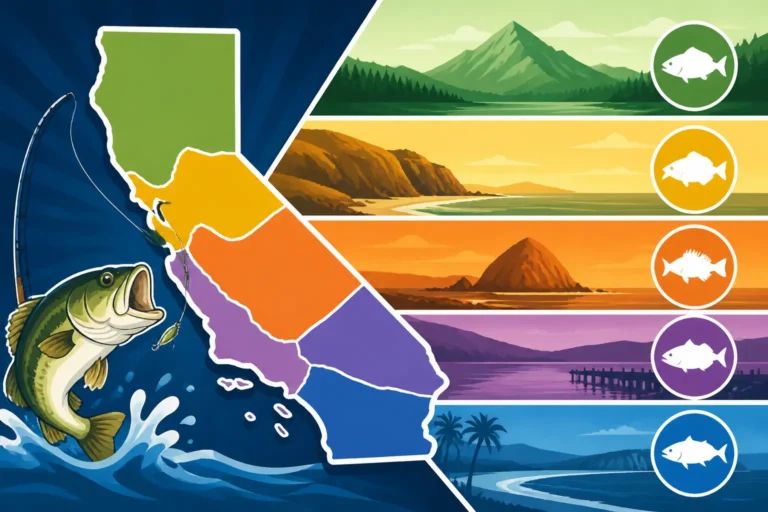
Most RCAs are defined by depth contours. For example, a regulation might state, "No groundfish fishing seaward (offshore) of the 50-fathom (300-foot) depth contour," or "No groundfish fishing shoreward (inshore) of the 20-fathom (120-foot) depth contour" in certain areas. These depth limits are dynamic and change depending on the region (Northern, Central, or Southern California management areas) and even the specific time of year.
For instance, the California Rockfish Depth Restrictions are notorious for shifting, sometimes annually, based on stock assessments and management needs. What might be open to 100 feet one season could be restricted to 60 feet the next, or vice-versa. This is why a good, up-to-date chartplotter with current depth contours and a reliable GPS unit are not just helpful, they're absolutely essential. Many anglers will highlight these depth contours on their charts or program them into their electronics to create virtual boundaries. It’s also crucial to remember that these depths are measured in fathoms (6 feet) or feet, so you need to know which measurement the regulations are using to avoid miscalculation.
Consider this scenario: You're fishing off the Central Coast, hoping for some tasty Vermilion Rockfish. You've heard the general rule is often an open season to 60 feet. But if the current federal regulation, which overrides, says no groundfish fishing seaward of the 50-fathom line (300 feet), you could be perfectly legal at 60 feet. However, if that same regulation had a special seasonal closure that prohibits groundfish fishing between the 20-fathom (120-foot) and 40-fathom (240-foot) lines during certain months, you could be unknowingly violating the law even if you're within the broader 60-foot general limit. It takes diligent cross-referencing to get it right.
Here's a simplified example of how depth restrictions might look, but always check current regulations:
| Management Area | Typical RCA Depth Limits (Example) | Common Species Affected |
|---|---|---|
| Northern CA | Shore to 60-ft, then 120-300ft closure, open beyond 300ft (varies) | Lingcod, Vermilion Rockfish |
| Central CA | Shore to 60-ft, open 60-120ft, then 120-300ft closure, open beyond 300ft (varies) | Canary Rockfish, Cabezon |
| Southern CA | Shore to 60-ft, open 60-240ft, then deeper closures for Cowcod Conservation Area (CCA) | Cowcod, Boccacio, Yellowtail |
Note: This table is for illustrative purposes only. Actual regulations are complex and change frequently. Always consult the latest CDFW and NOAA Fisheries rules.
Practical Tips for Fishing Around RCAs
Knowing what RCAs are is one thing; actually applying that knowledge on the water is another. There are definite steps you can take to minimize your risk of accidental violations and maximize your enjoyment.
Essential Tools for RCA Compliance
Having the right gear and information at your fingertips is half the battle when dealing with RCAs. It’s not just about a fishing rod and reel anymore; it’s about navigation and regulation smarts.
First and foremost, you need a reliable GPS unit and chartplotter. This is your eyes and ears on the water. Make sure your charts are updated, and take the time to program in the current RCA boundaries and depth contours. Many modern chartplotters from brands like Garmin, Lowrance, or Simrad allow you to overlay fishing regulation boundaries, making it incredibly easy to see if you’re approaching a closed zone. You can often download these boundaries from CDFW or NOAA Fisheries websites directly to your device. Don't cheap out on this—a good chartplotter is an investment in stress-free fishing.
Secondly, always carry the latest copy of the California Sport Fishing Regulations booklet. You can often pick up a physical copy from any tackle shop or download the PDF from the CDFW website. This isn't just for reading; it's your legal reference. It can be found on platforms like Amazon if you prefer a physical copy delivered to your door. Sometimes, regulations change mid-season, so also bookmark the CDFW and NOAA Fisheries websites on your phone or tablet for real-time updates. The information in the How to Read the California Fishing Regulations Booklet guide can be invaluable here.
Finally, a good depth sounder or fish finder is obviously critical for locating fish, but it also helps you monitor your depth precisely, ensuring you stay within legal fishing zones. Modern units often integrate with your chartplotter, giving you a comprehensive view of what's below and where you are geographically in relation to RCAs.
Best Practices to Avoid Violations
Beyond having the right tools, adopting a few best practices can make a huge difference in staying compliant. Nobody wants to deal with a citation or the shame of mistakenly fishing in a protected area.
-
Plan Ahead, Always: Before you even leave the dock, check the latest regulations for your specific fishing area. Pay close attention to the California Rockfish Rules in the Northern Management Area, California Rockfish Rules in the Central Management Area, or California Rockfish Rules in the Southern Management Area, depending on where you're headed. Look up the specific depth restrictions for the species you intend to target and the current season. Don't rely on what you think you remember from last year or what someone told you at the bait shop—regulations change.
-
Mark Your Boundaries: Once you know the current RCA boundaries and depth restrictions, immediately mark them on your chartplotter. Create clear waypoints or shaded zones. This visual reminder is incredibly helpful, especially when you're busy fighting a fish or distracted by conditions.
-
Communicate with Crew/Fellow Anglers: If you're fishing with others, make sure everyone on board understands the current regulations and where the RCAs are. Designate someone to keep an eye on the GPS and depth sounder, especially when drifting. It's a team effort to stay legal. If you're on a charter or party boat, the captain will handle this, but it's still good to be aware.
-
Err on the Side of Caution: If you're ever in doubt about whether you're in an RCA or if a particular depth is legal, assume it's closed and move to a clearly legal area. It’s far better to miss out on a few fish than to face fines and penalties. Fish and Game wardens patrol these areas, and they take violations seriously.
-
Know Your Target Species: Remember that RCAs specifically protect groundfish. If you're targeting other species, like surface-feeding tuna or pelagic species that don't live on the bottom, the RCA rules might not apply in the same way, but it's still crucial to confirm. However, even if you’re targeting yellowtail, if you accidentally drop a jig deep and hook a rockfish in a closed RCA, you could still be in trouble. It’s about the intent and the method in closed areas.
By staying informed, utilizing technology, and adopting a cautious approach, you can successfully navigate the complexities of California's Rockfish Conservation Areas. This ensures not only your compliance with the law but also your contribution to the long-term health and sustainability of our precious marine fisheries. Happy fishing!
Disclaimer
The information provided in this guide is for general informational purposes only and does not constitute legal advice. Fishing regulations in California are subject to change by the California Department of Fish and Wildlife (CDFW) and federal agencies like NOAA Fisheries. It is the responsibility of every angler to consult the most current official California Sport Fishing Regulations booklet and any in-season updates before engaging in fishing activities. Failure to do so may result in fines or penalties.