California Rockfish Rules in the Northern Management Area
It's incredibly frustrating trying to keep up with all the twists and turns of California's fishing regulations, especially when you're just trying to enjoy a day out on the water chasing rockfish. Between different zones, varying depth limits, and seasons that seem to shift with the wind, it can feel like you need a law degree just to cast a line. This guide is here to untangle those complexities, specifically focusing on the rockfish rules in California's Northern Management Area, so you can fish with confidence and stay on the right side of the law.
Understanding the Northern Management Area for Rockfish
Navigating California's coast for rockfish means knowing your zones. The state is carved up into several management areas, each with its own set of rules regarding seasons, depths, and bag limits. For us folks looking to drop a line for rockfish, understanding exactly where the Northern Management Area (NMA) begins and ends is the first, crucial step. It's not just a suggestion; it's the foundation upon which all other regulations in this region are built.
Geographical Boundaries Explained
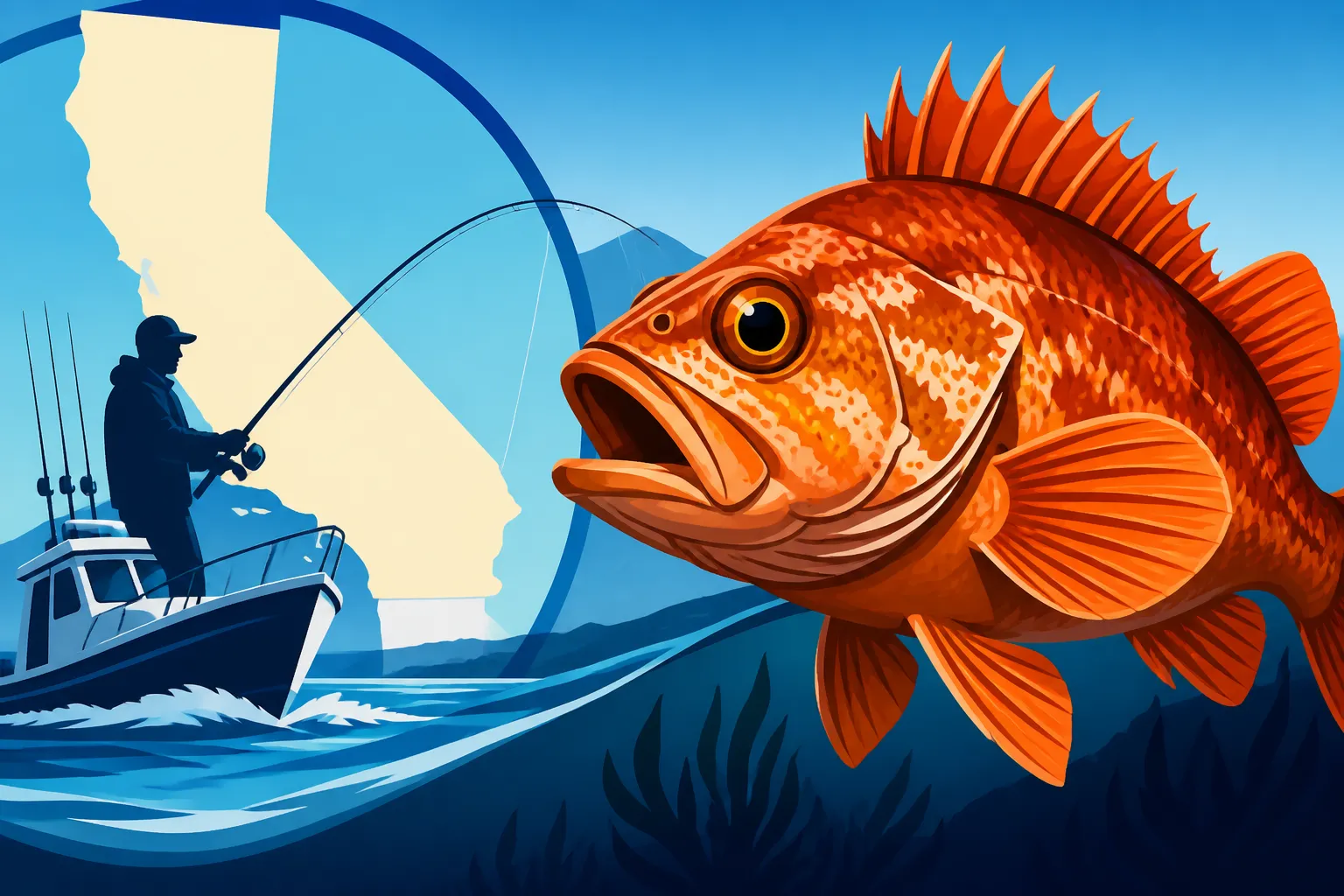
The Northern Management Area for rockfish encompasses a significant stretch of California's upper coastline, extending from the Oregon border all the way down to a specific latitude line just north of Cape Mendocino. Specifically, the southern boundary for the Northern Management Area is set at 40°10' N latitude. This line cuts across the ocean, roughly near the small community of Petrolia, south of Eureka. If you're heading out from Humboldt Bay or further north, you're squarely in the NMA. Everything north of that invisible line up to the Oregon state line falls under these specific regulations. It’s absolutely vital to know this boundary, especially if you plan on fishing near the southern edge of the NMA, as crossing into the Central Management Area (which starts south of 40°10' N) means a whole new set of rules you'll need to abide by. I’ve heard countless stories of anglers getting confused, thinking they're in one zone only to realize they've drifted into another with different regulations. Always double-check your GPS!
Key Ports and Access Points
This area is dotted with some fantastic, though sometimes rugged, coastal access points and harbors that serve as launchpads for rockfish anglers. Places like Crescent City in the far north offer direct access to these productive waters, as do the ports in Eureka, including Humboldt Bay. Smaller coastal towns and fishing communities often have boat launches or pier access, even if they aren't major commercial hubs. For instance, launching a kayak or a smaller boat from Trinidad Harbor or Shelter Cove puts you right into prime NMA rockfish territory. Anglers heading out from these locations will find themselves targeting species like Vermilion, Black, Blue, and Lingcod, among others, that thrive in the rocky reefs and kelp beds characteristic of this northern stretch. Many local tackle shops in these towns, like Englund Marine & Industrial Supply in Crescent City or Pacific Outfitters in Eureka, are excellent resources for local knowledge and up-to-date information on conditions and regulations, beyond what you might find by just scrolling on your phone.
Navigating Specific Rockfish Bag and Size Limits
Once you know you’re in the Northern Management Area, the next hurdle is figuring out what you can actually keep. This is where many anglers, myself included, can get a bit cross-eyed. The California Department of Fish and Wildlife (CDFW) meticulously defines daily bag limits and size restrictions to ensure sustainable fishing practices. These aren't just arbitrary numbers; they're carefully set to protect fish populations and ensure that future generations can enjoy the thrill of rockfishing too.
Daily Bag Limits for Various Rockfish
In the Northern Management Area, the general daily bag limit for the RCG Complex (Rockfish, Cabezon, and Greenling) is 10 fish in aggregate. This means you can catch any combination of these species, but once you hit ten, you're done for the day for those specific types. Now, within that 10-fish total, there are sometimes sub-limits for certain species. For instance, in recent seasons, the limit for Vermilion Rockfish has been two fish as part of that 10-fish aggregate. This is a critical detail that many anglers overlook, leading to potential violations. So, you could catch two Vermilion and eight other rockfish, or ten of other rockfish if you don't catch any Vermilion. It’s always a good idea to consult the most current California Fishing Regulations Explained booklet, which you can often pick up at tackle shops or view online. This document is your bible for keeping up-to-date with any changes.
Here’s a simplified breakdown of the common daily limits you might encounter in the NMA for boat-based rockfishing:
| Species Group | Daily Bag Limit (NMA) | Sub-limits (if applicable) |
|---|---|---|
| RCG Complex | 10 fish in aggregate | |
| Vermilion Rockfish | 2 fish (within RCG total) | |
| Lingcod | 2 fish | |
| Cabezon | 2 fish | |
| Greenlings | 2 fish | |
| California Scorpionfish | 5 fish | |
| Leopard Shark | 3 fish |
Note: Always verify current regulations from the official CDFW booklet or website, as these are subject to change annually.
Remember, these limits are per person, per day. If you’re fishing with a buddy, your combined total isn't simply 20 rockfish unless you each caught your own legal limit. What often happens is someone catches their two Vermilion early, and then their focus shifts to other rockfish species. It's a fun challenge to manage your catch and ensure you're compliant while still getting plenty of action.
Minimum and Maximum Size Requirements
Beyond the number of fish you can keep, there are also length requirements. This is where a good measuring tape or board becomes your best friend. For most rockfish species within the RCG complex, there generally isn't a minimum size limit, but there are exceptions for highly managed species. For example, Lingcod in the Northern Management Area typically have a minimum size limit of 22 inches, and Cabezon usually require a minimum length of 15 inches. Greenlings often have a 12-inch minimum. These size limits are in place to ensure that fish have a chance to mature and reproduce at least once before being harvested, contributing to healthier populations.
It’s not uncommon to reel in a beautiful fish only to realize it’s an inch too short. It stings, but putting it back immediately and carefully is part of being a responsible angler. Investing in a reliable measuring device, perhaps one that floats if you’re prone to dropping things (like me!), is a smart move. You can find plenty of robust, easy-to-read measuring boards on Amazon that make checking your catch quick and efficient. Trying to eyeball it or use a makeshift ruler is just asking for trouble with a game warden. Make sure you know your California Fishing Bag and Size Limits for all target species before you head out.
Seasonality and Depth Restrictions in the Northern Management Area
Fishing for rockfish isn't a year-round free-for-all, particularly in the Northern Management Area. The CDFW implements specific open and closed seasons, along with critical depth restrictions, to manage these fisheries effectively. These rules are particularly dynamic and can change based on scientific assessments of fish stocks, so staying informed is paramount. It’s not just about what you catch, but when and where you catch it.
Open and Closed Seasons for Rockfish
The seasons for rockfish in the NMA are often shorter and more strictly defined compared to other regions, reflecting the specific conservation needs of these northern populations. While the exact dates can shift year to year, typically, the recreational rockfish season in the Northern Management Area will be open for a limited number of months, often starting in spring or early summer and closing by late fall or early winter. For example, in many recent years, the NMA rockfish season might open in May and close at the end of October, with specific nuances for different sub-areas or species within that window. These seasonal closures are crucial because they protect rockfish during their spawning periods or when they are most vulnerable.
Imagine planning a trip for months, getting all your gear ready, only to find out the season closed last week. It’s a gut punch! This is why checking the California Rockfish Season Dates Explained right before your trip is non-negotiable. Don't rely on last year's calendar. Even pier fishing, which sometimes has more lenient rules, can be affected by these broad seasonal closures when it comes to rockfish. If the season is closed, it means no targeting, retaining, or even possessing rockfish from boat-based trips.
Demersal Rockfish Conservation Areas RCAs and Depth Limits
Perhaps one of the most complex aspects of rockfish regulations in the NMA, and throughout California, is the concept of the Rockfish Conservation Area (RCA) and its associated depth restrictions. The RCA is a specific area of ocean defined by depth contours or latitude/longitude lines where fishing for certain groundfish, including many rockfish species, is restricted or prohibited. These areas are established to protect deeper-dwelling rockfish populations that are more vulnerable to overfishing and barotrauma (the stress fish experience when rapidly brought up from deep water).
In the Northern Management Area, the specifics of the RCA and depth limits can vary. Often, you'll see regulations stating that recreational fishing for groundfish is prohibited seaward of a certain depth, like 50 fathoms (300 feet), or even 40 fathoms (240 feet) in certain periods. This means you cannot fish for rockfish beyond that designated depth. If you're out on a boat with a fish finder, you'll need to pay close attention to the bottom contour and your GPS. Going beyond the allowable depth, even accidentally, can lead to significant fines. It's a real challenge, especially when the bite is hot in deeper water, but it's essential for conservation. You can find detailed maps and coordinates for these areas in the official CDFW regulations, but it helps to have a good chart plotter or a reliable fishing app on your phone that shows these boundaries in real-time. Understanding California Rockfish Depth Restrictions is critical for compliance.
Permitted Fishing Methods and Gear in the NMA
Once you've wrapped your head around the where, when, and what, it's time to consider the how. California, and especially the NMA, has specific rules about the types of fishing methods and gear you can use for rockfish. These regulations aim to minimize bycatch, reduce harm to released fish, and ensure fair chase. It's not just about catching fish, but doing so responsibly.
Gear Restrictions and Allowed Tackle
When it comes to rockfish, the gear restrictions typically revolve around the number of hooks and sometimes the type of weights used. For most recreational anglers targeting rockfish from a boat, you're usually limited to two rods per person, and each rod can have no more than two hooks attached to your line. This means those multi-hook sabiki rigs are fine as long as they don't exceed the two-hook limit, which many do (often having 6-8 small hooks). So, for rockfish, you'd be looking at a much simpler setup, perhaps a standard dropper loop rig with two hooks or a leadhead jig with a trailer hook. Using a heavy-duty rod and reel is common, as you're often pulling fish up from considerable depths, which can really put a strain on your equipment. Brands like Penn, Shimano, and Daiwa offer excellent jigging and conventional setups that hold up well to the demands of rockfishing.
Another key piece of gear for deeper water rockfish fishing, especially when you plan on releasing fish, is a descending device. While not always strictly required, their use is strongly encouraged to help released fish survive. Descending devices are weighted tools that allow you to send a fish back down to the depth it was caught, reversing the effects of barotrauma. Many sportfishing boats now have them on board, or you can pick one up relatively cheaply. It’s a simple act of conservation that can make a big difference. Remember to also check the general California Freshwater Fishing Regulations and California Saltwater Fishing Regulations for overarching rules that might impact your setup.
Barbless Hook Requirements and Release Practices
For rockfish specifically, the requirement for barbless hooks often comes into play when you are fishing with bait, or if salmon are also present in the waters you are targeting. While barbless hooks are generally required when fishing for salmon, and in many freshwater trout fisheries, their specific application to rockfish can be a bit more nuanced. Generally, if you're solely targeting rockfish in the NMA, barbed hooks are typically allowed, but it's always a good idea to confirm the most current rules. However, many conscientious anglers choose to crimp down their barbs or use barbless hooks voluntarily because it makes releasing fish easier and minimizes harm, which is especially important for undersized or prohibited species.
Beyond hook types, how you handle and release fish is crucial. As mentioned earlier, rockfish are highly susceptible to barotrauma when brought up from deep water. This manifests as an inflated swim bladder, bulging eyes, and sometimes stomach eversion. If you catch a rockfish you need to release, doing so quickly and carefully is paramount. Minimizing air exposure, avoiding dropping the fish, and using a descending device are all best practices. Learning about California Catch-and-Release Rules can increase your impact as an ethical angler. Proper technique not only improves the fish's chances of survival but also reflects well on the angling community. A pair of fish-handling gloves, available on Amazon, can also help protect both you and the fish during handling.
Essential Tips for Rockfish Anglers in the NMA
Navigating the Northern Management Area's rockfish regulations can feel like a labyrinth, but with a bit of preparation and the right mindset, it becomes much more manageable. Beyond just knowing the rules, there are some practical tips that can enhance your fishing experience and keep you compliant.
Staying Updated on Regulation Changes
This might sound like a broken record, but seriously, regulations change. The CDFW revises its sport fishing regulations annually, and sometimes even makes in-season adjustments based on scientific data, emergency situations, or federal mandates. What was legal last year might not be this year, or even next month. I’ve seen seasons open later, close earlier, or depth limits shift. The absolute best way to stay informed is to check the official CDFW website before every single trip. Print out the current regulations for the Northern Management Area, or save them as a PDF on your phone. You can also pick up the latest California Fishing Regulation Booklet Explained from most tackle shops, which is a great physical reference to have onboard. Don't rely solely on what a buddy told you last season!
Furthermore, local sportfishing landings and charter operators in places like Eureka or Crescent City are usually very good at staying on top of the latest rules. If you're going out on a charter, they'll ensure you're compliant, but it never hurts to be informed yourself. Many online fishing forums and local social media groups also provide real-time updates and discussions, though always cross-reference with official sources.
Locating Productive Rockfish Habitats
Knowing the rules is one thing, but finding the fish is another! Rockfish, as their name suggests, love structure. They gravitate towards rocky reefs, pinnacles, wrecks, and kelp beds where they can find food and shelter. In the Northern Management Area, the rugged coastline means there's no shortage of such habitats. Using a good quality fish finder or sonar is invaluable for identifying these structures and the fish holding around them. Many anglers also rely on fishing charts that mark known reefs and pinnacles.
When you're out on the water, pay attention to depth changes, current breaks, and areas where baitfish might be schooling. Sometimes, a subtle change in the bottom contour can hold a ton of fish. Don't be afraid to move around if you're not getting bites. Rockfish can be localized, so a hundred yards can make all the difference. For a deeper dive, check out guides on Best Rock Fishing Spots in California or How to Catch Rockfish in Deep Water for specific tactics. Exploring different depths within the legal limits can also yield different species, adding variety to your catch.
Preparing for a Rockfish Outing
A successful rockfish trip in the NMA isn't just about baiting a hook. It requires preparation. First, make sure your California Fishing License Guide is up-to-date. If you don't have one, you'll need to secure your California Fishing License Cost and purchase it before your trip. Second, check the marine weather forecast. The Northern California coast can be notoriously fickle, with calm mornings quickly turning into rough afternoons. Safety first! Tell someone where you're going and when you expect to be back.
Third, pack appropriately. Layers of clothing are essential due to unpredictable coastal conditions. Bring plenty of water and snacks. A cooler with ice will keep your catch fresh. Don't forget sunscreen, a hat, and polarized sunglasses to help you spot structure or fish activity. If you're using a boat, ensure all your safety gear (life jackets, flares, first-aid kit) is onboard and in good working order. A sturdy pair of waterproof boots and rain gear, even on a sunny day, can save you from an unexpected dousing. And of course, your fishing gear should be in top shape – reels serviced, lines fresh, and a good selection of jigs and weights ready. A well-stocked tackle box from Amazon, pre-loaded with various weights, hooks, and artificial baits like Berkley Gulp! or swimbait tails, will ensure you're ready for whatever the ocean throws at you.
Why These Regulations Exist
It’s easy to get bogged down in the minutiae of fishing regulations and feel like they’re just there to make our lives harder. Trust me, I’ve been there, grumbling about a seemingly arbitrary size limit or a season closure. But taking a step back, it’s clear that these rules aren't designed to punish anglers. Instead, they are the backbone of sustainable fisheries management, ensuring that the incredible rockfish populations we enjoy today will be around for our kids and grandkids to experience.
Protecting Vulnerable Populations
Many rockfish species are incredibly long-lived and slow to reproduce. Some can live for decades, and they don't reach sexual maturity until they are several years old. This makes them particularly vulnerable to overfishing. If too many larger, breeding-age fish are removed from the population, it can take a very long time for the stock to recover. The daily bag limits and minimum size requirements, like the 22-inch rule for Lingcod, are specifically designed to allow fish to grow to maturity and contribute to the next generation before they become part of an angler's dinner.
Think about it: that huge Vermilion Rockfish you caught might have been spawning for years. By regulating the number and size we can keep, and by establishing California Rockfish Conservation Areas, the CDFW is trying to ensure that enough fish remain in the ocean to keep the cycle going. It's a delicate balance, trying to provide recreational opportunities while safeguarding precious natural resources.
Mitigating Barotrauma and Improving Survival
The depth restrictions and encouragement of descending devices are direct responses to the issue of barotrauma. When a fish is reeled up quickly from depths, the gases in its swim bladder expand, causing internal injuries that often prove fatal even if the fish appears to swim away. This is a significant concern for deeper-dwelling rockfish species. By limiting fishing to shallower depths during certain periods or in specific zones, and by promoting the use of descending devices, the regulations aim to reduce the incidence of barotrauma.
The idea is simple: if a fish has to be released because it's undersized, out of season, or a prohibited species, we want to give it the best possible chance of survival. This is not just good sportsmanship; it's a vital component of managing fish stocks. Every fish that successfully swims away and lives to spawn another day contributes to a healthier fishery. It’s a collective responsibility, and understanding the science behind it helps us all appreciate why these rules, however inconvenient they might sometimes seem, are in place. These rules, alongside the broader California Fishing Regulations Explained, form a comprehensive approach to marine stewardship.
Disclaimer
Please note that fishing regulations, including those for rockfish in California's Northern Management Area, are subject to change. This guide provides general information based on typical regulations but should not be considered legal advice. Always consult the latest official California Department of Fish and Wildlife (CDFW) regulations before your fishing trip to ensure compliance.