Dana Point Fishing Guide
There's nothing quite like the anticipation of a fishing trip, especially when you're headed to a spot as iconic as Dana Point, but let's be real – figuring out where to go, what to catch, and how to do it can feel like a maze. You want to make the most of your precious time on the water, not spend it scratching your head or missing out on the best bites. This guide is designed to cut through that confusion, giving you the insider scoop on how to tackle fishing in Dana Point, from its diverse waters to its most sought-after species and the techniques that actually work.
Dana Point: A Gem for Anglers
Dana Point isn't just a pretty face with its stunning cliffs and beautiful harbor; it's a true angler's paradise, offering an incredible variety of fishing experiences that can satisfy everyone from the casual pier fisher to the serious offshore enthusiast. Its unique geography, situated in Southern California's rich marine ecosystem, means that you're never too far from a potential trophy catch.
The Unique Allure of Dana Point's Waters
What makes Dana Point so special for fishing? It really comes down to its incredible biodiversity and varied marine habitats. Just outside the harbor entrance, you're immediately greeted by vast kelp forests, which are teeming nurseries and hunting grounds for countless species. These underwater kelp "jungles" act like natural magnets, drawing in baitfish, crustaceans, and, of course, the predatory fish we love to catch. Beyond the kelp, the continental shelf drops off, leading to deeper waters where pelagic species roam.
Then there's the accessibility to offshore islands. Catalina Island, a legendary fishing destination, is a relatively short boat ride away. This proximity expands the fishing opportunities exponentially, giving access to even more diverse fish populations and different types of fishing, from shallow-water rockfishing to deep-water big game pursuits. The currents and upwellings in this area also play a critical role, bringing nutrient-rich waters that fuel the entire food chain, making it a consistent hot spot for feeding fish.
Key Fishing Areas Around Dana Point Harbor
Dana Point Harbor itself offers some excellent fishing, even without venturing far. The jetties at the harbor entrance, both the east and west, are fantastic spots for shore anglers or those with small boats looking for a quick bite. Here, you can often find calico bass, corbina, and various perch species. The calm waters inside the harbor are also surprisingly productive for smaller species and even some halibut trying to sneak in.
For those looking to cast a line without a boat, the Dana Point Pier, officially known as the Dana Wharf Sportfishing & Whale Watching Pier, is a public gem. Here, you don't even need a California Fishing License Guide to fish from the pier, which is a huge bonus for casual anglers or families. You can often hook into mackerel, bonito, various types of perch, and even some small sharks or stingrays. It's a great place to introduce kids to fishing or just enjoy a relaxing afternoon with a rod in hand. For more extensive nearshore fishing, charter boats departing from Dana Point can take you to local reefs and kelp beds, which are prime hunting grounds for rockfish, lingcod, and a variety of bass.
Top Fish Species to Target in Dana Point
The sheer variety of fish available in Dana Point is truly impressive. Depending on the season and where you choose to fish, you could be reeling in anything from a feisty calico bass to a powerful bluefin tuna. Knowing what's biting when and where is half the battle, and Dana Point delivers on multiple fronts.
Inshore and Bay Species
When you're sticking closer to shore, within the harbor, along the jetties, or in the immediate kelp beds, you'll find a lively array of species that are a blast to catch. California halibut are a highly prized catch, often found ambushing baitfish along sandy bottoms, especially near structure or drop-offs. They can be found in the harbor channels or just outside, and knowing the best bait for California Halibut in California can greatly improve your chances. Calico bass, a quintessential Southern California sportfish, are abundant in the kelp and rocky areas. They're known for their aggressive strikes and strong fights, making them a favorite among light tackle anglers. You can also expect to encounter a variety of perch species, croaker, and even some small leopard sharks or bat rays, especially if you're fishing with cut bait.
The best times for these inshore species generally span the warmer months, from spring through fall, when water temperatures are conducive to their feeding activity. However, many, like perch and smaller bass, can be caught year-round. Live bait, such as anchovies or sardines, is often king for halibut and calico bass, but artificial lures like plastics and jigs can be incredibly effective, especially when fishing the kelp.
Offshore and Pelagic Opportunities
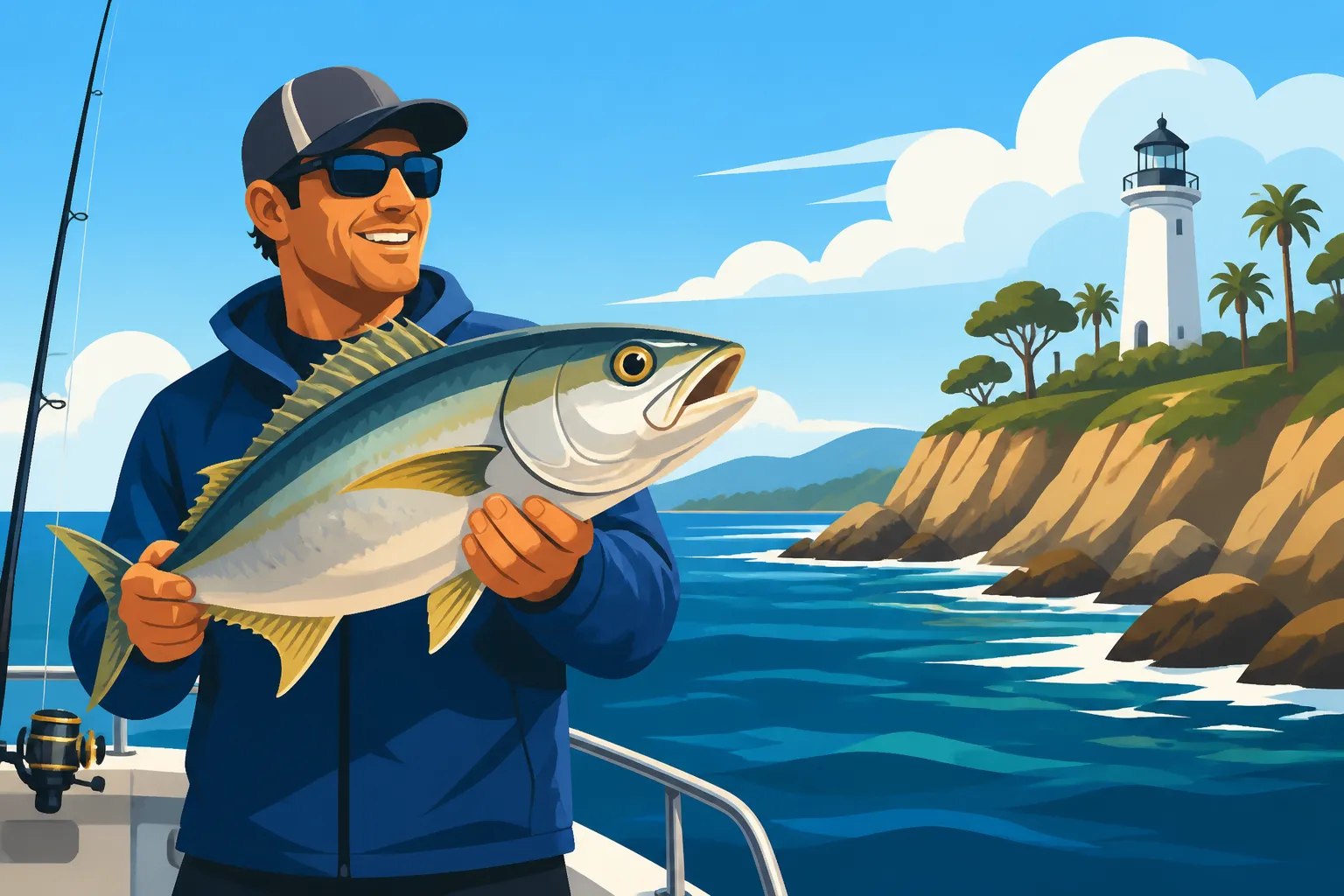
Venture further offshore, and a whole new world of angling opens up. Dana Point is a prime launching point for chasing pelagic powerhouses. Yellowtail are a major draw, especially from late spring through fall, found around kelp paddies, offshore islands like Catalina, or boiling on bait schools. These strong fighters make for exhilarating fishing and delicious table fare. You can find more details in our guide on California Yellowtail Regulations and Limits. Barracuda are another common sight, especially during summer, often found near kelp beds or just offshore, providing fast-paced action with their toothy grins.
But the real superstars for many offshore anglers are the various tuna species. Bluefin tuna, yellowfin tuna, and albacore tuna make their appearances seasonally, often requiring longer runs offshore. Bluefin, in particular, have been showing up in impressive numbers in recent years, drawing anglers from all over to target these massive, hard-fighting fish. Dorado (mahi-mahi) also migrate into Southern California waters during warmer late summer and early fall months, offering stunning colors and acrobatic fights. White seabass, while often found closer to structure, can also be considered a prized offshore target when they show up in schools. These offshore species typically require dedicated charter trips and specific techniques like trolling, jigging, or fly-lining live bait.
Best Fishing Techniques for Dana Point Waters
Understanding the specific techniques that work best for the diverse waters of Dana Point is crucial for a successful trip. It’s not just about having the right gear; it’s about how you present your bait or lure and adapt to the conditions.
Nearshore and Kelp Bed Strategies
Fishing the abundant kelp forests and rocky reefs around Dana Point requires a bit of finesse and the right approach. For calico bass, a popular technique is using plastics, like soft swimbaits or grub-tailed jigs, fished on a lead head. You want to cast these close to the kelp and work them back with a retrieve that mimics a fleeing baitfish. Another highly effective method, especially for larger calicos, is using live bait, such as anchovies or sardines, fished on a sliding sinker rig or simply nose-hooked and drifted into the kelp. The key here is quick reflexes to prevent the fish from burying itself in the kelp once hooked.
When targeting California halibut along the sandy patches near kelp or structure, drifting with live bait like anchovies or queenfish on a dropper loop rig is incredibly effective. Many anglers also use grub-style plastic lures, bounced along the bottom. For rockfish, which are prevalent in the deeper parts of the kelp and reef systems, dropper loop rigs with squid or cut bait, or vertical jigging with metal jigs, are go-to methods. You can learn more in our detailed guide on How to Catch Rockfish in California. Always be mindful of depth restrictions, especially for rockfish, as regulations like California Rockfish Depth Restrictions are frequently updated.
Offshore Tactics for Game Fish
For the pelagic species that roam Dana Point’s offshore waters, you'll need a different set of strategies. Trolling is a highly effective way to cover ground and locate schools of tuna, yellowtail, and barracuda. Boats often troll a spread of cedar plugs, feathers, or lipped lures, looking for signs of life or breaking fish. Once a school is located, or fish are marked on the sonar, the real fun begins.
When fishing for tuna or yellowtail, particularly when they're feeding on bait schools, the "bait-and-switch" technique is very popular. This involves casting live bait (like sardines or anchovies) into the water to draw the fish closer to the boat, then presenting a hooked bait or jig. Kite fishing has also become incredibly popular for targeting giant bluefin tuna, presenting a lure or bait on the surface to entice these wary giants. For species like dorado, which often hang around kelp paddies, casting live bait or small jigs near the paddy is usually the ticket. Understanding California offshore fishing techniques is key to success on these trips.
| Species | Best Season | Common Techniques | Preferred Bait/Lures |
|---|---|---|---|
| California Halibut | Spring – Fall | Drifting, Bouncing | Live anchovy, grubs, plastics |
| Calico Bass | Spring – Fall | Casting, Drift-fishing | Live bait, swimbaits, jigs |
| Rockfish | Year-round (seasonal closures apply) | Dropper loop, Vertical jigging | Squid, cut bait, metal jigs |
| Yellowtail | Late Spring – Fall | Trolling, Jigging, Fly-lining | Live sardine, iron jigs, surface iron |
| Bluefin Tuna | Summer – Fall | Trolling, Kite fishing, Jigging, Chunking | Live bait, heavy jigs, poppers |
| Barracuda | Summer | Casting, Trolling | Jigs, spoons, small lures |
| Dorado | Late Summer – Early Fall | Casting, Trolling | Live bait, trolled lures |
Planning Your Dana Point Fishing Adventure
A successful fishing trip in Dana Point, like anywhere else, starts long before you ever cast a line. Thoughtful planning, from choosing your vessel to understanding regulations, can make all the difference in turning a good day into a great one.
Choosing Between Charter Boats and Private Vessels
One of the biggest decisions you'll face is whether to fish from your own boat or book a charter. If you have your own vessel and are familiar with the local waters, you have the flexibility to go where you please, when you please. However, navigating new waters, especially offshore, requires experience and knowledge of local hot spots and hazards. Having the right gear for various species, including good sonar and GPS, is also essential.
For many, especially visitors or those looking to learn the ropes, a charter boat is an excellent option. Dana Point is home to several reputable sportfishing operations, like Dana Wharf Sportfishing & Whale Watching, which offer a range of trips. You can find options from half-day trips, perfect for families or beginners, to full-day excursions, and even multi-day long-range trips that venture further offshore for tuna. These charters provide all the necessary gear (though you can bring your own), expert guidance from seasoned captains and deckhands, and a built-in knowledge of where the fish are biting. Booking is often made easy through platforms like FishingBooker, which allows you to compare different boats, check availability, and read reviews, simplifying the process of finding the perfect trip. For more details on what to expect, check out our comprehensive guide to California Fishing Charters: Complete Guide.
Essential Gear and Licensing Requirements
Even if you're going on a charter, it's good to know the basics of what gear is suitable, and absolutely critical to understand licensing. For most inshore and nearshore fishing, a medium-heavy spinning or conventional rod paired with a reel spooled with 20-30 lb test line will cover a lot of ground. If you're targeting larger offshore species like tuna, you'll need much heavier gear, often 50-80 lb class outfits. Always check with your charter if you're bringing your own gear to ensure it's appropriate for the target species. Don't forget terminal tackle like hooks, sinkers, and swivels, and a good pair of pliers and line cutters.
Crucially, anyone 16 years or older needs a valid California Fishing License Guide to fish in California, whether you're fishing from your own boat, a charter boat, or even the shore (though not from public piers). You can purchase these licenses online through the California Department of Fish and Wildlife website, at licensed vendors like tackle shops, or sometimes even at the landing where your charter departs. Make sure to check the current California Fishing Regulations Explained, as bag limits, size limits, and season dates can change frequently. Don't forget that if you're targeting specific species like salmon, steelhead, or sturgeon, you'll also need a separate report card.
Seasonal Fishing Outlook in Dana Point
Understanding the ebb and flow of seasons in Dana Point is paramount to a successful fishing trip. The ocean's rhythm dictates which species are present, how active they are, and where they might be found.
Spring and Summer Highlights
Spring in Dana Point, typically from March to May, sees the ocean begin to warm up, signaling the arrival of many migratory species. This is often a fantastic time for California halibut, as they become more active in the bays and nearshore areas. Calico bass fishing also starts to pick up significantly in the kelp forests, with fish becoming more aggressive. As spring progresses into early summer (June to August), the waters really come alive. This is when the barracuda often show up in force, providing fast-action fishing, and yellowtail begin to appear more consistently, especially around offshore islands and kelp paddies.
The summer months are prime time for offshore sportfishing. The arrival of warmer currents often brings pelagic species like bluefin tuna, yellowfin tuna, and even dorado. Charter boats will be making longer runs offshore, looking for signs of working birds, bait schools, or kelp paddies that hold these prized game fish. This is when you'll find the most diverse range of fishing opportunities, from chasing trophy tuna to enjoying abundant nearshore action. For a detailed breakdown, check out our California Fishing Seasons: Month-by-Month Guide.
Fall and Winter Opportunities
As summer transitions into fall (September to November), the offshore bite for tuna and yellowtail can often remain red-hot, sometimes even improving as the fish feed aggressively before heading south. The water temperatures stay warm enough well into fall to keep these pelagic species around. White seabass can also become a significant target during the fall, often found near deeper structure or kelp beds. Nearshore, the calico bass and rockfish continue to provide consistent action.
Winter (December to February) brings cooler water temperatures, which means many of the highly migratory pelagic species move on. However, winter fishing in Dana Point is far from barren. This is an excellent time for targeting rockfish and lingcod on deeper reefs, as they tend to be more concentrated. Sand bass and sculpin can also be found in good numbers. While the offshore game changes, the local fishing can still be very productive, often with fewer crowds on the water. Many anglers find the cooler, calmer winter days perfect for a relaxing day of bottom fishing. Don't let the colder weather deter you; there's always something biting in Dana Point, and booking a winter trip on FishingBooker can sometimes yield great deals and less crowded boats.
Disclaimer
Fishing conditions and regulations in California can change frequently. Always consult the latest California Department of Fish and Wildlife regulations before heading out. The information provided here is for general guidance only.