Santa Barbara Fishing Guide
Trying to figure out where to cast your line in Santa Barbara can feel a bit overwhelming, especially with all the stunning coastline and diverse waters. You've heard whispers of amazing catches, but pinpointing the best spots, knowing what to target, and understanding the local nuances can be a real head-scratcher. This comprehensive guide is here to untangle all that, giving you the insider scoop on how to make your Santa Barbara fishing adventure a memorable one, whether you're a seasoned angler or just dipping your toes in the water.
Why Santa Barbara is a Premier Fishing Destination
Santa Barbara isn't just a postcard-perfect vacation spot; it's a legitimate angler's paradise, offering a remarkable diversity of fishing experiences. From the bustling energy of Stearns Wharf to the serene quiet of hidden coves and the thrilling depths of offshore waters, there’s something for everyone. The unique geography of the Santa Barbara Channel, protected by the Channel Islands, creates a microclimate that fosters an incredibly rich marine ecosystem. This means calmer waters than many other parts of the open Pacific, making for more comfortable fishing days, especially for those prone to seasickness.
The Sheltered Santa Barbara Channel
The Channel Islands act as a natural breakwater, shielding the Santa Barbara coastline from the full force of Pacific swells and winds. This protection creates a relatively calm and fertile fishing ground, perfect for a wide array of species. The cooler, nutrient-rich upwellings from the deeper ocean mix with the warmer surface waters, supporting a thriving food chain from microscopic plankton all the way up to pelagic predators like tuna and yellowtail. It’s not uncommon to see dolphins, sea lions, and even whales here, all part of this vibrant ecosystem. This unique environment makes the area particularly appealing for year-round fishing, as conditions are often more favorable than in less protected stretches of the California coast. You might even stumble upon some phenomenal fishing spots around the islands themselves, which are teeming with life.
Diverse Habitats for Varied Species
What truly sets Santa Barbara apart is the sheer variety of habitats available within a relatively short distance. Nearshore, you'll find extensive kelp forests, rocky reefs, and sandy bottoms. These areas are nurseries and hunting grounds for species like calico bass, rockfish, halibut, and various surfperch. As you move offshore, the ocean floor drops away, revealing deep canyons and seamounts that attract larger game fish. These deeper waters are where you might encounter more elusive species like white seabass, yellowtail, and even tuna during warmer months. This mosaic of environments ensures that no matter your preferred fishing style or target species, Santa Barbara likely has a spot just for you. Exploring these varied underwater landscapes requires different tactics and gear, but the reward is often a diverse cooler full of fish.
Top Fishing Spots in Santa Barbara
Santa Barbara offers a fantastic blend of easily accessible spots for casual anglers and more adventurous options for those looking to venture further out. Knowing where to go is half the battle, and each location presents its own set of opportunities and challenges.
Stearns Wharf
Stearns Wharf, the oldest working wharf in California, is more than just a tourist attraction; it’s a legitimate fishing hotbed. Here, you don't even need a California fishing license guide for pier fishing, which is a huge bonus for beginners or visitors looking for a spontaneous fishing experience. The structure itself attracts baitfish, which in turn draws in larger predators. You can expect to catch mackerel, bonito, sardines, various types of perch, and even small sharks and rays. The pier offers easy access, bait shops, and even a few restaurants if you want to grab a bite after fishing. It's an excellent spot for families or those looking for a relaxed day of fishing with a scenic view.
When fishing Stearns Wharf, think light to medium tackle. A 7-9 foot spinning rod with 8-15 lb test line is generally sufficient. For bait, cut squid, anchovies, or even mussels work well for perch and mackerel. If you're targeting bonito, try casting small Kastmasters or similar metal jigs. Pay attention to the tides; often, the incoming or outgoing tides will bring more activity. You might even get lucky and hook into a legal halibut or white seabass, though they're less common directly off the pier. Just remember to respect other anglers and keep your area clean.
Goleta Pier
Just a short drive north of Santa Barbara, Goleta Pier is another fantastic public fishing spot that, like Stearns Wharf, allows you to fish without needing to check the California fishing license requirements for visitors. This pier stretches out a good distance, providing access to deeper waters than many other piers. It's well-known for producing a wider variety of sportfish, including legal-sized halibut, white seabass, and even occasional thresher sharks. Of course, the usual suspects like mackerel, bonito, and various surfperch are also common catches. The pier is also equipped with fish cleaning stations, making it convenient to prepare your catch before heading home.
For Goleta Pier, you might want to step up your tackle slightly, especially if you're targeting bigger game. A medium-heavy rod with 20-30 lb test line is good for larger species or if you want to soak a chunk of bait for a shark. Live bait, such as anchovies or sardines, can be incredibly effective here, especially for halibut and white seabass. You can often catch your own live bait using a sabiki rig. Drifting a live bait under a bobber or using a sliding sinker rig are popular techniques. Don't be afraid to try different depths and areas along the pier, especially near the end where the water is deepest. The pier also tends to be less crowded than Stearns Wharf, offering a bit more elbow room.
Local Beaches for Surf Fishing
Santa Barbara's extensive coastline boasts numerous beaches perfect for surf fishing. Whether you prefer the sandy stretches of East Beach or the more rugged shores north and south of the city, there are ample opportunities to catch a variety of surf species. Common catches include barred surfperch, corbina, and spotfin croaker. Occasionally, you might even hook into a small halibut or leopard shark. Surf fishing is a wonderfully relaxing way to spend a morning or evening, connecting with the rhythm of the ocean. Just be sure to be aware of the California surf fishing guide and local regulations, as a license is required when fishing from the beach.
To get started with surf fishing, a 9-12 foot medium-heavy surf rod paired with a spinning reel spooled with 15-20 lb monofilament or braided line is ideal. A Carolina rig or a high-low rig with pyramid sinkers are standard setups. Best baits include sand crabs (which you can often dig up right on the beach), bloodworms, lugworms, or small pieces of cut mackerel or anchovy. Look for areas with slight depressions, troughs, or structure where fish might congregate. Fishing during an incoming tide, especially around dawn or dusk, often yields the best results. Beaches like Carpinteria State Beach or Hendry's Beach (Arroyo Burro Beach) are popular choices, but many quieter stretches can also be productive.
Nearshore Kelp Beds and Reefs
The waters just off the Santa Barbara coast are home to extensive kelp forests and rocky reefs, which are absolute magnets for fish. These vibrant underwater ecosystems provide food, shelter, and breeding grounds for a plethora of species. Here, you'll find incredible fishing for rockfish (such as vermilion, bocaccio, and olive rockfish), lingcod, sheephead, and various bass species like calico bass. These areas are typically accessed by kayak, private boat, or a local charter, which can take you directly to the hot spots. Understanding the California rockfish depth restrictions is crucial when fishing these areas, as regulations can change based on the time of year and specific zone.
Fishing these nearshore structures often involves jigs, plastics, or live bait dropped directly into or around the kelp. Heavy-duty tackle is a must, as you'll be pulling fish out of thick cover. A stout conventional rod with 30-50 lb braided line is recommended. Metal jigs, soft plastic swimbaits, and even whole dead squid can be very effective. If you're targeting calico bass, plastics worked through the kelp are a blast. For rockfish and lingcod, bouncing jigs or bait off the bottom near rocky structure is the way to go. Consider booking a guided trip, especially if you're new to this kind of fishing, as experienced captains know the best spots and techniques.
Offshore Waters and the Channel Islands
For the serious angler seeking bigger game and a true adventure, the offshore waters of the Santa Barbara Channel and the waters surrounding the Channel Islands are where it's at. This is where you chase pelagic species like yellowtail, white seabass, barracuda, and during warmer years, even bluefin and yellowfin tuna. The Channel Islands, including Santa Cruz, Santa Rosa, San Miguel, and Anacapa, are ecological hotspots with incredible fishing opportunities. However, these trips require longer runs, specialized boats, and a solid understanding of offshore fishing techniques. You'll need to be well-versed in the California saltwater fishing regulations and often, a California Ocean Enhancement Stamp as part of your fishing license.
Offshore fishing trips usually involve heavier gear: 30-80 lb conventional outfits, capable of handling powerful fish. Live bait (sardines, anchovies, mackerel) is king for these species, often fished on simple fly-line or dropper loop rigs. Trolling lures or casting heavy jigs (like those used for yo-yo jigging for yellowtail) are also effective methods. When targeting white seabass, especially during their spring and early summer run, fishing around known kelp paddies and structure near the islands can be incredibly productive. These trips often require an early start and a full day on the water, but the reward of a hard-fighting yellowtail or a trophy white seabass is unparalleled. Companies like Sea Landing or Santa Barbara Sportfishing offer various trips, from half-day excursions to longer full-day or even overnight trips to the islands. You can often find and book these trips easily through platforms like FishingBooker.
Target Fish Species in Santa Barbara Waters
The diversity of Santa Barbara's marine environment means a wide variety of fish species are on offer. Knowing what you're likely to encounter and their preferred habitats will greatly improve your chances of a successful outing.
Rockfish Species
Rockfish are a broad category of bottom-dwelling fish that are abundant throughout the kelp beds and rocky reefs of Santa Barbara. You'll typically encounter species like Vermilion Rockfish (often called "reds"), Bocaccio, Copper Rockfish, Starry Rockfish, and Olive Rockfish. These fish are delicious table fare and are generally quite willing to bite. They thrive in rocky habitats, often congregating around submerged structure or at the edges of kelp forests. Understanding the California rockfish regulations and limits is essential, as bag limits and depth restrictions can vary by species and season.
To catch rockfish, you'll want to target them near the bottom in rocky areas. A two-hook dropper loop rig with cut squid, anchovies, or mackerel is a classic setup. Metal jigs, especially those with glow-in-the-dark properties for deeper water, are also very effective. You'll usually find them anywhere from 30 to over 300 feet deep, depending on the species and time of year. For instance, Vermilion Rockfish and Copper Rockfish often hold closer to structure in shallower depths, while Bocaccio can be found in vast schools over softer bottoms at greater depths. Many charters specialize in California rockfish charter trips, making it easy for anglers to target these tasty fish.
California Halibut
California Halibut are prized flatfish, known for their delicious white meat and challenging fight. They are ambush predators that lie camouflaged on sandy or muddy bottoms, waiting for unsuspecting baitfish to swim by. While they can be found nearshore, especially around structures like piers and jetties, the most consistent fishing for larger halibut often occurs in bays, estuaries, or along sandy stretches just outside kelp beds. These fish can grow quite large, with trophy specimens exceeding 40 pounds.
Live bait is undoubtedly the most effective way to target California halibut. Live anchovies, sardines, or even small mackerel or queenfish drifted along the bottom using a sliding sinker rig are deadly. Artificial lures like soft plastic swimbaits (e.g., those from Berkley Gulp! or Big Hammer) or even leadhead jigs tipped with squid can also entice a bite, especially when slow-trolled or bounced along the bottom. Look for areas where sandy bottom meets kelp or structure, or along current breaks. Knowing the California halibut size and bag limits is crucial, as there are strict rules to protect this popular species. The spring and early summer are often considered the best times to target them.
Yellowtail
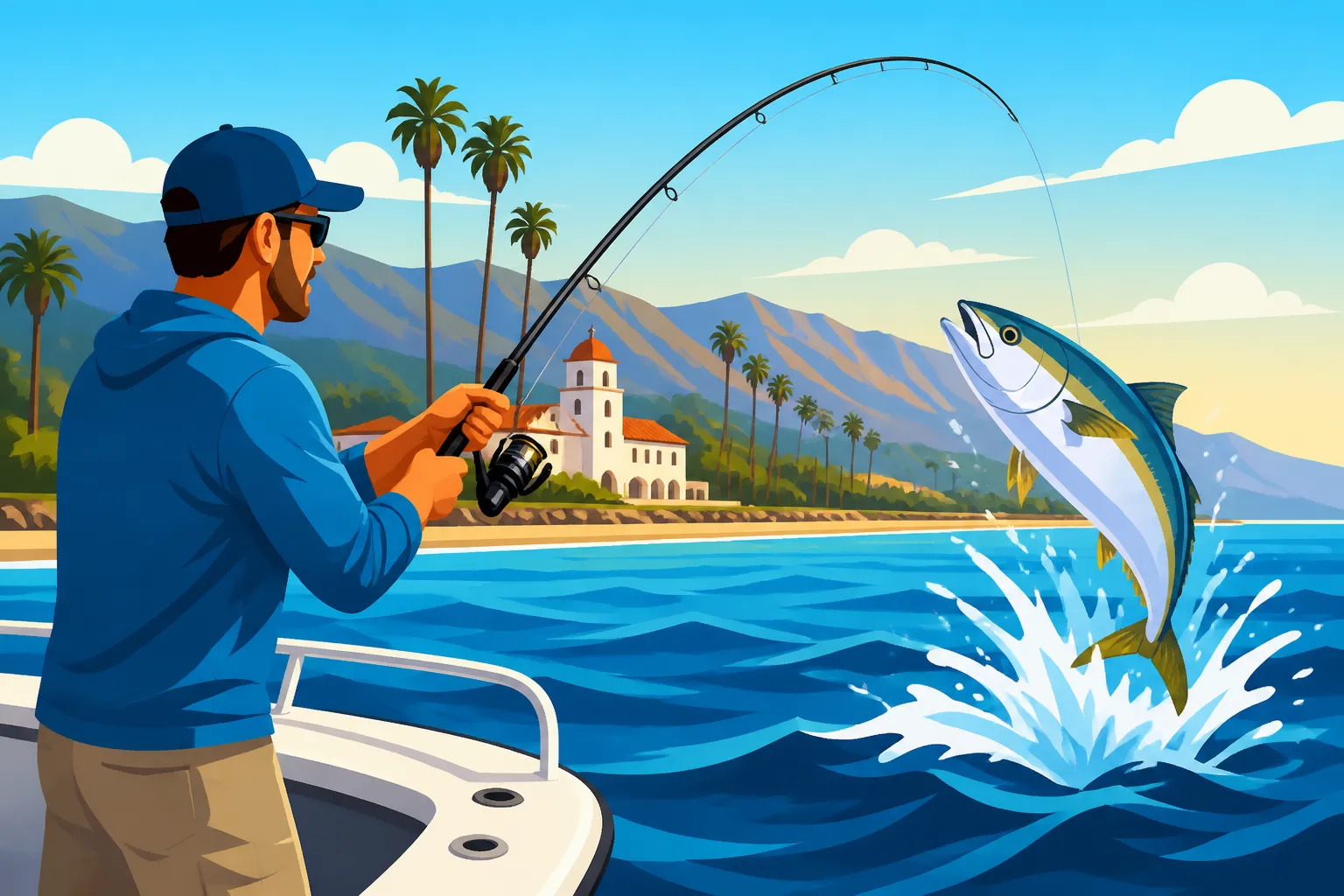
For those seeking a hard-fighting, pelagic gamefish, yellowtail are a top target in the Santa Barbara area, especially around the Channel Islands and offshore banks during warmer months. These powerful members of the jack family are known for their blistering runs and relentless battles. They are often found patrolling kelp paddies, offshore high spots, or near the islands, feeding on baitfish. They typically show up in good numbers from late spring through early fall when water temperatures are warmer.
Yellowtail fishing often involves heavier tackle, typically a conventional reel spooled with 30-50 lb test line on a stout rod. Live bait – particularly lively sardines, anchovies, or mackerel – is the most common and effective method. You can fish them on a simple fly-line rig (no weight) or with a small egg sinker if you need to get deeper. Artificials like surface irons (metal jigs cast and retrieved quickly on the surface) or yo-yo jigs (heavy metal jigs dropped to the bottom and retrieved rapidly) can also be incredibly effective, especially when the fish are actively feeding. You can learn more about these tactics in a comprehensive California yellowtail fishing guide. Check local fishing reports for current water temperatures and bait availability before heading out.
White Seabass
White seabass are often considered the ghost of the kelp forest – elusive, powerful, and highly sought after for their incredible fight and superb table quality. These large members of the croaker family can grow to impressive sizes, with fish over 50 pounds being caught in Santa Barbara waters. They inhabit kelp beds, rocky reefs, and sandy areas adjacent to structure, primarily feeding on squid, sardines, and anchovies. Their season typically runs from late spring through early summer, but they can be caught year-round.
Targeting white seabass requires patience and often, specific conditions. Squid is considered the ultimate bait for white seabass, whether live, fresh dead, or even artificial squid jigs. When the squid spawn is happening, fishing at night or during low light conditions can be particularly productive. Live finfish like anchovies or sardines can also be effective. Stealth is key, as these fish are notoriously skittish. Fishing in kelp stringers or on the edge of kelp beds, especially during tidal changes, is a common strategy. A medium-heavy conventional or spinning rod with 25-40 lb test line is appropriate. Remember to check the California White Seabass Regulations and Limits before you go, as seasons and bag limits are carefully managed.
Best Times to Fish Santa Barbara
Understanding the seasonal patterns and daily conditions is paramount to successful fishing in Santa Barbara. The ocean is a dynamic environment, and timing can make all the difference.
Seasonal Overview
Santa Barbara offers decent fishing year-round, but specific species truly shine during certain seasons.
- Spring (March – May): This is a fantastic time for California halibut as they become more active with warming waters, often congregating in shallower areas. White seabass also begin to show up, particularly towards the end of spring, especially if there's a good squid spawn. Rockfish action remains strong, especially as fishing depth restrictions may ease. The surf fishing for perch and croaker also picks up.
- Summer (June – August): Prime time for many offshore species. Yellowtail fishing heats up around the Channel Islands, and barracuda are abundant. White seabass fishing can be excellent, especially early in the season. Offshore, you might even encounter tuna like bluefin or yellowfin if the warm water pushes them close to shore. Inshore, rockfish and calico bass are plentiful in the kelp.
- Fall (September – November): Often considered one of the best fishing seasons. Water temperatures remain warm, keeping yellowtail and barracuda active. Offshore tuna opportunities can extend well into the fall. Lingcod fishing becomes more productive as they begin to spawn and move into shallower rocky areas. Rockfish continue to be a staple. The weather is often calmer, making for pleasant days on the water.
- Winter (December – February): While some species slow down, winter can still offer great opportunities. Rockfish are consistently available, though often in deeper water due to California Rockfish Conservation Areas. Lingcod are also a primary target, especially around rocky structures. Dungeness crab season typically opens in November, offering a different kind of bounty. Surf fishing for barred surfperch can also be excellent on calm days.
For a broader understanding of what to expect throughout the year, refer to the California Fishing Seasons: Month-by-Month Guide.
Tidal and Daily Considerations
Beyond the seasons, daily factors like tides, time of day, and weather patterns significantly influence fishing success.
- Tides: Tidal movement is crucial for many species, especially those inshore or near structure. Moving water, whether incoming or outgoing, often triggers feeding activity as it stirs up bait and nutrients. For halibut, the incoming tide can push baitfish into shallower feeding grounds. For pier and surf fishing, the two hours before and after a high or low tide can often be the most productive. Slack tide (the period of no movement between tides) tends to be slower, but not always.
- Time of Day: Dawn and dusk are universally recognized as prime feeding times for most fish species. The lower light conditions provide cover for predators and make them more confident in hunting. Early mornings are especially popular for offshore trips to maximize fishing time when the bite is hot. Midday can be slower, but deepwater bottom fishing for rockfish often remains consistent regardless of the sun's position. Overcast days can also extend good fishing into the middle of the day.
- Water Temperature: This is a huge factor, particularly for pelagic species. Yellowtail, tuna, and dorado follow warmer water currents. Monitoring local sea surface temperature charts can give you a significant edge in finding these fish. Local bait shops and fishing reports are excellent resources for up-to-date information on water temps.
Here's a quick reference table for common Santa Barbara targets:
| Species | Primary Habitat | Best Season | Common Bait/Lure | Notes |
|---|---|---|---|---|
| Rockfish | Kelp beds, rocky reefs, deep structure | Year-round | Squid, anchovies, jigs | Check depth limits and specific bag rules. |
| California Halibut | Sandy/muddy bottoms near structure | Spring, Early Summer | Live anchovies, swimbaits | Focus on moving tides. |
| Yellowtail | Channel Islands, kelp paddies, offshore banks | Summer, Fall | Live sardines, surface irons | Hard-fighting, fast retrieve lures. |
| White Seabass | Kelp beds, rocky reefs, sandy bottoms | Spring, Early Summer | Live squid (best), finfish | Elusive, often nocturnal. |
| Barracuda | Nearshore, offshore, kelp edges | Summer | Live anchovies, spoons, jigs | Fast-paced action, great fight. |
| Surfperch | Sandy beaches, rocky shorelines | Year-round | Sand crabs, bloodworms | Fun for all ages, easy access from shore. |
Charters and Guides for Santa Barbara Fishing
While shore and pier fishing are excellent options, to truly explore the diverse fishing grounds of Santa Barbara, especially the productive offshore areas and the Channel Islands, booking a charter or guide is highly recommended. These experienced professionals provide the vessel, gear, and invaluable local knowledge to put you on the fish.
Party Boat (Open Party) Trips
Party boats, also known as "open party" boats, are a popular and cost-effective way to get out on the water. You pay for a single spot on a larger vessel that takes a group of anglers out. These trips typically focus on specific targets like rockfish, lingcod, or inshore halibut, and sometimes barracuda or yellowtail depending on the season and bite. They are well-equipped with bait tanks, fish holds, and experienced deckhands who will help you with tackle, baiting, and landing fish. For many, these trips are the quintessential California sportfishing experience. You can find out more about what to expect on these excursions by reading our guide to California party boat fishing explained.
Party boats departing from Santa Barbara's harbor, like those from Sea Landing, offer a variety of trip lengths, from half-day (5-6 hours) to full-day (8-12 hours) trips. They are fantastic for families, beginners, or solo anglers looking to share the cost and camaraderie. The crew works hard to find the fish, and they’re often a great resource for learning new techniques. You’ll need to bring your own fishing license and usually some snacks and drinks, but they typically provide rods and reels for rent if you don't have your own. Booking in advance is always a good idea, especially during peak season. You can easily browse and book party boat trips through platforms like FishingBooker, which often show available spots and schedules from various landings.
Private Charters and Guided Trips
For a more personalized and often more productive fishing experience, a private charter or guided trip is the way to go. These trips allow you to customize your target species, fishing grounds, and schedule. A private charter means you have the entire boat and captain to yourselves (or your group), offering undivided attention and flexibility. This is ideal for serious anglers, corporate outings, or families who want a tailored adventure. Guides, particularly for fly fishing or specialized inshore techniques, often operate smaller boats or offer wade-fishing excursions.
In Santa Barbara, private charters can take you anywhere from nearshore kelp beds for calico bass and white seabass to the distant Channel Islands for yellowtail and tuna. The captains are intimately familiar with local conditions, current fish patterns, and often have specific spots they’ve found through years of experience. This local expertise is invaluable, especially when chasing elusive species. While more expensive than party boat trips, the personalized service, increased chances of success, and comfortable setting often make it worthwhile. When booking, discuss your target species and experience level with the captain to ensure they can meet your expectations. Many excellent captains are listed on services like FishingBooker, offering detailed profiles and customer reviews to help you choose the perfect fit for your Santa Barbara fishing adventure. Remember to inquire about What to Bring on a California Fishing Charter to be fully prepared.
Essential Gear and Techniques
Having the right gear and knowing the appropriate techniques can dramatically improve your fishing success in Santa Barbara. The diverse range of fishing opportunities means you'll likely need different setups for different targets.
Rods, Reels, and Line
The type of rod, reel, and line you choose largely depends on what and where you plan to fish.
- For Pier & Light Inshore: A medium-light to medium action spinning rod, 7-9 feet long, paired with a 3000-4000 series spinning reel. Spool it with 8-15 lb monofilament or braided line with a fluorocarbon leader. This setup is versatile enough for mackerel, bonito, and various perch from the piers or close to shore.
- For Surf Fishing: A medium-heavy action surf rod, 9-12 feet long, paired with a 5000-6000 series spinning reel. Spool with 15-20 lb monofilament or 30-40 lb braided line, with a 20-30 lb fluorocarbon leader. This length allows for long casts over the waves.
- For Nearshore Kelp & Reefs (Calico Bass, Rockfish): A medium-heavy to heavy conventional rod, 7-8 feet long, paired with a levelwind conventional reel (e.g., a Penn Fathom or Daiwa Lexa). Spool with 30-50 lb braided line and a 20-40 lb fluorocarbon leader. This setup provides the power to pull fish out of heavy cover.
- For Offshore (Yellowtail, White Seabass): A medium-heavy to heavy conventional rod, 7-9 feet long, paired with a star drag or lever drag conventional reel (e.g., a Shimano Torium or Avet SX/MXJ). Spool with 40-60 lb braided line, topped with a 30-60 lb fluorocarbon leader depending on the target and conditions. You'll need substantial stopping power for these hard fighters.
Baits and Lures
Your bait and lure selection should match the natural forage available in Santa Barbara waters.
- Live Bait: This is often the most effective for predatory species. Live anchovies and sardines are king for yellowtail, barracuda, and some halibut. Live squid is almost magical for white seabass. Mackerel are excellent for larger predators. You can often buy live bait from local bait barges in the harbor or on party boats.
- Cut Bait: Freshly cut pieces of squid, anchovy, or mackerel are deadly for rockfish, perch, and bottom dwellers. Squid strips are a universal bait that seems to catch almost anything.
- Soft Plastics: Swimbaits, grub tails, and creature baits are incredibly effective, especially for calico bass fished in kelp, or for halibut bounced along the bottom. Popular brands include Big Hammer, Lucky Craft, and Berkley Gulp!.
- Metal Jigs: Surface irons (like Salas or Tady) are fantastic for active yellowtail and barracuda. Yo-yo jigs (heavier, compact metal jigs) are used for deeper-holding yellowtail or rockfish. Kastmasters and similar spoons work well for bonito and mackerel from piers.
- Jigs for Bottom Fishing: Leadhead jigs tipped with squid or plastics are go-to for rockfish and lingcod. Scampi-style jigs or glow-in-the-dark jigs are also very effective in deeper water.
Fishing Techniques Specific to Santa Barbara
- Dropper Loop Rig: A staple for bottom fishing, especially for rockfish. It allows two hooks to be fished at different depths above a sinker, increasing your chances of a bite.
- Carolina Rig (Slider Rig): Excellent for halibut and surf fishing. A sliding egg sinker above a swivel, then a leader and a hook, allows the bait to move naturally along the bottom.
- Fly-lining Live Bait: For yellowtail and white seabass, simply hooking a live bait through the nose or back and casting it out with no weight, letting it swim freely. This is incredibly effective when fish are chasing bait on the surface.
- Slow Trolling: Often used for halibut or white seabass, pulling a live bait or lure slowly behind a boat near the bottom.
- Kelp Bed Fishing: For calico bass and white seabass, this involves casting jigs or plastics into the edges or pockets of kelp beds. It requires strong tackle and quick reflexes to prevent fish from diving into the kelp and breaking off.
- Surfcasting: Casting weighted rigs into the surf zone, looking for structure or depressions where surfperch, corbina, and croaker feed. Our California surf fishing guide offers more detailed advice.
Responsible Angling in Santa Barbara
Preserving Santa Barbara's incredible marine resources is crucial for future generations of anglers. Practicing responsible angling is not just good etiquette; it's a necessity.
Adhering to Regulations and Limits
The California Department of Fish and Wildlife (CDFW) sets strict regulations to manage fish populations. These include bag limits (how many fish you can keep), size limits (minimum and sometimes maximum lengths), and seasonal closures for certain species. Ignoring these rules not only puts fish populations at risk but can also lead to hefty fines and penalties. Always consult the most current California fishing regulations explained booklet before heading out. Specific species like rockfish have complex rules, including California Rockfish Depth Restrictions and sub-limits for individual species. Marine Protected Areas (MPAs) are also established along the coast, some with "no-take" zones where fishing is completely prohibited. Knowing California Marine Protected Areas Explained maps and rules is vital to avoid violations.
It's your responsibility as an angler to know and follow these rules. The CDFW publishes an annual sport fishing regulations booklet, which is available online and at most tackle shops where you can purchase your California fishing license. If you're unsure about a rule, it's always best to err on the side of caution or ask a local bait shop or charter captain.
Catch and Release Practices
While many fish in Santa Barbara are excellent eating, practicing catch and release for certain species or when you've reached your bag limit helps maintain healthy populations. If you plan to release a fish, handle it with care to maximize its survival chances.
- Minimize Handling: Try to keep the fish in the water as much as possible. If you must remove it, do so quickly.
- Wet Hands: Always wet your hands before touching a fish to avoid removing its protective slime coat.
- Barbless Hooks: Consider using barbless hooks, especially for species you intend to release, as they cause less damage and are easier to remove. California barbless hook requirements apply to certain fishing areas and species.
- Proper Dehooking: Use a dehooking tool or needle-nose pliers to quickly and gently remove the hook.
- Revive the Fish: If a fish looks stressed, hold it gently in the water, facing into the current, until it regains strength and can swim away on its own. For deep-caught rockfish that show signs of barotrauma (expanded swim bladder), using a descending device to safely return them to depth is crucial for their survival.
Minimizing Environmental Impact
Beyond fish handling, be mindful of your overall environmental footprint. Pack out everything you pack in, including fishing line, hooks, and bait containers. Dispose of trash properly to keep Santa Barbara's beautiful beaches and waters clean. Be respectful of wildlife, giving marine mammals and birds plenty of space. Avoid anchoring in kelp beds, which can damage this vital habitat. By being a responsible steward of the environment, you ensure that the fantastic fishing opportunities in Santa Barbara will be there for years to come.
Disclaimer
Please note: Fishing regulations, seasons, and conditions can change rapidly. Always consult the latest California Department of Fish and Wildlife (CDFW) regulations before any fishing trip. This guide is for informational purposes only and does not supersede official regulations.