California Jigging Tips and Techniques
If you've spent any time fishing in California, you know how incredibly diverse and sometimes frustratingly challenging our waters can be. From the deep offshore canyons to the rugged coastlines and expansive freshwater lakes, pinning down a consistent bite often feels like chasing a ghost. Traditional bait fishing certainly has its place, but when the fish are finicky, or you want to actively hunt down those elusive giants, jigging can be an absolute game-changer. This guide is all about diving deep into the world of jigging, giving you the tips and techniques to master this dynamic fishing style right here in the Golden State.
Understanding Jigging in California's Diverse Waters
Jigging isn't just a technique; it's an art form, a way of interacting with the water and the fish that truly puts your angling skills to the test. It's about presenting an artificial lure in a way that perfectly mimics an injured baitfish or a fleeing creature, triggering an aggressive, predatory strike.
What is Jigging Anyway?
At its core, jigging involves using a weighted lure – a "jig" – that is worked vertically or horizontally through the water column with a rhythmic retrieve. Instead of casting out and waiting for a bite, you're actively manipulating the lure to entice strikes. Think of it like a dance: you drop the jig, let it fall, and then retrieve it with various lifts, drops, and pauses. The idea is to make the jig appear alive, flashing and darting in a way that no self-respecting predator can resist.
This technique is incredibly versatile, which is why it's become so popular. You can jig in shallow bays for halibut, over deep reefs for rockfish, or offshore in vast expanses for schooling tuna. The beauty lies in its adaptability. When done right, jigging can be incredibly effective, often outperforming traditional bait when fish are keyed in on a specific forage or simply not interested in a static offering. It appeals to a fish's instinct to chase and kill, making it a thrilling and highly productive method for a wide array of species.
Why California is a Jigging Paradise
California's coastline stretches for hundreds of miles, offering an incredible variety of habitats perfect for jigging. From the chilly, nutrient-rich waters of Northern California to the warmer, structure-laden areas of Southern California, there’s a jigging opportunity around every corner. We’ve got everything from towering kelp forests, rocky reefs, and offshore banks to deep canyons and vast open ocean. This incredible diversity translates into a staggering array of target species that respond exceptionally well to jigs.
Imagine dropping a heavy knife jig over a deep rockfish reef off the coast of Eureka, or working a casting jig along the edge of a kelp paddy near San Diego, hoping for that explosive yellowtail strike. Perhaps you're chasing massive bluefin tuna miles offshore, dropping hefty jigs into deep thermoclines. Or maybe you're in the California Delta fishing for striped bass, casting a lighter jig into structure. Each environment and each species demands a slightly different approach, a different jig, and a nuanced retrieve, making California a true playground for the dedicated jig angler. It's challenging, no doubt, but the rewards—a hard-fighting fish on the end of your line caught on a lure you worked yourself—are absolutely unmatched.
Essential Jigging Gear for California Anglers
Before you can start dropping metal, you need the right tools for the job. Having the proper rod, reel, line, and, of course, the right jigs makes all the difference between a frustrating day and a fantastic one.
Rods, Reels, and Line Selection
Choosing your jigging setup is crucial because it needs to withstand aggressive retrieves, powerful strikes, and the brute force of California's top game fish.
-
Rods: For jigging, you'll generally want a rod with a fast action, meaning it bends mostly in the top third, providing excellent sensitivity for detecting subtle bites and ample backbone for fighting fish. Rod lengths typically range from 6'6" to 7'6". The specific power (medium-heavy to heavy) depends on your target species and jig weight. For lighter inshore work, a medium-heavy spinning rod might be perfect. However, if you're targeting big offshore tuna or deep lingcod, a heavy-action conventional jigging rod with a parabolic bend is often preferred. These rods are designed to absorb pressure and lift heavy fish without breaking your back. Brands like Shimano and Daiwa offer excellent jigging rods tailored for these applications, and you can find a wide selection of them on Amazon.
-
Reels: Both spinning and conventional reels have their place in California jigging.
- Spinning Reels: Are fantastic for casting jigs to breaking fish or when you need to cover water quickly. They're also great for lighter vertical jigging. Look for reels with a high retrieve ratio (6.0:1 or higher) and a powerful, smooth drag system. Sizes in the 8000-14000 range are common for offshore species, while smaller 4000-6000 models work for inshore halibut or rockfish.
- Conventional Reels: These are workhorses for heavier vertical jigging, especially when targeting deep, powerful fish. They offer incredible cranking power and often have larger line capacities. Single-speed or two-speed reels are common, with two-speed models providing extra leverage when fighting a monster. Again, brands like Penn and Okuma have robust conventional jigging reels readily available.
-
Line: Braided line is almost universally preferred for jigging because of its incredible strength-to-diameter ratio and, most importantly, its near-zero stretch. This lack of stretch provides unparalleled sensitivity, allowing you to feel every bump, grind, and subtle bite on your jig. It also translates into solid hooksets. For most applications, 50-80 lb braided line is a good starting point, though lighter (30-40 lb) or heavier (100 lb+) might be needed for specific scenarios. A high-quality fluorocarbon leader is essential to connect your braid to your jig. Fluorocarbon is nearly invisible underwater and abrasion-resistant, offering a critical buffer against rocky structure or toothy critters. The length and strength of your leader will vary, but 4-6 feet of 40-80 lb fluorocarbon is a common choice for many offshore species. Making sure you have good quality leader material is key, and you can often find great deals on fluorocarbon leader spools on Amazon. For more detailed information on line setups, consider checking out our guide on how to choose fishing line.
Choosing the Right Jigs for California Species
The market is flooded with jigs, and it can be overwhelming to pick the right one. The key is understanding how different jigs are designed to perform and which species they target.
-
Vertical Jigs: These are designed to be dropped straight down and worked near the bottom or through a specific depth.
- Knife Jigs: Long, slender, and typically heavy, knife jigs cut through the water quickly and flutter enticingly on the drop. They are fantastic for deep-water rockfish, lingcod, and even yellowtail and tuna when they are holding deep. Their fast sink rate is crucial for getting down to fish quickly, especially in strong currents. Weights can range from 100g (around 3.5 oz) all the way up to 500g (over 1 lb) or more for deep-drop applications.
- Flat-Fall Jigs: These jigs have a unique, wider profile that causes them to flutter and "fall" horizontally through the water column, mimicking an injured baitfish struggling to swim. They are incredibly effective for a wide range of species, including halibut, rockfish, yellowtail, and even bluefin tuna, especially when fish are suspending or feeding on dying bait. Their slower, seductive fall can often trigger bites when a faster knife jig won't.
-
Casting Jigs (Iron Jigs): These are designed to be cast long distances and retrieved rapidly or worked through the water.
- Surface Iron: Lighter, flatter metal jigs like the traditional "surface iron" or "candy bar" jigs are cast to breaking fish or along kelp lines. They are retrieved quickly, often "skipping" across the surface or just below, creating a commotion that yellowtail, bonito, and barracuda can’t resist. Classic examples include jigs from manufacturers like Tady and Salas.
- Heavy Iron (Yo-Yo Jigs): These are heavier, more compact metal jigs designed for deeper casting or yo-yo jigging. They sink fast and are retrieved with a rapid up-and-down motion, mimicking a fleeing baitfish. These are deadly for yellowtail, especially when they are holding deeper in the water column or around structure.
When selecting jigs, consider the following:
- Weight: Match the weight to the depth and current. You need enough weight to get to the fish quickly and stay in the strike zone.
- Color: Natural baitfish colors (sardine, mackerel, squid) are always good, but don't shy away from brighter colors (pink, chrome, blue/white) which can be excellent attractors, especially in deeper or murkier water. Sometimes a glow-in-the-dark jig can make all the difference in low light or deep conditions.
- Shape: Different shapes create different actions. A slender jig slices, a wider jig flutters. Experiment to see what the fish prefer on any given day.
Here's a quick comparison of popular jig types and their applications:
| Jig Type | Profile / Action | Primary Target Species | Best Conditions / Depths | Key Feature |
|---|---|---|---|---|
| Knife Jig | Long, slender, fast sink, erratic flutter | Rockfish, Lingcod, Deep Yellowtail, Tuna | Deep water, strong current, active retrieve | Rapid descent, mimics fleeing baitfish |
| Flat-Fall Jig | Wider, slower flutter, horizontal fall | Halibut, Yellowtail, Rockfish, Tuna | Mid-water, suspending fish, slower retrieve | Seductive, injured baitfish imitation |
| Surface Iron | Light, flat, skips on retrieve | Yellowtail, Bonito, Barracuda, Striped Bass | Surface, breaking fish, kelp lines, fast retrieve | Visual appeal, creates commotion |
| Heavy Iron | Compact, fast sink, vertical yo-yo action | Yellowtail, Tuna, Deeper Striped Bass | Mid-to-deep water, schools of fish, aggressive retrieve | Rapid vertical action, triggers reaction strikes |
| Soft Jigs/Swimbaits | Realistic, soft plastic, paddle tail | Halibut, Calico Bass, Spotted Bay Bass | Shallow to mid-depth, structure, subtle retrieve | Natural feel, versatile for many species |
You'll find an enormous variety of jigs from numerous manufacturers, and a quick search on Amazon will show you just how many options are out there for every budget and target species.
Mastering California Jigging Techniques
Jigging is all about presenting your lure in a way that triggers a predatory response. There are several fundamental techniques, each suited to different conditions and species.
Vertical Jigging: The Drop-and-Retrieve
Vertical jigging is perhaps the most iconic form of jigging and is incredibly effective for bottom-dwelling species and suspended fish in deeper water. The principle is simple: drop your jig straight down to the desired depth, then work it back up.
The first step is to get your jig to the target zone. Whether you're aiming for the bottom or a specific depth where you're seeing fish on your fish finder, drop the jig and let it free-fall. It's crucial to pay attention during this stage, as many strikes happen on the initial drop. Keep a loose thumb on your spool if using a conventional reel, or watch your line if using a spinning reel, looking for any sudden stops, twitches, or accelerations that indicate a bite. Once you hit the desired depth or the bottom, engage your reel.
Now comes the "retrieve" part, which is far more active than simply cranking. You'll want to experiment with different motions to see what the fish are responding to:
- The Yo-Yo Retrieve: This is a classic for vertical jigging. Drop the jig, let it hit bottom, then reel up rapidly for 5-10 cranks, lifting the rod tip at the same time to really get that jig swimming. Then, drop it back down on a semi-slack line, letting it flutter. Repeat this motion as you slowly drift or motor. This technique is fantastic for rockfish and lingcod in deep water, making the jig look like a fleeing baitfish.
- Slow-Pitch Jigging: This style uses specific rods and reels designed to impart a slower, more methodical, and seductive action to the jig. The rod tip loads and unloads, making the jig flutter and dart horizontally on the fall. It's less about speed and more about finesse and maximizing the jig's natural action on the drop. This can be incredibly effective when fish are lethargic or wary. You'll typically lift the rod slowly, then drop it, allowing the jig to fall with a specific rhythm. This technique has gained massive popularity for targeting a wide range of offshore species including yellowtail, tuna, and halibut, especially when they're not aggressively feeding.
- High-Pitch (Speed) Jigging: This is the opposite of slow pitch, characterized by aggressive, fast retrieves with sharp lifts and drops of the rod. The goal is to make the jig dart erratically and quickly, mimicking a fleeing or panicked baitfish. This technique often triggers reaction strikes from highly active predators like yellowtail and various tuna species. It’s physically demanding but incredibly rewarding when the fish are in a frenzied feeding mood.
The key to all vertical jigging is maintaining contact with your jig and feeling for those subtle takes. Bumps, changes in line tension, or a sudden weight can all indicate a bite. Don't be afraid to change up your retrieve speed, the height of your lifts, or even pause your jig at different depths. Many times, a fish will follow a jig and strike only when it pauses or changes direction. Experimentation is your best friend when vertical jigging.
Casting and Yo-Yo Jigging: Surface to Mid-Water
While vertical jigging dominates deep water, casting jigs allows you to cover vast amounts of water, target breaking fish, and explore shallower areas like kelp beds or bay structure.
-
Casting Jigs (Surface Iron): This technique is synonymous with Southern California yellowtail fishing. When you see foamy water, birds diving, or fish crashing bait on the surface, it's time to cast some iron!
- Fan Casting: Cast your surface iron in a fan pattern to cover a wide area around the boat or shore.
- Fast Retrieve (Skimming): Reel as fast as you can, keeping your rod tip high to make the jig skip and dart across the surface or just below it. This mimics a panicked baitfish trying to escape. The goal is to trigger an aggressive chase and strike.
- Sweep-and-Pause: An alternative retrieve is to sweep your rod to the side, taking up line, then pause, letting the jig flutter down for a second, then sweep again. This can be deadly when fish are slightly less aggressive.
- Applications: Surface iron is a top choice for yellowtail, especially those feeding on anchovies or sardines. It also works wonders for bonito, barracuda, and even coastal striped bass in areas like the San Francisco Bay.
-
Yo-Yo Jigging (Heavy Iron): This isn't just for vertical drops; it's also incredibly effective when casting. Imagine casting a heavy metal jig, letting it sink to a desired depth (or the bottom), and then rapidly retrieving it with a strong, sweeping lift of the rod, followed by quickly dropping the rod tip while reeling to let the jig fall and flutter.
- Method: Cast out as far as you can. Let the jig sink. Count it down to ensure it reaches the desired depth. Then, rapidly lift your rod tip from horizontal to vertical while reeling in slack, quickly drop the rod tip, and reel rapidly to take up slack as the jig falls. Repeat this aggressive up-and-down motion.
- Effectiveness: This creates a very erratic, fleeing action that often triggers an immediate reaction strike from aggressive predators. It's particularly deadly for yellowtail, especially when they are holding deeper in the water column or around submerged structure, and can also be effective for some tuna species that are feeding below the surface. Many times, the bite will come as the jig drops after a rapid retrieve, so always be ready. To improve your chances, make sure your knots are solid; learning how to tie an FG knot for braid to fluorocarbon is a game-changer for sensitivity and strength.
Target Species and Prime Locations for Jigging in California
California's waters are teeming with species that respond incredibly well to jigging. Knowing what to target and where to find them is key to a successful outing.
Jigging for Offshore Pelagics (Yellowtail, Tuna, Dorado)
The offshore waters of Southern California are legendary for pelagic species, and jigging is often the most effective method to hook into these powerful fighters.
-
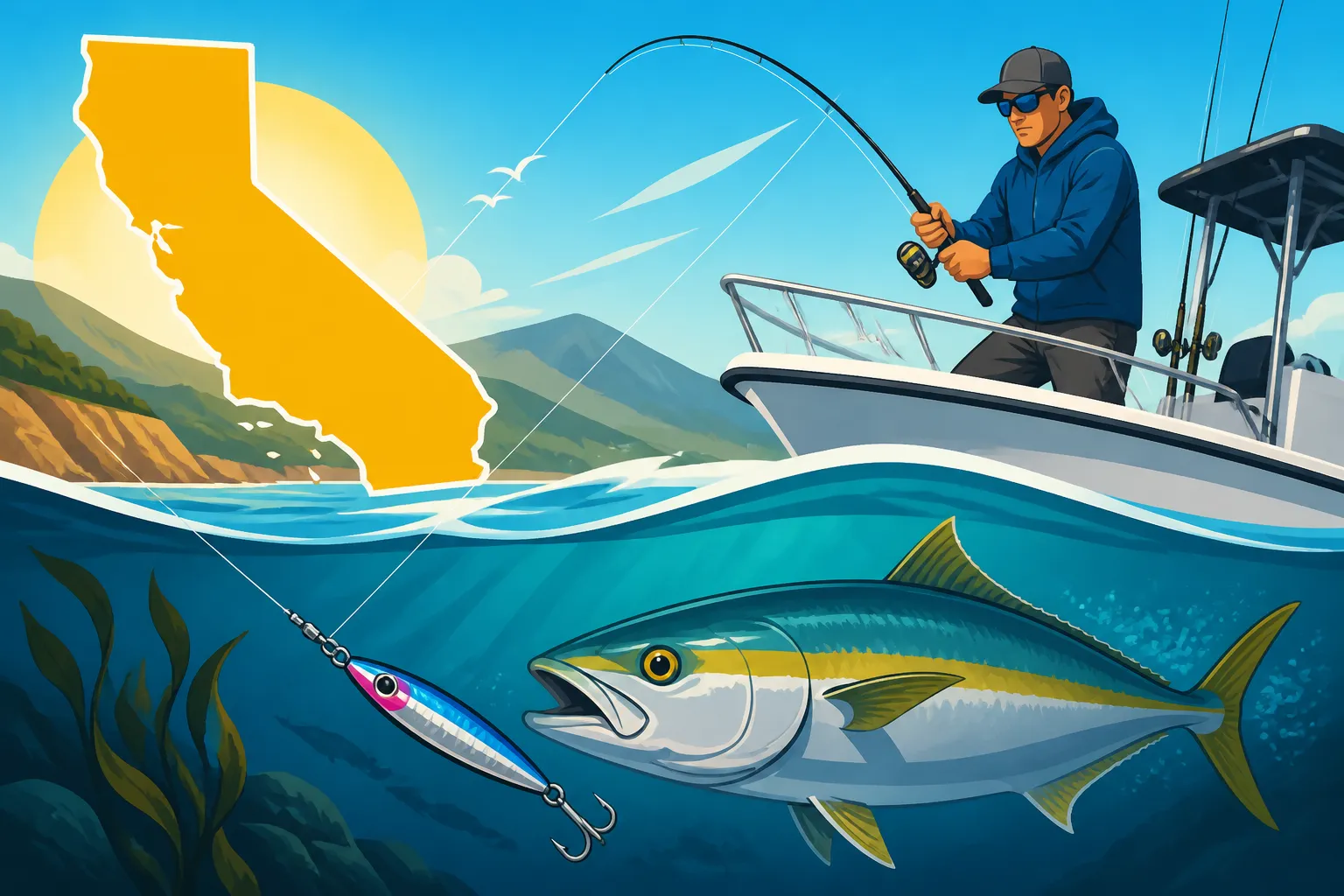
Yellowtail: These hard-fighting game fish are a top target for jig anglers. They can be found in a variety of offshore locations, from kelp paddies to high spots and deep banks.
- Prime Locations: Look for yellowtail around the Channel Islands, Catalina Island, San Clemente Island, and offshore banks like the Cortez Bank and Tanner Bank. When water temperatures are right, they can also move closer to shore. Check out our guide on the Best Fishing Spots in Southern California for more specific locations.
- Tactics: When yellowtail are on the surface crashing bait, casting surface iron is your go-to. If they're holding deeper around structure or under kelp, heavy yo-yo iron or vertical knife jigs can be incredibly effective. Pay close attention to your fish finder for schools of fish or bait, and drop your jig right into the zone. The best season for yellowtail typically runs from late spring through fall.
- Gear: Medium-heavy to heavy conventional or spinning setups with 50-80 lb braid and a 40-60 lb fluorocarbon leader are ideal.
-
Tuna (Bluefin, Yellowfin, Albacore): California's tuna fishery has exploded in recent years, especially for bluefin. Jigging is a primary method for catching these offshore giants.
- Prime Locations: Tuna are highly migratory, but common grounds include offshore banks, canyons, and zones hundreds of miles off San Diego, often following warm water currents and bait schools. Areas like the Cortez Bank, Tanner Bank, and the waters south of San Clemente Island are hotbeds for tuna activity.
- Tactics: For bluefin, heavy knife jigs and flat-fall jigs are essential. You'll often be dropping into deep schools marked on the sonar, or casting to breaking fish. Yo-yo jigging is also deadly when tuna are feeding deeper. For yellowfin and albacore, smaller knife jigs or flat-falls can work, especially when they're feeding on smaller bait. The California Albacore Season Explained and California Bluefin Tuna Season Explained guides can offer more specific timing.
- Gear: You'll need stout gear for tuna, often heavier than for yellowtail. Heavy conventional jigging setups with 80-130 lb braid and 80-150 lb fluorocarbon leaders are standard. For monster bluefin, some anglers even go heavier.
-
Dorado (Mahi-Mahi): These vibrant, acrobatic fighters are a warm-water treat.
- Prime Locations: Dorado are typically found offshore under kelp paddies, floating debris, or temperature breaks in warmer Southern California waters during late summer and early fall.
- Tactics: Casting lighter surface iron or even small knife jigs around kelp paddies can be highly effective. They're aggressive eaters, so a flashy, fast-moving jig often gets their attention.
- Gear: Medium-heavy spinning gear with 40-60 lb braid is usually sufficient.
Jigging for Nearshore Bottom Dwellers (Rockfish, Lingcod, Halibut)
While pelagics get a lot of glory, California's reefs and bays offer fantastic jigging opportunities for delicious bottom fish.
-
Rockfish: California boasts a huge variety of rockfish species, from vermilions to bocaccio, all of which love jigs.
- Prime Locations: Rocky reefs, pinnacles, and hard bottom structure along the entire California coast. Popular spots include the nearshore waters of Monterey Bay, Morro Bay, the Channel Islands, and the vast reefs off the Mendocino Coast. Always be aware of California Rockfish Depth Restrictions and Marine Protected Areas Explained.
- Tactics: Vertical jigging with knife jigs or flat-fall jigs is the most effective method. Drop your jig to the bottom and work it up through the strike zone (often 10-30 feet off the bottom). A slow, deliberate retrieve with pauses can be deadly, but sometimes a faster yo-yo style can trigger bites. Experiment with jig weights to match the current.
- Gear: Medium-heavy conventional or spinning gear with 40-60 lb braid and a 30-50 lb fluorocarbon leader. A good quality fish finder is almost a necessity for locating productive rock piles.
-
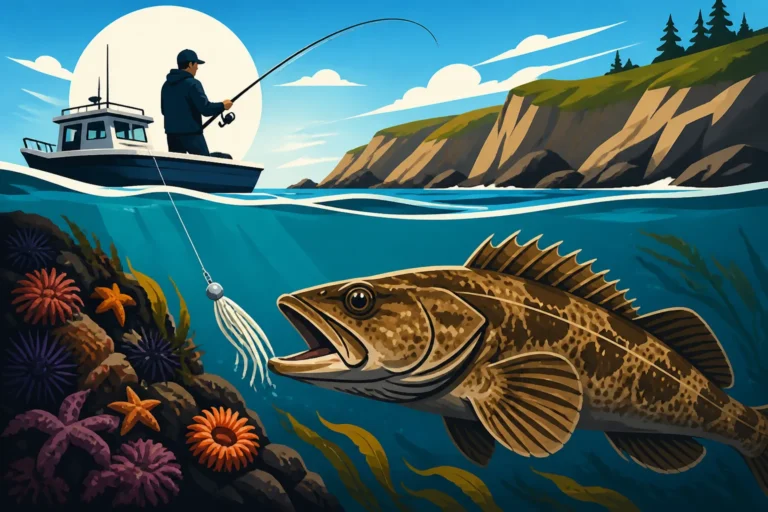
Lingcod: These aggressive, toothy predators are a prized catch, often found ambushing prey around rocky structures.
- Prime Locations: Lingcod share habitats with rockfish but often prefer even more rugged, high-relief structure. Look for them around deeper reefs, rocky pinnacles, and submarine canyons along the entire coast.
- Tactics: Heavy knife jigs are a top choice. Drop to the bottom, then work the jig with aggressive lifts and drops, mimicking an injured fish. Lingcod are ambush predators, so don't be afraid to bang the jig off the bottom to create a commotion. They often hit on the fall. For more specific tactics, check out our California Lingcod Season and Limits guide.
- Gear: Similar to rockfish, but leaning towards the heavier side of medium-heavy to heavy, as lingcod can be powerful fighters. Consider a heavier leader if you're getting frayed lines.
-
Halibut: These flatfish are masters of camouflage, lying in wait on sandy or muddy bottoms.
- Prime Locations: Bays, sandy flats adjacent to structure, and nearshore coastal areas. San Francisco Bay, San Diego Bay, and the coastal waters around Santa Monica are all productive for halibut. Our guide on California Halibut Size and Bag Limits can help you plan your trip.
- Tactics: Flat-fall jigs or lighter knife jigs worked slowly along the bottom are excellent. Cast out, let the jig hit the bottom, and then retrieve with a slow lift-and-drop motion, keeping the jig very close to the bottom. Small soft plastic swimbaits rigged on jig heads are also incredibly effective. The key is to keep it subtle and mimic a sole or flounder scooting along the sand.
- Gear: Lighter spinning gear (20-30 lb braid, 20-30 lb fluorocarbon leader) is usually sufficient, as halibut aren't typically brute fighters, but they can be large.
Advanced Jigging Strategies and Tips for Success
Jigging isn't just about dropping and reeling; it's about understanding the environment, adapting your approach, and perfecting your presentation.
Reading the Conditions and Adjusting Your Approach
Being a successful jig angler means being flexible and observant. The ocean is dynamic, and what worked yesterday might not work today.
- Current and Tide: Current is one of the biggest factors in jigging. Strong currents mean you'll need heavier jigs to maintain contact with the bottom or your desired depth. If the current is ripping, your 150g jig might drift too far, so you might need to step up to a 200g or even 300g jig. Conversely, in slack current, lighter jigs can be more effective as they offer more natural action. For bay fishing for halibut, understanding the best tides for California Halibut can dramatically increase your success.
- Water Temperature: Temperature breaks can indicate where bait and predator fish are concentrated, especially for pelagic species like tuna and yellowtail. Warmer water often means more active fish, while cooler water might require a slower, more subtle jig presentation.
- Bait Presence: Always be on the lookout for baitfish. Birds diving, baitballs on the surface, or bait concentrations on your fish finder are all prime indicators of where predator fish might be lurking. Match your jig's size and color to the prevalent bait if possible. If fish are feeding on small anchovies, a large knife jig might be ignored; a smaller, more realistic flat-fall or soft plastic might be the ticket.
- Using Electronics (Fish Finders/Sonar): A good fish finder is your best friend for vertical jigging. It allows you to pinpoint schools of bait, individual fish, and structure. Don't just drop randomly; look for arches or bait clouds. When you mark fish, drop your jig right into their depth range. Some advanced units with side-scan or 3D imaging can help you identify structure and fish holding off to the sides of the boat, allowing for more precise drops or casts. Always keep an eye on your screen and adjust your drops accordingly.
Rigging, Maintenance, and Safety
Proper rigging and maintenance ensure your gear performs when it matters most, and safety should always be paramount.
- Proper Knot Tying: Your knots are the weakest link in your setup. For connecting braided main line to a fluorocarbon leader, the FG knot is widely considered the strongest and most streamlined knot. It passes smoothly through guides and retains nearly 100% of the line strength. For tying your leader to your jig, a Palomar knot or an improved clinch knot are excellent choices. Practice these knots at home until they become second nature. There are many great online tutorials if you need a refresher.
- Hook Sharpness and Replacement: Jigs come with incredibly sharp hooks, but saltwater, rocks, and fish can dull them quickly. Always check your hook points before and after each trip. A dull hook means missed fish. Carry a hook sharpener or, better yet, replace hooks that are bent, corroded, or too dull to sharpen. Assist hooks, which are popular for vertical jigging, can also wear out and should be replaced regularly. Having a good supply of these, perhaps from a brand you trust on Amazon, will save you a lot of grief.
- Rod and Reel Maintenance: Saltwater is brutal on fishing gear. After every trip, rinse your rods and reels thoroughly with fresh water. Pay special attention to the reel, making sure to rinse out any saltwater from crevices. Store your gear in a dry place. Periodically, reels should be serviced (cleaned and re-greased/oiled) by a professional or yourself if you're comfortable. This prevents corrosion and keeps your drag system smooth, which is vital when battling a powerful fish.
- Safety First: Jigging often involves sharp hooks, heavy weights, and sometimes crowded boats.
- Watch Your Casts: Always be aware of your surroundings, especially on a party boat. Make sure no one is in your back cast before letting a heavy jig fly.
- Keep Hooks Covered: When not in use, keep hooks covered or secured to prevent accidental jabs.
- Mind Your Fingers: When unhooking a fish, especially one that's thrashing, be incredibly careful with your fingers around sharp hooks and teeth. Use pliers or de-hookers whenever possible.
- Stay Hydrated and Sun Protected: Long days on the water, especially offshore, require plenty of water and sun protection (hat, sunscreen, long sleeves).
By paying attention to these details, you'll not only increase your chances of success but also ensure a safer and more enjoyable experience on the water.
Disclaimer
Fishing regulations in California are subject to change by the California Department of Fish and Wildlife (CDFW). It is your responsibility to consult the latest CDFW regulations booklet or website before engaging in any fishing activity. This guide is for informational purposes only and should not be considered a substitute for official regulations.