How to Fish for Tuna in California
So, you're dreaming of tangling with a powerful tuna off the California coast? It’s a truly exhilarating experience, but let's be honest, it can feel incredibly daunting if you’re new to the offshore game. From the sheer size of the boats to the specialized gear and the often-fickle nature of these pelagic predators, it's easy to feel overwhelmed. This guide is here to cut through the confusion and give you a realistic, comprehensive breakdown of how to approach tuna fishing in California, helping you turn those dreams into unforgettable catches.
Understanding California's Tuna Landscape
Before you even think about casting a line, it's crucial to understand what tuna are swimming in California waters, when they're around, and where you’re most likely to find them. This isn't like fishing for trout in a local lake; these are migratory, fast-moving fish influenced heavily by ocean conditions.
Common Tuna Species in California
California's rich offshore waters host several exciting tuna species, each with its own characteristics and challenges. Knowing your target can significantly impact your preparation and tactics.
The big one, the heavy hitter, the fish that drives anglers into a frenzy: the Bluefin Tuna. These magnificent creatures have seen a resurgence in recent years, drawing crowds from all over. They're known for their incredible power and stamina, often growing to truly massive sizes – we're talking hundreds of pounds. Bluefin tend to be present when warmer water pushes closer to our coast, usually from late spring through late fall. They’re a significant challenge on even heavy tackle and demand respect. Catching one is often considered the pinnacle of California offshore sportfishing.
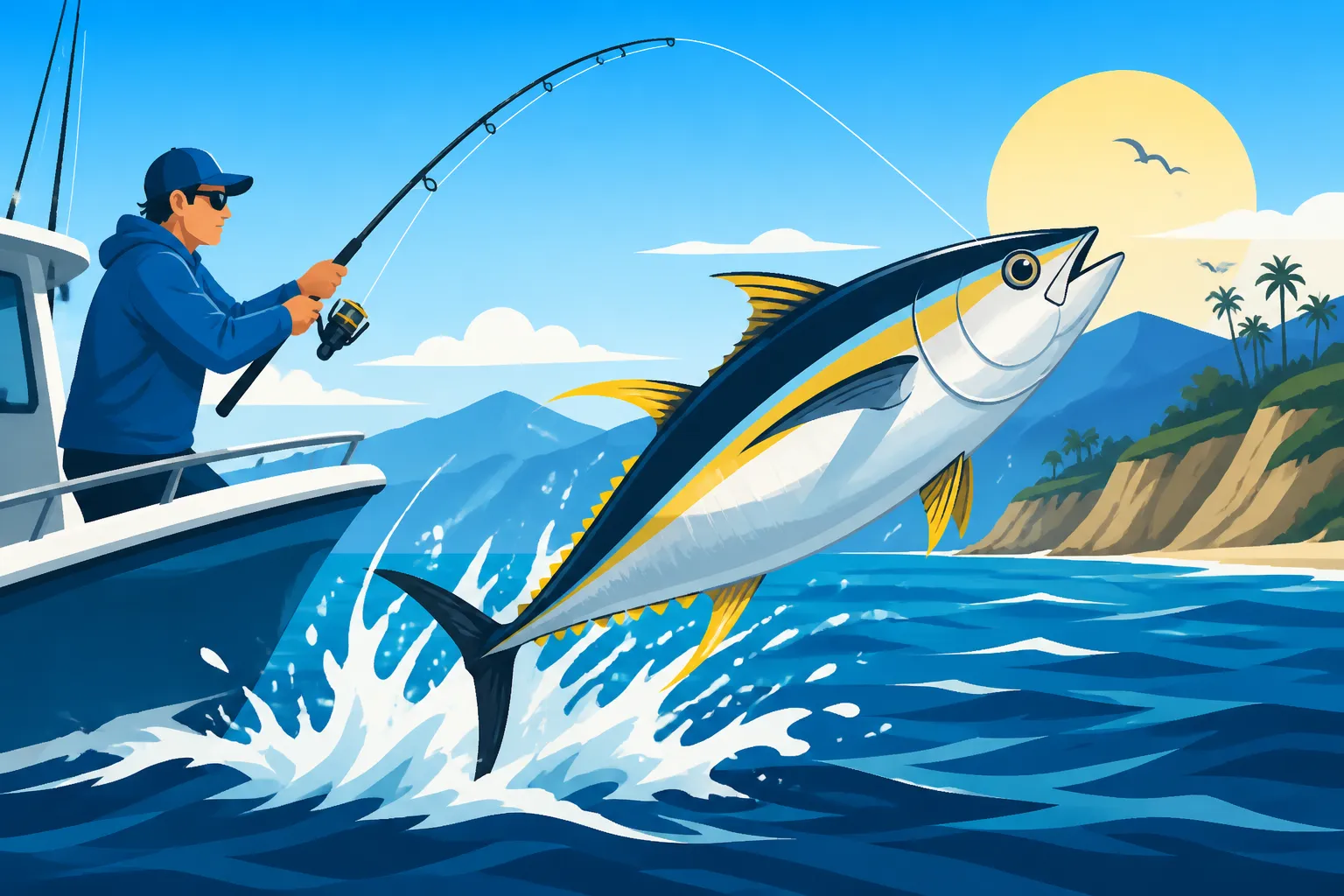
Next up, we have the Yellowfin Tuna. Often sharing the same warmer waters as Bluefin, Yellowfin are easily identifiable by their namesake bright yellow fins and finlets. While they might not reach the sheer colossal weights of the largest Bluefin, Yellowfin still grow to impressive sizes, commonly hitting 40-100 pounds, with bigger specimens certainly possible. They offer a fantastic fight and are excellent table fare. You’ll often find these mixed in with schools of Bluefin, providing a thrilling double-threat scenario on offshore trips.
Then there's the Albacore Tuna, affectionately known as "longfin." These are perhaps the most traditionally targeted tuna by recreational anglers for their delicious white meat, perfect for canning or searing. Albacore are typically smaller than their Bluefin or Yellowfin cousins, usually ranging from 15-40 pounds, but what they lack in individual size, they make up for in numbers. They often travel in large schools, and when you find them, the action can be non-stop. Albacore generally prefer cooler, clear offshore waters and can be found further out than other tuna species. You can learn more about California Albacore Season Explained to time your trips perfectly.
Finally, while not a true tuna by scientific classification, the Bonito is frequently caught in tuna-like conditions and mistaken for a small tuna. These streamlined, hard-fighting fish are plentiful in Southern California and make for a fun day on the water, especially for beginners or when the larger tuna aren't cooperating. They rarely exceed 15 pounds but strike aggressively and provide a fast, spirited fight, making them great practice for the bigger pelagics.
Prime Seasons and Migration Patterns
Tuna fishing in California is heavily seasonal, dictated by water temperature and the migratory patterns of these open-ocean wanderers. Generally, the season kicks off in late spring, heats up through the summer, and can extend well into the fall, sometimes even early winter if conditions remain favorable.
The arrival of warm, nutrient-rich currents, often originating from Mexican waters, is the primary trigger for tuna to move north into California's fishing grounds. Historically, July through October were considered prime months, but with shifting ocean conditions, we've seen seasons start earlier and last longer in recent years, particularly for Bluefin. For Bluefin Tuna, the season can often start as early as May or June and run strong into November, and sometimes even December, especially for larger, older fish. Understanding California Bluefin Tuna Season Explained is crucial for planning. Albacore, which prefer slightly cooler offshore waters, might show up earlier in the summer and also stick around until the fall.
The influence of phenomena like El Niño and La Niña cannot be overstated. El Niño years, characterized by warmer Pacific waters, typically bring tuna species closer to shore and in greater abundance, sometimes even bringing exotic species like Dorado or Wahoo into California waters. La Niña years, with cooler water, can push tuna further offshore or limit their presence altogether. This makes staying updated with marine weather forecasts, sea surface temperature charts, and local fishing reports absolutely critical. The ocean is a dynamic place, and what was true last week might not be true today.
Key Fishing Grounds
When it comes to tuna fishing in California, the action predominantly takes place offshore, with the Southern California Bight being the epicenter. This vast marine area stretches from Point Conception in Santa Barbara County down to the Mexican border and is where most of the premier tuna action unfolds.
San Diego and Orange County serve as major departure points for the sportfishing fleet, with boats heading out to various offshore banks and islands. Iconic spots like the Coronado Islands (just south of the border, requiring a valid Mexican fishing license if you cross), Tanner Bank, Cortez Bank, and the various offshore seamounts are legendary for their tuna potential. These aren't just random spots; they're underwater structures that create upwellings, concentrating baitfish and, consequently, the predators that feed on them.
Closer to shore, but still often requiring a dedicated trip, are the Channel Islands, including San Clemente Island, Santa Catalina Island, and San Nicolas Island. While known for their excellent Yellowtail and Calico Bass fishing, these islands can also hold tuna, particularly Bluefin, especially when they're chasing bait close to structure. The waters surrounding these islands are complex, with varying depths and currents, making them productive hunting grounds. For anglers departing from Los Angeles and Ventura counties, these islands are often the primary targets for offshore species.
Further north, past Santa Barbara, tuna fishing becomes less consistent but is still possible, particularly for Albacore during strong runs. However, the consistent, large-scale tuna fishery that California is famous for is undeniably centered in its southern half.
Essential Gear and Tackle for Tuna Fishing
Tuna are powerful fish, and a typical bass or freshwater trout setup simply won't cut it. Investing in the right gear isn't just about catching fish; it's about having the strength to battle these formidable creatures efficiently and safely. You don’t want to be under-gunned when a hundred-pound Bluefin decides to test your resolve.
Rods and Reels
Choosing the right rod and reel combination is paramount for tuna fishing. Your setup needs to be robust enough to handle the incredible power and sustained runs of a tuna, yet sensitive enough to detect subtle bites.
For Albacore and smaller Yellowfin, you might get away with a medium-heavy conventional or spinning setup rated for 30-50 lb line. Brands like Penn, Shimano, and Avet make excellent conventional reels that are popular choices for this class of fish, offering smooth drags and reliable performance. For rods, look for something with a fast action and strong backbone, typically 7 to 8 feet long.
However, if you’re targeting larger Yellowfin or Bluefin Tuna, especially those over 50 pounds, you'll need to step up your game considerably. This is where heavy-duty conventional setups shine. Reels like the Shimano Talica, Penn International, or Avet Raptors are built for serious offshore abuse. Pair these with stout, purpose-built tuna rods, often shorter (5'6" to 7'6") and designed for heavy braid, rated for 60-100 lb or even 130 lb line. Brands like Phenix, Seeker, and Calstar are highly regarded for their tuna rods. These rods have thick blanks and heavy-duty guides to withstand immense pressure. When browsing for these, you'll find a wide selection of quality options on Amazon, often with detailed reviews to help you compare models. It’s worth noting that spinning gear for large tuna has become increasingly popular, especially for casting lures to breaking fish. High-end heavy-duty spinning reels like the Shimano Stella or Penn Slammer are capable, but they come at a price and require specialized rods.
Line, Leaders, and Terminal Tackle
Your line and terminal tackle are the direct connection to the fish, and any weak link will likely result in a lost fish and a lot of heartbreak.
For the mainline, braided line is almost universally preferred for tuna fishing. Its incredibly thin diameter for its breaking strength, minimal stretch, and superior sensitivity make it ideal for deep drops and long casts. Typical strengths range from 50 lb test for Albacore up to 100-130 lb test for large Bluefin. Brands like PowerPro or Daiwa J-Braid are popular and readily available. The minimal stretch of braid also means you'll feel every head shake and run, giving you better control during the fight.
Connecting your main braid to your hook is a fluorocarbon leader. Fluorocarbon is less visible underwater than monofilament and is more abrasion-resistant, which is crucial when fishing around toothy predators or rough structure. Leader strength varies depending on the species and conditions, ranging from 40 lb for skittish Albacore up to 100-200 lb for trophy Bluefin. The connection between your braid and fluorocarbon leader is critical; learn a strong knot like the FG knot or PR knot. If you're struggling to tie these, many local tackle shops or even YouTube tutorials can help.
Terminal tackle includes swivels, hooks, and sometimes weights. High-quality ball bearing swivels are a must to prevent line twist, especially when trolling or using jigs. For hooks, circle hooks are often mandated by regulations for certain species or in specific areas, and they are excellent for preventing gut-hooking, improving fish survival on release. For live bait, sharp, strong, heavy-gauge J-hooks are also commonly used, especially when "fly-lining" bait. Ensure your hooks are appropriately sized for your bait and target species – too small and they'll straighten, too big and they'll hinder your bait's action. Brands like Owner and Gamakatsu are renowned for their strength and sharpness.
Lures and Baits
Tuna are opportunistic feeders, and having a variety of lures and baits can be the difference between a slow day and an epic one.
Live bait is, without a doubt, the most effective method for tempting tuna. Fresh, lively bait like sardines, anchovies, and mackerel are gold. Sportfishing boats will often make a bait stop before heading offshore, netting thousands of these valuable little fish. Keeping them alive and healthy in the boat’s bait tank is paramount.
When tuna are feeding aggressively or boiling on the surface, jigs and poppers come into their own. Heavy metal jigs, often called "iron," are dropped deep and retrieved quickly, mimicking fleeing baitfish. These include classic surface irons (like Salas or Tady) for casting to foaming fish, and heavier, narrower knife jigs for vertical jigging when fish are holding deeper. Poppers and stickbaits are worked on the surface to create commotion, drawing explosive strikes from aggressive tuna. You can find a huge selection of these specialized lures on Amazon, making it easy to stock up before your trip.
Trolling lures are also highly effective, particularly for finding schools of tuna. Cedar plugs, plastic skirts, and spreader bars rigged with multiple lures create the illusion of a school of baitfish, drawing tuna in from a distance. Trolling is often the primary method charters use to locate fish before switching to live bait or casting.
Proven Techniques for California Tuna
Okay, you’ve got your gear. Now, how do you actually catch these things? Tuna fishing involves a blend of traditional methods and modern tactics, often requiring quick adjustments based on how the fish are behaving.
Live Bait Fishing (Bait and Switch, Fly-lining, Dropping)
Live bait is the bread and butter of California tuna fishing, especially on charter boats. There are a few key ways to present it.
Fly-lining involves casting a live bait (usually a sardine or anchovy) with minimal or no weight, allowing it to swim naturally away from the boat. This is incredibly effective when tuna are near the surface and keyed in on small baitfish. The goal is for your bait to look like just another panicked fish trying to escape the feeding frenzy. You'll often hear "Send a bait!" from the deckhands when tuna are crashing the surface. You can apply principles from How to Fly-Line Sardines for Yellowtail directly to tuna fishing.
The bait and switch technique is particularly exciting for larger tuna. The crew will troll a large, hookless lure (a "teaser") to draw a tuna right up to the stern of the boat. Once the tuna is visibly chasing the teaser, the angler casts a live bait or a casting jig in front of the fish as the teaser is pulled away. This tricks the tuna into switching its focus to your bait, leading to an explosive strike right at the boat.
When tuna are deeper, or when fishing on anchor over a bank, dropping live bait with a sinker is the way to go. This involves adding an appropriate weight (often a torpedo sinker) to get your bait down to the desired depth. Sometimes, a "chum line" of dead or injured baitfish is thrown over the side to draw fish closer and stimulate a feeding response. Chumming is a critical component of many successful tuna trips, creating a natural scent trail that guides the tuna to your boat. The fresher and livelier your bait, the better your chances.
Jigging and Popping
When tuna are aggressive and feeding near the surface or holding tight to structure, jigs and poppers can be incredibly effective, and often lead to some of the most visual and exciting bites.
Jigging covers a wide range of techniques. Heavy iron jigging, often called "yo-yo jigging," involves dropping a heavy metal jig (like a Salas 6X or Tady 4/0) to the bottom or a specific depth and then retrieving it as fast as you can, mimicking a fleeing baitfish. This technique is deadly when tuna are deeper, or when they're scattered and you need to cover a lot of water column. You can adapt the strategies outlined in How to Yo-Yo Jig for Yellowtail for tuna. For fish holding closer to the surface or when you mark schools shallower, lighter surface irons are cast out and retrieved with a sweeping, wounded-baitfish action.
Popping involves casting large, topwater lures (poppers or stickbaits) and working them aggressively across the surface. The goal is to create maximum commotion—splashes, gurgles, and wakes—to draw a reaction strike from hungry tuna. This is often done when tuna are "foaming" or busting bait on the surface, creating an electrifying visual spectacle as a large tuna explodes on your lure. This requires a stout spinning setup with a strong drag and a lot of stamina from the angler.
Trolling for Tuna
Trolling is arguably the most common method for locating tuna schools in the vastness of the open ocean, particularly for Bluefin and Albacore. It's often the first technique employed by charter boats.
The boat will pull a spread of lures at a consistent speed, typically between 5 and 10 knots, depending on the lures and conditions. This "spread" can consist of individual plastic skirted lures, cedar plugs, or more elaborate spreader bars and daisy chains that create the illusion of a school of baitfish swimming behind the boat. Each lure is run at a different distance from the boat and in a different wake position to cover a wider area and avoid tangles.
The crew constantly monitors sonar and fish finders, looking for baitfish schools, thermoclines (layers of water with different temperatures), and most importantly, marks that indicate tuna. Once a fish hits, the call of "Fish on!" goes out, and often, other lines are cleared while the crew tries to determine if it was a lone wolf or part of a larger school. If it’s a school, the boat might then switch to live bait or jigging to maximize the catch. Understanding how to read the boat's electronics and the subtle signs of a bite (even while trolling) comes with experience.
Understanding Boat Dynamics
Whether you’re on a private boat or a sportfishing charter, understanding how the boat operates during a tuna bite is crucial for success and safety.
On a charter boat, listening to the captain and deckhands is paramount. They are seasoned pros who know these waters and these fish. When a tuna is hooked, chaos can quickly ensue, and the crew will direct anglers on where to move, how to fight the fish, and when to clear other lines. Knowing the etiquette for a charter trip and Tipping on a California Fishing Charter are also important aspects of a smooth experience.
On a private boat, the responsibility falls entirely on you and your crew. Effective communication is key. When a fish is hooked, the boat's direction and speed might need to be adjusted to keep the fish off the props or out of other lines. Having a designated gaff person and understanding safe gaffing techniques is also vital. Always be aware of your surroundings – other boats, lines in the water, and the movements of your fellow anglers. Being prepared for a California Sportfishing Trips Explained experience will certainly make the trip smoother.
Navigating Regulations and Safety
The excitement of tuna fishing can sometimes overshadow the practicalities, but neglecting regulations or safety measures can quickly turn an epic trip into a disaster.
Licensing and Report Cards
Let's get this straight right off the bat: you absolutely need a valid California fishing license to fish for tuna, whether you're on a private boat or a charter. There are no exceptions for offshore fishing. You can purchase these online through the California Department of Fish and Wildlife (CDFW) website or from authorized vendors like tackle shops or sporting goods stores. Our California Fishing License Guide breaks down all the requirements.
While general tuna species usually don't require specific report cards in California waters, it's always wise to double-check the latest regulations. Report cards are usually reserved for species like Sturgeon, Steelhead, and Spiny Lobster. However, if your trip ventures into Mexican waters (e.g., around the Coronado Islands), you will also need a valid Mexican fishing license and potentially a Mexican FMM (Forma Migratoria Múltiple) if you plan to go ashore. The crew on a reputable charter will typically advise you on any additional requirements for cross-border trips. Don't forget, if fishing in state ocean waters, you may also need an California Ocean Enhancement Stamp.
Bag Limits and Size Restrictions
Tuna regulations are dynamic and can change based on scientific assessments and federal management plans, especially for highly migratory species like Bluefin. Always consult the most current California Sport Fishing Regulations booklet or the CDFW website before your trip. These are federal regulations managed by NOAA Fisheries, and California aligns with them.
Here's a general idea of common regulations, but these are subject to change and should always be verified:
| Tuna Species | General Daily Bag Limit (per angler) | Minimum Size Limit | Notes |
|---|---|---|---|
| Bluefin Tuna | Varies (e.g., 2-5 fish) | Varies | Highly variable; often has sub-limits based on size (e.g., 1 fish over 60 lbs). |
| Yellowfin Tuna | Varies (e.g., 10 fish) | None | Often part of an aggregate limit with other tuna species. |
| Albacore Tuna | Varies (e.g., 10 fish) | None | Can be very generous when schools are abundant. |
| Bonito | Varies (e.g., 10 fish) | 24 inches fork length (or 5 pounds) | This is a state regulation, often caught when targeting tuna. |
Note: This table provides a historical overview. Always verify current regulations with the CDFW or NOAA Fisheries before heading out. Enforcement is strict, and ignorance is no excuse for violations.
Penalties for exceeding bag limits or catching undersized fish can be severe, including hefty fines and confiscation of your catch and gear. It’s simply not worth the risk. A good rule of thumb is "when in doubt, let it go."
Safety First on Offshore Trips
Offshore tuna fishing can be an incredible adventure, but the open ocean demands respect. Safety should always be your top priority.
Seasickness is a real concern, and it can ruin your trip. If you’re prone to it, or even if you're not sure, take preventative measures. Over-the-counter medications like Dramamine or Bonine work for many, but start taking them the night before or at least an hour before departure. Scopolamine patches (prescription only) are also highly effective for some. Stay on deck, look at the horizon, and avoid reading or looking at your phone. Hydration is key, but avoid greasy foods and excessive alcohol before and during the trip. We have a dedicated guide on How Seasickness Works on California Offshore Trips that can provide more detailed prevention tips.
Sun protection is non-negotiable. You’ll be exposed to intense sun reflection off the water for hours, often without much shade. Wear a wide-brimmed hat, polarized sunglasses, and long-sleeved, breathable UV-protective clothing. Apply sunscreen generously and reapply frequently, especially after handling fish or getting wet.
Hydration and nutrition are also vital. Bring plenty of water, sports drinks, and easy-to-eat snacks. Fighting a big tuna is a workout, and you'll burn a lot of energy. Staying well-fed and hydrated will help maintain your stamina and focus. Think about packing similar items to those suggested in our What to Bring on a California Fishing Charter guide.
Lastly, always be aware of your surroundings on the boat. Deckhands are working hard and moving quickly, often with sharp tools. Watch for hooks, gaffs, and slippery decks. If you're on a private boat, make sure someone knows your float plan, and that you have all required safety gear, including life jackets, flares, and a VHF radio. The ocean is beautiful but unforgiving, and preparedness is your best defense.
Disclaimer
Fishing regulations and conditions are subject to change without notice. Always check the latest California Department of Fish and Wildlife (CDFW) regulations and local weather forecasts before heading out. This guide is for informational purposes only and does not constitute professional advice.